The Agency Model Isn’t Dead. It’s Evolving.
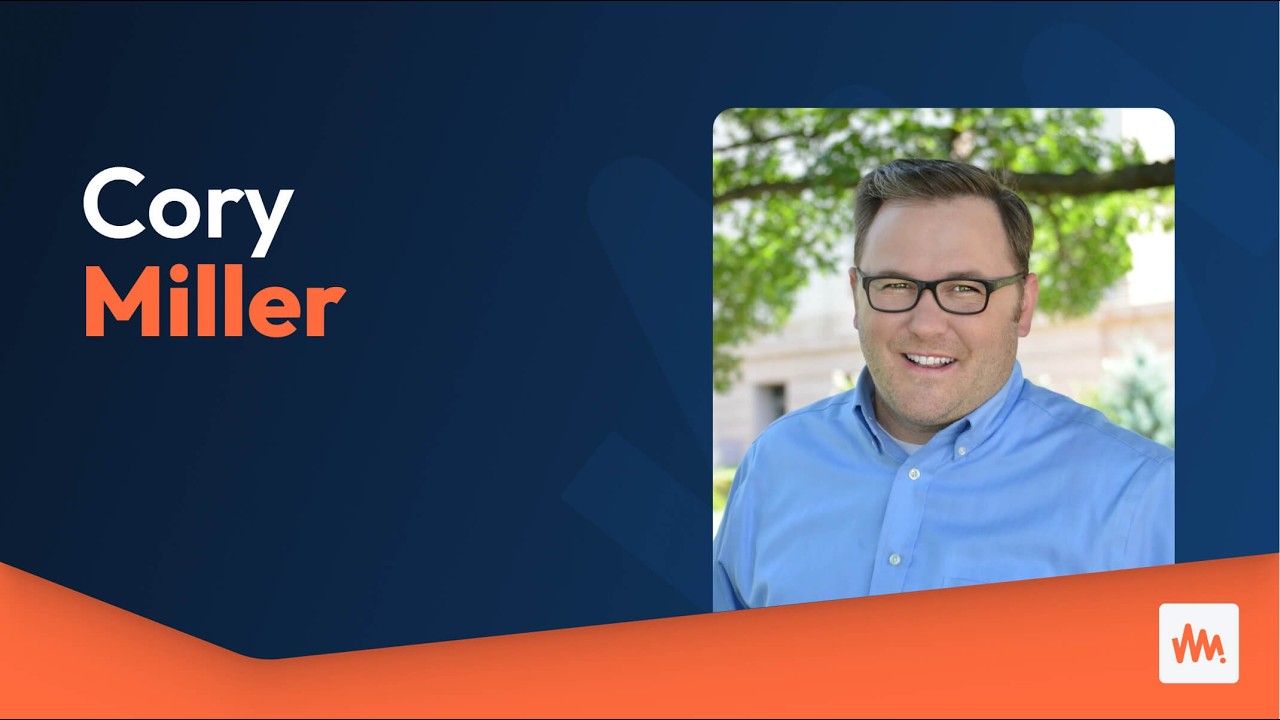
🔗 **Source:** [The Agency Model Isn’t Dead. It’s Evolving.](https://www.youtube.com/watch?v=wFK5te6SUhY)
> [!note]+ Document Notes
> tags: [wordpress-agencies, ai-development, hosting-partnerships, care-plans, client-relationships]
> author: "[MISSING]"
> source: The WP Minute (YouTube)
> reference: https://www.youtube.com/watch?v=wFK5te6SUhY
> date created: 2026-09-07
>
> > [!info] Generated analysis — not the author's words. Sections below are machine-written
> > from the captured source. Only text inside `> [!quote]` blocks is verbatim from the author.
> > Do not quote or attribute any other line to the named author.
>
> # 🏷️ Title: The Agency Model Isn't Dead. It's Evolving.
>
<!-- deep-read:sections start -->
## 🧭 Table of Contents
- [[#📝 Summary]]
- [[#📖 Main Content]]
- [[#🗒️ Notes]]
- [[#📚 References]]
- [[#🗣️ Paraphrase]]
- [[#📰 Newsletter]]
- [[#✅ Action Items]]
- [[#🧪 Hypotheses]]
- [[#📊 Methodology]]
- [[#❓ Questions]]
- [[#🔮 Future Research]]
- [[#💡 Implications]]
- [[#🧠 Learning Styles Assessment]]
- [[#📊 Accessibility Assessment]]
- [[#🌍 DEIB Assessment]]
- [[#✅ Logical Validity]]
- [[#🛡️ DARVO Analysis]]
- [[#🎯 Conclusion]]
- [[#🔄 Refactor Appendix — The Agency Model Isn't Dead. It's Evolving.]]
## 🔗 References
- Source: The WP Minute (YouTube channel), episode with host "Matt" and guest Corey Miller of hosting.com — https://www.youtube.com/watch?v=wFK5te6SUhY
- Speaker names as stated in the transcript: the host is addressed only as "Matt" (surname not stated in captured content — this is the same show that publishes as The WP Minute, formerly Matt Report, hosted by Matt Medeiros, but that identification is not made explicitly inside the transcript, so author is left [MISSING] rather than inferred). The guest, Corey Miller, states he has "for the past 20 years or so...made his living from agencies and freelancers, building tools" and now works at hosting.com on its agency partnership program.
- Sponsor disclosure stated on air: hosting.com sponsors The WP Minute; the guest works for the sponsoring company. Flagged for Logical Validity below.
- No outbound links found via `paras2.py --links` — confirmed, not asserted; this is expected for a caption-derived transcript, which strips even the description-box links a video might carry.
## 📝 Summary
- **What happened:** Matt (host) and Corey Miller (hosting.com, formerly of Post Status by his own 20-years-in-agencies description) discuss whether AI threatens the WordPress agency/freelancer business model, using Matt's own experience building a civic app that a city government is now rebuilding in-house with AI as the framing story. They conclude the model shifts rather than dies — agencies retain value as trusted, accountable experts — then pivot to hosting.com's new Agency Success Network, a no-exclusivity referral program connecting its 700,000+ hosting customers to vetted agencies and freelancers.
- **Why it matters:** This is a first-person account of the exact anxiety AI raises for WordPress's services economy (care plans, custom builds, agency retainers), paired with a named hosting company's concrete response (a referral marketplace) — useful as both sentiment data and a specific program to evaluate.
- **Key stakeholders:** WordPress agencies, freelancers, and consultants; hosting.com and its customer base; the WP Minute audience; by extension any WordPress services business whose value proposition rests on technical execution rather than ongoing strategic partnership.
- **Risks and tradeoffs:** the entire second half of the conversation is an advertisement for the sponsor's own program, delivered by the sponsor's own employee, inside sponsored content — a structural conflict of interest the hosts never flag as such (see DARVO/Logical Validity below).
- **Bottom line:** both speakers land on the same reframe — technical build skill is commoditizing, so the durable agency value is expertise-as-accountability ("I want to buy the insurance that Matt knows what he's doing") and ongoing relationship (care plans), not one-time delivery.
## 📖 Main Content
The episode opens with sponsor disclosure (hosting.com sponsors The WP Minute; Corey Miller works there) and personal catch-up before turning to the Automattic/WP Engine court case, which the host describes as delayed until October next year and as a distraction from WordPress's competitive position on AI.
**The DIY threat, told through a personal story.** Matt describes building a snow-plow tracking app for his local community, then a 311 civic-reporting system (potholes, downed trees, flooding), using AI-assisted development. The city's IT team has now told him they intend to build their own version using the same kind of AI tooling he used — the exact scenario he frames as the agency world's core AI fear: a client who once needed a builder no longer does, because the tool that built it for the agency now builds it for the client too.
**Corey's counter: expertise survives as accountability, not execution.** Corey argues do-it-yourselfers will always exist, but organizations still choose to "major in what they do best and hand off to the experts" because AI does not yet carry security judgment, best-practice knowledge, or accountability when something breaks. He frames this explicitly as buying insurance, not buying a build.
**A second, deeper fear from Matt.** Beyond losing client work, Matt names a generational loss: learning WordPress in the pre-AI era forced a builder to learn the whole stack — hosting, databases, plugins, IP addressing — and that forced curiosity is what built WordPress's community. AI answering instantly removes the "unpacking WordPress" process that produced that curiosity and, by extension, that community.
**Care plans as the existing proof-of-concept.** Corey traces "WordPress care plans" (recurring maintenance retainers) back to an earlier moment when agencies noticed clients needed ongoing care after launch and productized it — drawing an explicit parallel to extended warranties he sold at Circuit City. His claim: the need for ongoing care of a website "doesn't go away," and can extend to AI-related services the same way it extended to maintenance.
**The pitch: hosting.com's Agency Success Network.** Corey describes a no-exclusivity referral program launched by hosting.com's CEO ("Seb"), connecting the company's 700,000+ customers to vetted agencies via a short intake form (industry niche, up to three specialties, description of ideal client). Starting cohort: 50 founding partners, expected to grow. No minimum spend is currently required for referral eligibility. Sign-up: hosting.com/agency.
## 🗒️ Notes
#### ⏱️ [00:00](https://www.youtube.com/watch?v=wFK5te6SUhY?t=0) Cold open and sponsor disclosure
- hosting.com sponsors The WP Minute; Corey Miller (guest) works for hosting.com and is stated to be the only content-affecting party besides the show itself.
#### ⏱️ [02:42](https://www.youtube.com/watch?v=wFK5te6SUhY?t=162) Automattic/WP Engine court case
- Host: the case won't reach a jury until "October next year." Frames the ongoing legal dispute as a distraction from WordPress's competitive AI position, hoping for a "quiet renaissance" announced at WordCamp US.
- Corey calls the timing "terrible" and says he has friends at both companies; wants resolution so the industry can refocus on AI opportunity.
#### ⏱️ [05:30](https://www.youtube.com/watch?v=wFK5te6SUhY?t=330) What users actually want from AI + WordPress
- Corey: "I really think like the missing piece is how easy can we just make it to talk to WordPress and just do the thing we want to do."
- Names rocket.net's MCP WordPress integration as a concrete example of that bridge being built.
#### ⏱️ [08:17](https://www.youtube.com/watch?v=wFK5te6SUhY?t=497) Matt's civic-app story and the DIY fear
- Built a snow-plow app, then a 311 reporting system for potholes/trees/flooding, using AI-assisted development.
- The city's new IT director's team is now building their own version — "the same tool that I used to build it" is enabling the client to route around the builder.
> [!quote] ID:rw_01m1y14r0q0a8ma6yxmg1g9kf7
> "now staring down that barrel of, 'Oh, my customer, they're going to build it themselves now because of the same tool that I used to build it.' And now they are going, 'You know what? We're savvy enough now to do this.'"
#### ⏱️ [10:55](https://www.youtube.com/watch?v=wFK5te6SUhY?t=655) The expertise/accountability counter-argument
- Corey: organizations still hand off to experts because they want to "major in what they do best," and AI doesn't yet carry security judgment or accountability.
- Reframes the value proposition as "insurance," not labor: paying someone to be accountable when something breaks.
#### ⏱️ [19:00](https://www.youtube.com/watch?v=wFK5te6SUhY?t=1140) Care plans, historically
- Corey traces the origin of WordPress care/maintenance plans to agencies noticing an unmet post-launch need and productizing it — parallels his own extended-warranty sales history at Circuit City.
- Argues the underlying need for care "doesn't go away," even as its content shifts toward AI-adjacent services.
#### ⏱️ [28:00](https://www.youtube.com/watch?v=wFK5te6SUhY?t=1680) The deeper fear: losing the learning curve
- Matt: learning WordPress pre-AI forced a builder to learn hosting, databases, plugins, and networking — that forced curiosity produced the community itself.
- Fears AI's instant answers remove that "unpacking" process for the next generation of builders.
#### ⏱️ [31:37](https://www.youtube.com/watch?v=wFK5te6SUhY?t=1897) Transition to the agency partnership pitch
- Host explicitly frames this as the sponsor segment, having "been on both sides of the fence" — running an agency and, earlier, working hosting-side at Pagely soliciting agency business.
#### ⏱️ [32:29](https://www.youtube.com/watch?v=wFK5te6SUhY?t=1949) hosting.com's Agency Success Network
- Initiative from hosting.com CEO "Seb"; framed as "no exclusive deals," a referral layer for the company's 700,000+ customers.
- Intake: a 3–5 minute form asking agencies to name up to three ideal-client niches (HVAC and dentist-website examples given) so referrals match domain expertise, not just "does WordPress."
- Cohort: starting at 50 founding partners, expected to grow; no stated minimum customer spend for eligibility as of this recording.
#### ⏱️ [45:19](https://www.youtube.com/watch?v=wFK5te6SUhY?t=2719) Close and call to action
- Sign-up: hosting.com/agency. Host reiterates sponsor thanks; guest reiterates hosting.com is "proud" to sponsor the show.
## 📚 References
- No external sources, articles, or citations of any kind are present in the captured transcript — confirmed via `paras2.py --links` (0 results), not asserted from absence of visible URLs.
- Named-but-unlinked entities mentioned in conversation: rocket.net (MCP WordPress integration), hosting.com/agency (sign-up URL, stated verbally, not hyperlinked in this transcript), A2 Hosting (referenced as a prior brand now folded into hosting.com), Clutch (mentioned as a comparison point the speakers say they are not trying to replace).
- Guests/people named without independent sourcing: Russell Aron (three-person team referenced for GitHub activity), Jacqueline (WP Minute team member), Justin Synton ("agency of one"), Mark Slemanski, Brandy Lawson (Fire Effects, interior-design AI use case), Nathan Ingram (referenced livestreams).
## 🗣️ Paraphrase
Two WordPress-industry veterans talk through whether AI is going to put agencies out of business, using the host's own experience as the test case: he built a civic app for his town, and now the city's IT team is planning to build their own version with the same kind of AI tooling. The guest's answer is that execution skill is commoditizing but expertise-as-accountability isn't — clients will keep paying someone to be responsible when things break, the way they buy insurance rather than do their own electrical work. The host raises a second worry that goes beyond money: learning WordPress used to force a builder to learn the whole stack, and that forced curiosity is what built the community; AI answering instantly threatens to remove that on-ramp. The conversation then pivots into an unmissably sponsor-driven segment: the guest, who works for the show's sponsor, describes that company's new no-exclusivity referral program connecting its large customer base to vetted agencies, sorted by industry niche so a dentist-website shop doesn't get matched to an HVAC client.
## 📰 Newsletter
**"They're going to build it themselves now" — an agency's AI fear, from the inside.**
A civic app the host built for his town is being rebuilt in-house by the city's IT department, using the same AI tooling he used to build it the first time. That's the opening story in this conversation between The WP Minute's host and hosting.com's Corey Miller, and it's the sharpest version of the DIY-client fear WordPress agencies are quietly having. Their shared answer: execution is commoditizing, but "I want to buy the insurance that [you] know what you're doing" isn't — accountability, security judgment, and the relationship survive even when the build doesn't require an expert anymore.
Worth a listen if your agency's pitch still leads with "we build WordPress sites" rather than "we're accountable for what happens after."
Also covered: hosting.com's new Agency Success Network, a no-exclusivity referral program open to WordPress agencies and freelancers (hosting.com/agency) — note that this segment is delivered by the sponsoring company's own employee inside sponsored content, so evaluate the pitch accordingly.
## ✅ Action Items
#### DevRel
- Not applicable in the traditional sense (no SDKs, APIs, or contributor tooling discussed), but the "unpacking WordPress" fear — that AI removes the forced-curiosity on-ramp that built technical community — is directly relevant to any DevRel program measuring how new contributors are onboarded; worth tracking whether AI-assisted onboarding is producing shallower technical understanding among new WordPress builders. `#action`
#### OSPO
Not applicable to this source. No licensing, governance, or SBOM content.
#### Community
- The "care plan" evolution story (agencies noticing an unmet need and productizing it into a recurring service) is a reusable pattern for community managers watching for the next unmet need AI creates, rather than the AI threat itself.
- The host's named fear — that instant AI answers remove the community-building "curiosity loop" — is worth raising directly in any WordPress community-health conversation about new-contributor pipelines.
#### WordPress
- **Agencies/freelancers (direct, source-supported):** the episode's core argument — that value is shifting from "can build it" to "accountable when it breaks" — is a concrete positioning point for any WordPress agency reworking its pitch; the source explicitly frames this as "insurance," which is a specific sales language a services business could adopt or test.
- **Care and maintenance ("Make Support"-adjacent):** the extended-warranty framing for care plans, and the claim that ongoing care "doesn't go away" even as its content shifts, is a testable business-model claim for anyone running or advising a care-plan program.
- Core / Core Performance / Core AI / Mobile / Playground / Training / Marketing / Design / Documentation / Photos / TV / Polyglots / Accessibility / Meta / CLI / Tide / Openverse / Themes / Plugins: not applicable — the source is a business/sales conversation with no content addressing any of these teams' technical domains.
#### The WPOCC
Not applicable to this source. No governance, fellowship, or funding content.
### FAIR
Not applicable to this source.
## 🧪 Hypotheses
1. WordPress agencies whose pitch already centers on accountability/ongoing relationship (care plans, retainers) will see less client attrition from AI-enabled DIY building than agencies whose pitch centers on one-time build delivery.
2. Clients who route around an agency using AI tooling (as in the host's civic-app example) disproportionately return to a paid relationship within 6–12 months once the DIY build requires maintenance, security response, or scaling beyond initial scope.
3. Referral programs sorted by client-industry niche (the hosting.com form's approach) produce higher client-agency match satisfaction than generic "does WordPress" directories.
4. Builders who learned WordPress via AI-assisted tooling from the start develop measurably shallower infrastructure knowledge (hosting, DNS, database behavior) than builders who learned pre-AI, testable via a skills assessment comparing cohorts.
5. A hosting company's agency-referral program with no exclusivity and no minimum spend produces more agency sign-ups but lower per-referral conversion than a gated, minimum-spend program.
## 📊 Methodology
None. This is an unstructured conversation between two industry practitioners, entirely anecdotal — Matt's civic-app story, Corey's Circuit City extended-warranty analogy, and stated (not measured) claims like "700,000+ customers" and "50 founding partners." No data, survey, or study is cited anywhere in the transcript; every hypothesis above would need independent research to test.
## ❓ Questions
- Has the city IT team actually replaced Matt's 311 system, or is this still speculative at the time of recording ("the deal isn't done yet anyway")? The story is used as settled evidence for the DIY-threat argument while the host describes it as still in progress.
- What specific criteria does hosting.com use to vet agencies before including them in the referral directory, beyond the stated 3-to-5-minute intake form?
- Does the Agency Success Network's "no exclusive deals" structure mean an agency can also be listed in competing hosts' referral programs simultaneously, and does hosting.com view that as a feature or a risk to the program's value?
- What is the actual referral volume or agency-reported revenue impact from the program, since this recording describes it as an early-stage MVP with no reported outcomes yet?
- How does hosting.com handle a referral mismatch (e.g., an agency claims an HVAC specialty it doesn't actually have)?
## 🔮 Future Research
- A follow-up episode or independent report on the Agency Success Network's actual referral volume and agency satisfaction, once it has run long enough to have outcomes rather than intentions.
- Empirical comparison of client retention/attrition for WordPress agencies pitching "accountability and care" versus agencies pitching "build capability," as AI-assisted building becomes more common among clients.
- Research into whether AI-assisted learning paths for new WordPress builders produce different technical depth than the pre-AI, forced-exploration path Matt describes, and whether that gap matters for the health of the contributor pipeline.
## 💡 Implications
- **Practice:** agencies may need to shift sales language from capability ("we build WordPress sites") to accountability ("we're responsible when something breaks"), per the episode's own explicit reframe.
- **Business model:** care plans / retainers are positioned as the most AI-resistant revenue line discussed, because they sell ongoing relationship rather than one-time build output.
- **Security:** the episode names security judgment and best-practice knowledge as things AI does not yet reliably provide, positioning that gap as an agency's durable value — a claim made by a hosting-company employee with a direct interest in agencies remaining necessary customers of hosting services.
- **Education:** if the "unpacking WordPress" curiosity loop the host describes is real and shrinking, it has direct implications for how WordPress training and onboarding content should compensate — e.g., deliberately preserving some friction or exploration rather than optimizing every step toward instant AI answers.
- **Funding/partnerships:** the referral-marketplace model (no exclusivity, no minimum spend, niche-matched intake) is a specific, evaluable structure other hosts or platforms could adopt or benchmark against.
## 🧠 Learning Styles Assessment
- **Reading level estimate:** as a caption-derived transcript with filler words, false starts, and crosstalk retained (e.g., "we you know, I I transferred it over to a uh 311..."), a standard readability formula (Flesch-Kincaid) is not meaningful on this text; spoken register, casual, conversational, roughly equivalent to grade 8–9 vocabulary complexity if filler is mentally filtered.
#### 👀 Visual learners
- Present: none — audio/video only, and the captured transcript is caption-derived plain text with no visual aids.
- Improve: a simple two-column chart contrasting "commoditizing (build execution)" vs. "durable (accountability, care, relationship)" would crystallize the episode's central argument.
#### 🔊 Aural learners
- Present: well served — this is native audio/video content.
- Improve: none needed for this format; a written summary (like this one) is the improvement for non-aural learners.
#### 🗣️ Verbal learners
- Present: moderately served through analogy (insurance, extended warranties, Legos) that makes abstract claims concrete.
- Improve: a glossary of industry-specific terms used loosely (care plan, MCP integration, Agency Success Network) would help listeners unfamiliar with WordPress agency jargon.
#### 🧩 Kinesthetic learners
- Present: the hosting.com sign-up form (hosting.com/agency) is a concrete, immediate action a listener can take.
- Improve: no other hands-on exercises are present; a worked example of "reframing your agency pitch from capability to accountability" would give listeners something to practice.
#### 🧠 Logical learners
- Present: weakly served — the conversation is associative and anecdotal rather than structured argumentation; claims are illustrated with stories, not built into a stated chain of premises.
- Improve: a structured framework (e.g., "three things AI commoditizes vs. three things it doesn't") would make the reasoning auditable rather than felt.
#### 🧑🤝🧑 Social learners
- Present: well served — this is literally a dialogue, modeling how two practitioners talk through an anxiety in real time.
- Improve: none needed; the format is inherently social.
#### 🧘♀️ Solitary learners
- Present: weakly served — no reflection prompts or self-assessment tools for a listener to apply the ideas to their own business alone.
- Improve: a short "audit your own pitch" prompt list.
#### 🌿 Naturalistic learners
- Not applicable to this source.
## 📊 Accessibility Assessment
#### Screen reader semantics
- Present: as captured, the transcript is plain text with embedded speaker-change markers (`>>`) rather than semantic markup; no headings in the raw source (headings above are added by this analysis, not present in the original).
- Improve: proper closed captions with speaker labels and a navigable transcript page with timestamp anchors (this analysis adds those manually from the raw caption timestamps).
#### Keyboard navigation
- Not assessable from the captured transcript; depends on the live YouTube page/player, not on this text.
#### Contrast and readability
- Not assessable from a text-only transcript capture.
#### Text resizing and reflow
- Not assessable from a text-only transcript capture.
#### Media and captions
- Present: auto-generated-style captions with retained disfluencies (`uh`, `um`, false starts, broken words like "the the") — usable as a transcript but not edited for readability.
- Improve: a cleaned, edited transcript (removing filler and false starts while preserving meaning) would substantially improve usability for readers who rely on text rather than audio.
#### Forms and interactions
- Not applicable to this source directly, though the episode itself points listeners to an external form (hosting.com/agency) whose accessibility this transcript cannot assess.
#### Standards reference
- Cannot map to WCAG 2.2 AA criteria beyond caption presence (1.2.2) without access to the live video page.
## 🌍 DEIB Assessment
#### Cultural breadth
- Narrow — two US-based WordPress-industry men in conversation; examples drawn from US contexts (Circuit City, local US city government, Phoenix/WordCamp US). hosting.com's customer base is stated to include Kenya, India, the US, and Europe, but that breadth is asserted about the company's customers, not reflected in who's speaking.
#### Inclusive language
- Neutral throughout; no gendered or exclusionary phrasing observed. Both speakers are referred to here by name as stated in the transcript; pronouns are not asserted for either since none are stated in the captured content.
#### Neurodiversity support
- Weak — the conversational, tangent-heavy format (multiple mid-thought pivots, long unbroken monologues) is harder to follow than structured content; the retained disfluencies compound this for a reading (rather than listening) audience.
- Improve: chapter markers or a structured summary (like the Notes section above) substantially mitigate this for readers.
#### Representation
- All named individuals in the conversation (Russell Aron, Jacqueline, Justin Synton, Mark Slemanski, Brandy Lawson, Nathan Ingram) are mentioned briefly without elaboration on their backgrounds; no pronouns are stated for any of them in the captured content, so none are assumed here.
#### Psychological safety
- The tone throughout is supportive and non-adversarial; fears (job loss, community erosion) are voiced openly and validated by both speakers rather than dismissed, which models psychologically safe discussion of an anxiety-inducing topic.
## ✅ Logical Validity
#### Strong reasoning
- The "insurance, not labor" reframe (people pay to have someone accountable when something breaks, not just to have something built) is a coherent, testable distinction between commoditizing execution and durable expertise-as-accountability. Location: ~10:55, "I want to buy the insurance that Matt knows what he's doing."
- The care-plan analogy to extended warranties is a real historical parallel (recurring-service business models emerging from one-time-sale industries) and is internally consistent with how WordPress care plans actually developed.
#### Fallacies
- **Undisclosed-conflict framing presented as neutral analysis.** The entire back half of the episode is Corey Miller, a hosting.com employee, describing and promoting hosting.com's own program, on a show hosting.com sponsors — the sponsorship is disclosed, but the guest's direct financial interest in the program's success is never separately named as a reason to weigh his claims about it cautiously. Fix: state the guest's stake in the specific program being discussed, not just the general sponsorship. `#fallacy/conflict-of-interest`
- **Anecdote generalized to trend.** Matt's single, still-unresolved ("the deal isn't done yet anyway") city-IT story is used as the framing evidence for a broader claim about client behavior, without any stated base rate of how common this pattern actually is. Fix: qualify as one data point, or gather more before generalizing. `#fallacy/hasty-generalization`
- **Unfalsifiable reassurance.** "There's going to be a place... for those experts to come alongside and help guide" is stated with confidence but no criteria by which it could be judged wrong, and is offered by someone whose business depends on that place existing. Fix: name a specific, checkable prediction (e.g., a metric or timeframe) rather than an open-ended assurance. `#fallacy/unfalsifiable-claim`
#### Tone of voice
Warm, informal, digressive, mutually validating — two long-acquainted colleagues thinking out loud rather than debating. Confident reassurance dominates the second half once the sponsor segment begins.
## 🛡️ DARVO Analysis
Not applicable in the classic sense — there is no accusation being denied, attacked, or reversed between the two speakers, who are in agreement throughout. However, one adjacent pattern is worth naming under this heading: the conversation raises a real threat to agency livelihoods (AI-enabled DIY building) and then resolves that anxiety via a sponsor's product pitch, without acknowledging that the entity offering reassurance (hosting.com, through its own employee) has a direct financial interest in agencies continuing to need hosting-company referral traffic. This is a structural conflict of interest rather than a DARVO dynamic, and it is more precisely captured under Logical Validity above.
## 🎯 Conclusion
The durable claim, independent of the sponsor segment, is a value-proposition shift: as AI commoditizes the ability to build a WordPress site, the client-facing agency value is moving from "I can build this" to "I am accountable for this working, staying secure, and getting fixed when it breaks" — framed explicitly as an insurance relationship rather than a labor transaction. The host's second, less commercial point — that AI's instant answers may remove the forced-curiosity learning path that built WordPress's technical community in the first place — is the more original and less self-interested observation in the episode, and worth carrying forward independent of anything about hosting.com's specific program. Practical next step for a reader running or advising a WordPress agency: audit whether your current pitch still leads with build capability, and if so, test rewriting it around accountability and ongoing relationship instead.
## 🔄 Refactor Appendix — The Agency Model Isn't Dead. It's Evolving.
### 📚 Literature Atoms (H3)
#### [H1] A client rebuilding in-house with AI is the agency's core existential fear
> [!quote] ID:rw_01m1y14r0q0a8ma6yxmg1g9kf7
> "now staring down that barrel of, 'Oh, my customer, they're going to build it themselves now because of the same tool that I used to build it.'"
The concrete, first-person version of the abstract "AI will kill agencies" fear — told about a still-unresolved situation, not a completed loss.
Tags: `#xref`
**Highlight**: [view highlight](readwise://01m1y14r0q0a8ma6yxmg1g9kf7)
<!-- atomicity: 1 idea ✓ -->
#### [H2] Expertise survives as accountability, framed explicitly as insurance
> [!quote] ID:rw_01m1y14r0q0a8ma6yxmg1g9kf7
> "I want to buy the insurance that Matt knows what he's doing."
The episode's sharpest reframe: the product being sold shifts from build labor to accountability when something breaks — testable against real client retention data, though none is offered here.
Tags: `#xref`
**Highlight**: [view highlight](readwise://01m1y14r0q0a8ma6yxmg1g9kf7)
<!-- atomicity: 1 idea ✓ -->
#### [H3] AI's instant answers may remove the curiosity loop that built the WordPress community
> [!quote] ID:rw_01m1y14r0q0a8ma6yxmg1g9kf7
> "now there's no more unpacking WordPress... AI is just like, here's the answer, I did it for you."
The most original claim in the episode and the least commercially self-interested — a generational-knowledge-transfer concern distinct from the revenue-loss fear that dominates the rest of the conversation.
Tags: `#xref`
**Highlight**: [view highlight](readwise://01m1y14r0q0a8ma6yxmg1g9kf7)
<!-- atomicity: 1 idea ✓ -->
#### [H4] A no-exclusivity, niche-matched referral program is hosting.com's concrete answer
> [!quote] ID:rw_01m1y14r0q0a8ma6yxmg1g9kf7
> "no exclusive deals... we know there's a win-win here or a win-win-win"
A specific, evaluable program structure (700,000+ customer base, ~50 founding-partner cohort, niche-matched intake form) delivered by an employee of the company running it, inside sponsored content — evidence of intent, not of outcomes.
Tags: `#xref`
**Highlight**: [view highlight](readwise://01m1y14r0q0a8ma6yxmg1g9kf7)
<!-- atomicity: 1 idea ✓ -->
### 🧠 Permanent Candidates (H4)
#### [P1] When a tool commoditizes execution, the surviving value is accountability for outcomes
**Claim** (one sentence, Courtney's voice): Once a capability becomes cheap and self-serve enough that a client can produce the same output an expert would, the expert's remaining value shifts from "I can make this" to "I am responsible for this working and for fixing it when it doesn't" — an insurance relationship rather than a labor transaction.
**Evidence pointer**: [[#H2]]
**Scope & conditions**: Holds when the client-side risk of getting it wrong (security, downtime, liability) is real and the client either can't or doesn't want to own that risk themselves; breaks down for low-stakes, easily-reversible work where no one needs an accountable party.
**Links**:
- [[3. Resources/MOCs/AI Agent Safety MOC]] — because applies-in service-business positioning under AI-driven commoditization
<!-- atomicity: 1 idea ✓ -->
#### [P2] Forced exploration produces deeper technical understanding than instant answers do
**Claim** (one sentence, Courtney's voice): Requiring someone to figure out how a system's parts connect — by trial, failure, and manual research — builds a durable, transferable mental model that an instant correct answer does not, because the model comes from the search process itself, not from the destination.
**Evidence pointer**: [[#H3]]
**Scope & conditions**: Applies to any domain where system-level understanding (not just task completion) is the goal — onboarding new contributors, technical education, debugging skill; less relevant where the only goal is the immediate output and no downstream understanding is needed.
**Links**:
- [[3. Resources/MOCs/AI & the Future of Knowledge Work MOC]] — because extends the general "instruction debt" pattern to learning itself
<!-- atomicity: 1 idea ✓ -->
### ✏️ Fleeting Queue
- The host's city-IT story is described as still unresolved ("the deal isn't done yet anyway") but is used rhetorically as settled evidence for the DIY-threat argument — worth flagging whenever a single anecdote does double duty as both illustration and proof. `#xref`
- Neither speaker names the direct financial interest Corey Miller has in the specific program he's describing, beyond the general sponsor disclosure at the top of the episode — worth a general rule for evaluating sponsored-segment claims. `#xref`
### → Things 3 (max 2 actions)
- [ ] If drafting or reviewing agency positioning/pitch copy for a WordPress client, test the "accountability/insurance" framing from this episode against the current "we build WordPress sites" framing. `#things`
- [ ] None further — the hosting.com program itself (sign-up, evaluation) is not an action item for Courtney's own work; noted for awareness only.
<!-- deep-read:sections end -->
📄 **Full text:** [[Full Document Contents/Articles/The Agency Model Isn’t Dead. It’s Evolving..md|The Agency Model Isn’t Dead. It’s Evolving. by [MISSING]]]
## Highlights
- software, of course, and understanding what consumers need from a product. But now staring down that barrel of, "Oh, my customer, they're going to build it themselves now because of the same tool that I used to build it." And now they are going, "You know what? We're savvy enough now to do this." And that's uh that's that's something I always knew was coming with AI and it sort of deflated a little bit. ([View Highlight](https://read.readwise.io/read/01m1y1qs7h2y8nm2wjbdwqkz6e))
- Note: H1 — the concrete, first-person version of "AI will kill agencies," told about a still-unresolved situation. #xref
- Tags: xref
- you need that expertise. Uh you and I have product expertise. We built and shipped products. We built and shipped communities. We've done those types of things and I think there are always going to be the do-it-yourselfers and that's awesome. But I think at the end of the day they want to major in what they do best and hand off to the experts. At least for this season of time that I think is is bigger. Because as we both know, uh we can have AI do all these things, but there's certain things that you You ([View Highlight](https://read.readwise.io/read/01m1y1qvvsp2dx5wnxe16v1v08))
- Note: H2 — expertise reframed as accountability/insurance rather than build labor. #xref
- Tags: xref
- advent of WordPress care plans because we recognized we saw it with clients and then we innovated on that, iterated on that and became this whole other part of our industry, care and maintenance. Um the simply the the software managed WP, for instance, was the category definer of I can update all my sites from one one panel. But our role has shifted a a little bit, I think, with the new technology and it's up to us to get out there and innovate with it, ([View Highlight](https://read.readwise.io/read/01m1y1qykva50z80rg99cm1m7w))
- Note: Care-plan origin story — the existing proof-of-concept for productizing an unmet client need. #xref
- Tags: xref
- domain registration, how IP addresses work, how network traffic flowed, uh, you know, what does it mean when your database gets too slow, what does that mean when you're dealing with a client, okay, customer service, I have to be have to pay attention to all this stuff. And it was like you had to figure it all out. Um, and maybe those are the golden the golden years. And now AI is just like, here's the answer, I did it for you. It's like, wait a minute, how did how did you do that? Like what what did you do? And that's the thing that I'm scared of because now there's no more unpacking WordPress ([View Highlight](https://read.readwise.io/read/01m1y1r18eyzt2q8vwdy7a3h7m))
- Note: H3 — the most original claim in the episode: AI's instant answers may remove the curiosity loop that built the WordPress community. #xref
- Tags: xref
- So, no exclusive deals. You don't need to move your clients to hosting.com, but we know there's a win-win here or a win-win-win as Michael Scott would say in The Office. And that is our customers have a need. Now, not all of them, but some have a need to have professionals build their presences, help with their programs, and all that kind of thing. Then, our work with agency success community over the past year and plus with A2 Hosting now hosting.com has been providing all the ([View Highlight](https://read.readwise.io/read/01m1y1r4ekmwzdkw59gck95t1a))
- Note: H4 — hosting.com's Agency Success Network pitch, delivered by its own employee inside sponsored content. #xref
- Tags: xref