The Alisa Childers/Josh Howerton Debate: Who’s Right About Leadership?
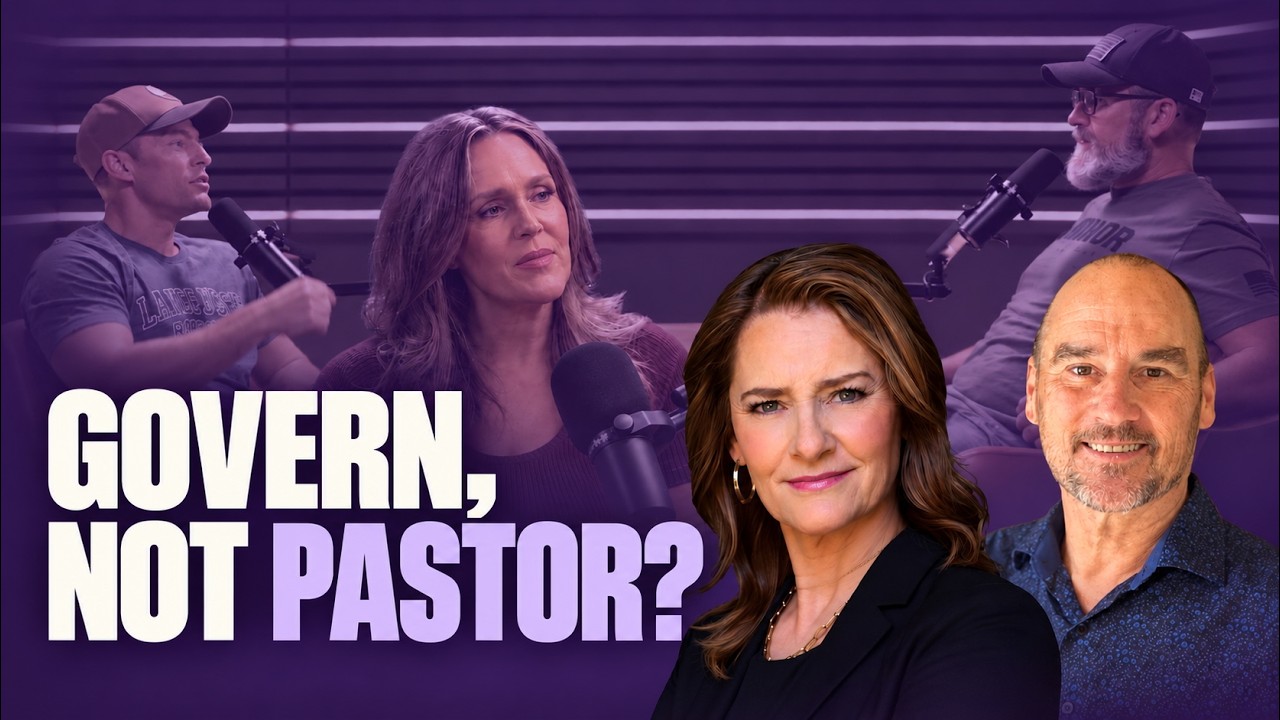
🔗 **Source:** [The Alisa Childers/Josh Howerton Debate: Who’s Right About Leadership?](https://www.youtube.com/watch?v=AQGdD3-EJr0)
> [!note]+ Document Notes
> tags: [church-governance, church-accountability, spiritual-abuse, new-apostolic-reformation, ecclesiology, evangelicalism]
> author: Julie Roys and Lance Ford
> source: Roys Report (YouTube)
> reference: https://www.youtube.com/watch?v=AQGdD3-EJr0
> date created: 2026-10-03 20:02
>
> > [!info] Generated analysis — not the author's words. Sections below are machine-written
> > from the captured source. Only text inside `> [!quote]` blocks is verbatim from the author.
> > Do not quote or attribute any other line to the named author.
>
> > [!warning] Auto-caption artifacts and speaker-attribution note. This is a two-host commentary
> > episode: Julie Roys and Lance Ford play clips from a podcast conversation between pastors Josh
> > Howerton (Lakepointe Church, Dallas area) and Josh McPherson (Grace City Church, Wenatchee,
> > Washington), plus clips of Alisa Childers and Landon Schott, and comment between them. None of
> > the four quoted parties appears live. Captions garble most names: Howerton shows up as
> > "Howardon," "Howton," "Howard," "Howardson," and "Howardton"; McPherson as "McFersonson,"
> > "McFerson," and "M. Fearson"; Childers as "Lisa Childers," "Elisa Childers," "Childressers," and
> > once as "children's"; Schott as "Shot"; Lakepointe as "Lakeoint"/"Lake Point"; Wenatchee as
> > "Wanachi"; filmmaker Nathan Apffel as "Appfell"/"Afel"; pastor Ryan Visconti as
> > "Viscanti"/"Viscani"; Grace Community Church elder Hohn Cho as "Han Show"; Eileen Gray as "Eileen
> > Gay"; and James Robison as "James Robinson." The name of the original podcast is captioned as
> > "the research podcast," which this analysis can't confirm. The captions mark speaker changes
> > only with `>>` and often drop them, so attributions between Roys and Ford below rest on
> > self-references ("Lance, you've served on a lot of boards," "as a woman," "my writing life") and
> > are labeled "likely" where the turn boundary is unclear. Inside the played clips, the two Joshes
> > trade short affirmations ("That's right," "Yeah"), so individual lines are assigned only where
> > the hosts or context name the speaker. Quotes preserve the caption text as transcribed.
>
> # 🏷️ Title: The Alisa Childers/Josh Howerton Debate: Who’s Right About Leadership?
>
<!-- deep-read:sections start -->
## 🧭 Table of contents
- [📝 Summary](#-summary)
- [📖 Main content](#-main-content)
- [🗒️ Notes](#️-notes)
- [📚 References](#-references)
- [🗣️ Paraphrase](#️-paraphrase)
- [📰 Newsletter](#-newsletter)
- [✅ Action items](#-action-items)
- [🧪 Hypotheses](#-hypotheses)
- [📊 Methodology](#-methodology)
- [❓ Questions](#-questions)
- [🔮 Future research](#-future-research)
- [💡 Implications](#-implications)
- [🧠 Learning styles assessment](#-learning-styles-assessment)
- [📊 Accessibility assessment](#-accessibility-assessment)
- [🌍 DEIB assessment](#-deib-assessment)
- [✅ Logical validity](#-logical-validity)
- [🛡️ DARVO analysis](#️-darvo-analysis)
- [🎯 Conclusion](#-conclusion)
## 📝 Summary
- **What happened.** In a 1 hour 23 minute episode of The Roys Report uploaded to the Roys Report YouTube channel on 2026-10-02 (also released that day as audio and a transcript at roysreport.com), investigative reporter Julie Roys and author Lance Ford revisit an older podcast conversation between pastors Josh Howerton and Josh McPherson. Clips from it recirculated after filmmaker Nathan Apffel posted a reel, and apologist and podcaster Alisa Childers then posted that McPherson's statements ("We're here to govern, not pastor"; "I get nervous with the word accountability") describe "the defining feature of the new apostolic reformation." Howerton answered on X that he'd been taken out of context, and fellow pastor Landon Schott said in a clip that anyone attacking Howerton is "evil" and "religious scum."
- **The claim.** Roys and Ford argue that the full podcast makes Childers's concern stronger, not weaker. Their case: McPherson's "15 keys for a wartime board" (00:10:56) set out a governance model in which the pastor receives vision from God, the board confirms it, criticism gets filtered by insiders, compassion is treated as a vulnerability, and the board's job is to "strengthen the hand" of an "anointed man." Howerton's on-podcast affirmations ("That's right," "that's important") put him inside that model even though he later describes a board that outvotes him.
- **Why it matters.** The hosts say "thousands, probably tens of thousands of young pastors" learn from these men (Ford, 00:11:39, unsourced estimate). For a reader leaving the New Apostolic Reformation (NAR), the episode separates two questions people often blur: whether a pastor belongs to the NAR, and whether a church structure reproduces its single-anointed-leader governance. Both hosts say the second question is the one that matters.
- **Key stakeholders.** Josh Howerton and Josh McPherson (heard only in clips); Alisa Childers (heard and quoted from her posts); Landon Schott of Mercy Culture Church and Ryan Visconti of Generation Church (defenders, quoted or summarized by the hosts); Lakepointe congregants and former members whom Roys says she has interviewed; elders and board members at churches that adopt the model.
- **Risks and tradeoffs.** The hosts quote the original podcast at length, which gives this episode more primary material than a reaction to a 90-second clip. They still select what to play, and the full original episode isn't linked in the description, so a viewer can't check what was left out. The hosts' commentary also mixes argument with personal characterization ("gross," "arrogant," "bully," "WHO IN THE HELL DO YOU THINK YOU ARE?"), and several of their claims about Howerton (plagiarism, spiritual-abuse accusations from former members) are asserted with no source shown in the episode.
- **Bottom line.** On governance, the hosts make a scripture-anchored case (Acts 15, Acts 20, 1 Peter 5, Matthew 20 and 23, 1 Corinthians 12) that "govern, not pastor" and "the Lord anoints a man" are not New Testament ecclesiology, and they credit Howerton's statements about elder pushback "in isolation." Their conclusion that Childers was "100% right" (Roys, 01:10:42) is their judgment; Howerton's and McPherson's own fuller explanation of the 15 keys exists only in the clips the hosts chose to play.
## 📖 Main content
- **Framing the dispute.** Roys opens with a cold open of four voices: McPherson ("monarchy not democracy"), Howerton's board question, Childers's warning, and Schott's "you're evil" (00:00:00). She then stages a joke about wives calling husbands "sir," playing a clip in which a man (the context suggests Howerton) says his wife Jana calls him "sir." Ford jokes that his wife Sherry owes him "40 years worth of sers" and Roys says she owes her husband Neil the same (00:01:29 to 00:02:10). The bit sets up the hosts' later charge of misogyny. It also pairs a separate clip with the governance dispute, which a viewer should weigh as framing rather than evidence.
- **Two questions, not one.** Ford states the episode's thesis: "This is not primarily an episode about whether Josh Howardon is a member of the New Apostolic Reformation." The larger questions are whether the governance model is biblical and whether it is safe, "because those are not the same question" (00:02:55 to 00:03:38).
- **What Childers said, and what she clarified.** Roys reads Childers's post: the NAR's defining feature is "apostle governed churches where you have one man whether they use the word apostle or not at the top who directly hears from God." Roys then stresses that Childers later wrote "Do I think Howardon is NAR? I truly hope not" and asked Howerton to distance himself from the teaching (00:05:49). This clarification matters for fairness: much of the pushback rebutted a membership charge Childers had explicitly declined to make.
- **Howerton's response.** Roys reads his X post in full (00:06:35 to 00:08:45). His points: false accusations against pastors are now too frequent to answer; he recently recorded a podcast warning against modern "big A" apostles; he just spent two days in prayer and SWOT evaluation with Lakepointe's elders; he has lost votes and "gladly" deferred; one elder is assigned to his personal discipleship; each summer he asks elders what to keep, start, and stop doing; and the clip was 90 seconds from a podcast "whose only focus was how pastors can prepare their churches for online mobs." Roys says she's "glad" for those statements while saying she doubts them "given the interviews I've done with former members" (00:08:45). She names two image-repair tactics in the post, "bolstering" (pointing to 600 to 700 upcoming baptisms) and "counterattack and victimhood" (00:09:28).
- **Was it only about online mobs?** Ford says no: the original podcast laid out "15 keys to a wartime board," which McPherson says he wrote 15 years ago, covering board and staff construction (00:10:12 to 00:10:56). Roys calls Howerton's "only focus" claim a reason to question whether he's "arguing in good faith" (00:11:39).
- **The board as a vulnerability.** The two Joshes compare a church board to the Death Star's weak point: "good men in the wrong seats are the Death Star vulnerability" (00:13:06). Roys, who has her own board, says a healthy board exists "to love, support, guide, and if necessary, rebuke the pastor"; Ford adds it must be able to say "you cannot continue in this role" (00:13:49 to 00:14:35).
- **Unity over diversity.** McPherson says his board values "unity over diversity" and that a board that continually confronts the pastor is made of "yesmen to a louder voice" (00:16:03). Ford grants the "legitimate point" that outside pressure isn't automatically correct, then names the closed loop: agreement becomes courage and disagreement becomes capitulation (00:16:46). Roys argues unity requires diversity and that the Josh's definition is conformity (00:17:30). Ford links this to Mark Driscoll's demands on the Mars Hill elders; Roys notes Driscoll has spoken at McPherson's church and conferences (00:18:12 to 00:18:56).
- **Critics as "demonic liars."** Howerton describes running case studies on internet "mobbings" with his board twice a year from his first year (00:14:35 to 00:15:20). In a later clip, board members reviewing such cases conclude "these people are demonic liars," and one of the Joshes adds that a healthy board can "chuckle at mob attacks" and "dismiss" "fake outrage" (00:21:05 to 00:21:49). Note that the same clip also says some case studies involved a pastor "in egregious sin" who "needed to be rebuked or removed." The hosts argue this trains boards to classify outside criticism before evaluating its content (00:22:33 to 00:23:19).
- **"You weren't in the room."** One of the Joshes describes Skyping in pastors to tell boards "the rest of the story" behind watchdog coverage (00:27:40). Roys grants that "reporting can be incomplete" but calls "you don't know the whole story" "one of the oldest defenses" of unhealthy institutions, citing Phil Johnson's claim of undisclosed "exculpatory evidence" in the Eileen Gray case and a later finding by Grace Community Church elder Hohn Cho that went the other way (00:29:07 to 00:29:50). Both examples are her own reporting history; the episode doesn't show the documents.
- **Heaven down, not pew up.** The theological center: McPherson tells his board "we are here to represent God to the people. You are not here to represent the people to God," says "Our job at this table is to hear from God," and calls himself "God's anointed and called man" whose vision gets "confirmed" by the team: "monarchy not democracy" (00:32:47 to 00:34:14). Ford's son hears it as the pope's role as vicar of Christ (00:35:01). Ford calls "heaven down, not pew up" "a Mark Driscollism." Roys names it the "Moses model," which she says ARC and Calvary Chapel churches also teach, and answers with Acts 2 (00:37:19 to 00:38:02).
- **Confirmation versus shared discernment.** Ford's strongest argument: "confirmation is not the same thing as shared discernment." If the leader receives the vision and the plurality validates it, the direction of authority is already set. Acts 15 instead reads "it seemed good to the Holy Spirit and to us" (00:39:30 to 00:40:13). Ford says he isn't calling McPherson a heretic, but the principle is "dangerously close to assigning church leaders a mediating role that belongs to Christ alone" (00:40:57).
- **Govern, not pastor.** McPherson says "We're here to govern, not pastor" and Howerton replies "that's important" (00:44:35). Visconti's defense, as Ford summarizes it, is that McPherson only distinguishes governing from pastoral care. Ford answers that Acts 20:28 and 1 Peter 5:2 give elders both oversight and shepherding (00:45:20 to 00:46:03). Roys relays a former Lakepointe member's account that Howerton said "I don't shepherd people" (00:46:49), single-source and unnamed.
- **Accountability makes him "nervous."** The clip that drew the most attention: McPherson says a board member who thinks his job is accountability "probably wouldn't be on my board very long," that "I get nervous with the word accountability," and that "Private shouldn't have the ability to tell the lieutenant where where we go" (00:47:31 to 00:48:13). Howerton then asks whether he means strategy rather than morality, and McPherson agrees that a pastor "straying on his marriage" is the board's business (00:48:58). Roys argues that exempting everything but sexual and criminal sin mirrors Driscoll's "controversy, not scandal" defense, which left bullying and retaliation unaddressed (00:49:41 to 00:50:24).
- **The anointed man.** A clip: successful businesses have "two or three guys at the top," "the Lord never anoints a committee," "The Lord anoints a man," and the team's purpose "is to help strengthen the hand of the anointed man," with the Moses-model objection waved off as "Moses is in the Bible" (00:54:01 to 00:54:44). Ford answers that the question is whether Jesus set Moses as a model for the church, and says he did not (00:55:29 to 00:56:15).
- **CEOs, gifting, and empathy.** McPherson's keys include "generals, not soldiers," CEOs over "a guy who works an 8 to5," "leaders of men, not pastors of people," "gift of governance, not gift of compassion," "Character is a given," and "not emotionally manipulated by misplaced empathy" (00:56:15 to 01:04:04). He says he avoided engineers, doctors, and attorneys on his board. Ford says the elder qualifications in 1 Timothy 3 and Titus 1 are about character, not command experience, and that Romans 12's "administration" isn't what McPherson means by governance (01:01:56). Roys reads a C.S. Lewis line about men and women needing each other's virtues and says the model has "no place for softer virtues like compassion or empathy" (00:58:25 to 00:59:51).
- **Mob-proof means survivor-proof.** Roys's central question: a board trained to be skeptical of outsiders, watchdogs, criticism, and "misplaced empathy" needs someone checking that it "hasn't become survivorproof, too" (01:06:16). Ford adds the board's first job becomes protecting "the golden goose" (01:07:01).
- **Who evaluates criticism.** McPherson says he submits criticism of himself to his executive team, and his board told him "we don't receive criticism from someone we wouldn't seek counsel from" (01:08:32 to 01:09:14). Ford notes the evaluators are the same team selected under the governance philosophy: "That's not no accountability, but it isn't independent accountability either" (01:09:14 to 01:09:57).
- **The caveat for Howerton.** Ford flags that Howerton pushes back in the podcast: his eight-person board keeps "at least one break tapper," currently two lawyers, because he is "very comfortable with a ton of risk" (01:11:26 to 01:12:08). Ford's question: if that's Howerton's conviction, why does he affirm McPherson's stronger claims throughout (01:12:08 to 01:12:51)?
- **The response as a case study.** Roys argues the past days enacted the podcast's own script: Childers's critique was called a false accusation, Schott called her "evil and religious scum," and Visconti, per Roys, warned of "false witness," slander, and "sewing discord" and stressed she has no ecclesiastical relationship with these men (01:13:35). Ford answers that church discipline and public theological critique are different things, and "public teaching invites public examination" (01:14:18 to 01:15:01).
- **The NAR label, set aside.** Roys accepts Visconti's point that the NAR is more specific than a pastor believing God called him to lead, and says Howerton should be taken "at his word" on rejecting modern apostles. She argues he nonetheless "clearly believes in contemporary prophets on the order of Moses," and that "You don't have to be nar to build an unhealthy hierarchy" (01:15:45 to 01:17:14). The prophets claim is her inference from the podcast, not a position Howerton states.
- **Jesus' model and the close.** Ford cites Matthew 20:25-26 ("It shall not be so among you"), Matthew 23:8, and Acts 15 (01:17:14 to 01:18:38). Roys concedes Howerton's defense "in isolation" sounds "on track," says the full context "intensified" the hosts' concerns, and reads 1 Corinthians 12 (01:18:38 to 01:20:06). Ford's last line: healthy leadership is about "strengthening the body of Christ," not "strengthening the hand of the leader" (01:21:38). The episode closes with a donation ask offering a book for gifts of $50 or more (01:22:26).
- **Uncertainty flags.** Unsourced or single-source within the episode: the "tens of thousands of young pastors" estimate (00:11:39); Roys's statements about interviews with former Lakepointe members (00:08:45, 01:07:47); the former member's "I don't shepherd people" account (00:46:49); the plagiarism and plagiarized-apology claims, which the hosts say they show side by side but which this transcript can only partly confirm (00:24:03 to 00:25:29); and the claim that McPherson's conference has a Christian-nationalism focus (00:58:25). The 600 to 700 baptisms figure comes from the X post Roys reads, attributed to Howerton.
## 🗒️ Notes
#### ⏱️ [00:00:00](https://www.youtube.com/watch?v=AQGdD3-EJr0&t=0) The church leadership controversy
- Cold open of four clips: McPherson on vision and "monarchy not democracy," Howerton's board-accountability question, Childers's warning, and Schott defending Howerton.
> [!quote] [00:00:00]
> Friends, if you go to a church that is led this way, you are in a spiritually dangerous situation.
- Roys summarizes "the past week and a half" and quotes Childers: "There's only one king in the church and that is King Jesus" (00:00:45).
- Roys's sarcastic line that Childers "apparently does not know her place" introduces an unrelated "sir" clip and a host joke about wives owing husbands "40 years" of "sirs" (00:01:29 to 00:02:10).
#### ⏱️ [00:02:27](https://www.youtube.com/watch?v=AQGdD3-EJr0&t=147) Were the clips taken out of context?
- Roys: "Not just 90 seconds, not just one social media reel, the whole argument" is the episode's method (00:02:10 to 00:02:55).
- Ford separates the NAR-membership question from the governance question: is the model biblical, and is it safe (00:02:55 to 00:03:38)?
#### ⏱️ [00:03:47](https://www.youtube.com/watch?v=AQGdD3-EJr0&t=227) Alisa Childers challenges the model
- Origin: the original conversation was about "building a wartime church" for a culture the two pastors call hostile; Nathan Apffel's reel recirculated it (00:03:38 to 00:04:21).
- Childers reposted with a screen recording after learning of commentary she didn't want to endorse, then quoted McPherson's "govern, not pastor" and "nervous with the word accountability" lines (00:04:21 to 00:05:06).
- Childers's clarification, per Roys: "Do I think Howardon is NAR? I truly hope not." Roys: the label "doesn't settle the governance question" (00:05:49).
#### ⏱️ [00:06:38](https://www.youtube.com/watch?v=AQGdD3-EJr0&t=398) Josh Howerton responds
- Roys reads Howerton's X post: false accusations, a recent podcast against "big A" apostles, a two-day elder retreat with SWOT review, lost votes, an elder assigned to his discipleship, annual keep/start/stop feedback (00:06:35 to 00:08:01).
> [!quote] [00:08:01]
> Interpret your words in the worst possible light and make it sound like you're a deranged Nar guy.
- Roys calls the 600 to 700 baptisms reference "bolstering" and "made harder by things like this" "counterattack and victimhood," and says it likens Childers to "the online mob" (00:08:45 to 00:09:28).
#### ⏱️ [00:10:17](https://www.youtube.com/watch?v=AQGdD3-EJr0&t=617) Building a "wartime" church board
- Ford: the original podcast laid out "15 keys to a wartime board," not only online-mob preparation (00:10:12).
- McPherson in clip: "I have 15 keys for a wartime board that I wrote 15 years ago" (00:10:56).
- Ford's reach claim, unsourced: "thousands, probably tens of thousands of young pastors" replicate these models (00:11:39).
#### ⏱️ [00:12:28](https://www.youtube.com/watch?v=AQGdD3-EJr0&t=748) Are church boards a threat?
- Clip: "a church board can be a death star vulnerability" (00:12:23).
- Roys: a healthy board exists "to love, support, guide, and if necessary, rebuke the pastor" (00:13:49).
- Ford: a board must be able to say "you cannot continue in this role"; treating it as a vulnerability puts accountability "on the defensive" (00:14:35).
#### ⏱️ [00:15:14](https://www.youtube.com/watch?v=AQGdD3-EJr0&t=914) Church unity or forced conformity?
- Howerton describes twice-yearly board case studies on internet mobbings from year one (00:14:35 to 00:15:20).
- McPherson: "we value unity over diversity" and a board that confronts the pastor is "yesmen to a louder voice" (00:16:03).
> [!quote] [00:16:46]
> Agreement with the pastor can become evidence of courage. Disagreement with the pastor can become evidence that you've capitulated to outside voices.
- Roys: "unity is not conformity" (00:17:30). Ford and Roys connect the pattern to Driscoll and the Mars Hill elders (00:18:12 to 00:18:56).
- Ford calls the claim "manipulative" and asks "How stupid do you think we are" (00:19:40).
#### ⏱️ [00:20:38](https://www.youtube.com/watch?v=AQGdD3-EJr0&t=1238) Dismissing critics as online mobs
- Clip: board members reviewing case studies conclude "these people are demonic liars"; the same clip concedes some pastors were in "egregious sin" (00:21:05).
- Clip: "You know that your board's in a healthy place when they can chuckle at at mob attacks on the church" (00:21:49).
- Roys calls the "monetized websites" charge hypocritical and cites Apffel's work on pastors' income (00:21:49 to 00:22:33).
- Roys raises Howerton's plagiarism and a "misogynist" wedding-night joke, then plays a clip she says shows his apology was itself plagiarized (00:24:03 to 00:25:29).
#### ⏱️ [00:27:12](https://www.youtube.com/watch?v=AQGdD3-EJr0&t=1632) The "you weren't in the room" defense
- Clip: "unless you're there in the room hearing the conversation, seeing the situation, you probably don't have the whole story" (00:27:40).
- Roys grants "reporting can be incomplete" and that some sites are "really, really bad," then names the defense as institutional (00:28:22 to 00:29:07).
- Examples: Phil Johnson's "exculpatory evidence" claim in the Eileen Gray case and Driscoll's "if you only knew" claims to Jeremy Boring (00:29:07 to 00:30:34).
- Ford recalls Driscoll telling his side with Robert Morris and on James Robison's show, and the "We are not anonymous" response (00:31:17 to 00:32:03).
#### ⏱️ [00:32:59](https://www.youtube.com/watch?v=AQGdD3-EJr0&t=1979) Who hears from God?
> [!quote] [00:32:47]
> we are here to represent God to the people. You are not here to represent the people to God.
- McPherson: "Our job at this table is to hear from God" and "monarchy not democracy"; a board member raising a constituency's concern is told "You're gone" (00:33:31 to 00:34:14).
- Ford: his son reacted "he's playing pope, the vicor of Christ"; Ford declines to "push that comparison too far" (00:35:01).
- Roys names the "Moses model" and answers with Acts 2:17-18 (00:37:19 to 00:38:02).
#### ⏱️ [00:39:30](https://www.youtube.com/watch?v=AQGdD3-EJr0&t=2370) Shared discernment or rubber stamp?
> [!quote] [00:39:30]
> But confirmation is not the same thing as shared discernment.
- Ford contrasts Acts 15:28, "it seemed good to the Holy Spirit and to us," with a leader-receives, board-confirms model (00:40:13).
- Roys recounts confronting an Anglican bishop who wasn't used to being challenged and later faced a scandal (00:42:25 to 00:43:08).
- Ford: Christianity has a king, "but the king is not the senior pastor"; Ephesians 4 has leaders equipping the saints (00:43:52).
#### ⏱️ [00:44:44](https://www.youtube.com/watch?v=AQGdD3-EJr0&t=2684) "Govern, not pastor": is it biblical?
- Clip: "We're here to govern, not pastor." Howerton: "that's that's important, Josh" (00:44:35).
- Ford on Visconti's defense: Acts 20 and 1 Peter 5 make elders overseers who shepherd; "Biblical oversight is pastoral by its very nature" (00:45:20 to 00:46:03).
- Roys relays an unnamed former member's account of Howerton saying "I don't shepherd people" (00:46:49).
#### ⏱️ [00:47:46](https://www.youtube.com/watch?v=AQGdD3-EJr0&t=2866) When accountability becomes a threat
- Clip: key four, "strengthen pastor, not throttle pastor" (00:47:31).
> [!quote] [00:48:13]
> I get nervous with the word accountability >> because I think sometimes it it can be the way that men with less courage control men who have more courage
- Howerton asks whether McPherson means strategy, not morality; McPherson agrees a pastor "straying on his marriage" is board business (00:48:58).
- Roys ties "this might sound arrogant, but" to Driscoll and lists elder qualifications: gentle, not arrogant, not prone to anger (00:49:41 to 00:50:24).
- Ford on church ranks: presbuteros, diakonos, and poimen are household and community terms; Peter calls himself a "fellow elder" (00:52:34 to 00:53:18).
#### ⏱️ [00:54:20](https://www.youtube.com/watch?v=AQGdD3-EJr0&t=3260) Does God anoint a man or a body?
- Clip: "The Lord never anoints a committee. That's right. The Lord anoints a man." The team's purpose "is to help strengthen the hand of the anointed man" (00:54:44).
- Ford: "did Jesus establish Moses as a governing model for the New Testament church? He did not." (00:55:29 to 00:56:15).
#### ⏱️ [00:56:28](https://www.youtube.com/watch?v=AQGdD3-EJr0&t=3388) Should churches be run like businesses?
- McPherson: key nine, "generals, not soldiers"; he wanted "CEOs and business leaders" who are too busy for "meddling in my stuff" (00:56:15 to 00:56:56).
- Ford: 1 Timothy 3 and Titus 1 don't say "find CEOs" (00:57:40).
- Roys cites McPherson's church hosting a men's conference she says focuses on "hyper masculinity and Christian nationalism," and quotes C.S. Lewis (00:58:25 to 00:59:51).
#### ⏱️ [01:00:46](https://www.youtube.com/watch?v=AQGdD3-EJr0&t=3646) Can church governance lack compassion?
- Clips: key ten, "leaders of men, not pastors of people"; key eleven, "Gift of governance, not gift of compassion"; "Character is a given" (01:00:33 to 01:01:14).
- Ford: Romans 12 lists administration, but not the CEO-style governance meant here (01:01:56).
- Ford: "the context doesn't make it better, it makes it worse" (01:02:39).
#### ⏱️ [01:04:18](https://www.youtube.com/watch?v=AQGdD3-EJr0&t=3858) When "mob-proof" means survivor-proof
- Clip: key thirteen, "not emotionally manipulated by misplaced empathy"; a book recommendation captioned "emotional sabotage by Joe" (title and author unconfirmed); no "engineers, doctors, or attorneys" (01:04:04 to 01:04:48).
- Ford: under that rule Mr. Rogers wouldn't make the board (01:04:48). This is Ford's speculation about the Joshes' view.
> [!quote] [01:06:16]
> What I want to know is who's making sure that the board hasn't become survivorproof, too.
- Ford says he and Roys have heard stories "coming straight out of Lake Point" (01:07:47).
#### ⏱️ [01:08:43](https://www.youtube.com/watch?v=AQGdD3-EJr0&t=4123) Who gets to critique the pastor?
- McPherson submits criticism of himself to his executive team to decide whether to receive it (01:08:32).
- His board's rule: "we don't receive criticism from someone we wouldn't seek counsel from" (01:09:14).
- Ford: the evaluators were selected under the same philosophy, so it "isn't independent accountability" (01:09:57). Roys says as a woman she'd expect to be "written off as hysterical" (01:09:57 to 01:10:42).
#### ⏱️ [01:12:30](https://www.youtube.com/watch?v=AQGdD3-EJr0&t=4350) What the full context reveals
> [!quote] [01:11:26]
> We like to have one at least one break tapper.
- Howerton: an eight-person board with two lawyers; "I'm all seize opportunity" (01:12:08).
- Ford: why then affirm "Heaven down," "Monarchy," and "govern, not pastor" (01:12:08 to 01:12:51)?
- Roys: the backlash against Childers followed the podcast's own script for critics (01:12:51 to 01:13:35).
#### ⏱️ [01:14:32](https://www.youtube.com/watch?v=AQGdD3-EJr0&t=4472) Public teaching needs public scrutiny
- Ford: "church discipline and public theological critique are not the same thing"; Childers "is not attempting to dispose" Howerton (01:14:18).
> [!quote] [01:15:01]
> Listen, public teaching invites public examination.
- Ford notes the Joshes evaluate critics, journalists, and churches outside their own jurisdiction (01:15:01).
#### ⏱️ [01:15:41](https://www.youtube.com/watch?v=AQGdD3-EJr0&t=4541) Beyond the NAR label
- Roys accepts Visconti's narrower NAR definition and takes Howerton "at his word" on apostles (01:15:45).
- Roys's inference: he "clearly believes in contemporary prophets on the order of Moses" (01:15:45).
- Roys lists the model's traits and says "nares don't have a monopoly on it" (01:16:29 to 01:17:14).
#### ⏱️ [01:17:18](https://www.youtube.com/watch?v=AQGdD3-EJr0&t=4638) Jesus' model of church leadership
- Ford: Matthew 20, "It shall not be so among you"; Jesus "challenges the architecture from the outset" (01:17:14 to 01:17:55).
- Roys concedes Howerton's defense "in isolation" sounds "on track," then says the full context "intensified" the concerns (01:18:38 to 01:19:23).
- Ford: "The church doesn't need a more powerful man at the top. It doesn't need a braver atlas" (01:20:53).
#### ⏱️ [01:22:24](https://www.youtube.com/watch?v=AQGdD3-EJr0&t=4944) Support The Roys Report
- Roys's donation ask: gifts of $50 or more receive a book captioned as "Straight: A Compass for America's Church by David Dennis" (title and author spelling unconfirmed from captions) (01:22:26).
- Subscribe and review requests for Apple Podcasts, Spotify, and YouTube (01:23:09).
## 📚 References
The transcript itself contains no links; the following come from the video description or are primary sources for named entities. No URL here was fetched during this analysis; entities without a description link are named as text.
- [Episode page and transcript: "Here to govern, not pastor"](https://roysreport.com/podcast/here-to-govern-not-pastor/) (video description).
- [The Roys Report](https://www.roysreport.com) and [donation page](https://www.roysreport.com/donate) (video description).
- Original Josh Howerton and Josh McPherson podcast episode: not linked in the description; caption name ("the research podcast") unconfirmed.
- Alisa Childers's posts on the clip: quoted by Roys at 00:04:21 to 00:05:49; not linked.
- Josh Howerton's X post in response: read in full at 00:06:35 to 00:08:45; not linked.
- Ryan Visconti's X thread defending Howerton and McPherson: summarized at 00:45:20 and 01:13:35; not linked.
- Landon Schott clip: played at 00:00:00 to 00:00:45; not linked.
- Nathan Apffel, filmmaker of "The Religion Business," whose reel recirculated the clips (00:04:21).
- Lance Ford, "The Atlas Factor," cited by Roys at 00:41:41.
- Roys's prior reporting on John MacArthur, Grace Community Church, and the Eileen Gray case (00:29:07).
- Mark Driscoll's interview with Jeremy Boring, referenced at 00:29:50 and 00:49:41.
- C.S. Lewis quotation on masculine and feminine virtues, read at 00:59:08 (source work not named in the episode).
- Scripture cited by the hosts: Acts 2:17-18, Acts 15:28, Acts 20:28, 1 Peter 5:1-3, Ephesians 4:11-16, 1 Timothy 3, Titus 1, Romans 12, Matthew 20:25-28, Matthew 23:8-10, 1 Corinthians 12:21-25, Proverbs 12:18 (in the plagiarism clip), 1 Timothy 2:5 (paraphrased at 00:35:46).
## 🗣️ Paraphrase
- **The setup.** A podcast clip in which two megachurch pastors say elders are "here to govern, not pastor" and that "accountability" makes one of them "nervous" went viral again. Alisa Childers said the model matches the NAR's defining governance feature and called such churches spiritually dangerous, while saying she hoped Howerton wasn't NAR.
- **The defense.** Howerton says he's been misrepresented: his elders outvote him, an elder disciples him, he asks for annual feedback, he rejects modern apostles, and the clip came from a podcast about preparing for online mobs. Allies called Childers's critics evil, slanderous, or outside their jurisdiction.
- **The hosts' test.** Roys and Ford play much more of the original podcast to check the out-of-context claim. They find a 15-point board philosophy: pastor hears from God, board confirms, constituencies stay out, boards are trained to dismiss critics as "demonic liars," CEOs are preferred to empathetic members, and the team exists to strengthen "the anointed man."
- **The scripture argument.** They answer each point from the New Testament: shared discernment in Acts 15, elders who shepherd in Acts 20 and 1 Peter 5, the Spirit poured on all in Acts 2, Jesus' ban on lording it over others in Matthew 20, and the body that can't say "I don't need you" in 1 Corinthians 12.
- **The fairness concessions.** They grant that outside pressure isn't automatically right, that reporting can be incomplete, that Howerton keeps a "break tapper" on his board, that his statements "in isolation" sound right, and that he should be believed when he rejects modern apostles.
- **The verdict.** The full context, they say, made the concerns worse. The NAR label is a distraction: an unhealthy hierarchy doesn't need the NAR, and a church already has one head.
## 📰 Newsletter
**"We're here to govern, not pastor." Julie Roys and Lance Ford play the full podcast behind the viral clip, and they say context makes it worse, not better.**
When Alisa Childers warned that Josh McPherson's comments, with Josh Howerton agreeing, describe the NAR's signature governance model, the reply was that she'd ripped 90 seconds out of context. So The Roys Report did the obvious thing and played more of the source. What comes out is McPherson's "15 keys for a wartime board": a pastor who hears from God, a team that confirms, a board trained to "chuckle at" online criticism, CEOs preferred over the empathetic, and this line:
> "The Lord never anoints a committee. That's right. The Lord anoints a man."
Ford's sharpest point is a distinction worth keeping for any governance conversation, church or not: "confirmation is not the same thing as shared discernment." If one person receives the direction and everyone else validates it, the plurality on the org chart doesn't change where authority runs. Acts 15 reads "it seemed good to the Holy Spirit and to us," not "to James, and we agreed."
The episode is fair in places a commentary show doesn't have to be. Both hosts set the NAR label aside, accept Howerton's word that he rejects modern apostles, play his clip about keeping a "break tapper" lawyer on his board, and concede his defense sounds "on track" in isolation. It's also openly angry: expect "gross," "arrogant," and one shouted "WHO IN THE HELL DO YOU THINK YOU ARE?", plus claims about Howerton's plagiarism and former members that the episode asserts without showing sources.
If you've left a church where "you weren't in the room" ended every conversation, Roys's question is the one to take with you: when a board is built to be "mob-proof," who checks that it hasn't become survivor-proof too? Full episode and transcript: [roysreport.com/podcast/here-to-govern-not-pastor](https://roysreport.com/podcast/here-to-govern-not-pastor/).
## ✅ Action items
#### DevRel
- Developer advocacy: No direct action from this source; nearest relevance: Ford's "public teaching invites public examination" (01:15:01) applies to public talks and demos, which invite public critique from people outside your organization.
- Education: No direct action from this source; nearest relevance: the hosts' method (play the full source before judging a clip) is a teachable media-literacy step for workshop material on handling community controversies.
- Developer experience: No direct action from this source.
- Developer marketing: No direct action from this source; nearest relevance: Roys's "bolstering" label (00:09:28) names a response pattern (answer criticism with growth numbers) that marketing replies to criticism should avoid.
- Community management: Write into moderation guidelines that criticism gets evaluated on content, not on the critic's identity or presumed motive, the standard Ford states at 00:23:19.
- Internal/external/cross-project: No direct action from this source.
#### OSPO
- Policy & Governance: Check governance charters for the "confirmation, not discernment" pattern (00:39:30): if one role proposes and a body can only ratify, write in a path for the body to originate or reject direction.
- License Compliance: No direct action from this source.
- Security Management: No direct action from this source; nearest relevance: "you weren't in the room" (00:27:40) mirrors closed-door incident handling, where a disclosure policy should state what gets published and when.
- Software Inventory: No direct action from this source.
- Developer Support: No direct action from this source.
- Community Engagement: No direct action from this source.
- Strategic Alignment: No direct action from this source.
#### Community
- Maintainers: A maintainer group that only accepts criticism "from someone we wouldn't seek counsel from" (01:09:14) has closed itself to outside reports; review whether any escalation path depends on an insider vouching for the reporter.
- Contributors: No direct action from this source; nearest relevance: McPherson's "unity over diversity" (00:16:03) is a warning sign when onboarding treats disagreement as disloyalty.
- Sponsors: No direct action from this source.
- Ecosystem: No direct action from this source.
#### WordPress
- Core: No direct action from this source.
- Core Performance: No direct action from this source.
- Core AI: No direct action from this source.
- Core Program Team: No direct action from this source; nearest relevance: Ford's distinction between ratifying a leader's decision and deciding together (00:39:30) maps onto how release and roadmap decisions get made and documented.
- Mobile: No direct action from this source.
- Playground: No direct action from this source.
- Community: Incident response teams can use Roys's "survivor-proof" question (01:06:16) as a review prompt: does the process train reviewers to discount outside reports before reading them?
- Training: No direct action from this source.
- Marketing: No direct action from this source.
- Support: No direct action from this source.
- Design: No direct action from this source.
- Documentation: No direct action from this source.
- Photos: No direct action from this source.
- TV: No direct action from this source; nearest relevance: the auto-caption name errors here (four variants of "Howerton") are the same failure WordPress.tv caption review exists to catch.
- Polyglots: No direct action from this source.
- Accessibility: No direct action from this source.
- Meta: No direct action from this source.
- CLI: No direct action from this source.
- Hosting: No direct action from this source.
- Tide: No direct action from this source.
- Openverse: No direct action from this source.
- Themes: No direct action from this source.
- Plugins: No direct action from this source.
#### The WPOCC
- Programs: No direct action from this source.
- Projects: The WP Open Community Collective's governance work can borrow Ford's test (00:39:30): name who originates direction, not only who approves it.
- Funding experiments: No direct action from this source.
### FAIR
- Technical independence: No direct action from this source.
- Policies and covenants: The "strengthen the hand, not throttle" model (00:47:31) is the governance-capture shape anti-capture covenants guard against; a covenant should let the oversight body slow or stop the lead role, not only support it.
- Productized governance artifacts: A governance scorecard item could ask whether criticism of the top role is evaluated by a body that role selected (01:09:14).
## 🧪 Hypotheses
- Church boards whose members are chosen by the senior pastor and screened for "unity" overturn the senior pastor's proposals less often than boards elected by the congregation or appointed by an outside body, holding church size constant.
- Boards trained with "internet mobbing" case studies (00:15:20) rate an anonymized abuse allegation as less credible than untrained boards rate the same allegation.
- Congregations whose leaders teach a "Moses model" or "anointed man" governance theology produce more spiritual-abuse reports per 1,000 attenders than plural-eldership congregations, independent of whether the church self-identifies with the NAR.
- In public disputes between pastors and critics, pastor responses that use bolstering or counterattack (as Roys codes Howerton's post at 00:09:28) correlate with lower perceived trustworthiness among undecided readers than responses that address the specific claim.
- Viewers who see only the 90-second clip and viewers who hear the full original episode reach different judgments about whether the speakers endorse single-leader governance; the direction of the difference is the open question the hosts and Howerton dispute.
## 📊 Methodology
- **Board-independence study.** Survey board or elder minutes from a sample of nondenominational megachurches; code how members were selected and how often the senior pastor's proposals were amended, delayed, or rejected. Compare against denominational churches with external oversight.
- **Case-study priming experiment.** Randomly assign church board members to read either "mobbing" case studies or neutral governance material, then rate an anonymized allegation. Measure credibility scores and whether participants recommend investigation.
- **Governance-theology and harm.** Code public teaching (sermons, podcasts) for "anointed man," "Moses model," and "heaven down" language; match against independently documented abuse reports (lawsuits, third-party investigations). Control for size, region, and NAR self-identification.
- **Image-repair content analysis.** Apply Benoit's image-repair typology to a corpus of pastor responses on X to public criticism; run a reader panel on trustworthiness.
- **Clip-versus-full-context experiment.** Show one group the viral clip and another the full original episode (once located), then measure whether each judges the speakers to endorse unchecked pastoral authority. This directly tests Howerton's out-of-context claim against the hosts' rebuttal.
- **Limits.** The original podcast isn't linked in the description, so the hosts' selection can't be checked from this episode. The former-member accounts, plagiarism claims, and "tens of thousands" estimate are unsourced in the episode.
## ❓ Questions
- What does the original Howerton and McPherson episode contain beyond the clips played here, and what are all 15 of McPherson's keys? The hosts play or name at least keys two, four, nine, ten, eleven, and thirteen.
- Has Howerton addressed the specific "That's right" and "that's important" affirmations Ford lists at 01:12:51, as opposed to the NAR label?
- Who selects Lakepointe's elders and McPherson's board, and can either board remove its senior pastor? Neither the clips nor the X post say.
- What book is captioned as "emotional sabotage by Joe" at 01:04:04, and what does it argue about empathy?
- Does Roys's inference that Howerton believes in "contemporary prophets on the order of Moses" (01:15:45) match anything Howerton has said directly about prophecy?
- What did Visconti's thread say in full, given that the hosts both quote it as a useful correction (01:15:45) and criticize it as jurisdiction-gatekeeping (01:13:35)?
- How would the hosts distinguish their own "you're evaluating public teaching" stance from a critic who has never heard the full podcast, the standard they apply to others at 00:26:13?
## 🔮 Future research
- Empirical work on church governance structures and abuse outcomes, separating governance theology from movement labels like NAR, ARC, or Calvary Chapel, which Roys names at 00:37:19 as also teaching the Moses model.
- The history of "heaven down, not pew up" and related phrases; Ford attributes the phrase to Mark Driscoll (00:35:46), a claim that needs a dated primary source.
- Studies of how leadership training material frames external criticism, and whether "mob" framing changes how boards handle later abuse reports.
- New Testament scholarship on oversight and shepherding (episkopos, presbyteros, poimen) applied to modern board structures, building on the texts Ford cites.
## 💡 Implications
- **Practice.** Elders and board members can check their own structure against Ford's test: does the board ever originate direction, or only confirm it? And who outside the leader's selection reviews criticism of the leader?
- **Policy.** Church bylaws that let the senior pastor select and remove board members, and route criticism of himself through that board, create the closed loop Ford describes at 01:09:57, whatever the theology.
- **Security.** The "you weren't in the room" defense and undisclosed "exculpatory evidence" (00:29:07) parallel closed incident processes; transparency commitments on what gets published, and when, reduce the room for unverifiable claims on either side.
- **Education.** For people leaving the NAR, the episode shows that a church can reject the apostle label and still teach single-anointed-leader governance. Leaving the label doesn't mean leaving the structure.
- **Funding.** The hosts accuse critics' detractors of hypocrisy on "monetized websites" (00:21:49), and the episode itself ends with a donation ask (01:22:26). Watchdog and church funding both create incentives, and readers can weigh each side's.
## 🧠 Learning styles assessment
- Reading level estimate: Flesch Reading Ease 73.7 and Flesch-Kincaid Grade Level 6.1, computed over the 13,745-word transcript with a vowel-group syllable counter. Auto-captions insert their own sentence breaks, so the score reflects spoken, short-sentence delivery more than written text would; the theological vocabulary (ecclesiology, presbuteros, mediating role) runs above that grade level.
#### 👀 Visual learners
- Present: the show plays video clips of the original podcast and, per Roys at 00:24:46, a side-by-side plagiarism comparison. The transcript can't confirm what's on screen beyond that.
- Improve: an on-screen list of McPherson's 15 keys, with which ones get played, would let viewers track the argument; a simple diagram of "leader receives, board confirms" versus "body discerns together" would show Ford's central distinction.
#### 🔊 Aural learners
- Present: strong. It's a two-voice audio conversation with clear clip breaks, also released as an audio podcast.
- Improve: the clips use short overlapping affirmations ("That's right," "Yeah") that make it hard to hear which Josh said what; a host naming each speaker after each clip would help.
#### 🗣️ Verbal learners
- Present: the hosts define terms (bolstering, Moses model, shared discernment) and give Greek terms with meanings (presbuteros, diakonos, poimen at 00:52:34).
- Improve: "NAR" gets one working definition (Childers's, at 00:05:06), and "SWOT" and "big A apostle" aren't explained for newcomers.
#### 🧩 Kinesthetic learners
- Present: minimal; commentary format with no exercise.
- Improve: a short checklist for evaluating one's own church board (who selects members, who reviews criticism, can the board remove the pastor) would turn the argument into a task.
#### 🧠 Logical learners
- Present: the episode follows a claim-clip-rebuttal structure, and Ford's confirmation-versus-discernment argument (00:39:30) and closed-loop argument (00:16:46) are stated as mechanisms.
- Improve: several claims rest on unsourced estimates and unnamed former members; listing which claims are documented and which are reported would help readers who weigh evidence.
#### 🧑🤝🧑 Social learners
- Present: two hosts who build on each other's points and reference shared reporting history.
- Improve: no discussion prompt is offered; a set of questions for small groups or elder boards would fit the episode's purpose.
#### 🧘♀️ Solitary learners
- Present: 23 chapters and a published transcript make self-paced review possible.
- Improve: a short written summary of the 15 keys with the hosts' rebuttal to each would serve readers who prefer to work alone.
#### 🌿 Naturalistic learners
- Present: biblical body and flock imagery (shepherd, sheep, one body with many parts) gives organic metaphors in place of military ones.
- Improve: Ford's contrast between military rank and household or body terms (00:51:50 to 00:53:18) could be drawn out as a direct comparison of the two metaphor families.
## 📊 Accessibility assessment
#### Screen reader semantics
- Present: the description lists 23 timestamped chapters with descriptive titles and links a full transcript on roysreport.com.
- Improve: the description's social links render as "/ reachjulieroys" with no platform in the link text; screen readers announce them as near-identical fragments.
#### Keyboard navigation
- Present: YouTube's native player controls and chapter markers are keyboard reachable.
- Improve: nothing specific to this video beyond the player defaults.
#### Contrast and readability
- Present: not assessable from the transcript; any on-screen text overlays (clip captions, the plagiarism comparison) can't be checked here.
- Improve: if quoted posts are shown on screen, they should meet 4.5:1 contrast and stay on screen long enough to read.
#### Text resizing and reflow
- Present: not applicable to the video itself; the linked transcript page is the text alternative.
- Improve: the transcript page should reflow at 320 CSS px width without horizontal scroll.
#### Media and captions
- Present: auto-generated captions plus a published transcript on the episode page.
- Improve: auto-captions misspell every principal name (four or more variants of Howerton, three of McPherson, four of Childers) and garble a book title ("emotional sabotage by Joe") and the donation URL ("roarsupport.com/donate"). Speaker changes are marked only by `>>`, and often not at all, during rapid clip exchanges. The description credits licensed background music ("Dark Cinematic Bass"); whether it plays under speech can't be judged from the transcript.
#### Forms and interactions
- Present: not applicable; the only interaction is an external donation link.
- Improve: not applicable.
#### Standards reference
- WCAG 2.2 AA: 1.2.2 Captions (Prerecorded) is met in form, but proper-noun errors and missing speaker identification reduce accuracy in a video whose argument depends on who said what. 1.2.1 Audio-only and Video-only and 1.2.3 Audio Description or Media Alternative are supported by the published transcript, if it's linked from the video page (it is, in the description). 2.4.4 Link Purpose (In Context) fails for the social-handle fragments in the description. 2.4.6 Headings and Labels is supported by the descriptive chapter titles. 1.4.7 Low or No Background Audio is a AAA criterion, noted only because music is licensed for the episode.
## 🌍 DEIB assessment
#### Cultural breadth
- Present: the discussion stays within U.S. evangelical megachurch culture (Dallas, Wenatchee, Phoenix) and Anglican experience from Roys.
- Improve: no global or non-Western church governance is considered, though the hosts' scripture argument doesn't depend on U.S. context.
#### Inclusive language
- Present: Roys explicitly says the C.S. Lewis quote is "not saying anything about trans" (00:59:51), signaling care about how it might be heard. The hosts use "brothers and sisters" throughout.
- Improve: the clips' language is male-only ("leaders of men," "the anointed man," "dudes"); the hosts note this as a concern but don't address how women's leadership fits their own alternative model.
#### Neurodiversity support
- Present: 23 chapters and a repeated claim-clip-rebuttal pattern make the 83 minutes predictable.
- Improve: fast clip exchanges with overlapping affirmations are hard to follow by ear; on-screen speaker labels would help.
#### Representation
- Present: a woman investigative reporter and a male author co-host, discussing a woman critic and male pastors. Roys speaks directly from a woman's vantage point at 00:58:25 and 01:09:57.
- Improve: no former Lakepointe or Grace City member speaks in the episode; their accounts are relayed secondhand, and no defender of the two Joshes is given time to respond on air.
#### Psychological safety
- Present: the hosts center survivors' interests with the "survivor-proof" question (01:06:16) and treat critics' concerns as worth hearing.
- Improve: the opening "sir" segment and the personal insults ("gross," "verbal insanity," "How stupid do you think we are") model the same dismissiveness the hosts criticize, and could push away viewers who sympathize with Howerton and might otherwise weigh the argument.
## ✅ Logical validity
#### Strong reasoning
- **Separating the label from the structure (00:02:55, 00:05:49, 01:15:45).** The hosts split "Is Howerton NAR?" from "Is the model biblical and safe?" and accept Howerton's denial on the first. That move answers the defense's main rebuttal on its own terms and keeps the argument on governance.
- **Confirmation versus shared discernment (00:39:30 to 00:40:13).** Ford argues from mechanism: if the vision originates with one person and the plurality validates it, the plurality doesn't share discernment. Acts 15:28 serves as a concrete counterexample. It's a valid structural argument that holds even if the board sometimes votes against the pastor.
- **The closed feedback loop (00:16:46).** Ford grants the opposing premise (outside pressure isn't automatically right), then shows that the "yesmen to a louder voice" framing makes any disagreement evidence of compromise, so no disagreement can count as independent. This is a fair internal critique.
- **Independence of the evaluator (01:09:14 to 01:09:57).** Ford notes that criticism of the leader is reviewed by a team selected under the leader's own philosophy, and is careful to say "That's not no accountability, but it isn't independent accountability either." The claim is calibrated to the evidence.
- **Scripture-to-claim matching (00:45:20 to 00:46:03, 00:57:40).** For "govern, not pastor," Ford cites the two passages (Acts 20:28, 1 Peter 5:2) where the same people are told to oversee and shepherd, a direct textual answer to the specific claim.
- **Public teaching and jurisdiction (01:14:18 to 01:15:01).** Ford distinguishes church discipline from public theological critique and points out the defenders' standard would also bar the Joshes' own critiques of outsiders. It's a consistency argument, and it's valid.
#### Fallacies
- **Ad hominem and poisoning the well (00:24:03 to 00:25:29).** *Location:* "I'm considering the source. So, Josh Howton has been at the center of a number of online controversies," followed by plagiarism and a joke. *Weakness:* Howerton's plagiarism, if established, doesn't bear on whether the governance model is biblical, which the hosts said was the question. *Fix:* keep character evidence for questions about Howerton's credibility as a witness to his own board's practice, and say so.
- **Guilt by association (00:18:56, 00:35:46, 00:58:25).** *Location:* "Driscoll, we know has spoken numerous times at McFersonson's church... I think you see his influence"; "heaven down, not pew up... that's a Mark Driscollism." *Weakness:* shared speaking venues and a shared phrase don't show shared practice. *Fix:* the hosts already compare the content directly (Driscoll's "arrogant, but" pattern); that comparison carries the point without the association.
- **Straw man by extension (00:38:46).** *Location:* "that anybody could believe this um that only they can hear from God." *Weakness:* the clips say "Our job at this table is to hear from God" and that the pastor brings the vision; they don't say others can't hear from God. Roys's version is stronger than the quoted claim. *Fix:* argue that the structure treats the pastor as the channel for direction, which the clips do support.
- **Speculative attribution (01:04:48).** *Location:* "I guarantee you just looking at him and his sweater, these guys would say there's no way you're going to be on our board." *Weakness:* Ford assigns a view to the Joshes about a hypothetical person. *Fix:* rest the point on what McPherson said (no engineers, doctors, or attorneys; "misplaced empathy").
- **Inference stated as fact (01:15:45).** *Location:* "he clearly believes in contemporary prophets on the order of Moses." *Weakness:* Howerton doesn't say this; it's inferred from his agreement with McPherson. *Fix:* "his agreement implies" rather than "he clearly believes."
- **Unsourced quantity (00:11:39).** *Location:* "thousands, probably tens of thousands of young pastors." *Weakness:* no audience data. *Fix:* cite download or follower counts, or drop the number.
- **On the other side: false dilemma and appeal to consequences (00:15:20 to 00:16:03, 00:08:01).** *Location:* "Boards that aren't unified are actually ones that are filled with yesmen" (clip). *Weakness:* a board can disagree from conviction; the claim defines that possibility out. Howerton's post also argues that responding to critics would mean "you would never get anything accomplished for the kingdom" (00:06:35), which doesn't address whether the critique is accurate. *Fix:* address the content of the critique, as Howerton partly does when he describes lost votes.
#### Tone of voice
- Investigative and pastoral, with open anger. Roys alternates between reporter's framing ("Now, this is important. Childers later clarified...") and personal reaction ("That's honestly just gross," "it almost leaves you without words"). Ford is the more measured voice, building scripture arguments and adding concessions ("we would agree with that," "I'm not saying that Josh McFersonson's a heretic"), though he also shouts "WHO IN THE HELL DO YOU THINK YOU ARE?" at 00:37:19 if the caption's speaker turn is right. The opening "sir" bit and closing "Oh, I mean, sir" joke frame the episode with sarcasm aimed at the clips' gender views.
## 🛡️ DARVO analysis
- **Scope.** DARVO (Deny, Attack, Reverse Victim and Offender) describes how a person accused of wrongdoing responds. Here no one is accused of abuse in this exchange; Childers criticized public teaching. The framework still applies to how each side handles criticism, and the hosts invoke related image-repair categories themselves (00:09:28). Each item below cites the timestamp where it occurs, and separates the quoted parties from the hosts.
- **Deny.** Howerton's X post (read at 00:06:35 to 00:08:01) denies the characterization: "false accusations," "paint untrue pictures," "I believe the opposite of a nar view," and "All of this is the exact opposite of the picture insinuated in the OP." Two parts of that denial need separating. The NAR denial answers a charge Childers had explicitly declined to make (00:05:49), so it isn't evasion of her actual claim. The "only focus was... online mobs" claim (00:08:01) is a factual denial the hosts contest with the 15-keys clips (00:10:12 to 00:10:56); a viewer can't settle it without the full original. Howerton's description of lost votes and elder feedback is a substantive denial with specifics, which the hosts note but say they doubt from former-member interviews (00:08:45).
- **Attack.** On the defenders' side: Schott, in the clip at 00:00:00 to 00:00:45, says "if you're attacking Josh Howard, you're evil" and calls detractors "religious scum" motivated by "jealousy, insecurity, competitiveness." That attacks the critics' character and motive rather than the critique. Howerton's post describes critics as interpreting "your words in the worst possible light" to make him "sound like you're a deranged Nar guy" (00:08:01), which attributes bad faith without naming Childers. Visconti, as Roys summarizes him at 01:13:35, raised "false witness," slander, and "sewing discord," which are serious moral charges; the hosts paraphrase, so his exact wording isn't in the transcript. Inside the original podcast, critics are pre-labeled "demonic liars" and "demonic lying mobs" (00:21:05) and "Christian watchdog" coverage is called manipulation (00:27:40), which sets up attacks on future critics before any specific criticism arrives. On the hosts' side: Roys's turn to plagiarism and a misogynist joke (00:24:03), "That's honestly just gross" (00:09:28), Ford's "How stupid do you think we are" (00:19:40), and "verbal insanity" (01:02:39) attack the speakers' character alongside the argument. These are commentary, not a response to accusation, so they aren't DARVO, but they are the same move the hosts fault in Schott.
- **Reverse victim and offender.** Roys argues Howerton's "made harder by things like this" line (00:08:45) casts the pastor as the injured party and Childers as part of "the online mob" (00:09:28). The text supports her reading of the framing; whether it's sincere frustration or tactic can't be shown from the post. The opening of Howerton's post, "It is very difficult when people share false accusations of pastors" (00:06:35), centers the pastor's experience. The hosts apply the same frame to Driscoll: "instead of apologizing to the victim, he plays the victim" (Roys, 00:30:34), which is a claim about a different person in a different dispute and shouldn't be carried over to Howerton without evidence. The hosts' strongest structural point (01:12:51 to 01:13:35) is that the original podcast pre-installs the reversal: when criticism comes, boards are taught to see the pastor as the target of a mob, so the critic becomes the aggressor by default.
- **Emotional cues and rhetoric.** Schott's clip uses contempt ("disgusting," "gross," "scum"). Howerton's post uses scale and weariness ("so frequently and at such a scale"; "you would never get anything accomplished for the kingdom"). The hosts use sarcasm (the "sir" bit) and anger ("How dare you?").
- **Assessment.** Applied with timestamps, the pattern is clearest in the defenders' statements: Schott's character attack (00:00:00 to 00:00:45) and the podcast's pre-labeling of critics as "demonic liars" (00:21:05). Howerton's own post contains a partial pattern (denial plus a bad-faith attribution plus a burden-on-the-pastor frame) but also substantive specifics about elder pushback that DARVO doesn't account for. The hosts are not responding to an accusation, so DARVO doesn't describe them, but their ad hominem passages weaken their claim to be modeling the "evaluate the content, not the critic" standard Ford states at 00:23:19.
## 🎯 Conclusion
- **Bottom line.** Roys and Ford play much more of the original Howerton and McPherson podcast than the viral clip and argue that McPherson's "15 keys for a wartime board" describe single-anointed-leader governance: the pastor hears from God, the board confirms, critics are pre-labeled, and empathy is treated as a risk. Their scripture argument against "govern, not pastor" and "the Lord anoints a man" is specific and checkable. Their concessions are real: they set aside the NAR label, accept Howerton's denial of modern apostles, and air his "break tapper" clip.
- **What to take seriously.** Ford's distinction that "confirmation is not the same thing as shared discernment" and Roys's "survivor-proof" question are the two transferable tools. Both apply to any organization where one role proposes and a hand-picked body approves.
- **What to flag rather than repeat.** The "tens of thousands of young pastors" estimate, the former-member accounts, the plagiarism claims, and Roys's inference about Howerton and "contemporary prophets" are unsourced or inferential within the episode. The original podcast isn't linked, so the hosts' selection can't be checked from here.
- **For a reader leaving the NAR.** The episode's sharpest lesson is Roys's line that "You don't have to be nar to build an unhealthy hierarchy" (01:17:14): a church can reject the apostle title and still teach the structure.
- **Next steps.** Find and listen to the original Howerton and McPherson episode in full, read the transcript at roysreport.com, and compare Howerton's later statements on elder authority against the affirmations Ford lists at 01:12:51.
## 🔄 Refactor Appendix — The Alisa Childers/Josh Howerton Debate: Who’s Right About Leadership?
> Density: 2-5 Literature atoms (H3), 0-3 Permanent candidates (H4).
> Defaults: 3 Literature, 1 Permanent. Resonance filter: if you can't
> articulate in one line why a claim matters, drop it.
### 📚 Literature Split Pad
#### [H1] Pastor claims to represent God to the people
> [!quote] [00:32:47]
> we are here to represent God to the people. You are not here to represent the people to God.
**Context & use**:
- 00:32:47, McPherson in the original podcast explaining his key "heaven down, not pew up" to his board; Howerton prompts it.
- The primary-source line behind the hosts' "Moses model" and "vicar of Christ" critiques; quote it rather than the hosts' paraphrase when citing the model.
**Tags**: #xref #share
<!-- atomicity: 1 idea ✓ -->
#### [H2] Defining dissent as capitulation closes the feedback loop
> [!quote] [00:16:46]
> Agreement with the pastor can become evidence of courage. Disagreement with the pastor can become evidence that you've capitulated to outside voices.
**Context & use**:
- 00:16:46, Ford responding to McPherson's "yesmen to a louder voice" claim, after granting that outside pressure isn't automatically right.
- Names the mechanism that makes a board structurally unable to disagree, which applies well beyond churches.
**Tags**: #xref #articleseed
<!-- atomicity: 1 idea ✓ -->
#### [H3] Board confirmation is not shared discernment
> [!quote] [00:39:30]
> But confirmation is not the same thing as shared discernment.
**Context & use**:
- 00:39:30, Ford answering the defense that McPherson's vision is "confirmed by plurality," followed by Acts 15:28.
- A one-line test for any governance body: does it originate direction, or only ratify it?
**Tags**: #xref #aphorisms
<!-- atomicity: 1 idea ✓ -->
#### [H4] Mob-proof boards risk becoming survivor-proof
> [!quote] [01:06:16]
> What I want to know is who's making sure that the board hasn't become survivorproof, too.
**Context & use**:
- 01:06:16, Roys after McPherson's "not emotionally manipulated by misplaced empathy" key.
- The review question for any process designed to resist outside pressure: what does it do to a true report?
**Tags**: #xref #share
<!-- atomicity: 1 idea ✓ -->
#### [H5] Public teaching invites public examination
> [!quote] [01:15:01]
> Listen, public teaching invites public examination.
**Context & use**:
- 01:15:01, Ford answering the defense that Childers has no ecclesiastical relationship with these pastors.
- Separates church discipline from public critique; applies to anyone teaching on a public platform.
**Tags**: #xref #aphorisms
<!-- atomicity: 1 idea ✓ -->
### 🧠 Atomic Split Pad
#### [P1] Ratification isn't shared discernment
**Claim** (one sentence, Courtney's voice): When one person receives the direction and a group only confirms it, the group is a validator, not a co-discerner, however many members it has.
**Evidence pointer**: [[#H3]]
**Scope & conditions**: Holds for church boards, open-source steering groups, and nonprofit boards where the lead role proposes and the body can only approve or decline. Weakens where the body can originate proposals and has a record of doing so; Howerton's lost votes (00:07:18) would be counter-evidence if documented.
**Links**:
- [[Unaccountable single authority predicts abuse independent of theology]] — because extends
- [[You don't have to be NAR to build an unhealthy hierarchy]] — because applies-in church governance outside the NAR label
- [[Open-source governance and BDFL risk]] — because applies-in project leadership
<!-- atomicity: 1 idea ✓ -->
### ✏️ Fleeting Queue
- [F1] Find the original Howerton and McPherson podcast episode and list all 15 "wartime board" keys #fleeting #inbox
- [F2] Identify the book captioned as "emotional sabotage by Joe" (01:04:04) #fleeting #inbox
- [F3] Read the roysreport.com transcript to confirm speaker attributions the captions leave unclear #fleeting #inbox
### → Things 3 (max 2 actions)
- [ ] Read the Roys Report episode transcript to confirm Roys and Ford speaker turns — roysreport.com/podcast/here-to-govern-not-pastor #things
- [ ] Draft the "ratification isn't shared discernment" permanent note — church and open-source governance #things
<!-- deep-read:sections end -->
📄 **Full text:** [[Full Document Contents/Articles/The Alisa ChildersJosh Howerton Debate Who’s Right About Leadership.md|The Alisa Childers/Josh Howerton Debate: Who’s Right About Leadership? by Julie Roys and Lance Ford]]
## Highlights
- [00:16:03] it's hitting me as you're talking. Um, because we have a very unified board >> and and and and sometimes accusation is, oh, they're a bunch of yesmen. No, no, no. These are the strongest men I know who by nature are not yesmen, but we're unified because we value unity over diversity. I'll get to that in a moment. But here's the irony is people think that that diversity is strength, but when you when you have a board of of men who these guys aren't yes men, I'm trying to if a board is confronting you continually and disagreeing with you, it's because they're yesmen to a louder voice. >> Oh wow. >> Does that make sense? >> Frequently. >> Okay, we have to stop here because this [00:16:46] deserves some careful thought. Uh they're trying to make a legitimate point that outside pressure doesn't automatically mean outside pressure is correct. And we would agree with that. But watch what this framework can produce. Agreement with the pastor can become evidence of courage. Disagreement with the pastor can become evidence that you've capitulated to outside voices. And that can become a close feedback loop. A board member says, "Uh, pastor, I think the critics have a point, and the system already contains an explanation. You're being pressured. You're emotionally compromised. You're ([View Highlight](https://read.readwise.io/read/01m423x08htnb88b2ycpbnvwhx))
- Note: [H2] Defining dissent as capitulation closes the feedback loop
- Tags: atom/literature/h2
- [00:32:03] Robert Morris with a microphone in hand was telling his side of the story. And then not long thereafter, he's on TV with James Robinson doing the same thing. And it's just fabrication and totally Mark Driscoll was the victim even to the point and Julie you'll remember when when Martin Driscoll said oh well we don't even know who the people are that have been hurt. I I don't even know who I would apologize to remember and then then that's when the whole they started a even a uh I think a Facebook group called we are not anonymous. Exactly. No, Mark Driscoll, you know exactly who we are. [00:32:47] >> Yeah. And if you look at the notes that that were published online of these meetings, the charges were very specific. The incidents were very specific. He knew exactly who they were talking about. >> Yeah. >> So, up until this point, someone might argue, hey, this is simply strong organizational leadership. But then the podcast moves from organizational strategy into explicit theology. And this is where the conversation becomes more deeply problematic. >> Two, heaven down, not pew up. >> This is so important. >> This was huge. I told the guys, we are here to represent God to the people. You are not here to represent the people to God. >> Are you going to talk about your complaint department thing? >> What part? We don't have one. ([View Highlight](https://read.readwise.io/read/01m423wxr2fthdd97hfhsbexfj))
- Note: [H1] Pastor claims to represent God to the people
- Tags: atom/literature/h1
- [00:39:30] Now, one of the defenses that we've heard is but the vision is confirmed by plurality. Okay? But confirmation is not the same thing as shared discernment. And that is a really important distinction because if I say that God gives me the vision and you confirm it, well, I've already established where the vision originates. So I've already established the direction of authority and the plurality is just functioning primarily as a validator of what the leader says he has received already. And so that's very different from the New Testament picture that we see in Acts 15 for example. The [00:40:13] early church is facing an enormous theological controversy in Acts 15. And what do they eventually say? They say it seemed good to the Holy Spirit and to us. They didn't say it seemed good to James and the rest of us confirmed it. Uh, you know, I mean, it's it's crazy. Uh, not the anointed man received the direction and the board validated it. No, it seemed good to the Holy Spirit and to us. Now, that is what shared discernment really is. That's a plurality. actually discerning together under the headship of Jesus. And this is why I think that this heaven down ([View Highlight](https://read.readwise.io/read/01m423x2pdqbdghsbcyzjktv5s))
- Note: [H3] Board confirmation is not shared discernment
- Tags: atom/literature/h3
- [01:05:34] the that's the mentality that these guys have. >> Well, yeah. And and I think this whole idea that I mean, it seems to me that they're saying like the biggest danger that we have in the church with with pastors or with these boards is that they're they're too compassionate. They're too empathic. And and I'm sitting here from my standpoint, my vantage point of reporting all these controversies and scandals and places where boards have just completely lacked any any emotional empathy at all for for people. And I think this is where they're not acknowledging that yes, some people can be emotion emotionally [01:06:16] manipulated, but the opposite danger is also real. Boards can be discipled to treat compassion as a weakness. They can become more concerned about protecting the institution from accusations than listening carefully to people who say they've been harmed. And when an accountability structure has already been trained to be mobbroof, skeptical of outsiders, skeptical of watchd dogs, skeptical of criticism, and worried about misplaced empathy. What I want to know is who's making sure that the board hasn't become survivorproof, too. Well, and that that's that that's what all this creates because once again and and you heard it earlier in the dialogue from these guys is that the board is ([View Highlight](https://read.readwise.io/read/01m423x586vgsvbywyjqfpe22k))
- Note: [H4] Mob-proof boards risk becoming survivor-proof
- Tags: atom/literature/h3
- [01:14:18] McFersonson are preaching to outsiders on their podcast, Viscanti is arguing that only their church members can critique them. It's nuts. But it fits remarkably well inside this very framework that the podcast teaches. Exactly. And I think it's helpful to also note that church discipline and public theological critique are not the same thing. Alisa Childers is not attempting to dispose Josh Howardon as pastor. She's evaluating public teaching. So, two pastors published a public episode teaching other pastors how they believe church governance should work. And Christians don't need ecclesiastical jurisdiction over a [01:15:01] teacher in order to evaluate public teaching by scripture. Because if that was the standard, then none of us could evaluate teachers outside of our own congregation. And ironically, Howardon and McFersonson themselves spend portions of the podcast evaluating critics, journalists, watchd dogs, pastors, boards, and churches over which they have no ecclesiastical jurisdiction. Listen, public teaching invites public examination. >> Oh, the irony. That was such a good point. I mean, they're doing the exact thing that they seem to be critiquing everyone else of doing. But let's return ([View Highlight](https://read.readwise.io/read/01m423x7rtm5dpfj15fsvqhj9t))
- Note: [H5] Public teaching invites public examination
- Tags: atom/literature/h3