The Biggest Disaster in Christian Music | Keith Green
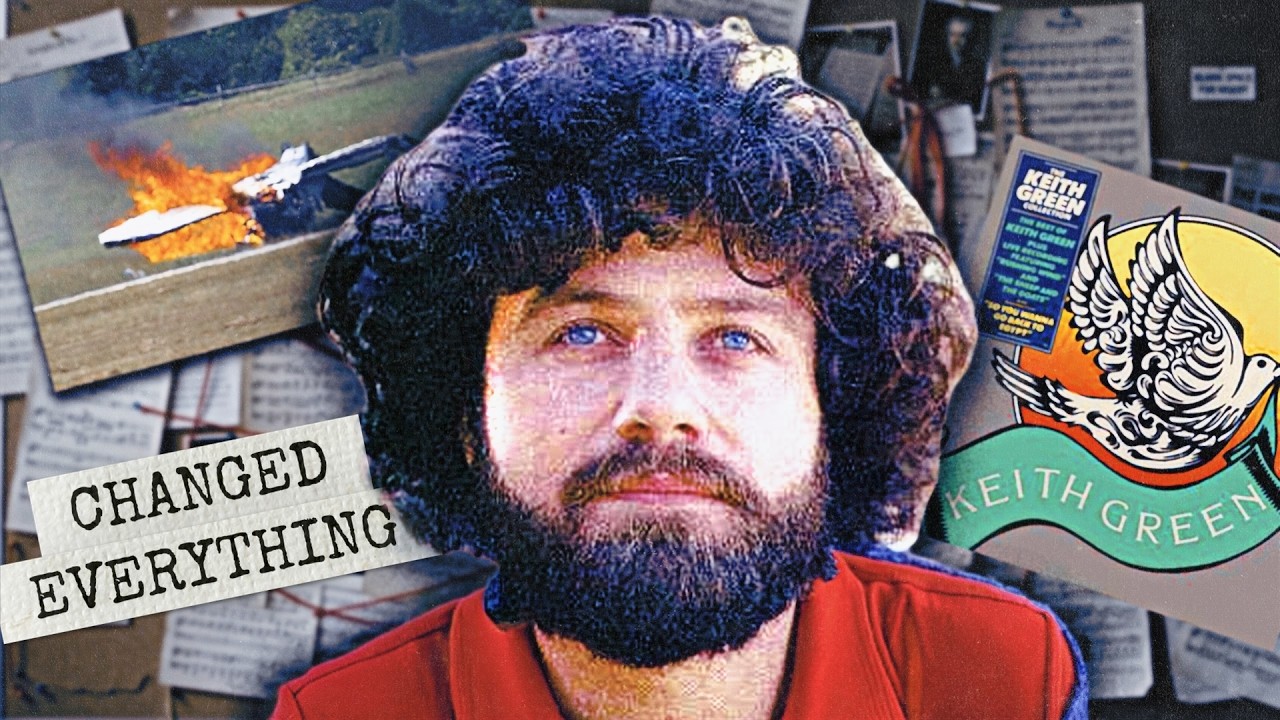
🔗 **Source:** [The Biggest Disaster in Christian Music | Keith Green](https://www.youtube.com/watch?v=jMNaYso_wlc)
> [!note]+ Document Notes
> tags: [keith-green, christian-contemporary-music, pay-what-you-can-distribution, jesus-movement, last-days-ministries, 1982-plane-crash]
> author: Jonathan Allen Wright
> source: Jonathan Allen Wright
> reference: https://www.youtube.com/watch?v=jMNaYso_wlc
> date created: 2026-09-10
>
> > [!info] Generated analysis — not the author's words. Sections below are machine-written
> > from the captured source. Only text inside `> [!quote]` blocks is verbatim from the author.
> > Do not quote or attribute any other line to the named author.
>
> # 🏷️ Title: The Biggest Disaster in Christian Music | Keith Green
>
<!-- deep-read:sections start -->
## 🧭 Table of Contents
- [📝 Summary](#-summary)
- [📖 Main Content](#-main-content)
- [🗒️ Notes](#️-notes)
- [📚 References](#-references)
- [🗣️ Paraphrase](#️-paraphrase)
- [📰 Newsletter](#-newsletter)
- [✅ Action Items](#-action-items)
- [🧪 Hypotheses](#-hypotheses)
- [📊 Methodology](#-methodology)
- [❓ Questions](#-questions)
- [🔮 Future Research](#-future-research)
- [💡 Implications](#-implications)
- [🧠 Learning Styles Assessment](#-learning-styles-assessment)
- [📊 Accessibility Assessment](#-accessibility-assessment)
- [🌍 DEIB Assessment](#-deib-assessment)
- [✅ Logical Validity](#-logical-validity)
- [🛡️ DARVO Analysis](#-darvo-analysis)
- [🎯 Conclusion](#-conclusion)
- [🔄 Refactor Appendix](#-refactor-appendix--the-biggest-disaster-in-christian-music--keith-green)
### 🔗 References
- [🗒️ Notes — full timestamped walkthrough](#️-notes)
- [🧪 Hypotheses / ❓ Questions — the unsourced technical claims about the crash](#-questions)
- [🔄 Refactor Appendix — the pay-what-you-can economics atoms](#-refactor-appendix--the-biggest-disaster-in-christian-music--keith-green)
## 📝 Summary
- **What happened.** A biographical video essay traces Keith Green's life from a child performer signed to Decca Records at 11, through a 1968 runaway period of drug use and searching across Eastern religions, to a 1975 conversion to Christianity, a fast-rising Contemporary Christian Music career on Sparrow Records, a 1979 break from standard concert and album pricing in favor of pay-what-you-can distribution funded by mortgaging his house, the founding of Last Days Ministries in Garden Valley, Texas, and his death on July 28, 1982, at age 28, in a plane crash that also killed his two eldest children, Josiah (3) and Bethany (2), and the entire eight-member Smalley family who were visiting as prospective ministry partners.
- **Why it matters.** The video's namable, specific claim — that Green asked to leave his label because "I'm ministering and a pastor doesn't charge for admission to a church, so why should I charge admission to a concert?" (00:18:43) — is a concrete, documented departure from standard music-industry economics, not a vague characterization of generosity. It's presented with numbers: 200,000+ copies of one album shipped by May 1982, 61,000 of them free, plus a standing buy-one-give-one policy once his albums reached Christian bookstores.
- **Key stakeholders.** Keith Green (subject); Melody Green (wife, co-writer, and the person who ran Last Days Ministries for 14 years after his death); Billy Ray Hearn (Sparrow Records executive who signed and later released Green from contract); the Smalley family (John, Didi, and their six children, killed in the same crash); pilot Don Burmeister; the more than 140 people who lived and worked at the Last Days property at the time of the crash.
- **Risks and tradeoffs.** The video states specific technical facts about the crash — an overload figure, a center-of-gravity offset, an insurance-mandated 1,000-hour requirement the pilot hadn't met, and a flight examiner "de-certified by the FAA the very next month" (00:26:59) — with no inline citation to a source document (NTSB report, news archive, etc.) in the transcript. These are exactly the kind of precise, high-confidence claims that deserve independent verification before being repeated elsewhere, especially given the subject matter.
- **Bottom line.** The durable, checkable content here is economic, not narrative: a working Christian musician who structured pricing, publishing, and distribution around explicit conviction rather than standard retail terms, sustained across at least two years and 200,000+ units. The plane crash that ended his life and his children's lives is treated in this note as a documented fact requiring care and accuracy, not as material to build an argument on.
## 📖 Main Content
Keith Gordon Green was born October 21, 1953, in Brooklyn, New York, to a Jewish family that practiced Christian Science — the video's own gloss on that movement, founded by Mary Baker Eddy in the late 1800s, is that it treats illness as illusion (00:00:44–00:01:10). Musical lineage ran through the family: his maternal grandfather founded Jaguar Records, his mother trained as a singer at Carnegie Hall, and by 11 Keith had signed with ASCAP and Decca Records as a prospective teen idol, appearing on network game and variety shows before the Osmond-driven teen-idol wave eclipsed him and Decca dropped him by 14 (00:01:49–00:05:30).
At 15, in 1968, Green ran away from home into the late-1960s Los Angeles counterculture — heavy marijuana and LSD use pursued explicitly as a spiritual search, plus a survey of Eastern religions and world faiths (00:06:11–00:07:58). The video includes an archival clip, apparently Green's own voice, describing how every tradition he investigated "gave some credit to Jesus Christ" while claiming its own equal standing — a framing he says tipped him toward Christianity specifically (00:07:28–00:08:14). He married fellow seeker Melody Steiner in 1972; both later described years of "cycling through philosophies the way other couples cycle through apartments" (00:09:03). In 1975, at 21 and — per the video — "absolutely miserable" despite a CBS staff songwriter job, Green attended a Friday-night Bible study at singer-songwriter Randy Stonehill's invitation and became a Christian that night; Melody followed a week later (00:09:15–00:10:01).
The video is explicit that Green's conversion produced an immediate, total-commitment response rather than a gradual one: within months, the Greens began housing strangers — Stonehill first, then a young mother and infant, a woman managing depression, people in active addiction recovery, runaways, and people leaving prostitution or unwanted pregnancy. Neighbor complaints in the Woodland Hills suburb didn't stop it; the Greens bought the house next door and rented five more on the same block, eventually running roughly seven properties under what locals called "the Greenhouse" (00:11:12–00:12:40). This is presented as the prototype for what became Last Days Ministries.
Career-wise, Sparrow Records founder Billy Ray Hearn signed Green in 1976 after crawling past kids seated on the floor to reach a packed church concert (00:13:16–00:14:21). *For Him Who Has Ears to Hear* (1977) included "Your Love Broke Through," later ranked by CCM magazine as the fifth-greatest album in Christian music history per the video (00:14:30–00:15:30). The follow-up, *No Compromise* (title drawn from a Melody-written line), pushed harder — "Asleep in the Light" is described as "a beat down of comfortable Christianity set to music" — and it's what pulled mainstream TV and radio attention toward Green just as he made his most consequential career decision (00:15:30–00:18:08).
**The economics pivot, which is this note's central atomized claim.** In 1979, after *No Compromise* took off, Green asked Sparrow to release him from his contract because he "didn't feel good about charging money for his music anymore" (00:18:08–00:18:21), reasoning on camera or in archival audio that a pastor doesn't charge admission to church, so he shouldn't charge admission to a concert (00:18:43). Sparrow let him go but retained half the publishing and international distribution rights — a detail worth flagging, since it means Green's own pricing model didn't fully sever his work from Sparrow's commercial terms (00:18:55). Green and Melody then mortgaged their house to self-finance the next album, *So, You Want to Go Back to Egypt* (1980, featuring Bob Dylan on harmonica), started their own label, Pretty Good Records, and shipped it to anyone who asked for whatever they could afford — including nothing (00:18:55–00:20:13). By May 1982 the video states more than 200,000 copies had shipped, 61,000 of them free; once his catalog reached Christian bookstores, buying one cassette got the purchaser a second free copy to give away (00:20:13–00:20:46). The video's own framing: "This was not a prosperity gospel thing. It was actual conviction" (00:20:57).
The Greens relocated the whole community to a 9-acre property in Garden Valley, Texas, in 1979, formally organizing as Last Days Ministries — a printing operation reaching tens of thousands of households with newsletters and tracts, plus a 10-week residential discipleship program. By 1982 more than 140 people lived and worked there full-time. The video is careful to present a divided record on the community's intensity: many participants describe it as the most formative season of their lives, while others raise concerns about pressure tactics and blurred personal boundaries — the video attributes some of this to Green's "John the Baptist temperament" and his association with revivalist mentors like Leonard Ravenhill (00:21:08–00:23:22).
**The crash.** On the evening of July 28, 1982, Green offered to fly a visiting family, John and Didi Smalley and their six children — prospective ministry partners — on a scenic tour over the property in a leased 1973 Cessna 414 twin-engine plane rated for six to seven passengers. Thirteen people boarded: Green, his children Josiah (3) and Bethany (2), the eight-member Smalley family, and pilot Don Burmeister, a former Marine aviator. The video states the aircraft was overloaded — the specific overage figure is garbled in the auto-generated transcript ("an estimated lb," 00:27:48), though a later line gives 450 lb overweight with full fuel tanks and a center-of-gravity offset described as "over 4 in aft of the limit" (00:28:01–00:28:11). The video also states Burmeister had only recently cleared a check ride removing a restriction limiting him to non-twin-engine aircraft, that his insurance carrier required 1,000 logged hours he hadn't met, and that the examiner who signed off his check ride was decertified by the FAA the following month "due to a documented history of incomplete or sub-standard checks" (00:26:47–00:27:26). None of these figures carry an inline source citation in the transcript; they should be independently verified before being repeated elsewhere, given what's at stake in getting them right.
The plane lifted off around 7:20 p.m., struggled for altitude almost immediately, and crashed into trees about a mile from the runway. There were no survivors. Green was 28. Melody, six weeks pregnant with their fourth child, Rachel, was at home with one-year-old Rebecca. Green, Josiah, and Bethany are buried together in Lindale, Texas; their shared headstone reads "Gone to be with Jesus" (00:28:38–00:29:56). The video's narrator states a personal view distancing the deaths from a "died from his own generosity" reading some viewers have offered, characterizing it instead as a lapse in judgment compounded by a pilot who should have declined the flight — framed explicitly as the narrator's own impression ("this feels like," 00:29:33), not as an investigative finding.
After the crash, Melody and producer Bill Maxwell assembled two posthumous albums from Green's unfinished material, *The Prodigal Son* (1983) and *Jesus Commands Us to Go* (1984), released as demos and rough takes. Melody ran Last Days Ministries for 14 years, closed its original form in 1996 with a stated theology of ministry "seasons," and has since continued it online, distributing Green's work for free. The Texas property later passed to Teen Mania Ministries, which itself closed in 2015. Green was inducted into the Gospel Music Hall of Fame in 2001, received the ASCAP Crescendo Award in 2006, and was honored with permanent displays at Nashville's Christian and Gospel Music Museum when it opened in October 2025 (00:31:06–00:32:30).
## 🗒️ Notes
#### ⏱️ [00:00:00](https://www.youtube.com/watch?v=jMNaYso_wlc&t=0s) Cold open
- The video opens on the crash before any biography: a plane built for seven, 13 aboard, doesn't clear the trees.
- Immediately pairs two facts as the video's stated hook: Green had been a Christian "for exactly seven years," and in that time he "mortgaged his house to give away his albums for free."
- States he "confronted the Christian music world aggressively" — sets up the economics conflict covered later.
#### ⏱️ [00:00:44](https://www.youtube.com/watch?v=jMNaYso_wlc&t=44s) Birth and a split religious upbringing
- Born October 21, 1953, Brooklyn, NY. Jewish family that practiced Christian Science (founded by Mary Baker Eddy, late 1800s; video's gloss: treats sickness as illusion).
- Green (in an archival clip, per the transcript) describes not learning he was Jewish until about 12, raised on "the teachings of Jesus plus the teachings of metaphysics" blended together.
- Musical lineage: maternal grandfather George Bennett founded Jaguar Records; mother trained as a singer at Carnegie Hall; father also worked in music.
#### ⏱️ [00:03:44](https://www.youtube.com/watch?v=jMNaYso_wlc&t=224s) Child star to has-been by 14
- 1965, age 11: youngest person ever signed to ASCAP, for the composition "A Go-Go Getter." Same year, signed a five-year Decca Records contract; father Harvey acted as business manager.
- Appeared on *I've Got a Secret* (May 3, 1965), Jack Benny, Steve Allen, and Joey Bishop programs; debut single "Cheese and Crackers," B-side "I Want to Hurt You."
- The Osmonds/Donny Osmond wave eclipsed him; Decca cut him from the contract. Video states that by 14, Green "felt like a has-been."
#### ⏱️ [00:06:11](https://www.youtube.com/watch?v=jMNaYso_wlc&t=371s) Runs away at 15; drugs and Eastern religion as spiritual search
- 1968, age 15: ran away from home "looking for two things, music and spiritual truth."
- Heavy marijuana, LSD, and other psychedelics — video states this wasn't purely recreational, that Green believed the era's narrative about drugs producing spiritual breakthrough.
- Surveyed Eastern religions and "every framework" he could find; an archival clip has him describing how Muslim, Christian, Yogananda-tradition, and Buddhist framings he encountered all "gave some credit to Jesus Christ," which he says tipped his search toward Christianity specifically — his own theological interpretation, presented as personal testimony rather than the narrator's independent claim about those traditions.
#### ⏱️ [00:09:15](https://www.youtube.com/watch?v=jMNaYso_wlc&t=555s) Marriage, career, misery, and the 1975 conversion
- Married Melody Steiner on Christmas Day (year not restated at this point in the transcript, though the 1972 meeting is stated earlier); both spent 1973 "cycling through philosophies the way other couples cycle through apartments," per Melody's later description.
- 1974: signed with CBS as a staff songwriter; he and Melody began co-writing as a team.
- 1975, age 21: employed, married, and "absolutely miserable." Singer-songwriter Randy Stonehill invited the couple to a Friday-night Bible study; Green became a Christian that night, Melody a week later. Green later said he'd been "lost in a fantasy" until, in his words, God's love "broke through" — the phrase that became the title of his best-known song.
#### ⏱️ [00:11:12](https://www.youtube.com/watch?v=jMNaYso_wlc&t=672s) Instant, total-commitment evangelism and "the Greenhouse"
- Stonehill (per the video) said Green's "zeal quite often got ahead of his emotional and spiritual maturity" — the video's own framing for why Green, once converted, became an unrelenting evangelist rather than a gradual convert.
- Within months, the Greens began housing people in crisis in their home: Stonehill first, then a young mother and infant, a woman managing depression, a person in active heroin addiction, runaways, people leaving prostitution, pregnant teenagers with nowhere to go.
- Neighbor complaints in Woodland Hills didn't stop the growth; the Greens bought the house next door and rented five more on the block. Locals called it "the Greenhouse" — the prototype for Last Days Ministries.
#### ⏱️ [00:13:16](https://www.youtube.com/watch?v=jMNaYso_wlc&t=796s) Sparrow Records and the "Your Love Broke Through" debut
- 1976: Sparrow Records founder Billy Ray Hearn crawled through a packed floor to reach a small Green church concert, then signed him — after Green admitted he'd already told Pat Boone's label he'd sign with them; the deal was reportedly sketched on a napkin at breakfast the next morning.
- *For Him Who Has Ears to Hear* (May 1977) included "Your Love Broke Through" and "You Put This Love in My Heart." CCM magazine later ranked it the fifth-greatest album in Christian music history, per the video.
#### ⏱️ [00:15:16](https://www.youtube.com/watch?v=jMNaYso_wlc&t=916s) *No Compromise* and the mainstream breakout
- Title drawn from a line Melody wrote in "Make My Life a Prayer." Melody later called it the album that "captured the absolute heart" of what Green wanted to say to other Christians.
- Included "Asleep in the Light," described in the video as a direct confrontation of "comfortable Christianity."
- This is the point mainstream TV and radio began seeking Green out, pulling him toward the secular attention he'd once been dropped from as a teen idol.
#### ⏱️ [00:18:08](https://www.youtube.com/watch?v=jMNaYso_wlc&t=1088s) 1979: leaving Sparrow over charging admission
- After *No Compromise*'s success, Green asked Sparrow to release him from contract — the video states he "didn't feel good about charging money for his music anymore," against the backdrop of Christian music becoming "a genuine industry" with bookstores, advertising, and sellout arena tours.
- Green's stated reasoning, per the video: "I'm ministering and a pastor doesn't charge for admission to a church, so why should I charge admission to a concert?"
- Sparrow released him but retained half the publishing and international distribution rights — the deal wasn't a clean break from commercial terms even as Green's own distribution model changed.
#### ⏱️ [00:19:08](https://www.youtube.com/watch?v=jMNaYso_wlc&t=1148s) Pretty Good Records and the Dylan cameo
- Green and Melody mortgaged their house to self-finance the next album and started their own label, named — per the video's description of Green's humor — Pretty Good Records.
- *So, You Want to Go Back to Egypt* (1980) features Bob Dylan playing harmonica on "I Pledge My Head to Heaven." The video reports Dylan called Green's debut album one of his favorites while they tracked the parts, with the caveat that "many people repeat that story" without independent confirmation — the video hedges this one appropriately.
#### ⏱️ [00:20:13](https://www.youtube.com/watch?v=jMNaYso_wlc&t=1213s) The pay-what-you-can numbers
- Green shipped the album to anyone who asked, for whatever they could afford — including free, if that's what was available.
- By May 1982: more than 200,000 copies shipped, 61,000 of them free, funded by the mortgaged house.
- Once carried in Christian bookstores, a standing policy gave buyers a second cassette free to give away. Video's framing: "This was not a prosperity gospel thing. It was actual conviction."
#### ⏱️ [00:21:08](https://www.youtube.com/watch?v=jMNaYso_wlc&t=1268s) Last Days Ministries in Texas: scale and a contested record
- 1979: the whole Greenhouse community relocated to a 9-acre property in Garden Valley, Texas, near Lindale, formally becoming Last Days Ministries.
- Rapid growth: a printing press reaching tens of thousands of households with newsletters and tracts, teaching tapes, and a 10-week residential program. More than 140 people lived and worked there full-time by 1982.
- The video presents a genuinely divided record here rather than picking a side: many describe the most formative spiritual season of their lives; others raise concerns about pressure tactics and blurred boundaries in the all-consuming community structure. Attributed partly to Green's "John the Baptist temperament" and his closeness to revivalist mentors like Leonard Ravenhill.
#### ⏱️ [00:24:03](https://www.youtube.com/watch?v=jMNaYso_wlc&t=1443s) Three categories of songs
- Category one — worshipful songs sung to God: "Oh Lord, You're Beautiful," and "There Is a Redeemer" (written by Melody, described as his catalog's most-sung composition).
- Category two — confrontational songs aimed at Christians: "Asleep in the Light," "The Sheep and the Goats," "So You Want to Go Back to Egypt." Green is quoted (per the video) saying, "I've never tried to be controversial. The truth is controversial enough."
- Category three — songs about his own conversion: "Your Love Broke Through" and "Grace by Which I Stand," described as his most musically complex and personally revealing work.
#### ⏱️ [00:25:09](https://www.youtube.com/watch?v=jMNaYso_wlc&t=1509s) Summer 1982: family, and the Smalleys' visit
- By summer 1982, Keith and Melody had three children — Josiah (3), Bethany (2½), Rebecca (1) — and Melody was six weeks pregnant with a fourth, Rachel.
- Earlier that spring, the Greens had returned from a trip to Europe energized about international missions and church planting.
- John and Didi Smalley, church planters with six children, visited to discuss ministry partnership. Green offered them a scenic aerial tour of the property that evening. An account (an unidentified interview subject in the video's transcript) describes a brief, unusual exchange with Green just before the flight, in which he asked that Rebecca "be raised to be a woman of God" if he didn't return.
#### ⏱️ [00:26:35](https://www.youtube.com/watch?v=jMNaYso_wlc&t=1595s) The plane, the pilot, and the crash
- Aircraft: a leased 1973 Cessna 414 twin-engine plane, rated for six to seven passengers. Pilot: Don Burmeister, a former U.S. Marine aviator who had only recently completed a check ride removing a restriction that had limited him to non-twin-engine aircraft.
- The video states the examiner who signed off that check ride was decertified by the FAA the following month over "a documented history of incomplete or sub-standard checks," and that Burmeister hadn't met his insurer's requirement of 1,000 logged flight hours or completed a required Cessna training course. None of these figures carry a cited source in the transcript.
- Thirteen people boarded: Green, Josiah, Bethany, the eight-member Smalley family, and Burmeister. The video states the aircraft was overloaded (the specific overage figure is garbled in the auto-generated transcript, appearing only as "an estimated lb") and separately gives 450 lb overweight with full tanks and a center-of-gravity offset described as over 4 inches aft of the limit.
- The plane lifted off around 7:20 p.m., struggled for altitude almost immediately, and crashed into trees about a mile from the runway. There were no survivors. Green was 28; Melody was at home, six weeks pregnant, with one-year-old Rebecca. He, Josiah, and Bethany are buried together in Lindale; their shared headstone reads "Gone to be with Jesus." The narrator states, as an explicitly personal impression rather than an investigative finding, that the crash "feels like a simple lapse in judgment combined with a pilot who should have made the call and said no."
#### ⏱️ [00:31:06](https://www.youtube.com/watch?v=jMNaYso_wlc&t=1866s) Legacy
- Two posthumous albums assembled by Melody and producer Bill Maxwell from unfinished material: *The Prodigal Son* (1983) and *Jesus Commands Us to Go* (1984), released as demos and rough takes.
- Melody Green ran Last Days Ministries for 14 years, closed its original form in 1996 ("For certain ministries, there are seasons"), and has since continued it online, distributing Green's work for free — continuity with the original pay-what-you-can model.
- Honors named in the video: Gospel Music Hall of Fame induction (November 27, 2001), ASCAP Crescendo Award (2006), permanent displays at Nashville's Christian and Gospel Music Museum (opened October 2025). The Texas property later passed to Teen Mania Ministries, which the video notes closed in 2015 "amid its own set of controversies," without detailing them.
## 📚 References
- [Video: The Biggest Disaster in Christian Music | Keith Green](https://www.youtube.com/watch?v=jMNaYso_wlc)
- Entities named in the video but not linked in the transcript, and not independently verified here (no network fetch performed for this note): Last Days Ministries, Sparrow Records, CCM magazine, the Christian and Gospel Music Museum (Nashville), the Gospel Music Hall of Fame.
## 🗣️ Paraphrase
Keith Green's story, as this video tells it, has two distinct halves that don't get equal weight in most retellings. The first half is a fast, well-documented arc: teen prodigy dropped by his label at 14, a runaway years marked by drugs and a genuine search across world religions, a 1975 conversion that turned him almost overnight into an uncompromising evangelist who filled his own house with people in crisis before he ever filled a recording contract. The second half is the part worth sitting with longer: once Green had industry success on his own terms — a hit debut, a confrontational second album pulling mainstream attention — he asked to be let out of his contract specifically because he no longer wanted to charge for his music, reasoning that a pastor doesn't charge admission to church. He and his wife mortgaged their house to fund a label that shipped records to anyone who asked, for whatever they could pay, sent free copies to those who had nothing, and gave away a second cassette with every one sold. That's not a stated intention or a marketing story — it's a documented, sustained distribution mechanism, running to 200,000-plus units and continuing after his death through his wife's ministry.
The video does not let the story end there, because it can't: Green, his two eldest children, and an entire visiting family of eight died together when an overloaded plane, flown by a pilot who hadn't met his own insurer's certification requirements, crashed a mile from the runway on July 28, 1982. The video states specific technical numbers about that crash — weight, center of gravity, hours logged, an examiner's decertification the following month — without citing where those numbers come from. They deserve to be checked before repeating them elsewhere. What the video gets right is refusing to resolve the tension between Green's conviction and the crash's apparent cause into a single tidy moral; it treats the economics story and the crash as two separate, both-true facts about the same short life.
## 📰 Newsletter
Keith Green gets cited constantly as an influence in Christian music circles, but the specific thing that made him unusual rarely gets named with numbers attached. This video does: in 1979, at the height of *No Compromise*'s success, Green asked out of his Sparrow Records contract because he didn't want to charge admission to what he considered ministry, then mortgaged his house to fund a label that shipped 200,000+ copies of his next album for whatever buyers could pay — 61,000 of them for free — plus a standing buy-one-give-one policy once bookstores carried his work. Worth a watch for anyone tracking how Christian creators have handled the tension between sustaining ministry work and monetizing it; the video also covers his death, alongside his two eldest children and a visiting family of eight, in a 1982 plane crash, with a level of factual detail about the crash's cause that's worth independently verifying before it gets repeated as settled fact.
## ✅ Action Items
#### DevRel
- Not applicable to this source — a biographical music-history video with no developer-relations, SDK, or community-program content.
#### OSPO
- Not applicable to this source — no open-source governance, licensing, security, or SBOM content appears anywhere in the transcript.
#### Community
- Not applicable to this source in the DevRel/OSS sense. If read loosely as a case study in community formation, Last Days Ministries (140+ live-in members, a 10-week residential program, and a contested internal record of both formative and pressure-heavy experiences) is a real-world data point for anyone studying high-intensity in-person community models — but nothing in the video maps to a maintainer/contributor/sponsor structure.
#### WordPress
- Not applicable to this source across all subteams (Core, Core Performance, Core AI, Core Program Team, Mobile, Playground, Community, Training, Marketing, Support, Design, Documentation, Photos, TV, Polyglots, Accessibility, Meta, CLI, Hosting, Tide, Openverse, Themes, Plugins) — the video never mentions WordPress or any WordPress product.
#### The WPOCC
- Not applicable to this source — no fellowship, funding, or governance content; unrelated to The WPOCC's remit.
#### FAIR
- Not applicable to this source — no federation, provenance, or governance-artifact content.
## 🧪 Hypotheses
- H1: A pay-what-you-can distribution model, when paired with an explicit, repeated public statement of conviction (as opposed to a discount promotion), produces different customer behavior — e.g., higher voluntary payment rates — than standard fixed pricing in the same era's CCM market.
- H2: The buy-one-give-one cassette policy measurably increased circulation of Green's catalog among buyers who could not otherwise afford it, relative to a fixed-price-only counterfactual.
- H3: Sparrow Records' retained half-share of publishing and international distribution rights generated ongoing commercial revenue from Green's catalog even after his own U.S. distribution moved to pay-what-you-can — meaning the "break with the industry" was partial, not total.
- H4: The video's specific technical claims about the crash (aircraft overload figure, center-of-gravity offset, the pilot's unmet 1,000-hour insurance requirement, and the examiner's FAA decertification the following month) match the contemporaneous public aviation-incident record.
- H5: First-person accounts describing Last Days Ministries' community life as "pressure tactics" versus "the most formative season of their lives" correlate with whether the person eventually left the community or stayed.
### 📊 Methodology
- H1/H2: Compare Pretty Good Records' shipment and payment records (if archived by Last Days Ministries or a successor entity) against a matched fixed-price CCM release from the same 1980–1982 window; measure voluntary-payment distribution and per-unit circulation among lower-income ZIP codes or equivalent proxy.
- H3: Trace Sparrow Records' catalog and royalty statements for Green's pre-1979 titles through the 1980s to quantify revenue Sparrow continued to draw from the retained publishing and international rights.
- H4: Cross-check the video's crash figures against the NTSB or FAA incident report for the July 28, 1982 Cessna 414 crash near Lindale, Texas, and against contemporaneous news coverage; flag any figure the video states that the primary record doesn't support.
- H5: Compile and code first-person accounts of Last Days Ministries (interviews, memoirs, prior documentaries) by whether the person left or stayed, and by sentiment (formative vs. concerning), to test for a correlation.
### ❓ Questions
- Does an independent NTSB or FAA report confirm the specific technical claims the video makes about the crash — the overload figure, the center-of-gravity offset, the pilot's unmet hour requirement, and the examiner's decertification timeline?
- What does "half of the publishing and international distribution" retained by Sparrow actually mean financially — did Sparrow continue to profit from formats or territories Green's own pay-what-you-can model didn't reach?
- How did Last Days Ministries fund a 140-person residential operation, printing press, and 10-week program if a significant share of Green's own music revenue was given away? The video doesn't address the ministry's broader funding sources (donations, bookstore sales through the standard trade, grants).
- What was the actual redemption or use rate of the buy-one-give-one cassette policy — did recipients keep or pass along the free copy, and is there any surviving data on that?
- Did the "died because he was trying to be overly generous" reading the narrator pushes back on originate from a specific published source, or is it characterized secondhand from general audience commentary?
### 🔮 Future Research
- No comparison against other Jesus Movement-era or CCM artists' pricing and distribution choices to establish whether Green's model was genuinely unique or part of a broader (if minority) practice in that scene.
- No independent verification of the crash's technical details against the public aviation-incident record — a clear, addressable gap given how specific and confident the video's numbers are.
- No accounting of Last Days Ministries' funding sources beyond music sales, despite operating a 140-person residential community, a printing press, and a national mail program.
- No exploration of how the "pressure tactics" concerns raised by some former community members relate to, or differ from, standard critiques of high-demand religious communities more broadly (the video names the concern but doesn't develop it).
### 💡 Implications
- **Practice.** Pretty Good Records is a documented, multi-year, six-figure-unit precedent for pay-what-you-can distribution funded by personal financial risk (a mortgaged house) rather than institutional subsidy — a concrete case study for any ministry or creator considering similar terms, though its funding mechanics for the surrounding ministry remain unaddressed.
- **Policy/governance.** The examiner decertification detail, if verified, is a real institutional-accountability data point about aviation safety oversight independent of the Green story specifically — worth separating from the ministry narrative if pursued further.
- **Security.** Not applicable in the infosec sense. In the aviation-safety sense: the stated gap between the pilot's actual qualifications and his insurer's stated requirements is the kind of documented pre-incident compliance failure that safety-governance research treats as a recurring, generalizable pattern, not just a one-off.
- **Education.** The video functions as accessible music-history education; its own factual specificity about the crash creates a teaching opportunity around sourcing standards for documentary-style content, distinct from its music-history content.
- **Funding models.** Directly relevant — mortgage-financed, pay-what-you-can, buy-one-give-one — presented in explicit contrast to what the video calls the era's emerging CCM "industry" of bookstore sales, advertising, and sold-out tours.
### 🧠 Learning Styles Assessment
- **Reading level estimate:** Flesch-Kincaid Grade Level ≈ 9. Basis: longer sentences carrying compound factual clauses (dates, dollar/pound figures, named institutions), occasional technical vocabulary (center of gravity, check ride, decertified), against a still-conversational narration register with first-person asides ("this is a detail I kind of love about him").
#### 👀 Visual learners
- **Present:** the video draws on archival photos, magazine clippings, game-show footage, and period concert footage (inferred from the described content; not directly reviewed for this transcript-only analysis).
- **Improve:** a labeled timeline graphic (1965 ASCAP → 1975 conversion → 1979 Sparrow exit → 1982 crash) would help viewers track the two-decade span the narration compresses into 34 minutes.
#### 🔊 Aural learners
- **Present:** first-person narration throughout, plus archival audio clips (interviews, Green's own recorded songs) woven directly into the account.
- **Improve:** a standalone audio-only cut would work well given how little the narration leans on unread on-screen text, per the transcript.
#### 🗣️ Verbal learners
- **Present:** clear definitions offered in passing (Christian Science, ASCAP, the three song categories); direct quotes from Green and others used to characterize his personality rather than just summarized.
- **Improve:** a glossary distinguishing "Jesus Movement" from "CCM industry" from "Last Days Ministries" as an institution would help a viewer unfamiliar with the era's vocabulary.
#### 🧩 Kinesthetic learners
- **Present:** none directly — this is a passive biographical narrative with no exercises or reproducible tasks.
- **Improve:** a companion "listen along" playlist ordered to match the three song categories described (worship, confrontation, testimony) would give a hands-on way to engage the claims.
#### 🧠 Logical learners
- **Present:** the three-category song taxonomy and the chronological cause-and-effect structure (industry success → moral discomfort → contract exit → distribution redesign) are both explicit and easy to follow.
- **Improve:** a simple before/after table contrasting Sparrow-era terms against Pretty Good Records terms (pricing, rights retained, distribution channel) would make the economics shift concrete rather than narrated.
#### 🧑🤝🧑 Social learners
- **Present:** none — a solo narrator with no discussion prompts or audience interaction beyond a mid-video subscribe ask.
- **Improve:** an explicit prompt inviting viewers who lived at Last Days Ministries to share their own account would extend the video's already-stated both-sides framing of that community's record.
#### 🧘♀️ Solitary learners
- **Present:** well suited to individual, uninterrupted viewing; the narrative doesn't require external material to follow.
- **Improve:** none needed for this format.
#### 🌿 Naturalistic learners
- **Present:** none — no ecological or systems-in-nature framing in the transcript.
- **Improve:** not a natural fit for this content; no changes recommended.
### 📊 Accessibility Assessment
*Assessed from the transcript only — the video itself was not visually reviewed, so on-screen contrast, focus order, and caption timing accuracy are not directly observed.*
#### Screen reader semantics
- **Present:** not applicable in the traditional sense — this is a video, not a marked-up page. If repurposed as a written article, the topic segmentation identified in the Notes section above would map cleanly to heading landmarks.
- **Improve:** if published as a companion article, use `<h2>` per life-stage segment (WCAG 2.2 SC 1.3.1, SC 2.4.6).
#### Keyboard navigation
- **Not observed** — no interactive elements described in the video content itself; not applicable without a direct platform/player review (would map to SC 2.1.1, 2.4.3 for the hosting page's controls, not the video content).
#### Contrast and readability
- **Not observed** — any on-screen text or archival image legibility wasn't visually verified for this note (WCAG 2.2 SC 1.4.3, SC 1.4.11 would apply on direct review).
#### Text resizing and reflow
- **Not observed** — no reflow-relevant on-screen UI described in the transcript.
#### Media and captions
- **Present:** a full timestamped transcript exists (the source of this analysis). Per the task brief, these are auto-generated captions, not human-corrected — consistent with several garbled or dropped elements observed directly in this transcript (e.g., the missing overload figure at 00:27:48, "an estimated lb").
- **Improve:** given the subject matter's gravity and the specific numeric claims made about the crash, a human-corrected caption pass — or at minimum a pinned comment or description correction for the garbled overload figure — would materially improve accuracy for any viewer relying on captions rather than audio (WCAG 2.2 SC 1.2.2, SC 1.2.4).
#### Forms and interactions
- **Not applicable** — no forms or interactive input in the video itself.
#### Standards reference
- Gaps above map to WCAG 2.2 AA: 1.2.2, 1.2.4, 1.3.1, 1.4.3, 1.4.11, 2.1.1, 2.4.3, 2.4.6. Most require direct visual/audio review of the published video to confirm or close; the caption-accuracy gap (1.2.2/1.2.4) is confirmed directly from this transcript.
### 🌍 DEIB Assessment
#### Cultural breadth
- **Present:** the video engages Green's Jewish heritage and Christian Science upbringing directly, and names several traditions (Islam, Buddhism, the Yogananda-associated Self-Realization tradition) he investigated during his search — though only briefly, and filtered entirely through Green's own testimony about why he ultimately rejected them in favor of Christianity, not through the video's own independent treatment of those traditions.
- **Improve:** a version of this content aimed at broader audiences could name which specific texts or teachers Green engaged with in each tradition, rather than summarizing the search as a single undifferentiated phase.
#### Inclusive language
- **Present:** consistent, direct language throughout; no coded or dismissive framing of the addiction, homelessness, or abuse-recovery populations the Greenhouse housed — the video names them plainly (people in addiction recovery, runaways, people leaving prostitution, pregnant teenagers) without stigmatizing language.
- **Improve:** none needed; the register is already careful on this point.
#### Neurodiversity support
- **Present:** the chronological structure (childhood → search → conversion → ministry → crash → legacy) is consistent and easy to track.
- **Improve:** the video is a single long unbroken narration with no spoken chapter markers; on-screen or spoken segment titles (matching the Notes headings in this file) would help viewers who rely on explicit structure cues.
#### Representation
- **Present:** Melody Green is credited with real, specific creative contributions — she wrote "There Is a Redeemer" (described as the catalog's most-sung song) and the title line of "Make My Life a Prayer" — and with running Last Days Ministries solo for 14 years after Keith's death, which the video states plainly rather than treating her as a secondary figure.
- **Improve:** the video still centers Keith's biography with Melody as a supporting figure throughout the main narrative; a companion piece foregrounding her 14 years of independent ministry leadership (only covered in the final two minutes here) would balance the representation.
#### Psychological safety
- **Present:** the crash section is handled with a measurably different, more careful register than the rest of the video — shorter sentences, factual cadence, explicit hedging on interpretation ("this feels like"). The video also states the community-intensity criticisms of Last Days Ministries directly rather than omitting them.
- **Improve:** given the subject includes the deaths of three children (Josiah, Bethany, and the six Smalley children) alongside the adults, a brief content note ahead of that section would serve viewers who want to prepare for or skip that material.
### ✅ Logical Validity
#### Strong reasoning
- **Even-handed treatment of a contested community record (00:22:14–00:22:23).** The video states both that many describe Last Days Ministries as "the most formative spiritual season of their lives" and that others had concerns about "pressure tactics" and blurred boundaries, without dismissing either account or forcing a single verdict. This is the harder, more honest path for a sympathetic biographical piece to take, and it takes it.
- **Appropriately hedged sourcing on an unverifiable celebrity claim (00:19:46–00:19:55).** The Dylan-praised-the-album anecdote is explicitly flagged as secondhand and repeated rather than confirmed ("you don't really know what Bob Dylan is thinking... but many people repeat that story") — a model of how to handle an attractive but unconfirmable detail.
#### Fallacies
- **Unsourced specificity presented with high confidence (00:26:47–00:28:11).** The crash section states an insurance-mandated 1,000-hour requirement, a decertification "the very next month," a 450 lb overage, and a center-of-gravity offset "over 4 in aft of the limit," with no inline citation. Precise numbers read as more authoritative than vague ones regardless of whether a source is named — that's the mechanism worth naming here, not an accusation that the figures are wrong. Fix: cite the source (NTSB report, contemporaneous news account) directly in the video description or on-screen, especially given the gravity of the claims.
- **Soft either-or framing around the crash's cause (00:29:24–00:29:33).** The video sets up "some people say he died because he was trying to be overly generous" against "this feels like a simple lapse in judgment combined with a pilot who should have made the call," as though these are competing explanations. They aren't mutually exclusive — an act of generosity and a pilot's professional failure to decline an unsafe flight can both be true at once. This doesn't undercut the technical conclusion, which is separately well-supported in the video's own account, but the framing oversimplifies a question that doesn't need to be either/or. The video's own hedge ("this feels like") already limits the damage by marking it as impression rather than finding.
#### Tone of voice
- Conversational documentary narration with frequent first-person asides ("this is a detail I kind of love about him," "personally really love this because this is how I also learned piano"), admiring toward the subject throughout. The register shifts noticeably for the crash section — shorter, more clipped sentences, fewer asides — before returning to a warmer, tribute-oriented close.
### 🛡️ DARVO Analysis
- **Deny:** Not applicable — the video contains no accusation the subject or the video itself is defending against. The closest analogue, the community-intensity concerns about Last Days Ministries, is stated directly by the video rather than denied.
- **Attack:** Not applicable — no critic or accuser is named or attacked; the video presents the "pressure tactics" concern neutrally, attributing it to unnamed former participants without disputing their account.
- **Reverse victim/offender:** Not applicable — no victim/offender framing appears; the video doesn't recast anyone as a victim in response to criticism. DARVO describes a rhetorical move by an accused party responding to an allegation, and there's no such exchange in this source. What the video does instead — naming a real, contested criticism and letting both sides of the record stand — is the opposite move, worth noting on its own terms rather than forcing it into a DARVO frame that doesn't apply.
## 🎯 Conclusion
The video's most citable, durable claim isn't the crash — it's that Keith Green walked away from a rising CCM career specifically over how the music was priced, and backed that decision with a mortgaged house, a self-funded label, and a buy-one-give-one policy sustained across 200,000+ units by 1982. That's a documented economic choice, not a vibe, and it stands in direct, useful contrast to standard Christian-music-industry economics the way the video itself frames it. The crash that ended Green's life, along with his two eldest children and the entire eight-member Smalley family on July 28, 1982, is treated in this note as the documented tragedy it is — real losses to real families — not as narrative material to build an argument on; the video's specific technical claims about the crash's cause deserve independent verification before being repeated elsewhere. Practical next step for a reader working through this as part of a wider set of Christian-music-industry sources: cross-reference the pay-what-you-can distribution model described here against how the rest of the source set treats industry monetization, and check the crash's stated technical details against a primary aviation-incident record before citing them.
## 🔄 Refactor Appendix — The Biggest Disaster in Christian Music | Keith Green
> Density: 4 Literature atoms (H4), 2 Permanent candidates (H4).
> Konik claim-header rules: present tense, declarative, ≤10 words, searchable, unique.
> Atomicity: one declarative sentence per atom.
> Atom scope note: atoms below cover only the pay-what-you-can economics — the durable, documented content this source is worth atomizing for. The plane crash is treated as a factual record in the Main Content and Notes sections above, not converted into a claim atom.
### 📚 Literature Atoms (H4)
#### [H1] Green refused to charge admission for his ministry
> [!quote]
> I'm ministering and a pastor doesn't charge for admission to a church, so why should I charge admission to a concert?
**Context & use**:
- [00:18:43](https://www.youtube.com/watch?v=jMNaYso_wlc&t=1123s) — Green's stated reasoning for asking Sparrow Records to release him from contract in 1979, per the video.
- Load-bearing claim for the whole economics thread; everything that follows (mortgaged house, Pretty Good Records, pay-what-you-can shipping) is presented as the direct consequence of this stated position.
**Tags**: #xref #aphorisms
<!-- atomicity: 1 idea ✓ -->
#### [H2] Mortgaging the house funded self-distributed music
> [!quote]
> Keith and Melody then mortgaged their house to finance his next album themselves.
**Context & use**:
- [00:18:55](https://www.youtube.com/watch?v=jMNaYso_wlc&t=1135s) — states the financial mechanism behind the 1979 exit from Sparrow's standard contract terms.
- Sparrow still retained half the publishing and international distribution rights per the same line — worth noting the break wasn't total, flagged in Questions above.
**Tags**: #xref
<!-- atomicity: 1 idea ✓ -->
#### [H3] Albums shipped for whatever buyers could pay, including nothing
> [!quote]
> If they could afford nothing, he sent them the album for free anyway.
**Context & use**:
- [00:20:13](https://www.youtube.com/watch?v=jMNaYso_wlc&t=1213s) — describes the Pretty Good Records distribution policy for *So, You Want to Go Back to Egypt* (1980).
- Paired in the video with a hard number: 200,000+ copies shipped by May 1982, 61,000 of them free.
**Tags**: #xref
<!-- atomicity: 1 idea ✓ -->
#### [H4] Every purchased cassette came with a free giveaway copy
> [!quote]
> his policy became that for every cassette purchased, the buyer got a second cassette free of charge to give away to somebody else who needed it.
**Context & use**:
- [00:20:34](https://www.youtube.com/watch?v=jMNaYso_wlc&t=1234s) — describes the standing policy once Green's albums reached Christian bookstores.
- Extends the pay-what-you-can model into the retail channel itself, not just direct-to-listener shipping.
**Tags**: #xref
<!-- atomicity: 1 idea ✓ -->
### 🧠 Permanent Candidates (H4)
#### [P1] Sustained costly sacrifice can be the theological statement itself
**Claim** (Courtney's voice): When a creator's stated conviction is backed by a sustained, costly, and verifiable financial choice — not a one-time gesture — that choice is stronger evidence of sincerity than the stated conviction alone.
**Evidence pointer**: [[#H2]]
> [!quote]
> This was not a prosperity gospel thing. It was actual conviction.
**Scope & conditions**: Holds when the sacrifice is sustained across years and units (here: a mortgaged house funding 200,000+ shipped copies over roughly two years), not a single publicized gesture; doesn't by itself establish how the surrounding organization was funded — Last Days Ministries' broader finances aren't addressed by the source.
**Links** (≥1 with annotation):
- [[Prosperity gospel critique]] — because contrasts: this claim is offered by the source as the explicit opposite of a prosperity-gospel financial pattern.
- [[Documented allegations vs. inference]] — because applies-in: the same discipline (require a mechanism, not just a stated intention) applies when evaluating any ministry's financial claims, including ones surfaced elsewhere in this reading series.
<!-- atomicity: 1 idea ✓ -->
#### [P2] A pricing structure can encode a theology more reliably than a statement
**Claim** (Courtney's voice): A ministry's actual pricing and distribution mechanism — not its stated values — is the more reliable evidence of what it believes about money, because a mechanism is costly to fake and easy to check.
**Evidence pointer**: [[#H3]] [[#H4]]
**Scope & conditions**: Requires the mechanism to be independently documented (unit counts, a named policy) rather than asserted; a stated value with no matching mechanism should be treated as unverified, not as false — this source happens to have both.
**Links** (≥1 with annotation):
- [[Sustained costly sacrifice can be the theological statement itself]] — because extends: P1's sincerity claim.
- [[Christian music industry economics]] — because applies-in: the wider NAR-and-industry-economics context this reading series is tracking.
<!-- atomicity: 1 idea ✓ -->
### ✏️ Fleeting Queue
- [F1] Cross-check the video's crash figures (overload weight, CG offset, 1,000-hour requirement, examiner decertification date) against a primary NTSB/FAA record before citing this video's account elsewhere. — https://www.youtube.com/watch?v=jMNaYso_wlc #xref
- [F2] When the rest of the 13-video set is processed, compare each artist's stated relationship to CCM industry monetization against Green's pay-what-you-can model — is his position an outlier or part of a documented minority pattern in the era? — #xref
### → Things 3 (max 2 actions)
- [ ] Verify the July 28, 1982 Cessna 414 crash's technical details (overload, CG offset, pilot certification, examiner decertification) against a primary aviation-incident record before this video's account gets cited or shared elsewhere — context #verification #things
- [ ] Once the full 13-video set has deep-read notes, compile a short cross-video comparison of how each source treats Christian-music/ministry monetization against Green's documented pay-what-you-can model — context #series-synthesis #things
<!-- deep-read:sections end -->
📄 **Full text:** [[Full Document Contents/Articles/The Biggest Disaster in Christian Music Keith Green.md|The Biggest Disaster in Christian Music | Keith Green by Jonathan Allen Wright]]
## Highlights
- >> If it wasn't for hypocrisy, I would have become a Christian 5 years before that. ([View Highlight](https://read.readwise.io/read/01m0p02h8j9hkjfgmah8cfgd67))
- Note: Green in his own voice — the delay in his conversion attributed to Christians' behavior, not to doctrine. He goes on to note Jehovah's Witnesses gave him hours no Christian would.
- Tags: religious-hypocrisy, atom/literature/h1
- doesn't charge for admission to a church, so why should I charge admission to a concert?" Sparrow, to their credit, ([View Highlight](https://read.readwise.io/read/01m0p02se6kreab6kfet3fmyw2))
- Note: The reasoning behind asking out of his own record contract at peak success — treats a concert as a church service, so charging becomes a category error.
- Tags: atom/literature/h2, ministry-economics
- Back to Egypt. 61,000 went for free, paid by a guy who had mortgaged his own house. When Keith's albums were ([View Highlight](https://read.readwise.io/read/01m0p0320d5sj6nzxd090dtxwj))
- Note: The costly-signal detail: personally financed the giveaway rather than routing it through a label or donor base. ~30% of 200,000 shipped free.
- Tags: ministry-economics, atom/literature/h2
- never tried to be controversial. The truth is controversial enough." Now, ([View Highlight](https://read.readwise.io/read/01m0p01fmp0pcaw6dgztw6r7ps))
- Note: Green's own framing of his confrontational catalog — he located the offense in the content, not in his delivery.
- Tags: christian-music-history, atom/literature/h3
- max. It was later determined that the aircraft was overloaded by an estimated 445 lb and the center of gravity was thrown ([View Highlight](https://read.readwise.io/read/01m0p03b7kj7cqvvm7w8cczd8f))
- Note: The mechanical cause: 13 aboard a 7-seat Cessna 414, ~445 lb over and CG >4in aft of limit. The video attributes the crash to this plus pilot qualification gaps, not to Green's generosity.
- Tags: atom/literature/h1, aviation-accident