The Cathedral, the Bazaar, and the Winchester Mystery House
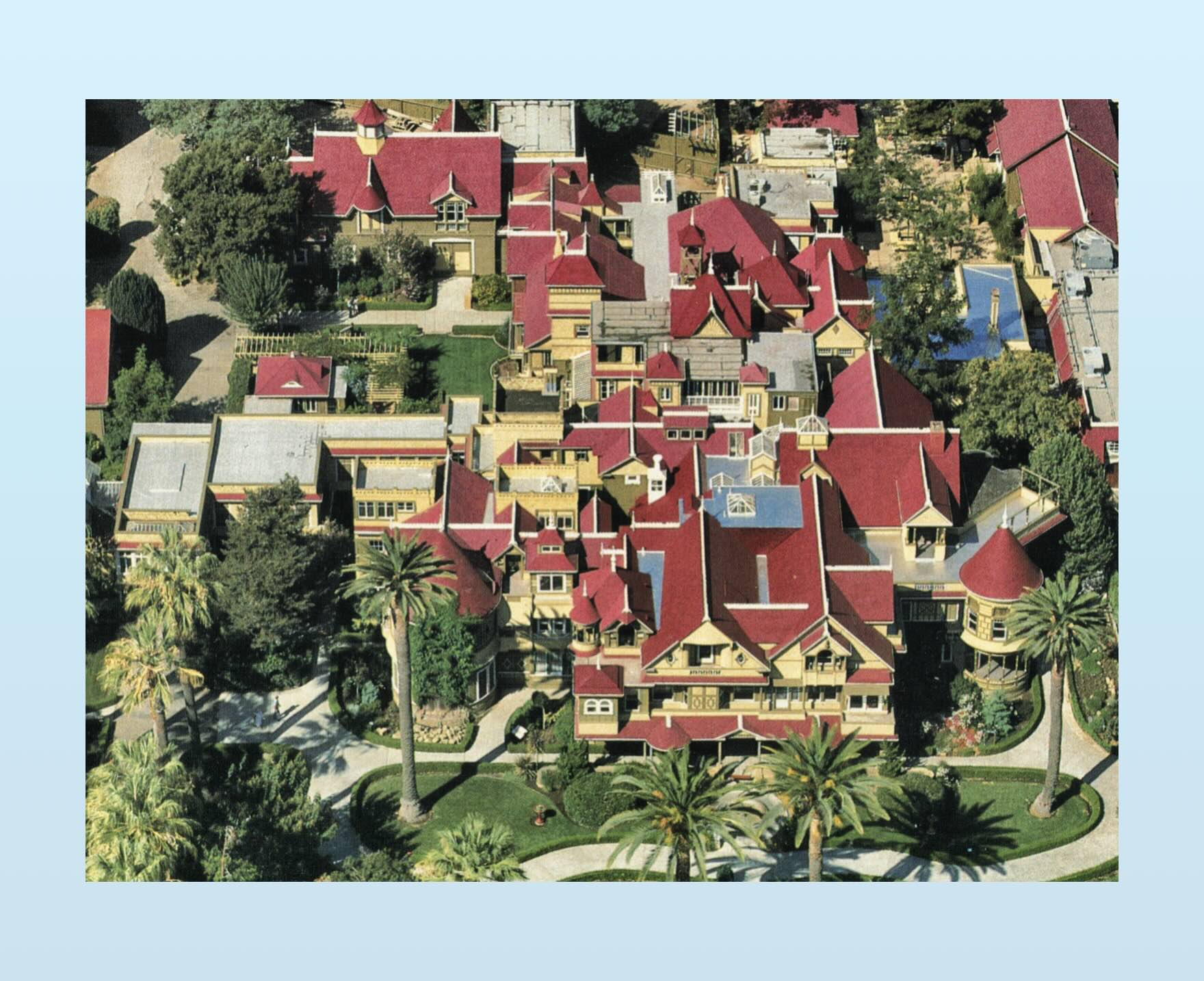
🔗 **Source:** [The Cathedral, the Bazaar, and the Winchester Mystery House](https://www.dbreunig.com/2026/03/26/winchester-mystery-house.html)
> [!note]+ Document Notes
> tags: #open-source #ai #software-development #architecture #tooling
> author: dbreunig
> source: dbreunig.com
> reference: https://www.dbreunig.com/2026/03/26/winchester-mystery-house.html
> date created: 2024-12-28 13:45
>
> # 🏷️ Title: The Cathedral, the Bazaar, and the Winchester Mystery House
>
<!-- deep-read:sections start -->
## 🧰 Action Inbox
- [H1] Develop review processes for AI-generated contributions — manage deluge of low-quality PRs #open-source
- [H2] Build personal tooling strategically — focus on idiosyncratic needs vs shared infrastructure #ai
- [H3] Identify opportunities for boring/critical tools — sell plumbing not stained glass #software-development
## 🧭 Table of Contents
- [[#📝 Summary]]
- [[#📖 Main Content]]
- [[#📚 References]]
- [[#🗣️ Paraphrase]]
- [[#📰 Newsletter]]
- [[#✅ Action Items]]
- [[#🧪 Hypotheses]]
- [[#📊 Methodology]]
- [[#❓ Questions]]
- [[#🔮 Future Research]]
- [[#💡 Implications]]
- [[#🧠 Learning Styles Assessment]]
- [[#📊 Accessibility Assessment]]
- [[#🌍 DEIB Assessment]]
- [[#✅ Logical Validity]]
- [[#🛡️ DARVO Analysis]]
- [[#🎯 Conclusion]]
### 🔗 References
- [The Cathedral and the Bazaar by Eric Raymond](https://www.catb.org/~esr/writings/cathedral-bazaar/)
- [Winchester Mystery House](https://www.winchestermysteryhouse.com/)
## 📝 Summary
- **What happened**: AI coding agents are creating a new software development paradigm beyond Raymond's Cathedral/Bazaar models - the "Winchester Mystery House" of idiosyncratic, sprawling personal tools
- **Why it matters**: Code generation is now ~100x faster than human writing (1,000 lines/commit vs 10-100 lines/day), fundamentally changing development economics
- **Key stakeholders**: Open source maintainers drowning in AI contributions, developers building personal toolchains, companies deciding what to build vs buy
- **Risks and tradeoffs**: Bazaar model struggles with coordination at machine speed; Mystery Houses lack documentation and sharing
- **Bottom line**: We need new tools for managing attention and contributions when implementation is cheap but feedback/coordination remain expensive
## 📖 Main Content
The article extends Eric Raymond's 1998 "Cathedral and Bazaar" framework with a third model enabled by AI coding agents. Where the Cathedral model emphasized planned, closed development and the Bazaar model leveraged internet-enabled collaboration, the Winchester Mystery House model reflects an era where code generation has become dramatically cheaper than human coordination.
The Winchester Mystery House analogy draws from Sarah Winchester's architectural passion project - a 500-room mansion built without formal training but with unlimited resources and personal vision. Similarly, developers with AI coding agents can now build sprawling, highly personalized toolchains guided primarily by their own feedback loops rather than community consensus.
Key evidence includes Claude Code generating ~1,000 lines per commit compared to human developers' 10-100 lines per day. This speed mismatch creates coordination problems: maintainers like Daniel Stenberg (curl) have disabled bug bounties due to overwhelming low-quality AI contributions, while GitHub added features to limit PR spam.
The author argues this creates an inversion of the Bazaar model's dynamics. The internet made feedback cheap and coordination fast, enabling "many eyeballs" to find bugs efficiently. AI makes implementation cheap while leaving feedback and coordination unchanged, creating bottlenecks where machine-speed code generation hits human-speed review processes.
## 📚 References
- [The Cathedral and the Bazaar](https://www.catb.org/~esr/writings/cathedral-bazaar/)
- [Winchester Mystery House History](https://www.winchestermysteryhouse.com/)
- [99% Invisible Winchester Episode](https://99percentinvisible.org/)
- [Fred Brooks' The Mythical Man-Month](https://en.wikipedia.org/wiki/The_Mythical_Man-Month)
## 🗣️ Paraphrase
- AI coding agents generate code 100x faster than humans, creating a new development paradigm where individual developers build highly personalized, sprawling toolchains (Winchester Mystery Houses) rather than focusing on shared projects
- Open source faces a coordination crisis as machine-speed code generation overwhelms human-speed review processes, leading maintainers to implement defensive measures against AI-generated contribution spam
- The future requires new tools and processes to manage attention efficiently - helping good ideas surface from the noise while enabling maintainers to process contributions at scale
## 📰 Newsletter
**AI Coding Agents Are Reshaping Open Source Development**
The era of cheap code is here, and it's creating fascinating new patterns in how we build software. AI coding agents like Claude are now generating ~1,000 lines of code per commit - about 100x what human developers produce daily.
This speed difference is spawning "Winchester Mystery Houses" - highly personalized, sprawling developer toolchains built for an audience of one. Think Steve Yegge's Gastown or the explosion of custom agent workflows we're seeing everywhere.
But there's a coordination challenge: while code generation happens at machine speed, feedback and review still happen at human speed. Open source maintainers are drowning in AI-generated contributions, leading to defensive measures like disabling bug bounties and PR restrictions.
The opportunity? Focus on the "plumbing" - the boring, critical infrastructure that developers need but don't want to build themselves. Let them have fun with their personal Mystery Houses while collaborating on the foundational tools that make it all possible.
**Resources**: [Cathedral and Bazaar](https://www.catb.org/~esr/writings/cathedral-bazaar/), [Developer Resources](https://developer.wordpress.org/), [Community Guidelines](https://make.wordpress.org/)
## ✅ Action Items
#### DevRel
- Developer advocacy: Study coordination patterns in high-velocity AI contribution projects, develop case studies
- Education: Create workshops on managing AI-generated contributions, review processes for maintainers
- Developer experience: Build tools for rapid contribution triage, automated quality assessment
- Developer marketing: Position products as "plumbing" vs "fun stuff" based on Winchester House lessons
- Community management: Develop moderation strategies for AI contribution influx, feedback loops
#### OSPO
- Policy & Governance: Draft AI contribution policies, attribution requirements for generated code
- License Compliance: Scan for training data compliance in AI-generated contributions
- Security Management: Enhanced review for AI-generated code, automated vulnerability detection
- Software Inventory: Track AI-generated dependencies, maintainer attention budgets
- Developer Support: Training on AI tooling integration, contribution quality standards
- Community Engagement: Fund coordination tools for high-volume projects, maintainer burnout prevention
- Strategic Alignment: Metrics for healthy AI contribution ratios, community health KPIs
#### Community
- Maintainers: Coordination tooling grants, attention management systems, automated triage
- Contributors: AI contribution guidelines, quality standards, human reviewer collaboration
- Sponsors: Fund infrastructure for managing contribution velocity, review automation
- Ecosystem: Cross-project standards for AI contribution handling, shared tooling
#### WordPress
- Core: Review processes for AI-generated patches, contribution velocity management
- Core Performance: Automated performance impact assessment for AI contributions
- Core Program Team: Coordination overhead planning, cross-team AI contribution standards
- Community: Guidelines for AI use in contributions, workshop development
- Documentation: AI contribution documentation standards, attribution practices
- Meta: Infrastructure scaling for increased contribution volume
- CLI: Automated scaffolding review, generated command validation
- Plugins/Themes: Enhanced review automation, quality gates for AI-generated submissions
## 🧪 Hypotheses
- Projects that focus on "boring infrastructure" will see higher quality AI contributions than those building "fun" user-facing features
- Open source maintainer burnout will correlate with AI contribution volume without corresponding review automation investment
- Personal "Mystery House" toolchains will converge on similar architectures despite independent development
- Attention management tools will become as critical to open source as version control systems
### 📊 Methodology
- Survey analysis: Track maintainer sentiment vs AI contribution ratios across major projects
- Code analysis: Compare quality metrics between human and AI contributions over time
- Network analysis: Study convergence patterns in personal developer toolchain architectures
- Case studies: Document successful coordination strategies in high-velocity AI contribution projects
### ❓ Questions
- What coordination mechanisms can scale review processes to match AI code generation speed?
- How do we preserve knowledge sharing when developers focus on personal Mystery Houses?
- Which software categories are most susceptible to the coordination crisis vs Mystery House benefits?
### 🔮 Future Research
- Automated contribution quality assessment beyond basic linting and testing
- Attention routing systems that surface novel ideas from high-volume repositories
- Economic models for sustaining open source maintenance in the cheap-code era
### 💡 Implications
- **Practice**: Developers should identify which tools to build personally vs collaborate on, focusing collaboration on boring/critical infrastructure
- **Policy**: Open source projects need AI contribution policies and enhanced review automation to prevent maintainer burnout
- **Security**: AI-generated code requires different review approaches, potentially automated vulnerability scanning at contribution time
- **Education**: Developer education must include coordination skills and attention management, not just coding
- **Funding**: Investment should focus on coordination tools and maintainer support rather than just code generation capabilities
### 🧠 Learning Styles Assessment
Reading level estimate: 12th Grade (technical but accessible)
#### 👀 Visual learners
- Present: Charts showing code generation rates, architectural diagrams of Winchester House analogy
- Improve: Decision trees for build-vs-collaborate choices, visual timelines of development model evolution
#### 🔊 Aural learners
- Present: None evident in text format
- Improve: Audio version with narrated examples, podcast discussion of coordination challenges
#### 🗣️ Verbal learners
- Present: Rich analogies (Winchester House, plumbing vs stained glass), defined technical terms
- Improve: More concrete examples of successful coordination strategies, case study narratives
#### 🧩 Kinesthetic learners
- Present: None evident in text format
- Improve: Hands-on exercises for contribution triage, workshop activities for coordination practice
#### 🧠 Logical learners
- Present: Clear progression from historical models to current challenges, quantitative evidence
- Improve: Decision frameworks for tool categorization, systematic evaluation criteria
#### 🧑🤝🧑 Social learners
- Present: Discussion of community dynamics, coordination challenges
- Improve: Forum discussion prompts, collaborative exercises for developing coordination solutions
#### 🧘♀️ Solitary learners
- Present: Individual reflection on personal toolchain choices
- Improve: Self-assessment worksheets for Mystery House vs collaboration decisions
#### 🌿 Naturalistic learners
- Present: Ecosystem thinking about software communities, organic growth patterns
- Improve: Biological analogies for healthy vs unhealthy contribution ecosystems
### 📊 Accessibility Assessment
#### Screen reader semantics
- Present: Clear heading hierarchy, descriptive section titles
- Improve: More descriptive alt text for charts, better landmark navigation
#### Keyboard navigation
- Present: Standard web accessibility appears intact
- Improve: Skip links for long-form content, better focus management
#### Contrast and readability
- Present: High contrast text, reasonable line spacing
- Improve: Ensure chart data has text alternatives, check color-only information
#### Text resizing and reflow
- Present: Responsive design supports zoom
- Improve: Test at 400% zoom, ensure no content clipping
#### Media and captions
- Present: Static content with embedded charts
- Improve: Provide data tables for chart information, audio descriptions if adding multimedia
#### Forms and interactions
- Present: Minimal interactive elements
- Improve: N/A for current format
#### Standards reference
- Meets WCAG 2.2 AA for static content, would need review if adding interactive elements
### 🌍 DEIB Assessment
#### Cultural breadth
- Present: Global open source perspective, includes diverse project examples
- Improve: More international case studies, non-Western development model examples
#### Inclusive language
- Present: Gender-neutral technical language, avoids exclusionary jargon
- Improve: Plain language alternatives for technical terms, avoid architectural metaphors that assume cultural knowledge
#### Neurodiversity support
- Present: Clear structure, logical progression, defined concepts
- Improve: Better chunking of long paragraphs, consistent formatting for examples
#### Representation
- Present: Mentions diverse contributors (Sarah Winchester as historical example)
- Improve: Contemporary examples from underrepresented groups, diverse maintainer perspectives
#### Psychological safety
- Present: Respectful discussion of challenges without blame
- Improve: Acknowledge stress/burnout impacts on maintainers, provide supportive framing
### ✅ Logical Validity
#### Strong reasoning
- **Deductive strength**: Strong - premises about AI speed and human coordination limits logically lead to coordination crisis conclusion
- **Inductive strength**: Good - uses specific examples (curl, GitHub) to support broader patterns
- **Causal reasoning**: Solid - clearly links cheap code to coordination problems and new development patterns
- **Analogical strength**: Excellent - Winchester Mystery House analogy effectively illuminates key properties of new development model
#### Fallacies
- **Appeal to novelty**: Suggests new is inherently different/better, but addresses this by showing coexistence with existing models
- **False dichotomy**: Could better acknowledge spectrum between models rather than discrete categories
#### Tone of voice
- **Overall tone**: Analytical and optimistic, balances challenges with opportunities, uses engaging analogies without being informal
### 🛡️ DARVO Analysis
- **Deny**: None detected - acknowledges real coordination challenges facing maintainers
- **Attack**: None detected - doesn't blame any stakeholders for current situation
- **Reverse victim/offender**: None detected - correctly identifies maintainers as overwhelmed rather than obstructionist
- **Emotional cues and rhetoric**: Positive and solution-focused, avoids inflammatory language about AI or human developers
## 🎯 Conclusion
The emergence of AI coding agents has created a fundamental shift in software development economics, introducing the "Winchester Mystery House" model alongside Raymond's Cathedral and Bazaar frameworks. While developers can now build sprawling personal toolchains at unprecedented speed, the open source ecosystem faces coordination challenges as machine-speed code generation overwhelms human-speed review processes.
The path forward requires focusing collaboration on "boring" infrastructure while allowing personal innovation to flourish, combined with new tools and processes for managing attention efficiently. Rather than replacing existing models, the Winchester Mystery House approach will likely coexist with traditional open source development, each serving different needs in our evolving software landscape.
## 🧱 Refactor Appendix
### 📚 Literature Split Pad
### [H1] AI generates code 100x faster than humans
> [!quote] [The Cathedral, the Bazaar, and the Winchester Mystery House](https://www.dbreunig.com/2026/03/26/winchester-mystery-house.html) by [[dbreunig]] via [[dbreunig.com]]. Published 2026-03-26. Accessed 2024-12-28.
> "the average net lines added by Claude per commit is now smooth and steady at 1,000 lines of code per commit"
Evidence for fundamental shift in development economics, contrasts with human 10-100 lines/day.
[view highlight](https://www.dbreunig.com/2026/03/26/winchester-mystery-house.html#H1) #xref #articleseed ID:rw_001
### [H2] Coordination becomes primary bottleneck in AI era
> [!quote] [The Cathedral, the Bazaar, and the Winchester Mystery House](https://www.dbreunig.com/2026/03/26/winchester-mystery-house.html)
> "implementation at machine speed hitting coordination infrastructure built for human speed"
Explains why maintainers feel overwhelmed despite technological advancement.
[view highlight](https://www.dbreunig.com/2026/03/26/winchester-mystery-house.html#H2) #xref ID:rw_002
### [H3] Focus collaboration on boring infrastructure not fun features
> [!quote] [The Cathedral, the Bazaar, and the Winchester Mystery House](https://www.dbreunig.com/2026/03/26/winchester-mystery-house.html)
> "Don't try to sell developers the stuff that's fun, the stuff they want to build. Sell them the stuff they avoid"
Strategic guidance for what to collaborate on vs build personally.
[view highlight](https://www.dbreunig.com/2026/03/26/winchester-mystery-house.html#H3) #xref ID:rw_003
---
### 🔖 Atomic Split Pad (Zettel Candidates)
#### [Z1] Winchester Mystery House model enables personal toolchains
- Applies when code generation dramatically outpaces coordination costs
- Pointer to AI coding agent examples and personal tool proliferation
- Links: [[Open-Source-Models]] [[Developer-Productivity]]
#### [Z2] Attention management
<!-- deep-read:sections end -->
📄 **Full text:** ![[Full Document Contents/Articles/The Cathedral, the Bazaar, and the Winchester Mystery House.md|The Cathedral, the Bazaar, and the Winchester Mystery House by dbreunig.com]]
## Highlights
- [The Cathedral and the Bazaar](http://www.catb.org/~esr/writings/cathedral-bazaar/)”. In it, he detailed two methods of building software:
• *The Cathedral* model is carefully planned, closed-source, and managed by an exclusive team of developers.
• *The Bazaar* model is open, transparent, and community-driven. ([View Highlight](https://read.readwise.io/read/01kq2efe7m9sj14fp6hdndd8ce))
- many developers are doing with cheap code: building idiosyncratic tools for ourselves, guided by our passions, taste, and needs. ([View Highlight](https://read.readwise.io/read/01kq2ejt6mat354wfjvv1b0vr1))
- Winchester Mystery Houses are idiosyncratic, sprawling, and fun. But does this mean we’re abandoning the bazaar? ([View Highlight](https://read.readwise.io/read/01kq2mrvgndvr5jmw91krt5qv5))
- We don’t need [eyeballs](https://en.wikipedia.org/wiki/Linus%27s_law) to find bugs *in* the software, we need eyeballs to find bugs before they *reach* the software. ([View Highlight](https://read.readwise.io/read/01kq2mtjvqeystsjdysfmb5gam))
- OpenClaw is incredibly modular and places few limitations on the user. It integrates 25 different chat and notification systems, plugs into most inference end points, and is built on the exceptionally flexible [pi](https://github.com/badlogic/pi-mono) agent toolkit. This eager flexibility was embraced early – security and data protections be damned – but since its exponential adoption Peter Steinberger and the community have been steadily pushing improvements and fixes. ([View Highlight](https://read.readwise.io/read/01kq2mx9f2gy1vqk5250p2bney))
- One reason OpenClaw works so well in the bazaar is that it is a *foundation for personal tools* ([View Highlight](https://read.readwise.io/read/01kq2my1gk889cssgwktfm4qyh))
- Don’t try to sell developers the stuff that’s fun, the stuff they *want* to build. Sell them the stuff they avoid or don’t want to take responsibility for. ([View Highlight](https://read.readwise.io/read/01kq2q2f90c00fjceesxxsgs6x))
- The internet made coordination cheap and gave us the bazaar. Coding agents made implementation cheap and gave us the Winchester Mystery House. What we’re missing are the tools and conventions that make attention cheap, that let maintainers absorb contributions at machine speed and let good ideas surface among the noise. Until we figure this out, the bazaar will keep getting louder without getting smarter, and the best ideas in our Mystery Houses will be forgotten once we stop maintaining them. ([View Highlight](https://read.readwise.io/read/01kq2q35fadnvnm0zgz2yvs6ep))