The FBI Director Is MIA
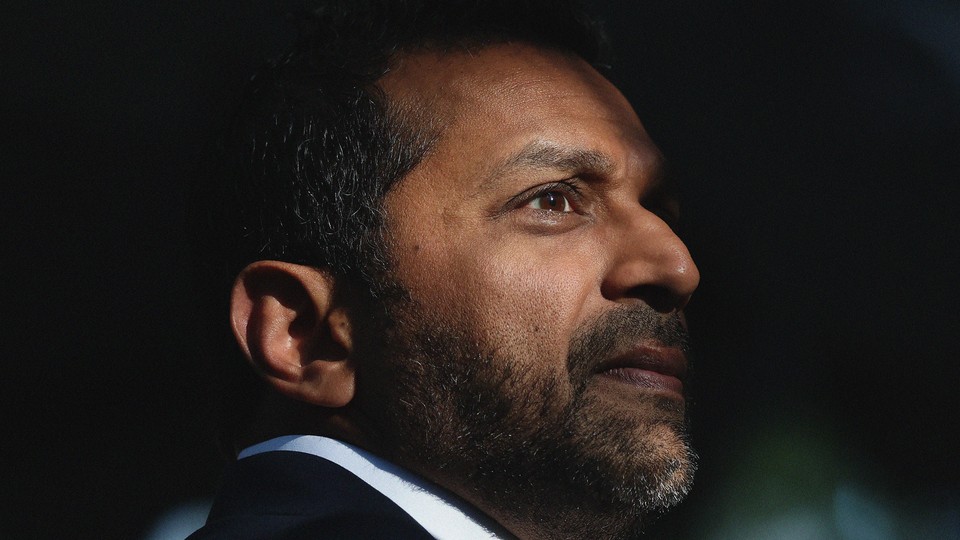
🔗 **Source:** [The FBI Director Is MIA](https://www.theatlantic.com/politics/2026/04/kash-patel-fbi-director-drinking-absences/686839/)
> [!note]+ Document Notes
> ```yaml
> tags: [politics, national-security, law-enforcement]
> author: Sarah Fitzpatrick
> source: The Atlantic
> reference: [https://www.theatlantic.com/politics/2026/04/kash-patel-fbi-director-drinking-absences/686839/]
> date created: 2026-04-18 12:00
>
> ---
>
> # 🏷️ Title: The FBI Director Is MIA
>
<!-- deep-read:sections start -->
## 🧭 Table of Contents
- [📝 Summary](#-summary)
- [📖 Main Content](#-main-content)
- [🗒️ Notes](#️-notes)
- [📚 References](#-references)
- [🗣️ Paraphrase](#️-paraphrase)
- [📰 Newsletter](#-newsletter)
- [✅ Action Items](#-action-items)
- [🧪 Hypotheses](#-hypotheses)
- [📊 Methodology](#-methodology)
- [❓ Questions](#-questions)
- [🔮 Future Research](#-future-research)
- [💡 Implications](#-implications)
- [🧠 Learning Styles Assessment](#-learning-styles-assessment)
- [📊 Accessibility Assessment](#-accessibility-assessment)
- [🌍 DEIB Assessment](#-deib-assessment)
- [✅ Logical Validity](#-logical-validity)
- [🛡️ DARVO Analysis](#-darvo-analysis)
- [🎯 Conclusion](#-conclusion)
### 🔗 References
- Include links cited in or relevant to the article.
## 📝 Summary
- What happened: The piece reports on FBI Director Kash Patel’s alleged excessive drinking, erratic behavior, absences, and political purges, based on numerous anonymous sources.
- Why it matters: Such behavior at the top of the FBI may pose national-security and rule-of-law risks, especially during conflict with Iran.
- Key stakeholders: Kash Patel, Donald Trump and the White House, FBI leadership and rank-and-file, DOJ, U.S. public.
- Risks and tradeoffs: Vulnerability to foreign exploitation, weakened counterterror capacity, politicization of law enforcement versus Trump’s perceived “law and order” gains.
- Bottom line: The article portrays Patel as a destabilizing and potentially dangerous FBI director whose position is nevertheless protected by his loyalty to Trump.
## 📖 Main Content
- The article opens with Patel’s panicked assumption he’d been fired after a technical login failure, illustrating what sources describe as erratic behavior and “freak-outs.” ([opening scene](https://read.readwise.io/read/01kpfch2j7n70mr6850xx00nj3?endLexposition=00009&startLexposition=00000&emphasizeText=he+panicked%2C+frantically+calling+aides+and+allies+to+announce+that+he+had+been+fired))
- Multiple current and former officials say Patel fears losing his job, citing concerns over his alleged excessive drinking and absences; senior Trump officials are reportedly discussing replacements, even as official statements strongly defend him.
- Sources depict Patel as suspicious, impulsive, and quick to leap to conclusions without evidence, calling his leadership a management failure and a “national-security vulnerability.” ([overview critique](https://read.readwise.io/read/01kpfch2j7n70mr6850xx00nj3?endLexposition=0000L&startLexposition=0000D&emphasizeText=they+described+Patel%E2%80%99s+tenure+as+a+management+failure+and+his+personal+behavior+as+a+national-security+vulnerability))
- Colleagues allege repeated public intoxication at D.C. and Las Vegas venues, late-start workdays, and security details struggling to wake him; at one point, “breaching equipment” was reportedly requested to reach him behind locked doors.
- Officials worry about his availability and focus, particularly with the U.S. at war with Iran, fearing a domestic terror incident occurring while he is impaired or unreachable.
- Patel’s political background and confirmation: once billed as a “change agent,” he had embraced conspiracies such as the FBI masterminding January 6; confirmed by a narrow 51–49 vote after heavy White House pressure.
- Inside the FBI, hopes for reform gave way to disappointment; Patel is often described as absent or unreachable, delaying time-sensitive investigative decisions and compounding bureaucratic bottlenecks.
- Impulsive conduct in investigations includes premature public claims (e.g., prematurely touting a “person of interest” in a university shooting who was later released).
- Trump reportedly appreciates Patel’s aggressive purge of perceived “deep-state” enemies and January 6 investigators but is frustrated by Patel’s media performance and pace of politically directed probes.
- Patel’s personal use of FBI perks (notably the jet) and visible partying reportedly unsettle White House staff, who fear Trump’s reaction if he focuses on those stories.
- DOJ ethics rules formally bar habitual excessive use of alcohol due to judgment and blackmail risks; the inspector general has warned such behavior can expose officials to foreign coercion.
- A widely seen clip of Patel chugging beer with the U.S. Olympic hockey team allegedly prompted a personal reprimand from Trump; officials suspect alcohol may have contributed to Patel spreading inaccurate information about ongoing cases.
- Employees fear retaliation if they report concerns; Patel is said to use polygraphs to identify “leakers” and probe staff opinions about his “enemies” and Trump critics.
- He has openly advocated using state power against perceived enemies, including naming “corrupt or disloyal” officials in his book *Government Gangsters* and threatening to “come after” media figures over 2020 coverage; inside the FBI, he has led purges of supposed anti-Trump conspirators.
- High turnover, loss of experienced personnel, and purges reportedly leave the bureau “more vulnerable,” short-staffed, and demoralized, with diminished “muscle memory” for counterterror work, especially after firing key Iran-focused counterintelligence staff shortly before the Iran war. ([vulnerability concern](https://read.readwise.io/read/01kpfch2j7n70mr6850xx00nj3?endLexposition=0000s&startLexposition=0000m&emphasizeText=The+result+is+an+FBI+workforce+being+asked+to+accomplish+more+with+fewer+resources%2C+and+with+less+direction+from+the+top))
- Patel’s obsession with projecting a “fierce” FBI image, including complaints that bureau merchandise isn’t intimidating enough, is portrayed as absurd but also symptomatic of misplaced priorities; some officials say they’re almost relieved when he focuses on “bullshit” rather than substantive decisions.
- The piece concludes with an official’s stark assessment: Patel’s behavior means the country effectively lacks a functioning FBI director. ([final quote](https://read.readwise.io/read/01kpfch2j7n70mr6850xx00nj3?endLexposition=0000t_00000_00000_00000-001G&startLexposition=0000s&emphasizeText=but+it+also+means+we+don%E2%80%99t+have+a+real+functioning+FBI+director))
### 🗒️ Notes
- Opening anecdote: mistaken belief of being fired after IT issue; wide internal chatter; illustrates volatility and paranoia.
- White House and DOJ statements present Patel as an effective “law and order” leader, framing criticism as anonymous hit pieces.
- Numerous anonymous sources across government institutions claim a pattern of heavy drinking, erratic behavior, absences, and politicized purges.
- Alleged intoxication in social venues and on trips, with operational impacts (rescheduled briefings, difficulty waking him, request for breaching equipment).
- Heightened concern given concurrent war with Iran and potential domestic terror threats.
- Background: polarizing political operative, promoter of Jan. 6 conspiracy theories, narrow Senate confirmation.
- Internal management: irregular presence, delayed decisions, perceived bottlenecks, impulsive announcements on high-profile cases.
- Political function: pleased Trump by targeting perceived enemies, yet frustrated him with media performance and slow-rolling political investigations.
- Ethics and security: DOJ rules against habitual intoxication; IG warning about blackmail risk; high-visibility drinking incidents.
- Culture of fear: aggressive leak-hunting via polygraphs, questions about staff loyalty and views on enemies.
- Retaliatory purges of perceived anti-Trump or disloyal officials; efforts to weaponize the FBI against media and political foes.
- Organizational impact: loss of experienced personnel, high turnover, weakened counterintelligence (especially on Iran), lower morale, sense of siege.
- Symbolic focus on “fierceness” and intimidation (merchandise, image) contrasted with perceived lack of substantive leadership.
- Core thesis: Patel’s personal conduct and politicized leadership undermine the FBI’s operational capacity and the rule of law.
## 📚 References
- Sarah Fitzpatrick, “The FBI Director Is MIA,” The Atlantic (2026-04-17), https://www.theatlantic.com/politics/2026/04/kash-patel-fbi-director-drinking-absences/686839/
- DOJ Ethics Handbook (referenced regarding alcohol and conduct).
- Kash Patel, *Government Gangsters* (2023).
- Related Atlantic coverage on Trump-era purges and loss of institutional trust (e.g., “The Trust Has Been Absolutely Destroyed”).
## 🗣️ Paraphrase
- Paragraph A paraphrase: The article depicts Kash Patel as an erratic and frequently intoxicated FBI director whose behavior and political purges alarm colleagues and may endanger national security during a volatile period, even as Trump and top officials publicly defend him.
- Paragraph B paraphrase: Anonymous officials describe a culture of fear, weakened investigative capacity, and politicization under Patel, arguing that his fixation on loyalty and “fierceness” has effectively left the United States without a reliable, functioning FBI leader.
## 📰 Newsletter
In this week’s WordPress-adjacent reading, a sobering Atlantic feature on FBI Director Kash Patel explores how leadership failures and politicization can destabilize critical infrastructure. For us in the WordPress ecosystem, it’s a reminder that governance, transparency, and clear roles matter—whether in core teams, hosting platforms, or plugin communities. If you’re designing contributor programs or moderation policies, consider formal charters and escalation paths to prevent similar “single point of failure” dynamics.
Helpful links:
- WordPress Governance Project: https://make.wordpress.org/project/
- Community Team Handbook: https://make.wordpress.org/community/handbook/
- Security Team: https://make.wordpress.org/core/handbook/security/
## ✅ Action Items
#### DevRel
- Document clear escalation paths for security- or trust-related incidents in developer communities.
- Offer workshops on ethics and responsible use of admin/mod powers in plugins and platforms.
- Improve SDK and API docs around logging, auditing, and traceability for sensitive actions.
- Publish content on building resilient systems that don’t rely on a single “hero” admin.
- Run community surveys to detect fear, burnout, or political pressure in contributor spaces.
- Align internal teams on incident communication SLAs and responsibilities.
#### OSPO
- Codify contribution and decision-making policies to avoid personality-driven governance.
- Enforce license and policy compliance scans on security-sensitive plugins and tools.
- Create vulnerability intake and disclosure policies modeled on established security orgs.
- Maintain SBOMs and clear ownership for critical open-source dependencies.
- Provide regular training on ethics, retaliation risks, and whistleblower protections.
- Support upstream projects that strengthen governance and security in the WordPress stack.
- Track KPIs on governance maturity and security posture for executive reporting.
#### Community
- Support maintainers with governance templates and burnout-prevention practices.
- Design contributor onboarding that clarifies rights, protections, and escalation channels.
- Provide sponsors with transparent reporting and clear boundaries on influence.
- Run cross-project drills for coordinated security advisories and vulnerability handling.
#### WordPress
- **Core:** Maintain transparent decision logs and rationale for contentious changes.
- **Core Performance:** Track perf metrics publicly to build trust in tradeoffs.
- **Core AI:** Define guardrails on data use, logging, and abuse reporting.
- **Core Program Team:** Schedule regular retros focused on governance and communication.
- **Mobile:** Ensure crash and incident telemetry is transparent and privacy-preserving.
- **Playground:** Use it to teach safe security and governance patterns via labs.
- **Community:** Update WordCamp and meetup playbooks with guidance on controversial topics.
- **Training:** Produce lessons on governance, moderation, and security responsibilities.
- **Marketing:** Emphasize transparency and community oversight in messaging.
- **Support:** Maintain clear escalation policies for harassment and abuse reports.
- **Design:** Visualize governance structures and decision flows for contributors.
- **Documentation:** Add governance and incident-handling sections to DevHub/HelpHub.
- **Photos/TV/Openverse:** Ensure clear contributor guidelines, moderation criteria, and appeal paths.
- **Polyglots:** Provide translation guidance on sensitive political or legal terminology.
- **Accessibility:** Include accessible reporting flows for misconduct and security issues.
- **Meta:** Improve reliability and transparency of .org infrastructure and incident communication.
- **CLI/Hosting/Tide/Themes/Plugins:** Integrate security, provenance, and auditability into tooling and review processes.
#### The WPOCC
- Fund fellowships for maintainers focusing on governance and security.
- Support projects that document and improve community charters and codes of conduct.
- Pilot transparent funding models that minimize capture by any single actor.
### FAIR
- Encourage local verification of plugin/theme signatures and provenance.
- Publish covenants on funding transparency and anti-capture policies.
- Provide reusable governance artifacts—charters, MoUs, operator agreements—for WordPress orgs.
## 🧪 Hypotheses
- H1: Habitual excessive drinking among senior security officials increases the likelihood of operational delays in crisis response.
- H2: Politically motivated purges of experienced investigators reduce an agency’s effectiveness in counterterrorism operations.
- H3: Use of polygraphs to police internal loyalty correlates with decreased whistleblowing and increased organizational risk.
- H4: Publicly visible misconduct by security leaders reduces rank-and-file morale and trust in leadership.
- H5: Highly politicized law-enforcement leadership increases perceived illegitimacy of legal outcomes among the public.
### 📊 Methodology
- Use historical case studies of agencies where leaders had documented substance-abuse issues; measure incident response times and error rates.
- Compare counterterrorism outcomes and near-miss data before and after significant staff purges.
- Survey employees in organizations with aggressive leak-hunting practices; track anonymous reporting and incident counts.
- Conduct longitudinal morale surveys and track attrition after leadership scandals.
- Use public-opinion polling to relate perceptions of law-enforcement politicization to trust in investigations and prosecutions.
### ❓ Questions
- How resilient is the FBI’s operational chain of command to an impaired or absent director?
- What internal checks exist when political loyalty conflicts with professional ethics?
- At what threshold does leader misconduct become a national-security issue rather than a personnel one?
- How do whistleblower protections function when leadership controls loyalty tests and internal investigations?
### 🔮 Future Research
- Comparative analysis of politicization in security agencies across democracies.
- Long-term effects of leadership scandals on recruitment quality and diversity.
- Evaluation of governance models that best insulate security agencies from partisan capture.
- Study of early-warning indicators of leadership-related security vulnerabilities.
### 💡 Implications
- Practice: Agencies need clear contingency plans and deputy structures to mitigate leader failure.
- Policy: Strengthening oversight, ethics enforcement, and whistleblower protections is essential.
- Security: Personal vulnerabilities (e.g., substance abuse) in senior officials must be treated as security issues.
- Education: Leadership training in security agencies should emphasize ethics, resilience, and nonpartisan norms.
- Funding: Resources for independent oversight bodies and IG offices are critical to sustained accountability.
### 🧠 Learning Styles Assessment
- Reading level estimate: Roughly 11th–12th grade (complex sentences, political/legal vocabulary; approximate Flesch–Kincaid based on sample paragraphs).
#### 👀 Visual learners
- Present: Narrative descriptions, but few visuals.
- Improve: Add org charts of FBI leadership, timelines of key incidents, and flow diagrams for decision-making.
#### 🔊 Aural learners
- Present: None explicitly.
- Improve: Provide an audio narration or podcast episode discussing the investigation.
#### 🗣️ Verbal learners
- Present: Rich narrative, quotes, and clear characterizations.
- Improve: Add a glossary of legal and institutional terms (e.g., counterintelligence, inspector general).
#### 🧩 Kinesthetic learners
- Present: None.
- Improve: Interactive case study exercises on agency governance and crisis response.
#### 🧠 Logical learners
- Present: Chronological narrative with causal links implied.
- Improve: Include explicit causal diagrams, timelines, and tables comparing pre- and post-Patel metrics.
#### 🧑🤝🧑 Social learners
- Present: Multiple perspectives from officials; good for discussion.
- Improve: Add discussion prompts and guided questions for classrooms or reading groups.
#### 🧘♀️ Solitary learners
- Present: Long-form article suited to reflective reading.
- Improve: Add reflection questions at the end.
#### 🌿 Naturalistic learners
- Present: Minimal direct relevance.
- Improve: Use analogies to ecosystem resilience and failure modes (e.g., keystone species loss).
### 📊 Accessibility Assessment
#### Screen reader semantics
- Present: Standard article structure with headings and paragraphs (typical for major outlets).
- Improve: Ensure semantic HTML5 landmarks and descriptive link text.
#### Keyboard navigation
- Present: Likely usable via keyboard, as with standard news sites.
- Improve: Verify focus indicators and skip links; avoid hidden keyboard traps in ads.
#### Contrast and readability
- Present: The Atlantic generally uses adequate contrast and legible fonts.
- Improve: Confirm ≥4.5:1 contrast; allow user font-size choices and increased line spacing.
#### Text resizing and reflow
- Present: Responsive design for mobile and desktop.
- Improve: Ensure content reflows properly at 200% zoom without horizontal scrolling.
#### Media and captions
- Present: Images with likely captions and alt text.
- Improve: Confirm descriptive alt text; provide transcripts for any embedded videos.
#### Forms and interactions
- Present: Minimal, mostly subscription prompts.
- Improve: Ensure form labels, error messages, and target sizes meet WCAG 2.2 AA.
#### Standards reference
- Map any gaps to WCAG 2.2 AA criteria such as 1.4.x (contrast), 2.1.x (keyboard), 1.3.1 (info and relationships).
### 🌍 DEIB Assessment
#### Cultural breadth
- Present: Focus on U.S. institutions and politics.
- Improve: Provide comparative examples from other countries’ security agencies.
#### Inclusive language
- Present: Generally neutral, professional tone.
- Improve: Add plain-language summaries to support broader audiences, including non-experts.
#### Neurodiversity support
- Present: Clear structure, but dense paragraphs.
- Improve: Break text into shorter sections with more subheadings and summaries.
#### Representation
- Present: Quotes mainly from anonymous officials; limited demographic visibility.
- Improve: Where appropriate, include varied perspectives and note limitations.
#### Psychological safety
- Present: Serious but not graphic; respectful framing.
- Improve: Offer content warnings around political stress and institutional mistrust; link to reporting avenues for misconduct.
### ✅ Logical Validity
#### Strong reasoning
- Inductive reasoning: Patterns of reported behavior (drinking, absences, impulsive decisions) are used to infer broader leadership risk; strength increases with numerous, diverse sources.
- Causal reasoning: The article links purges and turnover to reduced institutional “muscle memory” in counterterror work; supported by expert testimony but could be strengthened with empirical data.
#### Fallacies
- Potential overreliance on anonymous testimony could risk confirmation bias; the article mitigates this somewhat by quoting official denials and supportive statements.
- Some causal claims (e.g., direct link between drinking and specific investigative errors) remain partly speculative without hard evidence.
#### Tone of voice
- Tone: Critical, investigative, and alarmed, but couched in reported speech.
- Example: Officials describe Patel’s tenure as a “management failure” and “national-security vulnerability,” signaling a strong evaluative stance.
### 🛡️ DARVO Analysis
- Deny: Patel’s quoted response—“Print it, all false, I’ll see you in court—bring your checkbook”—is a blanket denial without engagement on specifics.
- Attack: Calling reporting “anonymously sourced hit pieces” attacks credibility rather than addressing substance.
- Reverse victim/offender: Framing himself as target of unfair media attacks implies victimization, while the article portrays him as the source of institutional harm.
- Emotional cues: Defensiveness, aggression, and legal threats dominate, rather than transparent rebuttal or evidence-based counterarguments.
## 🎯 Conclusion
The article argues that Kash Patel’s alleged excessive drinking, erratic conduct, and political purges have degraded the FBI’s capacity and credibility at a dangerous geopolitical moment. For readers, the key takeaway is the importance of robust, depoliticized governance and real accountability mechanisms in any institution tasked with public safety or critical infrastructure.
## 🧱 Refactor Appendix (append after 🎯 Conclusion)
### 📚 Literature Split Pad
- Purpose: Stage Konik CEE units that become per-source Literature notes.
- Split level: **H3**.
- Include verbatim quotes under 25 words and a [view highlight] link.
### [H1] FBI director’s conduct undermines security
> [!quote] [The FBI Director Is MIA](https://www.theatlantic.com/politics/2026/04/kash-patel-fbi-director-drinking-absences/686839/) by [[Sarah Fitzpatrick]] via [[The Atlantic]]. Published 2026-04-17. Accessed 2026-04-18.
> “They described Patel’s tenure as a management failure and his personal behavior as a national-security vulnerability.”
Two lines: context and use. Cite data if relevant.
[view highlight](https://www.theatlantic.com/politics/2026/04/kash-patel-fbi-director-drinking-absences/686839/#H1) #xref #articleseed ID:rw_[MISSING]
### [H2] Politicized purges weaken FBI effectiveness
> [!quote] [The FBI Director Is MIA](https://www.theatlantic.com/politics/2026/04/kash-patel-fbi-director-drinking-absences/686839/)
> “The result is an FBI workforce being asked to accomplish more with fewer resources, and with less direction from the top.”
Two lines: context and use.
[view highlight](https://www.theatlantic.com/politics/2026/04/kash-patel-fbi-director-drinking-absences/686839/#H2) #xref ID:rw_[MISSING]
---
### 🔖 Atomic Split Pad (Zettel Candidates)
- Purpose: Promote reusable claims into Atomic notes.
- Split level: **H4**.
- Each item: one idea, present tense, specific, testable.
#### [Z1] Leadership misconduct erodes national security capacity
- Scope/condition in one line.
- Pointer to page/time or dataset.
- Links: [[Institutional-Trust]] [[Security-Governance]]
#### [Z2] Politicized purges reduce investigative muscle memory
- Scope/condition in one line.
- Pointer to page/time or dataset.
- Links: [[Bureaucratic-Capacity]] [[Rule-of-Law]]
---
### ✏️ Fleeting Queue (Extract by Selection)
- Purpose: Capture quick actions or sparks for Fleeting notes.
- Extraction: **Select one line** → “Refactor: Extract selection to new note (content only).”
- Keep each line short and self-contained.
- [F1] Compare FBI leadership failures here to governance patterns in large open-source projects — context/https://www.theatlantic.com/politics/2026/04/kash-patel-fbi-director-drinking-absences/686839/ #fleeting #inbox
- [F2] Draft governance checklist for security-critical WordPress plugins mirroring agency best practices — context/same #fleeting #inbox
- [F3] Explore role of whistleblower protections in distributed communities vs. centralized agencies — context/same #fleeting #inbox
---
<!-- deep-read:sections end -->
📄 **Full text:** ![[Full Document Contents/Articles/The FBI Director Is MIA.md|The FBI Director Is MIA by Sarah Fitzpatrick]]
## Highlights
- But Patel, according to multiple current officials, as well as former officials who have stayed close to him, is deeply concerned that his job is in jeopardy. He has good reasons to think so—including some having to do with what witnesses described to me as bouts of excessive drinking. My col ([View Highlight](https://read.readwise.io/read/01kpgb0a321x6wyg7vh43cs385))
- The IT-lockout episode is emblematic of Patel’s tumultuous tenure as director of the FBI: He is erratic, suspicious of others, and prone to jumping to conclusions before he has necessary evidence, according to the more than two dozen people I interviewed about Patel’s conduct, including cur ([View Highlight](https://read.readwise.io/read/01kpgb168gr98pzwdreq4ek1p8))
- They said that the problems with his conduct go well beyond what has been previously known, and include both conspicuous inebriation and unexplained absences. His be ([View Highlight](https://read.readwise.io/read/01kpgb1sv034v69kf4kqpbt2kf))
- Some of Patel’s colleagues at the FBI worry that his personal behavior has become a threat to public safety. An FBI director is expected to be available and focused on his job—especially when the nation is at war with a state sponsor of terrorism ([View Highlight](https://read.readwise.io/read/01kpgb2h8qzre13y4a72se6e5t))
- Patel has also earned a reputation for acting impulsively during high-stakes investigations. He announced triumphantly on social media, for instance, that the FBI had “detained a person of interest” in the Brown University shooting in December. That person was soon released while agents continued to hunt for the killer. ([View Highlight](https://read.readwise.io/read/01kpgb39q6x1jftf9sck2s065x))
- nd the occasional beer. FBI officials and others in the administration have privately questioned whether alcohol played a role in the instances in which he shared inaccurate information about active law-enforcement investigations, including following the murder of Charlie Kirk. ([View Highlight](https://read.readwise.io/read/01kpgb40vfv7pekeb2tdespne1))
- Many of the people who spoke with me said that they have been afraid to reveal their concerns about Patel publicly or through traditional whistleblower channels, because he has been aggressive in cracking down on anyone he deems insufficiently loyal. At Patel’s direction, FBI e ([View Highlight](https://read.readwise.io/read/01kpgb4nd0y0tab90k1r72mf3c))
- evel of muscle memory or discernment that is necessary to identify and counter a terror attack is missing,” the former official said. A current official described people inside the bureau feeling besieged and disillusioned—or even angry. ([View Highlight](https://read.readwise.io/read/01kpgb5fke3y0fbp16npr8h6x5))
- Days before the United States launched its war with Iran, Patel fired members of a counterintelligence squad that was devoted, in part, to Iran. The director said in testimony before Congress that the agents had been let go because their work investigating Trump’s handling of classified documents had placed them in violation of the bureau’s ethics rules. But multiple officials told me they were concerned that the firings had been rushed, and would leave the U.S. shorthanded at a cru ([View Highlight](https://read.readwise.io/read/01kpgb965mqe6gtyak4978jr9c))
- citizens. “Part of me is glad he’s wasting his time on bullshit, because it’s less dangerous for rule of law, for the American public,” one official told me, “but it also means we don’t have a real functioning FBI director.” ([View Highlight](https://read.readwise.io/read/01kpgba1tkf0s6tm09pena8sgn))