The Identifying Markers of Christian Supremacy
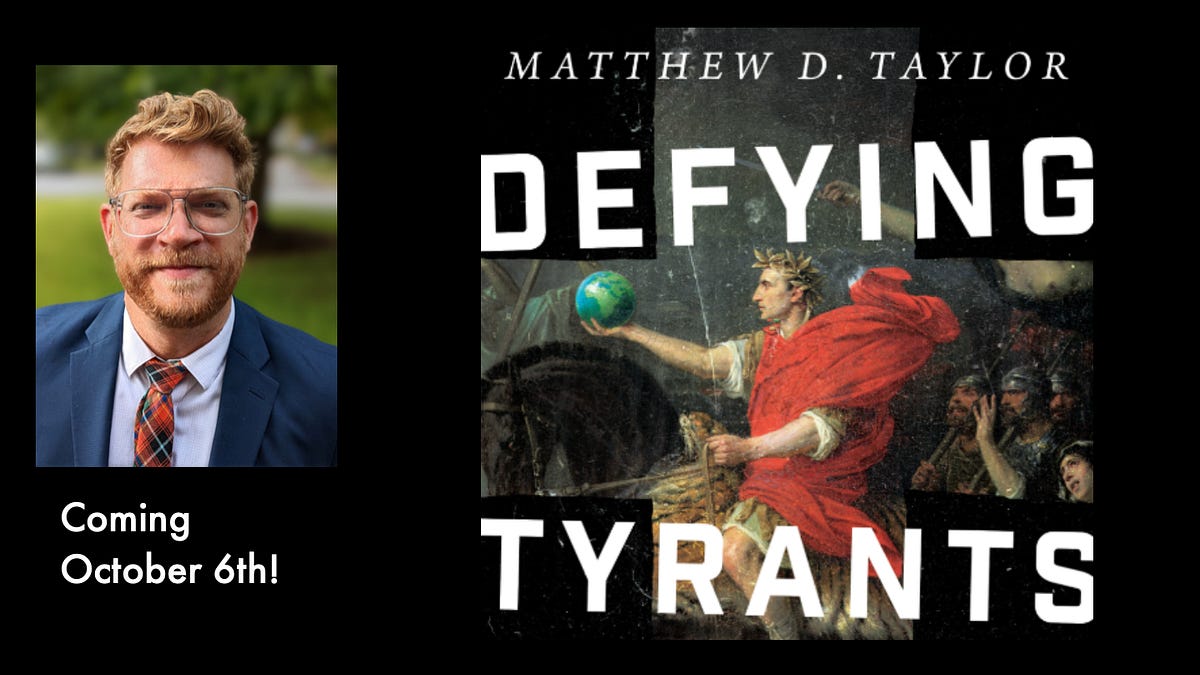
🔗 **Source:** [The Identifying Markers of Christian Supremacy](https://matthewdtaylor.substack.com/p/the-identifying-markers-of-christian)
> [!note]+ Document Notes
> tags: [christian-supremacy, christian-nationalism, political-theology, religious-authoritarianism, dominionism, church-power]
> author: Matthew D. Taylor
> source: Reckonings (Substack)
> reference: https://matthewdtaylor.substack.com/p/the-identifying-markers-of-christian
> date created: 2026-07-29 12:30
>
> > [!info] Generated analysis — not the author's words. Sections below are machine-written
> > from the captured source. Only text inside `> [!quote]` blocks is verbatim from the author.
> > Do not quote or attribute any other line to the named author.
>
> # 🏷️ Title: The Identifying Markers of Christian Supremacy
>
<!-- deep-read:sections start -->
## 🧭 Table of Contents
- [📝 Summary](#-summary)
- [📖 Main Content](#-main-content)
- [🗒️ Notes](#️-notes)
- [📚 References](#-references)
- [🗣️ Paraphrase](#️-paraphrase)
- [📰 Newsletter](#-newsletter)
- [✅ Action Items](#-action-items)
- [🧪 Hypotheses](#-hypotheses)
- [📊 Methodology](#-methodology)
- [❓ Questions](#-questions)
- [🔮 Future Research](#-future-research)
- [💡 Implications](#-implications)
- [🧠 Learning Styles Assessment](#-learning-styles-assessment)
- [📊 Accessibility Assessment](#-accessibility-assessment)
- [🌍 DEIB Assessment](#-deib-assessment)
- [✅ Logical Validity](#-logical-validity)
- [🛡️ DARVO Analysis](#-darvo-analysis)
- [🎯 Conclusion](#-conclusion)
### 🔗 References
- [Original post](https://matthewdtaylor.substack.com/p/the-identifying-markers-of-christian) — Reckonings, 21 July 2026
- *Defying Tyrants: Following Jesus in a World of Christian Antichrists* (Broadleaf Books, 6 October 2026) — the forthcoming book this excerpts
- *The Violent Take It by Force* — Taylor's prior book, cited internally as evidence for the global-radicalisation claim
- Matthew 4:5–7, Luke 4:5–8 — the temptation narrative used as the theological hinge
- "The renunciation of status" — attributed to an unnamed writer in the captured text
## 📝 Summary
- **What happened.** An excerpt from the introduction of Taylor's forthcoming book, published on his Substack. It defines "Christian supremacy," lists its behavioural markers, catalogues the different names it takes across Catholic, Orthodox, and Protestant traditions, and argues it is theological rather than merely political.
- **Why it matters.** The piece is doing definitional work — attempting to name a cross-tradition phenomenon that currently goes by incompatible labels (integralism, phyletism, dominionism, theonomy, Seven Mountains) in different communities. If the definition holds, it lets observers see one pattern where they currently see several unrelated ones.
- **Key stakeholders.** Christians across traditions, whom the piece addresses as its primary audience; researchers of religious extremism; the leaders and movements characterised, who are described in categories but not named individually here; readers deciding whether to buy the book.
- **Risks and tradeoffs.** This is an excerpt from a commercial book with a paid-subscription pitch appended, so it is written to persuade rather than to survey. No individual is named, no incident cited, no data given — the supporting evidence is deferred to Taylor's prior book and to his professional standing. The rhetoric is deliberately heightened ("Christian evil," "revolting stenches," "Christian Antichrists" in the subtitle), which is a homiletic register rather than an analytic one.
- **Bottom line.** Taylor's claim is that Christian supremacy is the belief that Christians are entitled to power over others; that it is spreading across traditions; that its distinguishing feature is theological rather than political; and that it must therefore be resisted inside churches as well as in public.
## 📖 Main Content
- **The definition is the load-bearing contribution.** "Christian supremacy, at its most basic, is the idea that Christians are entitled to power over other people." Everything else in the piece hangs off that. It is deliberately narrow — about entitlement to power, not about belief, conservatism, or public religiosity — and that narrowness is what makes it usable as a diagnostic rather than as a slur.
- **The behavioural markers are given as a list.** Fear and paranoia that exaggerates enemies; a self-image as good guys or victims even while inflicting harm; coercion and domination even when wearing a "loving" face; a sense of innate superiority over enemy and non-Christian neighbour alike; attraction to dictatorial leaders because the agenda is unpopular and would not win a free majority; selective proof-texting that avoids Jesus's teachings on power; preaching obedience to tyrants; zeal for Christianity as an abstraction combined with contempt for actual Christians outside the clan.
- **The taxonomy is the most reference-useful passage.** Taylor maps the vocabulary across traditions: Catholic "integralism" or "radical traditionalism"; Orthodox "phyletism," which he glosses as elevating a select set of Christians to premier status; Protestant "dominion theology" or "dominionism"; the ruling "Ekklesia" and "conquering the Seven Mountains" (family, government, religion, education, arts and entertainment, media, business); and "theonomy," using biblical law to restructure modern nations. His argument is that these are variations on one theme rather than unrelated movements.
- **The theological-not-political claim is the argumentative pivot.** Taylor grants that many humans seek power for many reasons, then argues that what distinguishes Christian supremacy among modern supremacies is its theological nature. The practical consequence he draws is directional: a purely political phenomenon could be resisted politically, but a theological one requires theological intervention — which is also, conveniently, what the book supplies.
- **The institutional-capture argument.** Because power must be held before it can be abused, Taylor argues such people rise through church structures — youth leaders, worship leaders, elders, deacons, pastors, priests, teachers, bishops, apostles, prophets, politicians — and are celebrated for piety, knowledge, and preaching. He invokes the whitewashed-tomb image from the gospels.
- **The scale claim is explicitly bounded.** Taylor states they are not a majority of the church but wield outsized influence. This is a meaningful limitation and he volunteers it.
- **The theological counter-argument is scriptural.** He grounds the opposing case in the temptation narrative ("all the kingdoms of this world" as a devil's bargain), Jesus's instruction to self-denial rather than coercive power, the first-and-last inversions, and early Christian practice under Roman rule — what he calls "the renunciation of status." The historical claim is that the early church's refusal to conform to Roman conceptions of power is precisely what got it into trouble.
- **Contested and uncertain.** The Orthodox gloss is imprecise: phyletism was condemned at the 1872 Council of Constantinople specifically as ecclesiastical nationalism — organising the church along ethnic lines — which is related to but not identical with Taylor's "elevation of a select set of Christians to premier status." Whether integralism, phyletism, and dominionism are genuinely one phenomenon or three with family resemblance is asserted rather than demonstrated. And the historical picture of a uniformly anti-authoritarian early church is a contested reading; Romans 13 and the household codes cut the other way and go unmentioned.
### 🗒️ Notes
- **Framing move at the open.** Taylor anticipates the skeptical reader in their own voice — "OK, sure, some Christians are a little power hungry… Let's not get carried away" — then answers with credentials rather than evidence. Effective rhetorically; worth noticing that the answer to "show me" is "I'm a researcher."
- **The horticultural metaphor runs throughout.** Garden beds, hedgerows, species, host habitats, invasive growth, first bloom. It carries an implicit argument — that this is an organism spreading rather than a set of independent choices — which is doing quiet analytic work.
- **"I have seen the rising face of Christian evil."** The strongest rhetorical line in the piece, and the clearest signal that the register is homiletic rather than academic.
- **On democracy.** The claim that these movements are "magnetized to dictatorial leaders because they need a path to power and they know their agenda is unpopular" is a claim about motive, offered without supporting evidence, and is among the piece's most contestable assertions.
- **On hermeneutics.** The charge is not that opponents misread scripture but that they avoid specific passages "with surgical precision" — an accusation of deliberate selection rather than error.
- **The reader-recruitment passage.** Taylor addresses readers who are thinking of specific celebrity Christians and tells them they are exactly who these movements want to enlist, then lists what will be offered: prosperity, protection, power, advancement, a government that empowers Christians. This is the piece's most direct pastoral move.
- **Commercial context, disclosed.** The post opens with a preorder link and closes with a paid-subscription pitch. Taylor states plainly that he keeps most work free and asks readers to carry some of the cost — the disclosure is honest and unmissable.
## 📚 References
- *Defying Tyrants: Following Jesus in a World of Christian Antichrists* — Broadleaf Books, 6 October 2026
- *The Violent Take It by Force: The Christian Movement That Is Threatening Our Democracy* — Taylor's prior book on the New Apostolic Reformation
- [Institute for Islamic, Christian, and Jewish Studies](https://icjs.org/) — Taylor's institutional affiliation, not stated in this excerpt
- Council of Constantinople (1872) — the primary source for the condemnation of phyletism, not cited in the piece
- *Nostra Aetate* and Vatican II documents — relevant background to the integralism discussion, not cited here
- Matthew 4:5–7, Luke 4:5–8, Matthew 23:27 (whitewashed tombs), Matthew 19:30 (first and last)
## 🗣️ Paraphrase
- Taylor expects readers to roll their eyes at the phrase "Christian supremacy" and says so up front.
- He answers the skepticism with his job: he researches extreme religious movements full time and says there is cause for alarm.
- He has watched this spread not only in his own Protestant world but across Catholic and Orthodox traditions too.
- His definition: Christian supremacy is the belief that Christians are entitled to power over other people.
- It often starts as fear — exaggerating enemies and the danger they pose.
- Its adherents see themselves as the good guys or the victims even while doing harm, so they have to caricature opponents.
- It seeks to coerce and dominate even when it presents as loving, including toward people who mean it no harm.
- Politically, he says it attacks democracy in favour of authoritarian states, because its agenda could not win a free vote.
- It is related to Christian nationalism but aims globally rather than at one nation.
- It proof-texts selectively and avoids what Jesus said about power.
- It preaches obedience to tyrants, or organises to install one.
- It reveres Christianity as an ideal while holding actual Christians outside its clan in contempt.
- The distinguishing feature among modern supremacies is that this one is theological, not just political.
- Because power must be held to be abused, its adherents climb into church leadership and are celebrated there.
- They are not a majority, but their influence is outsized.
- The same impulse has different names by tradition: integralism, phyletism, dominionism, Seven Mountains, theonomy.
- If you are thinking of specific celebrity Christians, Taylor says you are who they want to recruit.
- What they offer — prosperity, protection, power, a government that crushes your enemies — is the devil's bargain from the temptation narrative.
- Jesus taught self-denial and refusal of coercive power; the early church built its life around inverting status.
- Refusing Roman conceptions of power is what got the early Christians into trouble in the first place.
## 📰 Newsletter
Matthew D. Taylor has posted the introduction to his forthcoming book, and the definitional work in it is worth having even if you don't buy the book.
His definition is narrow on purpose: Christian supremacy is "the idea that Christians are entitled to power over other people." Not conservatism, not public faith, not voting badly — entitlement to power over others. Narrow enough to be a diagnostic rather than an insult, which is more than most writing in this space manages.
The most immediately useful passage is a vocabulary map. The same impulse gets called integralism or radical traditionalism by Catholics, phyletism among the Orthodox, dominionism or theonomy or "conquering the Seven Mountains" among Protestants. If you've ever read three articles about three of these and not realised they were describing overlapping terrain, that paragraph is the payoff.
His argumentative pivot is that this is theological, not merely political — so it can't be answered by political organising alone and has to be contested inside churches. Convenient for someone selling a theology book, and also not obviously wrong.
Fair warning on register: this is homiletic, not academic. "I have seen the rising face of Christian evil" is a sentence in it. No individuals are named, no incidents cited, and the evidence is largely deferred to his previous book, *The Violent Take It by Force*. Read it as a definitional essay and a sermon, and go to the earlier book for the receipts. ([Reckonings](https://matthewdtaylor.substack.com/p/the-identifying-markers-of-christian))
## ✅ Action Items
#### DevRel
- Developer advocacy: not applicable to this source.
- Education: the cross-tradition vocabulary map is a transferable teaching pattern — when one phenomenon has different names in different communities, publishing the crosswalk is high-value work.
- Developer experience: not applicable to this source.
- Developer marketing: not applicable to this source.
- Community management: the behavioural markers list is structurally similar to how communities describe bad-faith participation patterns; the definitional discipline (narrow, behaviour-based, not belief-based) is worth borrowing for codes of conduct.
- Internal/external/cross-project: not applicable to this source.
#### OSPO
- Policy & Governance: only as analogy — the argument that a movement's distinguishing feature determines which arena can address it applies to governance disputes generally.
- License Compliance: not applicable to this source.
- Security Management: not applicable to this source.
- Software Inventory: not applicable to this source.
- Developer Support: not applicable to this source.
- Community Engagement: not applicable to this source.
- Strategic Alignment: not applicable to this source.
#### Community
- Maintainers: the institutional-capture observation — that people seeking power climb the structures and are celebrated on the way up — has a direct analogue in project governance and is worth holding.
- Contributors: not applicable to this source.
- Sponsors: not applicable to this source.
- Ecosystem: not applicable to this source.
#### WordPress
- Core through Plugins: not applicable to this source. This is political-theology content routed to the faith-and-theology wiki with no WordPress-project bearing. Recording the subteam list as inapplicable rather than omitting it, per template requirements.
#### The WPOCC
- Programs: not applicable to this source.
- Projects: not applicable to this source.
- Funding experiments: not applicable to this source.
### FAIR
- Technical independence: not applicable to this source.
- Policies and covenants: not applicable to this source.
- Productized governance artifacts: not applicable to this source.
**Vault routing:** faith-and-theology wiki. Per the Field Notes scope gate, hard-excluded from the professional newsletter pipeline.
## 🧪 Hypotheses
- If integralism, phyletism, and dominionism are one phenomenon rather than three, then their adherents will show convergent positions on church-state relations despite having no shared texts, institutions, or genealogy — testable by comparing published platforms.
- If these movements are magnetized to authoritarian leaders because their agenda cannot win a free majority, then their stated policy positions will poll below majority support in the populations they seek to govern.
- If Christian supremacy is theological rather than merely political, then theological intervention should measurably reduce adherence relative to political counter-organising alone.
- If adherents systematically avoid specific passages about power, then their citation patterns will show statistically significant under-representation of those passages relative to a baseline of comparable preachers.
- If such figures preferentially climb institutional hierarchies, then their representation in leadership will exceed their representation in congregations.
- If the early church was distinctively anti-authoritarian, then its texts on power will diverge measurably from contemporaneous Greco-Roman moral literature — with Romans 13 and the household codes as the obvious counter-evidence to account for.
### 📊 Methodology
- **Convergence analysis.** Assemble published platforms and doctrinal statements from movements labelled integralist, phyletist, and dominionist. Two independent coders rate each on church-state relations, religious liberty for non-adherents, and democratic legitimacy. Convergence across genealogically unrelated movements would support the one-phenomenon claim; divergence would refute it.
- **Citation-pattern study.** Build a corpus of sermons and published writing from figures Taylor's framework would classify as supremacist, plus a matched control set. Compute citation frequency for power-related passages (Matthew 20:25–28, Mark 10:42–45, Philippians 2:5–11) against overall scriptural citation. Tests the surgical-avoidance claim empirically rather than by assertion.
- **Leadership representation.** Where movement affiliation is publicly identifiable, compare its prevalence in denominational leadership against congregational prevalence.
- **Polling test.** Extract concrete policy positions from movement literature; field them as standalone polling items without movement attribution to test the unpopular-agenda claim.
- **Intervention trial.** This is the hardest to run and the most valuable: compare congregations receiving theological engagement with the material against matched congregations receiving political-framing engagement, measuring attitude change over 12 months.
- **Historical text comparison.** Compare New Testament power language against Stoic and Roman moralist corpora, explicitly accounting for Romans 13 and the household codes rather than setting them aside.
- **Data sources.** Denominational directories; sermon archives and podcast transcripts; movement publications; existing religion-and-politics survey instruments (PRRI, Pew).
### ❓ Questions
- Is the Orthodox gloss right? Phyletism as condemned in 1872 was ecclesiastical nationalism — organising church along ethnic lines — which overlaps with but is not the same as elevating select Christians to premier status.
- What distinguishes Christian supremacy from ordinary religious majoritarianism, which is common across traditions and eras?
- How does the framework handle Christians who hold theocratic beliefs but reject coercion — is intent, action, or belief the criterion?
- Who is the unnamed writer credited with "the renunciation of status"?
- How does the early-church-as-anti-authoritarian reading handle Romans 13 and the household codes, which the excerpt does not mention?
- If adherents are a minority with outsized influence, what is the actual estimate, and by what method?
- Does the diagnostic risk over-application — could it classify any Christian political engagement as supremacist, and what is the stopping rule?
### 🔮 Future Research
- Comparative study of majoritarian religious movements across traditions to test whether the Christian case is genuinely distinct or an instance of a general pattern.
- Longitudinal tracking of the vocabulary crosswalk: do these movements begin citing each other over time, which would support convergence?
- The mechanism of institutional capture in voluntary religious organisations, and what structural features resist it.
- Whether theological counter-argument changes adherence, which is the empirical question the whole intervention thesis rests on and which nobody has answered.
- Reception study of how the term "Christian supremacy" itself lands — whether it clarifies or triggers defensive dismissal in its intended audience.
### 💡 Implications
- **Practice.** The definition is usable. Anyone assessing a movement or leader can ask the narrow question — is power over others being claimed as an entitlement — rather than the unfalsifiable one about sincerity.
- **Policy.** If the cross-tradition convergence claim holds, then policy analysis that treats Catholic integralism and Protestant dominionism as unrelated is missing a coordinated phenomenon. If it does not hold, the framing risks collapsing genuinely different movements into one target.
- **Security.** Not directly addressed in this excerpt, though the claim about attraction to authoritarian leaders has obvious implications for democratic-resilience work.
- **Education.** The vocabulary crosswalk is immediately teachable and would improve most public discussion of these movements, which currently proceeds in three unconnected conversations.
- **Funding models.** The piece is an unusually clean example of the independent-scholarship model: free content, book promotion, paid subscriptions, disclosed openly. Worth noting as a structure, and as a pressure toward heightened rhetoric.
### 🧠 Learning Styles Assessment
- Reading level estimate: Flesch-Kincaid Grade Level approximately 12–13. Long compound sentences with embedded clauses; the theological vocabulary (integralism, phyletism, theonomy, Ekklesia, hermeneutic, catechized) is dense and mostly unglossed.
#### 👀 Visual learners
- Present: none — unbroken prose with no images, diagrams, or pull quotes in the captured text.
- Improve: the taxonomy paragraph is begging for a table — tradition, local term, core claim, representative figures. A single graphic would make the piece's most valuable contribution scannable and quotable.
#### 🔊 Aural learners
- Present: none in the captured text, though the prose has a strong homiletic cadence that would read aloud well.
- Improve: Substack supports audio versions; this piece would carry particularly well as narration given its sermon structure.
#### 🗣️ Verbal learners
- Present: strong — the horticultural metaphor is sustained and coherent, and the whitewashed-tomb image is deployed effectively.
- Improve: key terms arrive unglossed. "Phyletism," "theonomy," "hermeneutic," and "Ekklesia" all appear without definition in a piece written for a general Christian readership.
#### 🧩 Kinesthetic learners
- Present: the reader-recruitment passage asks readers to actively call specific figures to mind, which is genuine participation.
- Improve: no checklist, no self-assessment, no worked example. Given that the piece is offering a diagnostic, a "how to apply these markers" exercise would be the obvious next step.
#### 🧠 Logical learners
- Present: the definition-then-markers-then-taxonomy structure is clear, and the scale claim is honestly bounded.
- Improve: zero evidence at the level of instance. No named individuals, no cited incidents, no data, no sources. Every empirical claim is either asserted or deferred to the author's prior book. A logically-minded reader has nothing to check.
#### 🧑🤝🧑 Social learners
- Present: Substack comments and the direct second-person address create a conversational frame.
- Improve: no discussion prompts, and no engagement with the strongest counter-arguments a reader might bring — which is what would make it a conversation rather than an address.
#### 🧘♀️ Solitary learners
- Present: self-contained excerpt, readable in one sitting, with an explicit self-examination invitation.
- Improve: a reading list would serve independent follow-up; the only pointer is to the author's own prior book.
#### 🌿 Naturalistic learners
- Present: unusually strong — the entire piece is structured on an ecological metaphor of species, habitats, invasive spread, and garden beds.
- Improve: the metaphor does unexamined argumentative work. Framing a set of human choices as an organism that "plagues host habitats" implies inevitability and contagion rather than agency and persuasion, which is a substantive claim smuggled in as imagery.
### 📊 Accessibility Assessment
#### Screen reader semantics
- Present: standard Substack article structure; emphasis is marked with `<em>` on the technical terms, which is semantically appropriate.
- Improve: the opening editorial note is bracketed with square brackets rather than marked up as a distinct section, so its status as framing rather than body text is conveyed visually only.
#### Keyboard navigation
- Present: cannot verify from captured text; standard Substack template with inline links.
- Improve: confirm visible focus on the preorder and subscription links, which are the page's primary calls to action.
#### Contrast and readability
- Present: cannot verify from captured text.
- Improve: verify contrast on the subscription-pitch block, which Substack typically renders in a tinted container — a common 1.4.3 failure spot.
#### Text resizing and reflow
- Present: cannot verify from captured text.
- Improve: confirm the long paragraphs reflow at 200% zoom without clipping; several run well over 150 words.
#### Media and captions
- Present: no media in the captured text, so no caption obligation.
- Improve: if an audio version is added, ship a transcript alongside it.
#### Forms and interactions
- Present: a subscription form is implied by the pitch, though not visible in the captured text.
- Improve: ensure the subscribe input has a visible label rather than placeholder-only text, and that success and error states are announced.
#### Standards reference
- Gaps map to WCAG 2.2 AA: 1.3.1 Info and Relationships (framing note markup), 1.4.3 Contrast (Minimum), 1.4.10 Reflow, 2.4.7 Focus Visible, 3.3.2 Labels or Instructions (subscribe form).
### 🌍 DEIB Assessment
#### Cultural breadth
- Present: genuinely notable for this genre — the piece deliberately covers Catholic, Orthodox, and Protestant traditions rather than treating American evangelicalism as the whole subject, and states the phenomenon is global rather than national.
- Improve: despite the global framing, every named concept traces to Western Christianity. African, Latin American, and Asian expressions of these movements — which are large and growing — go unmentioned, and the "peeked over the hedgerows" framing keeps the vantage point firmly Western.
#### Inclusive language
- Present: the definition is behaviour-based rather than identity-based, which matters: it describes what people claim rather than who they are, and Taylor explicitly says adherents are not a majority.
- Improve: the register is dehumanising in places — "species," "invasive," "plague," "host habitats," "revolting stenches." Biological metaphors applied to human groups carry a difficult history, and the piece uses them heavily on a group it is criticising. That is worth naming even when the criticism is substantively fair.
#### Neurodiversity support
- Present: consistent structure — definition, markers, taxonomy, counter-argument — and clear paragraph-level topic sentences.
- Improve: dense unglossed terminology and long sentences raise the processing cost considerably. The taxonomy paragraph packs six technical terms into one block of prose where a list would serve far better.
#### Representation
- Present: Taylor situates himself explicitly — Protestant, a seminary attendee, a researcher — so readers can locate his vantage point rather than having to infer it.
- Improve: this is the weakest dimension. No voice from within the movements described, no dissenting scholar, no named individual who could respond. The people characterised are described entirely in the third person and in categories. For a definitional piece, the absence of any account of how adherents describe themselves is a real gap — even a hostile description benefits from engaging its subject's self-understanding.
#### Psychological safety
- Present: mixed, and interestingly so. Taylor explicitly protects the majority of Christians ("God be praised!"), grounds his critique in shared scripture rather than from outside the tradition, and addresses tempted readers with something closer to pastoral concern than condemnation.
- Improve: the heightened language — "Christian evil," "Christian Antichrists," "revolting stenches" — will read to sympathetic-but-uncertain readers as an accusation rather than an invitation, which works against the piece's own recruitment aim. No content warning precedes material likely to be distressing for readers with religious-harm histories.
### ✅ Logical Validity
#### Strong reasoning
- **Definitional discipline.** Fixing the definition narrowly — entitlement to power over other people — before listing markers is the correct order and prevents the term from expanding to cover any disliked religious politics. The definition is falsifiable in principle: a movement that seeks no power over non-adherents does not qualify.
- **Analogical synthesis across traditions.** Identifying that Catholic integralism, Orthodox phyletism, and Protestant dominionism describe overlapping terrain is a genuine contribution. Practitioners in each tradition typically know only their own vocabulary, so the crosswalk creates visibility that none of them had.
- **Honest scope limitation.** "Christian supremacists don't make up a majority of the church" is volunteered, not extracted. Arguments that bound their own claims are more credible than those that do not, and this one is bounded at the point where overreach would be most tempting.
- **Internal critique from shared premises.** The theological counter-argument is built from scripture the target audience already accepts — the temptation narrative, the status inversions, early church practice. This is the strongest available form of argument for the intended readership, since it does not require them to grant anything they did not already hold.
- **Coherent causal mechanism.** "Because one must first have power to abuse it, Christian supremacists tend to find their way into leadership" supplies a mechanism rather than merely an observation, and it generates a testable prediction about leadership over-representation.
#### Fallacies
- **Appeal to authority, self — the response to skepticism, block 3.** "But as a religion researcher, whose job is keeping track of the thorny and fast-growing theologies behind extreme religious ideas, I can tell you that there is cause for alarm." *Weakness:* the anticipated objection is "show me the evidence," and the answer given is credentials. In an excerpt containing no named individuals, no cited incidents, and no data, expertise is carrying the entire evidentiary load. *Fix:* one concrete, sourced example would do more than the credential does. The book presumably has them; the excerpt does not.
- **Unfalsifiable construction — the victim-framing marker, block 5.** "In their own minds, Christian supremacists are always the good guys or the victims, even when they are the ones inflicting harm." *Weakness:* as a diagnostic marker this cannot be failed. Someone who denies being a supremacist and claims to be acting in good faith has thereby exhibited the marker. Genuine good faith and the pattern described produce identical observable behaviour. *Fix:* specify what evidence would distinguish sincere self-defence from the pattern — otherwise the marker classifies rather than diagnoses.
- **Circular definition risk — the whole markers list.** *Weakness:* the markers are drawn from movements already classified as supremacist, then offered as criteria for identifying supremacy. Without an independently specified sample, the list describes the cases it was derived from. *Fix:* state the selection criteria for the movements studied, and test the markers against a held-out set.
- **Loaded language substituting for argument — throughout, notably blocks 4 and 13.** "I have seen the rising face of Christian evil"; "revolting stenches and buried skeletons"; "aberrant, invasive power-species." *Weakness:* affective intensity is doing work that evidence would otherwise do, and it is concentrated exactly where specifics are absent. *Fix:* the substantive argument is strong enough to survive a plainer register; the heightened language mainly costs credibility with the skeptical reader the piece opens by addressing.
- **False dilemma, mild — the political-versus-theological framing, block 11.** "It's easy to look at this problem and imagine it to be primarily political… But make no mistake: Christian supremacy is also profoundly theological." *Weakness:* the framing treats political-explanation and theological-explanation as competitors, when material-interest and theological-conviction accounts are complementary. The conclusion drawn — that theological intervention is therefore necessary — is also the conclusion that justifies the book. *Fix:* argue for theological work as necessary-in-addition rather than as the distinguishing truth, which is both weaker and more defensible.
- **Cherry-picked historical premise — the early church argument, blocks 20–23.** The New Testament is presented as uniformly anti-authoritarian and status-inverting. *Weakness:* Romans 13's injunction to submit to governing authorities, and the household codes' endorsement of hierarchical order, are exactly the passages opponents cite, and neither appears. Selective citation is the specific charge Taylor levels at his subjects. *Fix:* engage the counter-texts directly; the argument would be considerably stronger for surviving them.
- **Motive attribution without evidence — block 7.** "They are magnetized to dictatorial leaders because they need a path to power and they know their agenda is unpopular." *Weakness:* a claim about what adherents privately know, offered without any supporting evidence. *Fix:* cite polling on the policy positions, which would establish unpopularity without requiring access to anyone's private beliefs.
#### Tone of voice
- Homiletic, urgent, and prophetic rather than academic — this is a jeremiad, and Taylor uses that word himself, so the register is chosen rather than accidental. He writes as an insider addressing his own tradition ("my own Protestant garden bed," "God be praised!"), which licenses a moral intensity an outside critic could not deploy. The second-person address shifts partway through from the skeptical reader to the tempted reader, and the piece is most effective in that second mode. The sustained biological metaphor and the escalating diction do real persuasive work, and they are also the piece's main analytic liability: they assert contagion where the argument needs to demonstrate convergence.
### 🛡️ DARVO Analysis
- **Deny.** Not present in the text's own rhetoric. Taylor makes accusations rather than answering them, so there is nothing here for him to deny. Note, however, that the piece *describes* denial behaviour in its subjects — the claim that adherents "lie about their own real-world victims" is an allegation of denial, not an instance of it.
- **Attack.** Present and substantial, directed at a described category rather than at named individuals. The attack is the piece's purpose, so this is not a covert move — but the intensity is worth recording: "Christian evil," "revolting stenches," "aberrant, invasive power-species," "rebellion against Jesus's explicit teachings." Because no individual is named, no one has standing to respond, which is a structural feature of the rhetoric rather than an accident.
- **Reverse victim/offender.** Not present in Taylor's own argument — but the piece is largely *about* this pattern, which makes it an unusually direct specimen for the framework. Block 5 describes it explicitly: adherents "are always the good guys or the victims, even when they are the ones inflicting harm and abuse." That is a definition of victim-offender inversion in all but name, applied as a diagnostic marker. Taylor is naming DARVO without the vocabulary.
- **Emotional cues and rhetoric.** Fear framing ("cause for alarm," "rising face of Christian evil"); disgust framing (stenches, skeletons, plague, invasive species); urgency ("make no mistake"); in-group appeals ("God be praised!"). The disgust register is the most notable, and it is the one most likely to produce agreement without argument.
- **Related fallacies.** The unfalsifiable victim-framing marker and the loaded-language substitution are both catalogued above. The two interact: an emotionally intense description of an unfalsifiable marker is persuasive in proportion to how hard it is to check.
- **Analytical note.** A text that accurately describes a manipulation pattern in others is not thereby free of persuasion techniques itself, and this one is not. The substantive critique may well be correct; the rhetorical construction still warrants the same scrutiny it applies.
## 🎯 Conclusion
- **Bottom line.** Taylor defines Christian supremacy as the belief that Christians are entitled to power over other people, lists behavioural markers, and maps the term's equivalents across Catholic, Orthodox, and Protestant traditions — integralism, phyletism, dominionism, theonomy, Seven Mountains. His argumentative pivot is that the phenomenon is theological rather than merely political, and therefore requires theological resistance inside churches as well as political resistance outside them. He bounds the claim: adherents are a minority with outsized influence.
- **Next steps for readers.** Take the definition and the vocabulary crosswalk; both are usable immediately and are the piece's real contribution. Do not take the excerpt as evidence — it names no one, cites no incident, and defers its empirical support to *The Violent Take It by Force*, which is where to go if you want the receipts. Hold the unfalsifiable marker at arm's length: a diagnostic that treats denial as confirmation cannot distinguish a supremacist from someone wrongly accused, and that is a real defect in an otherwise disciplined definition. And read the early-church section knowing that Romans 13 and the household codes are the passages his opponents cite, and that neither appears here.
## 🔄 Refactor Appendix — The Identifying Markers of Christian Supremacy
> Density: 2–5 Literature atoms (H3), 0–3 Permanent candidates (H4).
> Defaults: 3 Literature, 1 Permanent. Resonance filter: if you can't
> articulate in one line why a claim matters, drop it.
>
> Konik claim-header rules: present tense, declarative, ≤10 words when
> possible, searchable, unique, mirrors annotation focus if present.
>
> Atomicity: one declarative sentence per atom. "and"/"also" → split.
>
> Tag pool: #bmf · #addendum · #xref · #articleseed · #storystem · #share · #aphorisms
### 📚 Literature Atoms (H3)
#### [H1] Christian supremacy claims entitlement to power over others
> [!quote] ID:rw_01kyqbbdwx5fbh976qpajzrhz7
> Christian supremacy, at its most basic, is the idea that Christians are entitled to power over other people.
**Context & use**:
- The definitional paragraph, early in the excerpt.
- Narrow enough to function as a diagnostic rather than an epithet. The same paragraph also describes victim-inversion, which is DARVO under another name — worth keeping the two together.
**Tags**: #xref #articleseed
**Highlight**: [view highlight](https://read.readwise.io/read/01kyqbbdwx5fbh976qpajzrhz7)
<!-- atomicity: 1 idea ✓ -->
#### [H2] One impulse carries different names by tradition
> [!quote] ID:rw_01kyqbbx5tnszkgg4krakze364
> Some Catholics have named their aberrant, invasive power-species "integralism" or "radical traditionalism"
**Context & use**:
- The taxonomy paragraph, roughly two-thirds through.
- The most reference-useful passage in the piece: integralism (Catholic), phyletism (Orthodox), dominionism / Seven Mountains / theonomy (Protestant). Note the Orthodox gloss is imprecise against the 1872 condemnation.
**Tags**: #xref #share
**Highlight**: [view highlight](https://read.readwise.io/read/01kyqbbx5tnszkgg4krakze364)
<!-- atomicity: 1 idea ✓ -->
#### [H3] Theological problems resist purely political remedies
> [!quote] ID:rw_01kyqbc7hs5ehgs3x9xtpqtkhz
> what makes Christian supremacy distinct, among all the varied, nasty supremacies of our modern world, is its theological nature
**Context & use**:
- The argumentative pivot, mid-excerpt.
- The claim that determines the book's whole prescription. Also the claim that most conveniently justifies writing the book — worth holding both facts at once.
**Tags**: #xref
**Highlight**: [view highlight](https://read.readwise.io/read/01kyqbc7hs5ehgs3x9xtpqtkhz)
<!-- atomicity: 1 idea ✓ -->
### 🧠 Permanent Candidates (H4)
#### [P1] A movement's naming convention hides its convergence with others
**Claim** (one sentence, Courtney's voice): When the same impulse acquires a different name inside each community it enters, participants in every community will see a local phenomenon and miss the shared one.
**Evidence pointer**: [[#H2]]
**Scope & conditions**: Holds where communities have low cross-readership and each has coined its own term. Breaks where a shared external label already exists and is used by all parties — at which point the convergence is visible and the disagreement is about it rather than about whether it exists.
**Links**:
- [[Vocabulary crosswalks as scholarship]] — because extends
- [[Parallel terminology in open source governance]] — because applies-in a secular case
- [[Convergent evolution]] — because contrasts on whether shared shape implies shared origin
<!-- atomicity: 1 idea ✓ -->
#### [P2] A diagnostic that treats denial as confirmation cannot diagnose
**Claim** (one sentence, Courtney's voice): Any criterion satisfied both by the behaviour it targets and by an innocent party's denial of it has stopped being a test and become a classification.
**Evidence pointer**: [[#H1]]
**Scope & conditions**: Holds for any behavioural framework used to assess individuals — supremacy markers here, but equally bad-faith detection in community moderation. Breaks where the criterion is one input among several and the framework specifies disconfirming evidence, which restores falsifiability.
`proof_state: working`
**Links**:
- [[Falsifiability]] — because extends
- [[DARVO analysis]] — because contrasts on how to apply a pattern without presuming guilt
- [[Code of conduct enforcement]] — because applies-in community governance
## Tests / falsifiers
- Identify a case where the framework's author would say the marker is present but the person is not a supremacist. If no such case can be constructed, the marker is not falsifiable.
- If the framework specifies what evidence would clear an accused person, the objection dissolves.
<!-- atomicity: 1 idea ✓ -->
### ✏️ Fleeting Queue
- [F1] Check the 1872 Council of Constantinople on phyletism — Taylor's gloss reads as ecclesiastical nationalism, not "elevation of a select set of Christians" — https://matthewdtaylor.substack.com/p/the-identifying-markers-of-christian #fleeting #inbox
- [F2] Read *The Violent Take It by Force* — the excerpt defers all its evidence there #fleeting #inbox
- [F3] Who is the unnamed writer credited with "the renunciation of status"? #fleeting #inbox
- [F4] How does this framework handle Romans 13 and the household codes? Their absence is the excerpt's biggest exegetical gap #fleeting #inbox
- [F5] The vocabulary-crosswalk pattern generalises — worth a note on where else one phenomenon hides behind community-local names #fleeting #inbox
### → Things 3 (max 2 actions)
- [ ] Add the cross-tradition supremacy vocabulary map to the faith-and-theology wiki — vault #things
- [ ] Verify the phyletism gloss against the 1872 conciliar text before citing this anywhere — research #things
<!-- deep-read:sections end -->
📄 **Full text:** [[Full Document Contents/Articles/The Identifying Markers of Christian Supremacy.md|The Identifying Markers of Christian Supremacy by Matthew D. Taylor]]
## Highlights
- Christian supremacy, at its most basic, is the idea that Christians are entitled to power over other people. It is represented by an ever-growing array of species and forms. Christian supremacy can appear, at first bloom, as a sort of fear and paranoia: an exaggeration of one’s enemies and the peril they pose. In their own minds, Christian supremacists are always the good guys or the victims, even when they are the ones inflicting harm and abuse, so they must exaggerate and caricature their opponents and lie about their own real-world victims to make them all seem truly evil. ([View Highlight](https://read.readwise.io/read/01kyqbbdwx5fbh976qpajzrhz7))
- Note: The operative definition — entitlement to power over others — plus a description of the victim-inversion pattern that is structurally DARVO under another name.
- Tags: atom/zettel/z1, religious-authoritarianism, atom/literature/h1, christian-supremacy, darvo/reverse
- It’s easy to look at this problem and imagine it to be primarily *political*, just human beings selfish for more power. If this were true, then it would merely need to be resisted in the political realm as a political force. But make no mistake: Christian supremacy is also profoundly theological. Many humans are attracted to power and embrace the will to dominate for many reasons. In fact, what makes Christian supremacy distinct, among all the varied, nasty supremacies of our modern world, is its theological nature. It is precisely Christian supremacy’s theological toxicity that makes interventionslike this book and other jeremiads, books, and sermons necessary. We must resist it both in the public square and in our churches. ([View Highlight](https://read.readwise.io/read/01kyqbc7hs5ehgs3x9xtpqtkhz))
- Note: The load-bearing move for the book's thesis: if the phenomenon is theological rather than merely political, then political counter-organising alone cannot address it.
- Tags: atom/literature/h2, christian-supremacy, political-theology
- As we’ve already noted, different species of Christian supremacy plague different host habitats, attaching themselves to different forms of Christianity. Hyperactive Christian nationalism is a sort of brash, chauvinistic version, blending a blood-and-soil nativism with a cultural holy war. Some Catholics have named their aberrant, invasive power-species “integralism” or “radical traditionalism,” a vision that is literally medieval in how it calibrates the relationship of church and state. It is termed *phyletism* among the Orthodox: the elevation of a select set of Christians to premier status. Some Protestants call it *dominion theology* or *dominionism*––a hope for Christian power over the whole globe. Others talk of Christians as the ruling *Ekklesia* and “conquering the Seven Mountains” (family, government, religion, education, arts ([View Highlight](https://read.readwise.io/read/01kyqbbx5tnszkgg4krakze364))
- Note: The cross-tradition vocabulary map: integralism (Catholic), phyletism (Orthodox), dominionism / Seven Mountains / theonomy (Protestant). The most reference-useful passage in the piece.
- Tags: religious-taxonomy, dominionism, atom/literature/h1, christian-supremacy
## Links
- [[3. Resources/Permanent Notes/Religious Literacy Starts by Refusing the Fiction of a Monolithic Faith]] — applies-in: the shared supremacy claim needs a vocabulary crosswalk that preserves differences among traditions.
- [[3. Resources/MOCs/Faith & Theology MOC]] — belongs-to: political theology and Christian supremacy.