The Man Who Started the Newsboys Then Vanished
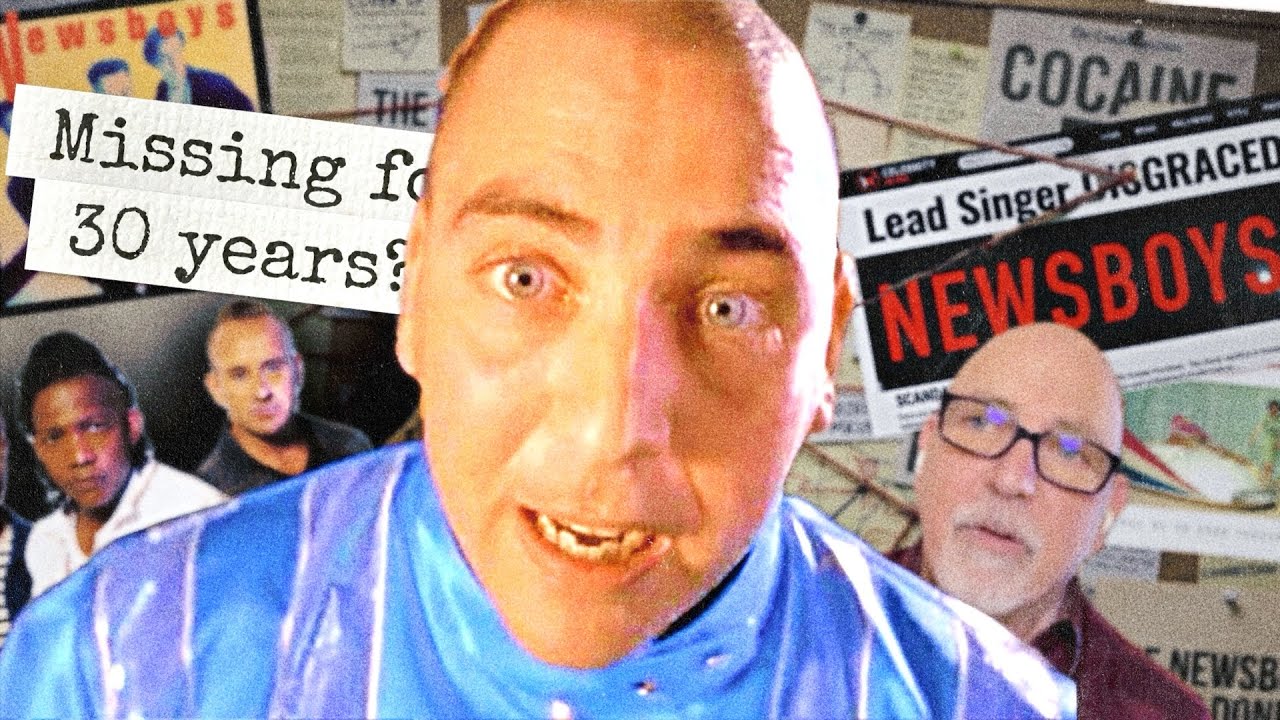
🔗 **Source:** [The Man Who Started the Newsboys Then Vanished](https://www.youtube.com/watch?v=YWNbWcXYjL0)
> [!note]+ Document Notes
> tags: [newsboys, contemporary-christian-music, band-ownership-disputes, addiction-and-recovery, testimony-narratives]
> author: Jonathan Allen Wright
> source: Jonathan Allen Wright
> reference: https://www.youtube.com/watch?v=YWNbWcXYjL0
> date created: 2026-09-10
>
> > [!info] Generated analysis — not the author's words. Sections below are machine-written
> > from the captured source. Only text inside `> [!quote]` blocks is verbatim from the author.
> > Do not quote or attribute any other line to the named author.
>
> # 🏷️ Title: The Man Who Started the Newsboys Then Vanished
>
<!-- deep-read:sections start -->
## 🧭 Table of Contents
- [📝 Summary](#-summary)
- [📖 Main Content](#-main-content)
- [🗒️ Notes](#️-notes)
- [📚 References](#-references)
- [🗣️ Paraphrase](#️-paraphrase)
- [📰 Newsletter](#-newsletter)
- [✅ Action Items](#-action-items)
- [🧪 Hypotheses](#-hypotheses)
- [📊 Methodology](#-methodology)
- [❓ Questions](#-questions)
- [🔮 Future Research](#-future-research)
- [💡 Implications](#-implications)
- [🧠 Learning Styles Assessment](#-learning-styles-assessment)
- [📊 Accessibility Assessment](#-accessibility-assessment)
- [🌍 DEIB Assessment](#-deib-assessment)
- [✅ Logical Validity](#-logical-validity)
- [🛡️ DARVO Analysis](#-darvo-analysis)
- [🎯 Conclusion](#-conclusion)
- [🔄 Refactor Appendix](#-refactor-appendix--the-man-who-started-the-newsboys-then-vanished)
### 🔗 References
- [🗒️ Notes — full timestamped walkthrough](#️-notes)
- [✅ Action Items — org-mapping and applicability](#-action-items)
- [🔄 Refactor Appendix — atoms and permanent candidates](#-refactor-appendix--the-man-who-started-the-newsboys-then-vanished)
## 📝 Summary
- **What happened.** Host Jonathan Allen Wright interviews John James, the founding lead singer of the Newsboys, about growing up in an abusive household in Far North Queensland, Australia; converting to Christianity as a child; co-founding the band (originally "The News") at 18 with Peter Furler; the band's move to the US and Nashville; John's escalating compromises (infidelity, alcohol, internet use) hidden behind touring success; his 1997 confession to Furler and exit from the band within days; a period of addiction, homelessness-adjacent poverty, and estrangement from former bandmates; and his eventual return to faith, remarriage, and founding a ministry, I Reach USA, along with a new book and first new music in roughly 30 years.
- **Why it matters.** The video's title frames John James as someone who "vanished," but the interview itself documents the opposite: a publicly traceable life with a named ministry, public school and prison outreach, military chaplaincy-adjacent work, a forthcoming book, and new recorded music. That gap between title and content is the video's own most checkable claim.
- **Key stakeholders.** John James (interview subject, first-person account of his own departure and recovery); the Newsboys as an institution (Peter Furler, later lead singer Michael Tait, and manager-turned-more-than-manager Wes Campbell); host Jonathan Allen Wright, who supplies third-person narration between John's answers and states some facts (the band's post-John corporate structure, the "public narrative" about why John left) without citing a source inside the video.
- **Risks and tradeoffs.** The host's narration includes an unsourced claim that manager Wes Campbell "had kind of taken more ownership of the band in a strange way" at the same time John was pushed out — a claim about contractual/credit arrangements that is substantive and worth taking seriously, but it is asserted by the narrator, not documented with contracts, filings, or a direct John James statement in this transcript. The video also references Michael Tait's later "accusations" and departure from the band only in passing, explicitly deferring detail to "a later video" — a live, contested, and separate matter this note does not extend into.
- **Bottom line.** This is a first-person redemption narrative told largely in John James's own words, interspersed with host narration that makes one specific, unverified claim about the band's ownership structure. What's documented (the timeline of his departure, his own account of his compromises, his current public ministry) should be read separately from what's alleged (the ownership-structure claim) and from what's explicitly out of scope (Michael Tait's situation).
## 📖 Main Content
John James's account runs chronologically: a childhood in a "toxic" and "abusive" environment under his father Frank, an Italian-Australian man he describes as "the playboy amongst playboys"; his parents' separation and his placement with an aunt and uncle at around age four; a 1979 encounter with a man named Graham who invited him to a youth club, which led to his conversion; and, separately, his father's own unexpected conversion, which the interview frames as the mechanism that eventually reunited the family. John later returned to live with his father, met Peter Furler at 18, and became the lead singer of what started as "The News" — later renamed "The Newsboys" to avoid confusion with Huey Lewis and the News.
The band's early break came through informal, undocumented relationships rather than a structured business: manager Wes Campbell took the job with, in John's words, "no contracts, no legal documents," after running a Christian coffee-shop venue where the band drew a following. A connection to David Smallbone (of the Smallbone/for KING & COUNTRY family, per the transcript's own account) led to a production deal via Tommy Sims, and the band moved to the US in 1987 and later to Nashville. Through the mid-1990s the band built momentum — the interview cites 1995 as roughly when songs like "Not Ashamed" and "Shine" became hits — and credits producer/collaborator Steve Taylor as a creative turning point.
John describes his unraveling as gradual and self-rationalized: "a little compromise here, a little there," internet use, alcohol, and infidelity while married, all justified in the moment by a mission-focused logic he later names explicitly — "protecting the brand." In 1997, while working on the *Step Up to the Microphone* album, he told Peter Furler about his double life; "within days," per the host's narration, John was out of the band. The public narrative at the time attributed his exit to cocaine use; John says in the interview that his substance use actually escalated *after* his wife and the band had already left him, not before — a sequencing claim that runs counter to the story the host says was circulating publicly. The host does not cite a source for either the "public narrative" or the timing counter-claim; both are presented as narration without an on-screen citation.
What follows is a period of real hardship: an unemployment-office scene where an interviewer tells him "it's going to be really difficult to find you a job," and a door-to-door business selling Lamingtons (an Australian sponge cake, explained in the interview as roughly analogous to "a door-to-door Twinkie salesman") that ends with him being removed from a mall by security. He describes losing his sense of identity along with the band membership itself, and credits his father — the same man responsible for his childhood abuse — with helping him back toward church and recovery. He later met his current wife, Tanya, and together they founded I Reach USA, a ministry the interview describes as doing public-school talks, addiction-recovery-clinic work, prison outreach, and work with military "H2F facilitators" on a "spiritual resilience program." He has also written a book (title not given in the transcript) and recorded new music for the first time in roughly three decades.
Two claims in the video are host narration rather than John's own words, and deserve separate handling. First: "Wes Campbell was their manager, but also started becoming more of an owner, Newsboys Incorporated, Newsboys Touring LLC" — a claim about the band's legal-entity structure, stated by the narrator in third person ("their manager"), with no document, filing, or on-screen source shown. Second, and more pointed: the narrator states that "within days, John was out of the band, and Wes had kind of taken more ownership of the band in a strange way" — directly juxtaposing John's exit with the manager's growing ownership stake, using the hedge phrase "in a strange way" that implies suspicion without asserting a specific causal mechanism. Neither claim is attributed to a named source inside the transcript, and John James does not make either claim himself in the portions of the interview included here. This is exactly the kind of contractual/credit claim worth atomizing carefully — see the DARVO Analysis and Refactor Appendix sections below for how this note handles it.
## 🗒️ Notes
#### ⏱️ [00:00:00](https://www.youtube.com/watch?v=YWNbWcXYjL0&t=0s) Framing: the Newsboys' current controversy vs. John James's history
- Host opens by referencing "investigations, accusations" currently surrounding the Newsboys (unspecified in this segment) and pivots to "the original lead singer" and his "collapse... over 30 years ago."
- States the video's guiding questions up front: what happened to John James, and can a person recover from "completely destroying their life."
#### ⏱️ [00:01:01](https://www.youtube.com/watch?v=YWNbWcXYjL0&t=61s) Childhood in Far North Queensland; father's double life
- John: born into what he calls "a very toxic environment and a very abusive environment."
- His father, Frank, is described as a first-generation Italian-Sicilian, "the playboy amongst playboys," involved in unspecified illegal activity ("illegal card... games, illegal horse riding").
- His mother, Joy, is described as an outsider in the Italian-Australian community who "left" after dealing with an abusive, unfaithful husband.
#### ⏱️ [00:03:13](https://www.youtube.com/watch?v=YWNbWcXYjL0&t=193s) Parents split; raised by an aunt and uncle
- At around age four, John's older siblings went with his biological father; his father "wasn't prepared to take" John.
- An aunt and uncle (his father's sister and her husband) raised him instead — described as "good people... loving people," but John names a lasting "void" from not being raised by either biological parent.
#### ⏱️ [00:04:07](https://www.youtube.com/watch?v=YWNbWcXYjL0&t=247s) 1979: meeting Graham, conversion, and his father's parallel conversion
- A man named Graham stopped his van, struck up a conversation, and invited John to a youth club with food — John cites this as the start of his introduction to Christianity.
- Separately, his father Frank underwent what John calls "a road to Damascus experience," which the interview frames as reuniting the family: Frank flew out, led John's stepmother to faith, and "started a crusade" to bring the rest of the family to Christ.
#### ⏱️ [00:06:22](https://www.youtube.com/watch?v=YWNbWcXYjL0&t=382s) Meets Peter Furler; becomes the News' lead singer at 18
- At a friend's birthday party, John met Peter Furler, a drummer whose band (with guitarist George and bassist Shawn) needed a singer.
- John: "mate, I elected myself... 'Do you want the job?' 'Yeah, I'll take it.'" He cites an aunt-and-uncle record collection (Bing Crosby, Frank Sinatra, Dean Martin, Tom Jones) as his early musical influence.
#### ⏱️ [00:07:51](https://www.youtube.com/watch?v=YWNbWcXYjL0&t=471s) Garage rehearsals and early songwriting as "The News"
- The band rehearsed weekly in Peter's parents' garage; John says "most of them were rubbish, but we didn't care."
- States the band's early self-understanding: every band delivers a message, so they chose to deliver one "as Christians with a message of hope."
#### ⏱️ [00:09:09](https://www.youtube.com/watch?v=YWNbWcXYjL0&t=549s) Wes Campbell becomes manager with no contract
- Wes Campbell ran a Christian coffee-shop venue where the band played and drew a growing, paying crowd.
- The band asked him to manage them informally: "There was no contracts, no legal documents. He just thought, 'Okay.'" He became "our manager and sound guy."
#### ⏱️ [00:10:09](https://www.youtube.com/watch?v=YWNbWcXYjL0&t=609s) Renamed Newsboys; first record deal via Smallbone and Tommy Sims
- The band renamed itself from "The News" to "The Newsboys" to avoid confusion with Huey Lewis and the News.
- Their first album, *Read All About It*, was produced by Tommy Sims; the connection came through David Smallbone, who the transcript says "was really responsible for helping to join the dots" toward a record deal with a small label.
#### ⏱️ [00:11:34](https://www.youtube.com/watch?v=YWNbWcXYjL0&t=694s) Move to the US in 1987, then Nashville
- John frames the move as necessary: "we felt America was the place we needed to be," citing Australia's small population and "almost non-existent Christian music culture" at the time.
- The band settled in Nashville, citing it as the hub for both country music and Christian record labels.
#### ⏱️ [00:15:41](https://www.youtube.com/watch?v=YWNbWcXYjL0&t=941s) Steve Taylor collaboration and a creative turning point
- Steve Taylor was originally brought on to write lyrics for one song ("Not Ashamed"), then produced the full album.
- John calls the resulting multi-album collaboration the source of "the most all-time iconic Newsboys songs" and "a real turning point in the band's career."
#### ⏱️ [00:16:55](https://www.youtube.com/watch?v=YWNbWcXYjL0&t=1015s) Cracks in the foundation: pressure and self-rationalized compromise
- John describes not being "aware to the degree I should have been" of mounting moral and workload pressure during the band's rise.
- Names the mechanism directly: "a little compromise here, a little there... it's no big deal," including early internet use, chat rooms, escalating alcohol consumption, and infidelity while married — framed as small erosions that compound over time.
#### ⏱️ [00:20:38](https://www.youtube.com/watch?v=YWNbWcXYjL0&t=1238s) 1997 confession to Peter Furler and departure from the band
- While working on the *Step Up to the Microphone* album, John told Furler about his "double life" during a studio break: "I had purposed in my heart that I'm just going to pull the trigger and let the chips fall where they may."
- Host narration (third person, not John's own words): "within days, John was out of the band, and Wes had kind of taken more ownership of the band in a strange way." The host also states the public narrative attributed his exit to cocaine use, while John says his substance use actually escalated only after his wife and the band had already left him.
#### ⏱️ [00:22:34](https://www.youtube.com/watch?v=YWNbWcXYjL0&t=1354s) Aftermath: lost marriage, lost bandmates, "public leper"
- John reflects that if he'd been living a double life around close friends, he'd understand being let go — but also names the loss of "brotherhood" as one of the most painful parts.
- He explicitly declines to stay bitter: "I understand the decisions they made to be on damage control and distance themselves from me. I would have probably have done exactly the same thing." He also says he became "public leper number one" — former ministry friends stopped taking his calls.
#### ⏱️ [00:24:35](https://www.youtube.com/watch?v=YWNbWcXYjL0&t=1475s) Australia: addiction, unemployment, Lamington sales, rock bottom
- Back in Australia with "no formal education," John describes an unemployment-office interaction where he's told it will be "really difficult" to place him.
- He started a door-to-door Lamington-selling business, including an incident where mall security removed him — which he frames as a stark, almost comic contrast to once being escorted by security to major stages.
#### ⏱️ [00:28:20](https://www.youtube.com/watch?v=YWNbWcXYjL0&t=1700s) The Newsboys continue without him; ownership structure shifts
- Host narration states Peter Furler took over as lead singer and the band's sound "gradually shifted," while John (first-person) recalls fans still asking "where's John?" months and years after his exit.
- Host narration, not attributed to John or any named source: "Wes Campbell was their manager, but also started becoming more of an owner, Newsboys Incorporated, Newsboys Touring LLC. These things start creeping in where it starts making the lines a little blurry." This is the video's central claim about contractual/credit arrangements around the band's founder-level departure — see the Refactor Appendix for its atomized, attributed treatment.
#### ⏱️ [00:29:24](https://www.youtube.com/watch?v=YWNbWcXYjL0&t=1764s) Present day: wife Tanya, I Reach USA, new book and music
- Host narration notes Peter Furler later left the band in "the late 2000s" and was replaced by Michael Tait, who "has had several accusations come out against him and has stepped down from the band" — the host explicitly defers detail, saying "maybe that's for a later video." This note does not extend into that separate, unresolved matter.
- John married Tanya (who the interview says had "her own difficult past in a different marriage") and together they founded I Reach USA, doing public-school talks, addiction-recovery outreach, prison ministry, and work with a military "spiritual resilience program." He has written a book and recorded new music for the first time in roughly 30 years.
## 📚 References
- [Video: The Man Who Started the Newsboys Then Vanished](https://www.youtube.com/watch?v=YWNbWcXYjL0) — Jonathan Allen Wright, 35:40, published 2026-03-27.
- The Jawline — host's second channel/podcast, named in the closing segment as the location of "John and I's full conversation." No URL is given in the transcript; not linked here to avoid guessing at one.
- I Reach USA — ministry co-founded by John James and his wife Tanya, named directly in the interview. No URL is given in the transcript.
- John James's book and new album — referenced by the host as available for pre-order in a video comment/description; no title or URL is stated in the transcript itself.
## 🗣️ Paraphrase
John James tells a story with two distinct halves: a public collapse, driven by his own account of small, self-justified compromises during the Newsboys' rise, and a much quieter public rebuilding — recovery, a second marriage, and a ministry doing outreach work in schools, addiction-recovery clinics, prisons, and with military personnel. He's forthright about his own responsibility, repeatedly declining to blame the bandmates and manager who distanced themselves from him after his 1997 confession, even while naming the real cost: lost marriage, lost "brotherhood," years of poverty and addiction back in Australia.
The interview's harder-to-verify layer sits in the host's narration, not John's own words. Jonathan Allen Wright states, without an on-screen source, that manager Wes Campbell's ownership stake in the band grew "in a strange way" around the same time John was pushed out, and that the band was later restructured into named legal entities ("Newsboys Incorporated, Newsboys Touring LLC") under Campbell. Those are substantive claims about who ends up controlling a band's name, income, and credit after a founder's departure — but they're asserted, not documented, inside this transcript.
## 📰 Newsletter
A redemption-arc interview worth reading past its own headline: the video's title says John James, founding lead singer of the Newsboys, "vanished" after leaving the band in 1997 — but the interview itself documents a fully public second act, including a named ministry (I Reach USA), school and prison outreach, work with military chaplaincy-adjacent programs, a forthcoming book, and his first new recorded music in roughly 30 years. The more interesting thread for anyone tracking how Christian entertainment institutions handle founder departures is buried in the host's narration, not John's own words: an unsourced claim that manager Wes Campbell's ownership stake in the band grew "in a strange way" right as John was exiting, later formalized into named entities ("Newsboys Incorporated, Newsboys Touring LLC"). Worth flagging as a claim to watch, not a settled fact — no contract, filing, or named source backs it up inside this video.
## ✅ Action Items
#### DevRel
- Not applicable to this source — a personal testimony interview with no developer-relations, SDK, or technical-community content.
#### OSPO
- Not applicable to this source — no open-source governance, licensing, or software content anywhere in the transcript.
#### Community
- Not applicable to this source in the open-source/technical sense. If read instead through a faith-community lens: the video is a documented case study in how a religious-entertainment institution (a band with a manager who became more of an owner) handled a founder's moral failure and exit — relevant background for anyone studying accountability structures in celebrity-pastor-adjacent or Christian-entertainment organizations, though this transcript alone doesn't resolve the ownership claim either way.
#### WordPress
- Not applicable to this source across all subteams (Core, Core Performance, Core AI, Core Program Team, Mobile, Playground, Community, Training, Marketing, Support, Design, Documentation, Photos, TV, Polyglots, Accessibility, Meta, CLI, Hosting, Tide, Openverse, Themes, Plugins) — no WordPress or software content appears in the transcript.
#### The WPOCC
- Not applicable to this source — no fellowship, funding, or governance content; unrelated to The WPOCC's remit.
#### FAIR
- Not applicable to this source — no federation, provenance, or governance-artifact content.
## 🧪 Hypotheses
- H1: The host's claim that manager Wes Campbell's ownership of the band grew "in a strange way" concurrent with John's 1997 exit is a documentable, checkable fact (via band incorporation records, if "Newsboys Incorporated" and "Newsboys Touring LLC" are real, searchable entities) rather than an inference.
- H2: The "public narrative" the host says attributed John's departure to cocaine use was actually reported contemporaneously in 1997-98 Christian music press, and is traceable to a specific outlet or statement rather than generalized hearsay.
- H3: John James's self-description of moral drift ("a little compromise here, a little there") matches a documented behavioral pattern in addiction-recovery literature on gradual boundary erosion preceding disclosure.
- H4: The video's title ("...Then Vanished") measurably underperforms or outperforms a more accurate title (e.g., referencing his ministry or book) in click-through terms — testable only with the creator's own analytics, not from this transcript.
### 📊 Methodology
- For H1: search US and Australian corporate/business registries for "Newsboys Incorporated" and "Newsboys Touring LLC"; identify listed officers and formation dates; cross-reference formation dates against 1997 (the stated exit year) to test the "concurrent" framing.
- For H2: search Christian Copyright Licensing International, CCM Magazine archives, and contemporaneous 1997-98 press for reporting on John James's departure from the Newsboys; compare stated reasons against the host's "cocaine usage" narrative claim.
- For H3: compare John James's account against published addiction-recovery frameworks (e.g., relapse-prevention literature on cognitive minimization) for structural overlap, noting this is pattern comparison, not diagnosis.
- For H4: would require the channel's own click-through and audience-retention data; not obtainable from the transcript.
### ❓ Questions
- Does a documented "Newsboys Incorporated" or "Newsboys Touring LLC" entity exist, and if so, when was it formed relative to John's 1997 exit?
- What was the actual, contemporaneously reported reason given for John's 1997 departure, and does it match the host's "public narrative was... cocaine usage" claim?
- Whose decision was it — John's, the band's, or the manager's — to formalize the "we asked him... to be our manager" arrangement into named legal entities, and on what terms?
- Is "vanished" in the title a claim about John's public visibility specifically during 1997-2020s (which the transcript doesn't address in detail) or a retrospective framing device applied loosely to the whole 30-year period, which the interview's own content contradicts for at least the recent years?
### 🔮 Future Research
- No documentary evidence (contracts, incorporation filings, royalty statements) is shown or cited in this video for the ownership-structure claim; that's the single biggest gap given how substantive the claim is.
- No independent confirmation of the "public narrative was... cocaine usage" claim — it's asserted by the host without a citation.
- No detail is given on what happened to songwriting or master-recording credits for material John contributed to before 1997 — relevant to any "founder pushed out of their own band" claim but never addressed in this transcript.
- The video explicitly defers the Michael Tait matter to "a later video" — worth tracking whether that follow-up exists and whether it addresses the same manager/ownership structure named here.
### 💡 Implications
- **Practice.** For anyone researching artist-manager relationships in Christian music, this interview is a useful primary-source lead (a named manager, named legal entities) but not a substitute for the underlying records.
- **Policy/governance.** Illustrates a recurring pattern in informally-managed bands: an undocumented "no contracts, no legal documents" manager relationship formed early, which can harden into significant ownership leverage by the time a founding member is in crisis and least able to negotiate.
- **Security.** Not applicable in the technical sense.
- **Education.** Useful teaching example of the difference between a subject's first-person testimony and a narrator's third-person editorializing within the same interview — the transcript makes that seam visible if you read carefully for pronoun and voice shifts.
- **Funding models.** Not applicable to this source.
### 🧠 Learning Styles Assessment
- **Reading level estimate:** Flesch-Kincaid Grade Level ≈ 6-7. Basis: short spoken clauses, frequent filler ("um," "uh," "you know"), Australian colloquialisms ("mate," "crikey," "ratbags," "Lamington") used conversationally rather than explained, and auto-caption artifacts (unpunctuated run-ons, embedded "[music]" tags) consistent with unscripted spoken narration.
#### 👀 Visual learners
- **Present:** not directly observable from the transcript alone; the video is a filmed interview and likely includes on-screen text/photos, but this note is transcript-only and can't confirm.
- **Improve:** if repurposed as a written piece, a timeline graphic (1979 conversion → 1987 US move → 1997 exit → present-day ministry) would help visual readers track the three-decade span.
#### 🔊 Aural learners
- **Present:** the entire piece is a spoken, first-person interview — strongly suited to listening.
- **Improve:** a standalone audio-only cut (podcast feed) would serve this group without requiring the video.
#### 🗣️ Verbal learners
- **Present:** vivid, concrete analogies in John's own words ("public leper number one," the Lamington/Twinkie comparison, "the tsunami that's taking you places").
- **Improve:** a glossary for non-Australian or non-Christian-subculture terms (Lamington, CCM, "H2F facilitators") would help verbal learners unfamiliar with the register.
#### 🧩 Kinesthetic learners
- **Present:** none — this is a narrative interview with no exercises or reproducible steps.
- **Improve:** not a natural fit for this content type; no changes recommended.
#### 🧠 Logical learners
- **Present:** a clear chronological structure (childhood → conversion → band formation → rise → collapse → recovery → present) that logical learners can follow as a timeline.
- **Improve:** a table separating "documented/first-person" claims from "host-narrated/unattributed" claims (as this note does in Main Content and DARVO Analysis) would make the evidentiary structure explicit rather than implicit.
#### 🧑🤝🧑 Social learners
- **Present:** none — a solo interview with no audience discussion shown.
- **Improve:** a discussion prompt inviting viewers to share their own experience of institutional "protecting the brand" logic would extend the theme socially.
#### 🧘♀️ Solitary learners
- **Present:** the confessional, first-person register is well suited to solitary reflective viewing.
- **Improve:** a reflection prompt drawn from John's own closing advice ("protect... your intimacy and your pursuit of the Lord," "stay connected to the local church... people you're accountable to") would help solitary viewers self-apply the closing message.
#### 🌿 Naturalistic learners
- **Present:** none — no ecological or systems-in-nature framing appears in the transcript.
- **Improve:** not a natural fit for this content; no changes recommended.
### 📊 Accessibility Assessment
*Assessed from the transcript only, per the video addendum — captions and transcript quality are the real subject here, not a web page's markup.*
#### Caption/transcript quality
- **Present:** captions are auto-generated, not human-corrected — confirmed by embedded "[music]" tags mid-sentence, retained filler words ("um," "uh"), and unpunctuated run-on sentences typical of ASR output rather than an edited transcript.
- **Improve:** a human-corrected caption pass would fix run-ons and add speaker labels, which the current auto-captions lack entirely — this transcript required inference (tone, pronoun shifts, context) to distinguish John's first-person answers from the host's third-person narration, a distinction auto-captions do not mark.
#### Speaker identification
- **Present:** the transcript uses ">>" as a loose, inconsistent speaker-change marker, but does not label speakers by name.
- **Improve:** adding "JOHN:" / "HOST:" labels would materially help any reader relying on the transcript alone (rather than audio/video) to follow who is claiming what — directly relevant given this note's need to separate John's testimony from the host's unattributed narration.
#### Audio description
- **Present:** not assessable from a transcript — this is a talking-head interview format, which typically has minimal visual-only content, but this can't be confirmed without watching the video.
- **Improve:** if on-screen graphics (dates, names, album covers) carry information not spoken aloud, a brief audio description would close that gap for blind or low-vision viewers.
#### Standards reference
- Gaps above map to WCAG 2.2 AA: 1.2.2 (Captions), relevant to caption accuracy; 1.2.3/1.2.5 (Audio Description), relevant to any unspoken on-screen information not observed here.
### 🌍 DEIB Assessment
#### Cultural breadth
- **Present:** the interview centers Australian regional culture specifically (Far North Queensland, Sicilian-Australian immigrant family dynamics, "Little Italy" community pressure) rather than a generic American frame, and explicitly contrasts Australia's small Christian-music market with the US industry John's band entered.
- **Improve:** none needed — the cultural specificity is a strength of this source, not a gap.
#### Inclusive language
- **Present:** consistent, direct language throughout; John's own idioms are Australian-English colloquial rather than exclusionary.
- **Improve:** insider Christian-subculture terms (CCM-adjacent references, "H2F facilitators," denominational assumptions) go unexplained — a general audience without that background may lose context.
#### Neurodiversity support
- **Present:** the chronological structure (childhood → band → collapse → recovery) is repeated and reinforced by the host's narration bridges.
- **Improve:** the unscripted, run-on spoken delivery (confirmed by the caption quality noted above) has no spoken or on-screen chapter markers — added structure would help viewers who rely on explicit segmentation to track a 35-minute narrative.
#### Representation
- **Present:** the interview names both parents (father and mother) and both marriages (first wife, unnamed; current wife, Tanya) without erasing the women's roles in the story, though the mother and first wife remain unnamed or minimally described compared to the men.
- **Improve:** a follow-up piece could note this asymmetry explicitly — John's mother "left" and is not otherwise developed as a person in this account, and his first wife is referenced only as someone who "had left him," with no independent voice given to either.
#### Psychological safety
- **Present:** the video handles addiction, infidelity, and childhood abuse directly but without exploitative detail; John frames his own accountability without external blame, and the host does not press for details beyond what John volunteers.
- **Improve:** given the subject involves a named living private individual, framing choices like the title's "vanished" carry real reputational weight — worth flagging that the person being profiled is not simply a symbol of "second chances" but someone whose current, ongoing life (ministry, family, career) is affected by how this content is read and shared.
### ✅ Logical Validity
#### Strong reasoning
- **Causal/sequential reasoning on moral drift (multiple points, e.g. t=1015-1238):** John's own account of "a little compromise here, a little there" compounding into full collapse is a coherent, internally consistent causal narrative — it names a mechanism (incremental rationalization under "protecting the brand" logic) rather than just asserting an outcome.
- **Explicit non-blame reasoning (t=1354):** John's statement that he understands and likely would have made the same "damage control" decisions his former bandmates made is a notably even-handed piece of reasoning — he distinguishes "understandable" from "right" ("Was it the right thing? Probably not... I would have probably have done exactly the same thing"), holding two claims in tension rather than collapsing them into either full blame or full excuse.
#### Fallacies
- **Title/content mismatch (loaded framing, not a classical fallacy but functionally similar to a straw-man of the subject's actual life).** Location: the video's title, "The Man Who Started the Newsboys Then Vanished." Why it's weak: the interview itself documents a fully public, ongoing life — a named ministry (I Reach USA), school and prison outreach, military-program work, a forthcoming book, and new music — which directly contradicts "vanished" as a literal description of the post-1997 period. Fix: a title reflecting the actual content ("...and rebuilt his life") would be accurate without losing the dramatic hook; as written, the title functions as clickbait that a viewer relying on the title alone would be actively misled by.
- **Unsourced claim presented as settled narration (appeal to unnamed authority).** Location: t=1323, "the public narrative was saying it was cocaine usage that got him kicked out." Why it's weak: "the public narrative" is never attributed to a specific outlet, statement, or date; it's presented with the same narrative confidence as facts John states about his own life, but it is not John's claim and carries no citation. Fix: name the source of the "public narrative" or flag it explicitly as the host's own characterization of what was commonly believed, rather than presenting it as an established fact.
- **Unsourced claim about causation via proximity (implied but unstated causal link).** Location: t=1311, "Wes had kind of taken more ownership of the band in a strange way" — stated immediately after John's exit is described, with the phrase "in a strange way" doing the work of implying wrongdoing without stating a specific mechanism, timeline, or document. Why it's weak: proximity in the narration (exit, then ownership language) is not evidence of a causal or even correlated relationship; "in a strange way" is a hedge that signals suspicion while avoiding a falsifiable claim. Fix: either produce the underlying documentation (incorporation dates, contract terms) or explicitly frame this as the host's unverified inference rather than narrated fact — see the Refactor Appendix for how this note atomizes and attributes it.
#### Tone of voice
- John's own segments: confessional, unguarded, self-implicating, frequently self-deprecating ("Crikey, how hard can it be? You know, we're not working for NASA here"), consistently first-person and present-accountable rather than defensive.
- Host's narration segments: documentary/dramatic, third-person, occasionally editorializing with loaded phrasing ("These things start creeping in where it starts making the lines a little blurry") that carries an implication the transcript doesn't otherwise substantiate.
### 🛡️ DARVO Analysis
DARVO (Deny, Attack, Reverse Victim and Offender) describes a rhetorical move made by an accused party in response to being held accountable. It does not apply cleanly to John James's own rhetoric in this transcript, and it's worth stating plainly why rather than forcing the framework: John does not deny his compromises (he names them specifically — infidelity, alcohol, internet use); he does not attack the people who distanced themselves from him (he explicitly says "I understand the decisions they made... I would have probably have done exactly the same thing"); and he does not reverse victim/offender status — he names himself as the one who caused harm ("I was taking potentially everyone down around me with me") while separately, and without contradiction, naming real harm done to him (loss of marriage, "brotherhood," and livelihood). His rhetoric is accountability-taking, not deflection, and is worth naming as the notable, opposite case rather than skipping this section.
The one place a DARVO-adjacent pattern is *worth flagging as absent evidence, not present evidence* is the host's unattributed claim about Wes Campbell's growing ownership "in a strange way." If that claim is accurate, it would describe an institution (the band/management structure) potentially benefiting from a founder's crisis-driven exit — but this transcript contains no response, denial, or counter-narrative from Wes Campbell or the band's management, so there is no accused-party rhetoric here to analyze either way. This section is not applicable to Michael Tait's situation, which the host explicitly defers to a separate, unmade video and which this note does not extend into.
## 🎯 Conclusion
The interview's real, checkable throughline is a contradiction between its own title and its own content: John James did not "vanish" — he built a documented, traceable second act (I Reach USA ministry, public-school and prison outreach, a book, new music) after a painful and self-acknowledged collapse. What deserves more scrutiny than the redemption narrative itself is the one claim in the video that isn't John's own testimony: the host's assertion that manager Wes Campbell's ownership of the band grew "in a strange way" around the time John was pushed out, later formalized into named legal entities. That's a substantive claim about who controls a band's name, income, and credit after a founder's departure, and it's asserted here without documentation. Practical next step for a reader: treat the recovery narrative as well-supported by John's own first-person account, and treat the ownership-structure claim as an unverified lead worth checking against actual incorporation records before repeating it as fact.
## 🔄 Refactor Appendix — The Man Who Started the Newsboys Then Vanished
> Density: 5 Literature atoms (H4), 2 Permanent candidates (H4).
> Konik claim-header rules: present tense, declarative, ≤10 words, searchable, unique.
> Atomicity: one declarative sentence per atom.
### 📚 Literature Atoms (H4)
#### [H1] Manager's ownership grew as founder exited, unsourced
> [!quote]
> Within days, John was out of the band, and Wes had kind of taken more ownership of the band in a strange way.
**Context & use**:
- [00:21:51](https://www.youtube.com/watch?v=YWNbWcXYjL0&t=1311s) — host narration (third person), not John James's own words within this transcript.
- The load-bearing, substantive claim about a contractual/credit arrangement following a founder's departure. No contract, filing, or named source is cited; the phrase "in a strange way" implies suspicion without stating a mechanism.
**Tags**: #xref
<!-- atomicity: 1 idea ✓ -->
#### [H2] Band later restructured as named legal entities under manager
> [!quote]
> Wes Campbell was their manager, but also started becoming more of an owner, Newsboys Incorporated, Newsboys Touring LLC.
**Context & use**:
- [00:28:42](https://www.youtube.com/watch?v=YWNbWcXYjL0&t=1722s) — host narration, describing the band's post-John corporate structure. Third-person framing ("their manager") confirms this is not John's own statement.
- Distinct from H1: this names specific legal entities rather than describing timing. Together, H1 and H2 form the video's ownership-structure claim; verifying them requires actual incorporation records, not this video.
**Tags**: #xref
<!-- atomicity: 1 idea ✓ -->
#### [H3] "Protecting the brand" as institutional self-justification
> [!quote]
> You can get to a place, knowingly or unknowingly, where it's all about protecting the brand.
**Context & use**:
- [00:19:41](https://www.youtube.com/watch?v=YWNbWcXYjL0&t=1181s) — John James's own words, describing the rationalization mechanism behind his hidden compromises before his 1997 exit.
- Names the specific institutional logic (brand-protection) that let personal compromise go unaddressed for years.
**Tags**: #xref #aphorisms
<!-- atomicity: 1 idea ✓ -->
#### [H4] Losing the band meant losing his sense of identity
> [!quote]
> The Newsboys had been my life and my identity, my sense of validation, my sense of worth, and to feel like my life now is obsolete and I have no meaning.
**Context & use**:
- [00:27:09](https://www.youtube.com/watch?v=YWNbWcXYjL0&t=1629s) — John James's own words, describing the identity collapse that followed his departure from the band, distinct from the financial/housing hardship described in the same segment.
**Tags**: #xref
<!-- atomicity: 1 idea ✓ -->
#### [H5] Called to be faithful, not famous
> [!quote]
> That we were never called to be famous, we were called to be faithful.
**Context & use**:
- [00:34:16](https://www.youtube.com/watch?v=YWNbWcXYjL0&t=2056s) — John James's stated advice to his younger self, closing the interview.
- Functions as the interview's summary aphorism; distinct from the earlier atoms, which describe mechanisms of collapse rather than the stated lesson drawn from it.
**Tags**: #xref #aphorisms
<!-- atomicity: 1 idea ✓ -->
### 🧠 Permanent Candidates (H4)
#### [P1] An unattributed proximity claim is not a documented cause
**Claim** (Courtney's voice): When a narrator states that someone's institutional power grew "in a strange way" right as a founder was pushed out, that's a proximity claim dressed as an implied causal one, and I should treat it as a lead to verify, not a fact to repeat.
**Evidence pointer**: [[#H1]] and [[#H2]]
**Scope & conditions**: Applies specifically to claims made by a narrator/interviewer about a third party's motives or benefit, where no document, quote, or named source backs the claim. Doesn't apply to a subject's own first-person account of their own experience, which carries different evidentiary weight.
**Links** (≥1 with annotation):
- [[DARVO framework]] — because contrasts on: DARVO analyzes an accused party's own rhetoric; this claim has no accused-party rhetoric to analyze at all, only unattributed narration, which is a different evidentiary gap.
<!-- atomicity: 1 idea ✓ -->
#### [P2] A title can contradict its own source material
**Claim** (Courtney's voice): Before repeating a video's framing (like "vanished"), I should check whether the video's own content already contradicts it.
**Evidence pointer**: [[#H4]] and Main Content (title/content mismatch, Logical Validity section)
**Scope & conditions**: Most useful for profile/interview-style content about a named living person, where a dramatic title is a click-through incentive separate from what the interview actually documents.
**Links** (≥1 with annotation):
- [[Loaded framing in headlines]] — because applies-in: any deep-read of a documentary-style video or profile piece where the title makes a claim the transcript itself can check.
<!-- atomicity: 1 idea ✓ -->
### ✏️ Fleeting Queue
- [F1] Search US and Australian business registries for "Newsboys Incorporated" / "Newsboys Touring LLC" and their formation dates relative to 1997. — https://www.youtube.com/watch?v=YWNbWcXYjL0 #xref
- [F2] Check whether the host's referenced follow-up video on Michael Tait exists yet, and whether it addresses the same manager/ownership structure named here. — #xref
### → Things 3 (max 2 actions)
- [ ] Search for a contemporaneous 1997-98 source on John James's Newsboys departure to check the host's "public narrative was cocaine usage" claim against actual period reporting — context #verification #things
- [ ] Note the "protecting the brand" institutional-rationalization pattern (H3) as a recurring theme to watch across the rest of this 13-video deconstruction series — context #nar-deconstruction-series #things
<!-- deep-read:sections end -->
📄 **Full text:** [[Full Document Contents/Articles/The Man Who Started the Newsboys Then Vanished.md|The Man Who Started the Newsboys Then Vanished by Jonathan Allen Wright]]
## Highlights
- The wheels were put in motion. Within days, John was out of the band, and Wes had kind of taken more ([View Highlight](https://read.readwise.io/read/01m2606npgt1530r5fns11e6qq))
- Note: Host narration, not John James's own testimony, and no document is cited. Unverified lead. The "vanished" framing is contradicted by the video itself, which documents his ongoing public ministry.
- Tags: christian-music-industry, alleged