The Money Scheme Behind Modern Worship Music?
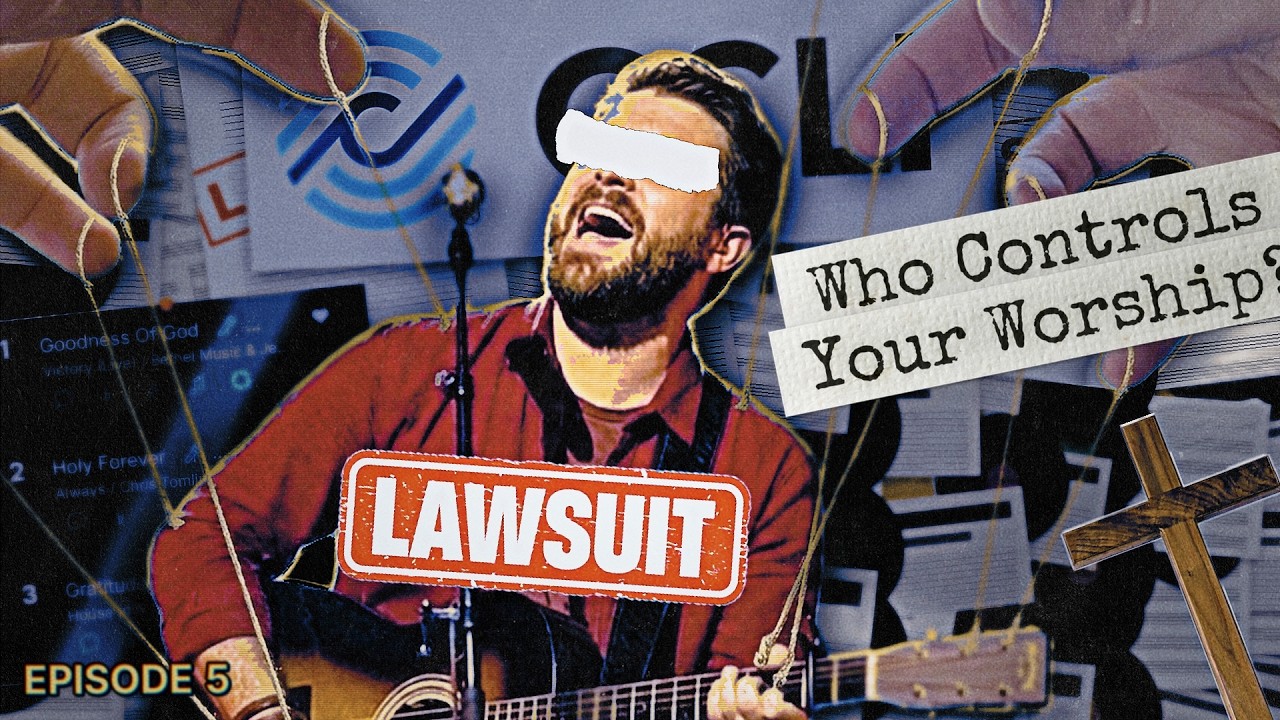
🔗 **Source:** [The Money Scheme Behind Modern Worship Music?](https://www.youtube.com/watch?v=FBviE0xlkDA)
> [!note]+ Document Notes
> tags: [ccli, worship-music-royalties, christian-music-industry, music-copyright-licensing, music-publishing, private-equity-media]
> author: Jonathan Allen Wright
> source: Jonathan Allen Wright
> reference: https://www.youtube.com/watch?v=FBviE0xlkDA
> date created: 2026-09-10
>
> > [!info] Generated analysis — not the author's words. Sections below are machine-written
> > from the captured source. Only text inside `> [!quote]` blocks is verbatim from the author.
> > Do not quote or attribute any other line to the named author.
>
> # 🏷️ Title: The Money Scheme Behind Modern Worship Music?
>
<!-- deep-read:sections start -->
## 🧭 Table of Contents
- [📝 Summary](#-summary)
- [📖 Main Content](#-main-content)
- [🗒️ Notes](#️-notes)
- [📚 References](#-references)
- [🗣️ Paraphrase](#️-paraphrase)
- [📰 Newsletter](#-newsletter)
- [✅ Action Items](#-action-items)
- [🧪 Hypotheses](#-hypotheses)
- [📊 Methodology](#-methodology)
- [❓ Questions](#-questions)
- [🔮 Future Research](#-future-research)
- [💡 Implications](#-implications)
- [🧠 Learning Styles Assessment](#-learning-styles-assessment)
- [📊 Accessibility Assessment](#-accessibility-assessment)
- [🌍 DEIB Assessment](#-deib-assessment)
- [✅ Logical Validity](#-logical-validity)
- [🛡️ DARVO Analysis](#-darvo-analysis)
- [🎯 Conclusion](#-conclusion)
- [🔄 Refactor Appendix](#-refactor-appendix--the-money-scheme-behind-modern-worship-music)
### 🔗 References
- [🗒️ Notes — full timestamped walkthrough](#️-notes)
- [✅ Action Items — org-mapping and applicability](#-action-items)
- [🔄 Refactor Appendix — atoms and permanent candidates](#-refactor-appendix--the-money-scheme-behind-modern-worship-music)
## 📝 Summary
- **What happened.** Episode 5 of a Jonathan Allen Wright series on Christian music and worship traces how Christian Copyright Licensing International (CCLI) began: in December 1984, Portland, Oregon's Bible Temple read about FL Publications' $3.1 million copyright-infringement suit against the Catholic Archdiocese of Chicago, got scared, and asked music minister Howard Rachinski to make the church legal. Rachinski built a flat-fee blanket license (Star Praise Ministries, 1985; renamed Christian Copyright Licensing International by 1988) that grew from ~50 churches in fall 1985 to a company that today licenses more than 450,000 songs to hundreds of thousands of churches. The episode then explains, in mechanical detail, how CCLI's money moves: a flat annual fee tiered by a church's attendance size on the way in, and a usage-credit pool weighted by reporting-church size on the way out — plus a separate, uncoordinated collision with YouTube/Facebook's automated Content ID system once churches started livestreaming.
- **Why it matters.** The title asks a question — "a scheme?" — and the content mostly answers it by *not* alleging one. The host states directly, twice, that CCLI's origin was fear-driven, not greed-driven, and that "structures do what structures do." The actual argument is structural-incentive determinism: a royalty pool that pays proportional to how many rooms sing a song, combined with a public leaderboard (the CCLI Top 100), predictably concentrates money in the largest, most repeated, most "singable" songs and predictably starves everything else — without anyone needing to design it that way on purpose. That distinction (deliberate scheme vs. emergent structural effect) is the analytical core of this note, and matters directly for anyone choosing what to report as sung in a CCLI-licensed service.
- **Key stakeholders.** Individual songwriters and small-catalog publishers (described as functionally invisible in the credit pool); worship leaders and music ministers who choose and report songs; CCLI as a licensing intermediary; the record labels and, later, the private-equity-backed corporations that acquire them; congregations that pay the fees and file the reports, including any that livestream.
- **Risks and tradeoffs.** The episode's own numbers contain at least one internal inconsistency (Rachinski is said to survey publishers quoting $50 to "over 100" per song, then to "average" that to $15 — the math doesn't reconcile as stated, and it's presented without correction). Several of the most pointed claims — CCLI's current ownership by "SESAC or CSAC" and that entity's ownership by "one of the largest private equity firms on the face of the planet" — are asserted, not sourced on screen, and the proper noun itself is ambiguous in the transcript. The illustrative "two songwriters" example (50 small churches vs. 10,000 including megachurches) is explicitly a hypothetical, not a documented case.
- **Bottom line.** The mechanics — attendance-tiered flat fees in, usage-credit-weighted pool distribution out, a public chart that turns reported usage into a feedback loop, and a Content ID layer that ignores CCLI licensing entirely — are concretely explained and largely checkable in outline, even where specific dollar figures and the current-ownership claim aren't independently verified here. The "scheme" framing in the title is the weakest part of the episode; the structural-incentive argument underneath it is the strongest.
## 📖 Main Content
The episode opens as episode 5 of a series (recapped at 00:00–00:01:52: a "400-year wall" between Christian and worldly music in episode 1; Calvary Chapel/Maranatha Music and the Praise Series tearing that wall down in episode 2; Word/Sparrow/Myrrh and Christian bookstores controlling 90% of Christian-music sales as a gatekeeper in episode 3; labels beginning to be bought up in episode 4). This episode's subject is the mechanism the host says made those labels valuable enough to buy: CCLI.
The origin story is specific and checkable in its broad shape even without external verification here: in December 1984, Bible Temple's leadership in Portland, Oregon read about FL Publications suing the Catholic Archdiocese of Chicago over unlicensed copying, attached to a $3.1 million figure. The technology of the era — overhead-projector transparencies, hand-copied lyrics and sheet music — meant nearly every church was doing the same thing Bible Temple was: reproducing copyrighted worship music without paying for it, not out of malice but because nobody treated it as theft. Pastor Dick Iverson tasked music minister Howard Rachinski with making the church legal. Rachinski's research (calling publishers to ask per-song copying costs) returned scattered answers; the video states he "averages $15 per song per printing" from quotes of "50" and "over 100" — a number that doesn't reconcile with the range given, flagged below under Logical Validity rather than corrected here. Rather than track down and pay every publisher separately, Rachinski built a single blanket-fee alternative: Star Praise Ministries, launched at a Northwest Ministers conference in May 1985 for $75/year. It grew to roughly 50 churches by fall 1985, about 1,100 within two years, incorporated as a business in January 1988, was renamed Christian Copyright Licensing International by April 1988, and launched the Church Copyright License nationally in October 1988 with 1,600 churches already enrolled. Today it licenses rights to more than 450,000 songs.
The host is explicit and repeats the point twice (00:07:24 and again near the close, 00:22:08): CCLI's founding motive was fear of a lawsuit, not a plan to profit, and the songwriters who get paid through it are "getting paid for real work." This matters because the video's title poses a question — "a scheme?" — and the body of the episode answers it mostly in the negative on the intent question while arguing yes on the *effect* question. The host's own framing, "structures do what structures do" (00:22:08), names this directly: no one needed to design CCLI to concentrate money in the largest rooms; the credit-and-tier math does that on its own once enough churches are reporting into one pool.
The money mechanics get two separate explanations. **Money in:** a church's annual CCLI fee depends only on its average weekly attendance, not on how many songs it uses or how large its music budget is — from roughly $60-something/year under 25 people to $5,000+/year for 20,000–50,000-member megachurches, with every tier receiving the identical license to all 450,000+ songs. **Money out:** churches periodically report which songs they used and how (projected on screen, printed in a bulletin, custom-arranged, or recorded), each use-type worth a set number of credits, each credit multiplied by a factor tied to the reporting church's size tier — so a megachurch's report counts for more than a small church's report of the same song. CCLI pools every credit from every reporting church nationally, takes its own cut, and divides what's left *unevenly*, proportional to credit share rather than split evenly or by merit. The host calls this "one single gigantic national collection plate" (00:10:52) and illustrates it with a hypothetical: a song 50 small churches sing every week versus a song 10,000 churches — including 100 megachurches — project every Sunday. In the credit pool, the first songwriter's rooms are "a rounding error"; the second's take "a giant slice of the entire national plate" (00:11:21). The host states plainly that CCLI's own fine print acknowledges not every songwriter gets a check every reporting period (00:12:26).
This distribution mechanic, the host argues, reshapes what gets written: the incentive favors songs that are maximally singable and repeatable across denominations over songs that are theologically dense or resonate in fewer, smaller rooms (00:12:56). CCLI's own published CCLI Top 100 chart closes the loop — worship pastors and labels can see exactly what's landing in the most rooms and write or program toward it, which the host says explains the frequent complaint that modern worship songs "all kind of sound the same" (00:15:12).
The episode's second half pivots to two things the CCLI license does not cover. First, the two-ownership-rights structure of any recorded song: the composition/melody (owned by the songwriter, subject to CCLI's licensing) and the master recording (owned by the label, per the loan-for-masters arrangement discussed in a prior episode). This produces four possible revenue streams for a worship song — mechanical, performance, sync, and CCLI — versus three for most pop songs (00:16:36–00:17:19). Second, and more concretely actionable: a standard CCLI license does not cover livestreaming. Churches need a second CCLI streaming license (roughly $80–100/year more) and, separately, permission to play an artist's original recording during a stream. Even fully licensed, the host describes streams getting muted, blocked, or struck by YouTube/Facebook's automated Content ID system — which is unrelated to CCLI, run by whoever registered the recording (the labels), has no visibility into CCLI's database, and enforces identically regardless of whether the church paid CCLI at all (00:19:46–00:20:27). The host's framing is that CCLI sells permission, but permission and platform-level automated enforcement are two separate, uncoordinated systems — paying one buys no protection from the other.
The episode closes with an unverified-here claim that CCLI is now owned by "something called SESAC or CSAC" (the transcript is ambiguous between these; "SESAC" is the more plausible reading, given it is a real US performance-rights organization, but this is noted as a likely intended word rather than corrected in any quoted text), itself owned by a large private-equity firm, and previews that within about a decade of CCLI's founding, every major Christian label would be acquired by one of the three largest secular music corporations — the subject of the next episode.
## 🗒️ Notes
#### ⏱️ [00:00:00](https://www.youtube.com/watch?v=FBviE0xlkDA&t=0s) Cold open and series recap
- Cold open: a worship song being sung Sunday morning is simultaneously "being counted by a company" nobody in the room is thinking about.
- Recaps episodes 1–4: the 400-year wall between Christian and worldly music (ep. 1); Calvary Chapel, Maranatha Music, and the Praise Series tearing that wall down (ep. 2); Word/Sparrow/Myrrh and Christian bookstores controlling 90% of sales as a gatekeeper (ep. 3); the labels beginning to be bought (ep. 4).
- Thesis line carried over from episode 3: "Whoever controls that gate ends up shaping the art."
#### ⏱️ [00:00:44](https://www.youtube.com/watch?v=FBviE0xlkDA&t=44s) Framing the machine: CCLI was built out of fear
- States the episode's subject directly: the mechanism that made the labels (covered in ep. 4) valuable enough to acquire.
- Names fear as the originating motivator, before any of the mechanics are explained.
#### ⏱️ [00:01:52](https://www.youtube.com/watch?v=FBviE0xlkDA&t=112s) December 1984: Bible Temple and the FL Publications lawsuit
- Bible Temple (Portland, OR) leadership reads about FL Publications suing the Catholic Archdiocese of Chicago for copyright infringement — copying religious music without paying — attached to a $3.1 million figure.
- Describes the era's copying norm: overhead-projector transparencies, hand-copied lyrics and sheet music, done by "churches all over America," not understood as theft.
- Legal point made explicit: creative work is copyrighted automatically on creation; enforcement depends on the owner's choice to pursue it.
#### ⏱️ [00:03:49](https://www.youtube.com/watch?v=FBviE0xlkDA&t=229s) Pastor Dick Iverson tasks Howard Rachinski with fixing it
- Iverson, looking at his own church's stack of transparencies, sees a "tiny little lawsuit lying dormant" and tells music minister Howard Rachinski to make the church legal.
- Rachinski surveys publishers for per-song copying costs; answers range "50" to "over 100," reported as averaging to "$15 per song per printing" — flagged in Logical Validity as an unreconciled figure.
- Legalizing Bible Temple's existing transparency stock alone is estimated at $6,000–$7,000, not counting new songs added monthly.
#### ⏱️ [00:05:15](https://www.youtube.com/watch?v=FBviE0xlkDA&t=315s) Star Praise Ministries and the $75 blanket license
- Rachinski's fix: one annual fee instead of per-publisher checks. Builds Star Praise Ministries inside Bible Temple's music department in 1985.
- Pitched at a May 1985 Northwest Ministers conference: $75/year for full legal coverage.
- Host's read on why churches signed up: not love of copyright law, but "peace of mind" — protection from the possibility of a lawsuit.
#### ⏱️ [00:06:10](https://www.youtube.com/watch?v=FBviE0xlkDA&t=370s) Growth, incorporation, and the accidental database
- Growth: ~50 churches by fall 1985; ~1,100 members within two years; incorporated January 1988; renamed Christian Copyright Licensing International by April 1988; Church Copyright License launches nationally October 1988 with 1,600 churches; today licenses 450,000+ songs.
- Structural point: every signed-up church has to report which songs it uses — CCLI accumulates, "almost by accident," the first national dataset of what America sings on Sunday.
#### ⏱️ [00:07:24](https://www.youtube.com/watch?v=FBviE0xlkDA&t=444s) Explicit motive framing: fear, not greed
- States directly that CCLI "was not born out of somebody trying to get rich" — origin was fear of a lawsuit, resolved by a genuinely helpful fix.
- Ties back to episode 1's Ira Sankey framing (royalties given to charity) and its question, "how easy is it to resist money?" — CCLI framed as what happens when, later, nobody does.
#### ⏱️ [00:08:13](https://www.youtube.com/watch?v=FBviE0xlkDA&t=493s) Money in: attendance-tiered flat fee
- Annual fee is based solely on a church's average weekly attendance — not song count or usage volume.
- Tier examples given: roughly $60s/year under 25 people; "a couple hundred" at 100; more at 500; up to $5,000+/year for 20,000–50,000-member megachurches.
- Every tier receives the identical license to the same 450,000+ songs — only the price changes.
#### ⏱️ [00:09:30](https://www.youtube.com/watch?v=FBviE0xlkDA&t=570s) Money out: usage reports, credits, and the national pool
- Churches periodically report which songs were used and how (projected, printed, custom-arranged, recorded) — each use type worth a different credit value.
- Each church's credits are multiplied by a factor tied to its size tier — a big church's report counts for more.
- CCLI pools every credit from every reporting church nationally, takes a cut, and divides the remainder unevenly by credit share — "one single gigantic national collection plate."
#### ⏱️ [00:11:21](https://www.youtube.com/watch?v=FBviE0xlkDA&t=681s) Illustration: two hypothetical songwriters
- Songwriter A: a song 50 small churches sing weekly and that "genuinely changes the lives" of those congregants.
- Songwriter B: a song 10,000 churches (including 100 megachurches) project every Sunday.
- In the credit pool, A's rooms are "a rounding error"; B's take "a giant slice of the entire national plate" — explicitly a hypothetical, not a documented real case.
#### ⏱️ [00:12:56](https://www.youtube.com/watch?v=FBviE0xlkDA&t=776s) Incentive shift: writing for repeatability over theology
- States the pool rewards "the most singable" and "most frictionless" worship, not the "most original or theological."
- Names the flip side: thousands of songwriters are reported and paid-for in aggregate but individually "functionally invisible" — sung in a few churches, never clearing a check.
#### ⏱️ [00:13:53](https://www.youtube.com/watch?v=FBviE0xlkDA&t=833s) The CCLI Top 100 as a public feedback loop
- CCLI publishes a ranked chart of most-reported songs nationally, visible to worship pastors and labels alike.
- Names the loop directly: songs sung get counted, counted songs top the chart, charting songs get imitated structurally by the next wave of writers, tightening the cycle — offered as the mechanism behind the "modern worship songs all sound the same" complaint.
#### ⏱️ [00:16:15](https://www.youtube.com/watch?v=FBviE0xlkDA&t=975s) Two separate ownership rights and four revenue streams
- A songwriter owns the composition/melody; the label (per the loan-for-masters deal from a prior episode) owns the master recording — two different assets, frequently conflated.
- Four possible revenue streams for a worship song: mechanical royalty, performance royalty, sync money, plus the CCLI-specific "unique Christian lane" — versus three for most pop songs.
#### ⏱️ [00:17:52](https://www.youtube.com/watch?v=FBviE0xlkDA&t=1072s) Streaming era: a second license, and Content ID's blind automation
- Standard CCLI license does not cover livestreaming; churches need a second CCLI streaming license (~$80–100/year additional), plus separate permission to play original recordings during a stream.
- Even fully licensed and legal, streams can be muted, blocked, or struck by YouTube/Facebook's Content ID — an automated system run by whoever registered the recording (the labels), with no visibility into CCLI's licensing database at all.
- Host's framing: CCLI sells "permission"; Content ID is "a robot" that enforces identically regardless of licensing status — two uncoordinated systems, paying one doesn't protect against the other.
#### ⏱️ [00:21:23](https://www.youtube.com/watch?v=FBviE0xlkDA&t=1283s) Structural verdict and current ownership claim
- States the throughline explicitly: "structures do what structures do" — the system was always going to concentrate money in the biggest rooms and the most repeatable songs, independent of anyone's original intent.
- Claims CCLI is now owned by "something called SESAC or CSAC" (ambiguous in the transcript; "SESAC" is the more plausible reading but not corrected here), itself owned by a large private-equity firm — asserted, not sourced on screen.
- Previews episode 6: every major Christian label acquired by one of the three largest secular music corporations within roughly a decade of CCLI's founding.
## 📚 References
- [Video: The Money Scheme Behind Modern Worship Music?](https://www.youtube.com/watch?v=FBviE0xlkDA)
- CCLI (Christian Copyright Licensing International) — named throughout as the subject; no official CCLI page linked in the transcript, verify licensing-tier and current-ownership figures against ccli.com before citing externally.
- FL Publications v. Catholic Archdiocese of Chicago — named as the triggering 1984 lawsuit; not linked or case-cited in the transcript, verify before citing.
- Prior episodes in this series (1–4), referenced but not linked in the transcript: the "400-year wall," Maranatha Music and the Praise Series, Word/Sparrow/Myrrh and Christian bookstores, and the labels' acquisition wave.
## 🗣️ Paraphrase
Wright's argument is that CCLI — the company that licenses churches to legally sing, project, and print copyrighted worship music — didn't start as a money grab. A Portland church got scared by a 1984 lawsuit against another church for unlicensed copying, and its music minister built a cheap blanket-license alternative to paying dozens of publishers separately. That fix grew, almost by accident, into a national database of exactly what American churches sing, and then into a company that now licenses 450,000-plus songs to hundreds of thousands of congregations. The mechanics of how the money moves are where the episode does its real work: churches pay a flat fee based only on how many people show up, but the payout side is a single national pool, divided not evenly but by whose songs got sung and projected the most, weighted further toward the biggest churches' reports. That structure — not anyone's stated intent — predictably rewards songs built to be sung everywhere over songs that matter deeply to a few rooms, and a public leaderboard (the CCLI Top 100) turns that reward into a feedback loop that writers chase.
The second half pivots from royalties to enforcement, and argues the two systems don't talk to each other. CCLI's license is a legal permission a church buys from the people who own the songs. YouTube and Facebook's Content ID is an automated bot that mutes or blocks based on registered recordings, with zero awareness of whether a church paid CCLI at all — so a fully licensed, legally compliant livestream can still get shut down. The episode ends on an unproven but pointed claim: CCLI itself is now owned by a for-profit rights organization that's in turn owned by a private-equity firm, meaning the company that counts what America's churches sing every Sunday is, today, someone else's balance-sheet asset.
## 📰 Newsletter
If you've ever wondered what actually happens between projecting a worship song's lyrics on a screen and someone getting a royalty check, this episode lays out the mechanics plainly: CCLI's flat, attendance-tiered fee on the way in, and a usage-credit pool weighted toward the biggest churches on the way out. The most useful idea here isn't the "scheme" framing in the title — the host himself says CCLI began as a fear-driven fix, not a money grab — it's the plainer point that a royalty pool paying proportional to reach will always favor the most-repeated song over the most-resonant one, whether or not anyone designs it that way. Worth a watch for anyone involved in choosing or reporting worship music, especially the streaming section: a standard CCLI license doesn't cover livestreaming, and even a second streaming license doesn't protect against YouTube/Facebook's Content ID, which has no idea CCLI licensing exists at all.
## ✅ Action Items
#### DevRel
- Not applicable to this source — the video covers church music licensing economics, not developer relations, SDKs, or community programs.
#### OSPO
- Not applicable to this source — no open-source governance, licensing, security, or SBOM content appears anywhere in the transcript.
#### Community
- Not applicable to this source — no maintainer, contributor, sponsor, or cross-project ecosystem content; this is a solo-narrated documentary episode.
#### WordPress
- Not applicable to this source across all subteams (Core, Core Performance, Core AI, Core Program Team, Mobile, Playground, Community, Training, Marketing, Support, Design, Documentation, Photos, TV, Polyglots, Accessibility, Meta, CLI, Hosting, Tide, Openverse, Themes, Plugins) — the video never mentions WordPress or WordPress governance.
#### The WPOCC
- Not applicable to this source — no fellowship, funding, or governance content; unrelated to The WPOCC's remit.
#### FAIR
- Not applicable to this source — no federation, provenance, or governance-artifact content.
## 🧪 Hypotheses
- H1: A church that primarily sings songs currently charting on the CCLI Top 100 pays the same flat annual CCLI fee as a church with an identical attendance that sings mostly non-charting songs, while the songwriters they support receive systematically different payouts.
- H2: Songs that debut on the CCLI Top 100 measurably converge toward the harmonic/structural patterns (chord progressions, tempo, vocal range) of the prior period's top-charting songs, more than a random sample of newly released worship songs not on the chart.
- H3: A congregation's reported usage (which songs, how often, which use-type) has a larger effect on a songwriter's CCLI payout than the number of individual worshippers who sing that song, once church-size tier is controlled for.
- H4: Churches that livestream and hold a valid CCLI streaming license still experience Content ID mutes/blocks/strikes at a rate statistically indistinguishable from unlicensed streams, because Content ID has no integration with CCLI's licensing database.
- H5: CCLI's current ownership structure (claimed here as a for-profit rights organization owned by a private-equity firm) is independently verifiable from public corporate-ownership records, contra the video's unsourced on-screen assertion.
### 📊 Methodology
- H1/H3: obtain CCLI's published credit-weighting schedule (use-type credit values, tier multipliers) and a sample of reporting-church attendance/usage data (aggregate, not identifying), then simulate payout under varying usage-vs-attendance-size scenarios to isolate which variable drives payout more.
- H2: pull audio features (tempo, key, chord-progression complexity) for consecutive years of the CCLI Top 100 and a matched control sample of newly released, non-charting worship songs from the same years; test for convergence in feature variance over time between the two groups.
- H4: survey a sample of CCLI streaming-license-holding churches on Content ID mute/block/strike incidence over a fixed period; compare against a sample of churches streaming without any license, controlling for platform (YouTube vs. Facebook) and stream length.
- H5: search public private-equity holdings disclosures, SEC filings, and performance-rights-organization ownership records for CCLI's parent chain; cross-reference against the "SESAC or CSAC" claim to resolve the ambiguous proper noun and confirm or refute the private-equity claim.
### ❓ Questions
- Which reading is correct — "SESAC" or something else — for CCLI's current owner, and is the private-equity-ownership claim independently documented anywhere the host doesn't cite?
- How does the stated $15-per-song-per-printing average reconcile with quotes of "50" and "over 100" from the publishers Rachinski surveyed — is this a transcription artifact, a units mismatch, or a simple error in the original narration?
- Does CCLI disclose its own take ("some off the top," per the episode) as a public percentage anywhere, and how does that compare to other performance-rights organizations' overhead?
- Is there a real-world case matching the hypothetical "50 small churches vs. 10,000 including megachurches" illustration, or is it purely a teaching device?
- Does CCLI or any platform offer a mechanism for a licensed church to flag a Content ID takedown as covered, and if so, why does the episode describe the outcome as "you're paying CCLI for the one thing CCLI actually controls" rather than mentioning that mechanism?
### 🔮 Future Research
- No comparison of CCLI's credit-weighting model against how other performance-rights organizations (ASCAP, BMI, SESAC in its general-market capacity) weight venue size versus play count — would clarify whether CCLI's structure is unusual or standard practice adapted to churches.
- No data in the episode on what share of CCLI's total distributed pool goes to the "10 or 20 megahits" versus the long tail — the claim is qualitative ("vacuum up the enormous share") without a cited percentage.
- No examination of whether CCLI's international licensing (CCLI operates outside the US as well, per general industry knowledge, though not mentioned in this transcript) uses the same tier/credit structure — scope of this episode is US-only.
- No discussion of whether songwriters or publishers can opt out of the credit-pool model (e.g., direct licensing) as an alternative to CCLI membership.
### 💡 Implications
- **Practice.** For a worship planner, the mechanics described mean that reporting accuracy (which songs, how used) directly determines a songwriter's payout — sloppy or incomplete CCLI reporting isn't a compliance footnote, it's the input to the entire distribution formula described here.
- **Policy/governance.** None named in the source directly, though the credit-pool weighting scheme functions as a private governance structure with no stated appeals process for songwriters who feel undercounted.
- **Security.** Not directly applicable; the closest analog is the Content ID gap described (00:17:52–00:20:27) — a licensed, compliant congregation has no technical recourse against an automated takedown, which is an operational risk for any church that livestreams.
- **Education.** The composition-vs-master-recording distinction (00:16:15) and the CCLI-license-vs-Content-ID distinction (00:19:46) are both genuinely useful, exportable pieces of media literacy for anyone in music ministry, independent of whether the episode's "scheme" framing holds up.
- **Funding models.** The core subject of the episode: a mandatory, tiered, pooled-and-redistributed licensing fee functions as a de facto funding model for worship songwriters, with payout skewed toward reach rather than an even split or a merit judgment.
### 🧠 Learning Styles Assessment
- **Reading level estimate:** Flesch-Kincaid Grade Level ≈ 8. Basis: long, run-on spoken sentences stitched with "and," frequent rhetorical questions ("How easy is it to resist money?"), and simple vocabulary — consistent with unscripted or lightly scripted documentary narration rather than edited prose.
#### 👀 Visual learners
- **Present:** transcript implies on-screen supporting graphics (a tier-pricing breakdown, a chart reference for the CCLI Top 100) though these were not visually reviewed here.
- **Improve:** a static diagram of the "money in" (attendance tier → flat fee) versus "money out" (usage report → credit → pool → payout) flow would make the two-halves structure the host describes verbally easier to retain.
#### 🔊 Aural learners
- **Present:** the entire episode is narrated documentary-style with music stings; content is fully accessible by audio alone with minimal reliance on unread on-screen text.
- **Improve:** a standalone audio recap distinguishing the "money in" and "money out" halves would help listeners who missed the host's own verbal signposting ("let's talk the money going in first").
#### 🗣️ Verbal learners
- **Present:** clear definitions built into the narration (mechanical vs. performance vs. sync royalty, composition vs. master recording) and a worked analogy ("toll booth of worship," "collection plate").
- **Improve:** an explicit glossary separating CCLI licensing terms (credit, tier, reporting period) from general music-industry royalty terms would help viewers new to either domain.
#### 🧩 Kinesthetic learners
- **Present:** none — no downloadable worksheet, checklist, or hands-on exercise accompanies the narration.
- **Improve:** a simple worksheet letting a worship leader estimate their own church's CCLI tier and reporting obligations would translate the abstract mechanics into something actionable.
#### 🧠 Logical learners
- **Present:** the explicit two-halves structure (money in / money out) and the credit → tier-multiplier → pool → uneven-split causal chain are laid out in sequence.
- **Improve:** a table mapping attendance tier to annual fee, and a second table mapping use-type to credit value, would make the two pricing schedules the host describes verbally scannable rather than narrated.
#### 🧑🤝🧑 Social learners
- **Present:** none — single-narrator documentary format with no discussion prompts or collaborative element in the transcript.
- **Improve:** a prompt inviting worship leaders to compare notes on their own church's CCLI reporting practices would extend the content into a practical, shared conversation.
#### 🧘♀️ Solitary learners
- **Present:** well suited to self-paced, individual viewing — no interactive or group-dependent element required to follow the argument.
- **Improve:** a reflection prompt ("does your church's reported usage match what you actually sing?") would help solitary viewers self-audit against the mechanics just explained.
#### 🌿 Naturalistic learners
- **Present:** none — no ecological or systems-in-nature framing appears in the transcript.
- **Improve:** not a natural fit for this content; no changes recommended.
### 📊 Accessibility Assessment
*Assessed from the transcript only — the video itself was not visually reviewed, so on-screen graphics, contrast, and caption accuracy are not directly observed.*
#### Auto-generated vs. human-corrected captions
- **Present:** the source transcript for this analysis is auto-generated (per the task's own framing) and contains no punctuation guarantees; it reflects standard automatic-captioning behavior, not creator-reviewed accuracy.
- **Improve:** creator-reviewed or corrected captions would reduce risk of mistranscribed proper nouns — this episode's own "SESAC or CSAC" ambiguity is a direct example of a caption-accuracy gap affecting a substantive claim.
#### Transcript availability
- **Present:** a full timestamped transcript exists and was the sole input for this note, satisfying the base requirement for a text alternative.
- **Improve:** none needed; transcript coverage is complete for the episode's runtime.
#### Verbal description of visual content
- **Present:** the narration is largely self-contained — dollar figures, tier examples, and mechanics are spoken aloud rather than left to on-screen-only text, based on what the transcript captures.
- **Not observed:** any on-screen-only graphics (a tier-pricing table, the CCLI Top 100 chart itself, any timeline graphic) that aren't fully described in speech would be inaccessible to a non-sighted listener relying on audio alone; this can't be confirmed or ruled out without a visual review.
#### Audio description need
- **Not observed** — whether the video requires a separate audio-description track depends on how much of its content (per above) lives only in on-screen graphics; flag for direct visual review before concluding either way.
#### Standards reference
- Maps to WCAG 2.2 AA 1.2.2 (Captions), 1.2.3/1.2.5 (Audio Description), and 1.2.4 (Live Captions, if any segments were live) — most items here require direct visual/audio review of the published video to confirm or close.
### 🌍 DEIB Assessment
#### Cultural breadth
- **Present:** the episode names a Catholic archdiocese (the sued party) and an independent charismatic/Pentecostal-adjacent congregation (Bible Temple) within the same origin story, spanning at least two distinct American church traditions.
- **Improve:** scope is entirely US-centric; CCLI licenses internationally in practice, and the episode doesn't address how (or whether) the same tier/credit mechanics apply outside the US.
#### Inclusive language
- **Present:** consistent second-person, non-gendered address; no idiomatic language likely to translate poorly.
- **Improve:** none needed; the register is plain and direct throughout.
#### Neurodiversity support
- **Present:** the recap-then-new-content structure at the top (00:00:44–00:01:52) and the explicit "two halves" framing for money in/out aid retention and orientation.
- **Improve:** the middle third (money-out mechanics through the CCLI Top 100 loop) is a long unbroken narration with no spoken chapter markers — a verbal "that's the money side, now the chart side" transition would help listeners tracking structure by ear.
#### Representation
- **Present:** named figures are Dick Iverson and Howard Rachinski (both men); no women are named in this episode's account of CCLI's founding or current operation.
- **Improve:** note this skew if the series is used as a template for further research — worth checking whether women songwriters or executives played roles in CCLI's history that this episode's account omits.
#### Psychological safety
- **Present:** the tone stays measured even when naming the "they don't care about you" line about private-equity ownership at the close — the host doesn't personally attack Rachinski or Iverson, whom he explicitly credits with good intent.
- **Improve:** none needed for this content; no sensitive material requiring a content warning.
### ✅ Logical Validity
#### Strong reasoning
- **Causal/mechanistic reasoning on the credit-pool formula (00:09:30–00:11:21):** the claim that a pool split by usage-credit share, weighted by reporting-church size, will systematically favor songs sung in many large rooms over songs sung in few small rooms is a clear, testable, and internally consistent mechanical argument — not just an assertion. It holds on its own terms once the tier-multiplier and pooling rules are granted.
- **Named counter-evidence to its own title (00:07:24, 00:22:08):** the host twice states outright that CCLI was not born from a profit motive and that the songwriters it pays are paid "for real work" — a rare case of a documentary explicitly weakening its own headline claim rather than only building toward it, which strengthens the credibility of the structural argument that remains.
#### Fallacies
- **Loaded framing / equivocation on "scheme" (title, and reinforced narratively throughout).** Location: the video is titled as a question about a "money scheme," but its own content states the originating actor acted from fear and good intent (00:07:24) and that the outcome is "structures do what structures do" (00:22:08) rather than intentional design. Why it's weak: "scheme" implies deliberate design to defraud or extract; the episode's actual evidence supports an emergent structural effect from a benignly motivated system, which is a materially different and less serious claim. Fix: a title or framing distinguishing "nobody planned this, but the incentives produced it anyway" from "a scheme" would match the video's own evidence more precisely — the question mark in the actual title is doing exactly this hedging work, and the note's own conclusion treats it as the load-bearing caveat.
- **Unreconciled statistic, uncorrected (00:04:22–00:04:44).** Location: Rachinski's publisher survey is reported as returning quotes of "50" and "over 100" (dollars per song per printing, implied) but "averaging" to "$15" — a figure inconsistent with the stated range as narrated. Why it's weak: presented as settled fact with no acknowledgment of the inconsistency; could be a units error, a transcription artifact, or a factual error in the original narration, and the viewer has no way to tell which from the video alone. Fix: state the range as given and flag the average as unreconciled, rather than repeating it as a clean $15 figure — this note preserves the discrepancy rather than silently resolving it.
- **Hypothetical illustration presented adjacent to documented history (00:11:21).** Location: the "two songwriters" example (50 small churches vs. 10,000 including megachurches) is introduced with "let me put this in a real-life illustration for you" immediately after a run of specific, dated historical facts (lawsuit figures, incorporation dates, membership counts) — the tonal continuity risks a viewer treating the hypothetical as another documented case. Why it's weak: no real songwriter or song is named or sourced for this example. Fix: an explicit "this is a hypothetical, not a real case" marker at the point of introduction, rather than relying on "imagine two songwriters" alone to signal it.
#### Tone of voice
- Documentary-narrative, second-person and first-person mixed ("you," "I have to answer a bigger question"), building tension through short declarative sentences and rhetorical questions, with periodic explicit reassurance that a named party (Bible Temple, Rachinski) is not the villain of the story — a structure that separates "this system produces a bad outcome" from "these specific people did something wrong."
### 🛡️ DARVO Analysis
- **Deny:** Not applicable — no accusation is being denied by an accused party. Bible Temple and Rachinski are described sympathetically as acting in good faith under fear; no one in the video is defending against a charge leveled at them.
- **Attack:** Not applicable in the classic DARVO sense — the video does direct pointed language at CCLI's current owners and private-equity backers ("Companies whose only job... is to return money to the shareholders. They don't care about you," 00:23:53–00:24:07), but this is the host critiquing an institution's incentive structure, not an accused party attacking an accuser's credibility.
- **Reverse victim/offender:** Not applicable — no victim/offender framing is reversed anywhere in the transcript; there is no accuser figure in the narrative at all.
- **Actual rhetoric present instead:** the episode's real rhetorical move is a motive-to-structure pivot — establishing sympathetic, good-faith motive for the founders (denying any "scheme" at the origin) and then arguing the resulting *structure* produces a bad outcome regardless of anyone's intent. The closing line attributing indifference to "the shareholders" and private-equity owners is an inference about corporate motive not independently sourced in the episode (no interview, filing, or statement is cited) — it should be read as the host's argument, not an established fact.
## 🎯 Conclusion
The title asks whether there's a money scheme behind modern worship music; the episode's own evidence answers "not at the origin, but yes in effect." CCLI began as a fear-driven, good-faith fix to a real 1984 legal exposure, not a plan to extract money from churches — the host says so twice, unprompted. What the episode actually documents is a royalty-distribution structure (flat attendance-tiered fees in, usage-credit-weighted pooled payouts out, amplified by a public leaderboard) that predictably rewards reach over resonance without anyone needing to design it that way, plus a separate and genuinely underexplained gap between CCLI's licensing permission and platforms' automated Content ID enforcement. For anyone involved in choosing or reporting worship music in a CCLI-licensed congregation, the practical takeaway isn't the unproven private-equity-ownership claim at the close — it's the two mechanics that are checkable and actionable now: reported usage, not attendance or effort, is what determines songwriter payout, and a CCLI streaming license does not protect a livestream from an unrelated, automated takedown system.
## 🔄 Refactor Appendix — The Money Scheme Behind Modern Worship Music?
> Density: 5 Literature atoms (H4), 2 Permanent candidates (H4).
> Konik claim-header rules: present tense, declarative, ≤10 words, searchable, unique.
> Atomicity: one declarative sentence per atom.
### 📚 Literature Atoms (H3)
#### [H1] CCLI's origin was fear, not a money grab
> [!quote]
> CCLI was not born out of somebody trying to get rich, it seems.
**Context & use**:
- [00:07:24](https://www.youtube.com/watch?v=FBviE0xlkDA&t=444s) — stated directly after the founding story (Bible Temple, the 1984 lawsuit, Rachinski's blanket license) and before the money mechanics are explained.
- This is the load-bearing sentence for reading the title's "scheme?" as a hedge, not a claim — the episode explicitly denies deliberate intent at the origin while still arguing the resulting structure produces a concentration effect.
**Tags**: #xref #aphorisms
<!-- atomicity: 1 idea ✓ -->
#### [H2] CCLI's fee is set by attendance, not usage
> [!quote]
> the price is not based on how much music you use.
**Context & use**:
- [00:08:22](https://www.youtube.com/watch?v=FBviE0xlkDA&t=502s) — introduces the "money in" half of the two-part mechanism (money in vs. money out) that structures the rest of the episode.
- Every attendance tier receives the identical 450,000+-song license; only the price scales with tier, per the surrounding narration.
**Tags**: #xref
<!-- atomicity: 1 idea ✓ -->
#### [H3] Payouts pool nationally and split unevenly by reach
> [!quote]
> It's a collection plate. One single gigantic national collection plate.
**Context & use**:
- [00:10:52](https://www.youtube.com/watch?v=FBviE0xlkDA&t=652s) — the episode's own stated "most important sentence," describing how every church's fee is pooled and then divided by usage-credit share rather than evenly.
- Directly grounds the "winner takes most" distribution claim made two minutes later (00:12:26) and the two-songwriter illustration that follows it.
**Tags**: #xref #aphorisms
<!-- atomicity: 1 idea ✓ -->
#### [H4] Content ID ignores CCLI licensing status entirely
> [!quote]
> The bot has no idea that CCLI license exists.
**Context & use**:
- [00:20:07](https://www.youtube.com/watch?v=FBviE0xlkDA&t=1207s) — explains why a fully licensed, streaming-license-paying church can still get muted, blocked, or struck during a livestream.
- Names the mechanism: Content ID is run by whoever registered a recording (the labels), operates automatically, and has no integration with CCLI's database.
**Tags**: #xref
<!-- atomicity: 1 idea ✓ -->
#### [H5] Royalty structures concentrate outcomes regardless of intent
> [!quote]
> But structures do what structures do.
**Context & use**:
- [00:22:08](https://www.youtube.com/watch?v=FBviE0xlkDA&t=1328s) — the episode's own closing thesis statement, delivered right after affirming that CCLI "does something useful" and pays songwriters for real work.
- This is the sentence that most precisely separates the video's "scheme" title from its actual argument: structural determinism, not deliberate design.
**Tags**: #xref #aphorisms
<!-- atomicity: 1 idea ✓ -->
### 🧠 Permanent Candidates (H4)
#### [P1] Reported usage, not attendance, sets a songwriter's CCLI payout
**Claim** (Courtney's voice): In a CCLI-licensed congregation, what actually determines a songwriter's payout is which songs get reported as used and how often, weighted by the reporting church's size — not attendance, not effort, and not theological quality.
**Evidence pointer**: [[#H3]]
**Scope & conditions**: Holds for CCLI's pooled-credit model specifically; doesn't necessarily generalize to other performance-rights organizations' weighting schemes, which this note didn't verify. Matters directly for anyone choosing which songs to report as sung in worship planning.
**Links** (≥1 with annotation):
- [[Winner-take-most distribution systems]] — because applies-in: any pooled royalty or attention system where payout scales with reach rather than an even split.
- [[CCLI reporting practice]] — because extends: reporting accuracy is the practical lever this claim converts into, not an abstract critique.
<!-- atomicity: 1 idea ✓ -->
#### [P2] A licensing permission and platform enforcement are separate, uncoordinated systems
**Claim** (Courtney's voice): Paying for a content license (like CCLI's streaming add-on) buys permission from the rights-holder, not protection from a platform's own automated enforcement system, because the two have no shared database.
**Evidence pointer**: [[#H4]]
**Scope & conditions**: Demonstrated here for CCLI + YouTube/Facebook Content ID specifically; the general pattern (licensing layer and enforcement layer built by different, non-communicating parties) likely recurs elsewhere and is worth checking before assuming a paid license fully protects a livestream.
**Links** (≥1 with annotation):
- [[Automated content moderation false positives]] — because applies-in: any platform-level bot enforcement layer that can't verify an underlying license.
<!-- atomicity: 1 idea ✓ -->
### ✏️ Fleeting Queue
- [F1] Resolve whether CCLI's current owner is "SESAC" or something else, and whether the private-equity-ownership claim is independently documented — the transcript itself is ambiguous on the proper noun. — https://www.youtube.com/watch?v=FBviE0xlkDA #xref
- [F2] Check the $15-per-song-per-printing figure against the $50/"over 100" range Rachinski is said to have surveyed — the numbers as narrated don't reconcile. — #xref
### → Things 3 (max 2 actions)
- [ ] Before livestreaming any worship service, confirm what a CCLI streaming license actually covers versus what Content ID can still flag, independent of licensing status — context #worship-planning #things
- [ ] When reporting CCLI usage for worship planning, note that the reporting itself (not just song selection) is what routes royalty credit to songwriters — context #worship-planning #things
<!-- deep-read:sections end -->
📄 **Full text:** [[Full Document Contents/Articles/The Money Scheme Behind Modern Worship Music.md|The Money Scheme Behind Modern Worship Music? by YouTube]]
## Highlights
- song is being counted by a company. A quiet, unglamorous, but wildly successful company that most churchgoers ([View Highlight](https://read.readwise.io/read/01m0p00vg808h5j312ns2ppv50))
- Note: The cold open's reveal — every song sung on a Sunday is metered by a company most churchgoers have never heard of. Sets up CCLI as the episode's subject.
- Tags: atom/literature/h5, ccli
- make this plain because it's the most important, maybe, sentence in this whole episode. It's a collection plate. One single gigantic national collection plate. Every church in America drops its annual fee in, and then that whole plate ([View Highlight](https://read.readwise.io/read/01m0p08w7bew3rnaf4zcenvtfv))
- Note: The narrator flags this as the episode's key sentence: pooled national fees divided by size-weighted usage, not per-transaction payment. Mechanism behind every downstream claim.
- Tags: ccli, atom/literature/h1
- worship songs all kind of just sound the same. [music] It's not really an accident when the system rewards sameness [music] and when the money flows to the song that the most rooms can sing the most easily, you get an industry quietly optimizing for ([View Highlight](https://read.readwise.io/read/01m0p09raby2jz5j88qcsp4nev))
- Note: The homogenization claim. Cite with caveat: the incentive is real but the episode never addresses competing causes (radio formatting, producer networks, congregational singability).
- Tags: worship-music, atom/literature/h4
- represents them. System two is called Content ID. [music] And Content ID is not a permission. Content ID is a robot. YouTube and Facebook run automated systems or bots that listen to every single thing that you upload and compare ([View Highlight](https://read.readwise.io/read/01m0p09eqjx4b8r27pkhjvzcsw))
- Note: Why fully licensed church streams still get blocked — a license is a permission between parties; Content ID is a matcher that never consults it. Generalizes well beyond worship music.
- Tags: articleseed, content-id, atom/literature/h3
- get paid are getting paid for real work. But structures do what structures do. This structure was always going to concentrate the money and the influence into fewer [music] and fewer hands. It was always going to reward the biggest ([View Highlight](https://read.readwise.io/read/01m0p095y12x34xt7tqpw0s3m1))
- Note: The thesis, delivered right after conceding CCLI's genuine usefulness — an institutional-design critique that doesn't require anyone to have acted badly.
- Tags: atom/literature/h2, aphorisms