The New Apostolic Reformation Is Not a Cult
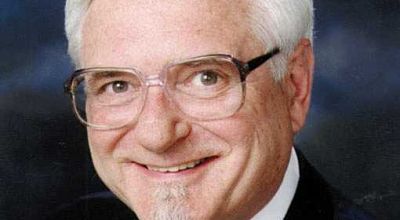
🔗 **Source:** [The New Apostolic Reformation Is Not a Cult](https://mycharisma.com/culture/the-new-apostolic-reformation-is-not-a-cult/)
> [!note]+ Document Notes
> tags: [new-apostolic-reformation, dominionism, apostolic-governance, seven-mountains, religious-self-definition, media-criticism]
> author: C. Peter Wagner
> source: Charisma
> reference: https://mycharisma.com/culture/the-new-apostolic-reformation-is-not-a-cult/
> date created: 2026-07-26 17:20
>
> > [!info] Generated analysis — not the author's words. Sections below are machine-written
> > from the captured source. Only text inside `> [!quote]` blocks is verbatim from the author.
> > Do not quote or attribute any other line to the named author.
>
> # 🏷️ Title: The New Apostolic Reformation Is Not a Cult
>
<!-- deep-read:sections start -->
## 🧭 Table of Contents
- [📝 Summary](#-summary)
- [📖 Main Content](#-main-content)
- [🗒️ Notes](#️-notes)
- [📚 References](#-references)
- [🗣️ Paraphrase](#️-paraphrase)
- [📰 Newsletter](#-newsletter)
- [✅ Action Items](#-action-items)
- [🧪 Hypotheses](#-hypotheses)
- [📊 Methodology](#-methodology)
- [❓ Questions](#-questions)
- [🔮 Future Research](#-future-research)
- [💡 Implications](#-implications)
- [🧠 Learning Styles Assessment](#-learning-styles-assessment)
- [📊 Accessibility Assessment](#-accessibility-assessment)
- [🌍 DEIB Assessment](#-deib-assessment)
- [✅ Logical Validity](#-logical-validity)
- [🛡️ DARVO Analysis](#-darvo-analysis)
- [🎯 Conclusion](#-conclusion)
### 🔗 References
- [The article itself](https://mycharisma.com/culture/the-new-apostolic-reformation-is-not-a-cult/)
- [The NPR Fresh Air segment being answered](https://www.npr.org/transcripts/139781021)
- [NPR Fresh Air, Bradley Onishi, 2024](https://www.npr.org/transcripts/1234843874) — how the movement was described thirteen years later
- [NPR Weekend Edition, Matthew D. Taylor, 2024](https://www.npr.org/transcripts/nx-s1-4862611) — scholarly account post-January 6
## 📝 Summary
- **What happened.** C. Peter Wagner — the Fuller Seminary church-growth professor who coined the term "New Apostolic Reformation" in 1994 — responds directly to NPR's October 2011 Fresh Air segment and to the broader wave of coverage tying Rick Perry, Michele Bachmann, and Sarah Palin to the movement. He rejects the "cult" and "heresy" labels, denies that the NAR is an organization at all, disclaims the "founder" and "intellectual godfather" titles, and works through the specific charges one at a time: apostolic governance, prophets, dominionism, theocracy, extra-biblical revelation, and signs and wonders.
- **Why it matters.** This is the primary source for the movement's self-description, written by the person who named it, at the moment it first drew national scrutiny. Any honest assessment of the NAR has to engage it rather than route around it — and reading it directly rather than through a critic's summary is the only way to see which characterizations survive contact with the movement's own account. It is also, structurally, a near-textbook example of a defensive rhetorical pattern, which makes it doubly useful as a document.
- **Key stakeholders.** Wagner and affiliated apostolic networks; the politicians whose associations prompted the coverage; journalists covering the movement; critics inside conservative evangelicalism, whom Wagner treats as a distinct problem from the liberal critics; and readers of Charisma, a charismatic-audience outlet, which shapes what the piece assumes and what it must argue for.
- **Risks and tradeoffs.** Several of Wagner's factual points are genuinely sound and were needed — there really is no membership roster, "cult" really is an imprecise pejorative doing rhetorical work, and lists of "NAR figures" really are constructed by outsiders. But the defense's structural core is that the NAR has no official theology, no leader, and no members, which means no criticism can ever attach to it: any belief cited can be relocated to an individual. That is simultaneously true and unfalsifiable. Several key redefinitions — of dominionism especially — replace the contested claim with an uncontroversial one and defend that instead.
- **Bottom line.** Read it as the indispensable other side, and read it critically. It successfully punctures some sloppy coverage and successfully establishes that the movement is not an organization in any ordinary sense. It does not successfully answer what critics actually allege, because it repeatedly answers a milder version of the charge — most visibly on dominionism and theocracy, where the distinction he draws is much thinner than the confidence with which he draws it.
## 📖 Main Content
**The occasion and the framing.** An editorial note establishes the context: NPR named Wagner as the movement's architect and tied Perry and other politicians to the NAR negatively; Wagner has been watching media "work to taint Christian political candidates with false notions" and writes to clarify. He tracks the escalation — minor mentions around Palin's vice-presidential run, more around Bachmann, then a surge when Perry entered the Republican primary in August 2011.
His diagnosis of motive comes early and sets the tone for everything after: as best he can discern, the NAR has become a tool in the hands of certain liberal opponents of conservative candidates, designed to discredit them via their friendships with Christian leaders supposedly affiliated with the movement. To that end, he says, critics accuse the NAR of false doctrine and attach the "cult" label. He cites two examples — a Forgotten Word Ministries piece by Marsha West headlined "Texas Governor's Upcoming Leadership Event Includes Cult Members," and an Al Jazeera piece titled "America's own Taliban" that called him the movement's "intellectual godfather." That last designation is what he says prompted him to respond.
Note what this framing accomplishes and what it costs. It's a plausible read of some coverage — the timing does track the primary calendar, and the "cult" framing was clearly doing partisan work in places. But by locating the criticism's origin in political motive, it excuses him from engaging the substance of what critics allege, and it sets aside the fact that some of the sharpest criticism of NAR theology has come from *within* conservative evangelicalism, not from liberal opponents. He acknowledges internal critics later, but not in this diagnostic frame.
**What the NAR is, in his account.** The denial is categorical: "The NAR is definitely not a cult." Affiliates believe the Apostles' Creed and the standard classic statements of Christian doctrine. He adds a scale claim — the NAR embraces the largest non-Catholic segment of world Christianity, and the fastest-growing, the only segment growing faster than world population and faster than Islam, with Christianity booming across the Global South, where most new churches would comfortably fit the NAR template.
That scale claim is doing rhetorical rather than logical work. Growth is not evidence of doctrinal soundness, and the comparison to Islam is a rhetorical choice rather than an analytic one. It also quietly widens the category enormously: if most new Global South churches "fit the template," then the NAR label covers vast numbers of congregations with no connection to Wagner's networks — which makes the movement both very large and very hard to criticize, since any specific criticism now implicates only a fraction.
**The Reformation comparison, carefully bounded.** He describes the NAR as the most radical change in the way of doing church since the Protestant Reformation, then immediately narrows: this is *not* a doctrinal change. The movement adheres to the Reformation's major tenets — authority of Scripture, justification by faith, priesthood of all believers. What differs is the quality of church life, governance, worship, theology of prayer, missional goals, and an optimistic vision of the future.
This is a genuinely useful distinction and it's the strongest structural move in the piece. If the changes are ecclesiological rather than doctrinal, then "heresy" is the wrong category, and much of the criticism is misaimed. Whether the distinction holds under pressure is another question — apostolic governance and ongoing prophetic revelation have doctrinal implications, whatever their formal classification.
**Not an organization, not a founder.** "The NAR is not an organization. No one can join or carry a card. It has no leader." He denies being the founder, allowing only that he may have been the first to observe the movement, name it, and describe its characteristics — research that came together in 1993, while he was professor of Church Growth at Fuller Theological Seminary, where he taught for thirty years.
He traces roots to four independent streams: the African Independent Church Movement from 1900, the Chinese House Church Movement from 1976, the US Independent Charismatic Movement from the 1970s, and the Latin American Grassroots Church Movement from roughly the same period. He was neither founder nor member of any — just a professor who noticed they were the fastest-growing churches in their regions and shared characteristics.
The naming history is straightforward and self-consistent. He tried "Postdenominational," dropped it after objections from friends who were denominational executives, and in 1994 tested "New Apostolic Reformation" — "Reformation" for world impact comparable to the Protestant Reformation, "Apostolic" because apostolic governance is the most radical of the changes, "New" because existing churches already called "apostolic" didn't fit the pattern. He lists near-synonyms: Neopentecostal, Neocharismatic, Independent, Nondenominational.
**The membership-list argument, which is his best.** He says he's fascinated by the lists of individuals the media "glibly" connects to the NAR, notes that some wouldn't recognize the term, and observes that while many would fit the template, the absence of a membership list means only they can say whether they consider themselves affiliated.
This is a real and substantive criticism of the coverage. When a movement has no roster, every list of its members is constructed by outsiders applying their own criteria — and those criteria are rarely stated. It's the same structural problem the 2011 segment's guest acknowledged from the other direction. It's also, conveniently, unfalsifiable in the other direction: affiliation becomes purely self-declared and therefore revocable under scrutiny, which means the movement can be large when growth is being claimed and small when responsibility is being assigned.
**On "cult" and "heresy."** He argues that if critics use openness to the NAR as a slur, they need to specify what is actually wrong with it. Calling it a cult or heretical "can be attributed only to sloppy or immature journalism." He adds that heresy has come to mean merely that a person disagrees with the accuser, and that the purpose of the word is guilt by association — implanting the question "Who would vote for a heretic?" What critics actually cite, he says, are legitimate areas of disagreement among Christian theologians, comparable to whether infant baptism is practiced. Neither position on such a question deserves the heresy label.
This is his strongest argument on the merits. "Cult" is a pejorative with no stable definition, it was demonstrably doing partisan work in the coverage he cites, and demanding that critics name the specific doctrinal error is a fair request. The infant-baptism analogy is apt for some of the disputed items and much less apt for others — the question of whether apostles hold governing authority over churches is not obviously on the same tier as a sacramental disagreement.
**The disclaimer that structures the whole defense.** Before going through specifics he notes he speaks only for himself: others in the NAR might disagree and are not compelled to agree, because the NAR has no official statements of theology or ecclesiology. He adds that most affiliates have long track records in traditional Christianity and have gone through paradigm shifts, and that one effect of every paradigm shift is that some people are pulled out of their comfort zones — suggesting that some opposition comes from people who decided not to change and are upset with those who did.
Two things are happening here. The first is honest: he really can't speak for a movement with no doctrinal statement, and saying so is more scrupulous than the alternative. The second is that this construction makes the movement structurally uncriticizable. Any cited belief becomes one individual's view. Combined with the no-membership-list point, it means no claim about "the NAR" can ever be pinned down. And the comfort-zone framing psychologizes disagreement — recasting substantive theological objection as an emotional reaction to change.
**Apostolic governance.** He takes Ephesians 4:11–12 literally: Christ gave apostles, prophets, evangelists, pastors, and teachers for equipping the saints. Most of traditional Christianity accepts the last three but not the first two; he thinks all five remain active. He cites 1 Corinthians 12:28 — "first apostles, second prophets, third teachers" — and specifies that this "does not describe a hierarchy, but a divine order," with apostles first in that order.
The hierarchy/order distinction is asserted rather than explained, and it's carrying a lot of weight. If apostles are first in a divine order and churches align under them, the practical difference from hierarchy is unclear. He doesn't say what authority the order confers or how it is limited.
He strongly objects to journalists writing "self-appointed" or "self-declared" apostles: "No true apostle is self-appointed." Apostles are gifted by God, their gift and fruit are recognized by peers, and they are commissioned to the office by other respected and qualified leaders.
This is the piece's clearest formal fallacy. The claim is definitionally immune to counterexample — any self-appointed apostle simply isn't a true apostle. The substantive answer he could have given (here is the actual commissioning process, here are its checks, here is who can revoke recognition) is absent, and the peer-recognition process he describes is circular if the peers are themselves apostles recognized the same way.
**Prophets.** Prophets are prominent in both Testaments and are second after apostles; every apostle needs alignment with prophets and every prophet needs apostolic alignment. He cites Amos 3:7 — God does nothing unless He reveals His secret to His servants the prophets — and 2 Chronicles 20:20, believe His prophets and you shall prosper, adding: "I want to prosper and I want you to prosper."
**Dominionism — the pivotal redefinition.** He defines dominionism as "the desire that some of my friends and I have to follow Jesus and do what He wants," specifically the Lord's Prayer petition that God's kingdom come and will be done on earth as in heaven. He then describes heaven — no injustice, no poverty, righteousness, peace, prosperity, no disease, love, no corruption, no crime, no misery, no racism — and asks: "Wouldn't you like your city to display those characteristics?"
Then the theological grounding: Genesis 1:28, God telling Adam and Eve to fill the earth, subdue it, and have dominion. Satan usurped Adam's dominion and became "the ruler of this world" (John 14:30). Jesus brought the kingdom and expects kingdom-minded people to take whatever action is needed to push back Satan's kingdom.
This is the argumentative heart of the piece and its weakest passage. Critics do not allege that the movement wants cities without poverty or racism; they allege a program for Christian control of institutions. Wagner substitutes the uncontroversial content (wanting a good society, praying the Lord's Prayer) for the contested content (dominion over the seven mountains), then defends the substitution. The rhetorical question invites agreement with a description no one disputes. And "take whatever action is needed" sits oddly inside a defense arguing the movement's aims are modest — it's the one phrase in the passage that gestures at the thing critics are actually worried about, and it goes unexamined.
**Theocracy — a distinction that needs more work.** He defines theocracy as a nation run by authorized representatives of the church or its functional religious equivalent, and says everyone he knows in the NAR would absolutely reject it, citing Constantine's failed experiment and oppressive Islamic governments. The alternative: "The way to achieve dominion is not to become 'America's Taliban,' but rather to have kingdom-minded people in every one of the Seven Mountains: Religion, Family, Education, Government, Media, Arts & Entertainment, and Business so that they can use their influence to create an environment in which the blessings and prosperity of the Kingdom of God can permeate all areas of society."
Take the denial seriously — it's explicit, it's on the record, and it rejects a specific institutional arrangement. But the proposed alternative is kingdom-minded people occupying and influencing all seven domains including government, in order to permeate all areas of society. The difference from theocracy is formal (no ecclesiastical authorization of officeholders) rather than substantive (the aim remains comprehensive religious shaping of public life). Wagner doesn't explain what constrains the project, what happens to citizens who don't share the aim, or how "influence" stops short of control. A reader who wanted to be persuaded needs those answers and doesn't get them.
**Extra-biblical revelation.** His argument is historically clever: some object that God revealed everything in the Bible, but "there is nothing in the Bible that says it has 66 books." It took God a couple of hundred years to reveal to the church which writings belonged — that is itself extra-biblical revelation. Catholics and Protestants still disagree on the number. Beyond that, prayer is two-way, we can hear God's voice, and God reveals new things to prophets. The governing rule: new revelation cannot contradict Scripture, though it may supplement it.
The canon observation is accurate and the point about Protestant-Catholic disagreement is fair. But the inference doesn't follow: that the church historically discerned a canon does not establish that individuals receive ongoing authoritative revelation now. Those are different kinds of claim — one is a communal, historical, closed process; the other is individual, ongoing, and open. The "cannot contradict, may supplement" rule sounds like a constraint but does little work in practice, since a supplement is by definition not a contradiction, and nothing is said about who adjudicates.
**Signs and wonders.** He finds it hard to understand why these appear on lists of heresies, since Jesus told disciples to heal the sick and cast out demons. This pulls traditionalists out of their comfort zones, "but that just goes with the territory." To the criticism that the NAR has an excessive fixation on Satan and demonic spirits, he responds: "This is purely a judgment call, and it may only mean that we cast out more demons than they do. So what?"
The first part is a reasonable point — continuationism is a mainstream position, not a heresy. The "So what?" is dismissive of a criticism that had specific content in the coverage he's answering, which concerned not the frequency of exorcism but the application of demonic categories to political opponents, ethnic groups, and religions. He reframes a claim about targets as a claim about volume.
**Relational rather than legal structure.** He closes by explaining journalists' frustration: they couldn't find a top leader or leadership team, a newsletter, an annual meeting, a doctrinal statement, or a code of ethics. Denominations are legal structures; the NAR is a relational structure. Everyone is related to or aligned with an apostle or apostles, voluntarily, with no legal tie; some have dual or multiple alignment. "Apostles are not in competition with each other, they are in cahoots. They do not seek the best for themselves, but for those who choose to align with them. If the spotlight comes on them, they will accept it, but they do not seek it." The key, he says, is the shared desire that God's kingdom come and will be done on earth as in heaven.
The legal/relational distinction is analytically real and explains genuine journalistic confusion. It also, unavoidably, describes a structure that cannot be held accountable: no charter to violate, no membership to revoke, no body to answer. Wagner presents this as a feature. The characterization of apostles as non-competitive, self-effacing, and reluctant about the spotlight is asserted without evidence and is the kind of claim about motive that no reader can check.
**Contested and uncertain.** Nearly everything, which is why the piece belongs in a set. Whether the ecclesiological/doctrinal distinction holds; whether Seven Mountains influence is meaningfully different from theocracy; whether the movement's leaders' documented statements about political opponents, Islam, and LGBTQ people — the substance of the coverage he's answering — are addressed anywhere in this response. They largely are not: he answers the "cult" and "heresy" framing thoroughly and the specific conduct allegations barely at all.
## 🗒️ Notes
Not a transcript and contains no timestamps, so no timestamped subheadings. Dense notes follow, in document order.
- **Editorial framing.** Charisma introduces the piece as a response to NPR naming Wagner as the movement's architect and tying Perry and others to the NAR negatively; Wagner writes to say what the NAR is and is not.
- **Escalation timeline.** Minor mentions with Palin's VP run, more with Bachmann, a surge when Perry entered the Republican primary in August 2011.
- **Diagnosis of motive.** The NAR has become "a tool in the hands of certain liberal opponents of the conservative candidates designed to discredit them" via their friendships with supposedly affiliated Christian leaders.
- **Two cited examples.** Marsha West / Forgotten Word Ministries, "Texas Governor's Upcoming Leadership Event Includes Cult Members"; Al Jazeera, "America's own Taliban," which called him the movement's "intellectual godfather" — the trigger for the response.
- **Categorical denial.** "The NAR is definitely not a cult." Affiliates hold the Apostles' Creed and standard classic statements of Christian doctrine.
- **Scale claim.** Largest non-Catholic segment of world Christianity; fastest growing; the only segment growing faster than world population and faster than Islam; most new Global South churches would fit the template. Rhetorical rather than logical work — growth isn't evidence of soundness, and the claim vastly widens the category.
- **Reformation comparison, bounded.** Most radical change in doing church since the Protestant Reformation — but explicitly *not* doctrinal. Retains authority of Scripture, justification by faith, priesthood of all believers. Changes are in church life, governance, worship, prayer theology, missional goals, and an optimistic future vision.
- **Not an organization.** No membership, no cards, no leader. Denies being founder; allows only that he first observed, named, and described it. Research crystallized 1993; professor of Church Growth at Fuller for 30 years.
- **Four root streams.** African Independent Church Movement (1900), Chinese House Church Movement (1976), US Independent Charismatic Movement (1970s), Latin American Grassroots Church Movement (same period). Neither founder nor member of any.
- **Naming history.** Tried "Postdenominational," dropped after denominational-executive friends objected. 1994: "New Apostolic Reformation" — Reformation for comparable world impact, Apostolic for governance as the most radical change, New to distinguish from existing "apostolic" churches. Synonyms: Neopentecostal, Neocharismatic, Independent, Nondenominational.
- **The membership-list argument — his strongest.** Media lists are "glib"; some named wouldn't recognize the term; many would fit the template but only they can say if they're affiliated, since no list exists. A real criticism of the coverage — and simultaneously unfalsifiable in the other direction, since affiliation becomes self-declared and revocable.
- **Demand for specificity.** If openness to NAR is used as a slur, critics must say what's actually wrong. "Cult"/"heresy" claims "can be attributed only to sloppy or immature journalism."
- **On the word heresy.** It has come to mean only that someone disagrees with the accuser; its purpose is guilt by association, implanting "Who would vote for a heretic?" What's actually cited are legitimate theological disagreements, comparable to infant baptism.
- **The structural disclaimer.** He speaks only for himself; others in NAR may disagree and aren't compelled to agree; NAR has no official statements of theology or ecclesiology. Honest — and it makes the movement structurally uncriticizable, since any belief cited becomes one person's view.
- **Psychologizing dissent.** Most affiliates went through paradigm shifts; every paradigm shift pulls some people from comfort zones; some opposition comes from those who "decided not to change and they are upset with those who have chosen to change."
- **Apostolic governance.** Ephesians 4:11–12 taken literally; all five offices active today. 1 Corinthians 12:28 order — "This does not describe a hierarchy, but a divine order." Distinction asserted, not explained; carries substantial weight.
- **"No true apostle is self-appointed."** Objects strongly to "self-appointed" and "self-declared" in journalism. Apostles are gifted by God, recognized by peers, and commissioned by other respected qualified leaders. The clearest formal fallacy in the piece — definitionally immune to counterexample, and circular if the recognizing peers were themselves recognized this way.
- **Prophets.** Second after apostles; mutual alignment required between the offices. Amos 3:7 and 2 Chronicles 20:20 cited. "I want to prosper and I want you to prosper."
- **Dominionism redefined — the pivotal move.** Defined as wanting to follow Jesus and do what He wants, per the Lord's Prayer. Heaven described as free of injustice, poverty, disease, corruption, crime, misery, racism. "Wouldn't you like your city to display those characteristics?" Substitutes the uncontroversial content for the contested one.
- **The Genesis grounding.** Genesis 1:28 dominion mandate; Satan usurped Adam's dominion, became "the ruler of this world" (John 14:30); Jesus expects kingdom-minded people to "take whatever action is needed" to push back Satan's kingdom. That last phrase is the one that gestures at what critics actually worry about, and it goes unexamined.
- **Theocracy rejected — explicitly.** Defined as a nation run by authorized church representatives; "Everyone I know in NAR would absolutely reject this idea," citing Constantine and oppressive Islamic governments.
- **The alternative offered.** Not "America's Taliban" but kingdom-minded people in every one of the Seven Mountains — Religion, Family, Education, Government, Media, Arts & Entertainment, Business — using influence so kingdom blessings "permeate all areas of society." Difference from theocracy is formal, not substantive; nothing is said about constraints, dissenters, or where influence stops.
- **Extra-biblical revelation.** "There is nothing in the Bible that says it has 66 books." Canon determination took centuries and was itself extra-biblical revelation; Catholics and Protestants still disagree on the number. Prayer is two-way; God reveals new things to prophets. Rule: cannot contradict Scripture, may supplement it. Historically accurate premise, non-sequitur inference — communal historical canon-formation is a different kind of claim than ongoing individual revelation.
- **Signs and wonders.** Jesus sent disciples to heal and cast out demons; expecting otherwise is puzzling. On the "excessive fixation on Satan and demonic spirits" criticism: "This is purely a judgment call, and it may only mean that we cast out more demons than they do. So what?" Reframes a criticism about *targets* as one about *volume*.
- **Relational versus legal structure.** Journalists couldn't find a top leader, leadership team, newsletter, annual meeting, doctrinal statement, or code of ethics — because denominations are legal structures and the NAR is relational. Alignment with an apostle is voluntary, without legal tie; dual and multiple alignment occur.
- **Character claim about apostles.** "Apostles are not in competition with each other, they are in cahoots. They do not seek the best for themselves, but for those who choose to align with them. If the spotlight comes on them, they will accept it, but they do not seek it." Asserted without evidence; a motive claim no reader can check.
- **Closing and bio.** The key is the shared desire that God's kingdom come on earth as in heaven. Bio: president of Global Harvest Ministries; Chancellor of the Wagner Leadership Institute (est. 1998), equipping leaders especially those in the NAR; missionary in Bolivia 1956–71.
## 📚 References
- [C. Peter Wagner — "The New Apostolic Reformation Is Not a Cult," Charisma](https://mycharisma.com/culture/the-new-apostolic-reformation-is-not-a-cult/)
- [NPR Fresh Air — "The Evangelicals Engaged In Spiritual Warfare," 2011](https://www.npr.org/transcripts/139781021) — the segment being answered
- [NPR Fresh Air — Bradley Onishi, 2024](https://www.npr.org/transcripts/1234843874) — includes archival audio of Gross interviewing Wagner himself in 2011
- [NPR Weekend Edition — Matthew D. Taylor, 2024](https://www.npr.org/transcripts/nx-s1-4862611) — scholarly account of Wagner's networks and January 6
- [Al Jazeera — "America's own Taliban"](https://www.aljazeera.com/opinions/2011/9/22/americas-own-taliban) — one of the two pieces Wagner names
- [Ephesians 4:11–12](https://www.biblegateway.com/passage/?search=Ephesians+4%3A11-12) and [1 Corinthians 12:28](https://www.biblegateway.com/passage/?search=1+Corinthians+12%3A28) — the governance proof texts
- [Genesis 1:28](https://www.biblegateway.com/passage/?search=Genesis+1%3A28) — the dominion mandate as he reads it
## 🗣️ Paraphrase
- An editorial note explains that NPR published a piece naming Wagner as the movement's architect and linking Rick Perry and other politicians to the NAR unfavorably, and that Wagner is responding to correct false notions.
- Wagner says he first noticed NAR mentions around Sarah Palin's vice-presidential run and considered them insignificant, saw more with Michele Bachmann, and watched attention surge when Rick Perry entered the presidential race in August 2011.
- His reading is that the NAR has been taken up by certain liberal opponents as a means of discrediting conservative candidates through their associations with Christian leaders said to be affiliated.
- To make the attack work, he argues, critics accuse the movement of false doctrine and apply the "cult" label, as in a Forgotten Word Ministries piece about Perry's Houston prayer event and an Al Jazeera article titled "America's own Taliban" that named him the movement's intellectual godfather.
- He states flatly that the NAR is not a cult, that those affiliated hold the Apostles' Creed and standard Christian doctrinal statements, and that the movement encompasses the largest and fastest-growing non-Catholic segment of world Christianity, particularly across the Global South.
- He characterizes the NAR as the most radical change in how church is done since the Protestant Reformation, while insisting the change is not doctrinal — Scripture's authority, justification by faith, and the priesthood of all believers are retained, with differences in governance, worship, prayer, mission, and outlook.
- The NAR, he says, is not an organization: there is no membership, no card, and no leader. He rejects the "founder" title, allowing only that he may have been first to observe, name, and describe the movement during research in 1993 while teaching church growth at Fuller.
- He locates the movement's roots in four independent streams — African Independent Churches from 1900, Chinese House Churches from 1976, US Independent Charismatics from the 1970s, and Latin American Grassroots Churches from the same era — none of which he founded or joined.
- He recounts naming it: "Postdenominational" was abandoned after objections from denominational friends, and in 1994 he settled on New Apostolic Reformation, with each word chosen deliberately.
- He observes that media lists of NAR-connected figures are careless, that some named would not recognize the term, and that because no membership list exists, only individuals can say whether they consider themselves affiliated.
- He argues critics owe an account of what is actually wrong with the NAR, and that calling it a cult or heretical reflects sloppy or immature journalism.
- Heresy, he says, has come to mean disagreement with the accuser, and functions to attach guilt by association to politicians; what critics cite are ordinary theological disagreements no more serious than the dispute over infant baptism.
- He notes he speaks only for himself, since the NAR has no official theology or ecclesiology and affiliates need not agree with him, and suggests some opposition comes from people uncomfortable with the paradigm shifts others have made.
- On governance, he reads Ephesians and 1 Corinthians literally: all five offices including apostles and prophets remain active, with apostles first — describing not a hierarchy, he says, but a divine order.
- He objects strongly to journalists calling apostles self-appointed, insisting that no true apostle appoints himself: the gift comes from God, is recognized by peers, and is formally commissioned by other qualified leaders.
- On prophets, he cites Amos and 2 Chronicles for the necessity of prophetic revelation and mutual alignment between apostles and prophets, adding that he wants both himself and his readers to prosper.
- He defines dominionism simply as wanting to follow Jesus, specifically praying that God's kingdom come on earth as in heaven — describing heaven as free of injustice, poverty, disease, corruption, crime, and racism, and asking whether readers wouldn't want that for their own cities.
- He grounds dominion in Genesis, arguing that Adam's God-given dominion was usurped by Satan, who became ruler of this world, and that Jesus expects kingdom-minded people to take whatever action is needed to push that kingdom back.
- He rejects theocracy outright, defining it as rule by authorized church representatives and citing Constantine and oppressive Islamic governments as failures — the goal instead being kingdom-minded people influencing all seven mountains of culture so that kingdom blessings permeate society.
- On extra-biblical revelation, he notes that nothing in Scripture specifies its own contents, that canon formation took centuries and was itself extra-biblical, and that Catholics and Protestants still disagree — concluding that God still speaks, subject only to the rule that new revelation may supplement but never contradict Scripture.
- On signs and wonders, he finds their inclusion among heresies puzzling given Jesus's instructions to heal and cast out demons, and dismisses the charge of excessive focus on demons as a judgment call that may simply mean his movement performs more exorcisms than critics do.
- He closes by explaining that journalists' inability to find a leader, newsletter, meeting, or doctrinal statement reflects the difference between legal denominational structures and the NAR's relational one, in which people voluntarily align with apostles who, he says, cooperate rather than compete and do not seek the spotlight.
## 📰 Newsletter
**How do you defend a movement that, by design, doesn't officially exist?**
This one's outside the usual beat, but it's the cleanest example I've read of a rhetorical structure worth being able to recognize — and it's genuinely instructive about what happens when a decentralized thing gets criticized.
In 2011, NPR ran a segment on the New Apostolic Reformation, a network of self-described apostles and prophets then surfacing in coverage of Rick Perry's presidential run. C. Peter Wagner — the Fuller Seminary professor who coined the term in 1994 — published a direct response in Charisma. Reading both is far more useful than reading either.
**Wagner lands some real hits.** His best point is structural: the NAR has no membership list, no charter, and no leader, so every media list of "NAR figures" is assembled by outsiders applying unstated criteria, and some people on those lists wouldn't recognize the term. That's a fair criticism of sloppy coverage. He's also right that "cult" is a pejorative with no stable definition that was clearly doing partisan work, and that critics owe a specific account of what's doctrinally wrong rather than a label. His distinction between *ecclesiological* change (how church is governed) and *doctrinal* change (what's believed) is analytically useful, and if it holds, "heresy" is simply the wrong category.
**Then it gets slipperier.** He defines dominionism as wanting to follow Jesus and pray the Lord's Prayer — describing heaven as a place with no poverty, disease, corruption, or racism, and asking "Wouldn't you like your city to display those characteristics?" Well, yes. But nobody was objecting to that. Critics object to a program for Christian control of institutions. He's swapped the contested claim for an uncontroversial one and defended the swap.
Same move on theocracy. He rejects it explicitly — a nation run by authorized church representatives, which he says everyone he knows would refuse, citing Constantine. His alternative: kingdom-minded people in all seven "mountains" of culture, including government, using influence so that kingdom blessings "permeate all areas of society." That's a formal distinction (nobody's ecclesiastically *authorized*) rather than a substantive one, and he never says what constrains it or where influence stops.
And there's a textbook no-true-Scotsman: objecting to journalists writing "self-appointed apostles," he replies that "no true apostle is self-appointed." That's immune to counterexample by construction.
**The deeper thing worth noticing** is that the defense's foundation — no leader, no roster, no official theology, and affiliates need not agree with him — is simultaneously honest and unfalsifiable. He genuinely can't speak for a movement with no doctrinal statement. But it also means no criticism can ever attach: cite any belief, and it becomes one individual's opinion. Wagner frames the relational-not-legal structure as a virtue. It's also, unavoidably, a structure with nothing to hold accountable — no charter to violate, no membership to revoke, no body to answer.
That tradeoff isn't unique to religion, and it's why I'm flagging this for a technical audience. Any community organized purely by voluntary affiliation — which describes a lot of open source — gets the same flexibility and the same accountability gap. It's a large part of why projects eventually adopt written codes of conduct and formal governance, even when the informal version was working fine. Structurelessness doesn't eliminate power; it just makes power unaccountable.
Read the original, not a summary of it. Primary sources on contested topics are worth the twenty minutes.
## ✅ Action Items
#### DevRel
- Developer advocacy: none applicable to this source; no technology content appears.
- Education: the motte-and-bailey pattern here (defend the uncontroversial version, advance the contested one) is a clean teaching example for critical-reading instruction in any domain.
- Developer experience: none applicable to this source.
- Developer marketing: none applicable to this source.
- Community management: genuinely relevant. This is what it looks like when a community with no formal structure is asked to answer for its members' conduct — the answer is that there is no "it" to answer. Worth understanding before you need it.
- Internal/external/cross-project: none applicable to this source.
#### OSPO
- Policy & Governance: the strongest transferable lesson in the whole source. A body with no charter, no roster, and no leader cannot be held accountable, whatever its intentions — and this document is the articulate defense of that arrangement. Anyone drafting governance meant to resist capture should read it as a description of the cost.
- License Compliance: none applicable to this source.
- Security Management: none applicable to this source.
- Software Inventory: none applicable to this source.
- Developer Support: none applicable to this source.
- Community Engagement: none applicable to this source.
- Strategic Alignment: none applicable to this source.
#### Community
- Maintainers: the "I speak only for myself; we have no official position" response is one every maintainer of an informal project eventually gives. This source shows both why it's honest and why it reads as evasive.
- Contributors: none applicable to this source.
- Sponsors: none applicable to this source.
- Ecosystem: none applicable to this source.
#### WordPress
- Core: none applicable to this source.
- Core Performance: none applicable to this source.
- Core AI: none applicable to this source.
- **Core Program Team:** none applicable to this source.
- Mobile: none applicable to this source.
- Playground: none applicable to this source.
- Community: tangentially relevant — the reason WordCamps operate under a written code of conduct rather than shared goodwill is precisely the accountability gap this document defends. Useful illustration if that rationale ever needs explaining.
- Training: none applicable to this source.
- Marketing: none applicable to this source.
- Support: none applicable to this source.
- Design: none applicable to this source.
- Documentation: none applicable to this source.
- Photos: none applicable to this source.
- TV: none applicable to this source.
- Polyglots: none applicable to this source.
- Accessibility: none applicable to this source.
- Meta: none applicable to this source.
- CLI: none applicable to this source.
- Hosting: none applicable to this source.
- Tide: none applicable to this source.
- Openverse: none applicable to this source.
- Themes: none applicable to this source.
- Plugins: none applicable to this source.
#### The WPOCC
- Programs: none applicable to this source.
- Projects: none applicable to this source.
- Funding experiments: none applicable to this source.
### FAIR
- Technical independence: none applicable to this source.
- Policies and covenants: directly relevant as a cautionary case. Anti-capture design often means minimizing formal structure; this document shows the endpoint of that logic, where the absence of structure makes the entity unanswerable. Covenants need to specify what *can* be held to account, not only what cannot be captured.
- Productized governance artifacts: the list of things journalists couldn't find — leader, leadership team, newsletter, annual meeting, doctrinal statement, code of ethics — is effectively an inventory of the governance artifacts an accountable body needs. Useful as a checklist, read inversely.
*Note on scope: this is a religion-and-politics primary source in the faith-and-theology research track, not a professional-track item. Padding the WordPress subteams with strained connections would be worse than the honest "not applicable." The genuine transferable content is about governance, accountability, and rhetorical structure, captured above.*
## 🧪 Hypotheses
1. **Rosterless movements resist attribution.** Movements without formal membership exhibit systematically higher rates of affiliation-disclaiming by named figures under media scrutiny than movements with formal membership, with no corresponding change in observable network ties.
2. **Redefinition as defense.** When contested technical terms are challenged publicly, defenders disproportionately respond by substituting a broader, uncontroversial definition rather than by defending the contested content.
3. **Self-description diverges from practice.** Movement self-descriptions of goals (influence, persuasion) diverge measurably from observable activity (institutional placement, political mobilization), and the gap widens with the level of external scrutiny.
4. **Growth claims as legitimation.** Religious movements facing heterodoxy accusations invoke growth statistics at higher rates than movements not facing such accusations, independent of actual growth rates.
5. **Internal versus external criticism.** Criticism originating inside a movement's own theological tradition receives substantively different responses than criticism from outside it — engagement versus motive-attribution.
6. **Structure follows scrutiny.** Movements sustaining prolonged external criticism adopt more formal governance artifacts (statements, spokespeople, codes) over time, even when founding ideology rejected them.
### 📊 Methodology
- **H1 (disclaiming).** Longitudinal tracking of individuals named as movement-affiliated in initial coverage. Code public self-descriptions at intervals; independently code network ties via shared event appearances, cross-endorsements, board memberships, and publication venues. Test whether disclaiming rises while ties persist. Two coders on ties with reported reliability, blinded to the self-description coding. The obvious confound is that genuine disaffiliation also occurs — distinguish by whether ties actually change.
- **H2 (redefinition).** Content analysis of public defenses across contested terms and domains (religious, political, corporate). Pre-registered rubric coding each defense as "defends contested content," "substitutes broader definition," or "denies the term applies." Sample across domains to test generality. This document would code cleanly as substitution on "dominionism."
- **H3 (stated versus observable).** Pair movement self-descriptions with independent observation of activity — candidate endorsements, appointments, organizational funding, conference programming. Measure divergence. Scrutiny level operationalized as media mention volume. Directional prediction: divergence increases with scrutiny, which is testable against the 2011 spike.
- **H4 (growth as legitimation).** Comparative content analysis of movement communications, coded for growth claims, split by whether the movement faced heterodoxy accusations in the same period. Control for actual growth using independent denominational and census data — the interesting result is invocation *independent of* underlying rate.
- **H5 (internal versus external criticism).** Within this document alone the pattern is visible: liberal critics get motive-attribution, internal evangelical critics get the infant-baptism analogy and a comfort-zone explanation. Generalize via corpus analysis of responses coded by critic origin. Requires careful classification of critic position, which is the methodologically hard part.
- **H6 (structure follows scrutiny).** Longitudinal case series of movements under sustained criticism, tracking adoption of formal artifacts (doctrinal statements, designated spokespeople, codes of conduct, incorporated entities). Compare against matched movements without comparable scrutiny. Directly checkable for the NAR across the 2011–2024 span covered by this reading set.
### ❓ Questions
- Does the ecclesiological/doctrinal distinction survive pressure? Apostolic governing authority and ongoing prophetic revelation both have doctrinal implications regardless of how they're formally classified. Wagner asserts the distinction; he doesn't defend it.
- What exactly constrains Seven Mountains "influence"? He rejects theocracy and offers comprehensive influence over all seven domains as the alternative. What limits it, what happens to citizens who don't share the aim, and where does influence stop short of control? None of this is addressed, and it's what a persuadable reader needs.
- Is "no true apostle is self-appointed" answerable? He could have described the actual commissioning process and its checks — who commissions, who can revoke, what disqualifies. He doesn't, which leaves the claim definitional rather than substantive.
- Who adjudicates whether new revelation contradicts Scripture? The stated rule is the only constraint on prophetic revelation, and no mechanism for applying it is described.
- Does he answer the actual allegations? The coverage he responds to concerned specific documented conduct — political demonization, activity targeting Muslims, involvement with Ugandan legislation. This piece answers the "cult" and "heresy" framing thoroughly and that conduct barely at all. Is that a choice about scope or an evasion?
- How should the "So what?" be read? On the criticism of demonic fixation, he reframes a claim about *targets* (political opponents, ethnic and religious groups) as a claim about *volume* (we do more exorcisms). Is that a misunderstanding or a substitution?
- Was he right about the coverage? Partly, clearly. A fair audit would separate the criticisms that were sloppy from those that were substantiated — and the 2024 sources in this set bear on that directly.
### 🔮 Future Research
- **Self-definition under scrutiny.** How movements without formal membership manage their public boundaries when criticized — who claims, who disclaims, what triggers the shift. Methodologically rich and applicable well beyond religion.
- **The accountability cost of structurelessness.** Comparative work on movements, political formations, and open-source communities that deliberately avoid formal structure, examining what happens when responsibility is sought. Wagner's piece is an unusually articulate primary-source defense of the arrangement.
- **Motte-and-bailey in public argument.** Systematic study of definitional substitution as a defensive strategy — how often, in what domains, and whether audiences detect it.
- **Wagner's own trajectory.** He died in 2016 shortly after endorsing Trump. Tracing his positions from this 2011 defense through that endorsement would test whether the modest self-description here held.
- **The 2011 predictions audit.** Both this piece and its target made implicit predictions. A retrospective scoring both — what the critics got right, what Wagner got right, what each missed — would be more useful than continued advocacy from either direction.
- **Charisma as a venue.** Publishing in a friendly outlet shapes what must be argued and what can be assumed. Comparative analysis of the same defense addressed to different audiences would show what's load-bearing and what's audience-management.
### 💡 Implications
- **Practice.** For anyone assessing a contested movement: read the primary self-description, and read it critically. This document both corrects real errors in the coverage and evades the coverage's real substance, and you can only see both by reading it directly. The specific reading skill it teaches is watching for definitional substitution — when a defense redefines the contested term, check whether the new definition is the one anyone objected to.
- **Policy.** The governance lesson is the most portable thing here. An entity with no charter, no roster, and no leader is unaccountable as a structural consequence, not as a moral failing. Wagner argues this is a feature, and for flexibility and growth it plainly is. But any organization that wants both adaptability and answerability has to build the answerability deliberately, because it doesn't emerge from relationship alone. This is precisely the argument for written codes of conduct in communities that feel they don't need them.
- **Security.** Not applicable in a technical sense. The nearest analogue is reputational: a movement whose boundaries are self-declared can absorb bad actors without any mechanism for expulsion, since there is no membership to revoke. That failure mode recurs in informal communities of every kind.
- **Education.** Excellent teaching material for critical reading. It contains, in a few thousand words, a clean no-true-Scotsman, a clear motte-and-bailey, a distinction-without-a-difference, psychologizing of dissent, growth-as-validation, and a full DARVO structure — alongside several genuinely valid arguments that a lazy reading would dismiss. That mixture is what makes it useful: students learn more from a document that is partly right than from one that is simply wrong.
- **Funding models.** Marginal. The one observation worth keeping is that the relational structure Wagner describes moves resources through voluntary alignment rather than institutional obligation, which makes flows hard to trace — relevant to anyone attempting to map influence or money in loosely structured networks.
### 🧠 Learning Styles Assessment
- **Reading level estimate:** Flesch-Kincaid Grade 10.2; Flesch Reading Ease 55.0 ("fairly difficult"), computed on the 2,379-word article. Sentence structure is moderately complex in an academic register. As with the other sources in this set, the score understates the real burden: the argument turns on terms (dominionism, ecclesiology, apostolic governance, extra-biblical revelation, continuationism) that carry contested technical meanings, and following the piece requires knowing what critics said, which the article summarizes only selectively.
#### 👀 Visual learners
- Present: nothing — unbroken prose with bolded subheadings as the only structural signaling.
- Improve: the Seven Mountains framework is inherently diagrammatic and is named without being visualized. A simple two-column table contrasting "what critics say the NAR believes" with "what Wagner says it believes" would make the piece's actual argumentative moves — and its substitutions — immediately visible. The four root movements with their dates are a timeline waiting to happen.
#### 🔊 Aural learners
- Present: nothing; text-only with no audio version.
- Improve: the register is conversational enough to read aloud well. Given that the piece answers a radio segment, an audio response would have met the original audience where it was — a missed strategic opportunity as much as an accessibility one.
#### 🗣️ Verbal learners
- Present: strong, and this is the piece's craft. Wagner is a practiced teacher — he defines terms as he introduces them, uses the infant-baptism analogy to make an abstract point about theological disagreement concrete, and structures the middle as a walk through named objections. The naming history is a small narrative that carries a lot of explanation.
- Improve: the definitional work is precisely where the argument is weakest. Redefining "dominionism" as the content of the Lord's Prayer is verbally deft and analytically evasive. A verbal learner will find this piece persuasive on first read and should read it twice.
#### 🧩 Kinesthetic learners
- Present: minimal — nothing to do or apply.
- Improve: the natural exercise is comparative: read this against the NPR segment it answers and mark which charges are addressed, which are redefined, and which are ignored. That's an activity the piece invites but doesn't facilitate, since it never quotes its target at length.
#### 🧠 Logical learners
- Present: clearly structured — occasion, general denial, then objection-by-objection treatment with scriptural support for each. The distinction between legal and relational structure is genuinely analytic and explains real observed confusion. The canon-formation point is a sharp historical observation.
- Improve: the piece is dense with identifiable fallacies (see Logical Validity), and several load-bearing distinctions — hierarchy versus divine order, theocracy versus Seven Mountains influence — are asserted without being explained. A logical reader will notice that the strongest arguments are about *what the movement isn't organizationally* and the weakest are about *what it wants substantively*.
#### 🧑🤝🧑 Social learners
- Present: explicitly dialogic in posture — it names its critics, quotes headlines, and responds to specific charges, which models argument as exchange.
- Improve: it doesn't quote the actual criticism at any length, so readers see Wagner's summary of his opponents rather than his opponents. Published in a friendly outlet, it also never encounters pushback. Reading it alongside the NPR segment restores the dialogue the format removes.
#### 🧘♀️ Solitary learners
- Present: self-contained and readable in one sitting; scriptural citations are specific enough to look up independently.
- Improve: no pointer to the primary criticism, so a solitary reader gets one side by default. Given that the piece's whole claim is that critics have misrepresented the movement, providing a link to the misrepresentation would have strengthened it — and its absence is itself informative.
#### 🌿 Naturalistic learners
- Present: some organic framing — the movement is described as growing, spreading, and rooted in four regional streams, and "relational structure" is implicitly ecological. The Global South growth narrative is geographic.
- Improve: the organic metaphor is used for legitimation (we grow, therefore we're healthy) rather than analysis. Growth is not evidence of soundness, and the piece never engages what an ecosystem without structure actually does when something goes wrong in it — which is the question its own relational-structure argument raises.
### 📊 Accessibility Assessment
#### Screen reader semantics
- Present: the article uses bolded run-in subheadings ("Apostolic governance.", "The office of prophet.", "Dominionism.") to signal structure.
- Improve: those are visual bolding rather than semantic headings, so screen reader users get no heading navigation through a long objection-by-objection argument where jumping between sections is exactly what a reader needs. Converting them to real `<h2>`/`<h3>` elements would be a one-line fix with substantial benefit. Maps to WCAG 2.2 AA 1.3.1 Info and Relationships, 2.4.6 Headings and Labels.
#### Keyboard navigation
- Present: standard article page; no author-introduced interactive elements.
- Improve: site-level concern outside the author's control. Maps to WCAG 2.2 AA 2.1.1 Keyboard.
#### Contrast and readability
- Present: inherits site theming.
- Improve: nothing content-specific. Maps to WCAG 2.2 AA 1.4.3 Contrast (Minimum).
#### Text resizing and reflow
- Present: prose reflows cleanly.
- Improve: none needed. Maps to WCAG 2.2 AA 1.4.4 Resize Text, 1.4.10 Reflow.
#### Media and captions
- Present: not applicable — no audio or video content.
- Improve: none, though see the aural-learners note about a missed audio response.
#### Forms and interactions
- Present: not applicable to this source; no interactive controls.
- Improve: none.
#### Standards reference
- Aggregate: the one real author-side technical issue is visual-only subheadings in a long structured argument (1.3.1, 2.4.6). The larger barrier is again cognitive: the piece responds to criticism it never quotes, so any reader lacking the original context is dependent on the author's characterization of his opponents. That's an argumentative choice rather than an accessibility failure, but it has the same practical effect — the reader can't independently verify what's being answered.
### 🌍 DEIB Assessment
#### Cultural breadth
- Present: genuinely and unusually broad. The movement is located in African, Chinese, Latin American, and US streams, with explicit attention to Global South growth. Wagner's own background as a missionary in Bolivia informs a perspective that treats non-Western Christianity as central rather than peripheral — a real strength and a corrective to coverage that frames the NAR as purely American.
- Improve: the breadth is invoked for legitimation (we are large and global) rather than examined. No Global South voice appears; those churches are counted, not quoted. The claim that most new Global South churches "would comfortably fit the NAR template" is an act of categorization performed on other people's congregations by an American academic — precisely the move he objects to when journalists do it to named individuals.
#### Inclusive language
- Present: generally civil and measured in register; he avoids inflammatory characterization of critics by name and keeps the tone professorial.
- Improve: "oppressive Islamic governments" appears as a casual comparator without qualification, and the piece works to distance the movement from the "America's Taliban" label by accepting the frame's premise about Islam rather than questioning it. Given that the coverage he's answering includes allegations about organized activity targeting Muslim communities, using Islamic governance as the negative reference point is a notable choice. Consistent generic masculine ("No true apostle is self-appointed... he") sits oddly beside the movement's documented practice of commissioning women apostles.
#### Neurodiversity support
- Present: well-structured for predictable reading — objections are handled one at a time under labeled headings, in a consistent pattern of state-the-charge, cite-scripture, answer. That regularity genuinely aids processing.
- Improve: the argumentative substitutions (dominionism redefined mid-piece) break the pattern in a way that's easy to miss on a first pass, since the surface structure stays regular while the underlying move changes. A reader tracking form rather than content will come away with an inaccurate summary.
#### Representation
- Present: the four-stream origin account genuinely centers non-Western Christianity, and he credits African, Chinese, and Latin American movements as originators rather than recipients — which is more than most American accounts of global Christianity manage.
- Improve: no one else speaks. Critics are summarized, never quoted at length; Global South churches are counted, never heard; the women apostles the movement does commission go unmentioned while the language stays generically masculine. The people most affected by the disputed practices — those characterized as demonically afflicted or targeted by spiritual warfare in the coverage being answered — are entirely absent from a document about whether that coverage is fair.
#### Psychological safety
- Present: the piece is non-inflammatory in tone and makes a legitimate plea for fair treatment, which is a reasonable thing for a person publicly labeled "intellectual godfather" of "America's own Taliban" to want. That grievance is real and shouldn't be dismissed.
- Improve: the safety it seeks is one-directional. Dissenters are psychologized as people who "decided not to change and they are upset with those who have chosen to change," which frames disagreement as personal deficiency rather than position — a move that makes internal dissent harder, not easier. And "it may only mean that we cast out more demons than they do. So what?" dismisses a criticism whose actual content concerned demonic categories applied to political opponents and religious minorities. For readers in the groups so categorized, the reassurance offered is that the practice is merely more frequent, not that they aren't its targets.
### ✅ Logical Validity
#### Strong reasoning
- **The membership-list argument — his best, and it is genuinely good.** With no roster, every list of NAR members is constructed by outsiders using unstated criteria, and some named would not recognize the term. This is a valid and substantive criticism of the coverage, and it identifies a real methodological problem that critics of decentralized movements routinely gloss over. The 2011 segment's own guest effectively conceded the same point from the other side.
- **The heresy/disagreement distinction.** Arguing that "heresy" is being used to mean "disagrees with me" and that the disputed items are ordinary theological differences — with infant baptism as the comparator — is a fair point about how theological discourse degrades under political pressure. The analogy fits some disputed items better than others, but the underlying demand (name the specific doctrinal error) is legitimate.
- **The legal/relational structure distinction.** Analytically real and genuinely explanatory. It accounts for observed journalistic frustration (no leader, no newsletter, no annual meeting) by identifying a structural difference rather than dismissing the confusion. This is the most useful concept in the piece and it travels well beyond religion.
- **The canon-formation observation.** Historically accurate: nothing in Scripture specifies its own contents, the canon was determined over centuries, and Catholics and Protestants still differ on the count. As a rebuttal to a naive sola-scriptura objection this lands.
- **The ecclesiological/doctrinal distinction.** Bounding the "most radical change since the Reformation" claim by explicitly excluding doctrine is a disciplined move that narrows his exposure and, if sustained, makes "heresy" a category error. He states it clearly and returns to it.
- **Explicit self-limitation.** Repeatedly noting that he speaks only for himself and that affiliates aren't compelled to agree is more scrupulous than claiming to represent the movement. That it also happens to be strategically convenient doesn't make it dishonest.
#### Fallacies
- **No true Scotsman — the clearest formal fallacy here.** "No true apostle is self-appointed." **Weakness:** the claim is immune to counterexample by construction — any self-appointed apostle is by definition not a true apostle, so no evidence could ever refute it. The peer-recognition process he offers is also circular if the recognizing peers were themselves recognized the same way, with no external check described. **Fix:** describe the actual commissioning mechanism — who commissions, what disqualifies, who can revoke recognition, and what has happened in practice when someone was judged not to qualify.
- **Motte-and-bailey / equivocation on "dominionism" — the pivotal move.** The contested term is redefined as wanting to follow Jesus and pray "your kingdom come, your will be done." **Weakness:** nobody objects to the Lord's Prayer. Critics object to a program for Christian control of institutions — the Seven Mountains content he himself describes two paragraphs later. He defends the uncontroversial definition and advances the contested program in the same piece without acknowledging they are different. **Fix:** defend the actual claim — state what dominion over the seven mountains means operationally and why it is compatible with pluralism.
- **Distinction without a demonstrated difference — theocracy.** Theocracy is rejected as rule by authorized church representatives; the alternative is kingdom-minded people in all seven mountains including government, using influence so kingdom blessings "permeate all areas of society." **Weakness:** the difference is formal (no ecclesiastical authorization) rather than substantive (comprehensive religious shaping of public life remains the aim). No constraint, limiting principle, or account of non-adherents is offered. **Fix:** specify what influence stops short of, and what protects citizens who don't share the aim.
- **Ad hominem and motive attribution.** Criticism is "a tool in the hands of certain liberal opponents"; the cult and heresy claims reflect "sloppy or immature journalism." **Weakness:** locating criticism's origin in political motive substitutes for engaging its content, and it's factually incomplete — some of the sharpest NAR criticism came from within conservative evangelicalism, which this framing can't accommodate. **Fix:** engage the strongest version of the criticism regardless of who made it.
- **Psychologizing dissent.** Opposition partly attributed to people who "decided not to change and they are upset with those who have chosen to change." **Weakness:** recasts substantive theological objection as emotional discomfort, which is unfalsifiable and forecloses the disagreement rather than answering it. **Fix:** treat the objection as a position with reasons.
- **Appeal to popularity as validation.** Largest non-Catholic segment of world Christianity, fastest growing, faster than world population and faster than Islam. **Weakness:** growth is not evidence of doctrinal soundness — the argument would validate any rapidly growing movement, including ones he would reject. The Islam comparison is rhetorical rather than analytic. It also inflates the category so broadly that specific criticisms implicate only a fraction. **Fix:** drop it, or state plainly that it addresses significance rather than legitimacy.
- **Non sequitur on revelation.** Canon formation was extra-biblical, therefore ongoing extra-biblical revelation is warranted. **Weakness:** a communal, historical, now-closed process of discerning which texts are scriptural is a categorically different claim from individuals receiving new authoritative revelation today. The premise is true; the conclusion doesn't follow from it. The stated safeguard — may supplement, cannot contradict — does little work, since a supplement is by definition not a contradiction, and no adjudicating authority is named. **Fix:** argue for continuing revelation on its own grounds rather than borrowing the canon's.
- **Minimization / reframing the charge.** On excessive fixation on demons: "it may only mean that we cast out more demons than they do. So what?" **Weakness:** converts a criticism about *targets* — demonic categories applied to political parties, ethnic groups, and religions — into one about *volume*. The version answered is not the version alleged. **Fix:** address whether the movement's teaching does characterize political opponents and religious groups in demonic terms, which is the actual question.
- **Unfalsifiability as structural defense.** No membership list, no leader, no official theology, and affiliates need not agree with him. **Weakness:** each element is individually true and honest; together they ensure no criticism can ever attach to "the NAR," since any cited belief relocates to an individual. This is the foundation the whole defense rests on. **Fix:** none available within the piece's premises — which is itself the point worth noticing, and the reason the governance observation in Implications matters more than any single argument here.
#### Tone of voice
- Professorial and patient, with the cadence of thirty years of lecturing — he sets up each objection, supplies a text, and resolves it, in a rhythm that is genuinely pleasant to read and quietly authoritative.
- Warm and inclusive toward the in-group. Frequent "we" and "my friends and I"; the aside "I want to prosper and I want you to prosper" is disarming, and the invitation "Wouldn't you like your city to display those characteristics?" enlists the reader as a fellow reasonable person.
- Sharper toward critics than toward opponents in the abstract. "Sloppy or immature journalism" and "glibly" carry real condescension, and the "So what?" is the one moment where patience visibly drops.
- Confident to the point of foreclosing. The strongest formulations — "definitely not a cult," "no true apostle is self-appointed," "everyone I know in NAR would absolutely reject this idea" — are stated as settled rather than argued, and they cluster precisely where the reasoning is thinnest.
- Aggrieved but composed. The piece has a real grievance behind it (being called godfather of "America's own Taliban") and largely resists letting it show, which makes the occasional flashes more noticeable.
- Closes on institutional self-promotion — the bio naming his ministry and leadership institute — which slightly undercuts the preceding claim that apostles do not seek the spotlight.
### 🛡️ DARVO Analysis
**This is the one source in the reading set where DARVO analysis has substantial content, because it is the only one responding to accusation rather than making one. The pattern is present in all three components, though it coexists with several legitimate arguments — the finding is that the structure is present, not that every claim in the piece is bad faith.**
- **Deny.** Extensive and explicit. Categorical denials open the piece: "The NAR is definitely not a cult." "The NAR is not an organization. No one can join or carry a card. It has no leader." "I have been called the 'founder,' but this is not the case." Several of these are defensible on the facts — there genuinely is no roster, and he genuinely did not found the four underlying streams. The more significant denials operate by **redefinition**: dominionism is denied its contested meaning and replaced with the Lord's Prayer; theocracy is denied by defining it narrowly enough that Seven Mountains influence falls outside; the demonic-fixation charge is denied by converting it from a claim about targets to a claim about volume. **Minimization** appears in the dismissive "So what?" and in characterizing substantive doctrinal objections as no weightier than a dispute over infant baptism.
- **Attack.** Directed at critics' competence, motives, and psychology rather than at their arguments. On competence: the cult and heresy charges "can be attributed only to sloppy or immature journalism"; media lists are compiled "glibly." On motive: the NAR "has become a tool in the hands of certain liberal opponents of the conservative candidates designed to discredit them" — which attributes partisan intent in place of engaging content. On psychology: opposition arises because "certain people have decided not to change and they are upset with those who have chosen to change," recasting disagreement as emotional deficiency. And a notable inversion — the accusation of heresy is turned back as an accusation of bad faith: "All too often 'heresy' has come to mean only that the person disagrees with me and my friends."
- **Reverse victim and offender.** The clearest and most structurally important component. The framing establishes the movement and the politicians as victims of a coordinated smear: critics are deploying the NAR as a *tool* to *taint* candidates and *discredit* them by association. Wagner personally is positioned as a victim of misattribution — falsely called founder, falsely called intellectual godfather, falsely associated with "America's own Taliban." The net effect is a complete inversion of the accusation's direction: the coverage alleged that a movement was targeting religious minorities, political opponents, and LGBTQ people, including support for legislation carrying execution provisions. The response relocates victimhood entirely to the movement and its allies, and those originally described as targets do not appear in the document at all.
- **Emotional cues, rhetoric, and related fallacies.** The persuasive machinery is well-mannered rather than heated, which makes the pattern harder to see and more effective. Warm in-group address ("my friends and I," "I want you to prosper") builds identification; the rhetorical question "Wouldn't you like your city to display those characteristics?" recruits agreement to an uncontroversial proposition standing in for a contested one. Related fallacies logged above reinforce each component: no-true-Scotsman protects the denial, ad hominem and psychologizing execute the attack, and the motive-attribution framing carries the reversal. **The important qualification:** DARVO structure does not establish that the underlying accusations were correct. Wagner's membership-list criticism is genuinely valid, "cult" was genuinely imprecise and partisan in use, and some coverage was genuinely sloppy. A document can exhibit a defensive rhetorical pattern and still contain true and important corrections — recognizing the pattern tells you how to read the piece, not how to resolve the dispute.
## 🎯 Conclusion
- **Bottom line.** The indispensable other side of the 2011 coverage, written by the man who named the movement, and it should be read directly rather than through anyone's summary. It succeeds at two things: establishing that the NAR is not an organization in any ordinary sense, and showing that "cult" and "heresy" were imprecise labels doing partisan work. It fails at the thing that matters most — answering what critics actually alleged — because it repeatedly answers a milder version of the charge.
- **The two moves to watch.** Dominionism gets redefined as praying the Lord's Prayer, which nobody objected to, while the Seven Mountains program critics did object to is described approvingly two paragraphs later. And theocracy gets rejected on a formal definition while comprehensive religious influence over all seven domains including government is offered as the alternative, with no account of what constrains it. Both are motte-and-bailey structures, and both are executed smoothly enough to pass on a first read.
- **The argument that genuinely lands.** With no membership list, no charter, and no leader, every media list of "NAR figures" is built by outsiders applying unstated criteria, and some people on those lists would not recognize the term. That is a real methodological failure in the coverage and Wagner is right to press it. It is also unfalsifiable in the other direction — affiliation becomes self-declared and revocable, so the movement can be vast when growth is claimed and vanishing when responsibility is assigned.
- **What to carry forward.** The governance observation outlives the religious dispute entirely. A body organized purely by voluntary relationship — no charter to violate, no membership to revoke, no leader to answer — is unaccountable as a design consequence, whatever anyone intends. Wagner presents this as a virtue, and for flexibility and growth it plainly is. Any community that wants both adaptability and answerability has to build the answerability on purpose, because it does not emerge from goodwill. That is the strongest available argument for written governance in communities that feel they don't need it.
- **Read it third, not first.** The sequence that works is the NPR segment, then this, then the 2024 sources. Reading Wagner immediately after the accusation shows exactly which charges he engages and which he passes over, and the 2024 material lets you check whether the modest self-description here held up.
## 🔄 Refactor Appendix — The New Apostolic Reformation Is Not a Cult
> Density: 2–5 Literature atoms (H3), 0–3 Permanent candidates (H4).
> Defaults: 3 Literature, 1 Permanent. Resonance filter: if you can't
> articulate in one line why a claim matters, drop it.
>
> Konik claim-header rules: present tense, declarative, ≤10 words when
> possible, searchable, unique, mirrors annotation focus if present.
>
> Atomicity: one declarative sentence per atom. "and"/"also" → split.
>
> Tag pool: #bmf · #addendum · #xref · #articleseed · #storystem · #share · #aphorisms
### 📚 Literature Atoms (H3)
### [H1] Relational structures resist accountability by design
> [!quote] ID:rw_pending
> whereas denominations are legal structures, the NAR is a relational structure. Everyone is related to, or aligned, with an apostle or apostles. This alignment is voluntary. There is no legal tie that binds it.
**Context & use**:
- Closing section, "Relational Structures"
- The most portable idea in the piece, and Wagner states it as a virtue. No charter to violate, no membership to revoke, no body to answer. Applies directly to informal open-source communities and any group that resists formal governance — structurelessness doesn't remove power, it removes accountability for it.
**Tags**: #xref #articleseed #share
**Highlight**: [view highlight](readwise://pending)
<!-- atomicity: 1 idea ✓ -->
### [H2] Dominionism gets redefined as the Lord's Prayer
> [!quote] ID:rw_pending
> Dominionism. This refers to the desire that some of my friends and I have to follow Jesus and do what He wants.
**Context & use**:
- The "Dominionism" section
- The pivotal motte-and-bailey. Nobody objected to praying "your kingdom come"; critics objected to a program for Christian control of institutions — which he describes approvingly two paragraphs later under Seven Mountains. Clean teaching example of definitional substitution as a defensive move.
**Tags**: #xref #articleseed
**Highlight**: [view highlight](readwise://pending)
<!-- atomicity: 1 idea ✓ -->
### [H3] No membership list means no verifiable affiliation
> [!quote] ID:rw_pending
> since the NAR has no membership list they themselves would need to say whether they consider themselves affiliated or not.
**Context & use**:
- Discussion of media lists connecting individuals to the movement
- His strongest argument and genuinely valid — every list of NAR figures is built by outsiders using unstated criteria. Also unfalsifiable in the other direction: self-declared affiliation is revocable under scrutiny, so the movement can be vast when claiming growth and vanishing when assigned responsibility.
**Tags**: #xref #share
**Highlight**: [view highlight](readwise://pending)
<!-- atomicity: 1 idea ✓ -->
### [H4] "No true apostle is self-appointed" is definitionally circular
> [!quote] ID:rw_pending
> I strongly object to journalists using the adjective "self-appointed" or "self-declared" when referring to apostles. No true apostle is self-appointed.
**Context & use**:
- "Apostolic governance" section
- Textbook no-true-Scotsman, immune to counterexample by construction. The peer-recognition process offered is circular if recognizing peers were recognized the same way, and no external check or revocation mechanism is described.
**Tags**: #xref
**Highlight**: [view highlight](readwise://pending)
<!-- atomicity: 1 idea ✓ -->
### [H5] Theocracy is rejected while its function is retained
> [!quote] ID:rw_pending
> The way to achieve dominion is not to become "America's Taliban," but rather to have kingdom-minded people in every one of the Seven Mountains
**Context & use**:
- "A theocracy" section
- The denial is explicit and on the record, which matters. But the difference is formal (no ecclesiastical authorization of officeholders) rather than substantive (comprehensive religious shaping of public life remains the goal). No limiting principle, no account of non-adherents, no statement of where influence stops.
**Tags**: #xref #articleseed
**Highlight**: [view highlight](readwise://pending)
<!-- atomicity: 1 idea ✓ -->
### 🧠 Permanent Candidates (H4)
#### [P1] Defining a term to exclude the objection is not answering it
**Claim** (one sentence, Courtney's voice): A defense that redefines the contested term into something uncontroversial has changed the subject rather than won the argument.
**Evidence pointer**: [[#H2]]
> [!quote]
> Dominionism. This refers to the desire that some of my friends and I have to follow Jesus and do what He wants.
**Scope & conditions**: Holds wherever a contested term has an established critical meaning that the defender replaces with a broader benign one — common in political, religious, and corporate self-defense. The diagnostic is whether the new definition is the one anyone actually objected to. Breaks when the critics' definition was genuinely a distortion, in which case correcting it is legitimate rather than evasive — so the test requires knowing what was actually alleged.
**Links**:
- [[Motte and bailey]] — because extends
- [[Critical reading]] — because applies-in
- [[Steelmanning]] — because contrasts on direction of charity
<!-- atomicity: 1 idea ✓ -->
#### [P2] Structurelessness relocates power rather than removing it
**Claim** (one sentence, Courtney's voice): A group with no charter, roster, or leader still has power and still makes decisions, but nothing in it can be held responsible for either.
**Evidence pointer**: [[#H1]]
> [!quote]
> Apostles are not in competition with each other, they are in cahoots.
**Scope & conditions**: Holds for any body organized by voluntary affiliation rather than formal membership — informal movements, loose online communities, ungoverned open-source projects. The tell is that responsibility can always be relocated to individuals while individuals can always disclaim the label. Breaks where reputational or funding dependencies create de facto accountability, or where a group voluntarily adopts norms it can be measured against.
**Links**:
- [[Tyranny of structurelessness]] — because evidence-for
- [[Code of conduct]] — because applies-in community governance
- [[Anti-capture design]] — because contrasts on what structure costs
<!-- atomicity: 1 idea ✓ -->
### ✏️ Fleeting Queue
- [F1] This is the DARVO document of the four-source set — the only one responding to accusation rather than making one, and it runs all three components cleanly (deny by redefinition, attack on competence/motive/psychology, reverse victim-offender via "tool of liberal opponents"). Useful teaching artifact precisely BECAUSE several of its arguments are genuinely valid. A document can exhibit the pattern and still be partly right. — #fleeting #inbox #articleseed
- [F2] Reading order for the cluster that actually works: NPR 2011 → Wagner rebuttal → Onishi 2024 → Taylor 2024. Reading Wagner immediately after the accusation shows which charges he engages and which he passes over. — #fleeting #inbox #xref
- [F3] Wagner categorizes Global South congregations as fitting "the NAR template" — the exact move he objects to when journalists apply labels to named individuals. Worth noting: the objection is to being categorized, not to categorizing. — #fleeting #inbox
- [F4] He died in 2016 shortly after endorsing Trump. Tracing his positions from this modest 2011 self-description to that endorsement would test whether the account here held. Onishi's 2024 interview includes archival audio of Gross interviewing Wagner directly in 2011 — different register than this written piece. Compare. — #fleeting #inbox #articleseed
- [F5] Governance transfer: the list of things journalists couldn't find (leader, leadership team, newsletter, annual meeting, doctrinal statement, code of ethics) reads inversely as an inventory of the artifacts an accountable body needs. Possible checklist for FAIR / WPOCC governance work. — #fleeting #inbox #xref
- [F6] "It may only mean that we cast out more demons than they do. So what?" — converts a criticism about TARGETS (political opponents, ethnic and religious groups) into one about VOLUME. Clean example of answering a different question than the one asked. — #fleeting #inbox
### → Things 3 (max 2 actions)
- [ ] Write the four-source NAR synthesis note tracing the 2011 self-description against the 2024 accounts, with reading order and what each source uniquely establishes — faith and theology wiki #things
- [ ] Extract the governance-artifact checklist from the relational-vs-legal structure argument for the FAIR/WPOCC accountability notes — governance #things
<!-- deep-read:sections end -->
📄 **Full text:** [[Full Document Contents/Articles/The New Apostolic Reformation Is Not a Cult.md|The New Apostolic Reformation Is Not a Cult by C. Peter Wagner]]
## Highlights
- I am rather fascinated at the lists of individuals whom the media glibly connects with the NAR. I’m sure that some of them wouldn’t even recognize the term. In many cases, however, they would fit the NAR template, but since the NAR has no membership list they themselves would need to say whether they consider themselves affiliated or not. ([View Highlight](https://read.readwise.io/read/01kyg2h9asy2d3p9sektwb6eqr))
- Note: [H3] His strongest argument, and it is genuinely good. With no roster, every media list of "NAR figures" is constructed by outsiders applying criteria they never state, and some named would not recognize the term. That's a real methodological failure in the coverage, and Tabachnick effectively concedes the same point from the other side in the 2011 segment.
THE CATCH: it's unfalsifiable in the other direction too. Self-declared affiliation is revocable under scrutiny, so the movement can be vast when growth is being claimed (see his "largest non-Catholic segment of world Christianity") and vanishing when responsibility is being assigned.
Also worth noting the asymmetry: Wagner objects to journalists categorizing named individuals, while himself categorizing most new Global South congregations as fitting "the NAR template." The objection is to being categorized, not to categorizing.
TESTABLE: track individuals named in early coverage — does disclaiming rise over time while observable network ties (shared events, cross-endorsements, boards) persist?
- Tags: religious-self-definition, media-criticism, atom/literature/h1
- I strongly object to journalists using the adjective “self-appointed” or “self-declared” when referring to apostles. No true apostle is self-appointed. First of all, they are gifted by God for that ministry. Secondly, the gift and its fruit are recognized by peers and the apostle is “set in” or “commissioned” to the office of apostle by other respected and qualified leaders. ([View Highlight](https://read.readwise.io/read/01kyg2hn7ev8a3ktct7vjvarhq))
- Note: [H4] FALLACY (no true Scotsman) — the clearest formal fallacy in the piece. "No true apostle is self-appointed" is immune to counterexample by construction: any self-appointed apostle simply isn't a true one, so no evidence could ever refute the claim.
The peer-recognition process he offers as the substantive answer is circular if the recognizing peers were themselves recognized the same way — and he describes no external check, no disqualifying conditions, and no mechanism for revoking recognition.
FIX he could have given: describe the actual commissioning process, who can revoke it, and a case where someone was judged not to qualify. The absence of that detail is what leaves the claim definitional rather than substantive.
Pairs with the "not a hierarchy, but a divine order" distinction a few paragraphs earlier — also asserted, also unexplained, also carrying a lot of weight.
- Tags: apostolic-governance, fallacy/no-true-scotsman, atom/literature/h2
- **Dominionism.** This refers to the desire that some of my friends and I have to follow Jesus and do what He wants. One of the things He does want He taught us to pray for in the Lord’s Prayer: “Your kingdom come, Your will be done on earth as it is in heaven.” This means that we do our best to see that what we know is characteristic of heaven work its way into the warp and woof of our society here on earth. Think of heaven: no injustice, no poverty, righteousness, peace, prosperity, no disease, love, no corruption, no crime, no misery, no racism, and I could go on. Wouldn’t you like your city to display those characteristics? ([View Highlight](https://read.readwise.io/read/01kyg2et83s6mr46m5pfstmysx))
- Note: [H2 / P1] The pivotal move in the whole piece — dominionism redefined as the Lord's Prayer.
FALLACY (motte-and-bailey / equivocation): nobody objected to praying "your kingdom come, your will be done." Critics objected to a program for Christian control of institutions — which Wagner himself describes approvingly two paragraphs later under Seven Mountains. He defends the uncontroversial definition and advances the contested program in the same article without acknowledging they differ.
The rhetorical question does the recruiting: "Wouldn't you like your city to display those characteristics?" invites agreement with a description no one disputes.
Note also the phrase he leaves unexamined in the very next paragraph — kingdom-minded people must "take whatever action is needed" to push back Satan's kingdom. That's the one clause gesturing at what critics actually worry about, and it goes undefended.
GENERAL PRINCIPLE (P1): a defense that redefines the contested term into something uncontroversial has changed the subject rather than won the argument. Diagnostic: is the new definition the one anyone actually objected to?
- Tags: fallacy/equivocation, atom/literature/h1, atom/zettel/z1, fallacy/motte-and-bailey
- **Relational Structures**
Some of the authors I read expressed certain frustrations because they found it difficult to get their arms around the NAR. They couldn’t find a top leader or even a leadership team. There was no newsletter. The NAR didn’t have an annual meeting. There was no printed doctrinal statement or code of ethics. This was very different from dealing with traditional denominations. The reason behind this is that, whereas denominations are legal structures, the NAR is a relational structure. Everyone is related to, or aligned, with an apostle or apostles. This alignment is voluntary. There is no legal tie that binds it. In fact, some have dual alignment or multiple alignment. Apostles are not in competition with each other, they are in cahoots. They do not seek the best for themselves, but for those who choose to align with them. If the spotlight comes on them, they will accept it, but they do not seek it. ([View Highlight](https://read.readwise.io/read/01kyg2ecr87rq9bkvga1chen0c))
- Note: [H1 / P2] Relational structures resist accountability by design — and Wagner states it as a virtue.
THE MOST PORTABLE IDEA IN THE PIECE. No charter to violate, no membership to revoke, no body to answer. The distinction between legal and relational structure is analytically real and genuinely explains the journalistic frustration he's describing. It is also, unavoidably, a description of something unaccountable.
GOVERNANCE TRANSFER: the list of what journalists couldn't find — top leader, leadership team, newsletter, annual meeting, doctrinal statement, code of ethics — reads inversely as an inventory of the artifacts an accountable body needs. Useful checklist for FAIR / WPOCC governance work.
Applies directly to informal open-source communities: structurelessness doesn't remove power, it removes accountability for it. This is the strongest available argument for written codes of conduct in communities that feel they don't need them.
Note the unverifiable motive claim at the end — apostles "not in competition," "do not seek the spotlight" — asserted without evidence, and slightly undercut by the self-promotional bio that closes the article.
- Tags: atom/literature/h1, religious-self-definition, atom/zettel/z1
## Links
- [[3. Resources/Permanent Notes/Structuring for Unaccountability Works Without Ever Denying the Allegation]] — evidence-for: absent rosters, charters, and accountable centers let affiliation expand while responsibility remains contestable.
- [[3. Resources/MOCs/NAR and Charismatic Authority Critique MOC]] — belongs-to: primary-source self-description of NAR relational structure.