The Tragedy of Christian Music's Best Artist: Rich Mullins
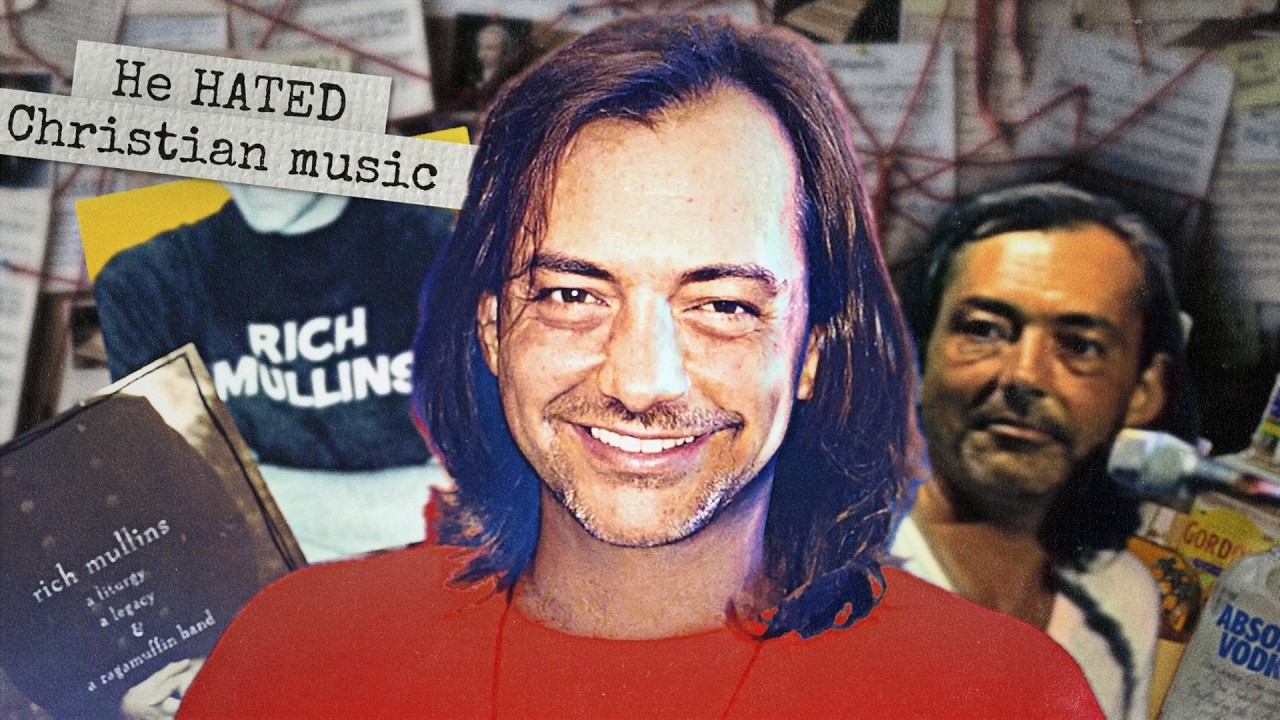
🔗 **Source:** [The Tragedy of Christian Music's Best Artist: Rich Mullins](https://www.youtube.com/watch?v=uzjXSDRKVfE)
> [!note]+ Document Notes
> tags: [rich-mullins, contemporary-christian-music, artist-finances, ccm-industry-criticism, faith-and-art, mental-health]
> author: Jonathan Allen Wright
> source: Jonathan Allen Wright
> reference: https://www.youtube.com/watch?v=uzjXSDRKVfE
> date created: 2026-09-10
>
> > [!info] Generated analysis — not the author's words. Sections below are machine-written
> > from the captured source. Only text inside `> [!quote]` blocks is verbatim from the author.
> > Do not quote or attribute any other line to the named author.
>
> # 🏷️ Title: The Tragedy of Christian Music's Best Artist: Rich Mullins
>
<!-- deep-read:sections start -->
## 🧭 Table of Contents
- [📝 Summary](#-summary)
- [📖 Main Content](#-main-content)
- [🗒️ Notes](#️-notes)
- [📚 References](#-references)
- [🗣️ Paraphrase](#️-paraphrase)
- [📰 Newsletter](#-newsletter)
- [✅ Action Items](#-action-items)
- [🧪 Hypotheses](#-hypotheses)
- [📊 Methodology](#-methodology)
- [❓ Questions](#-questions)
- [🔮 Future Research](#-future-research)
- [💡 Implications](#-implications)
- [🧠 Learning Styles Assessment](#-learning-styles-assessment)
- [📊 Accessibility Assessment](#-accessibility-assessment)
- [🌍 DEIB Assessment](#-deib-assessment)
- [✅ Logical Validity](#-logical-validity)
- [🛡️ DARVO Analysis](#-darvo-analysis)
- [🎯 Conclusion](#-conclusion)
- [🔄 Refactor Appendix](#-refactor-appendix--the-tragedy-of-christian-musics-best-artist-rich-mullins)
### 🔗 References
- [🗒️ Notes — full timestamped walkthrough](#️-notes)
- [🔄 Refactor Appendix — the fixed-salary atom](#-refactor-appendix--the-tragedy-of-christian-musics-best-artist-rich-mullins)
- [✅ Logical Validity — the "Best Artist" superlative flagged](#-logical-validity)
## 📝 Summary
- **What happened.** A biographical video essay traces Rich Mullins from a Quaker-farm childhood in Richmond, Indiana, through a songwriting breakthrough ("Sing Your Praise to the Lord," recorded by Amy Grant in 1982), a decade of Contemporary Christian Music (CCM) stardom built on albums like *Winds of Heaven, Stuff of Earth* (1988, "Awesome God") and *A Liturgy, a Legacy, and a Ragamuffin Band* (1993), a 1995 move to a Navajo reservation in New Mexico, and his death in a single-vehicle rollover on a highway in Illinois on September 19, 1997 (the video states the 10th plus "9 days later," implying the 19th without saying the date outright). Nine solo demo tapes recorded 9 days before his death, meant only as sketches for his band, became his final recordings.
- **Why it matters.** The video's most concrete, checkable claim is Mullins's financial arrangement: as royalties grew, he formed a nonprofit, handed financial control to his home church's elders and an accountant, capped his own income at roughly the average American salary ($24,000–$25,000/year per the video), and had everything above that redirected to charity — while asking never to be told the total. That's a specific, structural alternative to the industry economics the video (and the wider Christian-media-critique series this episode is part of) criticizes elsewhere by name: "huge marketing campaigns, algorithmic manipulation, mansions, stadium tours" ([00:14:29](https://www.youtube.com/watch?v=uzjXSDRKVfE&t=869s)).
- **Key stakeholders.** Mullins himself; Amy Grant and her label Reunion Records, who broke his songwriting career; the elders and accountant of his home church in Wichita, Kansas (transcribed throughout as "Witchah"), who administered his finances; his RagaMuffin Band, who completed and released his final album after his death; the CCM industry the video holds up as a foil.
- **Risks and tradeoffs.** This is an admiring tribute, not an investigation — the creator states outright that Mullins's music "impacted me deeply" ([00:27:14](https://www.youtube.com/watch?v=uzjXSDRKVfE&t=1634s)) and structures the whole video around that affection. Admiration is not evidence. The title's claim that Mullins was Christian music's "best artist" is asserted, not argued for with any comparative standard. Some biographical claims (the broken 1982 engagement, in particular) are explicitly flagged by the video itself as thin: "We don't know a whole bunch about this" ([00:05:37](https://www.youtube.com/watch?v=uzjXSDRKVfE&t=337s)).
- **Bottom line.** The durable, checkable content here is the salary-cap-plus-blind-giving structure — a concrete mechanism, not a mood. Everything else (the "tragedy" framing, the "best artist" superlative, the characterization of his interior life) is narrative interpretation built on top of that mechanism and on Mullins's own public interviews, quoted at length throughout.
## 📖 Main Content
The video opens on Mullins's final recording session — September 10th, 1997, in an abandoned church, alone with a tape recorder and nine songs — then works backward to his childhood on a farm in Richmond, Indiana. His father John is described as "a rather simple but blunt farmer" and his mother Neva as being "of Quaker descent" ([00:00:43](https://www.youtube.com/watch?v=uzjXSDRKVfE&t=43s)). The video frames Quaker simplicity and silence-based worship as in tension with "the grind and the grit of farming," and treats that tension as the formative pattern of Mullins's life. This is interpretive framing by the creator, not a claim Mullins is quoted making himself about his own childhood psychology.
Mullins began piano at four and was, per the video, "a prodigy." Friction with his father over his artistic inclinations is documented through one widely repeated line attributed to the father — "he had two daughters, two sons, and a piano player" ([00:03:44](https://www.youtube.com/watch?v=uzjXSDRKVfE&t=224s)) — and through Mullins's own words about adolescent depression, quoted directly: he describes being told to "cheer up... because God loves you" and answering that this "don't make me special," since "that just proves that God ain't got no taste" ([00:04:13]–[00:04:26](https://www.youtube.com/watch?v=uzjXSDRKVfE&t=266s)). That line — self-deprecating, theologically pointed, resistant to easy comfort — recurs at the video's close, reused as a kind of thesis statement for his whole body of work.
At Cincinnati Bible College (1974, never completed) Mullins started songwriting seriously, formed a band called Zion, and developed what the video calls a "homeless aesthetic" — no shoes, no new clothes, no dressing up "to be approved by God." He was engaged for roughly ten years during this period; his fiancée broke it off in 1982, and the video is candid that the record here is thin: "We don't know a whole bunch about this, but we do know that it seemed to break something within Rich" ([00:05:37](https://www.youtube.com/watch?v=uzjXSDRKVfE&t=337s)). A later Mullins quote about the relationship — that he felt lonely even in its most intimate moments, and wondered if "God wanted me to be celibate" and "the way that he accomplished that was to break my heart" — is presented as his own retrospective interpretation, not the video's.
The commercial break came through a demo tape passed to Dan Harrell, Amy Grant's brother-in-law and manager, in 1981. Grant recorded "Sing Your Praise to the Lord" as the lead single on her 1982 album *Age to Age*, which the video says became the first CCM album certified platinum and won Mullins a Dove Award in 1983. His own solo career followed: a self-titled 1986 debut, then 1988's *Winds of Heaven, Stuff of Earth*, containing "Awesome God" — a song the video notes Mullins "honestly thought... was one of his least poetic ones," despite its becoming (per the video, uncited) a near-ubiquitous congregational anthem still covered today. The video stages his first encounter with label executives as a culture-clash origin story: they expected "a really polished musician type" and instead "got a guy who looked like he hitchhiked there" ([00:09:34]–[00:09:45](https://www.youtube.com/watch?v=uzjXSDRKVfE&t=585s)).
The financial arrangement — the section with the clearest documentary shape — comes as his royalties grew. Per the video: Mullins "realized he was becoming wealthy. This terrified him" ([00:13:18](https://www.youtube.com/watch?v=uzjXSDRKVfE&t=798s)). He formed a nonprofit, "the Kid Brothers of St. Frank or St. Francis," handed financial control to the elders of his home church in Wichita and an accountant, and told them he wanted to make "no more than the average American man's salary" — landing on $24,000–$25,000 a year — with every dollar above that "divvied out by the leaders to different charities, missions, and organizations." He also asked never to be told the total given away, so as not to "build up this pride of being a great spiritual philanthropist" ([00:14:10]–[00:15:16](https://www.youtube.com/watch?v=uzjXSDRKVfE&t=916s)). The creator explicitly contrasts this with current CCM economics — "huge marketing campaigns, algorithmic manipulation, mansions, stadium tours... churches with millions of dollars of equipment" — and states a personal reaction ("I find this refreshing to hear") rather than presenting the contrast as a neutral fact.
1993's *A Liturgy, a Legacy, and a Ragamuffin Band* is framed as his creative peak, named for Brennan Manning's *The Ragamuffin Gospel*, which the video says gave Mullins language for his discomfort with wealth and fame. The video pairs this period with open acknowledgment of depression and alcoholism, quoting Mullins performing confession from the stage rather than promotional polish: "Sometimes I find it hard to pray... maybe that's why I've written so many prayer songs" ([00:19:20](https://www.youtube.com/watch?v=uzjXSDRKVfE&t=1160s)). In 1995 he moved into a trailer on a Navajo reservation in New Mexico with his friend Mitch, in his own words because he'd "gotten tired of a white evangelical middle class sort of perspective on God" and "thought maybe I would have more luck finding Christ among the... pagan Navajos" ([00:21:54]–[00:22:04](https://www.youtube.com/watch?v=uzjXSDRKVfE&t=1324s)).
His death is reported plainly: traveling with Mitch toward a benefit concert, his Jeep fishtailed and rolled; neither was wearing a seatbelt; both were ejected; Mitch survived and Mullins was struck by an oncoming vehicle and died instantly at 41. Two location details conflict within the video itself — the crash is first placed "on I 95... near Bloomington, Illinois" ([00:24:31](https://www.youtube.com/watch?v=uzjXSDRKVfE&t=1471s)) and then, twenty seconds later, "in the middle of Interstate 39" ([00:24:52](https://www.youtube.com/watch?v=uzjXSDRKVfE&t=1492s)). Interstate 95 does not run through Illinois; this is very likely a caption or scripting error rather than two real highways, and is noted here rather than silently corrected. His RagaMuffin Band found the abandoned-church demo tapes and, in 1998, released them as disc one of a double album, with the band's studio versions (featuring guest vocalists Michael W. Smith and Amy Grant) as disc two.
This episode sits inside a thirteen-video series Courtney is working through while deconstructing out of the New Apostolic Reformation. It's worth noting explicitly that this particular video is not about NAR doctrine or governance — it's a CCM-industry economic and stylistic critique, using Mullins as a positive foil. Its relevance to the wider series is the pattern it documents (an artist opting out of an industry's financial incentives) rather than any direct engagement with NAR theology or leadership structures.
## 🗒️ Notes
#### ⏱️ [00:00:00](https://www.youtube.com/watch?v=uzjXSDRKVfE&t=0s) Cold open: the final tape and the frame
- Sets the video's frame before any biography: a solo tape-recorder session in an abandoned church, nine songs, dead nine days later.
- States the video's thesis directly as a superlative: Mullins "accidentally became the most important and the most honest voice in Christian music."
> [!quote]
> Rich Mullins, no band, no producers, no label reps, just a man, a cheap tape recorder, and nine songs that he had been carrying
#### ⏱️ [00:00:34](https://www.youtube.com/watch?v=uzjXSDRKVfE&t=34s) Farm childhood, Quaker mother
- Born in Richmond, Indiana; father John a farmer, mother Neva of Quaker descent.
- Frames Quakerism's core tenet of silence ("a gathering of the soul") as in tension with the "grind and grit of farming" — presented as the formative contrast of his upbringing.
> [!quote]
> mother, Neva, was of Quaker descent. >> [music] >> Quaker, >> not that kind of Quaker. Quakerism, formerly known as a religious society of friends, is built around simplicity.
#### ⏱️ [00:01:28](https://www.youtube.com/watch?v=uzjXSDRKVfE&t=88s) Piano prodigy vs. his father
- Piano lessons from age four; playing in his local church as a teenager, engaging with "the nuances of faith" rather than just hymns.
- Father's friction with his artistic son captured in one widely quoted line.
> [!quote]
> His dad famously said that he had two daughters, two sons, and a piano player.
#### ⏱️ [00:02:06](https://www.youtube.com/watch?v=uzjXSDRKVfE&t=126s) Cincinnati Bible College: songwriting begins, the "homeless aesthetic"
- Arrives 1974; sharpens his theology, starts a religious "rebellion" against a glossier pop-gospel style; reads Chesterton and St. Francis over contemporary writers.
- Forms band Zion; writes "Sing Your Praise to the Lord" as a prayer, not (per the video) with commercial intent.
- Never graduates; develops a "homeless aesthetic" — no shoes, no new clothes.
- Quotes Mullins's own adolescent-depression line about God loving everybody not making him "special."
> [!quote]
> It was also at CBC that Rich began to develop what we would call his homeless aesthetic. He didn't like
#### ⏱️ [00:05:18](https://www.youtube.com/watch?v=uzjXSDRKVfE&t=318s) Engagement, and its 1982 breakup
- Engaged roughly ten years during his CBC and post-CBC period; writes a wedding song ("Doubly Good to You") he expected no one else to hear.
- The video explicitly flags this as thinly documented before quoting Mullins's later reflection that the loneliness he felt in the relationship "was baked in," not a complaint about his fiancée, and his speculation that "God wanted me to be celibate."
> [!quote]
> but then she broke the engagement off in 1982. We don't know a whole bunch about this, but we do know that it seemed to
#### ⏱️ [00:07:05](https://www.youtube.com/watch?v=uzjXSDRKVfE&t=425s) Nashville break: Dan Harrell and the demo tape
- 1981: Mullins's band Zion plays a small event; hands a demo to Dan Harrell, Amy Grant's brother-in-law/manager, who — unlike most such tapes, per the video — actually listens to it.
- The song's classical/Bach influence is cited as what set it apart on the radio.
> [!quote]
> Grant's brother-in-law and manager. In 1981, Rich's band Zion is performing at a small event, and Dan happens to be there. Rich at some point gets an opportunity hands Dan the demo tape
#### ⏱️ [00:09:10](https://www.youtube.com/watch?v=uzjXSDRKVfE&t=550s) Age to Age and platinum success
- "Sing Your Praise to the Lord" becomes the lead single of Amy Grant's 1982 *Age to Age*; the video states it became the first CCM album certified platinum and won a Dove Award in 1983 (no citation given for either claim).
> [!quote]
> Age. The album became a phenomenon. Eventually, it became the first contemporary Christian album to be certified platinum. Singer Praise to the Lord won a dove award in 1983. This is
#### ⏱️ [00:09:34](https://www.youtube.com/watch?v=uzjXSDRKVfE&t=574s) Meeting Reunion Records: the culture clash begins
- Label executives expect a polished performer and are surprised by his appearance; his talent at the piano is described as immediately undeniable regardless.
- The video treats this moment as the origin of a lifelong theme: Mullins never "fit in" with CCM's presentation norms.
> [!quote]
> polished musician type, but instead they got a guy who looked like he hitchhiked there. But once Rich sat down at the piano, his talent was undeniable. Not
#### ⏱️ [00:10:16](https://www.youtube.com/watch?v=uzjXSDRKVfE&t=616s) Solo albums, 1986–1988, and "Awesome God"
- Self-titled debut, 1986. *Winds of Heaven, Stuff of Earth*, 1988, contains "Awesome God," described as a global anthem still covered (the video names a Phil Wickham cover) — despite Mullins reportedly rating it among his "least poetic" songs.
- Growing discomfort with celebrity begins here; he leaves to study music education at Friends University in Wichita.
> [!quote]
> self-titled album in 1986, which is a brilliant listen. [music] >> I believe that the world won't last. a man like that don't [music] exist. So I'm looking for a few good.
#### ⏱️ [00:13:18](https://www.youtube.com/watch?v=uzjXSDRKVfE&t=798s) Wealth becomes terrifying
- As royalties from his own recordings and other artists' covers grow, Mullins reportedly becomes afraid money will separate him from God.
- This segment sets up the financial-arrangement claim treated as this note's central atomizable fact (see Refactor Appendix, atom H1).
> [!quote]
> Rich realized he was becoming wealthy. This terrified him. Rich
#### ⏱️ [00:15:25](https://www.youtube.com/watch?v=uzjXSDRKVfE&t=925s) 1993: A Liturgy, a Legacy, and a Ragamuffin Band
- Concept album, half traditional worship structure, half meditation on the American landscape; recorded with a group of musicians Mullins named the RagaMuffin Band after Brennan Manning's book *The Ragamuffin Gospel*.
- Manning's message ("God loves you because he is good, not because you are") is credited with shifting Mullins away from trying to make "perfect" art.
> [!quote]
> called them the RagaMuffin Band. This was a name borrowed from a Brennan Manning book. The Raga Muffin Gospel was a book that really helped Rich put into
#### ⏱️ [00:19:01](https://www.youtube.com/watch?v=uzjXSDRKVfE&t=1141s) Depression, drinking, and public honesty
- Video states Mullins struggled with depression and alcoholism, and — unlike what it characterizes as typical CCM practice — didn't hide either.
- Quotes Mullins telling audiences from the stage about his struggle to pray, framed by him as confession rather than performance.
> [!quote]
> that were going on in his life, not that he was [music] trying to get something out of it, but as a confession. Sometimes I find it hard to pray. And
#### ⏱️ [00:21:43](https://www.youtube.com/watch?v=uzjXSDRKVfE&t=1303s) Move to the Navajo reservation, 1995
- Moves with friend Mitch into a trailer on a Navajo reservation in New Mexico; in his own words, seeking a bigger picture of God than "a white evangelical middle class sort of perspective."
- Was completing a music-education degree specifically to teach music there, not as a "celebrity missionary."
> [!quote]
> thought maybe I would have more luck finding Christ among the uh pagan Navajos.
#### ⏱️ [00:23:44](https://www.youtube.com/watch?v=uzjXSDRKVfE&t=1424s) The Jesus album sketches and the crash
- 1997: begins a planned concept album on the life of Jesus, tentatively "10 Songs About Jesus"; records nine solo sketches alone in an abandoned church, intended only as guides for his band.
- Traveling with Mitch to a benefit concert, his Jeep fishtails and rolls; neither wore a seatbelt; both are ejected; Mullins is struck and killed instantly at 41. The video's own location references conflict ("I 95... near Bloomington, Illinois" vs. "Interstate 39" twenty seconds later) — noted here as a likely captioning/scripting error, not corrected in the quote below.
> [!quote]
> He died instantly at the age of 41 in the middle of Interstate 39.
#### ⏱️ [00:26:28](https://www.youtube.com/watch?v=uzjXSDRKVfE&t=1588s) Aftermath: the band finishes the record
- RagaMuffin Band locates the demo tapes and releases a 1998 double album: disc one the raw church recordings, disc two studio versions with guest vocalists including Michael W. Smith and Amy Grant.
> [!quote]
> and a bunch of guest vocalists including Michael W. Smith and Amy [music] Grant. And with that, Rich Mullen's legacy was cemented. Honest, messy, slightly disorganized, and caught between the
#### ⏱️ [00:27:14](https://www.youtube.com/watch?v=uzjXSDRKVfE&t=1634s) Creator's own reflection and closing performance
- The creator states Mullins's music "impacted me deeply" and shapes how they think about artists' lives and choices — an explicit first-person admission of the admiring lens the whole video is built through.
- Closes with a performance of "Here in America" over archival footage rather than further narration.
> [!quote]
> those final demos [music] contain something really special. Rich's music has impacted me deeply. [music] It makes me think about artistry and creative outlets. It also helps me think about
## 📚 References
- [Video: The Tragedy of Christian Music's Best Artist: Rich Mullins](https://www.youtube.com/watch?v=uzjXSDRKVfE)
- *The Ragamuffin Gospel*, Brennan Manning — named in the video as the direct source of the RagaMuffin Band's name and a formative influence on Mullins's thinking about grace; no edition or publisher cited in the transcript.
- *Age to Age*, Amy Grant (1982) — the album on which "Sing Your Praise to the Lord" first appeared; no label/catalog detail cited.
- *A Liturgy, a Legacy, and a Ragamuffin Band*, Rich Mullins (1993) — described as his creative peak; no label/catalog detail cited.
- The 1998 posthumous double album compiling the abandoned-church demo tapes and the band's studio versions is described but not named in the transcript.
## 🗣️ Paraphrase
The video tells Rich Mullins's life as a running argument between two forces: the plain, unpolished honesty he inherited from a Quaker mother and a hard-edged farming father, and a Christian music industry that wanted him polished, marketable, and safe. Every beat of the story — his refusal to wear shoes or dress up, his discomfort at award shows, his decision to cap his own income and give the rest away without being told the total, his move to a reservation instead of staying on the celebrity circuit, his open talk of depression and drinking from the stage — is read by the creator as evidence of the same refusal to perform for approval, whether from his father, from CCM audiences, or from God.
The creator doesn't hide that this is a tribute told from admiration: they open by calling Mullins the industry's "most important and most honest voice," and close by naming their own emotional stake in his music. The strongest, most independently checkable claim in the story isn't a feeling — it's the mechanism Mullins built with his church's elders to keep his income fixed and his giving anonymous even to himself. That's presented as the clearest proof of everything else the video claims about his character.
## 📰 Newsletter
For anyone following Courtney's Christian-media-industry watch list: this is a biographical deep dive on Rich Mullins that's worth a look less for its "best artist" framing (a claim on its face, not a finding) than for one specific, reusable fact — Mullins capped his own salary at roughly the U.S. average, routed the rest of his royalties through his church's elders to charity, and had them keep the total from him. That's a concrete structural alternative to the celebrity-pastor and stadium-tour economics the video (and adjacent critiques in this series) name directly. Worth a watch for the financial-arrangement section alone, even setting the hagiography aside.
## ✅ Action Items
#### DevRel
- Not applicable to this source — a music-biography video essay with no developer, SDK, or community-program content.
#### OSPO
- Not applicable to this source — no open-source governance, licensing, or software content of any kind.
#### Community
- Not applicable to this source — no maintainer/contributor/sponsor ecosystem; this is a solo creator narrating a single artist's biography.
#### WordPress
- Not applicable to this source across all subteams (Core, Core Performance, Core AI, Core Program Team, Mobile, Playground, Community, Training, Marketing, Support, Design, Documentation, Photos, TV, Polyglots, Accessibility, Meta, CLI, Hosting, Tide, Openverse, Themes, Plugins) — the video never touches WordPress or software governance.
#### The WPOCC
- Not applicable to this source — no fellowship, funding, or governance content.
#### FAIR
- Not applicable to this source — no federation, provenance, or governance-artifact content.
## 🧪 Hypotheses
- H1: A capped-salary-plus-blind-giving arrangement, administered by a third party the artist doesn't control, reduces an artist's exposure to income-maximizing incentives (touring scale, merchandise, algorithmic content decisions) relative to standard royalty-and-label arrangements.
- H2: Public, on-stage disclosure of depression and addiction by a CCM artist in the late 1980s–1990s was atypical enough that the video treats it as a distinguishing trait rather than an industry norm — this is testable against other CCM artist interviews/press from the same period.
- H3: The video's central superlative claim ("most important and most honest voice in Christian music") is not something the video itself attempts to establish comparatively — no other artist's honesty or importance is measured against Mullins's using any shared criterion.
- H4: The two conflicting highway references for the fatal crash (I-95 vs. Interstate 39) originate from a single scripting or transcription error rather than two independently sourced claims.
### 📊 Methodology
- For H1: compare Mullins's documented income structure against publicly reported CCM artist compensation/business structures from the same era (where available) and against modern celebrity-pastor/creator-economy income models; assess which financial levers (touring frequency, merchandising, algorithmic content strategy) each structure removes or preserves.
- For H2: sample CCM artist print and broadcast interviews from roughly 1985–1997 for self-disclosure of mental health or addiction struggles; compare frequency and framing (confession vs. redemption-arc marketing) against how this video frames Mullins's stage confessions.
- For H3: identify what comparative standard (sales, critical reception, theological substance, peer testimony) would be needed to support "best" or "most honest," and check whether the video supplies any of them anywhere outside the title and opening line.
- For H4: this would require locating the original video's shot list or script, or contacting the creator — not resolvable from the transcript alone.
### ❓ Questions
- What was the actual total Mullins's church elders distributed to charity over his career? The video states he asked never to be told — meaning no figure exists even for him, and the video doesn't supply one either.
- Who were the "elders" and what was the accountant's role structurally — was this a formal 501(c)(3) board, a handshake trust, or something else? The video names the nonprofit ("Kid Brothers of St. Frank/Francis") but not its legal structure.
- What does "the average American man's salary" mean operationally for a 1980s–90s figure — is $24,000–$25,000 the video's own claimed number, an inflation-adjusted estimate, or a period-accurate one? No source is given.
- Beyond Amy Grant's cover, how much of Mullins's total income came from his own performing/recording versus songwriting royalties from other artists — the video mentions "other people recording and playing his songs" without naming which contributed most to his wealth.
### 🔮 Future Research
- No comparison to other artists who structured income similarly (tithe-heavy giving, fixed-salary arrangements administered by a church or trust) to establish how unusual Mullins's approach actually was within CCM or gospel music more broadly.
- No engagement with critical or skeptical assessments of Mullins's legacy, if any exist — the video draws exclusively on admiring sources (friends, his own interviews, the creator's own reaction).
- No discussion of how the "Kid Brothers of St. Frank/Francis" nonprofit operated after his death, or whether its structure has been documented, studied, or replicated by any other artist.
- No treatment of how the financial arrangement intersects with his ministry work (the Navajo reservation years) — did the fixed salary fund that work directly, or was it separately supported?
### 💡 Implications
- **Practice.** The fixed-salary-plus-blind-giving structure is a reusable template for any income-generating public figure (artist, creator, pastor) who wants a hard ceiling on personal enrichment; it requires a trusted third party with actual financial authority, not just a stated intention.
- **Policy/governance.** Nonprofit structures like the one described (a formal entity plus delegated elder/accountant control) offer a concrete governance pattern for separating an individual's identity from an organization's finances — relevant to any Christian-media-critique work on celebrity-pastor compensation.
- **Security.** Not applicable to this source.
- **Education.** The video models (without naming it as such) the difference between a documented fact — the salary cap — and an admiring interpretation of character built on top of it; useful as a teaching example of biography vs. hagiography.
- **Funding models.** Directly relevant: this is one of the few concrete counter-examples in the Christian-media space to marketing-driven, tour-scale-maximizing artist compensation, named by the video itself as a contrast to "algorithmic manipulation" and "stadium tours."
### 🧠 Learning Styles Assessment
- **Reading level estimate:** Flesch-Kincaid Grade Level ≈ 8. Basis: short declarative sentences mixed with longer narrated exposition, frequent conversational asides ("Not that kind of Quaker"), and long verbatim interview quotes with the informal cadence of unscripted speech.
#### 👀 Visual learners
- **Present:** archival photos and performance/interview footage implied by the narration (not independently confirmed from the transcript alone); a closing musical performance over visuals.
- **Improve:** an on-screen timeline of the salary/nonprofit arrangement (formation date, cap amount, disbursement mechanism) would make the video's central factual claim easier to retain than narration alone.
#### 🔊 Aural learners
- **Present:** the entire video is voice narration interwoven with Mullins's own recorded interview audio and song excerpts — well suited to listening without watching.
- **Improve:** none needed; this format already serves aural learners directly.
#### 🗣️ Verbal learners
- **Present:** direct definitions (e.g., explaining what Quakerism is before using the term), and Mullins's own aphoristic quotes doing much of the explanatory work ("Good taste was the enemy of great art").
- **Improve:** a glossary distinguishing the video's own claims from Mullins's quoted claims would help verbal learners track whose voice is whose.
#### 🧩 Kinesthetic learners
- **Present:** none — a narrated biography with no exercises, worksheets, or hands-on component.
- **Improve:** not a natural fit for this content; no changes recommended.
#### 🧠 Logical learners
- **Present:** a roughly chronological structure (childhood → college → breakthrough → fame → crisis → reservation → death → legacy) that's easy to follow causally.
- **Improve:** an explicit "before/after" comparison table of Mullins's finances (pre- vs. post-nonprofit) would make the causal claim (wealth → fear → structural response) concrete rather than narrated.
#### 🧑🤝🧑 Social learners
- **Present:** none — no discussion prompts or audience engagement shown in the transcript.
- **Improve:** a prompt inviting viewers to discuss other artists who've structured income similarly would extend the video into a comparative discussion.
#### 🧘♀️ Solitary learners
- **Present:** well suited to solitary reflective viewing — the content invites personal reflection on faith, money, and honesty without requiring any external interaction.
- **Improve:** none needed.
#### 🌿 Naturalistic learners
- **Present:** the farming childhood and Navajo-reservation sections gesture toward land and place, though not framed ecologically.
- **Improve:** not a strong fit for explicit naturalistic framing; no changes recommended.
### 📊 Accessibility Assessment
*Assessed from the auto-generated transcript only — the video's visuals, on-screen text, and audio mix were not independently reviewed.*
#### Screen reader semantics
- **Not observed** — no on-screen UI to assess; would require direct video review to evaluate any on-screen text or lower-thirds (WCAG 2.2 SC 1.3.1).
#### Keyboard navigation
- **Not applicable** — a passive video with no interactive elements.
#### Contrast and readability
- **Not observed** — any on-screen text (names, dates, lower-thirds) was not visually reviewed; flag for direct check before treating as compliant (SC 1.4.3, 1.4.11).
#### Text resizing and reflow
- **Not applicable** — no reflow-relevant UI in a passive video.
#### Media and captions
- **Present:** captions exist and are auto-generated, not human-corrected — confirmed by transcript artifacts throughout: "Witchah" for Wichita, Kansas (recurs consistently, e.g. [00:13:28](https://www.youtube.com/watch?v=uzjXSDRKVfE&t=808s)), "semitr" for what context indicates is "semi" (truck) at [00:24:42](https://www.youtube.com/watch?v=uzjXSDRKVfE&t=1482s), and inline "[music]" tags breaking mid-sentence throughout.
- **Improve:** human-reviewed caption correction would fix the recurring "Witchah"/Wichita and similar proper-noun errors; an audio-description track would help non-sighted viewers access any archival photo or footage the narration doesn't describe aloud (e.g., what the abandoned church or the RagaMuffin Band setup actually looked like) (SC 1.2.2, 1.2.5).
#### Forms and interactions
- **Not applicable** — no forms or interactive input in the video itself.
#### Standards reference
- Gaps above map to WCAG 2.2 AA: 1.2.2 (Captions), 1.2.5 (Audio Description), 1.3.1, 1.4.3, 1.4.11. Most require direct visual/audio review of the published video to confirm or close; caption-accuracy gaps are confirmed directly from the transcript.
### 🌍 DEIB Assessment
#### Cultural breadth
- **Present:** the Navajo reservation section introduces a cross-cultural element, though it is narrated entirely through Mullins's own stated motivations rather than any Navajo perspective or source.
- **Improve:** the video never quotes or names anyone from the reservation community Mullins lived among; a fuller treatment would include that perspective rather than only the missionary's own account of "finding Christ among" that community.
#### Inclusive language
- **Present:** mostly plain, direct narration; Mullins's own quoted language ("pagan Navajos," [00:22:04](https://www.youtube.com/watch?v=uzjXSDRKVfE&t=1324s)) is quoted, not softened, and reflects his own 1990s framing rather than the creator's.
- **Improve:** the creator could flag that "pagan" is Mullins's own period-specific framing of the community he moved to serve, distinct from how that community would likely describe itself.
#### Neurodiversity support
- **Present:** clear chronological structure aids tracking across a 31-minute narration.
- **Improve:** the video runs as one continuous narration with no spoken chapter markers; on-screen or spoken segment titles (as approximated by this note's Notes section) would help viewers who rely on structural cues.
#### Representation
- **Present:** centers a white male CCM artist; women in the narrative (his mother, his ex-fiancée, Amy Grant) are present but secondary to Mullins's own voice and choices.
- **Improve:** the ex-fiancée is never named and her account of the broken engagement is never presented — the video is explicit that this side of the story isn't known, but doesn't address why or seek it out.
#### Psychological safety
- **Present:** the video discusses depression, alcoholism, and a fatal car accident without sensationalizing detail; the crash is reported plainly (cause, outcome, no graphic description).
- **Improve:** none needed — the discussion of mental health and death is handled with restraint throughout.
### ✅ Logical Validity
#### Strong reasoning
- **Evidence-grounded causal claim on the financial arrangement (00:13:18–00:15:16):** the sequence — growing wealth, stated fear of what it could do to his faith, a specific administrative structure created in response — is internally consistent and supported by concrete, checkable detail (nonprofit name, salary figure, disbursement mechanism), not just asserted sentiment.
- **Use of direct quotation over paraphrase for contested or sensitive claims:** the video repeatedly lets Mullins speak in his own words on engagement, depression, and faith rather than characterizing his inner state without him — strong practice for a biographical claim that would otherwise be unfalsifiable.
#### Fallacies
- **Unsupported superlative in the title and opening line.** Location: title ("Best Artist") and [00:00:13]–[00:00:23](https://www.youtube.com/watch?v=uzjXSDRKVfE&t=23s) ("the most important and the most honest voice in Christian music"). Why it's weak: no comparative standard, no competing artists named or assessed, no criteria given for "best," "most important," or "most honest" — this is the creator's editorial judgment, not a finding the video argues for. Fix: reframe as a stated personal ranking ("my favorite CCM artist") rather than an unqualified superlative, or name the comparison set and criteria.
- **Hasty generalization about the CCM industry.** Location: [00:14:29](https://www.youtube.com/watch?v=uzjXSDRKVfE&t=869s), "we hear a lot, especially within the CCM world currently, of people throwing ungodly amounts of money out in the name of Jesus... which a lot more CCM people need to think about right now." Why it's weak: no specific artists, ministries, or figures are named or cited; "a lot" and "currently" carry the entire claim with no data point behind them. Fix: name specific, checkable examples if the claim is meant to generalize beyond Mullins's own choices, or scope it explicitly as the creator's impression rather than a documented industry pattern.
- **Appeal to authority via uncited factual claims.** Location: e.g., "first contemporary Christian album to be certified platinum" ([00:09:10](https://www.youtube.com/watch?v=uzjXSDRKVfE&t=550s)) and the "$24 to $25,000 a year" salary figure ([00:15:08](https://www.youtube.com/watch?v=uzjXSDRKVfE&t=908s)) — both stated as fact with no source named. Why it's weak: these are checkable claims presented with the same confidence as the video's interpretive framing, collapsing the distinction between documented fact and narrative assertion. Fix: cite the source for specific figures (RIAA certification records, biographical interviews) so a viewer can distinguish "documented" from "asserted."
#### Tone of voice
- Warm, admiring, first-person-adjacent narration; frequent direct address to the audience ("I find this refreshing to hear"); uses Mullins's own dry, self-deprecating humor as a recurring register, and treats his death with restraint rather than melodrama.
### 🛡️ DARVO Analysis
- **Deny:** Not applicable to this source — no accusation against Mullins, or against any named party, appears anywhere in the video. DARVO describes a rhetorical move by an accused party (Deny, Attack, Reverse Victim and Offender); there is no accused party here.
- **Attack:** Not applicable — the video does level criticism (of CCM industry economics and marketing practices), but this is the creator's own editorial critique of an industry, not a defensive attack on an accuser. No individual or group is accused of wrongdoing and then counter-attacked.
- **Reverse victim/offender:** Not applicable — no victim/offender framing exists to reverse. The closest adjacent rhetoric is the video's implicit contrast between Mullins (framed as authentic) and the unnamed CCM industry (framed as compromised), but this is industry-level editorializing, not a DARVO pattern involving a specific accusation.
- Because DARVO doesn't apply, the more relevant rhetorical note is the video's use of an unnamed, undifferentiated "CCM industry" as a foil throughout — a rhetorical contrast device, not a documented critique of any specific actor (see Fallacies, hasty generalization).
## 🎯 Conclusion
The video's title claim — "Best Artist" — is asserted, not demonstrated, and should be read as the creator's own ranking rather than a finding this note can independently support. What the video does document with enough specificity to be useful past the tribute framing is Mullins's financial arrangement: a capped salary near the U.S. average, administered by his church's elders and an accountant, with the surplus given to charity and its total kept from him deliberately. That's a concrete, structural counter-example to the touring-scale, marketing-driven economics the video (and this creator's wider critique of Christian media) names directly elsewhere. Practical next step for a reader: treat the biographical narrative (his psychology, his father, his engagement, his "tragedy") as admiring interpretation resting on real but partial source material, and treat the salary-cap-plus-blind-giving structure as the one piece of this video specific and checkable enough to actually model.
## 🔄 Refactor Appendix — The Tragedy of Christian Music's Best Artist: Rich Mullins
> Density: 5 Literature atoms (H4), 2 Permanent candidates (H4).
> Konik claim-header rules: present tense, declarative, ≤10 words, searchable, unique.
> Atomicity: one declarative sentence per atom.
### 📚 Literature Atoms (H4)
#### [H1] Mullins capped his salary and gave surplus royalties away blind
> [!quote]
> He told the elders to never let him know how much money he had given away.
**Context & use**:
- [00:14:10](https://www.youtube.com/watch?v=uzjXSDRKVfE&t=850s) — follows directly from Mullins forming a nonprofit ("Kid Brothers of St. Frank/Francis") and handing financial control to his church's elders and an accountant.
- The video's single most concrete, structural claim — a mechanism, not a mood — and the one this task flags as the durable, atomizable content in the episode.
**Tags**: #xref #aphorisms
<!-- atomicity: 1 idea ✓ -->
#### [H2] Reunion Records expected polish and got a barefoot farm kid
> [!quote]
> polished musician type, but instead they got a guy who looked like he hitchhiked there. But once Rich sat down at the piano, his talent was undeniable. Not
**Context & use**:
- [00:09:34](https://www.youtube.com/watch?v=uzjXSDRKVfE&t=574s) — first meeting between Mullins and Amy Grant's label after "Sing Your Praise to the Lord" broke.
- Sets up the recurring theme the video returns to at awards shows and beyond: Mullins as a persistent style/culture outsider inside the CCM machine.
**Tags**: #xref
<!-- atomicity: 1 idea ✓ -->
#### [H3] The video admits it doesn't know why the 1982 engagement ended
> [!quote]
> but then she broke the engagement off in 1982. We don't know a whole bunch about this, but we do know that it seemed to
**Context & use**:
- [00:05:37](https://www.youtube.com/watch?v=uzjXSDRKVfE&t=337s) — rare moment where the video flags its own evidentiary limits rather than filling the gap with speculation.
- Useful marker for where documented biography ends and inference (his later "God wanted me to be celibate" quote) begins.
**Tags**: #xref
<!-- atomicity: 1 idea ✓ -->
#### [H4] Mullins moved to a Navajo reservation seeking a less small God
> [!quote]
> thought maybe I would have more luck finding Christ among the uh pagan Navajos.
**Context & use**:
- [00:22:04](https://www.youtube.com/watch?v=uzjXSDRKVfE&t=1324s) — Mullins's own stated reason, quoted directly, for the 1995 move with his friend Mitch.
- Connects to his earlier discomfort with celebrity and with what he called a "white evangelical middle class" frame on God.
**Tags**: #xref
<!-- atomicity: 1 idea ✓ -->
#### [H5] Mullins died instantly in a single-vehicle rollover at 41
> [!quote]
> He died instantly at the age of 41 in the middle of Interstate 39.
**Context & use**:
- [00:24:52](https://www.youtube.com/watch?v=uzjXSDRKVfE&t=1492s) — reported plainly, without graphic detail; treated factually here per this task's instruction.
- The video's own location references conflict internally (an earlier line places the crash on "I 95... near Bloomington, Illinois"); flagged as a likely captioning/scripting error, not resolved by this note.
**Tags**: #xref
<!-- atomicity: 1 idea ✓ -->
### 🧠 Permanent Candidates (H4)
#### [P1] A fixed-salary, blind-giving structure removes an artist's income-maximizing incentive
**Claim** (Courtney's voice): An artist can structurally remove their own incentive to chase audience-maximizing choices by capping personal income at a fixed amount, routing surplus earnings through a third party they don't control, and declining to be told the total.
**Evidence pointer**: [[#H1]]
**Scope & conditions**: Requires a genuinely independent administrator (elders/accountant here) with real authority, not just a stated intention — a self-administered "cap" the artist can revoke at will doesn't remove the incentive, it just delays acting on it. Distinct from tithing, which doesn't cap total personal income.
**Links** (≥1 with annotation):
- [[CCM industry economics]] — because contrasts: the video names touring scale, merchandising, and "algorithmic manipulation" as the incentives this structure specifically removes.
- [[Nonprofit fiduciary structures]] — because applies-in: any public figure (artist, pastor, creator) wanting a hard, self-binding ceiling on personal enrichment.
<!-- atomicity: 1 idea ✓ -->
#### [P2] A creator's superlative claim about a subject is editorial judgment, not a finding
**Claim** (Courtney's voice): When a video's title or opening line ranks its subject as "best" or "most important" without naming a comparison set or criteria, that's the creator's stated affection, not a claim the video has argued for — and I should read the rest of the video's factual claims with that distinction in mind.
**Evidence pointer**: [[#H1]] (contrast case: the salary-cap claim is checkable; the "best artist" claim is not)
**Scope & conditions**: Applies across this creator's wider video series and to biographical/tribute content generally; doesn't mean the underlying admiration is wrong, only that it isn't evidence.
**Links** (≥1 with annotation):
- [[Hagiography vs. biography]] — because contrasts: distinguishes documented fact (the nonprofit, the salary figure) from admiring interpretation (his psychology, the "tragedy" framing) within the same video.
<!-- atomicity: 1 idea ✓ -->
### ✏️ Fleeting Queue
- [F1] Locate a primary source (interview, biography, RIAA data) for the "first CCM album certified platinum" and "$24–25,000 salary" claims before treating either as settled fact. — https://www.youtube.com/watch?v=uzjXSDRKVfE #xref
- [F2] Check whether the "Kid Brothers of St. Frank/Francis" nonprofit's structure or filings are documented anywhere, as a model for the fixed-salary/blind-giving pattern. — #xref
### → Things 3 (max 2 actions)
- [ ] Verify the I-95-vs.-Interstate-39 crash-location discrepancy against a primary source before citing the crash location elsewhere — context #verification #things
- [ ] Cross-reference the salary-cap-plus-blind-giving structure against other artists' documented income arrangements for the CCM-industry-economics thread in this video series — context #ccm-industry-criticism #things
<!-- deep-read:sections end -->
📄 **Full text:** [[Full Document Contents/Articles/The Tragedy of Christian Music's Best Artist Rich Mullins.md|The Tragedy of Christian Music's Best Artist: Rich Mullins by YouTube]]
## Highlights
- September 10th, 1997, in an abandoned church somewhere in the Midwest. Rich ([View Highlight](https://read.readwise.io/read/01m0p01g3cm2exms2gh2h0zssg))
- Note: Opening scene-setter: 10 September 1997, alone in an abandoned church with a cheap tape recorder — nine days before his death. Those sketches became the posthumous Jesus Record.
- Tags: atom/literature/h5, rich-mullins
- God loves everybody. That don't make me special. That just proves that God ain't got no taste. ([View Highlight](https://read.readwise.io/read/01m0p0aeetx89d29yh6ga285jk))
- Note: Mullins in his own voice. The video returns to this at the close and turns it into its thesis — God takes "the junk of our lives" and makes art from it; a refined God would be "useless to Christianity." The joke is load-bearing theology.
- Tags: aphorisms, spiritual-formation, atom/literature/h3
- be distinct. And it just seems like a lot of people want to sound as much like the world as they can and and still have a Christian message, which maybe that's evangelistic, but I guess because I personally have a real problem with really slick music [music] and really ([View Highlight](https://read.readwise.io/read/01m0p0aza4jzxqpsfcpg4r1ssm))
- Note: His own on-camera critique of CCM, delivered mid-career rather than reconstructed posthumously. Note it's a craft critique as much as a theological one — he objects to slickness, and argues Jesus "reaches to the people who are very out."
- Tags: artistic-integrity, contemporary-christian-music, atom/literature/h4
- leaders of the church and an accountant. Rich then tells the elders and the leaders that he wants to make no more than the average American man's salary, [music] and that would be it. Every dollar after that average amount, whether it was $100,000 or a million dollar, would be divvied out by the leaders to different charities, missions, and organizations. Then Rich did the unthinkable. He told the elders to never let him know how much money he ([View Highlight](https://read.readwise.io/read/01m0p0a6aach9f64cmaa7kexar))
- Note: The structural core of the essay: capped salary at an average American wage, surplus distributed by church elders, and a standing instruction never to be told the total — guarding against spiritual vanity, not just greed.
- Tags: wealth-and-faith, atom/literature/h1
- into a tiny little trailer house in the middle of a Navajo reservation. >> I just kind of got tired of a white evangelical middle class sort of perspective on on God. And and I I I thought maybe I would have more luck finding Christ among the uh pagan ([View Highlight](https://read.readwise.io/read/01m0p0b8mae616t9hfrkx8pt84))
- Note: The 1995 move. Worth reading critically: the video quotes "pagan Navajos" approvingly as evidence of humility without examining the missionary framing, and no Navajo voice appears anywhere in the piece.
- Tags: spiritual-formation, atom/literature/h2