Trump’s “Lake America” Order Revives a Strange Genesis Warning
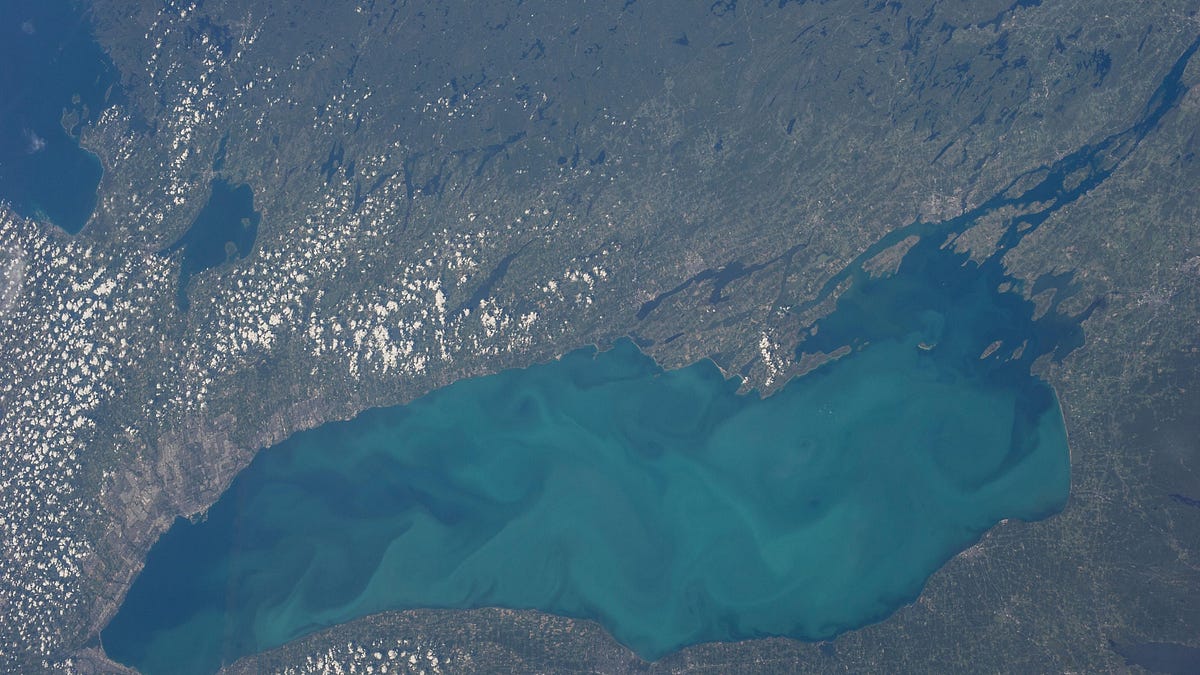
🔗 **Source:** [Trump’s “Lake America” Order Revives a Strange Genesis Warning](https://progressiveheretic.substack.com/p/trumps-lake-america-order-revives)
> [!note]+ Document Notes
> title: "Trump's \"Lake America\" Order Revives a Strange Genesis Warning"
> author: Progressive Heretic
> source: https://progressiveheretic.substack.com/p/trumps-lake-america-order-revives
> published: 2026-08-30
> type: literature
> tags: [indigenous-erasure, political-theology, place-naming, treaty-obligations, us-canada-relations, christian-nationalism, haudenosaunee]
>
> > [!info] Deep read — processed 2026-08-30
> > Progressive Heretic (Substack), 2026-08-30, 1,463 words. Commentary on an executive order
> > signed 2026-08-27. **Independently verified** against Washington Post, CBS News, The Hill,
> > AP, CBC and Global News before analysis — the order, the Seneca Nation response, and
> > Carney's rejection all check out. See Methodology for what verification added.
>
<!-- deep-read:sections start -->
## 📝 Summary
Trump signed an executive order on 2026-08-27 directing Interior and the U.S. Board on Geographic Names to rename Lake Ontario "Lake America" in the federal Geographic Names Information System within 30 days, and requiring federal agencies to use it on maps, contracts, and documents.
The piece's central move is a factual correction that reframes the whole story: **"Ontario" is not a Canadian name.** It is Indigenous, from the Wendat/Huron, rendered variously as "beautiful lake" or "lake of shining waters"; in Seneca, *Sganyatá·yo'*. So an order aimed at Canada in the middle of a trade war lands on Haudenosaunee history instead. Seneca Nation President J. Conrad Seneca has demanded rescission, citing the 1794 Treaty of Canandaigua.
The theological argument runs through two texts: Proverbs 22:28 on not removing the ancient landmark, and Genesis 11:4 — Babel's *"let us make a name for ourselves."* The author's thesis: the spiritual problem is not patriotism but *"needing your country's name stamped across the world as proof of its greatness."*
## 📖 Main Content
**The misdirected-target observation is the piece's real contribution** and it is not obvious. The order reads as an escalation against Canada — it arrives amid a trade war in which the U.S. imposed 50% tariffs on roughly $20 billion in Canadian goods and Canada reciprocated on roughly $20 billion in American goods. Roughly 52% of Lake Ontario's surface is Canadian, and an executive order cannot reach across the border anyway, so the practical effect on Canada is symbolic.
But the name being replaced was never Canadian. It predates Confederation and the Declaration of Independence — Carney's point, that it has carried the name for over 400 years. **A nationalist gesture aimed at a modern neighbor erases a considerably older Indigenous presence instead, and the people whose history is affected were not parties to the dispute that prompted it.** Seneca called it "blatant disrespect."
That is a real analytical finding, not a rhetorical one. The action's stated logic (assert American primacy over Canada) and its actual effect (overwrite an Indigenous name) do not match, and the mismatch is invisible unless you know the etymology.
**The colonial-pattern argument** is the piece's frame: *"You arrive somewhere people have lived for generations, replace their language with yours, put your preferred name on the map, and tell the story as though history began when you showed up."* This is a well-established account of toponymic colonialism and the author applies it accurately, though without citation.
**On the theology.** The Proverbs 22:28 usage is worth noticing because it is a reclamation. "Do not remove the ancient landmark that your ancestors set up" is conventionally deployed by conservatives against social change — don't move the old boundaries. The author heads that off explicitly: *"The proverb is not teaching that every old name or boundary must remain unchanged forever. Its warning is about power."* The original context supports this — landmarks were physical property markers, and moving one was a mechanism of land theft, not a metaphor for tradition. Redirecting a text back to its material sense is a legitimate move, and the author flags that he's making it.
**The Babel reading is the stronger of the two** and is carefully limited: *"The problem is not that somebody built a tall building. The story links a massive human project with the desire to make their own name central to it."* Genesis 11:4 does say *"let us make a name for ourselves"* as the builders' stated motive, and the escalation the piece points at — Gulf of America, Lake America, Trump publicly floating the Atlantic or Pacific next — is a name-making sequence rather than a series of unrelated stunts.
**The closing distinction is the sharpest line in the piece:** *"political authority is not sovereignty over reality… Christians should be suspicious whenever a ruler confuses the power to decree something with the power to make it true."*
It is also in tension with the piece's own urgency, and the tension goes unresolved. If a database entry cannot erase centuries of history, the order is impotent; if the erasure is real enough to warrant the Babel comparison, then decree does have some purchase on reality. Both are partly true — official nomenclature shapes what gets taught, mapped, and searched over decades — but the piece asserts both without reconciling them.
## 🗒️ Notes
- Order signed Thursday 2026-08-27; 30-day implementation window in the federal naming system.
- Verified: Ontario Premier Doug Ford also objected; Trump publicly criticized a Democratic governor for declining to support the name.
- 1794 Treaty of Canandaigua — between the United States and the Six Nations of the Haudenosaunee Confederacy — is the legal hook in Seneca's objection.
- Seneca's own phrasing, from the AP report the piece links: *"The President cannot assert ownership over our culture or erase it through irresponsible political action."* He also called the order "unpresidential."
- The Gulf of Mexico → Gulf of America precedent is the load-bearing prior; without it the pattern argument would rest on a single event.
- The piece names the war in Iran and the Venezuela oil arrangement as the bigger stories, positioning this one as the small thing that reveals the worldview.
- Action items are unusually concrete: a live BGN name-proposal process (usgs.gov), Native Land Digital, and the AP report on Seneca's response.
- **Provenance tell:** several outbound links carry `utm_source=chatgpt.com`, indicating the resource links were assembled with an AI assistant. It doesn't affect their validity — the BGN and Native Land URLs are real and correct — but it is worth knowing about the piece's construction.
## 📚 References
- Article: https://progressiveheretic.substack.com/p/trumps-lake-america-order-revives
- AP on the Seneca Nation response: https://apnews.com/article/1f5f831ab8d79d18a38999328a1af8c2
- U.S. Board on Geographic Names proposal guidance: https://www.usgs.gov/us-board-on-geographic-names/guidance-name-proposals
- Native Land Digital: https://native-land.ca/maps/native-land
- Verification sources: Washington Post, CBS News, The Hill, Salon, CBC, Global News, Baltimore Sun (2026-08-27 to 08-29)
- Scripture cited: Proverbs 22:28, Genesis 11:4 (NRSVUE)
- Treaty of Canandaigua, 1794
## 🗣️ Paraphrase
Trump ordered the federal government to start calling Lake Ontario "Lake America." He can't make Canada do it, and just over half the lake is Canadian anyway. But the bigger problem is that "Ontario" was never a Canadian name — it's Indigenous, from the Wendat, and it's older than either country. So a jab at Canada actually overwrites Haudenosaunee history, and the Seneca Nation wants it reversed under an 18th-century treaty. The author's biblical argument is that Proverbs warns against moving boundary markers because you can, and that Babel was about people wanting to make a name for themselves. Loving your country isn't the problem; needing its name on everything is.
## 📰 Newsletter
The detail that makes the "Lake America" order more than a stunt is one most coverage skipped: "Ontario" isn't a Canadian name. It's Wendat in origin — "beautiful lake," or "lake of shining waters," *Sganyatá·yo'* in Seneca — and it predates both Canada and the United States. So an order clearly aimed at Canada in the middle of a tariff fight doesn't actually land on Canada. It lands on the Haudenosaunee, who weren't party to the dispute. Seneca Nation President J. Conrad Seneca is asking for rescission under the 1794 Treaty of Canandaigua.
Progressive Heretic runs it through Genesis 11, and the reading is more careful than these pieces usually are: Babel's problem wasn't the tower, it was the stated motive — "let us make a name for ourselves." Gulf of America, Lake America, and Trump floating the Atlantic or Pacific next isn't three stunts, it's a sequence with a grammar.
The line worth keeping: political authority is not sovereignty over reality. A government can change what a database says. It cannot make centuries of history stop having happened.
Worth noting the piece leaves that in tension with its own alarm — if a database entry can't erase history, how much damage is the order doing? Both things are partly true. Official names shape what gets taught, mapped, and searchable over decades, which is slower and more real than either "it's just trolling" or "history is being erased."
## ✅ Action Items
- [ ] The BGN name-proposal route is real and open to the public — worth verifying the current process page before recommending it to anyone.
- [ ] Read Seneca's full statement via the linked AP report rather than the excerpt; the treaty argument is the substantive claim and deserves first-hand reading.
- [ ] Look up the Indigenous place names for your own area via Native Land Digital, then go to the nations' own sites — the piece includes Native Land's own caveat that it is a starting point, not an official boundary statement, which is the right way to use it.
- [ ] Track whether the 30-day GNIS implementation actually completes — the only falsifiable prediction in the story.
- [ ] Note the Proverbs 22:28 reclamation as a technique: taking a text usually used to resist change and returning it to its material property-boundary sense.
## 🧪 Hypotheses
1. **The renaming pattern will continue and escalate to targets with less Indigenous salience.** Trump floated the Atlantic and Pacific. Falsifiable within months.
2. **Federal name changes have slow, real downstream effects through databases, curricula, and search indexes** — meaning the "it's only symbolic" and "it erases history" readings are both wrong, and the truth is a decades-long drift. Testable by tracking GNIS-dependent systems.
3. **The Indigenous-origin fact will not penetrate the mainstream framing**, which will continue to cover this as a US–Canada story. Testable by coverage analysis.
4. **The Treaty of Canandaigua claim will not produce a legal remedy** but will function as a durable rhetorical anchor. The order changes federal usage, not land title, so the treaty nexus is arguable but thin.
## 📊 Methodology
The piece is opinion commentary built on straight-news reporting, and it does not conceal that. It links the AP report on the Seneca response and cites Carney and Seneca by name and position.
**I verified its factual spine independently before analyzing**, per the standing rule on extraordinary claims. Every checkable assertion held: the executive order and its 30-day GNIS window, Seneca's call for rescission and his Treaty of Canandaigua argument, Carney's rejection, the Indigenous etymology, and Trump floating an ocean next. Verification also added context the piece omits — Ontario Premier Doug Ford also objected, and Seneca's fuller quote is stronger than the excerpt used.
**Unsourced within the piece:** the 52% Canadian-surface figure, the tariff numbers (50% on ~$20bn each way), and the "more than 400 years" claim attributed to Carney. All are plausible and the tariff figures match the public record, but none carry a link, and a reader wanting to check them has to leave.
**The theological method is exegesis in service of an argument**, which is the genre. Its strength is that the author states the reading he is *not* making — explicitly disclaiming the traditionalist use of Proverbs 22:28 — rather than smuggling it. That is more disciplined than the form usually requires.
**Disclosed interest:** the piece ends in a subscription pitch framing paid support as a counterweight to Christian Right funding. Openly stated, and it shapes the register — this is advocacy writing with a conversion goal, not analysis.
## ❓ Questions
- Does the Board on Geographic Names have any discretion to decline or delay an executive order, or is the 30-day instruction binding on it?
- What is the actual legal force of the Treaty of Canandaigua here? It concerns land and peace, not nomenclature — is there a nexus, or is the argument moral?
- What happens to binational bodies that use the name — the International Joint Commission, NOAA/Environment Canada shared data, navigation charts? The piece doesn't ask, and this is where real cost would appear.
- Did the administration offer any stated rationale beyond nationalism?
- How was the Gulf of America change actually absorbed — did international bodies, map publishers, and search engines follow? That's the best available predictor for this one.
- Which Haudenosaunee nations besides the Seneca have responded?
## 🔮 Future Research
- Track GNIS and downstream systems over 12 months to measure how far a federal renaming actually propagates — this is the empirical question underneath the whole dispute.
- Study the Gulf of America precedent as a natural experiment in international adoption of a unilateral name change.
- Survey the toponymic-colonialism literature the piece gestures at without citing; the pattern is well documented and would strengthen the argument considerably.
- Examine whether any prior US geographic renaming has been reversed via the BGN public proposal process, which would tell you whether the action item is realistic or ceremonial.
- Look at the reverse trend — the restoration of Indigenous names (Denali is the obvious case) — for what conditions make it succeed.
## 💡 Implications
**For how this story should be told:** the framing determines who is treated as the injured party. Covered as a US–Canada spat, the Haudenosaunee are absent from their own story. The piece's correction is the thing worth carrying forward regardless of what one thinks of its theology.
**On the "it's just trolling" response:** the piece's answer is that people whose history is at stake don't experience it as trolling, and that the accumulation of individually-dismissible acts is where a worldview becomes visible. That's a reasonable argument about pattern recognition, and it is also the standard structure of an argument that can absorb any evidence. Worth holding both.
**For religious readers specifically:** the piece's actual target is not the order but a theology of national self-assertion, and Babel is a well-chosen text for it because the objection there is to the motive rather than the ambition. That is a more precise critique than "nationalism bad," and it is available to people who are patriotic.
**The durable idea:** decreeing a fact and making it true are different powers, and the confusion between them is a recognizable failure mode in any authority — governmental, corporate, or institutional. The database changes; the thing it describes does not.
## 🧠 Learning Styles Assessment
Short, tightly structured, and paced for a general reader: news facts, then the reframe, then two scriptural texts, then three concrete actions. The three-part action section — petition, learn, listen — gives kinesthetic and applied learners something to do, which most political commentary does not.
Serves verbal and sequential readers well. The single most effective device is the etymology reveal, placed early enough to reorganize everything after it. The Babel and Proverbs sections are brief enough to land without requiring biblical background, and both texts are quoted rather than summarized.
Nothing for visual learners — a map showing the lake's binational split, or Haudenosaunee territory against the modern border, would do more work than several paragraphs. No data, no timeline. And a reader who wants to verify the unlinked figures (52%, the tariff amounts, "400 years") has no path from within the piece.
## 📊 Accessibility Assessment
Plain language, short paragraphs, no specialist vocabulary left undefined — the one term that needs it, "ancient landmark," is explained in its material sense immediately. Reading level is broadly accessible and the structure is scannable, with the action items clearly separated from the argument.
The Indigenous-language terms (*Sganyatá·yo'*) appear with diacritics and a gloss but no pronunciation guide, which is a small barrier and also an easy fix.
Two genuine strengths: the action items link to the actual government process page rather than describing it, and the Native Land Digital recommendation carries that project's own caveat — that it is an educational starting point, not an official statement of Tribal boundaries — with an instruction not to stop there. Passing along a resource's own limitation is good practice and rare in this format.
The paywall on the fuller weekly briefing means the complete version of this analysis is not accessible to everyone, which the piece is upfront about.
## 🌍 DEIB Assessment
The piece's core insight *is* the DEIB analysis, which is unusual — the equity observation is the news finding rather than an appended consideration.
The structure of the harm is precise: two settler states conduct a trade dispute, one of them makes a symbolic move against the other, and the material cost falls on a third party present before either. The Haudenosaunee are not participants in the tariff conflict, were not consulted, and bear the erasure. The piece states this plainly — *"The Indigenous peoples whose languages and cultures shaped the region are not background characters in an American story. They were there before there was an American story."*
It also handles Indigenous voice correctly in a way that is easy to get wrong: it quotes Seneca's position, links the primary report so readers can go to the source, and explicitly instructs readers to read him *before* reducing this to a debate about Trump. Centering the affected party as an authority rather than as an illustration is the right handling.
The treaty framing matters too — it positions this as a legal obligation between sovereign nations rather than as a courtesy, which is the correct register for US–Tribal relations and is routinely lost in coverage.
**Gaps.** Only the Seneca Nation is quoted, though the piece references "other Haudenosaunee nations" — the Confederacy has six, and their positions may differ. Canadian First Nations with relationships to the lake are absent entirely, despite 52% of it being on the Canadian side. And the audience being addressed throughout is American Christians, which is a legitimate choice for the publication but means Indigenous readers are positioned as subject rather than reader.
## ✅ Logical Validity
**The central factual argument is sound and independently verified.** Ontario is Indigenous in origin; the order replaces it with a nationalist name; the Seneca Nation objects on treaty grounds. Each element checks out against primary reporting.
**The strongest inference** is the target/effect mismatch: an action framed as anti-Canadian produces an anti-Indigenous effect. This follows straightforwardly from the etymology and does not depend on assessing intent.
**The pattern argument is weaker than it reads.** Three data points — Gulf of America, Lake America, and a floated ocean — support "a pattern" but are stretched by *"they reveal a worldview."* The inference from repeated acts to a coherent worldview is plausible and is also structurally unfalsifiable as posed: any further renaming confirms it, and the absence of one is not treated as evidence against. Worth flagging because the piece's rhetorical force rests here.
**Unresolved internal tension**, noted above: *"political authority is not sovereignty over reality"* and *"the people whose history is being erased"* pull opposite ways on how much the order actually accomplishes. Both can be true on different timescales, but the piece asserts them a few paragraphs apart without connecting them.
**The scriptural arguments are honestly conducted.** The author names the reading of Proverbs 22:28 he is declining, which forecloses the obvious objection. The Babel reading correctly locates the text's own stated motive rather than importing one. Neither is presented as the only possible reading.
**Unstated premise:** that federal naming has real long-term consequence. The piece needs this for its urgency and never argues it. It is probably true — official nomenclature propagates through maps, curricula, and search — but it is assumed.
**Unsourced within the piece:** the 52% figure, both tariff amounts, and the 400-year attribution. All plausible, none linked.
## 🛡️ DARVO Analysis
**No DARVO in the piece.** It criticizes a powerful actor from a position of less power, identifies a third party as harmed, and makes no claim of injury to itself. There is no accused party being defended, no reversal of victim and offender, and no denial of any fact.
Two adjacent things are worth naming so the finding is a considered negative rather than an unexamined one.
First, the piece describes a move that *sets up* a reversal without performing one: framing the renaming as patriotism positions anyone objecting as insufficiently patriotic, which converts a factual objection about Indigenous history into a loyalty question. That's a related rhetorical structure, correctly identified by the author — *"sell the whole thing as patriotism"* — and attributed to the order rather than enacted by the piece.
Second, the closing subscription appeal characterizes the Christian Right as having *"spent decades paying people to undermine democracy while using spirituality to justify it."* That is a strong, unsourced characterization of an opposing group deployed in a fundraising context. It is not DARVO — no victim/offender inversion, no self-victimization — but it is the least evidenced sentence in the piece and sits in the section where the author has the most direct interest.
## 🎯 Conclusion
The piece earns its place on one fact most coverage missed: the name being replaced was never Canadian. An order aimed at a neighbor in a tariff dispute overwrites a Wendat name older than either country, and the Haudenosaunee — who had no part in the dispute — carry the cost. That reframing is verifiable, non-obvious, and changes who the story is about.
The theology is more careful than the genre usually manages. Babel is the right text because its objection is to a stated motive rather than to ambition, which makes the critique available to patriotic readers rather than only to opponents. And the author disarms the traditionalist misreading of Proverbs 22:28 by naming it before making his own.
Two things to hold against it. The move from three renamings to "a worldview" is a real pattern stated with more certainty than three data points support, and it is posed in a way nothing could falsify. And the piece leaves its own best line — that decree is not sovereignty over reality — sitting unreconciled against its claim that history is being erased.
The sentence to keep is the one about power: a government can change what a database says, and cannot make centuries stop having happened. That distinction outlasts the news cycle it was written for.
---
## Refactor Appendix
**Note type:** Literature note. Short opinion piece, but it carries one verified factual reframe and two transferable claims about power and naming.
**Permanent note candidates:**
### A nationalist gesture aimed at a rival can land on a third party who predates both
> [!quote] "'Ontario' is not a Canadian nationalist name Trump is replacing with an American one. The name is Indigenous in origin."
The stated target and the actual bearer of a symbolic act can differ, and the gap is invisible without knowing what is being replaced. Check the provenance of the thing being overwritten before accepting either side's account of whose dispute it is.
<!-- atomicity: 1 idea ✓ -->
### Decreeing a fact and making it true are different powers
> [!quote] "Political authority is not sovereignty over reality. The government can change what appears in a database. It cannot make centuries of history disappear."
Authority over a record is not authority over what the record describes. The recognizable failure mode in any institution is treating the ability to update the register as the ability to change the world it indexes.
<!-- atomicity: 1 idea ✓ -->
### Renaming is how power announces ownership without asserting a claim
> [!quote] "Colonial powers have used naming to announce ownership… erase the old name, center the powerful nation, and sell the whole thing as patriotism."
Nomenclature does the work of a title claim while remaining deniable as a mere label, which is exactly why it is available where a legal claim is not.
<!-- atomicity: 1 idea ✓ -->
### Reclaiming a text requires naming the reading you are declining
> [!quote] "The proverb is not teaching that every old name or boundary must remain unchanged forever. Its warning is about power."
Proverbs 22:28 is conventionally used to resist change; returning it to its material property-boundary sense is legitimate only because the author forecloses the traditionalist reading explicitly rather than quietly displacing it.
<!-- atomicity: 1 idea ✓ -->
**Links to existing vault notes:**
- [[A Claim That Proof-Texts Is Refuted By Reading The Rest Of The Source]] — contrasts; this piece does the opposite, restoring a verse to its context rather than lifting it out, and shows what the disciplined version looks like
- [[A Global Claim Needs Global Source Authority]] — applies-in; an executive order stops at the border, so a unilateral rename cannot bind the binational body it describes
- [[A Flattering Contrast Is Evidence of a Distorted Reading]] — extends; "sell the whole thing as patriotism" is the flattering frame that makes the erasure legible as virtue
- [[Condemnation Relocates Ideas to Looser Networks That Lack the Accountability That Condemned Them]] — contrasts; naming here concentrates rather than disperses authority
**Template Library:** Short political-commentary variant. Methodology records the independent verification pass and separates what checked out from what the piece leaves unsourced. DARVO recorded as a considered negative with two adjacent structures named. Logical Validity flags the unfalsifiable shape of the pattern-to-worldview inference.
<!-- deep-read:sections end -->
📄 **Full text:** [[Full Document Contents/Articles/Trump’s “Lake America” Order Revives a Strange Genesis Warning.md|Trump’s “Lake America” Order Revives a Strange Genesis Warning by Progressive Heretic]]
## Highlights
- is not a Canadian nationalist name Trump is replacing with an American one ([View Highlight](https://read.readwise.io/read/01m19r75631nhjh2xppe6dnnt8))
- Note: The piece's real contribution, and most coverage missed it. "Ontario" is Wendat in origin — Sganyatá·yo' in Seneca, "beautiful lake." An order aimed at Canada in a tariff fight lands on Haudenosaunee history instead. The stated target and the actual bearer of the act are different parties, and the gap is invisible without the etymology.
- Tags: place-naming, indigenous-erasure
- Do not remove the ancient landmark ([View Highlight](https://read.readwise.io/read/01m19r8701gec1saxhjn98wh67))
- Note: Proverbs 22:28, reclaimed. Usually deployed by conservatives against social change; the author returns it to its material sense — landmarks were physical property markers and moving one was a mechanism of land theft, not a metaphor for tradition. He forecloses the traditionalist reading explicitly rather than quietly displacing it, which is what makes the reclamation legitimate rather than a mirror-image proof-text.
- Tags: political-theology
- Let us make a name for ourselves ([View Highlight](https://read.readwise.io/read/01m19r7afh105y1e782typ1v1n))
- Note: Genesis 11:4. The careful part of the reading: the objection at Babel isn't the tower, it's the stated motive. Which makes the critique available to patriotic readers — the problem isn't loving your country, it's needing its name stamped on things as proof. Gulf of America, Lake America, and Trump floating an ocean next is a sequence with a grammar.
- Tags: political-theology, christian-nationalism
- political authority is not sovereignty over reality ([View Highlight](https://read.readwise.io/read/01m19r7d64w2s7bbekph178ft4))
- Note: The line that outlasts the news cycle. Authority over a record isn't authority over what the record describes. Note the unresolved tension though: if a database entry can't erase history, the order is impotent — which sits awkwardly against the piece's own alarm. Both are true on different timescales, and the piece doesn't connect them.
- Tags: political-theology, place-naming