Virtue Signaling, the Web as PKM, and Stopping Things
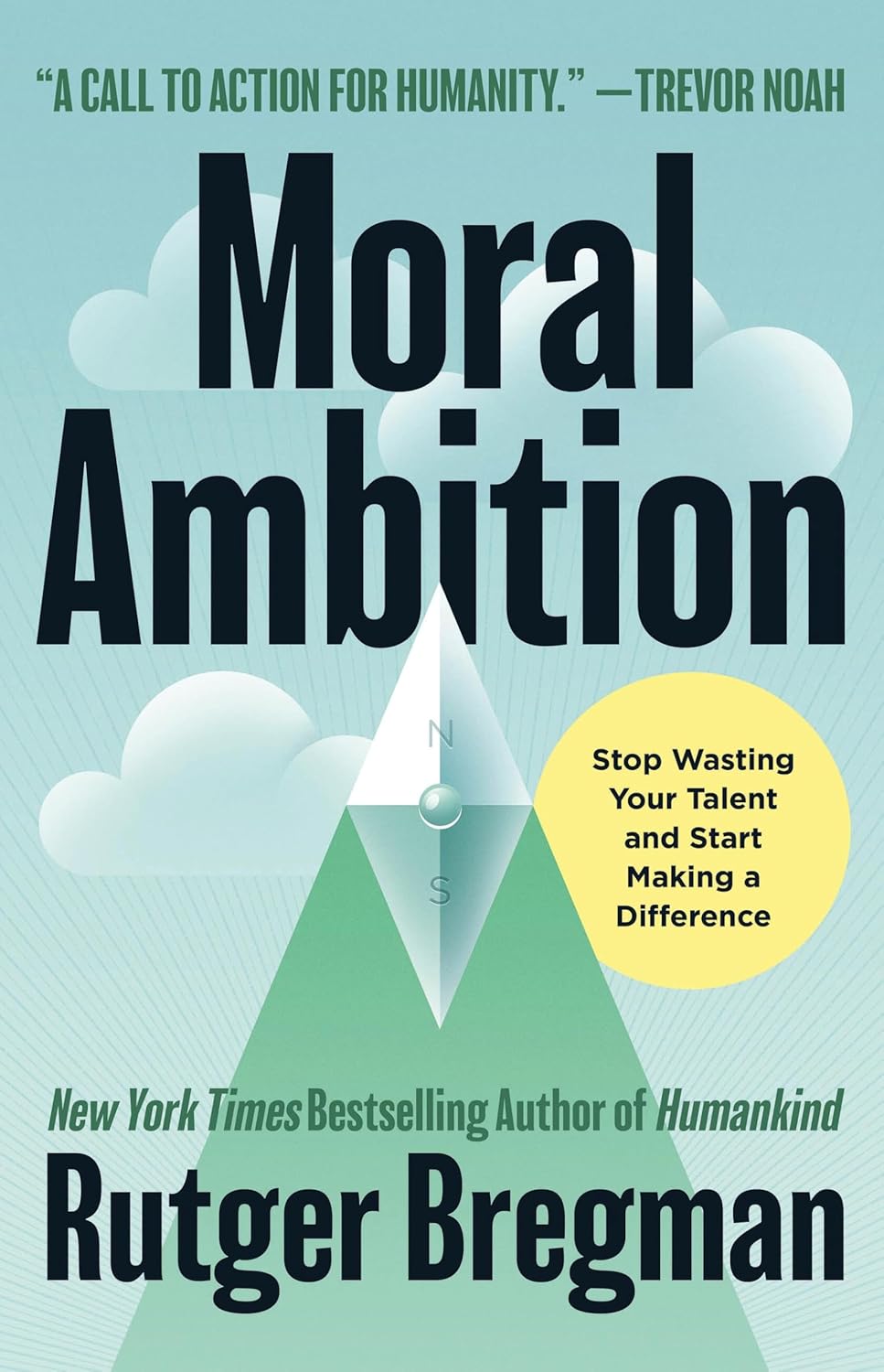
🔗 **Source:** [Virtue Signaling, the Web as PKM, and Stopping Things](https://curtismchale.ca/2026/08/08/virtue-signaling-the-web-as-pkm-and-stopping-things)
> [!note]+ Document Notes
> tags: [pkm, blogging, note-taking, virtue-signaling, coalition-politics, creator-burnout, indieweb]
> author: curtismchale.ca
> source: https://curtismchale.ca/2026/08/08/virtue-signaling-the-web-as-pkm-and-stopping-things
> reference: Matt Birchall's "About the Hank Green Situation"; Rutger Bregman's Moral Ambition; Cory's "farewell cadence" post
> date created: 2026-08-08
>
> > [!info] Generated analysis — not the author's words. Sections below are machine-written
> > from the captured source. Only text inside `> [!quote]` blocks is verbatim from the author.
> > Do not quote or attribute any other line to the named author.
>
> # 🏷️ Virtue Signaling, the Web as PKM, and Stopping Things
>
<!-- deep-read:sections start -->
## 🧭 Table of Contents
1. References
2. Summary
3. Main Content
4. References (source list)
5. Paraphrase
6. Newsletter
7. Action Items
8. Hypotheses
9. Methodology
10. Questions
11. Future Research
12. Implications
13. Learning Styles Assessment
14. Accessibility Assessment
15. DEIB Assessment
16. Logical Validity
17. DARVO Analysis
18. Conclusion
19. Refactor Appendix
## 🔗 References
- Matt Birchall, "About the Hank Green Situation" (birchtree.me)
- Rutger Bregman, *Moral Ambition*
- Cory, "farewell cadence" (coryd.dev)
- Kev Quirk, "linkception"
- Curtis McHale's own prior posts on blogging vs. threads and on note-taking
## 📝 Summary
Three loosely-linked observations from a short personal blog post: (1) intersectional coalition politics on the left demand alignment across every adjacent cause, which raises the cost of coalition membership and can backfire into rejection-driven radicalization (via Birchtree's Hank Green post); (2) a personal blog, maintained over years with outbound and self-referential links, may function as a note system in its own right — arguably better than a dedicated PKM tool, since writing publicly forces completion in a way private notes don't; (3) it's legitimate to stop a project (a YouTube channel, a blogging niche) once it has served its season, without treating the stop as a moral failure, provided the stopper isn't financially dependent on the thing they're stopping. Stakes are personal/reflective rather than institutional — this is a personal-blog opinion piece, not research. No named risks beyond the author's own admitted guilt about disappointing an audience.
## 📖 Main Content
### 🗒️ Notes
**Virtue signaling / coalition cost:** Bregman's intersectionality claim, as read by the author: left coalitions are harder to hold together because membership requires agreeing with the most militant position on *every* adjacent issue, not just the shared cause. Example given: a climate-focused coalition member who hunts sustainably still gets pushed to condemn all meat-eating to remain "in." The author quotes Birchtree's framing of what happens when a preferred in-group rejects someone and a less-preferred group welcomes them — the rejected person assimilates into whichever group actually accepted them, "in time, you'll start to talk like them, think like them, and act like them."
**The web as PKM:** The author suggests his blog — not Obsidian — was his real note system all along; COVID-era PKM tooling hype may have been a "missed the forest for the trees" moment, producing meta-notes about note-taking rather than novel thought. He distinguishes two link types a site can carry: links out to others' work (engaging with their thinking) and links to one's own past posts (revisiting/updating one's own ideas) — a healthy site, in his view, has both.
**Stopping things without guilt:** Uses Cory ending development on a Navidrome client, and his own decision to stop making Obsidian/PKM YouTube content, as cases for the same principle: recognizing a project's season has ended and stopping is not a failure, provided you're not financially dependent on continuing it or trapped by an identity built around "being the person who does X."
## 📚 References
Primary sources linked above; all are personal blogs / opinion pieces, not studies.
## 🗣️ Paraphrase
Para 1: three ideas this week share a thread — sometimes you change your mind, sometimes you stick with what already worked.
Para 2 (Hank Green section): Bregman says intersectionality raises the bar for left coalitions — you can't just share one cause, you must adopt the most militant stance on every adjacent one, or risk rejection.
Para 3: gives the concrete example — a sustainable hunter still gets pressured to renounce all meat-eating to stay in a climate coalition.
Para 4: points readers to Birchtree's fuller post and quotes its core mechanism — reject someone from the group they wanted, and the group that does accept them becomes who they become.
Para 5 (web as PKM section): during COVID there was a PKM tooling wave; the author wonders if his blog was already his note system.
Para 6: writing and linking "enmeshes" thought and can build a community of writers bouncing ideas — the Inklings held up as an unreachable ideal most people can't replicate in person.
Para 7: ties into the author's long-standing "you should be blogging, not threading" position across several of his own past posts.
Para 8: asks whether PKM tooling produced more notes-about-notes than actual novel thought.
Para 9: distinguishes outbound links (engaging others) from self-links (referencing one's own prior work); credits a healthy site with both.
Para 10 (Time to let go section): cites Cory ending a Navidrome client's development approvingly.
Para 11: someone missed the author's old YouTube book-research streams; he misses them too and felt guilty stopping.
Para 12: argues seasons pass, and continuing past a season means manufacturing use cases and reviewing tools you don't actually use just to keep views/income flowing.
Para 13: the core prescription — recognize when you're done, stop, absolve yourself of guilt, move to what inspires you now.
Para 14: caveat — this only holds if you're not financially dependent on the thing, or haven't built your whole identity around "being the PKM person."
Para 15: book club plug (community reading group, weekly notes + monthly wrap-up).
## 📰 Newsletter
**Should your blog be your PKM tool?** Curtis McHale's latest weekly roundup argues that during the COVID-era PKM boom, some of us built elaborate Obsidian vaults when our blogs — with their outbound links and self-references — were already doing the job, and arguably doing it more honestly, since publishing forces a thought to actually finish. He also makes the case that stopping a project (a YouTube channel, a content niche) isn't failure once its season has passed — as long as you're not financially chained to it. Tucked in the middle: a sharp read of why left-coalition politics fracture, via Rutger Bregman's *Moral Ambition* and Matt Birchtree's Hank Green post — intersectionality means agreeing on climate isn't enough; you're expected to align on every adjacent militant position too, or get pushed out entirely.
## ✅ Action Items
**DevRel / OSPO / Community:** No direct action; relevant as a data point on why community/coalition messaging that demands full ideological alignment (not just topical alignment) risks fracturing broad-tent groups — applicable lens for any community coalition-building (including WordPress community factions).
**WordPress / Core / Marketing / Support / Documentation / Design / Accessibility / Meta / CLI / Hosting / Tide / Openverse / Themes / Plugins / Mobile / Playground / Training / Photos / TV / Polyglots / Core Performance / Core AI / Core Program Team:** Not applicable to this source — no WordPress-specific content.
**The WPOCC / FAIR:** Not applicable to this source.
## 🧪 Hypotheses
1. Coalitions that demand alignment across adjacent issues (not just the shared cause) will show higher member attrition than single-issue coalitions.
2. Personal blogs with a mix of outbound and self-referential linking correlate with more original synthesis than PKM tools used privately (never published).
3. Public commitment to stopping a project (announcing it) reduces the "guilt debt" that keeps people continuing past a project's useful season.
4. Creators whose income depends on a content niche are measurably slower to stop producing in that niche than creators without that dependency, even after expressing the same "this has run its course" sentiment.
## 📊 Methodology
None — a personal reflective blog post citing other bloggers' posts and one book, with no original data collection, survey, or study design.
## ❓ Questions
- Does the "web as PKM" claim hold if the blog isn't the author's *primary* thinking space (i.e., if drafting happens privately and the blog is just the polished output)?
- Is Bregman's intersectionality claim empirically supported, or is it the author's/Bregman's interpretive gloss on observed coalition behavior?
- What's the actual audience-retention cost of "stopping" content that the algorithm has already been rewarding?
## 🔮 Future Research
- A comparative study of blog-as-notebook practices (public link-based thinking) vs. private PKM vault practices, measuring downstream original output.
- Empirical test of the "rejected-group assimilation" mechanism Birchtree describes, beyond anecdote.
## 💡 Implications
**Practice:** for anyone maintaining both a PKM vault and a blog, this is a prompt to ask whether the vault is doing real work or duplicating what publishing already accomplishes.
**Policy:** none directly; tangential relevance to community-guideline design (single-issue vs. multi-issue litmus tests).
**Security:** not applicable.
**Education:** relevant to any PKM/Zettelkasten-adjacent audience (this vault's own domain) as a counter-perspective worth holding against the vault's own practice.
**Funding:** the "don't feel guilty stopping, unless you're financially dependent on it" caveat is itself a funding-and-sustainability point, adjacent to other unglamorous-maintenance-funding threads already tracked in this vault.
## 🧠 Learning Styles Assessment
- **Visual:** Low — no diagrams, images, or visual aids in the source.
- **Aural:** Low — text-only, no audio component.
- **Verbal:** High — the piece is entirely prose argument and personal reflection.
- **Kinesthetic:** Low — no hands-on or applied exercise.
- **Logical:** Medium — makes a causal claim (rejection → assimilation into accepting group) but doesn't formalize or test it.
- **Social:** Medium — explicitly references and links a small community of blogger-interlocutors (Birchtree, Cory, Kev Quirk) and invites a book club.
- **Solitary:** Medium — reflective, personal-voice writing.
- **Naturalistic:** Low — not applicable.
- **Reading level:** Approximately grade 9–10 (casual conversational blog register, some compound-clause sentences).
## 📊 Accessibility Assessment (WCAG 2.2 AA)
- **Text alternatives:** N/A — no images in the captured content.
- **Time-based media:** N/A — no audio/video.
- **Adaptable/structure:** Headings present (H2 sections) but shallow (no H3 substructure); reasonably adaptable.
- **Distinguishable:** Not assessable from HTML content alone (no styling captured).
- **Keyboard accessible:** N/A — static article.
- **Enough time:** N/A.
- **Seizures/physical reactions:** N/A.
- **Navigable:** Footnote link present but only one; internal cross-links well-labeled with descriptive anchor text (not "click here").
## 🌍 DEIB Assessment
- **Cultural breadth:** Narrow — entirely within an English-language indie-blogging/PKM subculture.
- **Inclusive language:** Neutral; no exclusionary language observed, though the coalition-politics section characterizes "the left" as a monolith, which flattens real internal diversity.
- **Neurodiversity support:** Not addressed.
- **Representation:** All cited voices are individual bloggers, apparently male-coded names throughout (Matt, Cory, Kev) — no diversity of cited perspective visible in this piece.
- **Psychological safety:** The stopping-things section models a healthy, non-shaming stance toward changing one's focus, which is itself a psychologically-safe framing worth noting.
## ✅ Logical Validity
**Strong reasoning:** The "stopping things" argument is well-scoped — it explicitly names its own limiting condition (financial dependency) rather than overclaiming universally.
**Fallacies:**
1. **Hasty generalization** — "intersectionality is why it's harder to form coalitions on the left" treats a single book's framing as settled fact about an entire political wing, located in the opening paragraph of the Hank Green section. Fix: attribute explicitly as Bregman's contested thesis, not a description of observed fact.
2. **False dilemma (mild)** — the meat-eating example implies coalition members face a binary of "condemn all meat-eating" vs. "get rejected," when in practice most coalitions tolerate a range of positions; the example may be an extreme/illustrative case rather than the norm. Fix: flag as an illustrative anecdote, not a representative sample.
**Tone of voice:** Conversational, first-person, low-stakes — reads as a personal weekly digest rather than an argumentative essay; low rhetorical pressure.
## 🛡️ DARVO Analysis
Not applicable — no accusation, denial, or victim/offender reversal pattern present in this source; it's reflective commentary, not a response to an allegation.
## 🎯 Conclusion
A short personal-blog digest connecting three ideas — coalition-politics friction from over-alignment demands, the case for a blog as a legitimate PKM substitute, and permission to stop a project once its season passes. Bottom line: useful primarily as a counter-perspective to this vault's own PKM/Zettelkasten practice (does publishing substitute for private note-taking?) and as one more data point in the vault's running "unglamorous work / stopping without guilt / funding dependency" thread. Next step: check existing vault coverage of blog-as-PKM and stopping/permission-to-quit claims before creating a new Permanent note — likely connect rather than create.
## 🧱 Refactor Appendix
### Literature Split Pad
#### A blog with active in/out linking can substitute for a private PKM vault
> [!quote] ID:rw_curtismchale_01
> Enmeshing your thoughts with those of others ties into the idea that you should be blogging, not just sharing ideas on social media.
Where/why: central claim of the "web as your note system" section; directly relevant to this vault's own PKM practice as a counter-case.
#### Recognizing a project's season has ended and stopping is not a failure
> [!quote] ID:rw_curtismchale_02
> One crucial thing to do is to realize when you're done with something and then absolve yourself of any guilt associated with stopping it.
Where/why: core prescriptive claim of the "Time to let go" section, caveated by financial-dependency exception in the following paragraph.
### Atomic Split Pad
- Zettel candidate: "Coalition membership costs rise with issue-adjacency demands, not just the core cause" (Bregman/Birchtree mechanism).
- Zettel candidate: "Rejection from a preferred group and acceptance by another reshapes identity toward the accepting group" (Birchtree's mechanism, quoted secondhand).
### Fleeting Queue
- Is there already a vault Permanent on "publishing forces completion in a way private notes don't"? Check before creating.
- Possible connection to existing "unglamorous work stays unfunded until it breaks" thread via the financial-dependency stopping caveat.
<!-- deep-read:sections end -->
📄 **Full text:** [[Full Document Contents/Articles/Virtue Signaling, the Web as PKM, and Stopping Things.md|Virtue Signaling, the Web as PKM, and Stopping Things by curtismchale.ca]]
## Highlights
- [Matt's post](https://birchtree.me/blog/about-the-hank-green-situation/) had me thinking again about what Rutger Bregman says in [Moral Ambition](https://curtismchale.ca/book/moral-ambition-rutger-bregman/). He posits that intersectionality is why it's harder to form coalitions on the left side of the political spectrum[1](https://curtismchale.ca/2026/08/08/virtue-signaling-the-web-as-pkm-and-stopping-things/#fn:1). We can't just agree to fight climate change together, we must align with the most militant person in the room on every issue. ([View Highlight](https://read.readwise.io/read/01m0n648x45q3r3pwyj7kd4ftv))
- Note: Hasty generalization — treats a single book's framing (Bregman) as settled fact about an entire political wing. Fix: attribute explicitly as Bregman's contested thesis, not observed fact. Zettel candidate underneath it: coalition membership costs rise with issue-adjacency demands, not just the core cause. #fallacy/hasty-generalization
- Tags: atom/zettel/z1, fallacy/hasty-generalization
- So if someone is a vegetarian, I also have to condemn eating meat if I want to be part of the fight for climate change. It wouldn't be good enough to say that I hunt my own meat and avoid factory farming, all meat is bad. ([View Highlight](https://read.readwise.io/read/01m0n64bvv1h3x17r36t7nzjze))
- Note: False dilemma (mild) — implies a binary of "condemn all meat-eating" vs. "get rejected," when most coalitions tolerate a range. Fix: flag as illustrative anecdote, not representative sample. #fallacy/false-dilemma
- Tags: fallacy/false-dilemma
- Enmeshing your thoughts with those of others ties into the idea that [you](https://curtismchale.ca/2018/09/17/i-hate-twitter-threads-and-they-produce-little-value/) [should](https://curtismchale.ca/2023/10/20/agreed-your-talk-should-also-be-a-blog-post/) be [blogging](https://curtismchale.ca/2015/05/11/you-should-be-blogging/), not just [sharing](https://curtismchale.ca/2022/10/22/every-twitter-thread-should-be-a-blog-post) ideas on social media. Even on the more open networks like Mastodon, [you should be blogging](https://curtismchale.ca/2023/01/25/even-on-mastodon-threads-should-be-blog-posts/). ([View Highlight](https://read.readwise.io/read/01kzgvqkxp9dkq4phcw81gp5j5))
- Note: Central claim of "web as PKM" section — counter-perspective to private-vault note-taking.
- Enmeshing your thoughts with those of others ties into the idea that [you](https://curtismchale.ca/2018/09/17/i-hate-twitter-threads-and-they-produce-little-value/) [should](https://curtismchale.ca/2023/10/20/agreed-your-talk-should-also-be-a-blog-post/) be [blogging](https://curtismchale.ca/2015/05/11/you-should-be-blogging/), not just [sharing](https://curtismchale.ca/2022/10/22/every-twitter-thread-should-be-a-blog-post) ideas on social media. Even on the more open networks like Mastodon, [you should be blogging](https://curtismchale.ca/2023/01/25/even-on-mastodon-threads-should-be-blog-posts/). ([View Highlight](https://read.readwise.io/read/01m0n63yy70ghskj6xrfrs7g08))
- Note: ID:rw_curtismchale_01 — central claim of the "web as your note system" section: a blog with active in/out linking can substitute for a private PKM vault. Counter-case to this vault's own practice. #atom/literature/h1
- Tags: atom/literature/h1
- Looking at the links a site provides you could have two ways to view them. [Links to others](https://sals.place/blog/re-bubbles-interlinking-etc/) is is when they're working through others thoughts, and links to their own content is updating and referencing their own ideas. In theory a healthy site has some of both, and certainly just doesn't link out to only their own work since we all build our thoughts based on the work of others. ([View Highlight](https://read.readwise.io/read/01m0n645gm7hgyfsevdfnf6qk4))
- Note: Two link types a site can carry — outbound (engaging others' thinking) vs. self-referential (updating one's own ideas); a healthy site has both. Operational test for "is this blog actually a note system?" #atom/literature/h2
- Tags: atom/literature/h2
- One crucial thing to do is to realize when you're done with something and then absolve yourself of any guilt associated with stopping it. Stop and move on to something else that inspires you now and don't worry if that means a total change of what your focus is. ([View Highlight](https://read.readwise.io/read/01kzgvqq714fqmzr8kz4qns57p))
- Note: Core prescription of "Time to let go" — caveated by financial-dependency exception in next paragraph.
- One crucial thing to do is to realize when you're done with something and then absolve yourself of any guilt associated with stopping it. Stop and move on to something else that inspires you now and don't worry if that means a total change of what your focus is. ([View Highlight](https://read.readwise.io/read/01m0n642dbxfnrdfvznvakxhan))
- Note: ID:rw_curtismchale_02 — core prescriptive claim of "Time to let go": recognizing a project's season has ended and stopping is not a failure. Caveated by the financial-dependency exception in the next paragraph. #atom/literature/h1
- Tags: atom/literature/h1