Webflow vs. Acquia: What You Need to Know About 'Source'
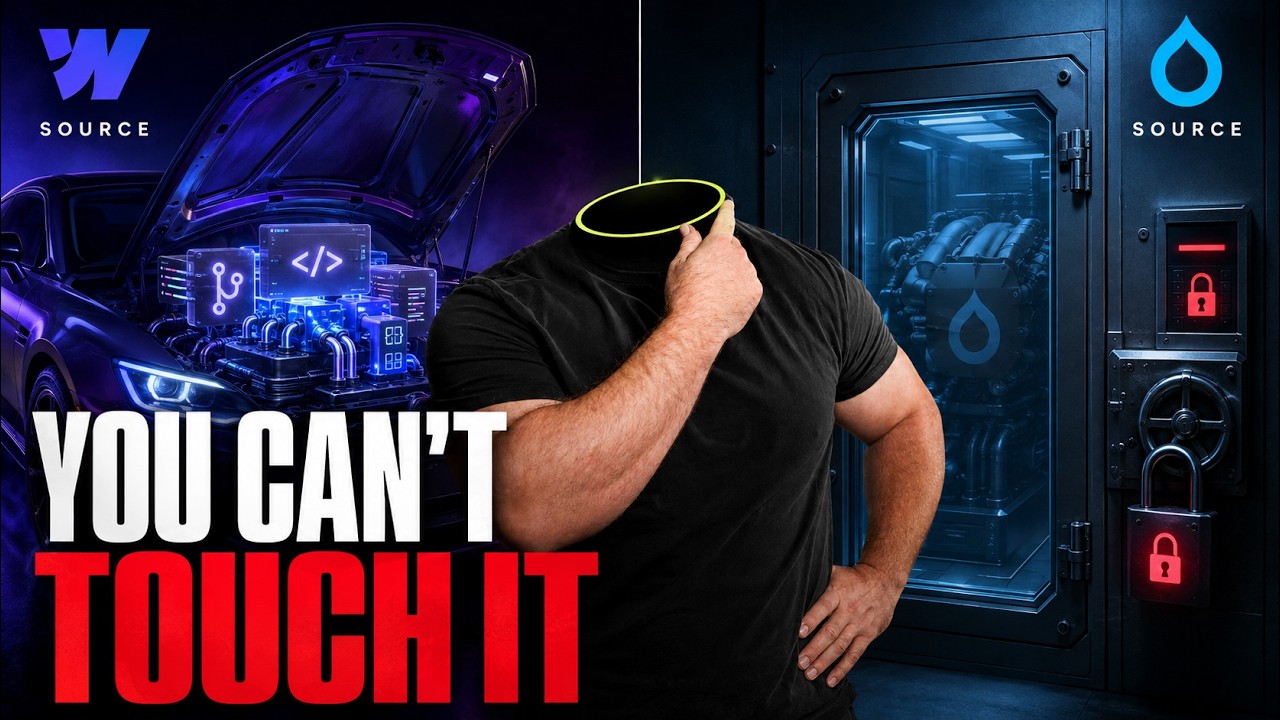
🔗 **Source:** [Webflow vs. Acquia: What You Need to Know About 'Source'](https://www.youtube.com/watch?v=PutL2Xrcp2w)
> [!note]+ Document Notes
> tags: [cms, drupal, webflow, acquia, managed-hosting, developer-autonomy]
> author: Headless | Show
> source: YouTube — Headless | Show
> reference: https://www.youtube.com/watch?v=PutL2Xrcp2w
> date created: 2026-09-20 12:35
>
> > [!info] Generated analysis — not the author's words. Sections below are machine-written
> > from the captured source. Only text inside `> [!quote]` blocks is verbatim from the author.
> > Do not quote or attribute any other line to the named author.
>
> # 🏷️ Title: Webflow vs. Acquia: What You Need to Know About 'Source'
>
<!-- deep-read:sections start -->
## 🧭 Table of Contents
- [📝 Summary](#-summary)
- [📖 Main Content](#-main-content)
- [🗒️ Notes](#️-notes)
- [📚 References](#-references)
- [🗣️ Paraphrase](#️-paraphrase)
- [📰 Newsletter](#-newsletter)
- [✅ Action Items](#-action-items)
- [🧪 Hypotheses](#-hypotheses)
- [📊 Methodology](#-methodology)
- [❓ Questions](#-questions)
- [🔮 Future Research](#-future-research)
- [💡 Implications](#-implications)
- [🧠 Learning Styles Assessment](#-learning-styles-assessment)
- [📊 Accessibility Assessment](#-accessibility-assessment)
- [🌍 DEIB Assessment](#-deib-assessment)
- [✅ Logical Validity](#-logical-validity)
- [🛡️ DARVO Analysis](#-darvo-analysis)
- [🎯 Conclusion](#-conclusion)
### 🔗 References
- [Source clip](https://www.youtube.com/watch?v=PutL2Xrcp2w)
## 📝 Summary
- A 51-second clip contrasting Webflow and Acquia's 'Source' product on a single axis: whether the customer can reach the code that ships.
- Webflow's pitch is characterised as direct access to the shipping code, with workspaces and permissions around it, and bring-your-own-stack connection.
- The load-bearing claim is sourced to vendor documentation: the Acquia Source CMS product guide is said to state that customers cannot access or modify the underlying Drupal code.
- Two further restrictions are attributed to the same guide — no direct server access, and no installing contributed Drupal modules.
- The speaker declines to frame this as a scandal, calling it 'just a managed service trade-off': less responsibility for maintaining the system, less freedom to change its foundation.
- The closing observation is the memorable one — that a field built on right-click-view-source now has a product where 'source needs a sales call'.
- Bottom line: a short, fair comparison whose one checkable claim is attributed to a named vendor document, and whose framing resists the outrage the topic invites.
## 📖 Main Content
- The clip does one thing and does it cleanly: it picks a single dimension — access to the underlying code — and compares two products on it rather than attempting a feature survey.
- The Acquia claim is the only substantive assertion and it is properly sourced in speech. It is attributed to the 'Acquia source CMS product guide', which makes it checkable by anyone who wants to read that guide.
- Three separate restrictions are named, not one: no access or modification of the underlying Drupal code, no direct server access, and no installing contributed Drupal modules. For a Drupal product, the third is the most consequential — contributed modules are how most Drupal functionality arrives.
- The Webflow side is thinner and is characterised as a pitch rather than as documented capability, which is an asymmetry the clip does not flag. One side is described from its product guide, the other from its marketing.
- The refusal to editorialise is the clip's best quality. 'That's just a managed service trade-off' correctly identifies this as a known category of bargain rather than a defect, and states both sides of it in one sentence.
- The 'opens the hood' versus 'the service department has it handled' framing is a fair restatement of the same trade-off in plain terms.
- The closing line does the actual argumentative work, and it is doing more than it admits. 'We used to right click view source and learn how somebody made a mistake and now source needs a sales call' contrasts a product named Source with the browser affordance that taught a generation, and lands the loss without asserting wrongdoing.
- Scope caveat that matters for anyone citing this: 51 seconds is not a product comparison. No pricing, no migration path, no discussion of who each product is for, and no Acquia response. It is a single well-chosen contrast, and should be used as a pointer to the product guide rather than as an evaluation.
- The clip ends on '>> Off with its head', a speaker marker from a separate segment, confirming this is an excerpt lifted from a longer show rather than a standalone piece.
### 🗒️ Notes
- ['The comparison axis', "Both products are said to overlap in what they promise marketers while taking 'vastly different approaches to the machinery underneath'.", 'Webflow is characterised as offering direct access to the code that actually ships, with workspaces and permissions around it.', 'Webflow positioning includes bringing an existing stack and connecting the work.']
- ['The Acquia Source restrictions', 'Attributed to the Acquia Source CMS product guide: customers cannot access or modify the underlying Drupal code.', 'Same source: direct server access is ruled out.', 'Same source: installing contributed Drupal modules is ruled out.', 'For a Drupal-based product this is the sharpest of the three, since contributed modules are the usual route to functionality.']
- ['The framing — trade-off, not scandal', "Characterised as 'just a managed service trade-off'.", 'Both halves stated: less responsibility for maintaining the system, and less freedom to change its foundation.', 'Restated as one product opening the hood and the other saying the service department has it handled.']
- ['The closing observation', "'The web dev part of my brain finds it rather funny.'", "'We used to right click view source and learn how somebody made a mistake and now source needs a sales call.'", 'Plays on the product name Source against the browser view-source affordance.', 'Clip ends with an unrelated speaker marker, confirming it is an excerpt from a longer programme.']
## 📚 References
- [Source clip](https://www.youtube.com/watch?v=PutL2Xrcp2w)
## 🗣️ Paraphrase
- Webflow and Acquia's Source promise marketers similar things but differ sharply in what the customer can reach underneath.
- Webflow's pitch is direct access to the code that actually ships, wrapped in workspaces and permissions, and connecting to a stack you already have.
- Acquia's own Source product guide says customers cannot access or modify the underlying Drupal code.
- That guide also rules out direct server access and installing contributed Drupal modules.
- The speaker treats this as an ordinary managed-service bargain rather than a failing: you trade freedom to change the foundation for freedom from maintaining it.
- One product opens the hood; the other says the service department has it handled.
- The irony noted at the end is that a field which learned by viewing source now has a product called Source that you have to talk to sales about.
## 📰 Newsletter
- Fifty-one seconds, one useful fact. Acquia's Source CMS product guide reportedly states that customers cannot access or modify the underlying Drupal code — and also rules out direct server access and installing contributed Drupal modules.
- That third one is the bite. Contributed modules are how Drupal functionality normally arrives, so ruling them out is a much larger constraint than it sounds next to the other two.
- The clip is fair about it: this is 'just a managed service trade-off'. Less responsibility for maintaining the system, less freedom to change its foundation. That bargain is a real product category, not a scandal.
- Worth noting the asymmetry though: the Acquia side is described from its product guide, the Webflow side from its pitch. Documentation versus marketing is not a like-for-like comparison.
- The line that stays with you: we used to right-click view-source to learn how somebody made a mistake, and now Source needs a sales call.
## ✅ Action Items
#### DevRel
- Not applicable to this source — nothing in it bears on DevRel work.
#### OSPO
- Not applicable to this source — nothing in it bears on OSPO work.
#### Community
- Not applicable to this source — nothing in it bears on Community work.
#### WordPress
- Not applicable to this source — nothing in it bears on WordPress work.
#### The WPOCC
- Not applicable to this source — nothing in it bears on The WPOCC work.
#### FAIR
- Not applicable to this source — nothing in it bears on FAIR work.
## 🧪 Hypotheses
- Acquia Source's published product guide states the three restrictions as characterised, verifiable by reading that guide directly.
- Prohibiting contributed modules constrains a Drupal deployment more than prohibiting code modification alone, since most functionality arrives that way.
- Managed CMS products that restrict code access trade measurably lower maintenance burden for reduced extensibility, testable against customer-reported outcomes.
### 📊 Methodology
- No method to assess. This is a 51-second opinion segment excerpted from a longer programme, not an analysis or a test.
- The one checkable claim is attributed to a named vendor document — the Acquia Source CMS product guide — which is the right way to make an assertion of this kind in speech.
- The comparison is asymmetric in sourcing: Acquia is described from its product documentation, Webflow from its marketing pitch. The clip does not acknowledge this.
- No pricing, migration, target-customer or vendor-response material appears, so the clip cannot support a purchasing conclusion.
- Verification note: no outbound links exist in this capture to check, because the source is a video transcript rather than a written article — the absence of citations here is a property of the medium, not a finding about the speaker, who does name his source aloud.
### ❓ Questions
- Does the Acquia Source product guide state these three restrictions in the terms characterised, and under what conditions or tiers?
- Are contributed modules excluded outright, or available through an Acquia-vetted catalogue?
- What does Webflow's 'direct access to the code that actually ships' include in practice — templates and custom code, or the platform runtime?
- Who is each product actually sold to, and does the code-access restriction bind the buyer or only the marketing team using it?
### 🔮 Future Research
- A documented comparison of code-access guarantees across managed CMS products would be genuinely useful and does not appear to exist.
- Whether restricted-access managed CMS deployments show lower security incident rates — the implied upside of the trade-off — is unexamined.
- The effect of closed managed platforms on where new developers learn is the real question under the closing joke, and nobody has measured it.
### 💡 Implications
- Practice: when evaluating a managed CMS, read the product guide for what it forbids rather than the pitch for what it enables — the restrictions are where the trade-off is actually written down.
- Policy: not applicable.
- Security: restricted code and server access reduces customer-side attack surface while concentrating dependence on the vendor's patching; the clip names the trade but assesses neither side.
- Education: the closing observation identifies a real pedagogical loss — platforms that cannot be inspected cannot be learned from by inspection.
- Funding: not applicable.
### 🧠 Learning Styles Assessment
- Reading level estimate: Flesch-Kincaid grade 9-10. A 51-second spoken clip; conversational, one sustained comparison.
#### 👀 Visual learners
- Present: Not assessable from the transcript; no visual content is described in the narration.
- Improve: If the clip shows the product guide on screen, quoting the relevant passage as text would let the central claim stand on its own.
#### 🔊 Aural learners
- Present: Well served — the entire content is spoken and self-contained.
- Improve: Nothing needed.
#### 🗣️ Verbal learners
- Present: The trade-off is stated twice in different registers, which aids retention in a short clip.
- Improve: 'Contributed modules' is used without gloss and carries the most weight of the three restrictions; a non-Drupal listener will miss why it matters.
#### 🧩 Kinesthetic learners
- Present: Nothing to try or apply.
- Improve: Naming where to find the product guide would give the listener a next action.
#### 🧠 Logical learners
- Present: A clean single-axis comparison with the trade-off stated in both directions.
- Improve: The sourcing asymmetry — documentation for one product, marketing for the other — is not acknowledged.
#### 🧑🤝🧑 Social learners
- Present: Conversational register, evidently part of a multi-person show.
- Improve: Nothing needed.
#### 🧘♀️ Solitary learners
- Present: Self-contained in under a minute.
- Improve: Nothing needed.
#### 🌿 Naturalistic learners
- Present: Not addressed.
- Improve: Not applicable.
### 📊 Accessibility Assessment
#### Screen reader semantics
- Present: Not applicable to video.
- Improve: Not evaluable.
#### Keyboard navigation
- Present: Not applicable.
- Improve: Not evaluable.
#### Contrast and readability
- Present: Not assessable from the transcript.
- Improve: Not evaluable.
#### Text resizing and reflow
- Present: Not applicable to video.
- Improve: Not evaluable.
#### Media and captions
- Present: A machine transcript exists and reads accurately, including product names.
- Improve: As an excerpt it carries no context for what came before or after, and it ends mid-programme on an unrelated speaker marker — disorienting for anyone arriving at the clip alone.
#### Forms and interactions
- Present: Not applicable.
- Improve: Not evaluable.
#### Standards reference
- Present: 1.2.2 Captions is met by the available transcript.
- Improve: 1.2.3 Audio Description would matter only if the product guide is shown on screen rather than described.
### 🌍 DEIB Assessment
#### Cultural breadth
- Present: Not addressed; the subject is a product comparison.
- Improve: Not applicable to this source.
#### Inclusive language
- Present: Neutral throughout; no disparagement of either vendor or their customers.
- Improve: Nothing to improve.
#### Neurodiversity support
- Present: Short, single-topic and clearly structured — an accessible format for a technical comparison.
- Improve: Nothing to improve.
#### Representation
- Present: Single speaker; no representational claim made.
- Improve: Not applicable to this source.
#### Psychological safety
- Present: Explicitly declines to frame a vendor's restriction as a failing, which keeps the discussion usable by people who have chosen that product.
- Improve: Nothing to improve.
### ✅ Logical Validity
#### Strong reasoning
- The strongest move is sourcing the central claim to the vendor's own product guide rather than to inference or reputation. A restriction stated in a company's own documentation is the hardest kind of claim to dispute and the easiest for a listener to verify.
- Naming three distinct restrictions rather than collapsing them into 'closed' is more precise than the genre usually manages, and the three differ in consequence — no contributed modules is a far larger constraint on a Drupal product than no server access.
- Refusing the available outrage is a genuine analytical choice. 'That's just a managed service trade-off' correctly classifies the situation, and stating both halves of the bargain in a single sentence is the fairest possible compression.
- The closing observation earns its place because it identifies a real second-order effect — inspectability is how the field taught itself — rather than merely scoring a point off the product's name.
#### Fallacies
- **False balance through asymmetric sourcing** — located at: the Webflow-versus-Acquia comparison. Acquia is characterised from its product guide and Webflow from its marketing pitch, then the two are set side by side as if comparably evidenced. A pitch and a product guide describe different things — one what a vendor wants to be true, the other what it commits to. Fix: check Webflow's documentation for what it actually guarantees before treating the contrast as established.
#### Tone of voice
- Wry and measured; the humour arrives at the end rather than colouring the analysis.
- Deliberately non-partisan about the vendors — the trade-off is named as ordinary rather than as a failing.
- Elegiac in the final line, where a technical comparison briefly becomes a comment on how the field used to learn.
### 🛡️ DARVO Analysis
- **Deny:** No instance present in this source.
- **Attack:** No instance present. The clip declines the available criticism of Acquia, framing the restriction as a category of product rather than a fault.
- **Reverse victim/offender:** No instance present in this source.
## 🎯 Conclusion
- The one durable takeaway is checkable and worth keeping: Acquia's Source product guide is said to rule out accessing or modifying the underlying Drupal code, direct server access, and installing contributed Drupal modules.
- The third restriction is the one to weigh, because contributed modules are how Drupal functionality normally arrives — it constrains far more than the phrase suggests.
- The clip's framing is fair and worth adopting: this is a managed-service bargain, less maintenance responsibility for less foundational freedom, not a scandal.
- The asymmetry to correct before citing it: Acquia is judged on documentation, Webflow on its pitch.
- Next step: read the Acquia Source product guide directly and confirm the three restrictions and their conditions, since the entire value of this clip rests on that one attribution.
## 🔄 Refactor Appendix — Webflow vs. Acquia: What You Need to Know About 'Source'
### 📚 Literature Atoms (H3)
#### [H1] Acquia Source documents that customers cannot modify the underlying Drupal
> [!quote]
> Acquia source CMS product guide says customers cannot access or modify the underlying Drupal code. It also rules out direct server access and installing contributed Drupal modules.
**Context & use**:
- Attributed to the vendor's own product guide, which makes it checkable
- Contributed modules are the usual route to Drupal functionality, so the third restriction binds hardest
**Tags**: #xref #share
<!-- atomicity: 1 idea ✓ -->
#### [H2] A managed service trades foundational freedom for maintenance relief
> [!quote]
> That's just a managed service trade-off. You get less responsibility for maintaining the system and less freedom to change its foundation.
**Context & use**:
- The speaker's refusal to treat the restriction as a failing
- States both halves of the bargain in one sentence
**Tags**: #xref #aphorisms
<!-- atomicity: 1 idea ✓ -->
#### [H3] A platform that cannot be inspected cannot be learned from
> [!quote]
> We used to right click view source and learn how somebody made a mistake and now source needs a sales call.
**Context & use**:
- Closing line, playing the product name Source against the browser affordance
- Names a second-order cost: inspectability was the field's teaching mechanism
**Tags**: #xref #aphorisms #articleseed
<!-- atomicity: 1 idea ✓ -->
### 🧠 Permanent Candidates (H4)
#### [P1] What a platform forbids in its documentation describes the product mor
**Claim** (one sentence, Courtney's voice): What a platform forbids in its documentation describes the product more accurately than what its marketing says it enables, because restrictions are the part a vendor commits to in writing.
**Evidence pointer**: [[#H1]]
**Scope & conditions**: Holds for evaluating managed or hosted platforms where a product guide exists. Weakest where documentation is thin or aspirational, and does not apply to open-source projects whose constraints live in code rather than in a guide.
**Links** (≥1 with annotation):
- [[First-Party Disclosure Asserts Where Third-Party Disclosure Measures]] — extends: both separate what a vendor claims from what it is accountable for
- [[Openness Is a Surface Property Not a License Property]] — applies-in: access restrictions can sit outside the license entirely
- [[WordPress Platform Design MOC]] — the open-versus-managed thread
<!-- atomicity: 1 idea ✓ -->
#### [P2] A field that taught itself by inspecting working examples loses its te
**Claim** (one sentence, Courtney's voice): A field that taught itself by inspecting working examples loses its teaching mechanism when the working examples become unreadable, and that loss is invisible in any measure of the platform's quality.
**Evidence pointer**: [[#H3]]
**Scope & conditions**: Applies where informal learning depended on artifact transparency — view-source on the web, readable binaries, open configuration. Does not apply where formal training already carried the teaching load.
**Links** (≥1 with annotation):
- [[Documentation Is Training Data and It Sets the Recommendation Prior]] — extends: both concern what a closed artifact stops teaching, to people or to models
- [[Removing the Incentive Removes the Free Content Not Just the Paid]] — contrasts: that claim is about supply of teaching, this one about inspectability of the subject
- [[Commons & Community Governance MOC]] — the open-web thread
<!-- atomicity: 1 idea ✓ -->
### ✏️ Fleeting Queue
- [F1] Read the Acquia Source CMS product guide and confirm the three restrictions and their conditions #fleeting #inbox
- [F2] Check what Webflow's documentation actually guarantees about code access, versus its pitch #fleeting #inbox
- [F3] 'Source needs a sales call' — usable line for a talk on view-source culture #fleeting #inbox
### → Things 3 (max 2 actions)
- [ ] Verify the Acquia Source restrictions against the product guide before citing them #things
<!-- deep-read:sections end -->
📄 **Full text:** [[Full Document Contents/Articles/Webflow vs. Acquia What You Need to Know About 'Source'.md|Webflow vs. Acquia: What You Need to Know About 'Source' by Headless | Show]]
## Highlights
- Acquia source CMS product guide says customers cannot access or modify the underlying Drupal code. ([View Highlight](https://read.readwise.io/read/01m2zttpptnjdedjv0vcp90f16))
- Note: [H1] Acquia Source documents that customers cannot modify the underlying Drupal. Attributed to the vendor's own product guide, which makes it checkable. Contributed modules are the usual route to Drupal functionality, so the accompanying module restriction binds hardest.
- Tags: atom/literature/h1, action/h1
- You know, we used to right click view source and learn how somebody made a mistake and now source needs a sales call. ([View Highlight](https://read.readwise.io/read/01m2zttwzdrkvn4x6hh6t5cyty))
- Note: [H3] A platform that cannot be inspected cannot be learned from. Closing line, playing the product name Source against the browser affordance — names a second-order cost: inspectability was the field's teaching mechanism.
- Tags: action/h3, atom/literature/h3