Were the Miracles Real? The Question That Misses the Point
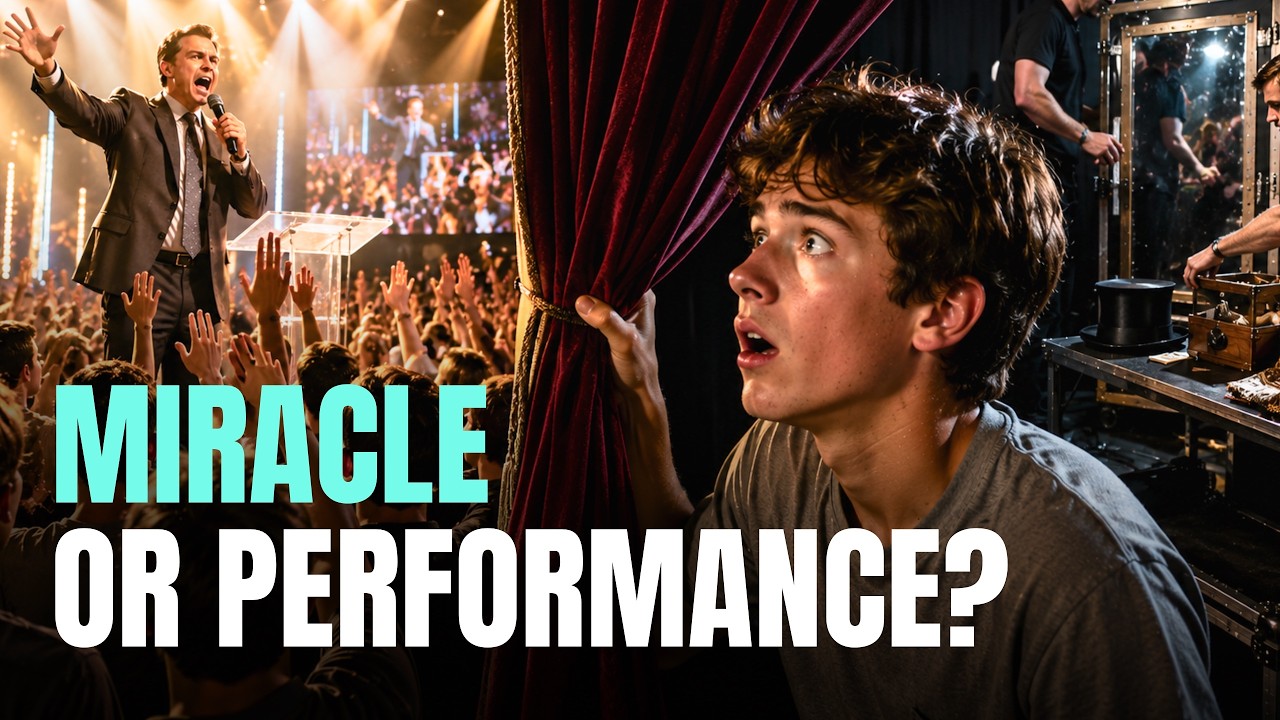
🔗 **Source:** [Were the Miracles Real? The Question That Misses the Point](https://www.youtube.com/watch?v=R9Q3-GUUo8k)
> [!note]+ Document Notes
> tags: [cult-recovery, spiritual-abuse, discernment, charismatic-movement, epistemology, media-literacy]
> author: Leaving the Message (two-host conversation; speakers not self-identified by name on camera)
> source: Leaving the Message (YouTube)
> reference: https://www.youtube.com/watch?v=R9Q3-GUUo8k
> date created: 2026-09-20 19:35
>
> > [!info] Generated analysis — not the author's words. Sections below are machine-written
> > from the captured source. Only text inside `> [!quote]` blocks is verbatim from the author.
> > Do not quote or attribute any other line to the named author.
>
> # 🏷️ Title: Were the Miracles Real? The Question That Misses the Point
>
<!-- deep-read:sections start -->
## 🧭 Table of Contents
- [📝 Summary](#-summary)
- [📖 Main Content](#-main-content)
- [🗒️ Notes](#️-notes)
- [📚 References](#-references)
- [🗣️ Paraphrase](#️-paraphrase)
- [📰 Newsletter](#-newsletter)
- [✅ Action Items](#-action-items)
- [🧪 Hypotheses](#-hypotheses)
- [📊 Methodology](#-methodology)
- [❓ Questions](#-questions)
- [🔮 Future Research](#-future-research)
- [💡 Implications](#-implications)
- [🧠 Learning Styles Assessment](#-learning-styles-assessment)
- [📊 Accessibility Assessment](#-accessibility-assessment)
- [🌍 DEIB Assessment](#-deib-assessment)
- [✅ Logical Validity](#-logical-validity)
- [🛡️ DARVO Analysis](#️-darvo-analysis)
- [🎯 Conclusion](#-conclusion)
- [🧱 Refactor Appendix](#-refactor-appendix)
- [🧰 Template Library](#-template-library)
## 🔗 References (in-page)
- Source video: https://www.youtube.com/watch?v=R9Q3-GUUo8k
- Channel: Leaving the Message — https://www.youtube.com/channel/UCBSpezVG15TVG-lOYMRXuyQ
- Duration: 8m10s. Upload date: 2026-09-20.
## 📝 Summary
**What happened.** Two hosts of *Leaving the Message* argue that the question survivors and
outsiders most often ask about healing-revival ministries — "were the miracles real?" — is the
wrong question, and that asking it keeps people stuck. One host frames revival meetings as stage
magic: he attends magic shows knowing they are acts, leaves entertained rather than puzzled, and
notes that revivalists deliberately fused gimmick with religion so that audiences leave asking
whether the trick was real instead of whether the movement was of God. The second host applies
this directly to his own father, a working prophetic figure, and states flatly that he does not
believe a single word-of-knowledge prophecy his father gave was genuine — every specific name,
street, or number had been obtained by ordinary means.
**Why it matters.** The framing is a discernment tool, not a debunking. Both hosts concede that
some events resist explanation, and one explicitly refuses to claim the unexplained is nothing.
Their claim is narrower and harder to dismiss: the real/fake binary is unfalsifiable in practice
and emotionally corrosive, because either answer leaves the asker unsatisfied. Replacing it with
a question about the movement's character and fruit gives a survivor something they can actually
evaluate.
**Stakeholders.** Former members of Message, Latter Rain, and NAR-adjacent movements; families of
itinerant healing ministers; researchers of charismatic revivalism; church leaders fielding
questions about signs and wonders; anyone assessing claims made under spectacle conditions.
**Risks.** The episode is anecdotal and self-reported, sourced almost entirely from two speakers'
memories of one family and one movement. A viewer could over-generalize "my father faked all of
it" into "all charismatic phenomena are fraud," which is broader than either host claims. The
hosts name living and recently active ministries (Bethel, IHOP, MorningStar, YWAM) in a critical
frame without presenting evidence specific to those organizations in this clip.
**Bottom line.** Stop adjudicating the trick; evaluate the system that needed the trick. The
question "was it real?" has no exit; "what did this movement do to people?" does.
## 📖 Main Content
The conversation opens on a claim about targeting: youth were "specifically looking for signs,
wonders, miracles because this is exciting." One host builds an extended analogy to stage magic —
Criss Angel is named as his own favorite — and observes that audiences at a magic show never leave
disturbed by the question of authenticity, because the frame was honest going in. Revivalism, he
argues, removed that honest frame. By braiding gimmick into religious claim, it produced audiences
who ask the wrong question on the way out.
The second host receives this as confirmation of his own experience and escalates it with family
detail. His father, he says, was skilled at tricking people; that was the actual skill set, not
prophecy. He offers a falsification test he ran incidentally over years: his father made
confident predictive claims about football outcomes in settings with no privileged information,
and lost consistently — the host claims his father owes him roughly $5,000 in lost bets. The
inference drawn is that a genuine capacity to access unavailable information would not fail
reliably in the one domain where it could be scored.
Both then walk the claim back to a deliberate boundary. The first host says some things "simply
can't be explained," while noting that in most cases he investigated, the eventual public version
bore little resemblance to how the event actually began — hype accrues over retellings. The second
host offers examples that unsettle a flat debunking: his father occasionally identified a recent
bereavement in a stranger on an airplane. He declines to resolve whether this is spiritual or
sharp intuition, notes that non-Christians do the same thing, and cites his younger sister as
someone who calls at the moment she is needed.
A secondary thread — flagged by both as deserving its own episode — is why these movements
concentrate on youth. The proposed answer is spectacle: young audiences are drawn by production
value, and the music functions the same way, with Misty Edwards concerts named as an example of
scale and staging.
The closing argument is the thesis. Whatever answer you get to "was it real," you lose: "no"
leaves you hunting for the exception, and "maybe" leaves you asking what that could possibly mean
and where it came from. The question does not terminate in anything useful.
### 🗒️ Notes
#### ⏱️ [00:00:00](https://www.youtube.com/watch?v=R9Q3-GUUo8k&t=0) The magic-show frame
- Claim that youth audiences specifically sought signs, wonders, and miracles because spectacle is exciting.
- Host compares revival phenomena to attending a magic show: he enters knowing it is a stage act, so authenticity is never the question afterward.
- Criss Angel named as a favorite performer; levitation cited as the signature effect.
- Reports that attendees of the early healing revivals asked him whether "little David Walker" could really levitate — treated by the host as evidence that stage technique was imported into revival meetings.
#### ⏱️ [00:00:45](https://www.youtube.com/watch?v=R9Q3-GUUo8k&t=45) Why the wrong question gets asked
- Leaving a magic show produces "that was really entertaining," not "I wonder if that was real."
- Revivalism is described as twisting religion and gimmick into one thing, so departing audiences ask "were the tricks real?" rather than "was this a movement by God?"
- Concession stated immediately: some witnessed things were "definitely tricks," others "can't be explained."
#### ⏱️ [00:01:33](https://www.youtube.com/watch?v=R9Q3-GUUo8k&t=93) Hype drift over retellings
- Of the unexplained cases investigated, the host says the eventual form "was nothing like how they originally started" — the account grows in transmission.
- Transition to a second topic the hosts flag for a future dedicated episode: why these movements target youth.
#### ⏱️ [00:02:22](https://www.youtube.com/watch?v=R9Q3-GUUo8k&t=142) Youth targeting and spectacle
- Bethel, IHOP, MorningStar, and YWAM named as churches and organizations that "thrive on youth movements."
- Proposed mechanism: spectacle draws young people specifically.
- Music extends the same mechanism; Misty Edwards concerts cited as functioning like concerts, "very big in their spectacle."
#### ⏱️ [00:03:08](https://www.youtube.com/watch?v=R9Q3-GUUo8k&t=188) The son's parallel analogy
- Second host reports he was about to offer the identical magic-show analogy independently.
- Describes the frustration of being asked whether "any of it was real" about his father.
- Frames his explanatory role: telling people there was a rabbit under the table, a mirror rather than a teleport — and being met with "wasn't some of it genuine?"
#### ⏱️ [00:03:56](https://www.youtube.com/watch?v=R9Q3-GUUo8k&t=236) "The magic show was a magic show"
- Direct claim: the father's skill set was tricking people, not prophecy — "magician or a con artist," with the performance as platform.
- States he does not think there was "ever a single instance of genuine word of knowledge prophecy."
- Specifics named as the tell: street names, numbers, a grandson's or grandfather's name — all treated as information obtained non-divinely.
#### ⏱️ [00:04:46](https://www.youtube.com/watch?v=R9Q3-GUUo8k&t=286) The football falsification test
- Concedes the negative claim is "impossible to prove" but asserts confidence from observed behavior outside ministry settings.
- Evidence offered: years of predictive claims about football outcomes where the father held no special information.
- Quantified claim: the father "owes me like $5,000" in lost bets; the host says he bet against his father's prophetic picks and profited, and that the father "loses all the time."
- Inference: reliable access to unavailable information "is just not... the product of divine stuff."
#### ⏱️ [00:06:23](https://www.youtube.com/watch?v=R9Q3-GUUo8k&t=383) The residue that resists debunking
- Counter-examples volunteered by the debunking host: his father, on airplanes, occasionally asked a stranger whether a family member had just died, and the person would begin crying.
- Explicitly leaves causation open — "Is it spiritual? Is it just good intuition? I don't know."
- Generalizes beyond religion: "It's not just Christians." Cites his younger sister as the best example of calling precisely when needed.
#### ⏱️ [00:07:09](https://www.youtube.com/watch?v=R9Q3-GUUo8k&t=429) Why the question has no exit
- Agreement that asking whether the magic tricks were real "is just not the right question."
- Both answers fail: "none of it was real" leaves the asker still wanting more; "maybe some of it was real" opens "what does that mean? Was it from God then?"
- Closing line of the argument: that question "doesn't ever lead to fruitful answer."
## 📚 References
Primary sources preferred. This clip is itself primary testimony; it cites no documents on screen.
- **Primary — the clip:** *Were the Miracles Real? The Question That Misses the Point*, Leaving the Message, 2026-09-20. https://www.youtube.com/watch?v=R9Q3-GUUo8k
- **Primary — channel:** Leaving the Message. https://www.youtube.com/channel/UCBSpezVG15TVG-lOYMRXuyQ
- **Named in the clip, not cited by the hosts** (each would need independent verification before use): Criss Angel (stage magician); "little David Walker" (child evangelist of the mid-century healing revivals); Bethel; IHOP; MorningStar; YWAM; Misty Edwards.
- **Companion clip, same channel, same day:** *When Prophecy Is a Trick: How Do You Tell What's Real?* https://www.youtube.com/watch?v=9D27ehJXY_4 — supplies the fruit-test criterion this clip gestures at but does not state.
- **Attribution caveat:** neither speaker states his own name in this clip. Speaker identity is not asserted here; role labels ("one host," "the second host") are used instead. Verify against the channel's own episode credits before quoting either man by name.
## 🗣️ Paraphrase
*Paragraph by paragraph, in plain terms.*
1. Young people came to these meetings hunting spectacle, and the meetings were built to supply it.
2. When you attend a magic show, you know the deal up front, so you leave entertained rather than troubled. Revivalism deliberately removed that up-front honesty.
3. Because the frame was dishonest, people leave asking the wrong thing — not "was this from God," but "was that trick real."
4. Some of what people saw was straightforwardly fake. Some of it resists explanation, and I'm not going to pretend otherwise.
5. But in the cases I chased down, the story that circulates today looks nothing like what actually happened at the time. Stories grow.
6. These movements aim at the young, and the reason is production value — the meetings and the music are both built as spectacle.
7. My father was a magician who worked in a religious setting. Being good at fooling people was the actual talent.
8. I don't believe any of his "words of knowledge" were real. The specific details always came from somewhere ordinary.
9. Here's my test: he made confident predictions about football, where he had no inside information, and he was wrong so consistently that I made money betting against him for years.
10. Even so, there are things I can't file away. He sometimes knew a stranger had just been bereaved. I don't know whether that's spiritual or just unusual perceptiveness, and plenty of non-religious people do it too.
11. Either way, "was it real?" is a dead end. Say no and people keep digging; say maybe and you've opened a worse question. Ask what the movement did instead.
## 📰 Newsletter
**Subject: The unfalsifiable question in your issue queue**
There's a question every WordPress security person has been asked at a party: *"But was the site actually hacked?"* You explain the malicious cron entry, the injected admin user, the base64 blob in `wp-config.php` — and they say, "Right, but could it have been something else?" You can't win that conversation, because the question was never built to terminate.
Two hosts on [Leaving the Message](https://www.youtube.com/watch?v=R9Q3-GUUo8k) ran into the religious version of this and named the pattern cleanly. People leaving healing-revival ministries keep asking "were the miracles real?" — and the hosts argue that whichever answer you give, the asker ends up stuck. No leaves you hunting for the one exception. Maybe leaves you asking what "maybe" could even mean.
Their alternative is the move we already make in triage: stop adjudicating the artifact, start assessing the system. Not *was that one effect genuine* but *what did this operation do to the people inside it*. That's a question with evidence attached.
The best bit is a falsification test that would make any QA lead happy. One host's father gave prophetic words for a living. The son noticed his father also made confident predictions about football games — a domain with no privileged information and, crucially, a **scoreboard**. He bet against him for years and says he's up about $5,000. That's not theology, that's just insisting a claim be tested where it can actually fail.
WordPress parallel, free of charge: a plugin that claims a 40% performance win in a hand-picked demo and won't show you a profile against a real site is running a stage act. Ask for the football game. Ask for the numbers from the domain where being wrong would show.
Worth the eight minutes. Pair it with [the companion clip](https://www.youtube.com/watch?v=9D27ehJXY_4), which supplies the actual replacement criterion — judge the fruit — that this one only points at.
## ✅ Action Items
**DevRel**
- Adopt "ask for the falsifiable domain" as a standing move when evaluating vendor claims: request the metric from the context where failure would be visible, not the demo.
- Draft a short talk or post on unfalsifiable questions in technical evaluation, using the stage-magic frame rather than the religious content.
**OSPO**
- When assessing a project's health claims, prefer scoreboard metrics (issue close latency, release cadence, bus factor) over narrative testimonials — the clip's "hype drift over retellings" applies directly to project reputations.
**Community**
- Note the youth-targeting-by-spectacle mechanism as a caution for event design: high-production onboarding events can select for excitement over informed consent. Audit whether newcomer programming sets honest expectations up front.
**WordPress subteams**
- *Core* — no action; source is non-technical.
- *Core Performance* — apply the falsification principle to benchmark claims: require profiles from representative sites, not curated demos.
- *Core AI* — relevant as an epistemics reference for evaluating model output claims; unexplained-but-impressive output invites exactly this real/fake trap.
- *Core Program Team* — no action.
- *Mobile* — no action.
- *Playground* — no action.
- *Community* — see Community above; applies to WordCamp newcomer track design.
- *Training* — candidate module material on evaluating claims and sources; the "wrong question" framing is teachable.
- *Marketing* — cautionary reference on spectacle-led messaging that outruns substance.
- *Support* — the "either answer frustrates" dynamic maps to support threads where the user's question is unanswerable as posed; train on reframing rather than answering.
- *Design* — no action.
- *Documentation* — no action.
- *Photos* — no action.
- *TV* — no action.
- *Polyglots* — no action.
- *Accessibility* — note only: auto-captions on this source are unpunctuated and mislabel speakers (see Accessibility Assessment).
- *Meta* — no action.
- *CLI* — no action.
- *Hosting* — no action.
- *Tide* — no action.
- *Openverse* — no action.
- *Themes* — no action.
- *Plugins* — apply to plugin-directory claim review: prefer testable assertions over demo-only performance claims.
**The WPOCC**
- Useful frame for governance discussions: evaluate an organization by what it does to participants rather than by its most impressive single artifact.
**FAIR**
- Reinforces provenance work — the "hype drift" observation is an argument for durable, signed provenance on claims and artifacts, since retold versions diverge from origins.
### → Things 3
- [ ] Watch companion clip 9D27ehJXY_4 and extract the fruit-test criterion into a permanent note
- [ ] Draft "ask for the football game" note on falsifiable evaluation domains
- [ ] Verify speaker identities against Leaving the Message episode credits before any citation by name
## 🧪 Hypotheses
1. **Spectacle selects for youth.** Audiences at high-production religious events skew younger than at low-production events in the same tradition, controlling for congregation demographics. Testable via attendance demographics across matched events.
2. **Hype drift is measurable.** Accounts of a given revival incident grow in specificity and magnitude with each retelling generation; earliest available accounts will be materially more modest than current circulating versions. Testable by tracing a single named incident through dated print, audio, and broadcast sources.
3. **Scoreboard domains falsify.** Practitioners claiming predictive access will perform at chance in any domain with an objective, scored outcome and no privileged information. Testable prospectively with pre-registered predictions.
4. **The binary question predicts worse recovery outcomes.** Former members who frame their processing as "was it real?" report longer unresolved distress than those who frame it as "what did it do to me." Testable via survey of recovery-community participants.
5. **The unexplained residue is not tradition-specific.** Rates of reported "impossible knowledge" experiences do not differ meaningfully between charismatic-religious and secular populations. Testable via matched-sample survey.
6. **Honest framing removes the authenticity question.** Audiences told in advance that an effect is a performance will report near-zero post-event uncertainty about its authenticity, versus high uncertainty when framing is ambiguous. Directly testable in a lab or staged setting.
## 📊 Methodology
**What the source actually is.** An unstructured two-person conversation, roughly eight minutes, recorded and published as a clip. No study design, no sampling, no instrument.
**Evidence types present.**
- *Participant testimony* — the second host on his own father; high access, zero independent corroboration, obvious and acknowledged personal stake.
- *Informal longitudinal observation* — the football-betting record, spanning years. This is the strongest item in the clip because the outcome is externally scored and the predictor had no privileged information. It remains unrecorded and unverifiable as presented: the ~$5,000 figure is a recollection, not a ledger.
- *Reported secondhand interviews* — "I actually get people who were there during the early years." Sample size, selection method, and recording status all unstated.
- *Investigative claim* — "most of them that I have investigated" regarding hype drift. Method, case count, and sources undisclosed.
- *Negative existential claim* — "not... a single instance of genuine word of knowledge prophecy." Unfalsifiable as stated, and the speaker says so himself.
**What is absent.** No documents, no dates, no named cases with citations, no third-party verification, no disconfirming-case search, no quantification beyond the betting anecdote.
**Appropriate weight.** Treat as credible lived testimony and a source of hypotheses, not as evidence about population-level phenomena. The falsification logic is portable; the specific factual claims are not yet sourced.
## ❓ Questions
- What replaces "was it real?" operationally — what does a survivor actually *do* with "judge the fruit" on a Tuesday afternoon?
- The hosts concede an unexplained residue. What would distinguish genuine anomaly from cold reading, selection bias in memory, and survivorship of hit-stories over miss-stories?
- If specifics always came from ordinary access, what were the actual acquisition channels — prayer cards, advance teams, local informants, published records? The companion clip answers this for one case; is it general?
- Does the youth-spectacle mechanism differ from ordinary concert marketing, or is the religious frame the only distinguishing variable?
- What is the ethical line for naming still-operating organizations (Bethel, IHOP, MorningStar, YWAM) in a critical frame without clip-level evidence specific to each?
- Who bears the cost of the "maybe some of it was real" answer — and is a deliberately unresolved answer kinder or crueler to someone still exiting?
## 🔮 Future Research
- **Trace one incident end to end.** Pick a single well-known healing-revival event and document every dated account from earliest to current, measuring drift in specificity and magnitude. This would convert "hype drift" from anecdote to finding.
- **Prospective prediction study.** Recruit practicing prophetic ministers for pre-registered, scored predictions in an information-neutral domain. Ethically fraught, methodologically clean.
- **Acquisition-channel taxonomy.** Catalogue documented mechanisms by which specific personal information reached platform ministers, across cases and decades.
- **Recovery framing study.** Test whether reframing interventions ("evaluate the system, not the artifact") improve measured outcomes for people leaving high-control religious groups.
- **The residue question.** Study reported anomalous-knowledge experiences across religious and non-religious populations with matched sampling, since one host explicitly claims the phenomenon is not Christian-specific.
- **Dedicated youth-targeting work.** The hosts themselves flag this as needing its own treatment; it is the clip's biggest undeveloped thread.
## 💡 Implications
**Practice.** For counselors and recovery facilitators, the clip supplies a usable reframe: redirect from adjudicating individual phenomena toward assessing systemic behavior. It also models a tone worth copying — conceding the unexplained rather than flattening it, which preserves credibility with people who witnessed something they cannot dismiss.
**Policy.** Organizations that solicit funds on the strength of demonstrated signs sit in a gap between religious liberty and consumer protection. The clip does not argue for regulation, but its acquisition-of-specifics claim is precisely the kind of conduct that fraud statutes reach when money changes hands.
**Security.** The companion clip makes this explicit; here it is latent. Personal-information acquisition — later revealed as keychain and account access — is a social-engineering and credential-hygiene story wearing religious clothes. Any organization where leaders have incidental access to members' devices or accounts has an insider-threat surface.
**Education.** A compact teaching case for source evaluation and falsifiability. The football-betting test is a better classroom example than most textbook illustrations because the reasoning is intuitive and the stakes are human.
**Funding.** For grantmakers supporting religious-trauma research, the clip highlights an under-resourced area: longitudinal documentation of movements while participants are still living. The hosts' secondhand interviews with early-revival attendees are a closing window.
## 🧠 Learning Styles Assessment
- **Visual** — Weak as delivered. It is a talking-heads clip; one host holds up an unnamed item ("the second one that you held up, invading the youth culture") that is never described for non-viewers. A timeline or acquisition-channel diagram would carry the argument better than the footage does.
- **Aural** — Strongest channel. Conversational, two voices, natural turn-taking, argument carried entirely in speech. Works well as audio-only.
- **Verbal** — Strong. The central move is an analogy (magic show) developed verbally and then applied; the reasoning is linguistic rather than numeric.
- **Kinesthetic** — Minimal. Nothing to do or manipulate. The football-bet example is the only concrete, enactable test, and it is described rather than demonstrated.
- **Logical** — Moderate to strong. There is a genuine argument structure: the binary question is unfalsifiable → both answers fail → therefore substitute a different question. The falsification test is sound reasoning informally presented.
- **Social** — Strong. Dialogue format, mutual confirmation, disclosure of personal history. Learners who process through conversation will find this natural and will likely want to discuss it.
- **Solitary** — Moderate. Rewards private reflection, especially for viewers with matching experience, but offers no structure for it — no summary, no takeaway list, no closing frame.
- **Naturalistic** — Not applicable to this source; no natural-world content, classification, or pattern-in-environment material. Noted rather than omitted per template rule.
**Reading level estimate.** Spoken register, roughly grade 8–9 equivalent. Vocabulary is plain; difficulty comes from unglossed insider references (Message movement, word of knowledge, Latter Rain adjacency, named ministries) rather than sentence complexity. An outsider will follow the argument but miss the weight of the references.
## 📊 Accessibility Assessment
Mapped to WCAG 2.2 AA, evaluated as published on YouTube.
1. **Perceivable — captions (1.2.2 Captions, Prerecorded).** *Fails.* Only auto-generated captions are present. The retrieved track is unpunctuated, renders non-speech as bracketed artifacts ("[snorts]", "[laughter]", "[clears throat]"), and encodes speaker changes as raw `>>` entities rather than labeled turns. In a two-speaker clip where the whole argument depends on *which* man is describing *whose* father, unlabeled speaker turns are a comprehension failure, not a cosmetic one.
2. **Perceivable — audio description (1.2.3 / 1.2.5).** *Fails.* A held-up physical item is referenced on camera and never described in audio. A non-sighted listener cannot know what "the second one that you held up" is.
3. **Perceivable — contrast and text alternatives (1.4.3, 1.1.1).** *Not assessable from transcript alone.* Requires visual inspection of the video frame, thumbnail, and any burned-in text.
4. **Operable — keyboard and controls (2.1.1, 2.4.x).** *Passes by platform.* YouTube's player supplies keyboard operation, focus handling, and skip mechanics; the publisher inherits these.
5. **Operable — seizure safety (2.3.1).** *Not assessable from transcript.* Talking-heads format makes flashing content unlikely but unverified.
6. **Understandable — language and readability (3.1.x).** *Partial.* Plain spoken English, but heavy unglossed in-group vocabulary. No glossary, no on-screen definitions, no description text supplying context for newcomers.
7. **Robust — structure and navigation (4.1.x, 2.4.10).** *Fails.* No chapters, no section markers, no timestamped description. An 8-minute clip with four distinct argumentative movements offers no way to navigate to any of them.
**Highest-value remediation, in order:** publish a human-corrected caption track with speaker labels; add chapter markers; add a two-sentence description naming the participants and the held-up item.
## 🌍 DEIB Assessment
**Cultural breadth.** Narrow by design and by subject. The frame is North American charismatic Christianity — Message movement, healing revivals, and named contemporary ministries. Global Pentecostalism, which is where most of the world's charismatic practice now happens, is entirely absent. One host does gesture outward by noting the unexplained-knowledge phenomenon "is not just Christians," which is the clip's only move beyond its own tradition.
**Inclusive language.** Generally respectful toward ordinary believers; the hosts direct criticism at practitioners and systems rather than at people who were deceived. "Con artist," "grift," and "wicked narcissistic men" (companion clip) are pointed but aimed at conduct. No slurs, no demeaning generalizations about adherents. One friction point: "cult" is used as a settled descriptor without definition, which is contested terminology in the study of new religious movements.
**Neurodiversity support.** Weak. Unstructured conversation, frequent topic switching, interruptions, and audible non-speech artifacts. No agenda, no signposting, no summary. Listeners who rely on predictable structure or who find overlapping speech taxing will struggle. Chapters and a stated outline would cost little and help substantially.
**Representation.** Two men, apparently both insiders to the same movement, discussing a third man. Women appear only as objects of narration — a mother, a sister, a named worship leader. No woman speaks. Given that women are heavily represented among both participants in and survivors of these movements, the absence is conspicuous and limits the clip's evidentiary reach.
**Psychological safety.** Mixed, and worth flagging. The content is potentially activating for survivors: parental betrayal, deception by a trusted figure, and religious disillusionment, delivered with laughter and snorting that could read as flippant to someone still in acute distress. No content warning, no support resources in the clip. Against that, the hosts' refusal to flatten the unexplained is itself a safety-preserving choice — it declines to tell viewers their real experiences were nothing, which is the most common harm in debunking content.
## ✅ Logical Validity
### Strong reasoning
- **The core argument is valid and well-formed.** If a question's every possible answer leaves the asker without resolution, the question is not serving the asker. Both branches are actually walked ("no" → still hunting; "maybe" → worse follow-on), which is more rigor than the genre usually shows.
- **The football test is genuinely good epistemics.** It isolates the variable that matters: take the claimed capacity into a domain with no privileged information and an objective scoreboard. Sustained failure there is real evidence. Informally gathered, but structurally sound.
- **Conceding the residue strengthens the case.** Refusing to claim the unexplained is explained — and declining to attribute it, even to the demonic — removes the easiest counter-move against them and signals the hosts are not simply debunking to a foregone conclusion.
- **Self-flagged unfalsifiability.** "It's impossible to prove that" is stated by the speaker about his own strongest claim. Marking the limit of one's own evidence is a mark of care.
### Fallacies
1. **Hasty generalization — the father to the movement.** *Located* at [03:56]–[04:46]. One man's documented deception is used to support "not... a single instance of genuine word of knowledge prophecy," and the frame extends implicitly to the wider revival scene. *Why it fails:* sample size one, selected precisely because it is known fraudulent. *Proposed fix:* scope the claim explicitly — "in every case I have personally examined, including my father's" — and state the case count.
2. **Guilt by association — the named ministries.** *Located* at [02:22]. Bethel, IHOP, MorningStar, and YWAM are named inside an argument about deception, on the strength of a shared trait (youth focus, spectacle), with no evidence presented against any of them in this clip. *Why it fails:* structural similarity is not evidence of the specific misconduct under discussion. *Proposed fix:* state plainly that the claim is about audience-acquisition method, not about fraud, or supply per-organization evidence.
3. **False analogy (partial) — magic show to revival meeting.** *Located* at [00:00]–[00:45]. The analogy is load-bearing and mostly earns its place, but the hosts' own point undercuts it: a magic show is consensual, framed, and entertainment-only, while a revival meeting involves money, medical decisions, and spiritual authority. *Why it matters:* the disanalogy is where the actual harm lives, so leaning on the analogy risks making the harm sound merely disappointing. *Proposed fix:* name the disanalogy explicitly — it strengthens rather than weakens their argument.
4. **Anecdotal evidence as quantification.** *Located* at [05:34]. "$5,000" and "loses all the time" are offered with the texture of data but rest on unrecorded recollection. *Proposed fix:* present as an impression, or produce the record.
5. **Appeal to personal incredulity, mild.** *Located* at [06:23]. "There are definitely people in the world who are good at this sort of behavior" substitutes an unexamined category for an explanation of the airplane-bereavement cases. *Proposed fix:* name the candidate mechanisms — cold reading, base rates, selective recall — rather than gesturing at unusual intuition.
### Tone of voice
Conversational, wry, and notably restrained given the subject. Humor is used as distance-keeping rather than mockery, and it is aimed at the father and the apparatus rather than at victims. The dominant register is weary expertise — people who have explained this many times. Two risks: the laughter can read as callous to a listener in fresh grief, and the fluency of two insiders agreeing with each other produces little friction, so weak claims pass unchallenged. No hedging theater and no false balance; when they do not know, they say so.
## 🛡️ DARVO Analysis
DARVO — Deny, Attack, Reverse Victim and Offender — is a pattern in which an accused party denies wrongdoing, attacks the credibility of the accuser, and recasts themselves as the true victim.
**Is the source itself performing DARVO?** No. The hosts are the accusing party, not the accused. They make no claim to victimhood in this clip beyond describing their own histories factually, they do not attack critics' character in place of argument, and they concede points against their own position (the unexplained residue, the unprovability of their strongest claim). Those concessions are the opposite of the pattern.
**Is DARVO described within the source?** Partially and implicitly, as the reported behavior of the father and the wider apparatus:
- **Deny** — Present by implication. A ministry built on effects that were "definitely tricks" depends on continuous denial of the mechanism. The clip does not narrate a specific denial episode; the companion clip's data-mining reveal supplies the concrete instance.
- **Attack** — Weakly present. One host reports being asked repeatedly whether "any of it was real," which reflects audience pressure on the person disclosing rather than a counterattack by the accused. The characterization of critics as opposing "modern-day miracles" (companion clip) is closer to a genuine Attack move, reframing a specific factual challenge as generalized hostility to the supernatural.
- **Reverse Victim and Offender** — Not demonstrated in this clip. Nothing here shows the father or the ministries claiming injury at the hands of those exposing them. The nearest structural relative is the framing that skeptics are against miracles, which positions the critic as aggressor and the practitioner as the defended party, but it is reported in passing rather than shown.
**Assessment.** Low DARVO content overall. The clip is better read as documenting the *conditions* under which DARVO becomes available to a leader — asymmetric information, spectacle, and an audience invested in the phenomena being real — than as an instance or a full description of it. Anyone tracking DARVO in this movement should treat this clip as background and go to the companion clip for a concrete case.
## 🎯 Conclusion
**Bottom line.** The hosts make a narrow, defensible claim and mostly stay inside it: "were the miracles real?" is an unfalsifiable question whose every answer fails the person asking, and it should be replaced with an assessment of what the movement did to people. Their strongest evidence is a falsification test — years of scored football predictions made without privileged information — and their most credible move is conceding that some events resist explanation while declining to attribute them to anything. The clip's real weakness is scope creep: one man's documented fraud carries more argumentative weight than one case can bear, and four active organizations are named inside that frame without clip-level evidence against any of them.
**Next steps.**
1. Watch the companion clip (9D27ehJXY_4) — it supplies the fruit-test criterion this clip only points toward, plus a concrete information-acquisition case.
2. Extract the falsification principle as a standalone permanent note; it transfers cleanly to technical claim evaluation and is the most reusable idea here.
3. Before citing either speaker by name, verify identity against the channel's own credits — neither man self-identifies in this clip.
4. Treat the named-ministry claims as unverified pending independent sourcing.
## 🧱 Refactor Appendix
### Literature Split Pad
**L1 — The unfalsifiable question**
Source: Leaving the Message, R9Q3-GUUo8k, [07:09]. The hosts argue that "was it real?" admits no answer that resolves the asker's distress: denial provokes continued searching, partial affirmation provokes an unanswerable follow-on about origin. They propose substituting a question about the movement's effect on people.
**L2 — Spectacle as audience-acquisition mechanism**
Source: same, [00:00], [02:22]. Claim that signs and wonders function as production value, that this preferentially recruits youth, and that worship music extends the same mechanism. Bethel, IHOP, MorningStar, YWAM, and Misty Edwards named as examples; no per-organization evidence given.
**L3 — The scoreboard falsification test**
Source: same, [04:46]–[05:34]. A claimed predictive capacity was exercised in a domain (football outcomes) with no privileged information and objective scoring; sustained failure over years, with a reported ~$5,000 in lost bets, is offered as evidence against genuine access.
**L4 — Hype drift in transmission**
Source: same, [01:33]. In investigated cases, the circulating account "was nothing like how they originally started" — accounts accrete specificity and magnitude across retellings.
**L5 — The conceded residue**
Source: same, [06:23]. Airplane bereavement identifications offered as genuinely unexplained; causation left open between spiritual and intuitive; phenomenon explicitly stated to occur outside Christian contexts.
#### Atomic Split Pad
**A1 — A question with no satisfying answer is a question about the asker, not the world.**
When every branch of an answer leaves the questioner unresolved, the question is misframed. Diagnose the frame before attempting the answer. Links: [[Falsifiability as a design constraint]], [[Reframing unanswerable support tickets]].
**A2 — Test a claimed capacity where it can be scored.**
Move the claim from the domain where it is exercised into an adjacent domain with objective outcomes and no privileged information. Sustained failure there is real evidence. Links: [[Benchmark claims require adversarial conditions]], [[Ask for the football game]].
**A3 — Consensual framing dissolves the authenticity question.**
An audience told in advance that an effect is a performance does not leave asking whether it was real. Ambiguous framing manufactures the question. Links: [[Informed consent in demos]], [[Spectacle and disclosure]].
**A4 — Accounts grow in transmission; originals are more modest.**
Expect specificity and magnitude to inflate with each retelling generation. Trace to the earliest dated source before treating a claim as established. Links: [[Provenance beats reputation]], [[FAIR provenance rationale]].
**A5 — Conceding the unexplained strengthens a debunking argument.**
Refusing to over-claim removes the easiest counter and preserves credibility with people who witnessed something they cannot dismiss. Links: [[Calibrated confidence]], [[Why total debunking backfires]].
**A6 — Structural similarity is not evidence of specific misconduct.**
Sharing a method with a bad actor does not establish that an organization committed that actor's offense. Name the shared trait and stop there absent per-case evidence. Links: [[Guilt by association]], [[Evidence scoping in criticism]].
#### Fleeting Queue
- The held-up item at [01:33] ("invading the youth culture") is never named — a book? a chart? Find the full episode and identify it.
- Neither speaker self-identifies; confirm both names from channel credits before any citation.
- "Little David Walker" — verify the historical child evangelist and dates independently.
- Hosts flag a dedicated youth-targeting episode as forthcoming; watch for it and link back here.
- Does the betting anecdote exist in any recorded form, or is it recollection only?
- Cross-reference the spectacle claim against existing scholarship on Pentecostal revival staging.
<!-- deep-read:sections end -->
📄 **Full text:** [[Full Document Contents/Articles/Were the Miracles Real The Question That Misses the Point.md|Were the Miracles Real? The Question That Misses the Point by Leaving the Message]]
## Highlights
- like $5,000 in um bets that he's lost over football games over the years. He's probably paid him back a a bit, but I have made a significant amount of money off of my father because he gets prophetic words about who's going to win football games and [laughter] I will bet against him, and he loses all the time. And it's it's kind of in good fun, like I you know, but you know, that the the being able to see the future, being able to access reliably ([View Highlight](https://read.readwise.io/read/01m30kfk5xr4vwxz94cd20mez7))
- Note: Atom A2 — test a claimed capacity where it can be scored. Move the claim into a domain with an objective scoreboard and no privileged information; sustained failure there is real evidence. Strongest evidentiary item in the clip, though the ~$5,000 figure is recollection, not a ledger.
- Tags: atom/atomic/h1, epistemology, falsifiability, discernment
- whatever answer you hear, you're either going to be You're either going to hear me say, "No, it None of it was real." and you're going to be frustrated because you're going to still want to find more, or you're going to get some answer that yeah, sure, maybe some of it was real, and then you're going to be in a frustrated place where it's like, well, what does that mean? Was it from God then? No, probably not if it was all of this different stuff. Where was it from? It just doesn't The that question doesn't ever lead to ([View Highlight](https://read.readwise.io/read/01m30kfyrweb0ddydwbt4w59zr))
- Note: Atom A1 — a question whose every answer leaves the asker unresolved is a question about the asker, not the world. Both branches are walked explicitly, which is the clip's central and best-formed argument.
- Tags: cult-recovery, epistemology, discernment, atom/atomic/h1