When Churches Ignore Abuse to Protect a Movement
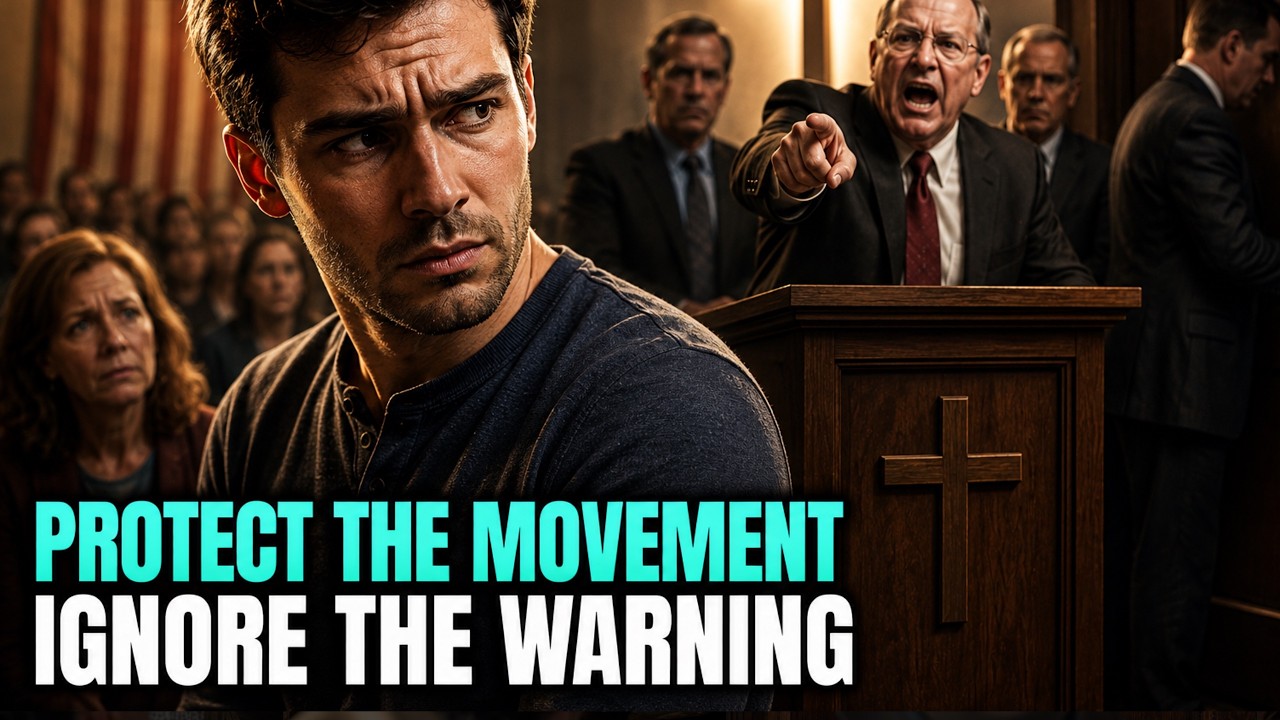
🔗 **Source:** [When Churches Ignore Abuse to Protect a Movement](https://www.youtube.com/watch?v=am_p_65SDq4)
> [!note]+ Document Notes
> title: "When Churches Ignore Abuse to Protect a Movement"
> source_url: "https://www.youtube.com/watch?v=am_p_65SDq4"
> content_type: video
> reading_stage: analytical
> tags: [religious-extremism, church-abuse, propaganda, white-supremacy, nar, safeguarding]
> processed_at: "2026-08-04"
>
> # 🏷️ Title: When Churches Ignore Abuse to Protect a Movement
>
<!-- deep-read:sections start -->
## 🧭 Table of Contents
- Summary
- Main Content
- References
- Paraphrase
- Newsletter
- Action Items
- Hypotheses
- Methodology
- Questions
- Future Research
- Implications
- Learning Styles Assessment
- Accessibility Assessment
- DEIB Assessment
- Logical Validity
- DARVO Analysis
- Conclusion
- Refactor Appendix
### 🔗 References
- [Original YouTube video](https://www.youtube.com/watch?v=am_p_65SDq4)
## 📝 Summary
A historical comparison argues that religious authority, manufactured threats, and movement loyalty can shield abusive leaders and prime followers for violence.
## 📖 Main Content
### 🗒️ Notes
Here is a detailed, source-faithful deep-reading aid and summary based on the provided video.
# Deep-Reading Aid & Timestamped Walkthrough
### Executive Summary & Thesis
* **Thesis / Central Claim:** The historical tactics of Klan figurehead William Joseph Simmons and his associate Davis—who weaponized religion, political influence, and fear-based propaganda to polarize populations—mirror modern religious extremist movements such as the New Apostolic Reformation (NAR).
* **Speakers' Stance:** The speakers contend that ideological leaders rarely preach explicit violence directly; instead, they create hostile, fear-driven doctrinal frameworks that incite lower-level adherents to commit destructive acts or violence.
### Timestamped Walkthrough
* **[00:00 - 00:47] Congressional Investigation of the Ku Klux Klan (1921)**
* **Main Argument:** Representative Upshaw strategically derailed a Congressional investigation into the KKK by proposing an "equal protection under the law" argument: Congress must either investigate *all* secret societies (e.g., Masons, Knights of Columbus) or none at all.
* **Verified Fact vs. Claim:** The video displays primary-source historical newspaper clippings documenting the 1921 Congressional inquiry into the Ku Klux Klan. The speakers argue that many Congressmen agreed to halt the investigation because they themselves were members of secret fraternal orders.
* **[00:48 - 02:47] Davis’s Escalation of Anti-Interracial Rhetoric & Klan Expansion**
* **Main Argument:** Davis initially operated under the guise of a respectable religious minister before revealing extreme white-supremacist views, using published articles to denounce interracial marriage and incite public fear.
* **Concrete Examples:**
* In February 1922, Davis published explicit denunciations of interracial marriage, writing that there were "too many mulattos in this country."
* By March 1922, he traveled across Oklahoma, Tennessee, Arkansas, and Georgia conducting public KKK lectures.
* Late in 1922, Davis returned to Georgia (specifically targeting Albany, Decatur, and South Georgia) to expand KKK chapters while Klan membership surged nationwide toward millions.
* **[02:48 - 04:48] Weaponization of Religion & Modern Parallels (NAR)**
* **Main Argument:** Religious authority and media coverage are frequently manipulated by bad-faith actors to mask abusive behavior while furthering political/theological agendas.
* **Modern Parallel:** The co-host parallels Davis’s historical playbook with high-profile leaders in the modern New Apostolic Reformation (NAR). He asserts that influential figures knowingly tolerate or protect predatory/unethical leaders as long as those leaders effectively advance the overarching organizational agenda.
* **[04:49 - 07:40] Manufactured Threats and Propaganda Strategies**
* **Main Argument:** The Klan successfully polarized society by inventing non-existent existential threats and casting themselves as defenders of "true Americanism" and Christian morality.
* **Historical Example / Media Strategy:** Klan propaganda promised to protect Christian morals from "14 million people of the colored race who were organizing." This rhetorical "slide of hand" turned a peaceful minority population into a manufactured existential enemy in the minds of followers.
* **Modern Parallel:** The co-host asserts that modern NAR propaganda employs identical mechanics: creating exaggerated or fictional social crises to polarize mainstream Christians against non-NAR members.
* **[07:41 - 08:13] Psychological Manipulation and Mob Mentality**
* **Main Argument:** Ideological leaders exploit mob mentality and emotional frenzy, knowing that destabilizing rhetoric inevitably triggers violent outcomes (such as historical lynchings) without requiring explicit orders from top leadership.
### Analysis Dimensions
#### 1. Concrete Examples & Historical Evidence
* **Newspaper Archive Clips:** Coverage of the 1921 Congressional KKK inquiry involving William J. Simmons, Chairman Campbell, and Rep. Upshaw.
* **Geographic Campaign Route:** Historical movement of Klan lectures through Idabel (Oklahoma), Tennessee, Arkansas, and South Georgia (Albany/Decatur).
* **Specific Rhetorical Tropes:** Propaganda alleging that millions of Black Americans were actively organizing against white Christian society.
#### 2. Accessibility, DEIB, & Security Concerns
* **DEIB / Civil Rights Focus:** The dialogue explicitly dissects how systemic racism, anti-miscegenation rhetoric, and white supremacy were embedded within religious and political structures.
* **Security & Extremism Concerns:** Highlight's how radicalizing language, dog whistles, and fear-based doctrine directly generate real-world political instability and mob violence.
#### 3. Limitations & Speaker Disclaimers
* **Speaker Bias / Framing:** The speakers explicitly draw direct ideological lines between early 20th-century KKK propaganda and the modern New Apostolic Reformation (NAR). While the historical details of the KKK inquiry are verified via newspaper documentation, the comparison to the modern NAR represents the speakers' analytical claims and interpretations.
* **Anonymity Disclaimer:** The co-host explicitly chooses not to name specific individual contemporary NAR leaders currently facing predatory accusations during the discussion ([04:10]).
#### 4. Practical Actions for Open-Source DevRel Practitioners
While the video focuses on religious/historical research, open-source and DevRel practitioners can apply its underlying lessons on community health, safety, and media hygiene:
* **Identify Manufactured Crises:** Recognize when bad-faith community actors use inflammatory, fear-driven propaganda to polarize open-source communities or fork projects unnecessarily.
* **Governance Transparency:** Avoid "secret society" or closed-door governance models; ensure moderation standards apply equally to high-profile leaders and new contributors alike.
* **Safeguard Community Members:** Establish clear Code of Conduct protocols that protect vulnerable group members from predatory behaviors, preventing leadership from turning a blind eye to unethical behavior for the sake of platform growth.
### Near-Verbatim Highlights
1. **On Weaponizing Religion:**
> "This represents the full scenario of how religion can be weaponized... presenting himself as a Christian minister who is spreading morals of society... but he's actually a predator." — *Co-host [02:58 - 03:32]*
2. **On Tolerating Bad Actors for the "Cause":**
> "Even though this character is not a good person, they saw what he's doing as being good... because he was preaching the agenda, they saw it as a good thing even though they knew probably he was going to fall." — *Co-host [04:00 - 04:44]*
3. **On Manufactured Threats and Propaganda:**
> "They could create a problem that really didn't exist, and then polarize people to fight that problem that did not exist." — *Co-host [06:55 - 07:03]*
4. **On Modern Parallels in Religious Movements:**
> "They're mimicking exactly what Davis was trying to do and how he did it... they polarize the people against Christians who aren't part of this NAR thing." — *Co-host [07:11 - 07:38]*
5. **On Mob Mentality and Violent Outcomes:**
> "A lot of people allow themselves to get caught up in the mob mentality, the frenzy of the moment, and that's how some of these lynchings probably occurred." — *Host [07:53 - 08:01]*
## 📚 References
- Original video and captions, accessed 2026-08-04.
- Any papers, products, incidents, or historical sources named by the speakers remain leads for primary-source verification unless linked and checked separately.
## 🗣️ Paraphrase
The speakers use early Klan organizing to argue that leaders can create moral panic, wrap it in Christian language, and benefit from violence without issuing an explicit order. Their comparison to the New Apostolic Reformation is an interpretation that needs independent source checking.
## 📰 Newsletter
Movement protection becomes dangerous when reputation outranks truth. The episode’s strongest warning is procedural: test claims, protect vulnerable people, and apply accountability rules to leaders as well as followers.
## ✅ Action Items
#### DevRel
- [ ] Document how your community escalates abuse reports without regard to status.
- [ ] Separate primary historical evidence from the speakers’ modern NAR comparison.
- [ ] Audit whether governance language turns disagreement into an existential enemy.
#### OSPO
- [ ] Apply the source’s governance and verification lessons to contributor automation and community policy where relevant.
#### Community
- [ ] Invite affected users and contributors into testing before treating the source’s recommendations as general.
#### WordPress
- [ ] Translate the most relevant claim into a small, reversible WordPress test or documentation check.
#### The WPCC
- [ ] Preserve a distinction between speaker claims, observed demonstrations, and independently verified facts.
### FAIR
- **Findable:** Original URL and topic tags are present.
- **Accessible:** Transcript is stored with the Reader document.
- **Interoperable:** Notes use Markdown and stable section headings.
- **Reusable:** Claims retain context, limitations, and follow-up questions.
## 🧪 Hypotheses
- Closed, status-protecting governance increases the chance that credible abuse reports are minimized.
### 📊 Methodology
The analysis combines the full English caption transcript with a visual, timestamped walkthrough. It distinguishes observed demonstrations and speaker claims from facts that still need primary-source verification.
### ❓ Questions
- Which primary sources support the claims about the 1921 inquiry and Davis’s travel?
- Which named NAR cases would permit a fair comparison instead of an analogy by assertion?
### 🔮 Future Research
- Open the primary sources named in the episode.
- Reproduce technical claims in a controlled environment where applicable.
- Compare critical responses from affected communities or maintainers.
### 💡 Implications
Safeguarding systems fail when institutional success becomes evidence of moral legitimacy.
### 🧠 Learning Styles Assessment
#### 👀 Visual learners
Use the timestamped walkthrough and recreate diagrams or demos from the linked video.
#### 🔊 Aural learners
Listen with captions and pause after each major argument.
#### 🗣️ Verbal learners
Restate the thesis and strongest counterargument aloud.
#### 🧩 Kinesthetic learners
Run the smallest safe experiment implied by the source.
#### 🧠 Logical learners
Map claims to evidence, limitations, and falsifiers.
#### 🧑🤝🧑 Social learners
Discuss one implication with a relevant community.
#### 🧘♀️ Solitary learners
Write a short response before reading outside commentary.
#### 🌿 Naturalistic learners
No strong naturalistic learning mode is inherent in this source.
### 📊 Accessibility Assessment
#### Screen reader semantics
Captions are available, but the video relies on newspaper images that need spoken description and source links.
#### Keyboard navigation
The video page and any demonstrated interfaces need separate keyboard testing.
#### Contrast and readability
Visual contrast wasn’t independently measured.
#### Text resizing and reflow
The transcript reflows as text; demonstrated products need separate testing.
#### Media and captions
English captions were recovered and preserved. Caption accuracy should be spot-checked for names and technical terms.
#### Forms and interactions
Any demonstrated interface requires task-based accessibility testing.
#### Standards reference
Use WCAG 2.2 AA as the baseline for web-interface follow-up.
### 🌍 DEIB Assessment
#### Cultural breadth
The episode centers racism and anti-miscegenation propaganda. Repeating historical slurs requires clear quotation context and care for affected audiences.
#### Inclusive language
Preserve quoted harmful language only when it’s necessary to analyze the source.
#### Neurodiversity support
Structured notes, captions, reduced-motion considerations, and asynchronous participation improve access.
#### Representation
The source’s speakers and examples don’t represent every affected group.
#### Psychological safety
Apply the source without pressuring people to disclose harm or participate in unsafe experiments.
### ✅ Logical Validity
#### Strong reasoning
The analysis preserves concrete examples and separates observed behavior from broader inference.
#### Fallacies
The historical evidence and the modern NAR analogy have different proof states. The analogy is plausible but not established merely by rhetorical similarity.
#### Tone of voice
The source is conversational and persuasive; some claims need a calmer evidentiary check.
### 🛡️ DARVO Analysis
The described movement tactics include denial of harm, attacks on outsiders, and role reversal that casts dominant actors as threatened victims.
## 🎯 Conclusion
A historical comparison argues that religious authority, manufactured threats, and movement loyalty can shield abusive leaders and prime followers for violence. Safeguarding systems fail when institutional success becomes evidence of moral legitimacy.
## 🔄 Refactor Appendix — When Churches Ignore Abuse to Protect a Movement
### 📚 Literature Atoms
#### Religious legitimacy can conceal predatory conduct.
> [!quote] ID:01kz7ccwdb8aga571xtdmz85dk
> This [clears throat] represents the full scenario of how religion can be weaponized.
**Context & use**:
- Reusable claim grounded in the source transcript.
**Tags**: #religious-extremism #church-abuse #xref
#### Manufactured threats polarize people around nonexistent crises.
> [!quote] ID:01kz7ccxce4zxwhvscedndvbc1
> So, it it was this agenda where they could paint themselves as the good guys even though they weren't they could create a problem that really didn't exist and then polarize people to fight that problem that did not exist.
**Context & use**:
- Reusable claim grounded in the source transcript.
**Tags**: #religious-extremism #church-abuse #xref
#### Leaders can incite mob violence without explicit commands.
> [!quote] ID:01kz7ccy1k5ey12baman6z1dfa
> But, as you mentioned that, uh, you know, weak-minded people, I I think, uh, there there's a lot of people that can allow allow themselves to get caught up in the mob mentality, the frenzy of the moment, and that's how that some of these lynchings probably occurred, or the violence probably occurred.
**Context & use**:
- Reusable claim grounded in the source transcript.
**Tags**: #religious-extremism #church-abuse #xref
### 🧠 Permanent Candidates
- Religious legitimacy can conceal predatory conduct.
- Safeguarding systems fail when institutional success becomes evidence of moral legitimacy.
### ✏️ Fleeting Queue
- Verify the strongest external claim against a primary source.
- Convert one action item into a bounded experiment.
## Processed
Deep-read notes, topic tags, source transcript, and literature atoms prepared on 2026-08-04.
<!-- deep-read:sections end -->
📄 **Full text:** [[Full Document Contents/Articles/When Churches Ignore Abuse to Protect a Movement.md|When Churches Ignore Abuse to Protect a Movement by YouTube]]
## Highlights
- So, he tries this He always wants to go back to Georgia and he he did that for a time uh trying to stay in Georgia, but he eventually was ousted altogether. But, Klan membership was skyrocketing at that time, uh approaching a few million members. Uh and Davis is in Albany, Decatur, and South Georgia at this time. You know, he was already being exposed around the Atlanta area. So, then he moves into South Georgia and he starts his campaign there. >> You mentioned so many elements of history there that if you really take the sum of all of them and you think about what they are and what these men were doing. This [clears throat] represents the full scenario of how religion can be weaponized. ([View Highlight](https://read.readwise.io/read/01kz7ccwdb8aga571xtdmz85dk))
- Note: Religious legitimacy can conceal predatory conduct.
- Tags: literature-atom
## Links
- [[3. Resources/Permanent Notes/The Institution Protects the Prophet Not the Congregation]] — evidence-with-limits: institutional success can conceal conduct and redirect protection upward; historical and named claims still need primary verification.
- [[3. Resources/MOCs/NAR and Charismatic Authority Critique MOC]] — belongs-to: movement protection, propaganda, and historical lineage.
- So, it it was this agenda where they could paint themselves as the good guys even though they weren't they could create a problem that really didn't exist and then polarize people to fight that problem that did not exist. And again, you take that up to, you know, through history to the NAR today that's largely what they've done from a religious standpoint. They polarize the people against Christians who aren't part of this NAR thing and who do not accept the political, religious, moral, and social elements of the NAR and they spread propaganda of things that are happening in American society that really is not the case. ([View Highlight](https://read.readwise.io/read/01kz7ccxce4zxwhvscedndvbc1))
- Note: Manufactured threats polarize people around nonexistent crises.
- Tags: literature-atom
- There may be some extreme versions that closely resemble it, but they they're mimicking exactly what Davis was trying to do and how he did it. >> They just have to be very careful about who they're following and who they're relying on for their, you know, doctrine and spiritual food. But, as you mentioned that, uh, you know, weak-minded people, I I think, uh, there there's a lot of people that can allow allow themselves to get caught up in the mob mentality, the frenzy of the moment, and that's how that some of these lynchings probably occurred, or the violence probably occurred. >> [music] [music] ([View Highlight](https://read.readwise.io/read/01kz7ccy1k5ey12baman6z1dfa))
- Note: Leaders can incite mob violence without explicit commands.
- Tags: literature-atom