Why Christianity Is True
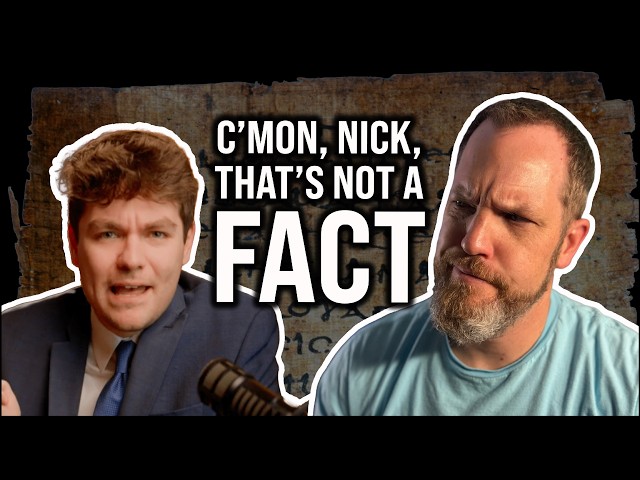
🔗 **Source:** [Why Christianity Is True](https://www.youtube.com/watch?v=OPAX6xV6LEs)
> [!note]+ Document Notes
> tags: [biblical-scholarship, christian-apologetics, historical-jesus, resurrection-claims, misinformation-tactics]
> author: Dan McClellan
> source: Dan McClellan (YouTube)
> reference: https://www.youtube.com/watch?v=OPAX6xV6LEs
> date created: 2026-09-28 09:05
>
> > [!info] Generated analysis — not the author's words. Sections below are machine-written
> > from the captured source. Only text inside `> [!quote]` blocks is verbatim from the author.
> > Do not quote or attribute any other line to the named author.
>
> > [!warning] Auto-caption artifacts. "Martyred" renders as "martyed" throughout. "Agrippa"
> > renders as "Agria." "Clement" is lowercased and unpunctuated ("first clement"). "Acts
> > 12:1-2" renders as "Acts 12:es 1-2." "Infamous" renders as "inf famousamous." The closing
> > line "that's it for this video, this has been [name]" renders as "the fit for this video,
> > it's been Bishop" — the sign-off name is unresolved and does not match any name in the
> > video description. Verify names and citations before quoting.
>
> # 🏷️ Title: Why Christianity is true
>
<!-- deep-read:sections start -->
## 🧭 Table of contents
- [📝 Summary](#-summary)
- [📖 Main content](#-main-content)
- [🗒️ Notes](#️-notes)
- [📚 References](#-references)
- [🗣️ Paraphrase](#️-paraphrase)
- [📰 Newsletter](#-newsletter)
- [✅ Action items](#-action-items)
- [🧪 Hypotheses](#-hypotheses)
- [📊 Methodology](#-methodology)
- [❓ Questions](#-questions)
- [🔮 Future research](#-future-research)
- [💡 Implications](#-implications)
- [🧠 Learning styles assessment](#-learning-styles-assessment)
- [📊 Accessibility assessment](#-accessibility-assessment)
- [🌍 DEIB assessment](#-deib-assessment)
- [✅ Logical validity](#-logical-validity)
- [🛡️ DARVO analysis](#-darvo-analysis)
- [🎯 Conclusion](#-conclusion)
- [🔄 Refactor Appendix](#-refactor-appendix--why-christianity-is-true)
### 🔗 Quick reference
- Source: https://www.youtube.com/watch?v=OPAX6xV6LEs (Dan McClellan, 8:43, published 2026-09-27)
- The transcript never names the person in the clip McClellan is reacting to. McClellan characterizes them, later in the video, as someone "well known indeed inf famousamous for spreading idiotic conspiracy theories" — McClellan's characterization, not an independently sourced identification.
- Named in the transcript: James the son of Zebedee, John, Herod Agrippa (captioned "Agria"), Peter, and a reference to "first clement" (1 Clement).
- A second, unrelated announcement closes the video: a members-only livestream with Data Overdogma podcast co-host Dan Beecher, Sunday September 27 at 7pm Mountain.
## 📝 Summary
- **What happened.** Dan McClellan, on the host's own YouTube channel, plays and responds line by line to a clip of someone arguing that Christianity is historically true. The video runs 8:43 and was published 2026-09-27.
- **The claim.** The clip's speaker makes three separate arguments for the historicity of Christianity: (1) 11 of the 12 apostles were martyred by Rome for preaching the resurrection and Christ's divinity, (2) the gospel accounts of the crucifixion and resurrection are not fiction, so they are substantially true, and (3) the resurrection belief could not have spread as far as it did unless it were true, because "hundreds and hundreds of people" witnessed the risen Christ.
- **Why it matters.** Each claim is a common apologetic argument circulated well beyond this one clip. McClellan's response distinguishes what can be dated to early sources from what appears only in later apocryphal or legendary material, which is the actual point of dispute among historians rather than a binary "did it happen or not."
- **Key stakeholders.** McClellan (a biblical scholar reacting on the host's channel), the unnamed clip speaker, and viewers weighing apologetic claims against historical-critical scholarship. Also the Data Overdogma podcast, referenced only for an unrelated livestream announcement.
- **Risks and tradeoffs.** McClellan's own numbers ("2nd through 6th century CE," "nine of the 11") are stated without on-screen citation; McClellan's credentialed authority is doing real work here that a viewer cannot independently check from this video alone. McClellan's language toward the clip's speaker ("idiotic," "asinine," "the foggiest idea") is also strong enough that it risks reading as personal attack rather than argument, even where the underlying point is sound.
- **Bottom line.** The video is a scholar's rebuttal of three stock apologetic arguments, sourced to McClellan's own expertise rather than to on-screen citations, delivered in sharply critical language toward an unnamed target.
## 📖 Main content
- **Claim 1: apostolic martyrdom as evidence.** The clip speaker asserts that 11 of the 12 apostles were martyred by the Roman Empire specifically for preaching the resurrection and Christ's divinity, offered as support for Christianity's truth. McClellan's rebuttal turns on dating: nine of the eleven traditional martyrdom accounts appear only in apocryphal narratives from the 2nd through 6th centuries CE, material McClellan says is "very clearly ahistorical" on its face and that even the person citing it would reject as history elsewhere. McClellan allows two exceptions as "historically plausible to likely": James the son of Zebedee, whose death by Herod Agrippa is recorded in Acts 12, and Peter, whose martyrdom is only suggested by a passage in 1 Clement and not discussed in detail until 2nd-to-4th-century sources. McClellan's conclusion is that calling this a "fact" is choosing to assert dogma, since even the two plausible cases aren't explicitly tied in the sources to preaching the resurrection specifically.
- **Claim 2: the gospels aren't fiction, so they're true.** The clip speaker argues the gospel narratives could not simply be invented fiction. McClellan agrees with the narrow claim and disagrees with what it's used to prove: McClellan says almost no historian claims the gospels are pure invention, and separately, the crucifixion is about as settled as ancient history gets. The actual point of scholarly dispute, McClellan says, is narrower and specific: the resurrection, for which McClellan says there is no good historical evidence. McClellan's account of *why* resurrection belief exists rests on early followers interpreting dreams, hallucinations, or other experiences as visitations by the risen Jesus, with the supernatural elements accreting onto a historical core as tradition and legend.
- **Claim 3: the belief couldn't have spread that far unless it were true.** The clip speaker's third argument treats geographic spread itself as evidence of truth, backed by a claim that Christ "appear[ed] to hundreds and hundreds of people" after the resurrection. This is where McClellan's tone sharpens. McClellan calls it "the most asinine part of this entire video," characterizes the speaker as someone "well known indeed inf famousamous for spreading idiotic conspiracy theories," and argues the underlying logic requires a "metaphysical property of veracity" that listeners could supposedly detect intuitively — which McClellan rejects outright. McClellan's counter-model: stories spread because they're interesting, useful, or meaningful, independent of whether they're true, and McClellan generalizes this to false claims spreading "all the time."
- **Who the target is, and what isn't established here.** The transcript gives no name for the clip's speaker. McClellan's claim that this is a known, "infamous" spreader of "idiotic conspiracy theories," and McClellan's reference to "the movements of which they are a part," are McClellan's own characterization inside this video — nothing in the transcript itself independently verifies who this is or confirms the characterization. McClellan's closing line about "naive white Christian nationalists" describes an audience McClellan believes this content targets, not a claim made by the clip's speaker.
- **Uncertainties and unsourced numbers to flag.** "11 out of the 12 apostles" (the clip speaker's figure), "hundreds and hundreds of people" (the clip speaker's figure for resurrection witnesses), and McClellan's own "nine of the 11," "2nd through 6th century CE," and the count of named authors discussing Peter's death are all stated without an on-screen source. None of these numbers can be checked from the video alone.
- **The closing segment is unrelated content.** After the reaction ends (00:07:16), McClellan pivots to announcing a members-and-Patreon-only livestream with the host's Data Overdogma podcast co-host Dan Beecher, for the evening the video was posted. This is promotional and not part of the historical argument.
## 🗒️ Notes
#### ⏱️ [00:00:00](https://www.youtube.com/watch?v=OPAX6xV6LEs&t=0) Claim 1 — apostolic martyrdom
- The clip speaker's claim, mid-sentence in the caption stream, cued by McClellan's own "all right let's see it":
> [!quote]
> supported by the fact that 11 out of the 12 apostles were martyed by the Roman Empire defending the resurrection of Christ and his divinity.
- McClellan's rebuttal opens immediately in the same breath:
> [!quote]
> So in absolutely no sense whatsoever is this a fact.
- McClellan's reasoning: nine of the eleven traditional martyrdoms rest only on 2nd-to-6th-century apocryphal narratives McClellan calls "very clearly ahistorical," and those narratives don't tie the deaths to preaching the resurrection or divinity specifically.
- Two exceptions McClellan grants as plausible-to-likely: James (son of Zebedee, brother of John), killed by Herod Agrippa per Acts 12, and Peter, supported only by a suggestive line in 1 Clement, with detailed martyrdom accounts not appearing until 2nd-4th century authors.
- McClellan's summary judgment, quoted below in Logical validity: treating the 11-martyrdom claim as fact is "choosing to accept a dogmatic position and then asserting that dogmatic position as a fact."
#### ⏱️ [00:02:54](https://www.youtube.com/watch?v=OPAX6xV6LEs&t=174) Claim 2 — the gospels aren't fiction
- The clip speaker's claim:
> [!quote]
> So historically, I just I don't think it makes sense that all the gospel stories are made up, that the crucifixion, resurrection was made up, that it it was all this elaborate work of fiction.
- McClellan agrees almost no historian holds that extreme position, and reframes what the real scholarly dispute is:
> [!quote]
> What most people who have any competent grasp of how history works would say is that the gospel stories are mostly tradition and legend
- McClellan separates two claims that the clip speaker runs together: the crucifixion is close to historical consensus ("very few people ... deny that"); the resurrection is "the primary point of contention" with, in McClellan's view, no good historical evidence for it.
- McClellan's account of the resurrection belief's origin: early followers interpreting dreams, hallucinations, or other experiences as post-death visitations, which then generated spreading stories — a historical core with legendary and supernatural material layered on top.
#### ⏱️ [00:05:04](https://www.youtube.com/watch?v=OPAX6xV6LEs&t=304) Claim 3 — spread implies truth
- The clip speaker's claim, spanning the same paragraph as McClellan's reaction to it:
> [!quote]
> And I also don't think it could have spread that far if it wasn't based on the truth.
> [!quote]
> Christ did appear to hundreds and hundreds of people after the resurrection and um so I I believe it's history.
- This is McClellan's sharpest reaction in the video:
> [!quote]
> So this is perhaps the most asinine part of this entire video.
- McClellan's characterization of the speaker (McClellan's own claim, not independently verified in this transcript):
> [!quote]
> This is an individual who is well known indeed inf famousamous for spreading idiotic conspiracy theories far and wide
- McClellan's counter-argument: the claim implicitly requires a "metaphysical property of veracity" that a hearer intuitively detects, which McClellan rejects; McClellan's replacement model is that stories spread because they're interesting, useful, or meaningful, not because they're true, and "false claims spread all the time."
- McClellan extends the characterization to "the movements of which they are a part," calling that a "tertiary fringe part" built on "spreading false and indeed absolutely idiotic claims."
#### ⏱️ [00:07:16](https://www.youtube.com/watch?v=OPAX6xV6LEs&t=436) Close of the reaction and an unrelated announcement
- McClellan's final line on the reacted clip names an intended audience for this kind of content, as McClellan's own assessment:
> [!quote]
> They're just trying to exploit the gullibility of a lot of naive white Christian nationalists out there in the English-speaking world.
- The sign-off itself is caption-garbled and unresolved:
> [!quote]
> And the fit for this video, it's been Bishop.
- McClellan then pivots, with no transition beyond that line, to promoting a members/Patreon-only livestream that same evening (Sunday, September 27, 7pm Mountain) with Data Overdogma podcast co-host Dan Beecher. McClellan explains the access mechanics (Patreon patrons or YouTube channel members, not plain subscribers) and repeats the time and date through the video's end at 00:08:43. This segment is unrelated to the historical claims addressed above.
## 📚 References
The transcript itself contains no links; the following come from the video description or are primary sources for named entities.
- Acts 12:1-2 (New Testament) — the account of James's death at Herod Agrippa's hands, cited by McClellan as the more historically plausible of the two martyrdoms McClellan accepts
- 1 Clement — the early text McClellan cites as the earliest (and only suggestive, not detailed) source for Peter's martyrdom
- Dan McClellan's socials, per the captured video description: [TikTok](https://www.tiktok.com/@maklelan), [Instagram](https://www.instagram.com/maklelan), [Threads](https://www.threads.com/@maklelan), [Facebook](https://www.facebook.com/daniel.o.mcclellan), [X](https://x.com/maklelan), [BlueSky](https://bsky.app/profile/maklelan.bsky.social), [Linktree](https://linktr.ee/maklelan)
- McClellan's book, "The Bible Says So," per the description — the description's link is truncated in the captured metadata (`https://us.macmi...`) and is not reproduced here as a working URL
- Data Overdogma podcast and its Patreon/YouTube membership, named in the closing announcement but not linked in the captured description
## 🗣️ Paraphrase
- **The setup.** McClellan reacts, in real time, to a clip of someone arguing for Christianity's historical truth, addressing three of that person's arguments in sequence.
- **On the apostles' martyrdom.** The claim that 11 of 12 apostles died for preaching the resurrection rests almost entirely on centuries-later apocryphal stories. Only two deaths — James and Peter — have any earlier or more plausible support, and even those aren't explicitly tied to preaching the resurrection specifically. Calling the rest "fact" is asserting dogma as history.
- **On the gospels not being fiction.** Almost no historian says the gospels are pure invention — that's not the real debate. The crucifixion is close to settled history. The resurrection is the actual point of contention, and McClellan says there's no good historical evidence for it; belief in it most likely grew from early followers interpreting dreams or other experiences as post-death appearances.
- **On spread implying truth.** The claim that the belief couldn't have spread so far unless true assumes some intuitable "truth signal" travels with a story. McClellan rejects that outright: stories spread because they're interesting or useful, and false claims spread constantly. McClellan adds a sharp personal characterization of the speaker as a known spreader of conspiracy theories, which the transcript doesn't independently substantiate.
- **The close.** McClellan frames the target audience for this kind of apologetic content as people McClellan considers gullible and politically aligned with Christian nationalism, then pivots to an unrelated livestream promotion for McClellan's own podcast.
## 📰 Newsletter
**A biblical scholar takes apart three viral arguments for "why Christianity is true" — and the video is worth watching for the historical method, even where the tone gets heated.**
Dan McClellan spends 8:43 responding line by line to someone else's clip making the case for Christianity's historicity. Three claims, three rebuttals, and one useful lesson in each: check the dating of your sources before you call something a fact.
**Claim one:** 11 of the 12 apostles were martyred by Rome for preaching the resurrection. McClellan's answer is about dating, not belief: nine of those eleven traditions come only from apocryphal texts written centuries later, material "very clearly ahistorical" on its own terms. McClellan will grant two as plausible — James (Acts 12) and Peter (a suggestive line in 1 Clement, detailed accounts not until much later) — and even those aren't explicitly linked in the sources to preaching the resurrection specifically. McClellan's line: calling the rest fact is "choosing to accept a dogmatic position and then asserting that dogmatic position as a fact."
**Claim two:** the gospels aren't fiction, so they're true. McClellan actually agrees with the first half — almost no historian thinks the gospels are pure invention — and uses that agreement to relocate the real dispute: the crucifixion is close to consensus history, and the resurrection is where the actual disagreement lives, with (in McClellan's assessment) no good historical evidence for it. McClellan's account of where the belief came from: early followers interpreting dreams or other experiences as the risen Jesus appearing to them, a historical core with legend and the supernatural layered on top.
**Claim three** is where the video gets sharp. The idea that belief couldn't have spread that far unless it were true, backed by "Christ did appear to hundreds and hundreds of people," draws McClellan's harshest line in the video — McClellan calls it "the most asinine part of this entire video" and describes the speaker as someone "well known indeed infamous for spreading idiotic conspiracy theories." McClellan's counter is straightforward: stories spread because people find them interesting, useful, or meaningful, not because some detectable truth-signal travels with them. False claims spread constantly too.
Worth flagging for anyone sharing this: the transcript never names who McClellan is responding to, and McClellan's characterization of them as "infamous" and part of a "tertiary fringe" movement is McClellan's own claim inside the video, not something the clip or this transcript independently establishes. McClellan's own historical figures (source dates, counts of authors) also arrive without on-screen citation — which doesn't make them wrong, but it does mean a viewer is trusting McClellan's credentials rather than checking a source on screen.
The video closes with an unrelated plug: a members/Patreon-only livestream with McClellan's Data Overdogma podcast co-host Dan Beecher.
Links: [Dan McClellan's Linktree](https://linktr.ee/maklelan) · [Acts 12](https://www.biblegateway.com/passage/?search=Acts+12) · [video](https://www.youtube.com/watch?v=OPAX6xV6LEs)
## ✅ Action items
#### DevRel
- Developer advocacy: not applicable to this source; nearest relevance is the general lesson that a rebuttal built on source dating is more durable than one built on credentialed assertion alone.
- Education: the "check when the source was written, not just what it says" method here is directly reusable for teaching source evaluation, in or out of religious contexts.
- Developer experience: not applicable to this source.
- Developer marketing: not applicable to this source.
- Community management: the "stories spread because they're interesting, not because they're true" framing is directly relevant to any community fighting misinformation spread through emotionally resonant claims.
- Internal/external/cross-project: not applicable to this source.
#### OSPO
- Policy & Governance: not applicable to this source.
- License Compliance: not applicable to this source.
- Security Management: not applicable to this source.
- Software Inventory: not applicable to this source.
- Developer Support: not applicable to this source.
- Community Engagement: not applicable to this source.
- Strategic Alignment: not applicable to this source.
#### Community
- Maintainers: not applicable to this source.
- Contributors: not applicable to this source.
- Sponsors: not applicable to this source.
- Ecosystem: the pattern of claims spreading through emotional resonance rather than accuracy, named explicitly here, generalizes to how misinformation moves through any open community and is worth naming when moderating it.
#### WordPress
- Core: not applicable to this source.
- Core Performance: not applicable to this source.
- Core AI: not applicable to this source.
- **Core Program Team:** not applicable to this source.
- Mobile: not applicable to this source.
- Playground: not applicable to this source.
- Community: not applicable to this source.
- Training: the source-dating method (check when a claim was first attested, not just whether it's ancient) is reusable in any training material on evaluating sources.
- Marketing: not applicable to this source.
- Support: not applicable to this source.
- Design: not applicable to this source.
- Documentation: not applicable to this source.
- Photos: not applicable to this source.
- TV: not applicable to this source.
- Polyglots: not applicable to this source.
- Accessibility: the auto-caption failures on proper nouns and citations (see Accessibility assessment) are a direct, reusable example for why caption review matters before publishing.
- Meta: not applicable to this source.
- CLI: not applicable to this source.
- Hosting: not applicable to this source.
- Tide: not applicable to this source.
- Openverse: not applicable to this source.
- Themes: not applicable to this source.
- Plugins: not applicable to this source.
#### The WPOCC
- Programs: not applicable to this source.
- Projects: not applicable to this source.
- Funding experiments: not applicable to this source.
#### FAIR
- Technical independence: not applicable to this source.
- Policies and covenants: not applicable to this source.
- Productized governance artifacts: not applicable to this source.
## 🧪 Hypotheses
- Textual analysis of extant early Christian sources will show that specific martyrdom accounts for the majority of the twelve apostles first appear only in texts dated to the 2nd century CE or later, consistent with McClellan's "nine of the 11" claim.
- A survey of historians of early Christianity who do not identify as apologists will show near-unanimous agreement that the crucifixion is historical, alongside a substantial minority-to-majority position rejecting the resurrection as a historical event, consistent with McClellan's framing of where the actual dispute lies.
- Content-spread studies (applying methods like those used for online misinformation research) will show that a claim's emotional resonance and narrative utility predict its historical spread better than any measure of its truth-value, consistent with McClellan's "stories spread because people find them interesting" model.
- If the unnamed clip speaker is identifiable, a review of their published output will show a pattern of claims outside mainstream historical or scientific consensus, supporting or undermining McClellan's "infamous for spreading idiotic conspiracy theories" characterization.
- Locating the original source video would show whether all three claims addressed here come from one continuous speaker or from a compilation of separate individuals, which this transcript alone cannot determine.
## 📊 Methodology
- **Martyrdom-dating claim.** A systematic review of patristic and apocryphal literature (Acts of Peter, Acts of Andrew, and similar texts) with each apostle's earliest attested martyrdom account dated and tabulated against McClellan's "2nd through 6th century" claim.
- **Historical consensus claim.** A structured survey of scholars in relevant academic societies (e.g., the Society of Biblical Literature) asking separately about the historicity of the crucifixion and the historicity of the resurrection, to test whether McClellan's split reflects genuine consensus.
- **Spread-implies-truth claim.** Comparative case studies of well-documented false claims that spread widely (using existing misinformation-diffusion literature) against claims of similar age and reach that are true, to test whether spread correlates with truth-value at all.
- **Speaker identification.** Locating and viewing the full original video (not just McClellan's transcript) to identify the clip's speaker and confirm or disconfirm the "infamous," "conspiracy theories" characterization against that person's own published record.
- **Data sources.** Patristic and apocryphal texts in critical editions; academic society membership surveys; published misinformation-spread research; the original reacted-to video if it can be located.
- **Limits.** This transcript supplies none of McClellan's source citations on screen, and none of the clip speaker's sourcing either. Every historical figure in this video (dates, counts) is asserted, not shown, from this transcript alone.
## ❓ Questions
- Who is the person in the reacted-to clip, and does McClellan's "infamous for spreading idiotic conspiracy theories" characterization hold up against their actual published record?
- Are all three claims addressed in this video from one continuous speaker in one original video, or a compilation of separate clips from different people?
- What are McClellan's actual sources for "2nd through 6th century CE" and "nine of the 11" — is there a citation available outside this video?
- Does the Acts 12 account of James's death, or the 1 Clement reference to Peter's, actually tie either death to preaching the resurrection specifically, as McClellan implies is missing from the other nine traditions?
- What historical or sociological evidence exists for McClellan's claim that stories spread on interest and utility rather than truth-value, beyond the assertion made in this video?
- Is there a meaningful line between McClellan's scholarly rebuttal and the ad hominem elements of McClellan's language ("idiotic," "asinine," "the foggiest idea"), and does that language undercut or simply accompany the historical argument?
## 🔮 Future research
- A dated catalog of every apostolic martyrdom tradition, from earliest attestation to latest embellishment, as a reusable reference for checking claims like the one addressed here.
- Comparative research on why "geographic or temporal spread proves truth" remains a persistent lay argument despite running counter to established misinformation research.
- Research on the rhetorical effectiveness of scholarly rebuttal videos that combine sourced historical correction with sharply critical characterization of the person being rebutted — does the sharpness help or hurt persuasion of an undecided viewer?
- Investigation into the specific "tertiary fringe" movement McClellan references but does not name, and its relationship to the "Christian nationalist" audience McClellan identifies as the intended target of this kind of content.
## 💡 Implications
- **Practice.** Anyone evaluating an apologetic historical claim can reuse McClellan's method here directly: ask when the source claiming the event was actually written, not just what event it claims happened.
- **Policy.** Not directly applicable; the closest policy-adjacent point is that platforms hosting reaction content built on unnamed, uncited targets create a verification burden for viewers that the video itself does not resolve.
- **Security.** Not applicable to this source.
- **Education.** The crucifixion/resurrection distinction McClellan draws is a reusable teaching point for anyone explaining what "historians generally agree on" actually means in the study of early Christianity, versus what remains genuinely contested.
- **Funding.** The video's closing pivot to a Patreon/membership-gated livestream is a reminder that even scholarly-rebuttal content on this platform is monetized through the same membership mechanisms as the content it's rebutting.
## 🧠 Learning styles assessment
- Reading level estimate: conversational but term-dense; Flesch-Kincaid Grade Level approximately 10-11. Unglossed terms include "apocryphal," "patristic-adjacent" source references, "1 Clement," and "dogmatic," alongside long, run-on spoken sentences typical of unscripted reaction commentary.
#### 👀 Visual learners
- Present: minimal. This is a straight-to-camera or voiceover reaction with no on-screen text, timeline, or source citations shown.
- Improve: a simple on-screen timeline of when each martyrdom tradition was first attested would make the dating argument, which is the crux of the whole video, visually legible instead of purely verbal.
#### 🔊 Aural learners
- Present: strong. Clear single-narrator delivery, conversational pacing, no music competing with the argument.
- Improve: the clip audio and McClellan's own commentary appear to interleave in the same caption stream with no spoken signposting ("here's what they said" / "here's my response"), which is harder to follow by ear alone than it would be with a verbal marker at each transition.
#### 🗣️ Verbal learners
- Present: good. McClellan explains the reasoning rather than just asserting conclusions, especially on the martyrdom and spread-of-belief arguments.
- Improve: "apocryphal," "1 Clement," and "dogmatic" are used without definition; a first-time viewer without background in early Christian studies would need to look them up.
#### 🧩 Kinesthetic learners
- Present: none. There is no exercise, checklist, or reproducible task offered.
- Improve: a linked reading list of the specific apocryphal martyrdom texts named would let an interested viewer go check the dating claim themselves.
#### 🧠 Logical learners
- Present: this is the video's strength. The martyrdom argument in particular is structured as a clear premise-to-conclusion chain: sources are dated, unreliable sources are set aside, and the remaining evidence is graded by plausibility rather than treated as uniform.
- Improve: zero citations are shown on screen for any of McClellan's own historical claims, so a logical learner has premises to evaluate but no way to check them from the video alone.
#### 🧑🤝🧑 Social learners
- Present: minimal within this video; the reaction format implies an ongoing public conversation, but no comments, community response, or discussion prompt appears in the transcript.
- Improve: the closing announcement about a members-only livestream is itself a social/community mechanism, but it's unrelated to the video's actual argument and offers no way to discuss the historical claims specifically.
#### 🧘♀️ Solitary learners
- Present: adequate. The video is short and self-contained enough to watch and absorb alone.
- Improve: because the clip speaker's claims and McClellan's rebuttals interleave without a clear verbal marker, a solitary learner reviewing this without visual chapter markers may need to rewatch sections to be sure who is saying what.
#### 🌿 Naturalistic learners
- Present: none; not a relevant frame for this source.
- Improve: not applicable to this source.
## 📊 Accessibility assessment
#### Screen reader semantics
- Present: not evaluable for a video artifact.
- Improve: a description-box outline distinguishing the three claims addressed, with timestamps, would help any assistive-technology user jump directly to the claim they came for.
#### Keyboard navigation
- Present: inherits YouTube's player controls.
- Improve: no chapter markers exist across the three distinct claims and the unrelated closing announcement; chapters would materially help navigation given the video's length and topic shift.
#### Contrast and readability
- Present: not evaluable; the transcript indicates a voiceover/talking format with no visible on-screen text or graphics described.
- Improve: not applicable to this source's apparent format.
#### Text resizing and reflow
- Present: not applicable to video content.
- Improve: applies to any linked source material, none of which is provided on screen.
#### Media and captions
- Present: auto-generated captions, unreliable on load-bearing proper nouns and citations: "martyred" as "martyed," "Agrippa" as "Agria," "Acts 12:1-2" as "Acts 12:es 1-2," "1 Clement" lowercased and unpunctuated, "infamous" as "inf famousamous."
- Improve: for a video whose entire argument depends on specific source names and dates, uncorrected captions materially undermine the ability to verify or even locate the sources being discussed. A corrected transcript would make the citations checkable.
#### Forms and interactions
- Present: not applicable to the source video.
- Improve: not applicable to this source.
#### Standards reference
- WCAG 2.2 AA notes: 1.2.2 Captions is met only nominally, with errors on nearly every proper noun and citation, which is a functional failure for a source-dependent argument even where the caption track technically exists. 2.4.5 Multiple Ways is unmet: no chapters, no transcript offered by the channel, no outline distinguishing the three claims addressed.
## 🌍 DEIB assessment
#### Cultural breadth
- Present: minimal; the video is entirely within an English-language, US-centered Christian-apologetics-versus-secular-scholarship frame.
- Improve: McClellan's closing reference to "Christian nationalists... in the English-speaking world" gestures at a broader political and cultural context but does not develop it; a viewer outside that specific US discourse gets no framing for why it matters.
#### Inclusive language
- Present: McClellan avoids gendered or exclusionary language in the historical argument itself.
- Improve: the characterization of the unnamed clip speaker's presumed audience as "naive white Christian nationalists" is a strong, racially and politically specific characterization presented as fact rather than flagged as McClellan's own assessment; readers relying on this analysis should treat it as McClellan's claim, not an established finding.
#### Neurodiversity support
- Present: single clear narrator, steady pace.
- Improve: the interleaving of the clip speaker's words and McClellan's response within the same unmarked caption stream, with no verbal or visual signpost at the transition, adds real cognitive load to tracking who is speaking.
#### Representation
- Present: two voices are represented (the clip speaker and McClellan), though only one is named or credentialed.
- Improve: the unnamed clip speaker has no opportunity to respond within this video, and their argument is represented only in the fragments McClellan chooses to address.
#### Psychological safety
- Present: McClellan is direct about the limits of the evidence for the claims McClellan accepts (e.g., "we don't really have a good discussion of that from anywhere near the time period"), which models honest uncertainty.
- Improve: the language directed at the unnamed clip speaker ("idiotic," "asinine," "the foggiest idea," "exploit the gullibility") is sharply personal in register. For any viewer who holds views closer to the clip speaker's, or who is themselves deconstructing from a similar background, that register may read as contemptuous of the person rather than critical of the claim, which can foreclose rather than invite engagement with the historical argument itself.
## ✅ Logical validity
#### Strong reasoning
- **The martyrdom-dating argument (00:00:00).** McClellan's structure is sound: a claim's reliability depends on how early it's attested, not merely on its antiquity or its being "traditional." Grading the two plausible martyrdoms (James, Peter) differently from the other nine, based on source dating rather than uniform acceptance or rejection, is a genuinely careful move.
- **Separating the crucifixion from the resurrection (00:02:54).** Treating "the gospels are not pure fiction" and "the resurrection specifically is historically well-evidenced" as two different claims, rather than one bundled claim, is the strongest piece of reasoning in the video — it isolates the actual point of dispute instead of letting a broad claim stand in for a narrow one.
- **The spread-mechanism counter-model (00:05:47-00:06:32).** Proposing that narrative interest, utility, and meaning explain spread at least as well as truth-value, and backing it with the observation that false claims demonstrably spread "all the time," is a genuine alternative explanation rather than a bare denial.
#### Fallacies
- **Argument from consequences / affirming the antecedent loosely, attributed to the clip speaker (00:05:04).** *Location:* "I also don't think it could have spread that far if it wasn't based on the truth." *Weakness:* wide spread is treated as sufficient evidence of truth, without ruling out the alternative explanations (interest, utility, social reinforcement) that McClellan raises. *Fix:* the claim would need independent evidence that spread specifically correlates with truth-value, which neither speaker in this video supplies.
- **Unsupported specific figures, on both sides (00:00:00 and 00:05:04).** *Location:* "11 out of the 12 apostles," "hundreds and hundreds of people," and McClellan's own "nine of the 11," "2nd through 6th century CE." *Weakness:* precise-sounding numbers are stated by both speakers without an on-screen citation for any of them. *Fix:* a citation card or linked source list for each figure would let a viewer check rather than trust either side.
- **Possible ad hominem framing, attributed to McClellan (00:05:04-00:07:16).** *Location:* "the most asinine part of this entire video," "an individual who is well known indeed infamous for spreading idiotic conspiracy theories," "this person doesn't have the foggiest idea what they're talking about." *Weakness:* these lines characterize the speaker's credibility and character rather than engage further with the specific claim; even where the underlying historical point (stories spread on interest, not truth-value) is separately well-argued, bundling it with character attack risks the argument being dismissed as personal rather than evaluated on its merits. *Fix:* the historical counter-argument stands on its own without the characterization; separating them would strengthen rather than weaken the rebuttal.
#### Tone of voice
- Measured and source-grounded through the martyrdom and gospel-historicity sections, shifting to openly contemptuous once the third claim is addressed. McClellan signals the shift ("this is perhaps the most asinine part of this entire video") before the sharpest language arrives, so the tone change is not accidental. The register throughout is that of a specialist correcting claims McClellan considers both factually wrong and, by the third claim, made in bad faith or for cynical audience-building — a combination that makes the video read less like neutral historical correction and more like a public callout of a specific, if unnamed, target.
## 🛡️ DARVO analysis
- **Deny:** Not applicable in the classic sense. No party in this transcript is responding to an accusation of wrongdoing made against them; the clip speaker's assertions are self-contained apologetic claims, not a denial of anything McClellan raised first.
- **Attack:** Present in one direction, worth naming precisely because DARVO usually describes it running the other way. McClellan attacks the credibility of the clip speaker directly and personally ("infamous for spreading idiotic conspiracy theories," "doesn't have the foggiest idea," "exploit the gullibility"), rather than confining the critique to the claim. This is credibility-undermining rhetoric, but it is not a DARVO "Attack" in the technical sense, since DARVO describes an accused party attacking an accuser's credibility after being confronted — here McClellan is the one initiating the critique, and the unnamed speaker is not present to respond.
- **Reverse victim/offender:** Not present. Neither party frames themselves as a victim of the other's accusation; there is no accusation-and-reversal structure in this transcript at all.
- **Assessment:** The DARVO framework does not map cleanly onto this video, because it isn't an accusation-response exchange — it's a one-directional critique of claims (and, in the third segment, of the claimant) with no reply from the person being criticized present in this transcript. Retained per template requirement; the finding is that the frame doesn't apply, though the one-directional, unanswered credibility attack in the third segment is worth noting on its own terms regardless of the DARVO label.
## 🎯 Conclusion
- **Bottom line.** McClellan rebuts three specific apologetic claims for Christianity's historicity by separating what's attested early from what's attested only in later, legendary material — a genuinely useful distinction, delivered alongside increasingly personal language toward an unnamed target as the video goes on.
- **The idea to keep.** Check when a source claiming an event happened was actually written, not just whether the claimed event itself sounds ancient. That's the through-line of all three rebuttals here.
- **The caution worth keeping too.** None of the specific historical figures in this video, on either side, come with an on-screen citation. Treat "nine of the 11," "2nd through 6th century CE," and "hundreds and hundreds of people" as claims to verify independently, not settled numbers.
- **The tone worth naming.** The video's harshest language arrives once it reaches the third claim, aimed at a person the transcript never names. Readers who find that language uncomfortable, including anyone working through their own history with high-control religious or apologetic environments, can take the historical argument on its own terms without needing to adopt the characterization of the person it's aimed at.
- **Practical next step for readers.** If you want to check any of the three claims yourself, start with Acts 12 for James, 1 Clement for Peter, and a general history of early Christian apocryphal literature for the other nine martyrdom traditions — all namable, checkable starting points that this video itself does not link.
## 🔄 Refactor Appendix — Why Christianity is true
> Density: 2–5 Literature atoms (H3), 0–3 Permanent candidates (H4).
> Defaults: 3 Literature, 1 Permanent. Resonance filter: if you can't
> articulate in one line why a claim matters, drop it.
>
> Konik claim-header rules: present tense, declarative, ≤10 words when
> possible, searchable, unique, mirrors annotation focus if present.
>
> Atomicity: one declarative sentence per atom. "and"/"also" → split.
>
> Tag pool: #bmf · #addendum · #xref · #articleseed · #storystem · #share · #aphorisms
### 📚 Literature Atoms (H3)
#### [H1] A claim's reliability tracks how early it is attested
> [!quote]
> You're just choosing to accept a dogmatic position and then asserting that dogmatic position as a fact.
**Context & use**:
- ~00:02:13, McClellan's summary judgment on the apostolic-martyrdom claim, after grading nine of eleven traditions as resting only on centuries-later apocryphal sources.
- The method generalizes past this one claim: date the source before evaluating the claim, and grade plausibility by attestation rather than by whether the tradition is old or widely repeated.
**Tags**: #xref #aphorisms
<!-- atomicity: 1 idea ✓ -->
#### [H2] Crucifixion and resurrection are separate historical questions
> [!quote]
> What most people who have any competent grasp of how history works would say is that the gospel stories are mostly tradition and legend
**Context & use**:
- ~00:02:54, McClellan separating "the gospels are not pure fiction" from "the resurrection is historically well-evidenced," which the clip speaker had treated as one claim.
- Isolating the actual point of scholarly dispute from an adjacent, less-contested claim is the strongest reasoning move in the video and is reusable whenever a broad claim is used to smuggle in a narrower, contested one.
**Tags**: #xref #articleseed
<!-- atomicity: 1 idea ✓ -->
#### [H3] Stories spread on interest and utility, not on truth-value
> [!quote]
> Stories spread because people find them interesting or useful or meaningful.
**Context & use**:
- ~00:05:47, McClellan's direct counter to the claim that resurrection belief's spread proves it happened.
- A specific, checkable alternative model to "it spread widely, so it must be true" — and one with independent support in misinformation-spread research outside this video.
**Tags**: #xref #articleseed #aphorisms
<!-- atomicity: 1 idea ✓ -->
### 🧠 Permanent Candidates (H4)
#### [P1] Attestation date, not antiquity, is what makes a historical claim checkable
**Claim** (one sentence, Courtney's voice): A tradition being old tells you nothing about whether it's reliable; what matters is how soon after the claimed event it was first written down.
**Evidence pointer**: [[#H1]]
**Scope & conditions**: Holds for any claim whose evidentiary weight rests on a chain of tradition — martyrdom accounts, oral history, folk etymology, corporate origin stories. Weakens where the claim is about something inherently unattestable either way (private intent, internal states) rather than a datable public event.
**Links**:
- [[Alarm fatigue before adding alarms]] — because contrasts on what makes a signal worth trusting
- [[A count is only a measurement while the counted thing is costly]] — because applies-in the general pattern of checking what a number actually proxies for
- [[Verify feature claims against shipped code, not README]] — because extends the same check-the-source-not-the-story instinct into a different domain
<!-- atomicity: 1 idea ✓ -->
### ✏️ Fleeting Queue
- [F1] Locate the original video McClellan is reacting to, to confirm whether one continuous speaker or a compilation is being addressed #fleeting #inbox
- [F2] Read Acts 12:1-2 and 1 Clement directly as the two sourced martyrdom claims this video accepts as plausible #fleeting #inbox
- [F3] The "spread implies truth" fallacy pattern shows up outside religious apologetics too — worth its own note connecting to misinformation-spread research #fleeting #inbox
### → Things 3 (max 2 actions)
- [ ] Draft the "attestation date, not antiquity, makes a claim checkable" permanent note — professional practice #things
- [ ] Read 1 Clement's Peter reference directly before citing this video's martyrdom claim anywhere #things
<!-- deep-read:sections end -->
📄 **Full text:** [[Full Document Contents/Articles/Why Christianity Is True.md|Why Christianity Is True by Dan McClellan]]
## Highlights
- preaching the resurrection and the divinity of Christ, you're just choosing to assert as historical facts traditions found in texts that are full of very clearly not historical claims. claims that you're going to reject yourself. You're just choosing to accept a dogmatic position and then asserting that dogmatic position as a fact. So, we can't really say any of these things are historical facts. We can say it's likely ([View Highlight](https://read.readwise.io/read/01m3m5ph2wzf439afjcjjj4gmw))
- Note: [H1] A claim's reliability tracks how early it is attested
- Tags: atom/literature/h1
- resurrection was made up, that it it was all this elaborate work of fiction. There are very few people who would say all of the gospel stories and the crucifixion and the resurrection are all an elaborate work of fiction that never happened. What most people who have any competent grasp of how history works would say is that the gospel stories are mostly tradition and legend and some of it is likely rooted in some kind of historical event, but we can't really be ([View Highlight](https://read.readwise.io/read/01m3m5pkzq57k5pzt55856vk5k))
- Note: [H2] Crucifixion and resurrection are separate historical questions
- Tags: atom/literature/h2
- tales whenever and wherever and however they occurred. And the idea must be that the hearer somehow had some metaphysical access to this property and just intuitively realized it was true. And that was the enhancer or the catalyst that allowed it to be spread further. And that's just asinine. Stories spread because people find them interesting or useful or meaningful. And veracity doesn't really have to be a ([View Highlight](https://read.readwise.io/read/01m3m5pphjd30c3nxqmd9seqj4))
- Note: [H3] Stories spread on interest and utility, not on truth-value
- Tags: atom/literature/h3