WordCamp US, 2026
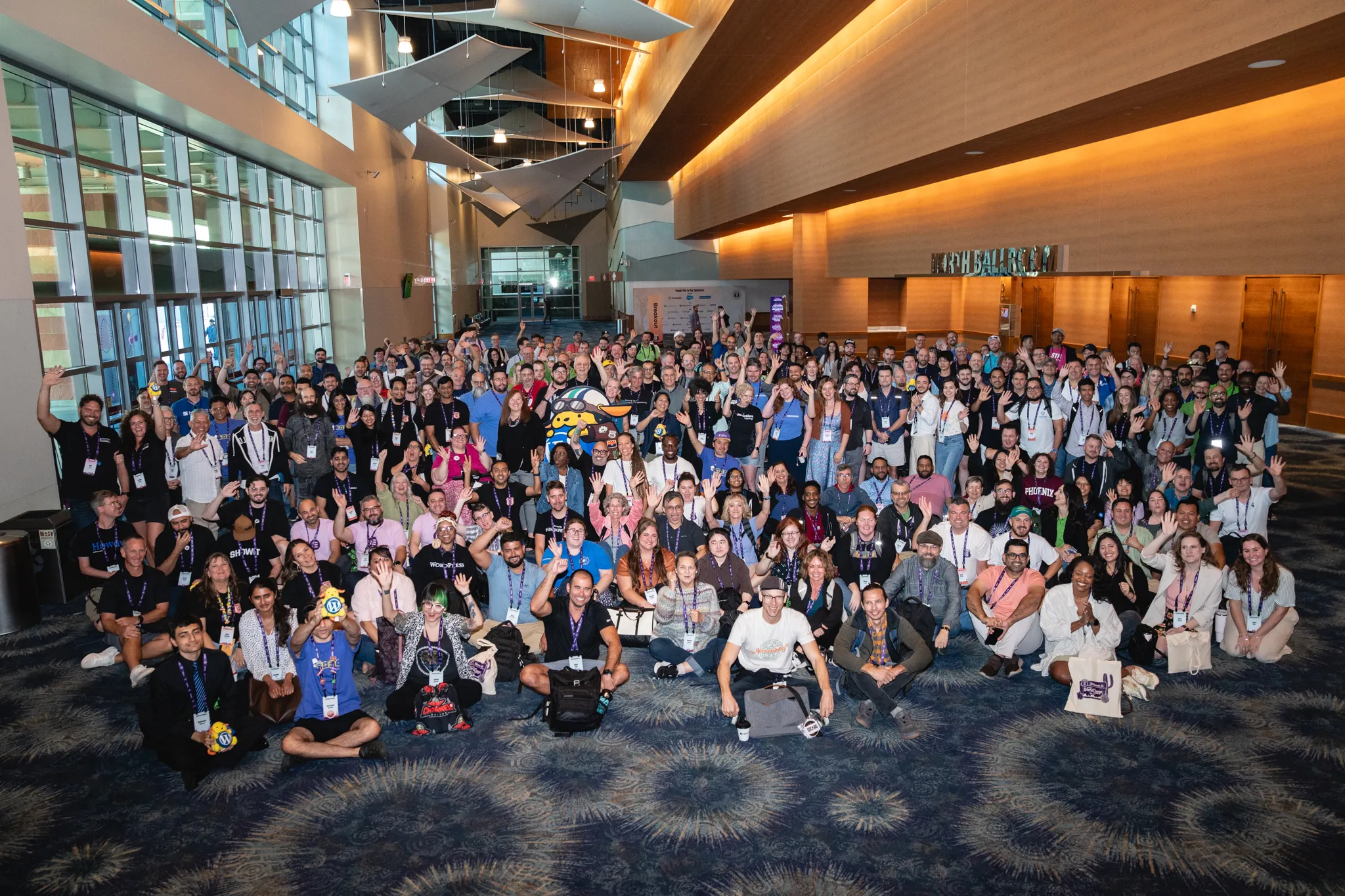
🔗 **Source:** [WordCamp US, 2026](https://topher.how/wordcamp-us-2026/)
> [!note]+ Document Notes
> tags: [wordcamp-us, wordpress-community, contributor-day, wordpress-photos, hosting-industry, ai-assisted-development, event-accessibility]
> author: Topher DeRosia — inferred from site and content; byline not in capture
> source: https://topher.how/wordcamp-us-2026/
> reference: "WordCamp US, 2026" — topher.how, personal event recap
> date created: 2026-08-26 21:45
>
> > [!info] Generated analysis — not the author's words. Sections below are machine-written
> > from the captured source. Only text inside `> [!quote]` blocks is verbatim from the author.
> > Do not quote or attribute any other line to the named author.
>
> # 🏷️ Title: WordCamp US, 2026
>
> **Attribution — inferred, basis stated.** Reader's `author` field reads `topher.how`, a domain, with **no byline in the capture.** The author is **Topher DeRosia**: the site is his, he references **MediaForge** as his business, and he served as **Table Lead for the WordPress Photos project** — all consistent with his long-standing role in the WordPress community. **Reviewer inference from in-text evidence, not a stated byline.**
>
> **Register — and the disclosure matters.** A **short personal event recap**, 647 words, informal and warm. **It is also partly commercial**, and the author says so in the second paragraph: his attendance was sponsored by **xCloud Hosting**, he wore their shirts at the event, and he uses the post to promote a white-label hosting offering he plans to build. **The disclosure is upfront and unambiguous, which is the right handling** — but the post should be read as a sponsored recap, not a neutral report.
>
> **Why it matters here.** Three things, none of which the post treats as its main subject. It contains a **show-floor observation about hosting and AI that complicates the Sanja Grbic / Jesse Friedman episode** from earlier in this batch. It documents a **last-minute structural change to Contributor Day** worth recording. And it includes a **first-hand account of AI-accelerated plugin development in a single day** — the accelerator pattern again, in a WordPress context.
>
<!-- deep-read:sections start -->
## 🧭 Table of Contents
1. Summary
2. Main Content and Notes
3. References
4. Paraphrase
5. Newsletter
6. Action Items
7. Hypotheses
8. Methodology
9. Questions
10. Future Research
11. Implications
12. Learning Styles Assessment
13. Accessibility Assessment
14. DEIB Assessment
15. Logical Validity
16. DARVO Analysis
17. Conclusion
18. Refactor Appendix
19. Template Library
## 🔗 References (in-page)
- **xCloud Hosting** — his sponsor, named and disclosed.
- **MediaForge** — his own business, named as the intended home for a white-label hosting offering.
- **The WordPress Photos project** — the team whose Contributor Day table he led.
- **Michelle Frechette** — credited with the idea for the media-library integration plugin.
- **Matt Galdino** (UI work) and **Kamran Abdul Aziz** (remote, performance) — credited contributors.
- **WP Sprints** — a short video he appeared in.
- **The plugin itself** — stated to be on GitHub and downloadable, **not linked in the captured text.**
- People greeted by first name with photos: Harmony, Arpit G, Isotta, Rocio, Chris, Mayank, Maura, Robert, Anthony, Mikey, Nikhil, Guste, Schalonda, Adnan — and *"A pigeon!"*
## 📝 Summary
**The setting.** WordCamp US 2026, **Phoenix, Arizona, in August.** He opens on the obvious issue: *"Many people were quite wary of the heat, and I know people that didn't even go because of it."*
**Sponsorship, disclosed immediately.** *"I want to start by saying thanks to xCloud Hosting for sponsoring me to WordCamp, I couldn't have gone without them."* He wore their shirts and reports being *"pleasantly surprised by how many people came up to me and told me they had moved (sometimes) hundreds of sites from other hosts to xCloud."*
What he was there promoting: **white-label hosting for freelancers and agencies** — *"Basically you can become a web host with xCloud managing the hard stuff."* He plans to spin this up for MediaForge and make a video about it.
**The hallway track, and the observation that matters.** His favourite track is the informal one. Being there with a host made him attentive to what other hosts were doing:
> *"It looks like hosts are going all in on AI, with site builders, plan management etc. It sort of feels like the way we've always managed hosting (menus, settings, etc.) is passing, and soon we'll simply tell an AI 'Set up a new site with SSL, using Gutenberg and this theme and those plugins' and it'll happen."*
And the self-aware coda: *"As a certified Old Person it feels weird, but I guess everything does when it's new."*
**Contributor Day — the most substantive section.** He was **Table Lead for the Photos Table**, and reports a structural change:
> *"This year they pivoted quite hard just a couple days before the event and decided that rather than have team tables they would have projects, with contributors from many tables."*
**Michelle Frechette proposed** building a plugin to integrate the Photos project into the **WordPress media library.** His reaction and what happened:
> *"I had my doubts we could do it in a day, but AI has really accelerated plugin development, so we dove in. With a single prompt I had a VERY rudimentary plugin running before we even announced what we were building!"*
Credited: **Matt Galdino** for UI work, **Kamran Abdul Aziz** remotely for *"speeding up the entire plugin quite a lot."* Outcome: *"By the end of the day we had a very usable plugin on github… I've added a bunch of new features since then, and it'll go into the WordPress.org plugins repository soon."*
**The heat.** *"I saw it get to 113F. I walked several blocks in it, carrying a backpack. It wasn't that bad. Only once did I sweat, and it wasn't that much."* His comparison: a 69°F, 87%-humidity day in Michigan left him *"drenched in sweat"*, and *"I was much more comfortable with the 113F than the 69F."*
**The close:** *"I had a really great time. It was profitable, it was fun, and I met some great people. Thanks Phoenix!"*
## 📖 Main Content
### 🗒️ Notes
**Setting and framing.**
- **WordCamp US 2026, Phoenix, Arizona, August.**
- *"Many people were quite wary of the heat, and I know people that didn't even go because of it. Read below for my opinion about it."*
- **Note the structure:** the heat is raised in the first paragraph as the thing people are worried about, then deferred to the end and answered from personal experience.
**Sponsorship.**
- *"I want to start by saying thanks to xCloud Hosting for sponsoring me to WordCamp, I couldn't have gone without them."*
- Four xCloud t-shirts, worn at the event.
- *"pleasantly surprised by how many people came up to me and told me they had moved (sometimes) hundreds of sites from other hosts to xCloud."*
- **What he was promoting:** *"white label hosting for freelancers and agencies. It's something I've been meaning to spin up for MediaForge, and something I'll be making a video on in the next couple weeks. Basically you can become a web host with xCloud managing the hard stuff. It's pretty slick. If you want to know more let me know."*
- **Reviewer note:** the disclosure is clear, early, and unambiguous. **The post nonetheless functions partly as sponsor content**, and the migration anecdote is an unverifiable testimonial relayed at the sponsor's benefit.
**The hallway track.**
- *"My favorite track at WordCamps is the Hallway Track. I really love meeting new people, greeting old friends, and learning about what everyone is building and doing."*
- Being there with a host made him attentive to *"both what other hosts were doing, but also what regular people were doing for hosting."*
- **The industry observation:** *"It looks like hosts are going all in on AI, with site builders, plan management etc."*
- **The prediction:** *"It sort of feels like the way we've always managed hosting (menus, settings, etc.) is passing, and soon we'll simply tell an AI 'Set up a new site with SSL, using Gutenberg and this theme and those plugins' and it'll happen."*
- **The self-aware hedge:** *"As a certified Old Person it feels weird, but I guess everything does when it's new."*
- A photo list of people met, by first name, including a joke entry (*"A pigeon!"*).
- Appeared in a short **WP Sprints** video.
**Contributor Day.**
- **Table Lead for the Photos Table.** *"Typically that means I help people get involved with the WordPress Photos project."*
- **The format change:** *"This year they pivoted quite hard just a couple days before the event and decided that rather than have team tables they would have projects, with contributors from many tables."*
- **Reviewer note: this is a real organisational data point** — a shift from **team-based** to **project-based** Contributor Day structure, decided **days before the event.** The post reports it neutrally and doesn't evaluate it.
- **The project:** *"Michelle Frechette had the brilliant idea of building a plugin to integrate the photos project into the WordPress media library."*
- **The AI claim:** *"I had my doubts we could do it in a day, but AI has really accelerated plugin development, so we dove in. With a single prompt I had a VERY rudimentary plugin running before we even announced what we were building!"*
- **Credits:** *"I won't list them all, but I do want to call out Matt Galdino, who did some really great work on the UI. Kamran Abdul Aziz also did some great work remotely, speeding up the entire plugin quite a lot."*
- **Outcome:** *"By the end of the day we had a very usable plugin on github. You can download it and test it now! I've added a bunch of new features since then, and it'll go into the WordPress.org plugins repository soon."*
- A screenshot is referenced. **The GitHub link is not in the captured text.**
**The heat.**
- *"I saw it get to 113F. I walked several blocks in it, carrying a backpack. It wasn't that bad. Only once did I sweat, and it wasn't that much."*
- **The comparison:** *"The week before I left I went to check the mail here in Michigan and came back drenched in sweat. It was 69F, but 87% humidity. I was much more comfortable with the 113F than the 69F."*
- *"If it were only 80 or 90F out there I think it would be very livable."*
**Close.** *"I had a really great time. It was profitable, it was fun, and I met some great people. Thanks Phoenix!"*
## 📚 References
- **The Photos media-library plugin on GitHub** — **the most actionable item here and not linked in the capture.** Stated to be downloadable and testable, with wp.org submission planned.
- **The WordPress Photos project** — the underlying initiative the plugin surfaces into the media library.
- **WP Sprints video** — referenced, not linked.
- **Cross-batch pairing that matters:** the **Sanja Grbic / Jesse Friedman *Impressive Hosting* episode** in this same batch, which argues hosts should *not* differentiate on interface and should converge on shared conventions. **Topher's show-floor observation points the other way** — or at least reports the industry doing so.
- **What's missing:** no link to the plugin, no link to xCloud, no link to the Photos project, and no independent basis for the industry observation beyond hallway conversations.
## 🗣️ Paraphrase
**On the observation that complicates another source in this batch.** From the show floor:
> *"It sort of feels like the way we've always managed hosting (menus, settings, etc.) is passing, and soon we'll simply tell an AI 'Set up a new site with SSL, using Gutenberg and this theme and those plugins' and it'll happen."*
**Read that against the *Impressive Hosting* episode elsewhere in this batch**, where a senior Automattic designer and a WP Cloud lead argued that hosts should **stop trying to differentiate on interface** — *"a toggle switch is a toggle switch and it should work the same everywhere"* — and compete instead on partnerships, technology, and integrations.
**These aren't flatly contradictory, and the way they fit together is the interesting part.** Sanja Grbic's own example was Jetpack shipping AI features **inside existing patterns**: *"we didn't have to come up with new ways of designing interfaces in order to be innovative."* Jesse Friedman's framing was *"being where the user is"* across panel, WP admin, app, and email. **A conversational surface is another "where the user is"** — an additional entry point, not necessarily a replacement for the control layer beneath it.
**But Topher is describing something more radical** — that the settings-and-menus layer itself *"is passing."* **If that's right, the amortised-convention argument gets harder**, because the thing conventions were amortising is the interface people stop touching. **If it's wrong** — and it's one person's read of a trade-show floor — **then hosts are building a natural-language veneer over controls that still need to be conventional when anyone drops into them.**
**Worth holding as an open question rather than a finding**, and worth noting that **the two sources have opposite incentives**: the *Impressive Hosting* pair work for a company selling a shared design system and an API platform; Topher was at the event on a host's dime, looking at what hosts are shipping.
**On the plugin story, which is the batch's accelerator pattern in a WordPress setting.** *"I had my doubts we could do it in a day… With a single prompt I had a VERY rudimentary plugin running before we even announced what we were building!"*
**Note the shape of it:** an experienced developer with a clear, well-scoped requirement, working in a domain he knows deeply, getting to a rough working artifact fast — then **a day of collaborative work with named contributors doing UI and performance** to reach *"a very usable plugin."* **The prompt got the scaffold; people got it to usable.** That is precisely the accelerator profile the LeadDev model describes and DX measured as token efficiency, and it is a more honest account than "AI built a plugin in a day" would have been.
**And it's a genuinely good outcome to record**: a Contributor Day that produced a real, downloadable, ongoing artifact rather than a discussion.
**On the Contributor Day pivot, which deserves more attention than the post gives it.** *"They pivoted quite hard just a couple days before the event and decided that rather than have team tables they would have projects, with contributors from many tables."*
**That is a significant structural change** — from organising by *team* to organising by *project* — **decided days before an event that people travel internationally to attend.** Topher reports it neutrally and moves on, and his own table's outcome was good. **But it's the kind of change that has different effects on different people**: a project-based format rewards those who can drop into unfamiliar collaboration quickly, and is harder for first-time contributors who came expecting to find a specific team. **Nobody in this post is asking how it went for people who weren't Table Leads.**
**On the heat, which requires care.** His account is specific and honest: 113°F, several blocks on foot with a backpack, barely sweating, and more comfortable than 69°F at 87% humidity in Michigan. **The physiological point is real** — evaporative cooling works far better in dry air, and dry heat genuinely is more tolerable than humid heat at much lower temperatures.
**The problem is the inference, not the experience.** He opens by noting *"I know people that didn't even go because of it"* and closes by concluding *"It wasn't that bad."* **One healthy adult's tolerance is not evidence about an event's safety for its attendees**, and 113°F is a temperature at which heat illness is a documented risk for people with cardiovascular conditions, people on common medications including diuretics and some psychiatric drugs, people with MS or other heat-sensitive conditions, pregnant attendees, older attendees, and wheelchair users who cannot simply walk faster to shorten exposure.
**He isn't dismissing anyone, and the post is good-natured throughout.** But the structure — *people were worried, here's my opinion, it wasn't that bad* — **functions as reassurance on a question his evidence can't settle.** The honest version of his own data is narrower and still useful: *dry heat is much more tolerable than the humidity numbers suggest, and I personally found it fine.*
## 📰 Newsletter
**A show-floor report that complicates the "hosting panels should look alike" argument.**
Topher DeRosia's WordCamp US recap from Phoenix contains one line worth pulling out, from someone who spent the event talking to hosts:
> *"It sort of feels like the way we've always managed hosting (menus, settings, etc.) is passing, and soon we'll simply tell an AI 'Set up a new site with SSL, using Gutenberg and this theme and those plugins' and it'll happen."*
**Set that against the *Impressive Hosting* episode I wrote up earlier this week**, where an Automattic designer and a WP Cloud lead argued hosts should stop differentiating on interface entirely — *"a toggle switch is a toggle switch"* — and compete on partnerships and technology instead.
**They may not actually conflict.** Jetpack's own AI features shipped *inside* existing patterns, and "be where the user is" already covered panel, WP admin, app, and email — a conversational surface is just one more. **But Topher is reporting something stronger:** that the settings layer itself is on the way out. **If he's right, the argument that conventions are a paid-once cost worth preserving gets harder**, because the conventions are attached to the screens people stop opening.
Worth noting the two sources have opposite incentives — one pair works for the company selling the shared design system, and Topher was there on a host's sponsorship looking at what hosts ship. **File as an open question.**
**The other thing worth knowing is a Contributor Day outcome.** Michelle Frechette proposed building a plugin to surface the **WordPress Photos** project inside the **media library**. Topher was skeptical it could be done in a day:
> *"I had my doubts we could do it in a day, but AI has really accelerated plugin development, so we dove in. With a single prompt I had a VERY rudimentary plugin running before we even announced what we were building!"*
**Note the honest shape of that story** — the prompt produced a scaffold; a day of work with named contributors (Matt Galdino on UI, Kamran Abdul Aziz remotely on performance) produced *"a very usable plugin."* It's on GitHub now, with wp.org submission planned. **A Contributor Day that shipped an artifact rather than a discussion is worth celebrating**, and the accurate framing is that AI removed the cold-start cost, not that it did the work.
**One structural note buried in the post:** Contributor Day *"pivoted quite hard just a couple days before the event"* — from team tables to **project-based tables drawing contributors from many teams.** That's a real change, decided days out, for an event people fly across the world to attend. Topher's table did well. **Nobody's asked how it went for first-time contributors who arrived looking for a specific team.**
**And on the heat**, since it's the thing everyone asked about: he reports 113°F, several blocks on foot with a backpack, barely sweating, and being more comfortable than 69°F at 87% humidity back home in Michigan. **The physiology is real** — dry heat is genuinely far more tolerable, and that's a useful thing to know.
**The inference is where I'd be careful.** He opens with *"I know people that didn't even go because of it"* and lands on *"It wasn't that bad."* **One healthy adult's tolerance isn't evidence about an event's safety** — 113°F carries documented heat-illness risk for people with cardiovascular conditions, on common medications, with heat-sensitive conditions like MS, pregnant, older, or using a wheelchair and unable to shorten their exposure by walking faster. The narrower version of his own experience is the useful one: **dry heat is more tolerable than the number suggests, and he personally found it fine.**
## ✅ Action Items
**DevRel**
- `#action/h2` **The Contributor Day plugin is a good story** for talks about what a contribution day can actually produce — with the accurate framing that the prompt got the scaffold and people got it usable.
- `#action/h3` The sponsorship disclosure is well handled and worth citing as a model: named, upfront, unambiguous.
**OSPO**
- `#action/h2` **Sponsored community participation is load-bearing** — *"I couldn't have gone without them"* — which is worth remembering in any conversation about who gets to attend events and whose voice therefore shapes the record.
**Community**
- `#action/h1` **The Contributor Day format change is the item to follow up.** Team tables → project tables, decided days before. **How did it go for people who weren't Table Leads?** Nobody in this account is asking.
- `#action/h2` A Contributor Day that produced a downloadable, ongoing artifact is a strong outcome and worth studying as a format.
**WordPress subteams**
- **Photos** — `#action/h1` **The most directly relevant subteam.** A plugin integrating the Photos project into the **media library** now exists, is on GitHub, and is headed for the wp.org repository. **This meaningfully lowers the friction between the Photos project and ordinary site-building**, which has been its main adoption obstacle.
- **Community** — `#action/h1` The Contributor Day structural pivot, and the open question of how project-based tables served newcomers versus team regulars.
- **Hosting** — `#action/h1` **The show-floor observation is the substantive content:** hosts going *"all in on AI, with site builders, plan management."* **Worth setting against the Impressive Hosting episode's argument for interface convergence** — the two point different directions.
- **Meta** — `#action/h2` If the Photos plugin reaches the wp.org repository, the media-library integration is a directory-side consideration.
- **Design** — `#action/h2` If the menus-and-settings layer really is *"passing"*, that is a live question for the WordPress design system's scope — **and it complicates the amortised-convention argument.**
- **Core AI** — `#action/h2` The single-prompt-to-scaffold account is a useful data point on where AI actually saves time in plugin work: **the cold start, not the finishing.**
- **Core, Core Program Team, Documentation, Training, Plugins, Themes, Accessibility, Support, CLI, Playground, Polyglots, Openverse, TV, Mobile, Marketing, Core Performance, Tide** — **Not applicable to this source.**
**The WPOCC**
- `#action/h2` **Event accessibility is the live item.** People chose not to attend because of the heat, and any future venue conversation should treat that as a participation-barrier question rather than a comfort preference.
**FAIR**
- Not applicable to this source.
**Personal / vault**
- `#action/h1` **Find and try the Photos media-library plugin.** Directly relevant to her own work — **Photos is on her subteam action lists**, and this is the integration that has been missing.
- `#action/h1` **Log the hosting-AI observation as an open question against the Sanja Grbic / Friedman analysis.** Two sources, opposite directions, opposite incentives. **Neither is settled and the tension is the useful part.**
- `#action/h2` **The accelerator pattern again, in WordPress:** experienced developer, clear scope, familiar domain, prompt-to-scaffold, humans to usable. **Consistent with DX's token-efficiency finding and the LeadDev model.**
- `#action/h2` **Contributor Day format change** — worth asking about at the next Community discussion, particularly its effect on first-time contributors.
- `#action/h3` **Note on sourcing:** this is a **sponsored recap**. Useful, disclosed, and not neutral.
## 🧪 Hypotheses
1. **The conversational-hosting hypothesis.** Menu-and-settings hosting interfaces are being displaced by natural-language provisioning. **One person's read of one trade-show floor**, and it points against the interface-convergence argument elsewhere in this batch. *Impression, not evidence.*
2. **The cold-start hypothesis (reviewer).** AI's contribution to the plugin was removing the blank-page cost, not doing the work — the day of human effort is what produced usability. *Follows from his own account; he doesn't frame it this way.*
3. **The accelerator hypothesis, again.** An experienced developer with clear scope in a familiar domain gets disproportionate benefit. **Fourth or fifth instance in this batch.** *Consistent, unmeasured here.*
4. **The dry-heat tolerance claim.** 113°F dry was more comfortable than 69°F at 87% humidity. **Physiologically sound and personally reported.**
5. **The safety inference (reviewer, contested).** That the heat *"wasn't that bad"* generalises from one healthy adult's experience to an event population. **Not supported by the evidence offered**, and the post's structure invites it.
6. **The Contributor Day format hypothesis.** Project-based tables produce better artifacts than team-based tables. *One successful table; no counterfactual, no account from other participants.*
7. **The sponsorship-access hypothesis.** *"I couldn't have gone without them"* — attendance at community events is materially gated by sponsorship. *Stated as fact about his own case; the general version is unexamined.*
## 📊 Methodology
**Design: a personal event recap.** **No data, no survey, no interviews beyond hallway conversation, and no attempt at any of those.** It is one attendee's experience, clearly labelled as such — *"Read below for my opinion about it."*
| Claim | Basis | Strength |
|---|---|---|
| Hosts going all in on AI | **Hallway conversations at one event** | **Weak as industry evidence, useful as a signal.** No count, no names, no vendors specified. |
| Menus-and-settings layer is passing | **His extrapolation** | **Speculation, and he flags it as feeling** — *"it sort of feels like."* |
| xCloud migration testimonials | **Relayed from conversations** | **Unverifiable, and it benefits his sponsor.** |
| Contributor Day pivoted days before | **First-hand, as Table Lead** | **Strong** — he was in the room for it. |
| Single prompt produced a working scaffold | **First-hand** | **Credible and specific**, with *"VERY rudimentary"* doing honest work. |
| A usable plugin by day's end | **First-hand, with named collaborators** | **Strong**, and independently checkable once the repo is found. |
| 113°F was tolerable for him | **Personal experience** | **Credible for him.** |
| Therefore the heat *"wasn't that bad"* | **Generalised from one person** | **Not supported.** The evidence is about one healthy adult on foot. |
**Strengths.**
- **The sponsorship is disclosed in the second paragraph**, by name, with the dependency stated plainly.
- **Contributors are credited by name** for specific contributions — UI, remote performance work.
- **The AI claim is hedged where it should be:** *"VERY rudimentary"*, and the day's collaborative work is described rather than elided.
- **His own uncertainty is flagged:** *"I had my doubts"*, *"it sort of feels like"*, *"As a certified Old Person it feels weird."*
- **The heat account is specific** — temperature, distance, load, and a controlled-ish comparison against a known humidity figure.
**What is not established.**
- **The industry observation has no basis beyond conversation.** No hosts named, no products cited, no count.
- **The migration testimonials are unverifiable** and commercially convenient.
- **The Contributor Day format change is reported, not evaluated** — no account of how it worked for anyone else.
- **The plugin isn't linked**, so its state can't be checked from the post.
- **The heat conclusion outruns its evidence**, and the post's structure — worry raised first, answered last — invites the reader to take it as reassurance.
**Bias checks.** *Sponsorship interest* — **present and disclosed**, and the post promotes both the sponsor and his own forthcoming offering. *Selection* — a good experience reported by someone whose trip was paid for and profitable. *Self-reported* — entirely, and openly. *Survivorship* — **notable on the heat question specifically**: the people who *"didn't even go because of it"* are absent from the account by definition, and they are the population whose concern is being answered. *False precision* — absent. *Anecdote generalised* — **the central weakness, and it lands on the heat.** *Newer-is-better* — resisted, mildly, via the *"certified Old Person"* self-deprecation.
## ❓ Questions
1. **Where is the plugin?** Stated to be on GitHub and downloadable; **not linked in the capture.** The most actionable missing item.
2. **How did the project-based Contributor Day work for non-Table-Leads?** Particularly first-timers who arrived expecting to find a team.
3. **Which hosts, and what exactly are they shipping?** The industry observation names no one.
4. **Did anyone experience heat illness at the event?** The question the heat section implicitly answers and cannot.
5. **How many people didn't attend because of the venue?** He knows some personally; there's no count anywhere.
6. **Is the settings layer actually going away, or is a conversational surface being added on top?** **The distinction determines whether this contradicts the interface-convergence argument or complements it.**
7. **Has the plugin reached wp.org?** He says *"soon."*
## 🔮 Future Research
- **Find the plugin repository** and try it — the concrete deliverable.
- **Ask the Community team about the Contributor Day format change**, including how it was decided and how it landed for newcomers.
- **Look for other WCUS 2026 recaps**, especially from disabled attendees, to test the heat account against a wider range of experience.
- **Check what hosts actually announced** at the event, rather than what the floor felt like.
- **Read this against the Impressive Hosting episode deliberately** — the two point different directions on interface convergence and have opposite incentives.
- **Track whether the Photos plugin ships to wp.org** and whether media-library integration moves Photos adoption.
## 💡 Implications
**Practice.** One useful thing for anyone running a contribution event: **a scoped project with a clear deliverable produced a shipped artifact in a day**, and the honest account of why is that the cold-start cost went to near zero while the finishing still took a team. **Plan for the second part.**
**Policy.** Two items, neither of which the post raises as such. **Sponsored attendance is load-bearing** — *"I couldn't have gone without them"* — which means the community record of an event is written disproportionately by people whose trips were paid for. And **venue selection is a participation question**: people chose not to attend, and any evaluation that samples only attendees cannot see them.
**Security.** Not applicable to this source.
**Education.** The plugin story is a good teaching example **if framed accurately**: the prompt removed the blank page, and named humans doing UI and performance work produced something usable. **The inaccurate version — "AI built a plugin in a day" — is the one that will circulate**, and it's worth correcting when it does.
**For Courtney's practice.** Three things. **The Photos media-library plugin is directly relevant** and worth trying. **The hosting-AI observation belongs in the file as an open question** against the interface-convergence argument, with both sources' incentives noted. And **the Contributor Day format change is worth raising** with the Community team, specifically on how project-based tables served first-time contributors.
## 🧠 Learning Styles Assessment
- **Visual** — **Central to the post and absent from the capture.** A long photo sequence of people met, plus a screenshot of the plugin. **The transcript preserves captions and no images**, so the social heart of the post is missing.
- **Aural** — Not applicable to this source.
- **Verbal** — **Warm and plain.** Short sentences, conversational, self-deprecating (*"a certified Old Person"*). Easy to read quickly.
- **Kinesthetic** — **Moderate.** A downloadable plugin and an offer to explain the white-label hosting model — though neither is linked.
- **Logical** — **Loose by design.** Section headings, chronological-ish, no argument to follow. **The one place structure does rhetorical work is the heat**, raised first and answered last.
- **Social** — **The strongest dimension by far.** The hallway track is named as his favourite thing, and a substantial portion of the post is naming and photographing people. **Contributors are credited specifically.**
- **Solitary** — Good. Short, self-contained.
- **Naturalistic** — Present, unusually: the heat section is a genuine environmental observation with a controlled comparison.
**Reading level estimate.** Roughly grade 8–9. **The most accessible source in this batch.** Plain vocabulary, short sentences, minimal jargon beyond WordPress-community terms (Contributor Day, Table Lead, Gutenberg, hallway track) that its audience already holds.
## 📊 Accessibility Assessment
Assessed from the captured text, as a **personal blog post**:
1. **Perceivable — non-text content (1.1.1).** **The notable finding, and it's substantial.** The post contains a long photo sequence, and **the captured alt text consists of first names with exclamation marks** — *"Harmony!"*, *"Arpit G!"*, *"Chris!"*, *"A pigeon!"* — plus a referenced plugin screenshot with no descriptive text surfaced. **If those strings are the alt attributes, they identify but do not describe**, which is the exact pattern the GitHub alt-text source in this batch diagnoses: passes a presence check, conveys nothing. **A screen reader user gets a list of names and no sense of the photos.** For the **plugin screenshot** it matters more — that image is the only depiction of the deliverable, and a description of what the integration looks like would carry real information.
2. **Perceivable — info and relationships (1.3.1).** **Good.** Clear section headings (Sponsorship, WordCamp Networking, Contributor Day, About the heat, Summary), short paragraphs. Extracted cleanly.
3. **Perceivable — contrast (1.4.3, 1.4.11).** Not assessable from the scrape. **Not assessed.**
4. **Operable — link purpose (2.4.4).** **Weak in effect.** The plugin, xCloud, the Photos project, and the WP Sprints video are all referenced and **none surfaced as a link in the capture.** *"You can download it and test it now!"* with nothing to click is the clearest instance.
5. **Operable — timing, seizures (2.2, 2.3.1).** No timed or moving content. **Pass.**
6. **Understandable — language and readability (3.1).** **Excellent.** Short, plain, conversational. Community jargon is audience-appropriate.
7. **Robust — parsing (4.1).** **Pass.** Clean extraction.
**Highest-value remediation:** descriptive alt text on the plugin screenshot, and a link to the repository.
## 🌍 DEIB Assessment
- **The heat section is the substantive item, and it needs stating carefully.** Topher's experience is real and his physiological point is correct: **dry heat is genuinely far more tolerable than humid heat**, and 113°F in Phoenix being easier than 69°F at 87% humidity in Michigan is a plausible and useful observation.
- **The problem is structural rather than intentional.** The post opens with *"I know people that didn't even go because of it"* and closes with *"It wasn't that bad."* **The people whose concern is being answered are, by construction, absent from the sample.** He is a healthy adult who walked several blocks carrying a backpack; **113°F carries documented heat-illness risk for people with cardiovascular conditions, people taking diuretics, beta blockers, anticholinergics, or several common psychiatric medications, people with MS and other heat-sensitive conditions, pregnant attendees, older attendees, and wheelchair users who cannot reduce exposure by walking faster.** For those groups the question is not comfort but whether attendance is safe.
- **None of that makes his account wrong** — it makes the generalisation unsupported. **The narrower version of his own evidence is genuinely useful:** dry heat is more tolerable than the number suggests, and he personally found the walking fine.
- **Venue selection is a participation question, not a comfort preference.** People declined to attend. **An event whose location filters attendance by health status has narrowed who shapes the community's record of it** — and this post, written by someone who attended and enjoyed it, is part of that record.
- **The sponsorship point compounds it.** *"I couldn't have gone without them."* **Attendance is gated twice** — by health and by money — and the accounts we get are written by people who cleared both gates. **He states his own dependency plainly, which is honest and worth crediting**; the general implication goes unexamined.
- **The credit practice is genuinely good.** Contributors are named for specific work — **Michelle Frechette** for the idea, **Matt Galdino** for UI, **Kamran Abdul Aziz** for remote performance work. **Naming the remote contributor specifically matters**, because remote Contributor Day participation is routinely invisible in event write-ups.
- **The photo roll is inclusive in intent and inaccessible in execution.** Naming and picturing many people is a warm community practice; **first-name-plus-exclamation-mark alt text means a blind reader gets a list and no photographs.**
- **The Contributor Day format change has an unexamined equity dimension.** Project-based tables reward people who can join unfamiliar collaboration quickly and who already know the community. **A first-time contributor arriving to find a specific team, and finding the structure changed days earlier, has a materially harder day** — and no account of that appears here.
- **Inclusive language.** Warm and neutral throughout. Self-deprecating about his own age rather than dismissive of anyone else's.
## ✅ Logical Validity
**Sound reasoning.**
1. **The sponsorship is disclosed before anything else substantive**, with the dependency stated: *"I couldn't have gone without them."*
2. **The AI claim is hedged accurately.** *"VERY rudimentary"* for the prompt output, and the day's collaborative work described rather than absorbed into the AI story. **He does not claim AI built the plugin.**
3. **His industry read is marked as impression, not finding:** *"It sort of feels like."*
4. **He flags his own likely bias:** *"As a certified Old Person it feels weird, but I guess everything does when it's new."* — **a genuine hedge against dismissing novelty.**
5. **The heat comparison is quasi-controlled** — two specific temperatures, two humidity conditions, same person, same activity type.
6. **Contributors are credited specifically** rather than gestured at.
**Fallacies and weaknesses.**
1. **Generalising from a sample of one** — `#fallacy/hasty-generalization`. **The heat conclusion.** *"It wasn't that bad"* rests on one healthy adult's experience and is offered in answer to other people's stated concerns.
2. **Survivorship on the same question** — `#fallacy/survivorship-bias`. The people who didn't attend because of the heat cannot appear in an attendee's account, and they are exactly the relevant population.
3. **Unverifiable testimonial benefiting the sponsor** — `#fallacy/conflict-of-interest`, **disclosed**. The migration anecdote is relayed, uncounted, and commercially useful.
4. **Industry claim from hallway conversation** — `#fallacy/hasty-generalization`. No hosts named, no products cited.
5. **Change reported without evaluation** — the Contributor Day pivot is described and its effects on anyone but his own table go unconsidered.
6. **A claim with no link** — *"You can download it and test it now!"* with nothing to click.
**Tone of voice.** Warm, brief, and generous — the dominant register is someone enjoying their community and naming the people in it. **The self-deprecation is doing real work**: *"As a certified Old Person it feels weird, but I guess everything does when it's new"* is a genuine hedge against reflexively dismissing a change he finds strange, and it's more self-aware than most industry commentary manages. **The one place the tone outruns the evidence is the heat**, where the structure — worry acknowledged up front, answered from personal experience at the end — reads as reassurance on a question a single person's comfort cannot settle. **Nothing about it is dismissive**; it simply generalises further than it can.
## 🛡️ DARVO Analysis
**Not applicable to this source.** DARVO describes a pattern in an accused party's account of alleged wrongdoing — denial, attacking the accuser, reversing victim and offender. **This is a friendly personal recap of a community event.** No accusation, no accused party, no contested harm.
**One adjacent observation, offered as a structural note rather than a criticism of intent.** The heat section responds to a stated concern — *"I know people that didn't even go because of it"* — **by answering it with the author's own comfort.** That is not denial and it is not an attack; the tone is entirely good-natured and he is reporting honestly on what he experienced.
**But the rhetorical shape is worth naming**, because it recurs in event write-ups generally: **a concern raised by absent people is settled by a present person's experience.** The absent people cannot respond, and the structure — worry first, personal refutation last — gives the reassurance the final word. **The fix is small**: the same evidence, stated as *dry heat is more tolerable than the number suggests, and I found it fine*, claims exactly what it can support.
**Recorded as: not applicable; one instance of a concern being answered by a sample that excludes the concerned.**
## 🎯 Conclusion
**Bottom line.** A warm 647-word sponsored recap with three things worth extracting, none of which the post treats as its subject.
**The observation that matters most** comes from the hallway track: *"It sort of feels like the way we've always managed hosting (menus, settings, etc.) is passing, and soon we'll simply tell an AI 'Set up a new site with SSL, using Gutenberg and this theme and those plugins' and it'll happen."*
**Read against the *Impressive Hosting* episode elsewhere in this batch** — where an Automattic designer and a WP Cloud lead argued hosts should stop differentiating on interface because *"a toggle switch is a toggle switch"* — **these point different directions.** They may reconcile: Jetpack shipped AI features *inside* existing patterns, and *"be where the user is"* already spanned panel, WP admin, app, and email, so a conversational surface is one more entry point rather than a replacement. **But Topher is claiming something stronger — that the settings layer itself is passing** — and if that's right, the amortised-convention argument gets harder. **Both sources have opposite commercial incentives, neither has evidence, and the tension is the useful part.** File as open.
**The Contributor Day outcome is the concrete win.** Michelle Frechette's idea, a plugin surfacing **WordPress Photos** into the **media library**, built in a day and now on GitHub with wp.org submission planned. **And the account is honest about how**: *"With a single prompt I had a VERY rudimentary plugin running"* — then a day of collaborative work, with **Matt Galdino** on UI and **Kamran Abdul Aziz** remotely on performance, to reach *"a very usable plugin."*
**The accurate reading is that AI removed the cold-start cost and people produced the usability.** That's the accelerator pattern again — experienced developer, clear scope, familiar domain — and it's the fifth instance in this batch. **The version that will circulate is "AI built a plugin in a day," and it's worth correcting.**
**The structural detail buried mid-post:** Contributor Day *"pivoted quite hard just a couple days before the event"*, from team tables to project-based tables drawing from many teams. **A real change, decided days out, for an event people travel internationally to attend.** His table did well. **Nobody here is asking how it went for a first-time contributor who arrived looking for a specific team**, and project-based formats reward exactly the people who already know everyone.
**On the heat, where I'd part company with the conclusion but not the observation.** His physiology is right — dry heat at 113°F genuinely being more tolerable than 69°F at 87% humidity is a real and useful thing to know, and his account is specific and honest.
**The inference is what doesn't hold.** He opens with *"I know people that didn't even go because of it"* and closes with *"It wasn't that bad."* **The people whose concern is being answered are excluded from the sample by definition.** He is a healthy adult who walked several blocks with a backpack; 113°F carries documented heat-illness risk for people with cardiovascular conditions, on several classes of common medication, with MS or other heat-sensitive conditions, pregnant, older, or using a wheelchair and unable to shorten exposure by walking faster. **Nothing about the post is dismissive** — it simply generalises past what one person's comfort can establish. **The narrower version is both true and useful.**
**And a point the post makes in passing that deserves more weight:** *"I couldn't have gone without them."* **Attendance at community events is gated by sponsorship and, at this venue, by health** — which means the community's record of an event is written disproportionately by people who cleared both gates. He states his own dependency plainly, which is honest.
**Next steps.**
1. **Find and try the Photos media-library plugin** — directly relevant, and the integration Photos has needed.
2. **Log the hosting-AI observation** as an open question against the interface-convergence argument.
3. **Raise the Contributor Day format change** with Community, specifically on how it served newcomers.
## 🧱 Refactor Appendix
### Literature Split Pad (H3)
> [!quote] `#atom/literature/h1`
> "It looks like hosts are going all in on AI, with site builders, plan management etc. It sort of feels like the way we've always managed hosting (menus, settings, etc.) is passing, and soon we'll simply tell an AI 'Set up a new site with SSL, using Gutenberg and this theme and those plugins' and it'll happen."
**Points against the interface-convergence argument** from the *Impressive Hosting* episode in this batch. Hedged as impression (*"it sort of feels like"*), from one show floor, by someone attending on a host's sponsorship. **Open question, not finding.**
> [!quote] `#atom/literature/h1`
> "I had my doubts we could do it in a day, but AI has really accelerated plugin development, so we dove in. With a single prompt I had a VERY rudimentary plugin running before we even announced what we were building!"
**The accelerator pattern in a WordPress setting.** Note the honest hedge — *"VERY rudimentary"* — and that a day of named human work followed. **AI removed the cold start; people produced the usability.**
> [!quote] `#atom/literature/h2`
> "This year they pivoted quite hard just a couple days before the event and decided that rather than have team tables they would have projects, with contributors from many tables."
**A real Contributor Day structural change**, reported neutrally and not evaluated. **Unexamined: how it landed for first-time contributors.**
> [!quote] `#atom/literature/h2`
> "I want to start by saying thanks to xCloud Hosting for sponsoring me to WordCamp, I couldn't have gone without them."
**Disclosure done well** — named, upfront, dependency stated. **And a point about access the post doesn't develop: community event records are written by people whose trips were paid for.**
> [!quote] `#atom/literature/h2`
> "I saw it get to 113F... It wasn't that bad... I was much more comfortable with the 113F than the 69F."
**The physiology is right and the generalisation isn't.** Dry heat is far more tolerable than humid heat — and one healthy adult's comfort cannot answer a concern raised by people who stayed home.
> [!quote] `#atom/literature/h3`
> "As a certified Old Person it feels weird, but I guess everything does when it's new."
**A genuine hedge against dismissing novelty**, and more self-aware than most industry commentary on the same subject.
> [!quote] `#atom/literature/h3`
> "Michelle Frechette had the brilliant idea of building a plugin to integrate the photos project into the WordPress media library."
**The integration WordPress Photos has needed** to reduce friction between the project and ordinary site-building.
### Atomic Split Pad (H4)
- `#atom/zettel/z1` **A concern raised by absent people cannot be settled by present people's experience** — Anyone who stayed away is excluded from the sample by definition, so an attendee's comfort answers a different question than the one asked. The narrower claim — *I personally found it fine* — is both true and honest.
- `#atom/zettel/z1` **AI removes the cold start; people produce the usability** — The blank-page cost going to near zero is a real and large gain, and it is not the same as the work being done. Conflating them produces the "built in a day" story that misdescribes what happened.
- `#atom/zettel/z1` **Event records are written by those who cleared the gates** — Attendance filtered by sponsorship, health, visa, or cost means the community's account of an event systematically over-represents people for whom it went well.
- `#atom/zettel/z1` **Reorganising a collaborative event favours the already-connected** — A format change that rewards dropping into unfamiliar collaboration advantages people who know the community, and is hardest on the newcomers such events exist to recruit.
- `#atom/zettel/z1` **Naming identifies; it does not describe** — Alt text consisting of a person's name passes a presence check and conveys nothing about the image. The failure is invisible to sighted authors precisely because the name is the point for them.
### Fleeting Queue
- `#atom/fleeting/f1` **FIND AND TRY THE PHOTOS MEDIA-LIBRARY PLUGIN** — on GitHub, wp.org submission planned. **Directly relevant; Photos is already on her subteam lists.**
- `#atom/fleeting/f1` **Log the hosting-AI observation as an OPEN QUESTION** against the Sanja Grbic / Friedman interface-convergence argument. **Opposite directions, opposite incentives, neither with evidence.**
- `#atom/fleeting/f1` **Contributor Day pivoted from team tables to project tables, days before the event.** Raise with Community — **how did it go for first-timers?**
- `#atom/fleeting/f1` **Fifth accelerator instance in this batch** — experienced dev, clear scope, familiar domain, prompt-to-scaffold.
- `#atom/fleeting/f1` **The heat conclusion outruns its evidence** — good physiology, unsupported generalisation, and the relevant population is absent from the sample by construction.
- `#atom/fleeting/f1` **Alt text is first-names-plus-exclamation-marks** — the exact pattern the GitHub alt-text source diagnoses. **A nice accidental pairing within one batch.**
- `#atom/fleeting/f1` **Sponsorship gates the record** — *"I couldn't have gone without them."* Honest disclosure, unexamined implication.
- `#atom/fleeting/f1` **Kamran Abdul Aziz credited for REMOTE Contributor Day work** — remote contribution is routinely invisible in event write-ups. Good practice worth copying.
<!-- deep-read:sections end -->
📄 **Full text:** [[Full Document Contents/Articles/WordCamp US, 2026.md|WordCamp US, 2026 by Topher DeRosia (inferred - byline not in capture)]]
## Highlights
- It looks like hosts are going all in on AI, with site builders, plan management etc. It sort of feels like the way we’ve always managed hosting (menus, settings, etc.) is passing, and soon we’ll simply tell an AI “Set up a new site with SSL, using Gutenberg and this theme and those plugins” and it’ll happen. As a certified Old Person it feels weird, but I guess everything does when it’s new. ([View Highlight](https://read.readwise.io/read/01m0zhnfj051tsf1q1cfhx7ksj))
- Note: POINTS AGAINST THE INTERFACE-CONVERGENCE ARGUMENT from the Impressive Hosting episode (Sanja Grbic / Jesse Friedman) earlier in this batch, where the case was that hosts should NOT differentiate on interface — "a toggle switch is a toggle switch" — because conventions are a learning cost already paid. THEY MAY RECONCILE: Jetpack shipped AI features INSIDE existing patterns, and "be where the user is" already spanned panel/WP admin/app/email, so a conversational surface is one more entry point. BUT Topher claims something stronger — the settings layer itself "is passing" — and if that holds, the amortised-convention argument gets harder. Note the opposite incentives: they work for the company selling the shared design system; he was there on a host's sponsorship watching what hosts ship. OPEN QUESTION, not a finding — and he hedges it himself ("it sort of feels like"). #atom/literature/h1
- I was selected as a Table Lead for the Photos Table. Typically that means I help people get involved with [the WordPress Photos project](https://wordpress.org/photos/). This year they pivoted quite hard just a couple days before the event and decided that rather than have team tables they would have projects, with contributors from many tables. ([View Highlight](https://read.readwise.io/read/01m0zhp66skn9t1zgxptmtcbkf))
- Note: A REAL CONTRIBUTOR DAY STRUCTURAL CHANGE, reported neutrally and not evaluated — team-based tables to PROJECT-based tables drawing contributors from many teams, decided days before an event people travel internationally to attend. His table did well and produced a shipped artifact. UNEXAMINED: how it landed for anyone who wasn't a Table Lead. A project-based format rewards people who can drop into unfamiliar collaboration quickly and who already know the community — which is hardest on exactly the first-time contributors these events exist to recruit. Worth raising with the Community team. #atom/zettel/z1
- [Michelle Frechette](https://profiles.wordpress.org/michelleames/) had the brilliant idea of building a plugin to integrate the photos project into the WordPress media library. I had my doubts we could do it in a day, but AI has really accelerated plugin development, so we dove in. With a single prompt I had a VERY rudimentary plugin running before we even announced what we were building! ([View Highlight](https://read.readwise.io/read/01m0zhntxj7g9jbqjp0m21ez68))
- Note: THE ACCELERATOR PATTERN AGAIN, IN WORDPRESS — fifth instance this batch. Experienced developer, clear well-scoped requirement, familiar domain, prompt-to-scaffold. AND NOTE THE HONEST SHAPE: "VERY rudimentary" is doing real work, and a full day of named human collaboration followed (Matt Galdino on UI, Kamran Abdul Aziz remotely on performance) to reach "a very usable plugin." AI REMOVED THE COLD START; PEOPLE PRODUCED THE USABILITY. The version that will circulate — "AI built a plugin in a day" — misdescribes what happened, and it's worth correcting when it does. Directly actionable: this is the media-library integration the Photos project has needed. #atom/zettel/z1