Yes, You CAN See the Face of God
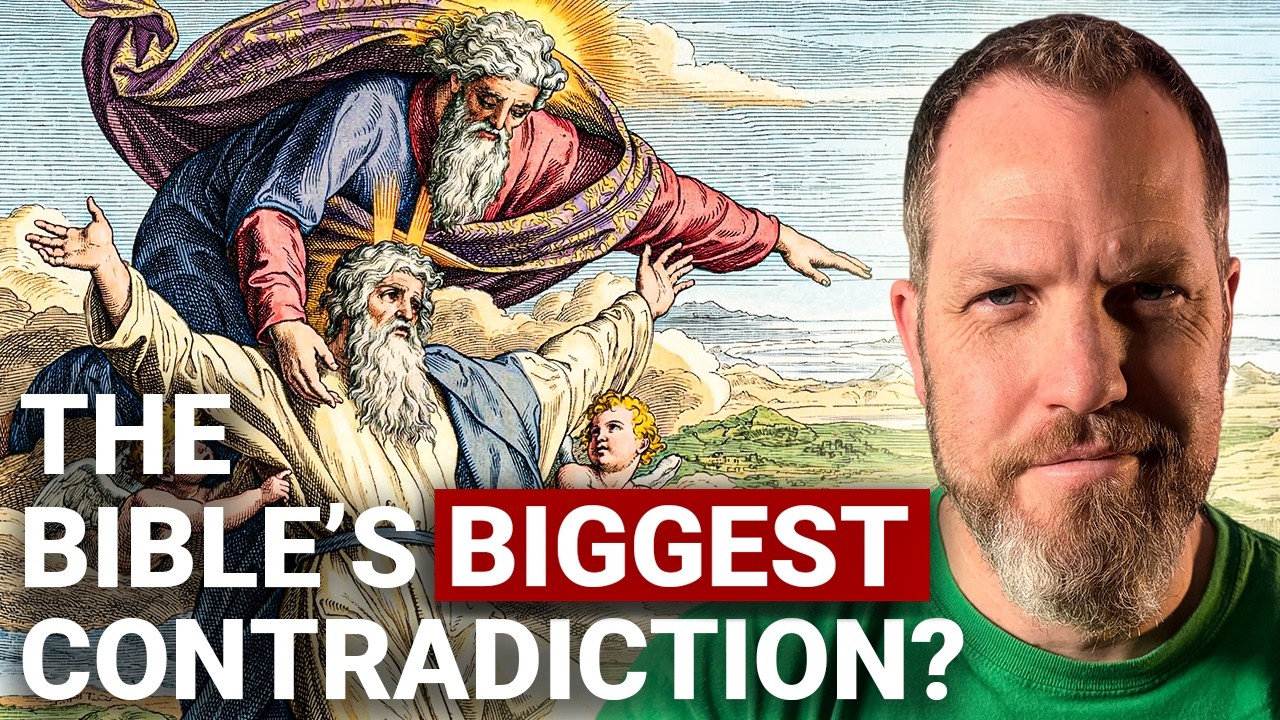
🔗 **Source:** [Yes, You CAN See the Face of God](https://www.youtube.com/watch?v=ohh4Huzfn2U)
> [!note]+ Document Notes
> tags: #biblical-studies #hebrew-translation #temple-practices #divine-imagery #ancient-israel
> author: Data Over Dogma
> source: YouTube
> reference: https://www.youtube.com/watch?v=ohh4Huzfn2U
> date created: 2024-12-28 19:15
>
> # 🏷️ Title: Yes, you CAN see the face of God
>
<!-- deep-read:sections start -->
## 🧰 Action Inbox
- [H1] Research standing stones in ancient Israelite temples — archaeological evidence #biblical-studies
- [H2] Compare active vs passive Hebrew verb forms in temple contexts — translation methodology #hebrew-translation
- [H3] Investigate cannabis use in ancient temple rituals — incense altar findings #temple-practices
## 🧭 Table of Contents
- [[#📝 Summary]]
- [[#📖 Main Content]]
- [[#🗒️ Notes]]
- [[#📚 References]]
- [[#🗣️ Paraphrase]]
- [[#📰 Newsletter]]
- [[#✅ Action Items]]
- [[#🧪 Hypotheses]]
- [[#📊 Methodology]]
- [[#❓ Questions]]
- [[#🔮 Future Research]]
- [[#💡 Implications]]
- [[#🧠 Learning Styles Assessment]]
- [[#📊 Accessibility Assessment]]
- [[#🌍 DEIB Assessment]]
- [[#✅ Logical Validity]]
- [[#🛡️ DARVO Analysis]]
- [[#🎯 Conclusion]]
### 🔗 References
- [Data Over Dogma YouTube Channel](https://www.youtube.com/channel/UC_channel_id)
- [Patreon Support Page](https://patreon.com/dataoverdogma)
## 📝 Summary
- Biblical scholars Dan Mlelen and Dan Beecher examine Hebrew translation issues around "seeing God's face"
- Key passages in Deuteronomy, Exodus, and Isaiah originally commanded actively "seeing God's face" rather than passively "appearing before God"
- Masoretic tradition deliberately changed vowelization to make active verbs passive
- Archaeological evidence suggests ancient Israelite temples used standing stones as divine images for ritual viewing
- Cannabis residue found on incense altars may have enhanced mystical experiences
## 📖 Main Content
The hosts explore a systematic mistranslation in Hebrew biblical texts where commands to "see God's face" (active voice) have been rendered as "appear before God" (passive voice). This affects multiple key passages about required temple visits during festivals.
The Hebrew verb "ra'ah" (to see) appears in active voice in the consonantal text, but Masoretic vowel points force a passive reading. In Isaiah 1:12, the infinitive construct form definitively requires active voice, making the mistranslation more obvious.
Archaeological findings at Arad reveal standing stones in Israelite temple holy places, along with incense altars containing cannabis residues from 2700 years ago. This suggests ritual viewing of divine images was enhanced by psychoactive substances during mystical experiences.
## 🗒️ Notes
#### ⏱️ [00:00](https://youtu.be/ohh4Huzfn2U?t=0) — [H1] Introduction to systematic Hebrew mistranslation
- Key idea: Multiple biblical passages contain deliberate translation alterations
- Evidence: "It's always mistranslated. It's always knowingly mistranslated"
#### ⏱️ [03:45](https://youtu.be/ohh4Huzfn2U?t=225) — [H2] Deuteronomy 16:16 active vs passive voice
- Key idea: Hebrew consonants support active "you will see the face of God"
- Evidence: "The consonants want you to understand this in the active"
#### ⏱️ [06:30](https://youtu.be/ohh4Huzfn2U?t=390) — [H1] Isaiah 1:12 infinitive construct proves active voice
- Key idea: Grammar definitively requires active reading in this passage
- Evidence: "In the infinitive construct, they do not have the same consonants"
#### ⏱️ [09:15](https://youtu.be/ohh4Huzfn2U?t=555) — [H2] Archaeological evidence: standing stones in temples
- Key idea: Physical divine images existed in ancient Israelite worship
- Evidence: "We've actually found a standing stone in an Israelite Judahite temple in Arad"
#### ⏱️ [12:00](https://youtu.be/ohh4Huzfn2U?t=720) — [H3] Cannabis residue on ancient incense altars
- Key idea: Psychoactive substances enhanced ritual experiences
- Evidence: "Three different kinds of cannabis that were being burned in the incense there"
#### ⏱️ [15:20](https://youtu.be/ohh4Huzfn2U?t=920) — [H2] Biblical contradictions about seeing God
- Key idea: Some texts say seeing God kills you, others describe people seeing God and living
- Evidence: "Moses spoke to God face to face like a man speaks with his friend"
#### ⏱️ [18:45](https://youtu.be/ohh4Huzfn2U?t=1125) — [H3] Ritual experience vs yearning in Psalms
- Key idea: Temple visits involved both physical ritual and spiritual longing
- Evidence: "My soul thirsts for God, for the living God. When shall I come and behold the face of God?"
#### ⏱️ [22:10](https://youtu.be/ohh4Huzfn2U?t=1330) — [H2] Economic function: offerings and costly signaling
- Key idea: "Seeing God's face" served to extract regular temple contributions
- Evidence: "You shall not see God's face empty-handed"
#### ⏱️ [25:30](https://youtu.be/ohh4Huzfn2U?t=1530) — [H3] Mass ritual processing vs individual mystical experience
- Key idea: Festival timing created assembly-line rather than contemplative encounters
- Evidence: "There's a line forming. You're seeing the face, dropping off your offering and getting out"
#### ⏱️ [28:40](https://youtu.be/ohh4Huzfn2U?t=1720) — [H2] Smoke obscuring divine images
- Key idea: Incense created mysterious, hazy viewing conditions
- Evidence: "Your ability to see the divine image is probably obscured by the smoke as well"
#### ⏱️ [31:15](https://youtu.be/ohh4Huzfn2U?t=1875) — [H3] Anti-iconic tradition as later development
- Key idea: Prohibition against divine images came after earlier acceptance
- Evidence: "The anti-idolatric polemic is a later developed thing"
#### ⏱️ [34:20](https://youtu.be/ohh4Huzfn2U?t=2060) — [H2] Translation footnotes acknowledge alternative readings
- Key idea: Modern translations relegate correct reading to footnotes
- Evidence: "Or see my face" appears in NRSV footnotes
## 📚 References
- Deuteronomy 16:16 - Command for festival appearances
- Exodus 34:24 - Parallel passage about seeing God's face
- Isaiah 1:12 - Infinitive construct form proving active voice
- Psalm 42:2 - Yearning to behold God's face
- Archaeological findings at Arad temple site
## 🗣️ Paraphrase
- Ancient Hebrew texts originally commanded people to actively "see God's face" during temple festivals, not merely "appear before" God as modern translations suggest
- Masoretic scribes deliberately altered vowel markings to change active voice verbs to passive voice, likely due to theological discomfort with the idea of directly viewing God
- Archaeological evidence shows ancient Israelite temples contained standing stones serving as divine images, with cannabis-enhanced incense rituals facilitating mystical viewing experiences
## 📰 Newsletter
**Biblical Translation Discovery: Ancient Israelites Were Commanded to "See God's Face"**
New research reveals a systematic mistranslation affecting multiple biblical passages about temple worship. Hebrew scholars demonstrate that original texts commanded actively "seeing God's face" rather than passively "appearing before God."
Archaeological evidence from ancient Israelite temples supports this reading, showing standing stones served as divine images for ritual viewing. Cannabis residue found on 2700-year-old incense altars suggests these encounters involved enhanced mystical experiences.
This finding challenges traditional assumptions about ancient Israelite worship practices and highlights how theological concerns can influence biblical translation choices.
**Key Takeaway:** Original Hebrew grammar and archaeological evidence both support active divine encounters in ancient temple worship, despite later scribal attempts to soften this concept.
Resources: [Biblical Archaeology Society](https://www.biblicalarchaeology.org/), [Society of Biblical Literature](https://www.sbl-site.org/), [Data Over Dogma Podcast](https://patreon.com/dataoverdogma)
## ✅ Action Items
#### DevRel
- Developer advocacy: Create educational content about Hebrew grammar analysis tools
- Education: Workshop on ancient language translation methodologies
- Documentation: Comparative analysis guides for biblical text variants
#### Community
- Contributors: Crowdsourced translation verification projects
- Sponsors: Support for biblical archaeology research funding
- Ecosystem: Cross-reference databases linking archaeological and textual evidence
## 🧪 Hypotheses
- Ancient Israelite temples routinely used psychoactive substances to enhance religious experiences
- Anti-iconic traditions in biblical texts represent later theological developments rather than original practices
- Systematic vowel alterations by Masoretic scribes reflect deliberate theological editing
- Standing stones in archaeological contexts correlate with "face of God" passages in biblical texts
### 📊 Methodology
- Comparative analysis of Hebrew consonantal text vs Masoretic vowelization
- Archaeological correlation between temple artifacts and textual references
- Chemical analysis of ancient incense residues for psychoactive compounds
- Cross-textual analysis of active vs passive voice patterns in ritual contexts
### ❓ Questions
- How widespread was psychoactive substance use in ancient Near Eastern temple practices?
- What specific visual elements made standing stones recognizable as divine images?
- How did economic factors influence the development of festival attendance requirements?
### 🔮 Future Research
- Systematic survey of all Hebrew Bible passages using ra'ah in temple contexts
- Comparative study of divine image practices across ancient Near Eastern cultures
- Chemical analysis of incense residues from additional archaeological sites
### 💡 Implications
- Practice: Biblical translation requires consideration of theological bias in manuscript traditions
- Education: Hebrew language instruction should emphasize consonantal text priority over later vowel systems
- Policy: Archaeological protection for ancient temple sites containing psychoactive substance evidence
- Security: Academic freedom protections for scholars challenging traditional religious interpretations
### 🧠 Learning Styles Assessment
Reading level estimate: Grade 12-14
#### 👀 Visual learners
- Present: Video format with speaking heads
- Improve: Hebrew text displays, archaeological site photographs, manuscript comparisons
#### 🔊 Aural learners
- Present: Full audio discussion format
- Improve: Pronunciation guides for Hebrew terms
#### 🗣️ Verbal learners
- Present: Clear definitions of technical terms, analogies to modern translation issues
- Improve: Glossary of Hebrew grammatical concepts
#### 🧩 Kinesthetic learners
- Present: None evident
- Improve: Interactive Hebrew text analysis tools, virtual archaeological site tours
#### 🧠 Logical learners
- Present: Step-by-step grammatical analysis, archaeological evidence correlation
- Improve: Decision trees for translation choices, comparative charts
#### 🧑🤝🧑 Social learners
- Present: Conversational podcast format between two scholars
- Improve: Discussion prompts for study groups, peer translation exercises
#### 🧘♀️ Solitary learners
- Present: Self-contained explanation of concepts
- Improve: Study questions for individual reflection, research assignments
#### 🌿 Naturalistic learners
- Present: Archaeological evidence from natural excavation contexts
- Improve: Environmental factors affecting artifact preservation
### 📊 Accessibility Assessment
#### Screen reader semantics
- Present: Audio-primary format accessible to screen readers
- Improve: Detailed alt text for Hebrew text examples when visual
#### Keyboard navigation
- Present: Standard YouTube player controls
- Improve: Chapter markers for easier navigation
#### Contrast and readability
- Present: Video format with clear speakers
- Improve: High-contrast Hebrew text displays when added
#### Text resizing and reflow
- Present: N/A for video format
- Improve: Responsive transcript formatting
#### Media and captions
- Present: Full transcript provided
- Improve: Hebrew pronunciation phonetic guides in captions
#### Forms and interactions
- Present: Standard video player interface
- Improve: Interactive timeline with topic markers
### 🌍 DEIB Assessment
#### Cultural breadth
- Present: Discussion of ancient Near Eastern cultures beyond just Israelite
- Improve: Broader ancient world religious practice comparisons
#### Inclusive language
- Present: Academic terminology clearly defined
- Improve: Gender-neutral language when discussing ancient practitioners
#### Neurodiversity support
- Present: Conversational format aids comprehension
- Improve: Clear topic transitions, concept summaries
#### Representation
- Present: Two male scholarly perspectives
- Improve: Include diverse scholarly voices on similar topics
#### Psychological safety
- Present: Respectful treatment of religious traditions
- Improve: Content warnings about challenging traditional beliefs
### ✅ Logical Validity
#### Strong reasoning
- Deductive strength: Hebrew grammatical rules consistently applied across passages
- Inductive strength: Archaeological evidence supports textual interpretation
- Causal reasoning: Economic motivations explain systematic translation changes
- Analogical strength: Comparison with other ancient Near Eastern practices
#### Fallacies
- Appeal to authority: Some reliance on scholarly consensus without detailed justification
- False dichotomy: Active vs passive reading presented as only options without considering other possibilities
#### Tone of voice
- Overall tone: Scholarly but accessible, occasionally humorous without undermining seriousness
### 🛡️ DARVO Analysis
- Deny: No denial patterns observed
- Attack: No attacks on opposing viewpoints, respectful disagreement with traditional translations
- Reverse victim/offender: No victim/offender dynamics present
- Emotional cues: Enthusiasm and humor enhance rather than manipulate content
## 🎯 Conclusion
This analysis reveals a systematic pattern of theological editing in Hebrew biblical texts, where original commands to "see God's face" were altered to "appear before God" through vowel modifications. Archaeological evidence from ancient Israelite temples, including standing stones and cannabis-enhanced incense rituals, supports the original active reading. This discovery highlights how later theological concerns influenced biblical translation traditions and demonstrates the importance of considering both textual and archaeological evidence in biblical scholarship.
## 🧱 Refactor Appendix
### 📚 Literature Split Pad
### [H1] Hebrew verbs systematically altered from active to passive voice
> [!quote] Yes, you CAN see the face of God by Data Over Dogma via YouTube. Published 2024. Accessed 2024-12-28.
> "The consonants want you to understand this in the active."
Masoretic vowel pointing deliberately changes meaning of temple ritual commands.
[view highlight](https://youtu.be/ohh4Huzfn2U?t=225#H1) #biblical-studies #hebrew-translation ID:rw_face_god_01
### [H2] Archaeological evidence supports textual reinterpretation of temple practices
> [!quote] Yes, you CAN see the face of God
> "We've found a standing stone in an Israelite Judahite temple in Arad."
Physical artifacts validate alternative readings of biblical worship descriptions.
[view highlight](https://youtu.be/ohh4Huzfn2U?t=555#H2) #archaeology #temple-practices ID:rw_face_god_02
---
### 🔖 Atomic Split Pad (Zettel Candidates)
#### [Z1] Infinitive construct forms preserve original active voice readings
- Applies to Isaiah 1:12 where consonants cannot support passive interpretation
- Pointer to 06:30 timestamp
- Links: [[Hebrew-Grammar]] [[Biblical-Translation]]
#### [Z2] Cannabis residue indicates psychoactive enhancement of religious experiences
- Found on 2700-year-old incense altars at Arad temple site
- Pointer to 12:00 timestamp
- Links: [[Ancient-Temple-Practices]] [[Psychoactive-Substances]]
---
### ✏️ Fleeting Queue
- [F1] Research other systematic vowel alterations in Hebrew Bible — comparative analysis #biblical-studies #translation
- [F2] Investigate standing stone iconography across ancient Near East — archaeological survey #ancient-israel #divine-imagery
- [F3]
---
## Full Transcript
[00:02] Hey everybody, I'm Dan Mlelen.<br>[00:04] >> And I'm Dan Beecher.<br>[00:05] >> And this is Data Over Dogma, where we<br>[00:08] increase public access to the academic<br>[00:10] study of the Bible and religion and we<br>[00:11] combat the spread of misinformation<br>[00:13] about the same. How are things today,<br>[00:15] Dan?<br>[00:18] >> I knew that was coming one of these<br>[00:20] days.<br>[00:21] >> I mean, I'm all right. How are you<br>[00:22] doing?<br>[00:23] >> Uh, I'm I'm doing well. I think I may be<br>[00:26] uh my<br>[00:28] one of my girls was sick while we were<br>[00:30] at uh Disneyland. She had a bit of a<br>[00:32] cold.<br>[00:33] >> Oh no.<br>[00:34] >> And um and I'm starting to get a little<br>[00:35] tickle in my throat. So I might be<br>[00:38] coming down with a cold myself.<br>[00:40] >> I mean every time you go away you come<br>[00:41] back and you get a you you got some sort<br>[00:44] of gamboo going at you.<br>[00:45] >> Ah yeah. I I got to stop drinking the<br>[00:49] water down there in LA.<br>[00:51] >> In California it's not safe. It's all of<br>[00:54] it's all of our downwater anyway. So,<br>[00:56] it's like I don't trust it.<br>[00:58] >> I'm given to understand based on some<br>[01:00] racist uncles in on Facebook that Gavin<br>[01:03] Newsome is is the cause of of uh<br>[01:06] everything that's going wrong in<br>[01:07] >> all the bad things in the whole wide<br>[01:08] world. All right. Uh well, today uh<br>[01:11] we've got a fun thing to talk about.<br>[01:13] It's it's an it's the law and uh and and<br>[01:17] and we're gonna see if we can if we can<br>[01:21] see the face of God. So, uh, let's just<br>[01:24] dive into it's the law.<br>[01:29] All right. So, this week's it's the law.<br>[01:32] You had sent me a whole bunch of<br>[01:35] different uh places where a certain uh<br>[01:41] Hebrew construction occurs.<br>[01:43] >> Yes. uh in a bunch of different books in<br>[01:45] Deuteronomy and Exodus and Isaiah and<br>[01:48] Samuel and uh uh talk to me about what<br>[01:53] about this phrase and how it's<br>[01:56] translated because what you sent to me<br>[01:58] is not what I see when I'm uh when I'm<br>[02:01] looking at it.<br>[02:02] >> Yeah. Yeah. So,<br>[02:04] this is a a commandment. I think the<br>[02:07] it's most clearly given as a command in<br>[02:08] Deuteronomy 16:16. Um, but the it's<br>[02:13] always mistransated. It's always<br>[02:15] knowingly mistransated. Uh, and it's I<br>[02:20] think it's so fascinating. But<br>[02:21] Deuteronomy 16:16, I'll read it and then<br>[02:23] I'll talk a little bit about what's<br>[02:24] going on with uh with some of the<br>[02:25] Hebrew. I'm not going to get too<br>[02:27] technical, but um but I think you<br>[02:30] >> I don't believe you. I just I think you<br>[02:32] are and I like it.<br>[02:34] >> I think this is fascinating. Three times<br>[02:36] a year all your males shall appear<br>[02:39] before the Lord your God at the place<br>[02:41] that he will choose at the festival of<br>[02:44] unleavened bread, at the festival of<br>[02:46] weeks, and at the festival of boos. They<br>[02:49] shall not appear before the Lord<br>[02:52] empty-handed.<br>[02:54] So, this is this is a commandment to to<br>[02:57] come up and appear before the Lord three<br>[02:58] times a year at specific festivals.<br>[03:00] However, what's going on in the Hebrew<br>[03:03] is is a little peculiar uh because it<br>[03:06] says um literally the Hebrew is uh<br>[03:12] three times in a year<br>[03:15] >> will see all of your males, the face of<br>[03:20] Adonai, your God.<br>[03:23] And the the consonants of the Hebrew say<br>[03:28] uh have it in the active. you will see<br>[03:30] the face of God. The vowels have altered<br>[03:34] it to make it passive. Now in the<br>[03:37] consonants, they can be understood in<br>[03:38] the passive, but the way the rest of the<br>[03:40] construction works with the particular<br>[03:43] uh particles and prepositions and<br>[03:45] everything, the consonants want you to<br>[03:48] understand this in the active. So the<br>[03:50] verbal root rah means to see. And so in<br>[03:52] the active it means you see the face of<br>[03:54] God. But if you twist it into the<br>[03:56] passive, it's be seen to the face of<br>[03:59] God, which is translated as appear<br>[04:02] before God.<br>[04:04] >> Now, when you say God, you're<br>[04:05] substituting the it's the<br>[04:07] tetetrogrammaton.<br>[04:08] >> It's the tetrogrammaton.<br>[04:09] >> It is the named God of Israel.<br>[04:11] >> Yes. And then appositionally it adds<br>[04:13] your God, Eloha. Um you see this in<br>[04:16] Exodus 34:24 as well. But in Isaiah, I<br>[04:20] think it is the most revealing because<br>[04:23] in Isaiah, it doesn't use uh a regular<br>[04:26] uh finite verb. It uses an infinitive<br>[04:29] and a specific kind of infinitive, the<br>[04:31] infinitive construct. And in the finite<br>[04:33] form,<br>[04:35] the active and the passive can have the<br>[04:37] same consonants. In the infinitive<br>[04:39] construct, they do not have the same<br>[04:41] consonants. And the consonants that we<br>[04:43] have in Isaiah 11:12, I'll read Isaiah<br>[04:45] 11:12 from the NRSVU. when you come to<br>[04:47] appear before me who ask this from your<br>[04:50] hand trample my courts no more. So the<br>[04:54] idea is coming to appear before God me<br>[04:57] this is God talking means coming unto my<br>[05:00] temple. Uh but the appear before me<br>[05:04] actually cannot mean that the consonants<br>[05:07] can't mean that. Uh the consonants are<br>[05:11] uh<br>[05:12] which would be uh when you come to see<br>[05:16] my face<br>[05:18] pan that means to see my face but the<br>[05:22] the maserites have um added the vowels<br>[05:26] of the passive form. So it's leot but it<br>[05:31] should be. So here here's where I'm<br>[05:34] getting technical but but in in short<br>[05:36] the consonants very definitely are<br>[05:38] intended to be active when uh when you<br>[05:42] come to see my face who asked this from<br>[05:46] your hand. Uh and so I think and there<br>[05:50] are a lot of scholars who who<br>[05:51] acknowledge this that this original<br>[05:55] commandment was not to appear before<br>[05:57] God. The original commandment was to see<br>[05:59] God's face three times in a year. And as<br>[06:02] we see in Isaiah, this is about coming<br>[06:04] into the temple. And so most likely this<br>[06:06] was a kind of ritualistic<br>[06:08] um beautifific vision where you go into<br>[06:11] the temple and you see the face of God<br>[06:14] probably by looking at a divine image. I<br>[06:16] am really trying to get Wizard of Oz out<br>[06:19] of my head right now because<br>[06:22] >> all I'm all I'm thinking about right now<br>[06:24] is like<br>[06:26] >> pay no attention to the man behind the<br>[06:28] curtain. But that's not what we're<br>[06:30] talking about.<br>[06:30] >> Not that kind of image. No, it wasn't a<br>[06:32] holographic. Uh it would have been a<br>[06:34] standing stone. And we've actually found<br>[06:36] a standing stone in a an Israelite<br>[06:40] Judahite temple uh in Arad. So we know<br>[06:44] that they had standing stones in in<br>[06:46] their temples. But to see the standing<br>[06:48] stone was to see God.<br>[06:50] >> And so uh I think that the idea here is<br>[06:55] you come to the temple, you see the<br>[06:58] standing stone, you see the face of God.<br>[07:01] And and you have in in the Psalms, you<br>[07:03] know, when shall I see the face of God?<br>[07:05] This yearning for the beautifific<br>[07:06] vision. Uh, so it's it's something that<br>[07:10] is is referenced in a variety of<br>[07:12] different ways, but it always gets<br>[07:14] translated in the passive because people<br>[07:16] are uncomfortable with this idea that<br>[07:20] you could see God's face because<br>[07:23] you're not supposed to be able to see<br>[07:24] God's face,<br>[07:25] >> right?<br>[07:25] >> Because of another tradition from from<br>[07:28] Exodus where uh Moses says, "Show me<br>[07:31] your glory." And God goes, "Uh, tell you<br>[07:34] what. I'm going to put you on this rock<br>[07:36] right here, and then I'm going to walk<br>[07:38] by, but I'm going to cover your face<br>[07:41] with my hand so that you can't see my<br>[07:43] face. And then I'm going to pull my hand<br>[07:45] away after I've passed by, and you can<br>[07:47] see my back, but you won't see my face."<br>[07:49] And and the text says, "Uh, no one can<br>[07:52] see me and live." Uh, and the ancient<br>[07:55] Greek translation says, "No one can see<br>[07:58] my face and live." So,<br>[08:00] >> you weren't surprised. And and then of<br>[08:02] course there are all of these scriptures<br>[08:04] later where people do see God<br>[08:06] >> Yeah. and live.<br>[08:07] >> Including Moses.<br>[08:08] >> Including Moses. Right. Right. And and<br>[08:10] like some of his elders too, right? I<br>[08:12] mean<br>[08:12] >> Yeah. Yeah. They they saw that's uh ex<br>[08:15] Exodus 24:10. Uh they saw the God of<br>[08:18] Israel and and they were like and he's<br>[08:20] his feet are like standing on this<br>[08:23] sapphire like patio kind of thing. And<br>[08:26] um but yeah, there it also has uh you<br>[08:29] have in numbers that um that Moses spoke<br>[08:33] to God face to face like a man speaks<br>[08:35] with his friend,<br>[08:37] >> right?<br>[08:37] >> Uh and so they're they're very clearly<br>[08:41] they've got uh they're a little<br>[08:42] conflicted on<br>[08:44] >> Jacob Don wrestled with the guy.<br>[08:46] >> Yeah. Jake Jacob and Jacob held his own<br>[08:48] for a bit.<br>[08:49] >> Yeah.<br>[08:49] >> Um so<br>[08:51] >> it was a tie. Um I so I one of the<br>[08:55] things that I wanted to get to with you<br>[08:57] because you mentioned the Psalms<br>[09:00] going talking about when you know I I<br>[09:03] when can I see his face? I want to see<br>[09:06] the face of God.<br>[09:07] >> Uh my one of my questions is<br>[09:11] because it sounds to me like this<br>[09:13] standing stone idea is like you called<br>[09:16] the thing at the center of the temple<br>[09:19] the face of God. Here we've got this<br>[09:21] thing. They've got this stone. It's got<br>[09:23] some inscription on it or something.<br>[09:25] >> And that's just what we call the face of<br>[09:28] God.<br>[09:30] So, but it doesn't seem like those sort<br>[09:34] of plaintive cries in Psalms are about I<br>[09:38] want to see a rock in the middle of the<br>[09:40] temple.<br>[09:42] >> Yeah. So, we uh Psalm 42:2, "My soul<br>[09:46] thirsts for God, for the living God.<br>[09:47] when shall I come and behold the face of<br>[09:50] God?<br>[09:51] >> Yeah. Uh I I think it's it's something<br>[09:53] that there there was the ritual aspect<br>[09:56] to it and then there was kind of the<br>[09:58] yearning for being in the presence of<br>[10:01] God<br>[10:02] >> of the actual like<br>[10:03] >> well well the<br>[10:04] >> corporate being. Well, the they they<br>[10:07] certainly understood God to be corporeal<br>[10:09] in this time period, but to be located<br>[10:12] elsewhere. And the standing stone was<br>[10:13] really the material<br>[10:16] uh medium that transmitted<br>[10:19] uh the divine presence. And so to<br>[10:22] >> He's still making me think of of Wizard<br>[10:24] of Oz. I'm sorry.<br>[10:27] So to um to be in the Holy of Holies was<br>[10:31] to be in God's presence, but you're<br>[10:34] you're more sensing it than you are um<br>[10:37] gazing upon it. But the the standing<br>[10:39] stone represented the material<br>[10:40] manifestation of that. And<br>[10:43] interestingly, I I I said that we have a<br>[10:46] standing stone found in a Holy of Holies<br>[10:48] in a Judah height temple. Uh we also<br>[10:50] have two incense altars that were found<br>[10:53] right just a few feet away from that<br>[10:55] standing stone and they tested the<br>[10:57] substances that had been burned on those<br>[10:59] incense altars 2700 years ago. And there<br>[11:03] were three different kinds of cannabis<br>[11:05] that were being burned uh in the incense<br>[11:07] there. So so I'm sure that played a role<br>[11:10] in the uh you know the psalmist is like<br>[11:13] I got to get back there man. uh because<br>[11:16] I'm sure he had a lovely experience<br>[11:19] being in God's presence and gazing at<br>[11:22] >> depending on what they were uh burning<br>[11:25] at the altar. You might have seen the<br>[11:28] face of God. I don't know.<br>[11:30] >> Yeah. I I think it was it was a mystic<br>[11:32] it was probably considered kind of a<br>[11:34] mystical experience. You go into the<br>[11:36] Holy of Holies, you have this this<br>[11:38] mystical communion with God and you see<br>[11:42] the material representation of God's<br>[11:44] presence and that is, you know, like<br>[11:47] gazing upon the face of God. And and<br>[11:50] there's been a lot of research on on how<br>[11:53] um the<br>[11:56] divine images kind of represent that<br>[11:59] gaze because there's there's this idea<br>[12:02] also that when you are looking at God,<br>[12:04] God is looking back at you.<br>[12:06] >> And so there's there's an intimidation<br>[12:08] that is also uh probably felt by folks<br>[12:12] there. What what's the saying? Uh, don't<br>[12:14] don't look into the abyss or or<br>[12:16] something like that cuz<br>[12:18] >> you'll see what it's looking back or<br>[12:19] something.<br>[12:20] >> Well, yeah, cuz like the abyss stares<br>[12:22] back or something like that. I I forget<br>[12:24] what it is. My my closest uh exposure to<br>[12:27] it is is from the animated show Amphibia<br>[12:30] or one of the characters that, but I<br>[12:33] wish I could remember what it was. But<br>[12:35] um so this is a spiritual mystical<br>[12:38] experience to be able to to do that. But<br>[12:41] but yeah, it was I think it's<br>[12:43] incorporated into this commandment in<br>[12:44] Deuteronomy 16:16 as a way to require<br>[12:48] that the males actually present<br>[12:50] themselves at the temple. This was part<br>[12:52] of costly signaling, but also there were<br>[12:54] almost certainly offerings that were um<br>[12:57] and in fact, it even says at the end,<br>[13:00] you shall not see God's face<br>[13:01] empty-handed.<br>[13:03] >> So, it's it's being worked into this<br>[13:05] demand for offerings that are supposed<br>[13:07] to be three times a year. So, it's It's<br>[13:10] time for your quarterly offering,<br>[13:12] >> right? Yeah. I mean, one of the things<br>[13:14] that it feels like is that uh because<br>[13:17] when I think about something that feels<br>[13:20] as important as the idea of seeing God's<br>[13:23] face,<br>[13:25] that feels like you take your time with<br>[13:27] it.<br>[13:28] >> But if they're doing it on the<br>[13:29] festivals, meaning everyone has to do it<br>[13:32] at the same time.<br>[13:33] >> Yeah. There's a line forming.<br>[13:34] >> It's Yeah. You're not taking your time<br>[13:35] with this. You're like you're you're<br>[13:37] seeing the face. you're dropping off<br>[13:39] your your offering and you're getting<br>[13:41] out of there. So,<br>[13:42] >> yes. Yeah. And and there's a there are<br>[13:44] other parts of the Hebrew Bible where<br>[13:47] the you're burning all this incense and<br>[13:50] all this stuff going on. There's even a<br>[13:52] degree to which it seems like the your<br>[13:56] ability to see the divine image is is<br>[13:59] probably obscured by the smoke as well.<br>[14:02] So, uh, the there's also, um, you know,<br>[14:06] when the later on when the high priest<br>[14:08] is the only one who can goes go into the<br>[14:10] holy of holies on one day a year, it's<br>[14:12] basically like fill the place with smoke<br>[14:15] and then the high priest is going in<br>[14:16] like, okay, I'm trying not to run into<br>[14:18] anything. Um, and so there's there's<br>[14:20] also some obscuring of of God's presence<br>[14:23] uh and God's face as well, which which<br>[14:26] could probably lend to the mystical<br>[14:28] experience. If you just see a a hazy<br>[14:30] outline of something in in the mist uh<br>[14:33] while you're getting stoned off your<br>[14:35] gourd, then um maybe you do come out. I<br>[14:40] saw<br>[14:40] >> and and when when you go into him, make<br>[14:43] sure you breathe deep cuz uh it's going<br>[14:46] to be a more fun experience.<br>[14:47] >> Yeah. Just take a deep breath and then<br>[14:49] hold it for as long as you can. And<br>[14:51] >> man, every time I see the face of God, I<br>[14:53] get real paranoid though.<br>[14:56] >> I just feel like<br>[14:57] >> Why is it like doing a whip it?<br>[15:02] >> I just I I guess part of my Okay, so I<br>[15:05] have one question. It might sound<br>[15:07] stupid. Is there a chance that these<br>[15:10] standing stones that some that there was<br>[15:13] an a physical like a face carved into<br>[15:15] them? Have they ever found like<br>[15:17] representative<br>[15:19] imagery or is that that that's actually<br>[15:21] not even okay, right? Like that's what<br>[15:23] the<br>[15:24] >> Well, according to the Hebrew Bible,<br>[15:27] even the standing stones are are um not<br>[15:30] allowed or at least parts of the Hebrew<br>[15:32] Bible. You're not supposed to have that<br>[15:34] kind of divine image.<br>[15:35] >> Uh in in Genesis, you have it. Uh it's<br>[15:38] really in parts of Genesis, you have it.<br>[15:40] It's really later on in particularly<br>[15:42] Deuteronomy where they're like you heard<br>[15:45] a voice but you didn't see any image so<br>[15:47] you know don't go making divine images.<br>[15:49] So it's not like the standing stone was<br>[15:51] was the approved version and then<br>[15:54] anthropomorphic statuary was the<br>[15:56] nonapproved version. They they were all<br>[15:59] unapproved. But I think that just a lot<br>[16:02] of scholars would suggest that just<br>[16:03] shows that the anti- idol pmic is a<br>[16:06] later developed thing because we clearly<br>[16:09] have divine images from earlier periods<br>[16:11] in Israel and Judah. Now when it comes<br>[16:13] to anthropomorphic stuff if if there was<br>[16:15] there could have been painted onto the<br>[16:17] standing stone something. We we haven't<br>[16:21] recovered any anthropomorphic statuary.<br>[16:24] Now I'm just picturing a stone with a<br>[16:26] smiley emoji on it. I don't think that's<br>[16:28] right either. About all of the things<br>[16:31] >> the when uh if you ever have the the<br>[16:33] privilege to travel to Malta,<br>[16:36] >> the and you go to Marsha Sllo, which is<br>[16:38] this little fishing uh village in the<br>[16:42] southeastern corner of the island.<br>[16:44] >> Uh they the boats are very colorful and<br>[16:47] they paint eyes on the boats.<br>[16:49] >> Oh, fun.<br>[16:49] >> And uh yeah, it's it's very cool. But I<br>[16:51] I you know, that could have been part of<br>[16:53] it. eyes. We don't have any<br>[16:55] anthropomorphic statuary from ancient<br>[16:56] Israel and Judah. There is<br>[16:58] anthropomorphic statuary from Egypt and<br>[17:01] from Mesopotamia. it. There's a a<br>[17:04] scholar Triva Medinger who argues that<br>[17:08] in ancient Israel and Judah there was a<br>[17:10] de facto<br>[17:12] aniconism in the sense that the divine<br>[17:15] imagery seemed to be<br>[17:17] nonrepresentational.<br>[17:19] Not because there was actual opposition<br>[17:22] to institutional opposition to<br>[17:24] anthropomorphic statuary, but just<br>[17:25] because the market wasn't there. They<br>[17:28] didn't have the resources. They probably<br>[17:30] didn't have the materials. there wasn't<br>[17:31] as much demand for it and so it's more<br>[17:34] >> is hard man.<br>[17:35] >> Yeah. And and the the representations<br>[17:37] are more symbolic. Uh but you know you<br>[17:40] do have the the Adonai and his Asher<br>[17:43] thing the drawing. So that that's the<br>[17:46] face of God and it's represented with<br>[17:48] Bess imagery. So it's kind of boine in<br>[17:51] appearance. Uh and and there's um there<br>[17:54] are things where people have argued oh<br>[17:56] this might be a a depiction of of God's<br>[17:59] face. We don't have anything<br>[18:00] anthropomorphic because it doesn't seem<br>[18:02] like that was the in thing<br>[18:04] >> right<br>[18:04] >> at the time for these smaller<br>[18:06] territorial states like ancient Israel<br>[18:09] and Judah. They didn't have near the<br>[18:12] complexity and the resources and the<br>[18:14] market that you had in Babylon or in<br>[18:17] Egypt. So, but that's an ongoing debate<br>[18:20] as well. Uh was there anthropomorphic<br>[18:23] representation of of the God of Israel?<br>[18:28] We don't know for sure. Um, so yeah,<br>[18:31] that that's a question I would love to<br>[18:32] have answered as well. I I think it<br>[18:34] would be absolutely fascinating to go<br>[18:36] see what was going on around 10,000 B.CE<br>[18:39] in these temples.<br>[18:40] >> Yeah, I guess I mean I guess it's just<br>[18:42] so clear that it's like the face of God.<br>[18:46] It's not it's not like the image of God<br>[18:49] or the you know, it's not the the the<br>[18:51] idea of God or whatever. It it I think<br>[18:54] that's what I was flashing on is just<br>[18:55] that it keeps saying the face and<br>[18:57] >> well you know what what do we have in<br>[18:59] the in the priestly blessing that we<br>[19:01] have on the kfanome uh silver amulets<br>[19:05] that we've talked about uh it says may<br>[19:07] his face shine upon you which is uh<br>[19:10] which is probably a reference to the sun<br>[19:12] and so<br>[19:14] >> you know if the sun is on the divine<br>[19:17] image and the sun is the symbol of the<br>[19:20] face of God like there a variety of ways<br>[19:23] that could be understood.<br>[19:24] >> Interesting. Uh so yeah I I wish we had<br>[19:27] more details about all of this but what<br>[19:30] we can say is that uh Deuteronomy 16:16,<br>[19:34] Exodus 34:24, Isaiah 1:12 uh and and I<br>[19:38] think also the story of Hannah and uh<br>[19:41] and Samuel and and 1 Samuel is uh the<br>[19:44] Hebrew there is saying that they're<br>[19:46] there to see the face of God and it's<br>[19:48] just been reinterpreted as uh appear<br>[19:52] before or just be in the general<br>[19:54] proximity of or presence of God.<br>[19:57] >> It does speak to the<br>[20:01] uh<br>[20:04] I I don't I don't want to assign like an<br>[20:06] agenda to all of these translators or<br>[20:08] whatever a tradition maybe, but it's<br>[20:11] interesting that<br>[20:14] none of none of the translations that I<br>[20:16] checked are saying the face of God.<br>[20:19] >> Oh, no. They they won't. That's that's<br>[20:21] just that widely agreed upon. we're<br>[20:24] understanding this to mean appear before<br>[20:26] and the Maseretic tradition vocalizes it<br>[20:29] that way. And so you're kind of<br>[20:31] overturning what the Maserites wrote<br>[20:33] when when you uh translate it<br>[20:35] differently. So<br>[20:37] >> yeah, when you when you do the the the<br>[20:40] Mlelen translation,<br>[20:41] >> the DMV. Yeah.<br>[20:42] >> Are you are you going to put the uh the<br>[20:44] face of God in there?<br>[20:45] >> Hell yeah, I am.<br>[20:46] >> Nice.<br>[20:46] >> Um<br>[20:47] >> nice. That's what I like to hear.<br>[20:49] >> And and there will be explanatory notes.<br>[20:51] So, I mean, if you look in uh if you go<br>[20:54] in the NRSV<br>[20:56] uee to Deuteronomy 16:16,<br>[21:00] um<br>[21:02] or maybe, no, it's not Deuteronomy. It's<br>[21:03] Isaiah. If you go into Isaiah 1:12,<br>[21:08] uh there's a footnote marker when you<br>[21:10] come to appear before me, footnote B,<br>[21:12] and you go down and it says, "Or see my<br>[21:15] face." So they're they're acknowledging<br>[21:18] that this is going on in in the Hebrew<br>[21:20] even though they're relegating it to the<br>[21:22] footnote of just one of the passages<br>[21:24] where where that's more clearly what the<br>[21:26] Hebrew is saying.<br>[21:27] >> I'm fascinated that the NRSVE doesn't<br>[21:30] have a footnote. They've got a footnote<br>[21:32] for booths,<br>[21:34] >> festival of booths and or tabernacles.<br>[21:37] >> Yeah.<br>[21:37] >> But no note about about face of God.<br>[21:40] Well, I think I think it's because in<br>[21:41] Exodus 34:24 and in um Deuteronomy<br>[21:46] 16:16,<br>[21:48] the consonants could go either way. Now,<br>[21:52] >> now when you look at the particles, cuz<br>[21:54] it's a it's a direct object marker and<br>[21:56] then my face, you don't appear<br>[22:00] to my face, you appear before me. It<br>[22:03] should be leaf nay, but it's at pani.<br>[22:06] Um, and so it works. it the consonants<br>[22:11] of the verb could be active or passive<br>[22:13] but in the context I think uh we got to<br>[22:16] throw the weight of the evidence in the<br>[22:18] direction of understanding it as active<br>[22:20] but I think that's why there's no note<br>[22:23] >> because they're like ah<br>[22:24] >> the consonants could go either way in<br>[22:26] the verb so we're just going to take the<br>[22:27] passive reading but with with Isaiah you<br>[22:30] can't the the consonants very clearly of<br>[22:33] the of the infinitive construct have to<br>[22:35] be active so uh they're like just put it<br>[22:38] in the footnote was there.<br>[22:40] >> Okay. Well, that is that's a lot of fun.<br>[22:45] There you go.<br>[22:46] >> Hopefully not too technical.<br>[22:47] >> Go see the face of God if you want to, I<br>[22:49] guess. Uh probably won't kill you. Uh<br>[22:52] >> smoke them if you got them,<br>[22:54] >> but uh<br>[22:55] >> enjoy the smoke while you're in there.<br>[22:58] All right, friends. Well, that's it for<br>[23:01] for this episode. Thank you all so much<br>[23:04] for tuning in. If you would like to<br>[23:05] become a part of making this show go and<br>[23:08] you know get get over and and listen to<br>[23:11] the uh the the afterparty over on<br>[23:14] Patreon where we you know we we talk we<br>[23:17] one of the things we do is we answer our<br>[23:19] patrons questions. So if you have a<br>[23:22] personal question that you'd like us to<br>[23:23] address, you can make us do it by<br>[23:26] becoming a $10 a month or more patron<br>[23:29] over at patreon.com/data<br>[23:31] overdogma. and uh and we will we'll<br>[23:34] we'll answer your questions for you. Uh<br>[23:38] thanks so much for uh to Roger Gaudy for<br>[23:41] editing and to JJ for uh being our<br>[23:45] producer and we will talk to you again<br>[23:47] next time. Bye everybody.
<!-- deep-read:sections end -->
📄 **Full text:** ![[Full Document Contents/Articles/Yes, You CAN See the Face of God|Yes, You CAN See the Face of God, YouTube]]
## Highlights
- talking about. >> Not that kind of image. No, it wasn't a holographic. Uh it would have been a standing stone. And we've actually found a standing stone in a an Israelite Judahite temple uh in Arad. So we know that they had standing stones in in their temples. But to see the standing stone was to see God. >> And so uh I think that the idea here is you come to the temple, you see the standing stone, you see the face of God. ([View Highlight](https://read.readwise.io/read/01km12202m6nh7t3fz1ten5g5g))
- Tags: 👻 ai highlighted
- allowed or at least parts of the Hebrew Bible. You're not supposed to have that kind of divine image. >> Uh in in Genesis, you have it. Uh it's really in parts of Genesis, you have it. It's really later on in particularly Deuteronomy where they're like you heard a voice but you didn't see any image so you know don't go making divine images. So it's not like the standing stone was was the approved version and then anthropomorphic statuary was the nonapproved version. They they were all unapproved. But I think that just a lot ([View Highlight](https://read.readwise.io/read/01km12205dqz8cqp50a5htptdq))
- Tags: 👻 ai highlighted
- that that's a question I would love to have answered as well. I I think it would be absolutely fascinating to go see what was going on around 10,000 B.CE in these temples. >> Yeah, I guess I mean I guess it's just so clear that it's like the face of God. It's not it's not like the image of God or the you know, it's not the the the idea of God or whatever. It it I think that's what I was flashing on is just that it keeps saying the face and >> well you know what what do we have in the in the priestly blessing that we ([View Highlight](https://read.readwise.io/read/01km12208ep0aqtrxrt3mwb05d))
- Tags: 👻 ai highlighted
- can't the the consonants very clearly of the of the infinitive construct have to be active so uh they're like just put it in the footnote was there. >> Okay. Well, that is that's a lot of fun. There you go. >> Hopefully not too technical. >> Go see the face of God if you want to, I guess. Uh probably won't kill you. Uh >> smoke them if you got them, >> but uh >> enjoy the smoke while you're in there. All right, friends. Well, that's it for ([View Highlight](https://read.readwise.io/read/01km1220aq64gcmnka7mztct90))
- Tags: 👻 ai highlighted