Your Champion Just Went Dark. Now What?
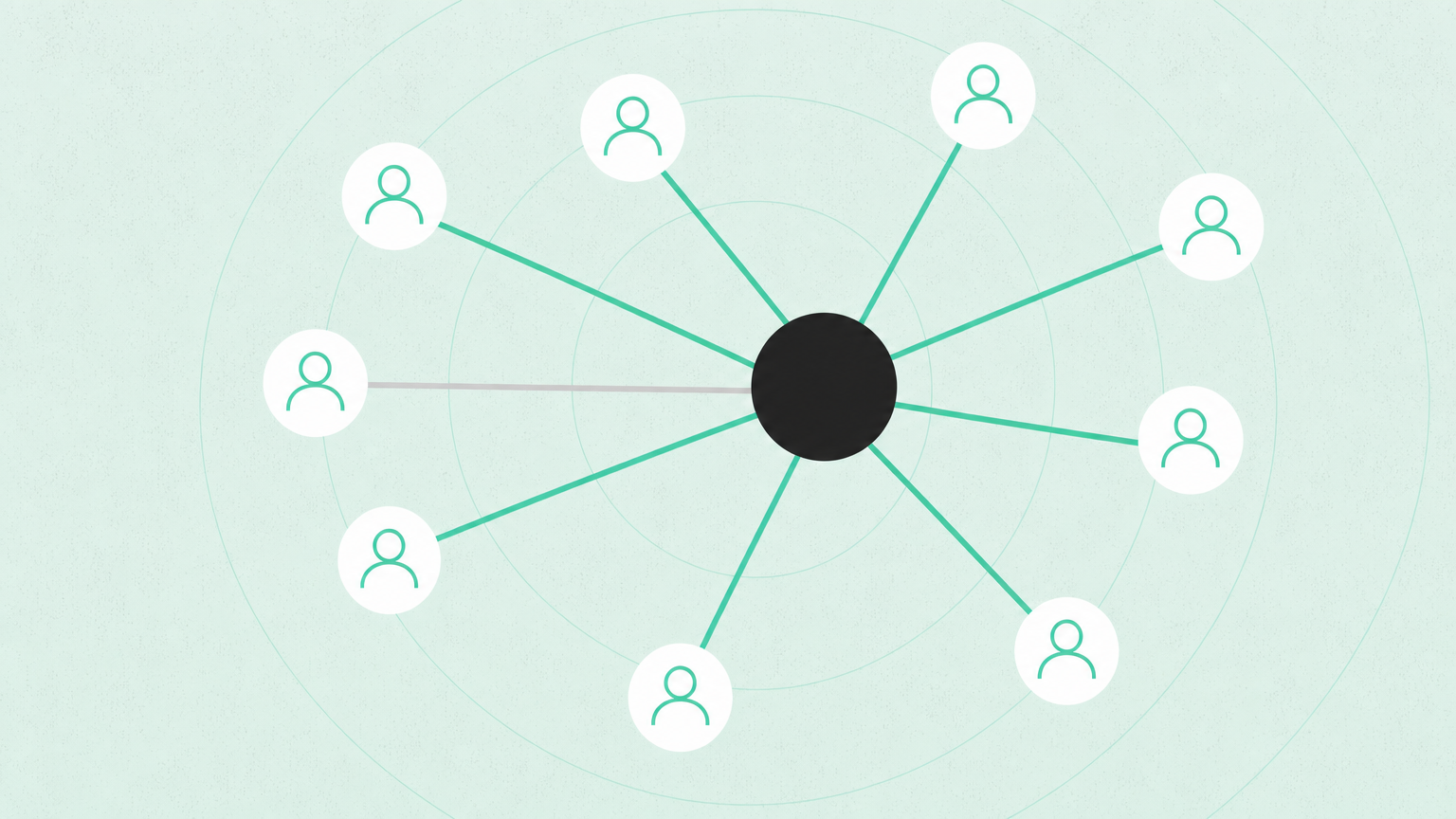
🔗 **Source:** [Your Champion Just Went Dark. Now What?](https://www.commonroom.io/blog/multi-threading-sales-deals/)
> [!note]+ Document Notes
> tags: [multi-threading, b2b-sales, buying-committee, champion-risk, buyer-signals]
> author: Common Room
> source: Common Room blog
> reference: https://www.commonroom.io/blog/multi-threading-sales-deals/
> date created: 2026-09-29 10:29
>
> > [!info] Generated analysis — not the author's words. Sections below are machine-written
> > from the captured source. Only text inside `> [!quote]` blocks is verbatim from the author.
> > Do not quote or attribute any other line to the named author.
>
> # 🏷️ Title: Your Champion Just Went Dark. Now What?
>
<!-- deep-read:sections start -->
## 🧭 Table of contents
- [📝 Summary](#-summary)
- [📖 Main content](#-main-content)
- [🗒️ Notes](#️-notes)
- [📚 References](#-references)
- [🗣️ Paraphrase](#️-paraphrase)
- [📰 Newsletter](#-newsletter)
- [✅ Action items](#-action-items)
- [🧪 Hypotheses](#-hypotheses)
- [📊 Methodology](#-methodology)
- [❓ Questions](#-questions)
- [🔮 Future research](#-future-research)
- [💡 Implications](#-implications)
- [🧠 Learning styles assessment](#-learning-styles-assessment)
- [📊 Accessibility assessment](#-accessibility-assessment)
- [🌍 DEIB assessment](#-deib-assessment)
- [✅ Logical validity](#-logical-validity)
- [🛡️ DARVO analysis](#️-darvo-analysis)
- [🎯 Conclusion](#-conclusion)
- [🔄 Refactor appendix](#-refactor-appendix--your-champion-just-went-dark-now-what)
## 📝 Summary
- **What happened.** Common Room published a blog post on 2026-09-28 (URL slug `multi-threading-sales-deals`) arguing that B2B sellers who route a deal through one champion risk a silent stall, and that they should build direct relationships with several members of the buying committee. The captured text has 52 paragraphs (¶0 to ¶51) and roughly 1,900 words. No individual byline appears in the captured text, so the author is recorded as Common Room.
- **The claim.** Multi-threading is a repeatable process, not a scramble: map the committee from real activity, engage early, frame broader access as help for the champion, track per-person status, and inspect coverage in deal reviews (¶18 to ¶36). The article then argues the map decays and needs live buyer signals to stay accurate (¶37 to ¶42).
- **Genre and interest.** This is vendor content marketing. Common Room sells a signals and revenue platform, and the article names three of its products (Person360, Buying Committee, Prospector) as the way to run the process, then closes with a demo request (¶39 to ¶41, ¶51). The problem statement and the product pitch come from the same seller.
- **Evidence base.** Most statistics carry a link to Forrester, Gartner, Madison Logic, or Salesforce (see References). Several claims carry no link in the captured markup: the "one of the most requested use cases" claim about job changers (¶42), the "6-13 people" figure (¶48), the 3-3-3 and 2-2-2 rule definitions (¶44, ¶45), and all product capability claims (¶39 to ¶41).
- **Why it matters.** The core coverage idea is sound and easy to test: a deal with one contact has one point of failure. The specific numbers are third-party claims relayed by a vendor with a reason to make the risk look large.
- **Key stakeholders.** Sales reps and sales leaders, RevOps, champions inside buying companies, buying-committee members, Common Room (vendor), and the research firms cited (Forrester, Gartner, Madison Logic, Salesforce).
- **Risks and tradeoffs.** Two stated tradeoffs sit in the text: late threading reads as desperation (¶24), and tailoring content per person can hurt consensus (¶28). The article omits the tradeoff of pulling in stakeholders a champion doesn't want involved, and it omits the cost and privacy side of tracking individual buyers by signal.
- **Bottom line.** Use the framework (map, start early, frame it as help, track status, coach on coverage). Treat the statistics as sourced but secondhand, and treat the tooling section as a sales pitch.
## 📖 Main content
**The core argument.** The article opens with a scenario: a champion "returns your calls, forwards your deck, and nods along," then goes dark, and a forecast deal stalls (¶0). Single-threading is "one relationship, one thread, one person" (¶8). Multi-threading replaces it with direct relationships across several people who shape the decision (¶2). The post separates multi-threading from multichannel outreach: sending one contact email, LinkedIn, and ads is multichannel, and it doesn't add people (¶3).
**Definitions.**
- *Single-threaded deal*: a straight line from seller to one contact to the rest of the account (¶6).
- *Multithreaded deal*: "a web of several direct relationships you can read and act on independently" (¶6). When one line goes quiet, the deal keeps moving (¶7).
- *Buying committee or buying group*: the set of people who influence, delay, or approve a purchase. The article uses Forrester and Gartner framing for this (¶4, ¶16).
- *Coverage view*: a per-person engagement status ("active, warming, gone quiet") that replaces a plain contact list (¶30).
**The evidence offered.** All figures below are as the article states them, each attributed there to a named source, and none was checked outside the captured text.
- 86% of B2B purchases stall and 81% of buyers end up dissatisfied with the chosen provider, attributed to Forrester's State of Business Buying 2024 (¶9).
- The average decision involves 13 people and 89% of purchases span two or more departments, attributed to Forrester (¶11).
- Buying groups that reach consensus are 2.5 times more likely to report a high-quality deal, and 74% of buyer teams show unhealthy conflict, attributed to a 2025 Gartner sales survey (¶12).
- Engaging three buying-group members can lift conversion by more than 50%, attributed to Forrester research as reported by Madison Logic (¶13).
- Complex buying groups run five to 16 people across up to four functions (¶16, Gartner). Gartner also finds 75% of B2B buyers prefer a rep-free experience (¶22).
- Content built for individual-level relevance can have a 59% negative impact on buying-group consensus (¶28, Gartner survey).
- Salesforce found reps spend about 70% of their time on non-selling work (¶36).
**The framework (¶18 to ¶36).**
- Map from evidence: real reporting structure plus who visited the site, opened the thread, or joined a trial (¶19, ¶20). Write the map where the account team can see it (¶21).
- Start in discovery or prospecting, because committees form before a seller is engaged (¶22, ¶23). Late outreach looks like working around your contact (¶24).
- Frame broader access as help with internal consensus. The suggested ask is "To make this easy to approve, who else should I bring up to speed?" (¶25, ¶26).
- Tailor each role's framing, keep the story consistent, and help members understand each other's priorities (¶27, ¶28).
- Track status per person and update it after every meaningful touch (¶29 to ¶31).
- Managers change the pipeline-review question from "How many contacts do we have?" to "Which roles are still uncovered?", set a coverage bar by proposal stage, and make stakeholder context visible to RevOps (¶32 to ¶35).
**The pivot to product (¶37 to ¶42).** The article argues a committee map "starts decaying the moment you build it" (¶37), so a live view built from buyer signals is needed. It names Person360 for identity resolution, Buying Committee for Engaged/Warm/Not engaged tagging, and Prospector for choosing the next stakeholder to add (¶39 to ¶41). Job-changer tracking is called one of the most requested use cases (¶42).
**Contested or unverifiable in this source.**
- The 86% stall figure has no definition of "stall" in the captured text. A reader can't tell whether stall means "no decision" or "delayed decision."
- The 50% conversion lift (¶13) is correlational as reported: engaging three members may be a marker of a healthy deal rather than the cause of one.
- The article gives three different headcounts for a committee: 13 average (¶11), five to 16 (¶16), and 6-13 (¶48). They don't conflict outright because they answer different questions, but the FAQ figure has no link.
- Text for three lists is missing from the capture: the role list introduced at ¶15, the signals list at ¶38, and the mistakes list at ¶43. The captured text ends each of those paragraphs with a colon and moves on, so this analysis can't say what those lists contained.
## 🗒️ Notes
#### 📄 ¶0-¶3 The hook and the definition
- ¶0 sets the scenario: a champion who forwards decks and nods on calls goes dark and the forecast deal stalls.
- ¶1 names the risk (single-threading) and promises a guide that covers the definition, why it fails, and a repeatable process "that buyer signals keep scalable."
- ¶2 defines multi-threading as relationships with several members of a buying committee at once.
- ¶3 separates channels from people: email plus LinkedIn plus ads to one account is multichannel, not multi-threaded.
#### 📄 ¶4-¶7 Why buying groups and the line-versus-web picture
- ¶4 cites Forrester's framing that deals get won by helping a committee decide, not by persuading one person (linked to the State of Business Buying 2024 press page).
- ¶5 argues that knowing one member means knowing a fraction of the deal.
- ¶6 and ¶7 give the mental model: a line has one failure point, a web keeps moving when one thread goes quiet.
#### 📄 ¶8-¶14 The cost of single-threading
- ¶8 says single-threading feels efficient because it hides risk behind a healthy-looking champion.
- ¶9 gives 86% stalled purchases and 81% dissatisfied buyers, attributed to Forrester 2024.
- ¶11 gives 13 people per decision and 89% of purchases spanning two or more departments.
- ¶12 gives the consensus statistics from Gartner 2025: 2.5 times more likely to report a high-quality deal, 74% of teams show unhealthy conflict.
- ¶13 adds the upside claim (more than 50% conversion lift from three members, via Madison Logic).
- ¶14 names the failure mode: the champion goes quiet, loses political capital, or changes jobs, and the deal disappears instead of downgrading.
- ¶10 is a one-line hinge: a stalled deal "just goes quiet."
#### 📄 ¶15-¶17 Roles and headcount
- ¶15 introduces Forrester buying-group personas as reported by Madison Logic, then the captured text stops before any list.
- ¶16 cites Gartner: five to 16 people across up to four functions, more for enterprise.
- ¶17 sets the goal as covering every role that can influence, delay, or approve, not hitting a headcount.
#### 📄 ¶18-¶21 Step one: map the committee
- ¶19 says to start from the real reporting structure, then layer on who visited the site, opened the last thread, or joined the trial.
- ¶20 states that an activity-based map beats an assumption-based one and makes gaps visible early ("If four roles matter and you've reached one").
- ¶21 asks teams to write the map where everyone sees it, with a name and status per role.
#### 📄 ¶22-¶24 Step two: start early
- ¶22 cites Gartner's 75% rep-free preference to argue committees form weeks before a seller is engaged.
- ¶23 says early meetings let a seller shape the criteria.
- ¶24 claims late threading "reads as desperation" and that timing separates diligence from working around your contact.
#### 📄 ¶25-¶28 Step three: make it a favor and tailor the message
- ¶25 and ¶26 reframe broader access as help with consensus and give a script for the ask.
- ¶27 matches each role to a concern: the economic buyer wants ROI and risk, the end user wants a tool that doesn't add work.
- ¶28 cites the Gartner 59% figure to argue that role-level tailoring alone can damage consensus, so keep the story consistent.
#### 📄 ¶29-¶31 Step four: track status, not names
- ¶29 says a contact list means nothing if most contacts have gone cold.
- ¶30 defines the coverage view: who is active, warming, or quiet.
- ¶31 sets a rhythm: after each meaningful touch, mark the role forward, steady, or slipped.
#### 📄 ¶32-¶36 Step five: make it a team practice
- ¶32 says a tactic in one rep's head isn't a strategy.
- ¶33 swaps the pipeline-review question from contact count to uncovered roles.
- ¶34 proposes a coverage bar: economic buyer, technical evaluator, and one end user in active conversation by proposal.
- ¶35 asks for stakeholder context visible to the team and RevOps.
- ¶36 cites Salesforce (70% of rep time on non-selling work) to argue manual committee mapping isn't realistic across every account.
#### 📄 ¶37-¶42 Signals and the Common Room pitch
- ¶37 says any committee map decays as people change roles and new evaluators join.
- ¶38 introduces "signals worth watching" and the captured text ends before the list.
- ¶39 names identity resolution as the catch and presents Person360.
- ¶40 and ¶41 describe Buying Committee tagging (Engaged, Warm, Not engaged) and Prospector's next-stakeholder prioritization.
- ¶42 elevates job-changer tracking, calling a former champion at a new company "the warmest thread you'll find."
#### 📄 ¶43-¶48 Mistakes and FAQ
- ¶43 introduces a common-mistakes list that the capture doesn't include.
- ¶44 defines the 3-3-3 rule as a rep-productivity cadence, distinct from deal coverage.
- ¶45 defines the 2-2-2 rule as a follow-up cadence at two hours, two days, and two weeks.
- ¶46 lists four sales approaches (transactional, consultative, value or insight, relationship) and pairs consultative with multi-threading.
- ¶47 restates the definition.
- ¶48 answers "how many stakeholders" with "often 6-13" and no link.
#### 📄 ¶49-¶51 Close and call to action
- ¶49 and ¶50 restate the thesis: coverage you can map, measure, and maintain; single-threaded deals stall quietly.
- ¶51 asks readers to request a demo and bring their toughest stalled deal.
## 📚 References
Links below come from the captured link list. Each is cited by URL.
**Primary sources for the statistics**
- [Forrester, The State of Business Buying 2024](https://www.forrester.com/press-newsroom/forrester-the-state-of-business-buying-2024): linked from the anchors "Forrester frames" (¶4), "Forrester's State of Business Buying 2024" (¶9), and "Forrester reports" (¶11). Source of the 86%, 81%, 13-person, and 89% figures as the article states them.
- [Gartner press release, 2025-05-07, buyer teams and unhealthy conflict](https://www.gartner.com/en/newsroom/press-releases/2025-05-07-gartner-sales-survey-finds-74-percent-of-b2b-buyer-teams-demonstrate-unhealthy-conflict-during-the-decision-process): linked from "Gartner's 2025 sales survey" (¶12) and "Gartner survey" (¶28), and one of the two "Gartner" anchors in ¶16 and ¶22. Source of the 2.5x, 74%, and 59% figures as the article states them.
- [Gartner, B2B buying journey](https://www.gartner.com/en/sales/insights/b2b-buying-journey): the second "Gartner" anchor. The link list doesn't say which of ¶16 (five to 16 people) or ¶22 (75% rep-free) maps to which of the two Gartner URLs, so treat the pairing as unconfirmed.
- [Madison Logic, What is a buying group](https://www.madisonlogic.com/blog/what-is-a-buying-group): linked from "Forrester research reported by Madison Logic" (¶13). A secondary source: Madison Logic reports Forrester, so the 50% figure passes through a third party.
- [Salesforce, sales AI statistics 2024](https://www.salesforce.com/news/stories/sales-ai-statistics-2024/): linked from "Salesforce" (¶36). Source of the 70% non-selling-time figure.
**Common Room's own pages, linked from the article**
- [Multithreading strategy dos and don'ts](https://www.commonroom.io/blog/multithreading-strategy-dos-and-donts-for-sales/): linked from ¶25.
- [Know the buyer](https://www.commonroom.io/blog/know-the-buyer/): linked from ¶30.
- [Fit first or signal first prospecting](https://www.commonroom.io/blog/fit-first-or-signal-first-prospecting/): linked from ¶38.
- [Website visitor identification](https://www.commonroom.io/blog/website-visitor-identification-how-to-turn-anonymous-traffic-into-pipeline/): linked from "Website visits."
- Product pages: [Person360](https://www.commonroom.io/product/person-360/), [Buying Committee](https://www.commonroom.io/product/buying-committee/), [Prospector](https://www.commonroom.io/product/prospector/), [comparison with LinkedIn Sales Navigator](https://www.commonroom.io/compare/linkedin-sales-navigator/ai/) (anchor "three tools," ¶41).
- [Request a demo](https://commonroom.io/demo/?website_attribution=blog%252Fmulti-threading-sales-deals): the call to action in ¶51.
- Related posts in the link list, likely footer recommendations: [What is AI sales coaching](https://www.commonroom.io/blog/what-is-ai-sales-coaching/), [Your forecast said commit](https://www.commonroom.io/blog/your-forecast-said-commit-your-buyer-said-otherwise/), [AI SDR](https://www.commonroom.io/blog/ai-sdr/), [30+ examples of buying signals](https://www.commonroom.io/blog/30-examples-of-buying-signals/).
**Claims with no link in the captured markup**
- The job-changer "most requested use cases" claim (¶42), the "often 6-13 people" figure (¶48), the 3-3-3 and 2-2-2 definitions (¶44, ¶45), the four sales approaches (¶46), and the product capability descriptions (¶39 to ¶41).
- The role list (¶15), signals list (¶38), and mistakes list (¶43) are absent from the captured text, so any links inside them can't be checked.
## 🗣️ Paraphrase
Common Room's argument runs in three moves. First, a deal that depends on one champion has a single point of failure, and the failure is silent: the champion goes quiet, the seller has no other contact, and the deal vanishes from the forecast without a formal loss. Second, modern purchases involve committees, so a seller who knows one member sees a fraction of the deal and can't see internal conflict or missing approvers. The article backs this with Forrester and Gartner figures on stalled purchases, committee size, and consensus.
Third, the fix is process. Build a map of the committee from activity, not guesses. Start in discovery. Ask the champion who else should be brought up to speed, and present it as help getting a yes. Track each person as active, warming, or quiet. Have managers ask which roles are uncovered in pipeline reviews. Then the pitch: reps can't maintain maps by hand across every account, committees change constantly, and so a platform that resolves identities and watches buyer signals should keep the map current. The article closes by inviting readers to request a demo and bring a stalled deal.
## 📰 Newsletter
**Your champion is one email away from leaving.** Common Room's new post on multi-threading makes a plain point: a deal with one contact has one way to fail, and it fails quietly. The post pulls Forrester and Gartner numbers (86% of B2B purchases stall, 13 people in the average decision) and turns them into a five-step routine: map the committee from real activity, engage early, ask your champion who else should hear from you, track status per person, and coach on uncovered roles instead of contact counts.
Read it with one caution. Common Room sells the signals platform the post ends up recommending, and a few numbers (the "6-13 people" range, the job-changer claim) arrive with no source link. The routine works with a spreadsheet, and the platform pitch is optional. For community and developer-relations folks, the useful part is the champion-departure problem: whoever carries your project inside an organization can change jobs, and one thread isn't enough. Links: [the post](https://www.commonroom.io/blog/multi-threading-sales-deals/), [Forrester's press page](https://www.forrester.com/press-newsroom/forrester-the-state-of-business-buying-2024), [Gartner's 2025 survey release](https://www.gartner.com/en/newsroom/press-releases/2025-05-07-gartner-sales-survey-finds-74-percent-of-b2b-buyer-teams-demonstrate-unhealthy-conflict-during-the-decision-process).
## ✅ Action items
The source is B2B sales content. Every DevRel and Community item below is an inference about how the sales ideas could map to developer-community relationships. The article never mentions developers, communities, or open source. Where the text gives no real hook, the line says so.
#### DevRel
- Developer advocacy: for each strategic account or community partner, list the named people you know at that organization and mark who is a sole contact. The article's line-versus-web picture (¶6, ¶7) supports the check, and the article's "who else should I bring up to speed?" ask (¶26) is a script you can adapt for a champion who is an internal developer advocate for your product.
- Education: run one office-hours session per quarter aimed at a second and third person at an adopting team, so a workshop attendee isn't the only relationship. Nearest support in the text: ¶22 and ¶23 on engaging early.
- Developer experience: no direct action from this source. Nearest relevance: ¶27 on matching content to each role's concern (economic buyer versus end user), which maps loosely onto docs paths for an evaluator versus a daily user.
- Developer marketing: don't reuse the 86%, 81%, or 50% figures in Pantheon material without opening the linked Forrester and Madison Logic sources. They describe B2B software buying committees, not developer adoption.
- Community management: track per-person status (active, warming, quiet, ¶30) for the handful of community members who carry a Pantheon project inside an outside organization, and note when one changes employer (¶42). This is an inference from the sales use case; do it only where the person has agreed to be tracked.
- Internal/external: ask sales and RevOps whether a committee-coverage view already exists for Pantheon accounts, so DevRel doesn't build a parallel map. The article's ¶35 argues for shared visibility with RevOps.
#### OSPO
- Policy and governance: if an internal system starts tracking individuals by activity signals (¶19, ¶38), set a written rule on what's collected and who can see it. The article doesn't address privacy.
- License compliance: no action from this source.
- Security management: no action from this source.
- Software inventory: no action from this source.
- Developer support: no direct action from this source. Nearest relevance: ¶31, keep any contact status current after each touch.
- Community engagement: for upstream relationships, note whether each depends on a single maintainer contact. This is an inference from the single-thread risk in ¶14.
- Strategic alignment: the coverage-bar idea (¶34) can translate to a KPI such as "share of key partner organizations with three or more known contacts." The article doesn't offer a benchmark.
#### Community
- Maintainers: no direct action from this source. Nearest relevance: a maintainer who is the only contact into an employer is a single thread (¶14).
- Contributors: no direct action from this source. Nearest relevance: ¶25, presenting broader access as help rather than a workaround.
- Sponsors: sponsorship renewals often run through one champion inside the sponsor. Map the second and third people who see the impact report, following ¶21 and ¶22. Inference, not stated in the article.
- Ecosystem: no direct action from this source.
#### WordPress
- Core: no action. This is sales content.
- Core Performance: no action.
- Core AI: no action.
- **Core Program Team:** no direct action from this source.
- Mobile: no action.
- Playground: no action.
- Community: nearest relevance is sponsor and host relationships that depend on one organizer; see the Community sponsors line above.
- Training: no action.
- Marketing: no direct action. If quoting the statistics, cite the primary Forrester and Gartner pages, not this vendor post.
- Support: no action.
- Design: no action.
- Documentation: no action.
- Photos: no action.
- TV: no action.
- Polyglots: no action.
- Accessibility: no action from the source's content. See the Accessibility assessment for the published page.
- Meta: no action.
- CLI: no action.
- Hosting: nearest relevance: hosting partner relationships that run through a single contact. Inference only.
- Tide: no action.
- Openverse: no action.
- Themes: no action.
- Plugins: no action.
#### The WPOCC
- Programs: no direct action from this source. Nearest relevance: fellowship or sponsor relationships that rely on one champion at an employer (¶14).
- Projects: no direct action from this source.
- Funding experiments: no direct action from this source.
### FAIR
- Technical independence: no action from this source.
- Policies and covenants: no direct action. Nearest relevance: ¶39 on identity resolution is a reminder that per-person tracking needs a stated data policy.
- Productized governance artifacts: no action from this source.
## 🧪 Hypotheses
1. Deals with three or more roles in active conversation by proposal stage close at a higher rate than deals with one or two, after controlling for deal size and segment. The article's 50% lift claim (¶13) is a correlation and needs this control.
2. The share of stalled deals (Forrester's 86%) drops when a coverage bar (economic buyer, technical evaluator, end user) is enforced at proposal, compared with a matched set of deals with no bar (¶34).
3. Asking a champion "who else should I bring up to speed?" (¶26) produces named stakeholders in at least 60% of asks, and the introductions convert to meetings at a measurable rate.
4. Late first contact with a stakeholder (first touch during procurement) lowers win rate compared with first touch in discovery, holding deal size constant (¶24).
5. A live signal-driven coverage view catches a champion departure earlier than a manually maintained map, measured in days from departure to CRM update (¶37, ¶42).
6. In developer communities, projects with three or more active contacts inside an adopting organization retain usage longer after a key contact leaves than projects with one contact. This is an inference from the sales claim and the text doesn't address it.
## 📊 Methodology
- **H1 and H2.** Pull 12 months of closed opportunities from CRM with contact-role data. Count roles engaged at proposal stage and compare win rates, using logistic regression with deal size, segment, and rep tenure as controls. Pre-register the coverage threshold before looking at outcomes.
- **H3.** Run the ask script across two rep cohorts for one quarter. Log asks made, names supplied, and meetings booked. Compare against reps who don't use the script.
- **H4.** Use first-touch timestamps per stakeholder. Compare win rate by stage of first contact, and exclude deals where a stakeholder was added because of a champion's request.
- **H5.** Instrument a sample of deals with both a manual status log and a signal feed. Record the date each system marks a champion as gone or changed, and compare against confirmed departure dates.
- **H6.** For a set of open-source or partner projects, count known contacts per adopting organization from an opt-in list. Compare usage retention in the 90 days after a lead contact departs.
- **Source check for the article's own figures.** Open the linked Forrester and Gartner pages and confirm each number, its definition of "stall," and its sample. Then check the Madison Logic page for the original Forrester citation behind the 50% claim.
## ❓ Questions
- How do Forrester and Gartner define a stalled purchase, and does 86% include purchases that eventually closed late?
- Does engaging three buying-group members cause a 50% conversion lift, or do healthy deals simply attract more engagement?
- Which of the two Gartner links supports the five-to-16 headcount (¶16), and which supports the 75% rep-free preference (¶22)?
- What is the source for the job-changer "most requested use case" claim (¶42), and how many customers does it represent?
- What was in the missing lists at ¶15 (roles), ¶38 (signals), and ¶43 (common mistakes)?
- How does the article's advice fit deals where the champion opposes broader access?
- What consent and privacy rules apply when a platform resolves anonymous and known activity to a named person (¶39)?
- Does per-person signal tracking work for deals with fewer than five stakeholders, such as small-business sales?
## 🔮 Future research
- **Causal evidence for coverage.** Published figures on stakeholder count and win rate are correlational as the article reports them. A randomized coaching intervention on committee coverage would isolate the effect.
- **Champion loss rates.** The article asserts champions "loses internal political capital, or changes jobs" (¶14) without a rate. A dataset of champion departures per deal would size the risk.
- **Consensus versus personalization.** The 59% figure (¶28) says individually tailored content can hurt consensus. Studies on which shared assets restore consensus would make the advice actionable.
- **Signal accuracy.** Identity resolution and Engaged/Warm/Not engaged tags (¶39, ¶40) have no accuracy claim in the text. Independent precision and recall numbers are missing.
- **Community-relationship transfer.** Whether multi-threading maps to open-source and developer-community relationships is untested. A case comparison of projects with single versus multiple organizational contacts would test it.
## 💡 Implications
- **Practice.** Sellers can adopt the map-and-status routine (¶19 to ¶31) with a spreadsheet today. The tooling isn't required to test the idea.
- **Policy.** Managers who ask "Which roles are still uncovered?" (¶33) instead of counting contacts change what gets rewarded. Compensation and review policy should match.
- **Security and privacy.** Resolving anonymous visits to named people (¶39) creates personal-data handling duties under GDPR and similar laws. The article doesn't mention them, and any team adopting the practice should.
- **Education.** The line-versus-web picture (¶6, ¶7) is a compact teaching device for single points of failure, usable outside sales.
- **Funding.** For a vendor, the case for a coverage platform rests on the 70% non-selling-time figure (¶36). Buyers of such tools should ask for measured time saved.
- **Vendor literacy.** The post is a usable training example of problem-solution marketing: problem statistics from third parties, a process framework with real advice, then a product pitch that solves the last hard step.
## 🧠 Learning styles assessment
- **Reading level estimate.** Flesch-Kincaid Grade Level of about 7.6 and Flesch Reading Ease of about 66, computed on the captured body text with a vowel-group syllable heuristic (roughly 1,919 words, 132 sentences, 14.5 words per sentence). Domain terms (RevOps, economic buyer, consensus, identity resolution) assume a working sales reader.
#### 👀 Visual learners
- Present: the text describes a line-versus-web picture (¶6). The captured text shows no images, so whether the published page includes a diagram is unknown.
- Improve: add a diagram of a single-threaded line beside a multithreaded web, and a sample committee map with Engaged, Warm, and Not engaged states.
#### 🔊 Aural learners
- Present: no audio or podcast version is referenced in the captured text.
- Improve: a 3-minute audio summary of the five steps would serve listeners.
#### 🗣️ Verbal learners
- Present: clear definitions (¶2, ¶6, ¶47), a memorable line-and-web analogy, and a script for the champion ask (¶26).
- Improve: define "economic buyer," "RevOps," and "identity resolution" on first use.
#### 🧩 Kinesthetic learners
- Present: a five-step process and a script, which readers can try on a live deal.
- Improve: a downloadable committee-map template and a worked example of one deal moving from one contact to five.
#### 🧠 Logical learners
- Present: statistics with named sources, and a clear cause chain: single thread, silent failure, stall.
- Improve: define "stall," show the sample for each statistic, and separate correlational figures from causal ones.
#### 🧑🤝🧑 Social learners
- Present: the pipeline-review coaching advice (¶33 to ¶35) is a team practice.
- Improve: add discussion prompts for a team huddle, such as "Which of our top five deals is single-threaded?"
#### 🧘♀️ Solitary learners
- Present: self-contained, skimmable structure with a consistent step pattern.
- Improve: a self-audit checklist ("name your economic buyer, evaluator, end user") would convert the article into an exercise.
#### 🌿 Naturalistic learners
- Present: nothing explicit. The web image (¶6) is loosely organic.
- Improve: an ecosystem analogy (a food web with redundant links) would make the resilience argument concrete.
## 📊 Accessibility assessment
The judgment below covers the article as captured. The capture is plain paragraphs with no visible headings, images, alt text, or markup roles, so several items can be judged only partly.
#### Screen reader semantics
- Present: paragraphs are short and single-topic. The FAQ block (¶44 to ¶48) puts each question at the start of a paragraph, which suggests question-and-answer structure.
- Improve: the capture doesn't show heading levels, so whether the FAQ questions are real headings can't be confirmed. Three list-introducing paragraphs (¶15, ¶38, ¶43) end in a colon with no list in the capture, which suggests lists or cards that may not have reached the text layer. Confirm they're real lists. WCAG 1.3.1 (Info and Relationships).
#### Keyboard navigation
- Present: not knowable from a captured text file.
- Improve: verify focus order and visible focus on the live page, especially any embedded cards behind the missing lists. WCAG 2.1.1 and 2.4.7.
#### Contrast and readability
- Present: short paragraphs and plain sentences (Flesch Reading Ease about 66).
- Improve: contrast can't be judged from text. Check 4.5:1 for body and link text on the live page, WCAG 1.4.3.
#### Text resizing and reflow
- Present: not knowable from the capture.
- Improve: verify 200% zoom and 320px reflow on the live page. WCAG 1.4.4 and 1.4.10.
#### Media and captions
- No media referenced in the captured text.
#### Forms and interactions
- Present: one call to action, "request a demo" (¶51), with descriptive link text.
- Improve: several anchors carry only a source name ("Gartner," "Forrester reports," "Salesforce") and three point to the same Forrester URL with different wording. The anchor "three tools" (¶41) goes to a Sales Navigator comparison page, and "Multi-threading isn't a workaround for your champion" (¶25) is a full sentence that links to a different post. WCAG 2.4.4 (Link Purpose in Context) is at risk for these. The demo URL carries a tracking parameter, which isn't an accessibility issue.
#### Standards reference
- Main checks against WCAG 2.2 AA: **1.3.1** (confirm the FAQ structure and the three missing lists render as real semantic lists), **2.4.4** (vague or mismatched link text), **1.4.3 / 1.4.4 / 1.4.10** (unverifiable here, test live), **1.1.1** (any diagrams need alt text; none are visible in the capture).
## 🌍 DEIB assessment
#### Cultural breadth
- Present: the examples are B2B software buying and cite US-based research firms (Forrester, Gartner, Salesforce). The captured text doesn't identify the regions of the data.
- Improve: state the geography of the samples and name one non-US buying-committee pattern, since decision-making structures differ across regions.
#### Inclusive language
- Present: plain, direct language and no gendered terms. The article avoids gendering the champion.
- Improve: "B2B buying stopped being an individual sport" (¶4), "Consensus is where deals live or die" (¶12), and "one champion can't carry a vote that large" (¶11) use sports and life-or-death idioms that non-native readers may stumble on. Low severity.
#### Neurodiversity support
- Present: consistent structure, one idea per short paragraph, and a five-step order.
- Improve: the missing lists and dense statistic clusters (¶9 to ¶13) are the hardest reading. A summary table of the seven statistics with source and definition would help.
#### Representation
- Present: no individual author is credited in the captured text and no customer or buyer is quoted.
- Improve: named authors and one buyer's voice would add perspective the article lacks. Every viewpoint in the post is a seller's.
#### Psychological safety
- Present: the article frames the champion respectfully and calls multi-threading "a favor to them" (¶25). It treats a quiet champion as a structural problem, not a personal failing.
- Improve: ¶34 says a rep who can't name who covers a role is "your coaching moment." Pair that with guidance so coaching doesn't turn punitive.
## ✅ Logical validity
This is advocacy and vendor content. The framework portion (¶18 to ¶36) reads as practical advice. The product section (¶37 to ¶42) is a pitch, and the whole piece is written by a company that sells the recommended tooling.
#### Strong reasoning
- **Structural argument, ¶6 and ¶7.** A single path has one point of failure; multiple independent paths don't. The argument is valid on its own terms and needs no statistic.
- **Causal mechanism, ¶14.** A single-threaded deal loses its only thread when the champion goes quiet, loses political capital, or changes jobs. Each cause is plausible and names a concrete path from single contact to stall.
- **Sourced context, ¶9 to ¶12.** The claims about stall rates, committee size, and consensus each carry a named source and a link, so a reader can check them against Forrester and Gartner.
- **Self-limiting advice, ¶24 and ¶28.** The article names two ways the tactic can backfire (late outreach, per-person tailoring that fractures consensus). Naming tradeoffs raises credibility.
- **Scale argument, ¶36.** The 70% non-selling-time figure, sourced to Salesforce, supports the claim that hand-maintained maps are unrealistic across every account. The step from there to "buy a platform" needs more support, see below.
#### Fallacies
- **Correlation presented as lever, ¶13.** "engaging just three buying-group members can lift conversion rates by more than 50%," reported via Madison Logic. Engaged, healthy deals may attract more stakeholders, so the direction of cause is open. *Fix:* label it as an association, or cite the design that shows causation.
- **Appeal to a secondary source, ¶13.** The 50% claim passes through Madison Logic, a secondary source. *Fix:* link the original Forrester study.
- **False dilemma, ¶36 to ¶38.** "A static contact list can't keep up with a committee that keeps moving" implies the choices are a stale list or a signal platform. A rep can refresh a shared map after each touch, which the article itself recommends at ¶31. *Fix:* present the platform as one option that reduces effort.
- **Undisclosed interest, ¶39 to ¶41 and ¶51.** The article names three Common Room products as the way to run the process and ends in a demo request. It never states plainly that the author sells them, though the site and links make it visible. *Fix:* one line of disclosure before the product section.
- **Unsupported superlative and claim, ¶42.** "one of the most requested use cases we hear from customers" carries no count and no link in the captured markup. *Fix:* give a number or drop the ranking.
- **Overgeneralization, ¶14 and ¶8.** "it doesn't downgrade, it disappears" and "looks healthy right up until the deal freezes" describe one failure pattern as universal. Not every single-threaded deal stalls, and the article gives no rate. *Fix:* state the share of single-threaded deals that stall, or hedge the claim.
- **Unsourced figures in the FAQ, ¶44, ¶45, ¶48.** The 2-2-2 cadence, the 3-3-3 cadence, and "6-13 people" have no link in the captured markup, and "6-13" sits beside "five to 16" (¶16) and "13" (¶11) without reconciliation. *Fix:* cite or align the numbers.
#### Tone of voice
- Confident, direct, and second-person, in the standard B2B content register. Short declarative lines drive the rhythm: "A stalled deal rarely announces itself. It just goes quiet." (¶10). Urgency language ("The numbers are sobering," ¶9; "The silent failure mode is the one that stings most," ¶14) sits in the problem section, and the tone turns promotional at ¶39 with product names. The FAQ (¶44 to ¶48) has the flat register of search-optimized answers.
## 🛡️ DARVO analysis
Not applicable to this source. DARVO (Deny, Attack, Reverse Victim and Offender) describes a response to an accusation, and this article is a marketing guide with no accuser or accused. For completeness across the three prongs: **Deny**: nothing is denied; the article raises no criticism of itself. **Attack**: no critic or competitor is attacked; the one comparison is a link to a Sales Navigator page (¶41). **Reverse victim/offender**: no such move appears. The nearest rhetorical device is fear framing of stalled deals as a threat to the reader, which is a persuasion tactic and not DARVO.
## 🎯 Conclusion
The durable idea is structural: a deal or relationship that depends on one person has a single point of failure, and covering more of the people who influence the decision cuts that risk. The five-step routine (map, start early, frame it as help, track status, coach on coverage) is usable without any product. The article states the risk with figures from Forrester and Gartner that carry links, and the primary pages can be opened and checked.
The limits are the vendor interest and the secondhand statistics. Common Room sells the signals platform the second half of the article promotes, the 50% conversion lift passes through a marketing firm and is correlational as told, and several figures (job-changer demand, "6-13 people," the cadence rules) have no link in the captured markup. Three lists (¶15, ¶38, ¶43) are missing from the capture.
**Next steps for readers:** open the Forrester and Gartner pages linked in References and confirm each number and its definition of "stall." Then pick one live deal or one community relationship, list the people you know at that organization, and count how many are more than a name. For developer-community work, treat the sales-to-community mapping in Action items as a hypothesis to test, not a finding.
## 🔄 Refactor Appendix — Your Champion Just Went Dark. Now What?
> Density: 2–5 Literature atoms (H3 pad), 0–3 Permanent candidates (H4 pad).
> Emitted: 4 Literature, 2 Permanent. Resonance filter applied. Statistic-only paragraphs
> were dropped because they relay third-party figures and travel better as a source pointer.
>
> Konik claim-header rules: present tense, declarative, ≤10 words, searchable, unique.
>
> Atomicity: one declarative sentence per atom. "and"/"also" → split.
>
> Tag pool: #bmf · #addendum · #xref · #articleseed · #storystem · #share · #aphorisms
### 📚 Literature Split Pad
#### [H1] One thread is a single point of failure
> [!quote] [¶7]
> When one line in a web goes quiet, the deal keeps moving. When the only line goes quiet, everything stops.
**Context & use**:
- ¶7, the end of the line-versus-web picture in ¶6.
- This is the structural argument behind the whole article. It holds without any statistic, which makes it the claim worth keeping for relationships outside sales.
**Tags**: #xref #aphorisms
<!-- atomicity: 1 idea ✓ -->
#### [H2] Tailoring to individuals can fracture group consensus
> [!quote] [¶28]
> content built purely for individual-level relevance can have a 59% negative impact on buying-group consensus.
**Context & use**:
- ¶28, attributed to a Gartner survey linked from the article. The figure is unchecked here.
- The tension is real and general: personalized messaging for each stakeholder can leave the group without a shared story. The article's fix is a consistent core story with tailored framing.
**Tags**: #xref #share
<!-- atomicity: 1 idea ✓ -->
#### [H3] Broader access is framed as help for the champion
> [!quote] [¶25]
> Multi-threading isn't a workaround for your champion. It's a favor to them.
**Context & use**:
- ¶25, followed by the script "To make this easy to approve, who else should I bring up to speed?" at ¶26.
- The reframe turns a coverage move into a service, which is the piece that generalizes to any sole-contact relationship.
**Tags**: #xref #aphorisms
<!-- atomicity: 1 idea ✓ -->
#### [H4] Vendor claims about demand arrive without counts
> [!quote] [¶42]
> Tracking job changers, especially former champions who move companies, is one of the most requested use cases we hear from customers.
**Context & use**:
- ¶42, no link in the captured markup, placed inside the product section.
- A useful specimen of a popularity claim with no number, from a company that sells the feature. Keep as a vendor-literacy example.
**Tags**: #xref #articleseed
<!-- atomicity: 1 idea ✓ -->
### 🧠 Atomic Split Pad
#### [P1] Single points of failure in relationships
**Claim** (one sentence, Courtney's voice): A relationship that runs through one person fails whenever that person leaves, so I map at least two people at every organization that matters to a project.
**Evidence pointer**: [[#H1]] · [[#H3]]
**Scope & conditions**: Holds when one person holds most of the connection and the organization can change that person's role or employer. Weaker when the relationship is institutional (a contract, an SLA) or when adding contacts would violate a person's preference for privacy or the champion's own working style.
**Links**:
- [[Bus factor]] — because extends the same single-point-of-failure logic from code ownership to relationships
- [[Developer community champions]] — because applies-in DevRel and community work where an internal advocate carries a project
- [[Reading vendor benchmarks]] — because contrasts on evidence type: this claim rests on structure, not on the article's statistics
<!-- atomicity: 1 idea ✓ -->
#### [P2] Personalization needs a shared core story
**Claim** (one sentence, Courtney's voice): When a message must land with several audiences, I write one consistent core story and tailor only the framing for each audience.
**Evidence pointer**: [[#H2]]
**Scope & conditions**: Rests on one Gartner figure the article reports and that I haven't checked. Applies to documentation and community messaging aimed at evaluators, daily users, and decision makers alike. Fails when audiences have conflicting requirements that no shared story can hold.
**Links**:
- [[Documentation audiences]] — because applies-in writing for mixed audiences
- [[Reading vendor benchmarks]] — because extends the practice of checking a cited figure before relying on it
<!-- atomicity: 1 idea ✓ -->
### ✏️ Fleeting Queue
- [F1] Open the linked Forrester 2024 page and confirm the 86%, 81%, 13-person, and 89% figures and how it defines a stalled purchase — https://www.forrester.com/press-newsroom/forrester-the-state-of-business-buying-2024 #fleeting #inbox
- [F2] Open the Gartner 2025 press release and confirm the 2.5x, 74%, and 59% figures — https://www.gartner.com/en/newsroom/press-releases/2025-05-07-gartner-sales-survey-finds-74-percent-of-b2b-buyer-teams-demonstrate-unhealthy-conflict-during-the-decision-process #fleeting #inbox
- [F3] Check whether the article's three missing lists (roles at ¶15, signals at ¶38, mistakes at ¶43) exist on the live page, since the capture drops them — https://www.commonroom.io/blog/multi-threading-sales-deals/ #fleeting #inbox
- [F4] Open question: does the champion-departure risk apply to developer communities, where a single advocate carries a project inside an employer? Article seed candidate #fleeting #inbox #articleseed
- [F5] The 50% conversion lift passes through Madison Logic and is correlational as told; find the original Forrester source or drop it — https://www.madisonlogic.com/blog/what-is-a-buying-group #fleeting #inbox
### → Things 3 (max 2 actions)
- [ ] Verify the Forrester and Gartner figures against their linked pages before quoting any of them — research, 20 min #things
- [ ] List sole-contact relationships in my DevRel and community work and name a second person for each — relationship audit #things
<!-- deep-read:sections end -->
📄 **Full text:** [[Full Document Contents/Articles/Your Champion Just Went Dark. Now What.md|Your Champion Just Went Dark. Now What? by Common Room]]
## Highlights
- When one line in a web goes quiet, the deal keeps moving. When the only line goes quiet, everything stops. ([View Highlight](https://read.readwise.io/read/01m3psdp1pvc60mm69yvzh94jt))
- Note: [H1] One thread is a single point of failure
- Tags: atom/literature/h1
- Multi-threading isn't a workaround for your champion. It's a favor to them. Position broader access as help building internal consensus, which is the thing they actually need to get a yes. ([View Highlight](https://read.readwise.io/read/01m3psdvz5k38kbb7bs6fwdd3e))
- Note: [H3] Broader access is framed as help for the champion
- Tags: atom/literature/h3
- But relevance to one person isn't the goal, because consensus is. The same Gartner survey found that content built purely for individual-level relevance can have a 59% negative impact on buying-group consensus. Tailor the framing, keep the story consistent, and help members understand each other's priorities so they can agree. ([View Highlight](https://read.readwise.io/read/01m3psds1pqerx6sgp1rpa3rr3))
- Note: [H2] Tailoring to individuals can fracture group consensus
- Tags: atom/literature/h2
- One signal earns special attention. Tracking job changers, especially former champions who move companies, is one of the most requested use cases we hear from customers. A champion who loved your product at their last company is the warmest thread you'll find, if you catch the move. ([View Highlight](https://read.readwise.io/read/01m3psdyh5stzyh5cqxrgyt4ym))
- Note: [H4] Vendor claims about demand arrive without counts
- Tags: atom/literature/h3