A New Apostolic Reformation?
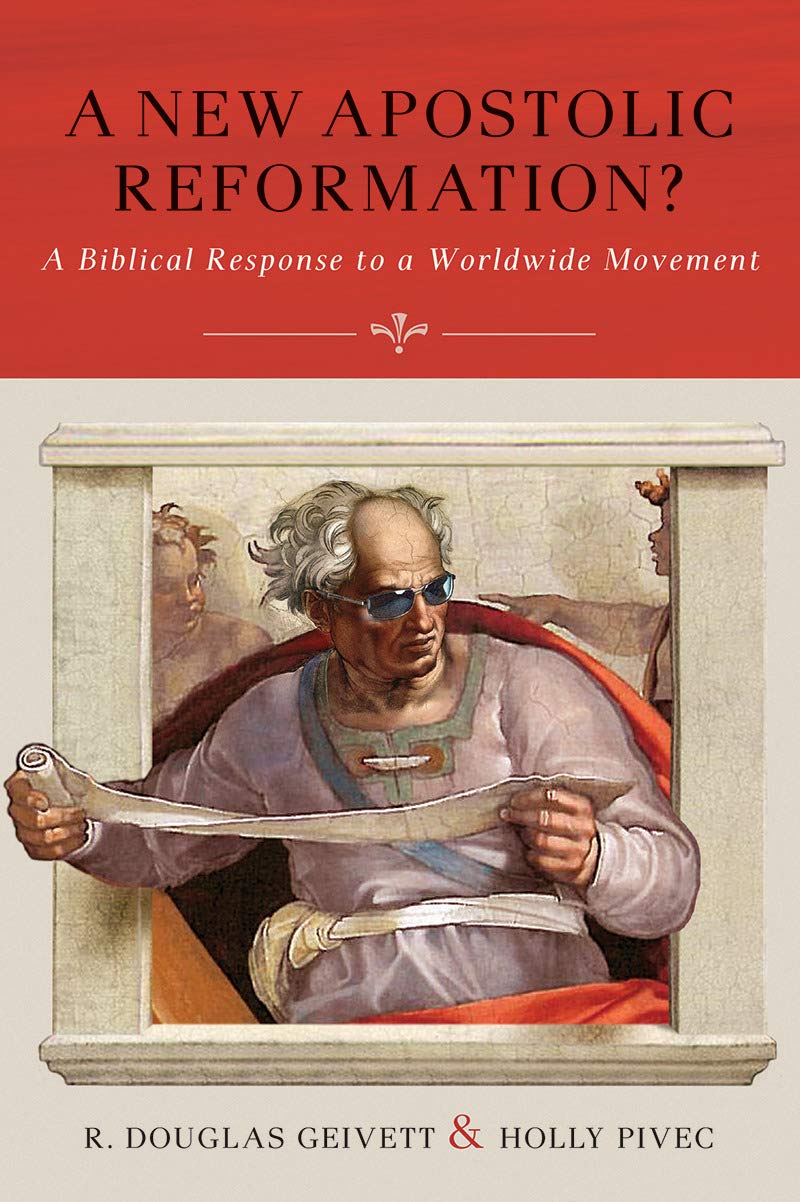
🔗 **Source:** [A New Apostolic Reformation?]()
## Highlights
- The movement is called the New Apostolic Reformation (NAR).2 It’s apostolic because its leaders claim they’re restoring the lost office of apostle to the church—an office endowed with astonishing authority, miraculous powers, and divine strategies for establishing God’s kingdom on earth.
- The biggest innovation of NAR is the belief that apostles, working together with prophets, must take over governance of the church—taking the reins from the pastors, elders, and denominational leaders—so that God’s end-time plans can be fulfilled and Christ can return.4 Churches that do not submit to the authority of these present-day apostles and prophets will sit on the sidelines as mere spectators.
- And some teach that any Christians who oppose this movement are under the control of a powerful demon known as the spirit of religion.
- Since NAR is not an organization or denomination there is no official listing of NAR beliefs, leaders, or churches. But the one thing all participants in NAR share in common, in our view, is the controversial belief in the present-day offices of apostle and prophet.
- Wimber found Bickle’s church guilty of making errors in its oversight of the prophets, including failure to provide adequate accountability for their prophecies. The church was also faulted for allowing some of these prophets to establish doctrine based on their prophetic words.
- NAR has gained so much momentum that its community now has its own Bible version, The Passion Translation, produced by the apostle Brian Simmons of Stairway Ministries (Wichita, Kansas).25
- NAR accounts for much of the phenomenal growth of Christianity taking place in the Global South—Africa, Asia, and Latin America. It’s part of the fastest-growing segment of non-Catholic Christianity worldwide, a segment researchers call the Independent, or Postdenominational segment, with more than 369 million participants.27 Only the Protestant segment is slightly larger.
- Though the Assemblies of God and other Pentecostal denominations officially disassociate themselves from key NAR teachings, many of their churches—which have considerable freedom to govern themselves—have in fact embraced those teachings.
- We are not talking about something on the fringes, but about a dynamic movement at the very heart of 21st-century Christianity. —C. Peter Wagner, Dominion! How Kingdom Action Can Change the World
- Destiny Image Publishers is a NAR company started in 1983 in response to visions that founder Don Nori said God gave to him, showing him the need for a company that would “publish the prophets.”71 Destiny Image has since become a major producer of books written by NAR apostles, prophets, and teachers, including Bill Hamon, Bill Johnson, Ché Ahn, James Goll, and Jonathan Welton. In addition, NAR apostles and prophets have even managed to have their books published by mainstream evangelical publishers, including Rick Joyner’s Shadows of Things to Come and Héctor Torres’s The Restoration of the Apostles and Prophets (both published by Thomas Nelson) and Cindy Jacobs’ The Reformation Manifesto (published by Bethany House). Thus multiple books written by NAR leaders can be found on the shelves of Christian bookstores as well as those of national chains like Barnes and Noble. Some of these books are bestsellers and have even made it to the shelves of Sam’s Club, such as the tenth anniversary edition of When Heaven Invades Earth, by Bill Johnson (Destiny Image Publishers).
- Tags: aqua, blue
- Presently most Protestant churches and ministries are not led by apostles. They’re led by pastors, elders, and denominational administrators, who, in the NAR view, are mere foot soldiers, bereft of fresh revelation and supernatural firepower. When the foot soldiers finally step aside and let apostles take charge, the church will be an unstoppable force.
- In the middle of the spectrum are many classical Pentecostals and charismatics103 who agree with the above definition of present-day apostles as pioneering missionaries and church planters. Yet they give these leaders added authority. These groups believe that apostles exist today who are authorized to perform miraculous signs to confirm the truth of the gospel they proclaim.
- NAR leaders who affirm the existence of apostles today and hold that these apostles have governing authority equal to the original apostles.
- The Assemblies of God view is summed up this way: “We affirm that there are, and ought to be, apostolic- and prophetic-type ministries in the Church, without individuals being identified as filling such an office.”
- In a NAR church, on the local level, the senior pastor calls the shots. The pastor is viewed as the leader of a church—not an employee of the church—and has final authority over the staff and budget.121 He or she does not answer to the elders; rather, the elders serve and support the pastor. This CEO-type role for pastors is much different from many traditional churches where the pastors are treated as employees of the church.
- So, apostles have God-given authority “to establish the foundational government of the church.” What does that mean? Notice Wagner’s definition. An apostle is a Christian leader gifted, taught, commissioned and sent by God with the authority to establish the foundational government of the Church within an assigned sphere of ministry by hearing what the Spirit is saying to the churches and by setting things in order accordingly for the expansion of the Kingdom of God [our emphasis].
- There is a chain of command in the church. Apostles, though they have been restored only lately, sit at the top. Prophets, pastors, evangelists, and all others submit to them. Prophets submit to apostles by providing them with new revelation, then stepping aside for apostles to interpret and implement it.131 Pastors, the local authority of a church, submit to the translocal authority of an apostle when they voluntarily join an apostolic network. When a pastor submits to an apostle, by extension all the people in the pastor’s congregation are under the proper “apostolic covering” (also called “spiritual covering”). Pastors must submit to apostles because they themselves don’t have what it takes to lead the church in advancing God’s kingdom. “The responsibility of pastors is to care for, nurture and comfort the flock. Very few pastors have either the gifts or the temperament to mobilize an army for war. Apostles, on the other hand, do.”
- network. For example, the apostolic network HIM expects churches to make a monthly donation and recommends that the donation be between 5 percent and 10 percent of their monthly gross income.
- Failure to submit to a NAR apostle is seen as failure to submit to God.
- If apostles sit at the top of church government, then how are they kept from abusing their authority? To whom are they accountable?
- covering” (counsel and correction) for those in their networks. Horizontal apostles: These apostles lead groups of peers—such as all the pastors in a city or all the apostles in a nation—to work together to accomplish specific purposes. Workplace apostles: These apostles provide leadership for Christians working in different sectors of society (for example, real estate, government, health care, or the media). Of these three categories, workplace apostles presently receive the most attention.
- Ahn’s leadership made up of apostles Sam and Linda Caster, Brian
- Nevertheless, present-day apostles can receive new revelation that supplements Scripture so long as it doesn’t contradict it. Wagner states: “The one major rule governing any new revelation from God is that it cannot contradict what has already been written in the Bible.
- But it does appear that NAR leaders allow for new revelation that is treated on a par with Scripture—despite denials to the contrary. We argue for this later in this book. We also note that NAR leaders typically do not grant a place of prominence to the apostle Paul, while most Protestant Christians believe Paul’s stature was equal to that of the Twelve.
- On the NAR interpretation, Jesus, at his ascension, gave the church five ongoing governmental offices: apostle, prophet, evangelist, pastor, and teacher. This is where the term fivefold ministry comes from. These five offices are also commonly called ascension gifts.
- But NAR leaders say there is no good reason to see only three of the five roles as ongoing. They often compare the present church to a hand that has only three fingers. According to the metaphor, the church today has limited influence because it does not yet exhibit appropriate regard for all five offices. When the majority of Christians accept all five present-day offices, the church will become God’s powerful hand to advance his kingdom.
- In addition to Ephesians 4:11 and 2:20, a third verse is often cited by NAR leaders in support of the present-day offices of apostle and prophet, 1 Corinthians 12:28: “And God has appointed in the church first apostles, second prophets, third teachers, then miracles, then gifts of healing, helping, administrating, and various kinds of tongues.”
- Numerous Protestant interpreters across denominational lines believe that apostles are listed first in the above verse—and prophets second—because they are first in rank or importance.
- Apostles in NAR have a number of functions, including receiving revelation from God, casting new vision for the church based on the revelation they have received, and governing within the church. Their authority, though sweeping, does have some limits. They have limited spheres of authority, they must work together with prophets, and they cannot author Scripture. The key Scriptures used to support the existence of present-day apostles are Ephesians 4:11, Ephesians 2:20, and 1 Corinthians 12:28.
- When were these other apostles commissioned? If 1 Corinthians 15:7 were the only Scripture that referred to them, then it would appear that they were all commissioned during the period of Jesus’s post-resurrection appearances. This is a reasonable assumption since both the Twelve—with the exception of Matthias—and Paul received their commissions when Christ appeared to them.
- The apostles of Christ understood that their role in governing the church was temporary. As they aged, and in preparation for their departure, they appointed elders to govern the church (Titus 1:5; 1 Peter 5:1–3; Acts 14:23) rather than ordaining any new apostles of Christ to succeed them.
- Apostles of the functional kind, however, do continue. The apostle Paul made this clear in Ephesians 4:11, where he listed the types of gifted leaders that God has given the church in its ongoing structure. Ephesians 4:11 does not list every type of gifted leader, but only those that are essential to the establishment of local churches and the proclamation of the Word of God.
- This avoidance of the word apostle when referring to present-day missionaries and church planters is appropriate.
- the fact that NAR churches are growing quickly is not necessarily a sign of God’s approval of them. All church growth isn’t necessarily healthy growth. The New Testament contains multiple warnings about false apostles, false prophets, and false teachers who will accumulate many followers (Matt.
- there’s no indication from Scripture that today’s “apostles” hold formal, governmental offices.
- Since overseeing apostles wield far-reaching authority that extends to multiple other apostles—each overseeing their own network of churches and ministries—what will prevent these overseeing apostles from joining up with other overseeing apostles, ultimately leading to the emergence of one apostle with pope-like authority? And even if such a figure should emerge, there is no guarantee that apostles would submit to his authority.
- NAR leaders might respond that accountability is not as big a problem as it might seem because NAR churches join apostolic networks voluntarily and, thus, can withdraw at any time if they feel that an apostle is being abusive or promoting heretical teachings.
- First, apostles must quite literally have seen the resurrected Lord. Second, they must have received a specific commission by Christ in the fashion of those first commissioned during the Apostolic Age. Third, they must perform miracles that attest to their authority as apostles of Christ. Fourth, any new teachings or practices they promote must be supported in Scripture. Fifth, they must exhibit an exemplary quality of ministry and lives of the highest level of virtue and integrity.
- the gift of prophecy hold a formal church office:
- Because those with the gift of prophecy do not hold a formal office, the governing body of the Assemblies of God disapproves of using the title of prophet in churches.
- NAR leaders—in contrast to Assemblies of God officials—believe that today’s prophets hold a formal office. In the NAR view, it’s essential that prophets govern, for these prophets must direct the church to adopt their new strategies.
- however, that prophets in the New Testament were not sent to nations, but functioned mostly in local churches. Except
- The notion of present-day prophets to nations has no biblical support.
- We simply note that even classical Pentecostal denominations, such as the Assemblies of God, express concern about prophetic words that purport to reveal spiritual gifts or provide personal life direction.361
- While there is a scriptural basis for an ongoing gift of prophecy, there is no basis for a present-day office of prophet that governs the church or prophets who prophesy to nations or give new truths.
- Grudem maintains that New Testament prophets need not be one hundred percent accurate since they do not have the same level of authority as the Old Testament prophets and do not hold a formal governing office in the church.
- NAR apostles and prophets claim to have revealed divine strategies for advancing God’s kingdom. Many are related to an overarching strategy known as strategic-level spiritual warfare—the attempt to cast out high-ranking demonic spirits that are believed to rule over cities and nations. Less extreme forms of some of these strategies have even been adopted to some degree by various Evangelical organizations and ministries. We urge great caution and the use of biblical discernment for those involved with any of these strategies.
- Thus, there is no biblical support for NAR teachings that workplace apostles must govern the so-called church in the workplace and cast out territorial spirits that rule over societal institutions.
- Apostolic unity is based on the premise that apostles—not pastors—are the true “spiritual gatekeepers” in a city.459 For cities to see transformation, Christians living in those cities must submit to the leadership of the local territorial apostles.
- Soaking The purpose of this practice is to experience greater intimacy with God by soaking in His presence. Such intimacy will activate miraculous gifts and supernatural experiences. Soaking often involves elements such as finding a place of solitude, praying in one’s native language, speaking in tongues, and waiting upon God to manifest his presence. This presence may be mediated by dreams, visions, trances, out-of-body experiences, angelic visitations, or being “transported in the Spirit,” rather like Philip, an early Christian convert and evangelist who was miraculously transported between geographical regions (Acts 8:39–40).506 The production of “soaking music” to aid people in their soaking practices has become an industry within NAR.
- there is no biblical support for NAR teachings about the rise of a miracle-working army that will perform greater miracles than those performed by Jesus or the apostles of Christ. Furthermore, Scripture nowhere commends the notion of training miracle-workers. No place in Scripture encourages the conviction that men and women may increase in miraculous power until they overcome sickness and death and execute God’s judgments.