Don’t Use AI? You Might Not Get the Job.
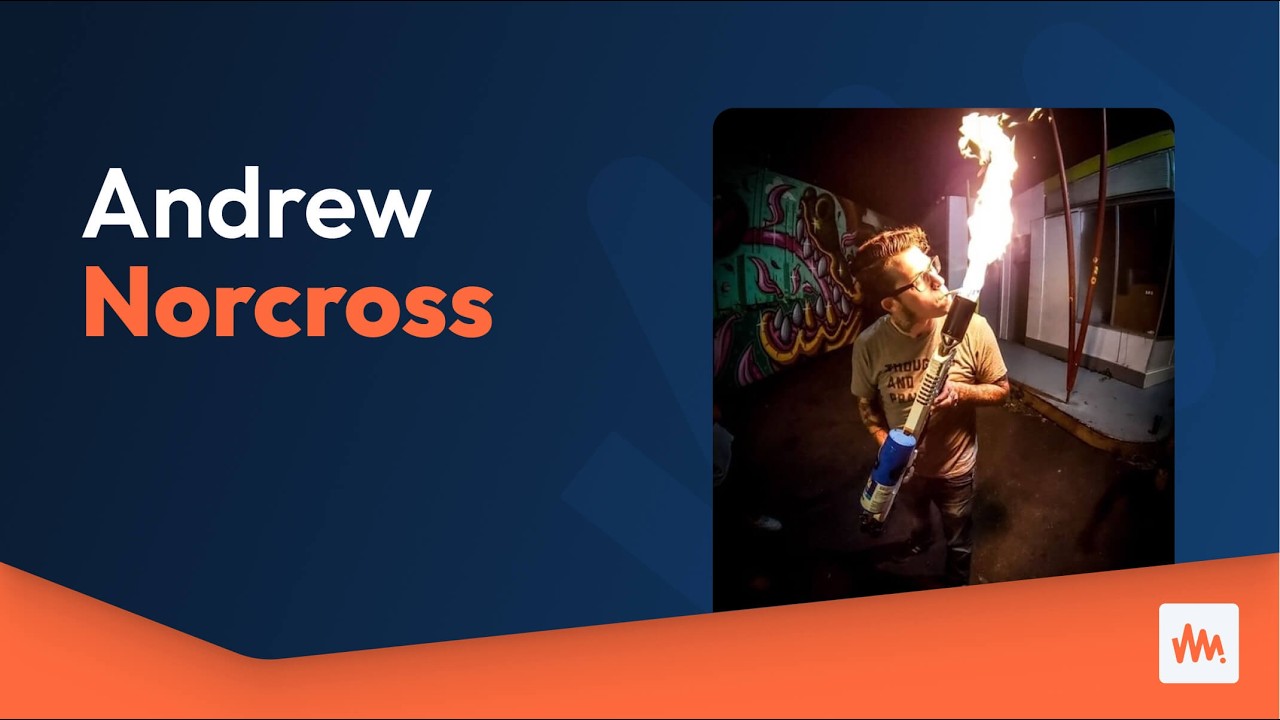
🔗 **Source:** [Don’t Use AI? You Might Not Get the Job.]()
> [!note]+ Document Notes
> tags: [wordpress-careers, ai-in-hiring, developer-labor, professional-judgment, open-source]
> author: Eric Karkovack and Andrew Norcross
> source: The WP Minute
> reference: https://www.youtube.com/watch?v=1Lxfe3MHlIc
> date created: 2026-08-04 10:08 EDT
>
> > [!info] Generated analysis — not the author's words. Sections below are machine-written
> > from the captured source. Only text inside `> [!quote]` blocks is verbatim from the author.
> > Do not quote or attribute any other line to the named author.
>
> # 🏷️ Title: Don’t Use AI? You Might Not Get the Job.
>
> ## 🧭 Table of Contents
> - [📝 Summary](#-summary)
> - [📖 Main Content](#-main-content)
> - [🗒️ Notes](#️-notes)
> - [📚 References](#-references)
> - [🗣️ Paraphrase](#️-paraphrase)
> - [📰 Newsletter](#-newsletter)
> - [✅ Action Items](#-action-items)
> - [🧪 Hypotheses](#-hypotheses)
> - [📊 Methodology](#-methodology)
> - [❓ Questions](#-questions)
> - [🔮 Future Research](#-future-research)
> - [💡 Implications](#-implications)
> - [🧠 Learning Styles Assessment](#-learning-styles-assessment)
> - [📊 Accessibility Assessment](#-accessibility-assessment)
> - [🌍 DEIB Assessment](#-deib-assessment)
> - [✅ Logical Validity](#-logical-validity)
> - [🛡️ DARVO Analysis](#-darvo-analysis)
> - [🎯 Conclusion](#-conclusion)
> - [🔄 Refactor Appendix](#-refactor-appendix--don-t-use-ai-you-might-not-get-the-job)
>
> ### 🔗 References
> - [Source video](https://www.youtube.com/watch?v=1Lxfe3MHlIc)
> - References named in the transcript are contextual leads; verify them independently before reuse.
>
> ## 📝 Summary
> - **What happened:** Eric Karkovack and Andrew Norcross examine a WordPress developer's difficult job search, including a rejection attributed to insufficient AI use. The conversation argues that hiring markets may reward visible tool adoption while undervaluing craft knowledge, and that AI is one factor among layoffs, consolidation, global pay differences, and shifts in the WordPress economy.
> - **Why it matters:** The episode records a contributor-level account of how AI expectations enter hiring. It matters as evidence of experience, not proof that all employers behave this way.
> - **Key stakeholders:** WordPress developers, job seekers, hiring managers, agencies, product companies, open-source maintainers, and contributor programs.
> - **Risks and tradeoffs:** Conflating one interview with the market, romanticizing past development culture, dismissing useful AI assistance, normalizing uncompensated training data, and amplifying career distress without practical support.
> - **Bottom line:** Evaluate candidates on outcomes, reasoning, verification, and role requirements. Ask about AI only when a specific task needs it, and don't treat tool enthusiasm as a substitute for professional competence.
>
> ## 📖 Main Content
> Eric Karkovack and Andrew Norcross examine a WordPress developer's difficult job search, including a rejection attributed to insufficient AI use. The conversation argues that hiring markets may reward visible tool adoption while undervaluing craft knowledge, and that AI is one factor among layoffs, consolidation, global pay differences, and shifts in the WordPress economy.
>
> The episode records a contributor-level account of how AI expectations enter hiring. It matters as evidence of experience, not proof that all employers behave this way.
>
> The source is an interview or educational presentation, not a controlled study. Claims about products, markets, organizations, and outcomes should be treated as speaker testimony unless a cited source independently confirms them.
>
> ### 🗒️ Notes
> #### ⏱️ [00:00](https://www.youtube.com/watch?v=1Lxfe3MHlIc&t=0) Karkovack introduces the episode as a discussion of the changing market for web professionals with veteran developer Andrew Norcross
> - Karkovack introduces the episode as a discussion of the changing market for web professionals with veteran developer Andrew Norcross.
> #### ⏱️ [18:26](https://www.youtube.com/watch?v=1Lxfe3MHlIc&t=1106) Norcross distinguishes routine administrative uses from work that requires technical judgment
> - Norcross distinguishes routine administrative uses from work that requires technical judgment.
> #### ⏱️ [20:41](https://www.youtube.com/watch?v=1Lxfe3MHlIc&t=1241) He reports that a prospective employer rejected him for not using enough AI in his workflow
> - He reports that a prospective employer rejected him for not using enough AI in his workflow.
> #### ⏱️ [25:00](https://www.youtube.com/watch?v=1Lxfe3MHlIc&t=1500) The discussion notes that older PHP training data can contain obsolete practices, increasing review needs
> - The discussion notes that older PHP training data can contain obsolete practices, increasing review needs.
> #### ⏱️ [31:47](https://www.youtube.com/watch?v=1Lxfe3MHlIc&t=1907) The speakers connect hiring pressure to WordPress saturation, consolidation, and changing product economics
> - The speakers connect hiring pressure to WordPress saturation, consolidation, and changing product economics.
> #### ⏱️ [40:55](https://www.youtube.com/watch?v=1Lxfe3MHlIc&t=2455) Norcross describes the market as unstable and avoids claiming a settled long-term career answer
> - Norcross describes the market as unstable and avoids claiming a settled long-term career answer.
>
> ## 📚 References
> - [Original video](https://www.youtube.com/watch?v=1Lxfe3MHlIc)
> - Not applicable beyond the source video; the transcript doesn't supply a complete, verified bibliography.
>
> ## 🗣️ Paraphrase
> - The guest's WordPress career began through experimentation and long-term community participation.
> - He values technical work as problem solving rather than code volume alone.
> - He accepts AI for routine tasks but resists a role centered on reviewing generated code.
> - A prospective employer reportedly viewed low personal AI use as a hiring weakness.
> - The guest worries that older PHP examples can make generated code outdated or unsafe.
> - The speakers say the weak market reflects layoffs and business incentives as well as AI.
> - Consolidation and mature product categories may reduce some WordPress opportunities.
> - They expect employer attitudes toward AI skills to keep changing as limitations become clearer.
>
> ## 📰 Newsletter
> A veteran WordPress developer says one employer passed because he didn't use enough AI. The episode's sharper point is that “AI skill” and “can do the job” aren't synonyms. Hiring teams need task-specific rubrics: show the reasoning, run the case, review the output, and credit the human experience that makes a result trustworthy.
>
> ## ✅ Action Items
> #### DevRel
> - Publish task-based work samples and explain when AI use is allowed, required, or irrelevant.
> #### OSPO
> - Treat maintainer labor, training data, attribution, and contributor funding as governance concerns.
> #### Community
> - Create psychologically safe career sessions that connect people to concrete help without demanding disclosure.
> #### WordPress
> #### Core
> - Document current PHP and WordPress compatibility assumptions used in contributor examples.
> #### Core Performance
> - Not applicable to this source; it doesn't identify a direct action for this team.
> #### Core AI
> - Create evaluations that measure correctness and verification, not prompt fluency alone.
> #### Core Program Team
> - Not applicable to this source; it doesn't identify a direct action for this team.
> #### Mobile
> - Not applicable to this source; it doesn't identify a direct action for this team.
> #### Playground
> - Not applicable to this source; it doesn't identify a direct action for this team.
> #### Community
> - Offer career support and paid contribution routes for displaced contributors.
> #### Training
> - Teach code review, provenance, and current-version validation for generated code.
> #### Marketing
> - Not applicable to this source; it doesn't identify a direct action for this team.
> #### Support
> - Capture recurring failures caused by obsolete generated snippets.
> #### Design
> - Not applicable to this source; it doesn't identify a direct action for this team.
> #### Documentation
> - Mark version scope clearly and retire obsolete code examples.
> #### Photos
> - Not applicable to this source; it doesn't identify a direct action for this team.
> #### TV
> - Not applicable to this source; it doesn't identify a direct action for this team.
> #### Polyglots
> - Not applicable to this source; it doesn't identify a direct action for this team.
> #### Accessibility
> - Not applicable to this source; it doesn't identify a direct action for this team.
> #### Meta
> - Not applicable to this source; it doesn't identify a direct action for this team.
> #### CLI
> - Not applicable to this source; it doesn't identify a direct action for this team.
> #### Hosting
> - Not applicable to this source; it doesn't identify a direct action for this team.
> #### Tide
> - Not applicable to this source; it doesn't identify a direct action for this team.
> #### Openverse
> - Not applicable to this source; it doesn't identify a direct action for this team.
> #### Themes
> - Include accessibility and backward-compatibility checks in AI-assisted theme work.
> #### Plugins
> - Encourage maintainers to test generated patches against security and compatibility checks.
> #### The WPOCC
> - Support paid maintenance and career-transition programs for open-source contributors.
> ### FAIR
> - Require transparent funding and governance around tools trained on community-produced code and documentation.
>
> ## 🧪 Hypotheses
> - Hiring rubrics that require AI use without task justification will predict job performance worse than work-sample rubrics.
> - Candidates with strong domain knowledge will catch more outdated PHP output than candidates assessed mainly on prompt fluency.
> - Explicit AI-use expectations in job descriptions will reduce interview-stage mismatch.
> - Economic consolidation and post-pandemic over-hiring will explain more variance in WordPress layoffs than AI adoption alone.
>
> ### 📊 Methodology
> - Audit a representative sample of WordPress job descriptions for concrete versus symbolic AI requirements.
> - Run blinded work samples comparing unaided, AI-assisted, and AI-led approaches on the same maintenance tasks.
> - Measure defect detection, security issues, accessibility regressions, explanation quality, and completion time.
> - Interview candidates and employers separately, then compare stated reasons with documented selection criteria.
>
> ### ❓ Questions
> - Which roles truly require AI tooling on day one?
> - How should candidates disclose tool use in take-home exercises?
> - What counts as evidence that a person can verify generated PHP?
> - How can hiring teams value community and maintenance knowledge?
> - What support helps displaced contributors without reducing them to market data?
>
> ### 🔮 Future Research
> - Longitudinal tracking of WordPress job postings, salaries, and required skills.
> - Research on AI-assisted maintenance of older PHP and WordPress code.
> - Studies of applicant experience with ghost jobs and long interview loops.
> - Comparisons between agency, product, enterprise, and independent contributor labor.
>
> ### 💡 Implications
> - Practice: define AI requirements by task, risk, and evidence rather than fashion.
> - Policy: publish candidate disclosure rules and prohibit hidden AI use in controlled assessments.
> - Security: test generated code against current WordPress and PHP standards.
> - Education: teach verification and domain fundamentals alongside tool operation.
> - Funding: support maintainer fellowships and paid contributor pathways during market contraction.
>
> ### 🧠 Learning Styles Assessment
> - Reading level estimate: Flesch–Kincaid grade 10–12 based on conversational syntax and specialized vocabulary; an exact score requires the cleaned transcript.
> #### 👀 Visual learners
> - Present: a spoken framework and examples, with limited dependence on visuals in the captured transcript.
> - Improve: add a labeled model, process diagram, and before/after example with text alternatives.
> #### 🔊 Aural learners
> - Present: the interview or narration format supports listening and speaker emphasis.
> - Improve: add a short chaptered audio summary and identify speakers consistently.
> #### 🗣️ Verbal learners
> - Present: definitions, analogies, repeated terms, and concrete stories.
> - Improve: add a glossary and a plain-language recap after each major idea.
> #### 🧩 Kinesthetic learners
> - Present: practical prompts or reflection exercises can be attempted during viewing.
> - Improve: add a bounded exercise, expected result, and verification checklist.
> #### 🧠 Logical learners
> - Present: frameworks and causal claims organize the discussion.
> - Improve: distinguish assumptions, evidence, mechanism, and measurable outcome in a table.
> #### 🧑🤝🧑 Social learners
> - Present: dialogue exposes agreement, challenge, and clarification.
> - Improve: provide moderated discussion prompts and a peer-review rubric.
> #### 🧘♀️ Solitary learners
> - Present: the transcript supports self-paced review and reflection.
> - Improve: add a worksheet, pause points, and answer key for self-checks.
> #### 🌿 Naturalistic learners
> - Present: Not applicable to this source; environmental systems aren't a central teaching device.
> - Improve: connect resource use and lifecycle effects only where evidence supports the link.
>
> ### 📊 Accessibility Assessment
> #### Screen reader semantics
> - Present: the saved transcript provides text access, but source-video heading and landmark quality wasn't verified.
> - Improve: use a logical heading hierarchy, identify speakers, and supply descriptive link text. WCAG 2.2: 1.3.1, 2.4.6.
> #### Keyboard navigation
> - Present: Not verifiable from transcript content alone.
> - Improve: test every player and transcript control by keyboard with visible focus. WCAG 2.2: 2.1.1, 2.4.7.
> #### Contrast and readability
> - Present: Not verifiable from the transcript.
> - Improve: test 4.5:1 normal-text contrast, 3:1 large text, line spacing, and readable line length. WCAG 2.2: 1.4.3, 1.4.12.
> #### Text resizing and reflow
> - Present: transcript text can support reflow, but the source page wasn't audited.
> - Improve: test 200% zoom and 320 CSS-pixel reflow without loss. WCAG 2.2: 1.4.4, 1.4.10.
> #### Media and captions
> - Present: a machine-captured transcript exists.
> - Improve: publish corrected captions, speaker labels, and timestamps; add audio description when visuals carry meaning. WCAG 2.2: 1.2.2, 1.2.5.
> #### Forms and interactions
> - Present: Not applicable to the spoken content; player controls still require testing.
> - Improve: ensure accessible names, target size, status messages, and error recovery. WCAG 2.2: 2.5.8, 4.1.2, 4.1.3.
> #### Standards reference
> - This is a content-based review, not a conformance claim. A WCAG 2.2 AA audit needs the rendered page, player, captions, keyboard flow, and assistive-technology testing.
>
> ### 🌍 DEIB Assessment
> #### Cultural breadth
> - Present: examples come mainly from a US/English-speaking professional context.
> - Improve: include workers and users across regions, labor systems, languages, and income levels.
> #### Inclusive language
> - Present: the conversational language is generally approachable but includes field-specific shorthand.
> - Improve: define jargon and avoid idioms where they obscure meaning.
> #### Neurodiversity support
> - Present: chaptered notes and a transcript support review at a chosen pace.
> - Improve: add predictable summaries, visual structure, and low-distraction text.
> #### Representation
> - Present: the source represents named professional experiences, not a representative sample.
> - Improve: add voices from affected groups with different roles, seniority, disability, and access to resources.
> #### Psychological safety
> - Present: the discussion is candid about uncertainty and tradeoffs.
> - Improve: separate critique from personal judgment and point people toward practical support when the topic affects livelihood or identity.
>
> ### ✅ Logical Validity
> #### Strong reasoning
> The speakers separate AI from other labor-market causes and ground the discussion in a specific hiring episode. The PHP example supplies a plausible mechanism for why domain knowledge still matters.
>
> #### Fallacies
> The episode sometimes moves from personal experience to broad claims about employers and executives, creating hasty-generalization risk. Statements that executives do nothing are rhetorical overreach; a stronger version would identify which decisions or incentives caused measurable harm.
>
> #### Tone of voice
> Candid, frustrated, reflective, and often sarcastic, with clear sympathy for people facing layoffs and job insecurity.
>
> ### 🛡️ DARVO Analysis
> No full DARVO pattern is established. Some corporate messaging may shift responsibility for layoffs onto AI, but the source doesn't document a specific accusation-response sequence well enough to classify Deny, Attack, or Reverse victim/offender.
>
> ## 🎯 Conclusion
> Evaluate candidates on outcomes, reasoning, verification, and role requirements. Ask about AI only when a specific task needs it, and don't treat tool enthusiasm as a substitute for professional competence.
>
> Next steps: test the strongest claims against independent evidence, run a bounded real-world case, and record conditions that change the result.
>
> ## 🔄 Refactor Appendix — Don’t Use AI? You Might Not Get the Job.
>
> > Density: 5 Literature atoms and 1 Permanent candidate.
> > Literature quotes match the associated master Readwise highlights.
>
> ### 📚 Literature Atoms (H3)
>
> ### [H1] Hiring can mistake tool use for competence
> > [!quote] ID:rw_1040672512
> > I was told that I did not use enough AI in my own workflows.
>
> **Context & use**:
> - 20:41 in the source.
> - The reported decision makes tool adoption a qualification apart from demonstrated work.
>
> **Tags**: #xref
> **Highlight**: [view highlight](readwise://open?highlight=1040672512)
>
> <!-- atomicity: 1 idea ✓ -->
>
> ### [H2] Routine tasks fit bounded AI assistance
> > [!quote] ID:rw_1040672513
> > AI seems to be pretty useful for mundane stuff. You know, admin-level work boilerplate
>
> **Context & use**:
> - 18:26 in the source.
> - The guest's position is selective use, not a blanket refusal.
>
> **Tags**: #xref
> **Highlight**: [view highlight](readwise://open?highlight=1040672513)
>
> <!-- atomicity: 1 idea ✓ -->
>
> ### [H3] Robot supervision can devalue craft work
> > [!quote] ID:rw_1040672514
> > that also sounds like a complete waste of the time that I have put into learning and gaining the experience to babysit a robot.
>
> **Context & use**:
> - 20:10 in the source.
> - A review-only role can remove the problem-solving work that motivates an expert.
>
> **Tags**: #xref
> **Highlight**: [view highlight](readwise://open?highlight=1040672514)
>
> <!-- atomicity: 1 idea ✓ -->
>
> ### [H4] Weak markets constrain tool choice
> > [!quote] ID:rw_1040672515
> > the job market is so bad right now that anybody who has a role is doing whatever they can to hold on to it
>
> **Context & use**:
> - 28:00 in the source.
> - Workers may adopt tools under economic pressure rather than preference.
>
> **Tags**: #xref
> **Highlight**: [view highlight](readwise://open?highlight=1040672515)
>
> <!-- atomicity: 1 idea ✓ -->
>
> ### [H5] AI fluency does not prove job competence
> > [!quote] ID:rw_1040672516
> > you're already hearing employers saying, "These people that know AI don't actually know how to do the job."
>
> **Context & use**:
> - 41:20 in the source.
> - Hiring needs separate evidence for tool knowledge and domain performance.
>
> **Tags**: #xref
> **Highlight**: [view highlight](readwise://open?highlight=1040672516)
>
> <!-- atomicity: 1 idea ✓ -->
>
> ### 🧠 Permanent Candidates (H4)
>
> #### [P1] Tool fluency never replaces domain verification
> **Claim** (one sentence, Courtney's voice): A hiring signal is useful only when it predicts the role's real work and its failure modes.
> **Evidence pointer**: [[#H1]]
> **Scope & conditions**: This applies to technical roles with observable work samples; confidential or safety-sensitive roles may need simulations and structured references instead.
> **Links**:
> - [[Work-sample hiring]] — because applies-in technical recruiting
> - [[Professional judgment]] — because extends
> - [[AI verification debt]] — because evidence-for domain expertise
>
> <!-- atomicity: 1 idea ✓ -->
>
> ### ✏️ Fleeting Queue
> - [F1] Draft an AI-use disclosure field for technical work samples. https://www.youtube.com/watch?v=1Lxfe3MHlIc #fleeting #inbox
> - [F2] Compare current WordPress job ads with the skills used in maintenance work. https://www.youtube.com/watch?v=1Lxfe3MHlIc #fleeting #inbox
>
> ### → Things 3 (max 2 actions)
> - [ ] Write a task-specific AI hiring rubric for one WordPress role — source follow-up #things
> - [ ] Collect three current job descriptions that state an AI requirement — source follow-up #things
## Highlights
- I was told that I did not use enough AI in my own workflows.
- Note: A hiring decision treated AI workflow adoption as a qualification independent of the candidate's demonstrated experience.
- AI seems to be pretty useful for mundane stuff. You know, admin-level work boilerplate
- Note: Norcross distinguishes bounded administrative assistance from substituting judgment-intensive engineering.
- that also sounds like a complete waste of the time that I have put into learning and gaining the experience to babysit a robot.
- Note: Mandatory AI supervision may feel like a devaluation of accumulated craft expertise.
- the job market is so bad right now that anybody who has a role is doing whatever they can to hold on to it
- Note: Labor-market pressure changes how freely workers can refuse imposed tools or workflows.
- you're already hearing employers saying, "These people that know AI don't actually know how to do the job."
- Note: AI fluency is not a substitute for underlying professional competence.