Agent-Ready Infrastructure: The New Enterprise CMS Requirement
🔗 **Source:** [Agent-Ready Infrastructure: The New Enterprise CMS Requirement](https://wpvip.com/blog/ai-content-management/)
> [!note]+ Document Notes
> ---
> tags: [enterprise-cms, ai-agents, model-context-protocol, ai-content-governance, vendor-positioning]
> author: Jake Ludington
> source: WordPress VIP
> reference: https://wpvip.com/blog/ai-content-management/
> date created: 2026-09-23 19:04
> ---
> > [!info] Generated analysis — not the author's words. Sections below are machine-written
> > from the captured source. Only text inside `> [!quote]` blocks is verbatim from the author.
> > Do not quote or attribute any other line to the named author.
> # 🏷️ Title: Agent-Ready Infrastructure: The New Enterprise CMS Requirement
> ## 🧭 Table of contents
> - [📝 Summary](#-summary)
> - [📖 Main content](#-main-content)
> - [🗒️ Notes](#️-notes)
> - [📚 References](#-references)
> - [🗣️ Paraphrase](#️-paraphrase)
> - [📰 Newsletter](#-newsletter)
> - [✅ Action items](#-action-items)
> - [🧪 Hypotheses](#-hypotheses)
> - [📊 Methodology](#-methodology)
> - [❓ Questions](#-questions)
> - [🔮 Future research](#-future-research)
> - [💡 Implications](#-implications)
> - [🧠 Learning styles assessment](#-learning-styles-assessment)
> - [📊 Accessibility assessment](#-accessibility-assessment)
> - [🌍 DEIB assessment](#-deib-assessment)
> - [✅ Logical validity](#-logical-validity)
> - [🛡️ DARVO analysis](#️-darvo-analysis)
> - [🎯 Conclusion](#-conclusion)
> - [🔄 Refactor appendix](#-refactor-appendix--agent-ready-infrastructure-the-new-enterprise-cms-requirement)
> ## 📝 Summary
> - **What happened.** WordPress VIP published a 19-paragraph, roughly 1,000-word post by Jake Ludington in September 2026 under six headings. Reader stored it as "Agent-Ready Infrastructure: The New Enterprise CMS Requirement"; the page title is "AI Content Management: Why Enterprises Need an Agent-Ready CMS." It argues that enterprise CMS platforms assume human-only readers and writers, that AI agents break that assumption, and that the CMS must become the orchestration layer for agents, with MCP as the connector and a governance layer (roles, audit log, kill switch) that VIP sells as Secure MCP.
> - **The claim.** Four parts: AI tooling is outgrowing content infrastructure (Gartner's 77%, MarTech's 62.1%); the CMS is the natural orchestration layer because brand context, workflow, and compliance guardrails already live there (¶5-6); MCP collapses an M×N integration problem into one protocol layer (¶7); agent governance must mirror human governance from day one (¶9-12). The commercial close: Sitecore, Adobe AEM, and Acquia "cannot fully answer these questions today" (¶14), and open architecture adapts faster (¶15).
> - **Why it matters.** For a Pantheon DevRel reader, this is the clearest public statement so far of how VIP positions MCP: as an enterprise governance product with a buyer's checklist, not as a developer feature. The checklist logic (agent roles mirror human roles, audit log resolves agent to action to human, kill switch spares editors) is sound and vendor-neutral. Any WordPress host can be measured against it, including Pantheon.
> - **Key stakeholders.** WordPress VIP (publisher, vendor, author of two of the five sources); Gartner and MarTech (third-party statistics); Anthropic, Microsoft, Google (named MCP adopters); Sitecore, Adobe, Acquia (named laggards, no evidence); enterprise content teams; competing WordPress hosts.
> - **Risks and tradeoffs.** Two of five citations are VIP's own gated reports, and the 85% anchoring the governance section comes from one of them with no sample size in the text. The 5×10=50 arithmetic is illustrative, and MCP reduces it to M+N components, not to one integration. The post's two most actionable lists (four capabilities in ¶8, five questions in ¶13) didn't survive the Reader capture; the paragraphs announce them and the items are absent. The competitor claim has no source, and Acquia runs on Drupal, an open-source CMS, which undercuts the open-versus-monolithic framing.
> - **Bottom line.** Keep the architecture: agent access mirrors human roles, every agent action logs the human it acts for, one switch stops agents without stopping editors. Drop the numbers you can't trace. Recover the actual five questions from the live page before reusing that section; the reconstruction below is labeled as the analyst's wording.
> ## 📖 Main content
> **The core argument, stripped of the pitch.** A CMS encodes three things for human editors: brand context, publishing workflow, and compliance guardrails (¶5). An agent that reads or writes content needs the same three (¶6). If those already live in the CMS, the CMS is where agent coordination belongs, which the post names the orchestration layer. That is a mechanism argument and it holds without a vendor attached. The alternative, wiring each AI tool to each data source, produces the sprawl the opening statistics describe.
> **The integration math.** ¶3 sets a hypothetical: 5 AI tools on 10 data sources, 50 custom integrations. ¶7 says a CMS with native MCP shrinks that to "a single protocol layer." Two corrections. First, 5×10 is a worked example placed between two survey figures, so it reads as if it belongs with them. Second, MCP's own design is M+N, not 1: 5 clients plus 10 servers, 15 components instead of 50. Still a real reduction; the phrasing overstates it. Where the CMS itself is the MCP server fronting content, the N side collapses for content specifically, which is the stronger claim the author could have made.
> **The statistics and who produced them.**
> | Figure | Where | Source | Independence | Caveat |
> |---|---|---|---|---|
> | 77% of 400 engineering leaders call building AI into apps a significant or moderate pain point | ¶0 | Gartner press release, 2025-05-22 | Third-party | Press release, not the instrument; two answer bands merged |
> | 62.1% use more AI tools than two years ago | ¶3 | MarTech 2025 State of Your Stack | Third-party, gated | Self-selected martech respondents; measures tool count, not integration pain |
> | 5 tools × 10 sources = 50 integrations | ¶3, ¶7 | Author's illustration | Hypothetical | MCP reduces to M+N (15), not 1 |
> | 85% say AI content published without human review erodes brand trust | ¶10 | VIP Future of the Web 2026 | Vendor research, gated | No sample size or method in the post; VIP sells the product the finding motivates |
> | Anthropic, Microsoft, Google standardized on MCP | ¶7 | No link | Unsourced | Directionally right; OpenAI's 2025 adoption is omitted |
> | Sitecore, AEM, Acquia "cannot fully answer these questions today" | ¶14 | No link | Unsourced | No evaluation, criteria, or date |
> **The four capabilities.** ¶8 announces "4 key capabilities." The list isn't in the captured text. Three are recoverable from what follows: authentication and roles mirroring human roles (¶9), an audit trail resolving which agent did what on behalf of which human (¶11), and a kill switch that spares humans (¶11). The fourth is most likely native MCP connectivity (¶7), since ¶12 lists exactly those four as Secure MCP's features. Treat the fourth as inferred.
> **The five questions, reconstructed.** ¶13 says "run through these five questions with each potential solution provider," and ¶14 says most DXPs can't answer them. The questions are missing from the capture. Until you pull them from the live page, here is a reconstruction from what the text does describe, in the analyst's wording:
> 1. Does agent access authenticate through the same identity system and inherit the same role definitions as human users, or is it a separate credential with its own permission model? (¶9)
> 2. Show me an audit log entry naming the agent, the action, the content object, and the human the agent acted for. (¶11)
> 3. Is there one control that disables all agent access without affecting human editing sessions, and how fast does it take effect? (¶11)
> 4. Do you expose content operations over MCP natively, and which operations (read, draft, publish, media, taxonomy, users) are in scope? (¶7, ¶12)
> 5. When the protocol or model landscape changes, what does adaptation cost: a configuration change, a plugin update, or a roadmap item? (¶14-16)
> The fifth is least certain; ¶14-16 argue adaptability without stating it as a question. If the live page's fifth is about something else (pricing, data residency, model choice), re
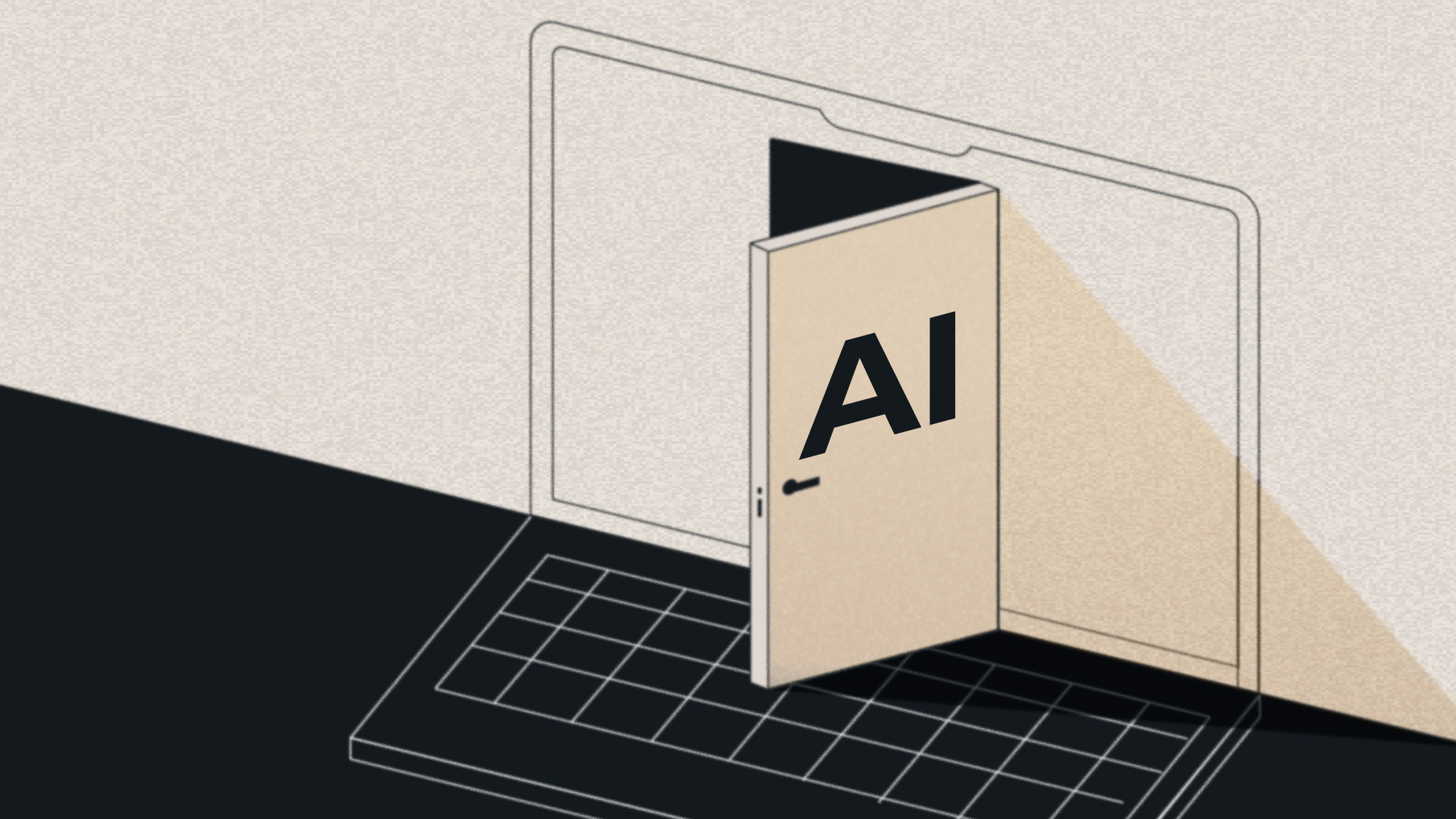
An open door labeled AI within the outline of a laptop screen and keyboard, symbolizing access to AI content management through agent-ready infrastructure.
A [Gartner survey](https://www.gartner.com/en/newsroom/press-releases/2025-05-22-gartner-survey-finds-77-percent-of-engineering-leaders-identify-ai-integration-in-apps-as-a-major-challenge) of 400 engineering leaders found that 77% called building AI capabilities into applications a significant or moderate pain point. The tools generally work in isolation. The people adding AI capabilities understand how to apply them to existing workflows.
In CMS infrastructure, this integration becomes a pain point because those AI tools are disconnected from the CMS infrastructure layer where content lives.
Most enterprise CMS platforms are built on the assumption that humans are the only readers and writers of content. When AI agents are added to the mix, that assumption becomes a bottleneck.
#### Your AI stack grew faster than your content infrastructure
There’s plenty of evidence to show AI adoption is on the rise. The 2025 MarTech [State of Your Stack report](https://info.martech.org/MTC_2504_2025StackSurv_Download1.html) found 62.1% of respondents are using more AI tools than they were two years ago. In an enterprise context, more tools equal more integration hurdles. If your content team uses 5 AI tools to read and write 10 different data sources, you could be looking at 50 custom integrations.
Each tool may perform well on its own. But the complexity of getting them all to work together is what prevents content teams from realizing the full benefits of agentic AI.
#### How the CMS became the orchestration layer for enterprise AI integration
In the early days of enterprise content management, the CMS served as both the content storage and display layers. Headless architecture evolved the CMS to provide a content API that supports unique display layers for web, app, and mobile experiences. In both traditional and headless CMS workflows, human editors need brand context, publishing workflows, and compliance guardrails.
AI agents need this same level of understanding. In AI-enabled content workflows, the CMS serves as the orchestration layer, coordinating agentic events.
Model Context Protocol (MCP) emerged as the standard for agent-data connectivity. Anthropic, Microsoft, and Google all standardized around MCP. A CMS that supports MCP natively is the connector for the enterprise AI stack, shrinking 5 tools x 10 data sources = 50 custom integrations into a single protocol layer that facilitates communication across the stack.
#### What agent-ready means for AI content management
An agent-ready CMS takes familiar human workflows and adapts them for AI agents across 4 key capabilities.
* **Access:** AI is evolving quickly. A custom integration for each new AI tool is unsustainable. A CMS platform that exposes capabilities via an MCP server simplifies access for all tooling.
* **Action:** Just like humans, AI agents need roles that determine what they can or can’t do. Restrictions are established to define which content is read-only and whether agents have the ability to publish, update, query, or personalize content.
* **Context:** Both humans and AI agents need publishing guidelines. An agent-ready platform provides brand standards, editorial tone, and compliance requirements in a persistent memory layer accessible by agents.
* **Control:** Agents also need boundaries, just like humans do. This means defining permissions, maintaining an audit trail, and being able to revoke access to some or all AI agents.
#### Governance is the layer you can’t retrofit
Content management systems limit human access with authentication and roles. Agent access should mirror that authentication and role definition.
Enterprise leaders already see the risk. In our [Future of the Web 2026 research](https://wpvip.com/resources/reports/future-of-the-web-2026/ai-content-governance/), 85% said AI content published without human review erodes brand trust. Their funded 2027 priorities are operational: governance, review systems, and editorial pipelines.
An enterprise CMS provides an audit trail to maintain brand consistency and address compliance requirements. AI needs a similar audit trail, so you know which agent initiated which action on behalf of which human. In the event that agent access needs to be turned off, you also need a single kill switch that doesn’t simultaneously lock out human workflows.
WordPress VIP implements this governance layer through [Secure MCP](https://wpvip.com/blog/wordpress-mcp/). It is the single authenticated endpoint with permission-based access that mirrors existing human user roles. Secure MCP provides an audit log for all agent-initiated actions. And in the event of needing to lock down your environment, there’s a one-click kill switch to disable agentic access.
#### Five questions to ask CMS providers
As you evaluate CMS platforms, run through these five questions with each potential solution provider:
1. **Is your MCP endpoint in production today, or will each AI integration start as a custom build?**
This indicates whether the platform is ready for AI or simply on the roadmap.
2. **When an agent acts in the system, whose permissions is it using?**
This establishes whether an AI agent is constrained by the same limitations as the human it serves.
3. **Can you show me the audit log for the last AI-initiated content change?**
There should be a verifiable audit trail for any demo of agents in action.
4. **If we needed to cut all agent access in five minutes, what’s the procedure?**
It’s important to know that humans can retain control if needed.
5. **Where do brand and compliance rules live in a form an agent can read?**
Governance can only be consistent when both humans and agents are bound by rules they can understand.
Most enterprise DXPs, including Sitecore, Adobe AEM, and Acquia, cannot fully answer these questions today. The platforms all existed before the new AI requirements emerged, and their monolithic nature requires a more complex roadmap than open systems.
Platforms built on open architecture are able to respond more quickly. The open source design of WordPress, for example, is intended to be adapted to evolving technologies, which allows content operations to iterate faster.
#### The CMS is no longer just a publishing tool
Choosing a CMS is no longer just a publishing decision. It’s the decision that determines how effectively AI integrates into your content operations for the next several years. An enterprise team that focuses solely on who offers the best feature checklist today will find itself locked into platforms requiring expensive rebuilds as AI capabilities evolve.
The enterprises that will move fastest on AI aren’t the ones with the best models or the biggest AI budgets. They’re the ones with the most agent-ready infrastructure.
Check out our [AI Readiness Report](https://wpvip.com/resources/reports/ai-readiness-report/) to see how your content operations stack up. The included AI Readiness Framework helps you benchmark your progress and plan next steps., Agent-Ready Infrastructure: The New Enterprise CMS Requirement, Jake Ludington, 01m387xygtb7apbqjhted6sy74.