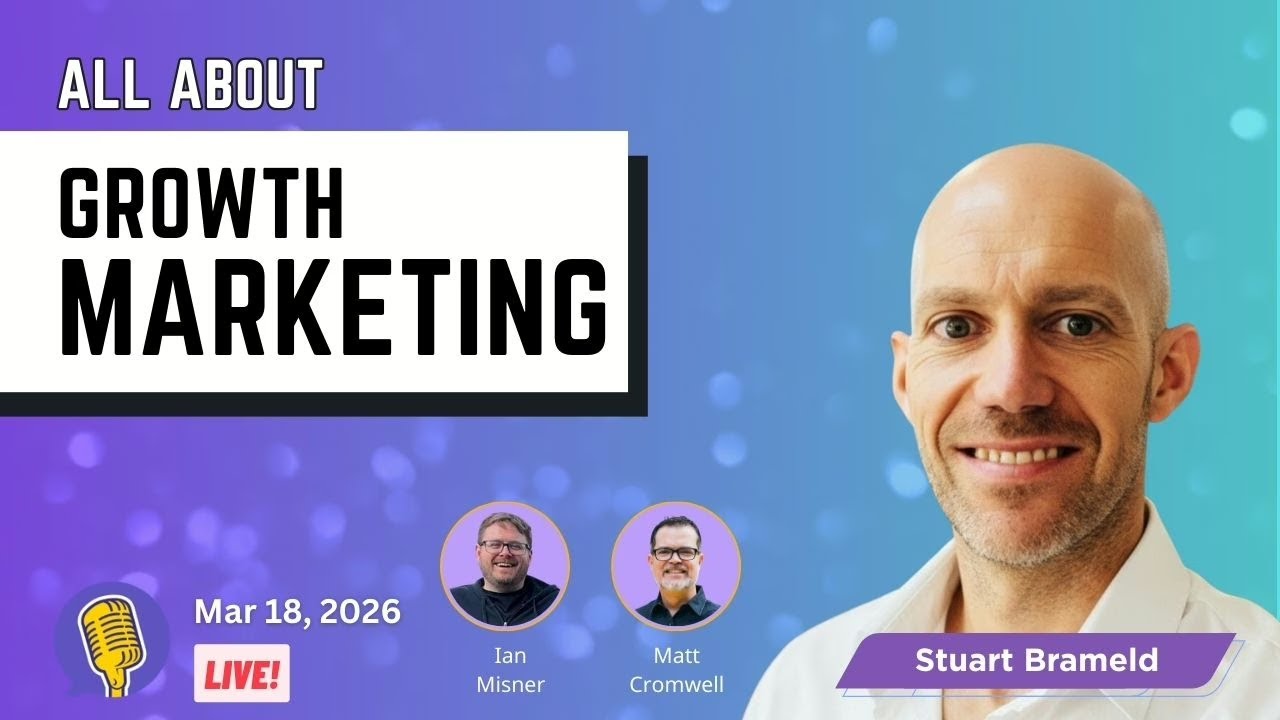
All About Growth Marketing
All right. Uh, you know, as WordPress
product builders, all of us are working hard on building the best
possible product for our users. Um, but you know, as everyone continues
to build more and more with AI and all the fun stuff we're working on, uh,
the thing that we need to really double down on and figure out how to do right
is put it in the hands of more users. Uh, today we've got Stuart Brameld here
to help us out with understanding the best way to grow a a WordPress product.
This is WP Product Talk, a place where
every week we bring you insights, product marketing, business management,
and growth, customer experience, product development, and more. It's your go-to podcast for
WordPress product owners. Buy WordPress product owners
and now enjoy the show. Hi, I am Ian Misner with Kestrel.
And I'm Matt Cromwell,
uh, with Roots and Fruit. Awesome. And, uh, before we get started, we
do want to, you know, say if you benefit in any way from WP Product
Talk, we would love your support. Uh, easiest way for you to do that
is to hit subscribe right now. I think we wanted to hit
like 10,000 subscribers. Matt, what are we at right now? We're at 11 five. We have met and exceeded
our own expectations. So, so they don't have to
subscribe, is what you're saying? No, that's not true at all. That's not true at all.
Right. And actually they all have to
subscribe to all the other places now. Now they're Spotify, follow and
Apple and uh, you know, whatever pod chaser, like there's a million
places where they can follow LinkedIn. Actually, can you find us Inactually? We need more folks on LinkedIn. Yeah, follow in LinkedIn, but
can I find us in pocket casts? Yes. I go there. Yes. Yes. Okay, good. Finally. Awesome. And, uh, huge thanks to FIUs for
being our exclusive growth partner. They've been helping us all along
the way here, uh, to, to meet and exceed our expectations.
FIUs helps software makers
grow, monetize, and succeed. FIUs is a merchant of record platform. They handle everything around selling
software, uh, the checkout, the payments, the subscriptions, the licensing, the
updates and everyone's favorite one, the global tax compliance, so you can
focus on building amazing products. Yeah, I highlight the tax thing
every time I say that, because we get asked about it constantly is
I, we, I'm not helping with that. So go get free MEUs. Yes. If that's what you need. Um, so yeah, let's jump
into the growth marketing.
Uh, we invited Stuart here from Growth
Method to, to help us out with this topic. Uh, Stuart, if you could start out, well
first thanks so much for being here. We appreciate it. Uh, but could you tell us everyone
a little bit about yourself? Yeah, sure. Hi, um, I'm Stuart. I run a company called Growth Method. We're a AI native campaign management
tool for, for marketing teams. Um, I also do consulting with a, a few
different clients and I'm a mentor with the Growth Mentor community, which is
a community for marketers and founders.
Um, so yeah, wear a few different hats. Yeah. Thank you. And, uh, thanks again for coming
on and for anyone watching live on YouTube or Twitter or where, I don't
know where we are right now, LinkedIn. But LinkedIn, yeah. Uh, we encourage you to leave your
comments, questions, feedback, you know, ask Stuart questions, come up
with smarter ones than I'm gonna ask. We'd really appreciate it. All right, so getting into the topic here
a little bit, um, Stuart, I'm gonna ask a very like, kinda like basic question
to very start out, start off with here.
What is growth marketing? You know, what, what is the
point at which you call it growth marketing and not just marketing? Yeah, good question. Um, I think they're pretty similar. Like there's a lot of debate around this
and I think it came from, um, uh, a lot of marketers moving into more growth
roles and there's a little bit of debate about what those growth roles were. Um, the main difference there being
marketing, being more kind of.
Acquisition focused, whereas growth tends
to look at much more across the whole lifecycle, um, and move across that. And there might, might be times
when a, a growth team is not focused on acquisition specifically, um,
but from, from my experience. Most of, so outside, it's certainly
outside of like the venture world, most of those growth world
roles ended up within marketing. Um, and so at some point they
sort of got mashed together and it became growth marketing.
Um, there is an element of, like
some people will say, a lot of growth marketing is this sort of
experimentation type, more agile process. Um, personally for me, I, I just feel it's
like teams that really want to focus on. Business growth and business impact,
because there are still a lot of marketing teams and individuals
that don't have that focus. There's a lot of marketing being
done that doesn't have this sort of tangible tie to business results.
Yeah, that's really, um, I mean, I could
say many times I've seen, you know, the marketing for marketing sake, right? Sort of on the treadmill,
just doing things. Um, which I guess that gets into maybe. You know, tying this in for
WordPress product builders, right? You know, they've, they, if, if
you're somebody who's built something that you genuinely believe is really
wonderful, really great, and you've shipped it and you know, you've started
doing marketing, you start getting a few users, but you start feeling
like you're hitting a wall, right? You know, they don't know where to
start, or they're just trying stuff.
You know, what do you recommend
for somebody who's like early in, early on in that process? Yeah. Um. This is, tends to be pretty bespoke,
but, um, I would imagine for most in the, in the WordPress ecosystem, there are,
um, the sort of like standard channels. If you're in like B2B, you probably want
to be in LinkedIn and you probably want to be at, in Twitter particularly for
more of that like tech audience where I think a lot of WordPress founders
are, are looking to acquire people.
Um. Probably want to be on YouTube,
probably wanna do some SEO. Like you kind of need to do
a little bit of everything. I think five years ago the advice
was double down on one channel and like forget about the rest. And the sort of old school Brian
Reforge HubSpot Playbook was like, pick a channel and exploit it
until you can't push it anymore. And forget about anything else. And when you hit the limits of that
channel, then go and explore everything.
Uh, go, go and explore elsewhere. Um, and I think that came from a good, um,
I, I think the theory behind that was very sensible at the time, um, and was very
focused on like, well, how do you, um, how do you get the most sort of bang for buck? Like, everyone's got some
kind of resource constraint. So like, if you're going to deploy
that resource, deploy it in the most. Kind of focused way possible. Mm-hmm. And the best way to do that at the
time was like, well pick a channel. And obviously some people have
had the, the big ones tended
to be like SEO and paid. And if you're a venture
backed, you'd push on paid. And if you weren't venture backed,
you tend to push hard on SEO. Um, I think that's changed a little
bit in the last couple of years, and certainly in the last year where. There are so many channels and people
find you in so many different ways, and the world is so much more diverse
than it used to be, and everyone's got their own social media platform and
the place they discover products that you sort of need to be everywhere more.
Yeah. And so I think, I think the,
the sort of advice of like, do one thing and do it really well
doesn't tend to work as well today. And you kind of need to do
a little bit of everything. Not to say that like one
isn't your, your sort of core acquisition channel, but I, I do. Tend to think you need to be everywhere. Yeah, a hundred percent. I think that leads a little bit into
a little bit of what you do, uh, with your company growth method. Um, the whole concept of, um, being able
to do smaller experimental moves, um, to
figure out where you might get traction. Um, I, I love the, the general approach. Can you talk a little bit
about that from a high level? Yeah. Um. We, we try and, uh, very much tie
marketing work to business outcomes. Um, try and get outta this
sort of outputs mentality. I've worked in and been a part of and
consulted for a lot of teams where
there's lots of stuff happening. Yeah. And. If you stopped all the stuff,
nothing would change from a business point of view. There's just like fluff. Um, I think Emily Kramer at,
um, marketing One calls it, uh, uh, it's not, it's not, um, throwing
spaghetti at the wall, uh, although the name will come back to me, but,
but just this idea of like doing lots of stuff and none of these things. Moving the business forward. Yeah. Um, and we really want to try, try and
tie together the goal of, of growth
method is to like put in a process
or a framework so that people can be really focused on, on business outcomes. Um, and so we tend to find, like a lot
of teams, even mature teams have, they've got like their goal figured out for the
marketing team and they've got a decent strategy and you can describe their like
ICP and their differentiation and like. Who their competitors
are and all this stuff. And then when you like go one level deeper
and you sort of dig into like, well, what
does this look like on a day-to-day basis? There's no plan. There's no like framework for like,
well, this is how we decide we should work on this thing versus this thing. And there's no like, well this is
roughly how long a thing should take. And there's no retrospective in terms of
we did this thing, did it work or not? So it's like the, the top level. Looks well planned out and strategic
and sensible, but like just one level lower, everyone's doing
totally random unconnected things
that may or may not tie to the goal. Yeah. Um, and so the goal of growth method
was to really put in this sort of system for doing things in what is
quite an opinionated way in, in that respect, it's a little bit unusual. It's very different to a, like a sauna or
a Trello or a. Space camp, all of those sort of typical project management tools. Um, because I think the danger of
those tools is you end up with like. Tasks and subtasks and kanban boards
and like activity, which looks good.
Yeah. But oftentimes activity isn't
producing anything meaningful. Totally. I, that's what resonated with me the most
and and how I discovered you in the first place, honestly, was through your blog
and you were talking about a lot of those kinds of things and that resonated with
a lot of my experience with working with a lot of different marketing teams in
the WordPress space over the last years. Um, marketing is so often, um, especially
with, it's not a knock on dev founders,
but especially when it's a dev founder,
marketing is sometimes reduced down to like writing blog posts and sending
emails and doing something on social. Um, and it's like. At the end of the day, a lot
of that is really just noise. Um, and not particularly effective,
um, at, uh, at driving anything related to business, uh, uh, objectives. Um, so that that laser focused on let's
only do the activities that actually
move towards something meaningful for
the business, I think is such a great focus that WordPress folks in particular
really need desperately right now. Uh, I, I think that's been great. Yeah. Yeah, it's really hard, um,
when you're a single founder. I think particularly to pull
yourself away from the stuff that you really enjoy doing. Like, I have this myself. Um, and there's things that, like,
there are the things that I know are gonna help move the business forward. And there are the things that like, I
really like doing on a day-to-day basis.
And your natural, obviously
human inclination is to slip back towards like, well, this is
fun or exciting or good for me. Um, or I like, you know, for me it's SEOI
really enjoy doing SEO and like trying to play, it feels like it's me versus
Google versus all of my competitors and who can rise up in the rankings and who
can get cited in a EO and chat GBT and all the, I kind of quite like that game. Um, and I'll do that all day long and
then forget to like send an email to my distribution list, for example,
because I just like doing that stuff.
And I think as a founder, if you're
a developer, you like writing code and something has gotta pull
you away from being like, hang on a second, this isn't helping. Push your business forward, you need
to spend at least some of your time in doing some of this marketing. Yeah, a hundred percent. Yeah. Productive procrastination
is my favorite thing. It's like the, you know, anytime, you
know, you should be getting a hundred new users, but you know, it's really
fun to go help the one guy in support. Right. He's got an interesting problem. It's a nice little puzzle. Right. I'd rather go do that.
Yeah. And it's so much worse now, right? With like ai, like stuff,
there's so much happening. I think you can't, you can't look at
any social platform with this dread of. I'm missing this, I should be doing
this, I should be testing this new model, this new coding tool. Yeah, I think it's harder than that. So, and then tying sort of what you were
saying though about, you know, you need to be everywhere, but a lot of the folks
you know, watching this are going to be like solo founders or small teams, right? So, you know, how do you, you know,
how do you show up everywhere in a structured way where you know you're
moving business outcomes if you have
really constrained resources, you
know, there's like a solo founder building stuff, getting it out there. They got five, 10 hours a week. What do they do to make sure that they're
showing up everywhere, but also, you know, being structured enough to know if what
they're doing is making the business move. Yeah. Um, a lot of what we do in growth
methods is trying to automate a lot of these things, and obviously
tech and AI can help with that.
And developers in a really good
space now to take advantage of that, like, I think, um. My gut feeling is that there'll be a move
of like more tech marketing people will move more towards dev and more tech dev
people will move more towards marketing. And there's this really nice synergy
in the middle where you are kind of like a super human that can
just do everything in a, to a level that, that others maybe can't. Um, so, um, yeah, I, I think sort of
leaning into the automation as much
as possible, and obviously with like. Both creating content and posting
content and putting it everywhere. Like that's kind of table stakes. Pretty simple. Now, like you, you kind of
can automatically poster every social platform, um, very easily. I think that where I see people go
wrong is that they automate stuff before figuring out the strategy
piece properly In terms of, um. If you're just kind of creating average
content and you have no differentiation
and your website looks a little bit naff
and there's no CTA and there's nothing for people to do and there's no re, like
you can automate everything you like and no one's gonna take any action on it. Um, and so a lot of the time it's sort
of really trying to pin people down to. Why you, it's sort of going back to
basics really in terms of marketing. Certainly the earlier stages, and I'm sure
Matt does a lot of this himself, is like founders trying to want to try and sell
every little feature that they've built.
And you go to the website and it's
got a list of 57 things it can do and people just get confused and leave. Um, so you kind of need
to figure out like. Your brand, like why you,
what do you do differently? And then like from a content
point of view, same sort of thing. Almost like what is your brand? Like, what is your content? How does that look like
from a brand perspective? And how is it different
from everyone else's? Because if your content strategy is, I'm
gonna ask Chachi BT to write a blog post for me and then publish it everywhere,
you're not gonna succeed obviously.
So a lot of that comes down to like,
what are you doing with the product? How are you deciding on things? And I think developers in a really
interesting space there where there's a lot of ability to sort of
almost like founder led marketing. Mm-hmm. Maybe if you are a dev, but like
talking more about the process and what you're thinking about and what
features you decided to ship and why do you decide to ship them. Like that way you can really
kind of lean into the building in public concept, I think today.
That's actually a go-to
for the WordPress space. Um, they, they love building and
talking about it in public and being like, I don't know what the heck
I'm doing, but this is what I did. And what do you all think? Um, they're really good at that. The founder led marketing,
I think is also a good one. Juan, I, I, I encounter a lot though, is Katie and I did founder led marketing
two weeks ago, so That's right. Yep. Anyone wants to hear more? Just check that out. Sorry to interrupt. Go for it. No, no, that's a, it's, it's a good one. I was gonna mention Ben too.
He's great. Um, another one that I run into regularly
is folks often don't, uh, totally comprehend the difference between
product marketing and content marketing. Um, and, uh, there's a lot of
overlap and things like that. Um, but I, I think. Being able to understand, um, like
when you need to talk about the product versus when you need to go out and
find new, um, kind of greenfield areas of, of potential audience members. Um, that's a, a tough one for a lot of
folks, but one thing that I, that you
mentioned earlier that I thought was, um. That's really key, um, is the
way, um, that you're looking into. Um, I, I did wanna lean in a
little bit into the differentiation thing you mentioned earlier. Um, a lot of, um, a lot of folks
don't think a lot about their differentiation except for, besides
just, um, feature parody types of ways. Um, um, and they sometimes don't
think, uh, really constructively
about their brand, um, except for. That it's a product. Um, I, I'd love to see if you might talk
into some of that from your perspective. 'cause I do think that for a lot
of folks who are born and bred in the marketing ecosystem and have
worked with larger brands, that, that's kind of like table stakes. Um, but often for our audience it's,
um, it's kind of an afterthought. Uh, they kind of sometimes back
into those things on accident. Um,
yeah, it's interesting. I, um, I always remember when I was,
I used to work in cybersecurity, uh, many years ago, and I remember an
agency coming in during that time and the company I worked for was doing a. Website redesign. I wasn't a marketer at the time. I didn't really think about it. But one thing they did was they took
like the H one and the H two in the description of 10 different companies,
10 of our competitors and ours, um, put
them all on a page and remove the logos. And we had to like understand who was who. And when you just look
at the text and the copy. It was impossible. Like we just felt like we picked
about six of our competitors and thought they were us because you
just look and sound the same, um, sound the same in, in that respect. And then you can sort of go to different
levels of, of how much sort of ui ux you add to that, that kind of game. Um, but even then you find
everyone's chosen blue at the time.
Everyone's got a bootstrap template, like
they all look the same and, and maybe even more so in, in the WordPress space. So I think some of that stuff
still that sort of still. Rings true to me in terms of sort
of, you sort of had to have a a, um. Uh, get outside of the building,
um, for want of a better word, and sort of look around and think
like, how am I standing out here? It's a great, great exercise because it's, it puts yourself
in the shoes of your website visitors because they land on your website and
they don't care about your brand or
they've never heard of it before, but
they saw all your other competitors too. And then they land, and then all
they do is they see the messaging. And if you just sound exactly like
the five other, um, products that they just looked at, they're just like,
nah, it's just another one of those. Um, it's a, it's a great exercise. I like that. Yeah, I like it a lot. I'm, I, I'm almost, I'm almost annoyed
I've never heard this before, because I'm just looking at some of our
competitors now and like, I gotta do this. We, we would fail this test. I can see it now.
If you do that though with, with
like a Slack or, or a, or a Nike or things like that, it's, it's
obvious, you know, like they, they nailed that, uh, really, really well. You always know who they are
based on those types of phrases. Yeah. Yeah. And then for, um, I think this is it. This is definitely easier as well. It's one of the things that's a lot
easier for early stages, uh, in, in my sort of growth mentor coaching calls. Um, this comes up quite a lot because
early stage founders tend to sort
of try and sell to the whole world. Um. Then that makes everything so much
harder because trying to decide like what to do next when you are, you know,
you've just built the thing and like, how am I gonna acquire my initial users? When your target market is like
millions of people in every country and you've got 20 competitors, like
what do you do next is really hard. And I often try and really
like push people uncomfortably to narrow their kind of ICP. And in doing so, you often find like some,
there's often, almost always something.
That I have to pull outta these
founders that actually is really unique to them, but they've just never
thought of like connecting the dots. It might be like the location and
they're in like, I don't know. So they could market to like all the
startups that within like five miles of their office or they have this like
second layer of, I was speaking to someone who worked in podcasts, but
they were always really into fitness and they knew all these fitness
people from their second business. I'm like, well, why don't you. Marry the two and
suddenly that made sense.
Um, or they have all this like
proprietary data, but they'd never thought of releasing it externally or,
um, using that externally in some way. Or they have some connection
to someone in the industry. Like there's almost always something. Um, but it takes a little bit of, I dunno,
introspection or working with someone else to sort of pull out where that. Uniqueness, yeah. Is um, or they're really talented of,
you know, they're really talented at talking or speaking, whatever it may be. Yeah. Yeah.
There's, um, a, a bit of
a viral tweet going around recently about growth marketing. I don't know if you've seen it, Stuart. Um, oh no. There, there's, um, a big PDF that
Anthropic put out about the way that they are using Claude internally. Um, and one of the pages there
shows how they're using Claude for their growth marketing. Um, and it says that they have one
growth marketer at Anthropic, uh, who's
doing like all of this crazy work. Um, and, um, there, in my mind, uh,
I, I definitely want to hear what you think about this, but there's a
couple things that jump out in my mind. One is like, well, the product has
done so much work already, uh, for them, the brand and the product
has done so much work already. Sitting one growth marketer on top of all
of that, success feels a little bit easy.
Um, at the same time, I mean, they
are anthropic, they have to be able to say something like that. It's like they're, it's like they're
dog fooding their own product and saying like, this is what you can accomplish. Um, but I, I'm kind of like, eh. It's, it's a struggle. I'm using AI for everything I do,
and it's still a whole ton of work. Um, I don't know what
your take is on that. Like, can, can we really
accomplish like anthropic level growth with just one person?
Uh, but what, what's your take? Yeah. I mean, they, they do have
30 billion in funding. That helps a little bit as well, right? Um, yeah. Um, um, I think it's. I think right now it's quite, I don't
feel the tooling is quite there. I had a coaching call earlier
and someone mentioned the term, like she asked about ag agentic
marketing, sort of like what is that? Um, and um, I think there's a lot
of people using AI to help with part
of, um, part of my marketing, but
it doesn't quite close the loop. I think there's this compound
engineering concept and I wrote recently about compound marketing. This idea that like, you can. Have an agent deployed that not
just like does, does the initial part of their campaign, whatever
that might be, in whatever channel. But then like monitors the performance,
does the analysis, feeds back, iterates, improves it, and sort of continues
moving around that, that cycle. And I think most people
do the first bit of those.
I've got an agent that helps
me doing the building bits and the publishing bit maybe. But then doesn't do the analysis
and the improvement and continuing to move around that, that loop, um,
which is very much an area that growth method is, um, hoping to step into. Yeah. Um. And so like, I, I absolutely think it's
going to, we'll, we'll probably start to move much more in that, in that direction. Um, so like we've got agents that are
doing the analysis now and they can go and connect to four or five different
tools and pull back the analysis for
you and tell you what worked to, what
didn't work and suggest what to do next. Um, going from like that analysis
to, I think this is what you should do next and I've gone and done
it for you, is quite a big jump. And still the best LLM models. Everyone knows, they still hallucinate,
they still do stupid things, and I'm certainly not at the point where I'm
going to delegate my, like, live access to my site to an LLM to just kind
of take control of and do its thing.
I think that'll the foreseeable future
to still be a, a human in the loop. Um. A lot more, a lot more sort of
strategic and a lot less, a hundred percent. I mean, what I am experiencing is
that in the past when I was running marketing teams for, for Give or for
other product companies, um, where we spent so many hours, so many weeks
of time was in the research, um, just spending tons of time researching what
our next move should be or what kind
of content we should be writing, or
what kind of emails we should be doing. Com, uh, competitor research,
um, all that kind of thing. And that's the kind of thing
that I feel like AI is doing for me now in, in minutes. Um, and that's where I
see the time savings. Like the fact that AI could publish
a, a an X to a post for me or a LinkedIn post for me, like I
kind of don't care about that. That that feels a little
bit like lazy web, you know?
Um, where I would much rather have it
maybe draft a whole bunch of things in a markdown file for me that I can
copy and paste whenever I'm ready. Um, that I don't see a bunch of the, the
huge benefits in the publishing side. I see it much more in the upfront part. Um, totally agree. Yeah. And, and going back to what we
were previously talking about, being a sort of a, a bit of a
thought partner as well, sort of checking yourself in terms of that. All that differentiation and channels
and suggesting like, you haven't done
anything here, but your competitors are. Maybe a hundred percent. And I think that's also
the great thing too. I've talked with a couple solo dev
founders recently who have gone from this, this mentality of, um, I don't
like spending time on marketing because I don't know what I'm doing. Um, and it just makes me feel incompetent
and I'd much rather do some dev that makes me feel competent, you know? Um, but now with AI in their
hands, um, they can just ask the
ai like, tell me what I should do. Like, I want to go and try to find
new audiences, reach new audiences, or, I've always heard that Facebook
ads are actually beneficial, but I, they always suck for me, like,
teach me how to do Facebook ads. And it actually is really good
at doing those things overall Totally. Yeah. And that gets you outside of your
little like founder dev bubble and pushes you away from like the, as we
talked about earlier, the, the sort
of day-to-day stuff that you enjoy
doing to maybe some of the stuff that actually gonna have a, a bigger impact. We're testing some stuff in growth method
at the moment where we basically suggest campaign ideas every week because we know
what your comp, who your competitors are, and we know what they're doing and we
can make a pretty good guess at like the channels they're using and we know what. Your product is and how you are different
and what you are doing and all the campaigns that you've run previously. And so we can start to say like,
have you thought about doing this? Or, you did this thing recently. Recently and it kind of worked, but if
you did this, maybe it will work better.
Or like, you've done 10 things in SEO and
then dropped it and moved to page like maybe like all those sorts of things with
vector databases and context becomes. Pretty good. Like it, it works really well. And I think even more so for, for
sort of solo founders and small teams, having that kind of thought partner,
sparring partner, someone to sort of. Push you a little bit
outside your comfort zone. So trying something different,
um, is, is really helpful.
Yeah. As we kinda go through this conversation,
I'm sort of like hearing, there's sort of two through lines maybe
correct me if these are not right. Maybe number one is when we
compare, like what you're describing to the PDF from Claude, for
example, like there is definitely. Sure they might have one growth marketer,
but how many engineers are helping that guy with all his automations? You know what I mean? Like how many people are showing
up to put those pieces in place and like taking the time to build
those pieces is meaningful work.
That matters. So that's one. The second one though, is there is
still like a voice to the media, right? Like what is it that you're presenting
to people and you know, like you're not just going to Claude and saying
like, Hey, make me some blog posts, or tell me what my ad campaign should be. Yeah. Like there needs to be like, what is
the brand, the through line being. You know, why should I care? Yeah. You're hitting those
sort of two main things. Is that sort of the, I'll clarify on the, on the Claude PD
F1, they actually made it really clear
that the growth, uh, marketer is not a
technical person, but he was creating all of the things himself with, uh. Co with Cowork, I believe it
was with, um, Claude Cowork. Um, they, they did make that super
clear actually, that he is not getting a bunch of help from the dev team. Um, so it, he taught himself,
um, how to use Claude for the purposes he was looking for. Um, it's really fascinating, honestly,
but I. Like what Stuart said earlier, uh, you know, he's sitting on a
mountain of investment and all kinds
of resources internally, uh, besides,
uh, having Claude at his fingertips. You give. Any random, uh, marketer, um,
Claude, and they're not gonna be as successful as he is at all. And it's not because he is 10
times better than everybody else. It's 'cause he's sitting on a amazing
product that's at the peak of its, uh, growth curve at the moment. Um, it's, it's just night
and day different, I think. Yeah. Yeah.
I do. Um, I do often find there's
like process that happen. I in, in companies, there's like a
lot of internal content that never sees, never gets to the outside world. And I often find myself trying to sort
of get marketing and like product and customer success closer together so that
we can like directly pull the stuff that they're doing, talking about writing,
and then use it as marketing material.
Um, I have one client I
worked with recently and. They've just sort of totally changed their
sort of core company, KPI, to, um, it doesn't really matter what the platform
does, but like tasks completed in their plat, it's not a project management
tool, but for want of a better word, like tasks completed in the platform. And so the whole company is oriented
around this new kind of KPI and goal and um, and it's made such a difference. 'cause suddenly like the CS team,
when they have their like weekly review calls, can talk about.
The tasks that were completed. And then we get the
transcriptions of that. And that can be really useful
for posts and content, et cetera. And then, like the engineering team are
working on things that help people do more tasks in that platform and the content
that exists that they're like in terms of the products they're creating, the feature
they're adding directly relates to that. And then like customer advocacy programs,
they want to start talking about like the tasks that they've completed and
suddenly everything suddenly just feels like it's really lined up.
So I think the closer you can get to like
the thing that your customer wants to do and then sort of try and pull it out the
rest of the organization, um, it, it, it solves a sort of blank space, um, blank
page content problem, which I think is the biggest challenge for a lot of companies
is like marketing's trying to think up a bit of content and they're totally
disconnected from the rest of the company. Yeah. Whereas if you ask like engineering or
success to come up with the content,
they're speaking to customers and thinking
about it all day, every day, you kind of want to just like take it from the stuff
that's being done, like the real stuff, not like engineering cs, throw something
over the fence to marketing and then throw it into so LLM model and try and like
turn it into something that's fluffy. You wanna like take the, the kind of raw,
the raw juice as much as possible and just share it with the outside world. And a lot of tooling
obviously now makes that. Really easy. Like maybe it's the decision process
that you pull out of a, I don't
know, the GitHub issues and comments. You can pull it directly and turn it
into a poster around like the discussions that engineering had around how they
created this feature or if you've got a really tech audience, like the code that
you wrote or snippets of the code and how you thought about architecting it. Yeah. That sort of stuff. And that's easy 'cause then you
haven't got to write the post. You've just gotta do
the work and the post. Comes out of the work that's being done. Yeah, I think that that's
that second through line you were talking about, Ian is. Is that none of this works unless
there's a ton of, uh, context, um, to
feed the AI in one form or another. Um, and that's a a hundred percent
what I've been focusing on too. Um, trying to make sure that, um,
locally I have as much context about the, the client or the brand
or the product as I possibly can. Um, and, uh, and bringing it
all into one spot and trying to analyze it there and then. Based on that alone, um, am I able
to figure out anything at all? Um, but um, but you know that
these can all, that, all this
data can be localized in one spot. In a relatively short amount of time,
like in many ways like this, this, this dream of having this huge database of all
of your business intelligence in one spot that was like the way that only big giant
enterprise companies worked in the past. And now anybody can build that with
Cursor or Claude, um, in a day or less. Um, and, uh, and it's, it's just a
powerhouse for, for being able to, to spin
up all kinds of marketing initiatives. Um, so. Yeah, yeah. There is something here, maybe a
little bit about like the speed over perfection as well, right? There's something about the, now the cloud
does enable you to connect all the data, all the pieces, all that context and you
know, you can give it your help desk. So it has all those conversations. Um, you know, you can just start. Doing more using those raw materials. I still question, and I don't know if
this is a question for you guys or just
in general, but it's like, how much
of that should you rely on the output? How much of that should you let the
machine derive you versus you know, really making sure there is like an
underlying voice to what you have, right? It's like the. W you know, I've always, I
always push the idea with code. It's always a commodity. The stuff behind the hooks
and filters, I actually don't really care what it looks like. You know, the stuff that the
developer or the customer touches, that's very important. So it does sort of make me
nervous, you know, getting to that
degree of like handing that over. Does that make sense? Yeah, I think, um, the more you sort
of, I think we spoke at the start about the kind of this system and I
think the more there's like a system and a framework for doing things,
the less chances you have of the LLM. Going in the wrong direction. You'll, you'll know this
from like coding world. Um, I'm relatively new to coding world,
but I'm building a lot with Laravel.
And like, the best thing about Laravel,
it's it that, like, similar to growth, it's, it's an opinionated system. Like if you want a queue,
there's a way of doing a queue. And if you want a cash, there's a way of
doing a c. And like, so when you, when you, you have to give it some context
and they've got their own sort of. AI MCP server and to, to pull
that context from the docs. And you have to have the docs. But once you've got to Matt's point,
once you've got that context and there's some, like, this is how we do things,
all of these sort of, all of the talk
about how Claude goes off and does some
random stuff and like generates sloppy code in my experience, goes out the
window because it knows it's got these like rails that it's running on and
it says like this is, and I think that really applies to marketing as well. And I think founders and and dev teams
are like perfectly positioned to take advantage of this stuff 'cause they
know how to connect their, like a APIs and CPS and the tools and give
it this context and like put it on
these rails so that every time it's a
very kind of engineering systems type thinking approach to doing things. How do I make sure that this thing
does the same time every time it runs? Um, so yeah, I, I just
think it comes back to, um. Ha having this sort of system or
a, a process or a way of doing things and, and sort of repeating
on that and, and dialing it in. And once it's dialed in, as you will
know with code, um, you know, one, once
you get it right, it runs the same,
it, it, it generally does the same thing in a pretty deterministic way. Hundreds, thousands, millions of times. Yeah, it's great. And I just pull up a comment here
from Lincoln, uh, you know, so, you know, planning our next experiment,
experiments wanted to use AI rather than just brainstorming. Uh, he used AI to conduct the
competitive research, identify what's missing, and help suggest experiments. And, you know, this whole comments
trails off here to, doesn't show
up on the screen, but if he was to
do it himself, it would take weeks. Got it done in minutes. I think that tying this back to the, you
know, especially small teams or founders, you know, you have a couple hours a
week, you can put together a map to follow, to experiment, to see what works. And then I guess tie that to what you
were just saying, a steward of, and then you figure out what to automate. You know, you identify a few things and
then you start off moving that further. Yeah. Is that basically, you know,
a very like loose map here?
Exactly. Yeah, I mean that, that's very similar
to what we do in in the product, but I would say the next step for
Lincoln would be, I would again, systematize that a little bit and then
just systematize it more and more. So maybe the first step is you put
that into like the schedule task stuff that is now in Claude, for example,
and it runs every week and reruns your customer intelligence stuff. And then res suggests some new
ideas and every Monday morning you get three new campaign ideas.
And then maybe the next step is you
introduce some prioritization thing to say, like, based on the context it has
of your business, I would pick this one. Um, and then maybe you start to
move towards like helping it do the build or do the analysis afterwards. But for a small team or a solo
founder that's already like, it's absolutely on the right page there. And then you just need to make sure that
like every week you ship one new thing. Um, but the, the, the system, the the
system piece there, I think is, is the thing that you really want there.
The compounding effect rather than
like, don't do it once and then you delete the session, never happens again. It's like, how can I turn this
thing into something that runs for me every week and make it a little
bit better each time it runs? Yeah, a hundred percent. Yeah, I like that a lot and I,
I'll throw it in my own experience using, you know, Claude and Claude
skills and MCP and all that. You don't even always have to go as
far as fully automating the thing, but like ensuring you're modifying like
your skills files to include the parts or to correct the thing that you didn't
like and take that extra like, you
know, 30 to 60 seconds on each task. Even for like micro improvements, you
know, the whole over time you get to that point where it starts to amaze you
and you don't know when it happened. You know, like that that experience it,
if you have that experience, you know what you're doing is probably working. Yeah, exactly. Yeah. Ev every time I've like
read a response and be like. And laughed out loud basically sometimes
I've been like, that is way too good for,
for a, not ai, but, uh, but good work. It, it, it starts to feel at times like,
you know, the experience where you bring on a new team member and you've taught
them a lot about your business and they start to have their own original ideas a
few months in and you're like, oh, that is great and you're, you're happy about it. The machine can do that too. If you take that extra little bit of
time to, I think, do what you're saying, Stuart, of adding the process, the
little layer of, you know, make sure you're teaching it, make sure you're,
you're building something and not just. Handing it off, right? Yeah, yeah.
Which is amazing, but creepy also. It's scary. Yeah, it's scary. I mean the, I don't wanna go too far
down the AI rabbit hole, but like, I mean, successfully automating
yourself outta work is really easy. Right now. The thing that you are best at is super
easy to automate really well if you take the time to follow these steps. And you know, if you're one of
the best in the world at a thing. The machine can be designed to
map to that and to follow that. And that's, it's amazing.
It's wonderful. It's also very scary. Yeah, yeah, yeah. Totally. It's in, it's one thing you just made
me think of, and I don't wanna go on too much of a tangent here, but, um,
I wonder whether sometimes I think developers are very, um, uh, uh. Security conscious, but like
precise about the way in which they work and the code that's written
obviously for, for, for good reason. Um, and I think marketers tend to be a
little bit less precise in many respects.
Um, so maybe part of the, part of
the kind of learning is a little bit of a sort of culture change. And just try something that is maybe a
little bit outside your comfort zone. I built a, um, open claw server. I've never, I haven't
played with it yet at all. So last night for my daughter's school,
the notifications just drive me nuts. I stuck open on this hener VPS
and then just told it to go and like connect to all I thing. It figured out everything, like all
these things you can't connect to.
'cause it's locked down by the school
and it works around the thing, and then it springs up a puppeteer thing and goes
and connects in and grabs the content. And now it just sends me a daily
thing with a summary of everything from four different apps and the
weather and the travel and whether there's anything on the road. Um, and what I, what I sort of really
learned from it was, I wouldn't go and do that in growth method, obviously,
but there is some element of like, there is a, there's a balance there. Like you kind of want to take
advantage of this new technology. Yeah, to some degree, but
in a safe, in a safe way.
So I do think it's worth
sort of experimenting. At like the cutting edge, um,
and then sort of bringing it back and finding, finding. Yeah. I actually love what you just said. I mean, I was complaining on
Twitter last week about exactly. I got 17 emails from my kid's
school in a week, and they hadn't even done anything wrong. If, if you ever turn what you're talking
about there into a product, let me know. I'll buy that. You're the third person that said this. I've just shown it to two
people on the WhatsApp. They're like, I don't wanna bother figuring
it all out, but if I could just
go sign up and redirect a few
things I'm in, that's amazing. But there's some poor like public school IT
professional who thinks that the system got hacked now and it's just open claw. Yeah, exactly. Yeah. And there's things I've seen online,
which I think is probably more on the open claw side around like how capable
AI is it like building these scripts. But I've never done it from the business
and for the product because I want to be very careful and security conscious
and build things in the right way.
But with this open door thing,
I wasn't worried about it. So a couple of times I just said
like, I've no idea how this works. Here's the API docs. Figure it out. Yeah. And it figures it out and it just
says, what's the login details? And it's done. And I was, I was just, it was
a real sort of eyeopening. Eyeopening. That's a good one. I do think marketers tend to
be more experimental because. We're dealing with human psychology, um,
and a lot of stuff is very subjective. Uh, you can send out just the perfect
messaging that it pisses off 10% of
your audience for one reason or another. Um, and under those circumstances
it's kind of like, well, we just gotta do our best. We're, we're going to make somebody mad
in one way or another, no matter what. So, um, I, I, I love the spirit
of, um, experimentation for sure. Yeah, I think, I also think like no one
knows in the marketing world, like no one knows what's gonna work the best or
whether something is gonna work or not. Much as people tend to pretend engineering
and dev is a bit different 'cause like
it works or it doesn't, but marketing
you like throw it out and a bit of it is kind of Yeah, course enough. Yeah, I get it. Yeah, it works perfectly. It's not secure at all and uh, screen
readers can't read it, but it works. Exactly. Yeah. But like marketing, I think you have to,
you're crazy not to experiment like this. This idea that like the CMOs
gonna walk into the room and like know the best strategy is. Total rubbish in opinion. You just gotta throw some stuff
out there and, and see what works
and figure out. So if you're planning everything
like a six month campaign, that's the Yeah, yeah, yeah, exactly. Yeah. And I just, I think we should
probably run into the, the best advice section of the show. So we wrap up every show with
just a quick round table question. You know, best advice for anyone
thinking about, you know, getting started in growth marketing or doing. More experimentation in that direction. Like what's one thing that
you would tell them to do? Uh, Stuart, if you wanna
get us started there.
Yeah. Um, I really like the, um. Google 20% time idea. Uh, maybe it can't be, it,
maybe a day is too much. But I often speak to teams that want to
take more of this approach, but they're not ready to like adopt a total growth,
agile experimentation way of working. And they've got very
existing rigorous processes. Um, I often say like, why don't you
give your, I said this to someone last week, why don't you give your
team this like 20% time mandate where you define the goal, but they
have complete autonomy in terms of.
For one day a week, something
that helps achieve that goal. And this team at that, this team I
spoke to, had a very rigorous old school content production SEO type process. Mm-hmm. And so everyone was
very much in their lane. And I said to the the CMO, like, why
don't you just say for one day a week, you can do anything you like as long
as you can tell me how it ladders up towards this goal I've given you. And maybe you'll just find
people that are more motivated. They've got skills you didn't know
that they'd have, they jump on these
things you've never even considered. 'cause this guy was the SEO optimization. Guy, and this guy was the copywriting
person, and this person was the one that created the images. Um, so I think I, I would take that
and, and whether it's a day or an hour or four hours, whatever, but
give yourself some percentage of your time where you just like ship
something and, and try something. Try something different. A hundred percent. Awesome. How about, how about you, Matt? Man, that was very
similar to my best advice.
Um, I mean, little bit
more, um, systematized. I, I actually told a bunch
of folks just last week. Um, uh, talking with a group of, um, in
my solo lab, I have, uh, solo founders in a, in a kind of a coaching group. I told them all, I asked them like,
how much time did you spend this last week on marketing at all? Um, and, uh, one of 'em was
like about two or three hours. Um, and another said, I
think about 15 minutes.
Um, wow. And, uh, I, uh. I basically was like, I didn't think
I was gonna make this recommendation, but I think you all should at least
double the amount of time that you spent on marketing this next week. Um, I, I tell them all the time,
I say, I say, your time is the most valuable thing that you have. And if that's true, then you need to
spend your time doing some of the most valuable work that you can possibly do. Um, and I can guarantee you that at
least 10 to 15 hours of your time
should be spent on growing your product
from a marketing perspective and not necessarily just building another feature. Um, and, um, uh, to me that's, that's
the best advice I can give to a lot of these solo dev founders is, uh. It hurts and you don't like it,
but if you don't spend the time, it's never gonna get any better. Yeah, I agree. And then, uh, for myself, I actually had
a different angle for this originally,
but since we talked so much about the
AI stuff at the end, I'm gonna pivot a little bit, is that this is advice
I'm trying to give myself actually. Rethink what the to-do list is for the
project management tool, et cetera. You know, back in the day we used to
write down what we should try, what we should experiment with, and then log it. So we'd eventually do it. And nowadays, honestly, just do the
not precious version of something. Yeah, just get it out there. Spend the 15 minutes you would've
written, written down the plan. Just go do a version of it. Maybe it sucks, who cares?
And then, you know, if
you're logging anything. Log the check if that worked
work to go back to later. And I'm not doing the best of that right. My myself at this point, but
I think that shift is gonna be really important for small teams in Yeah. Yeah. Yeah. Totally love it. Yeah. Awesome. Uh, yeah. So, uh, you know, I guess that's a wrap. Stuart, thanks so much
for joining us today. I really appreciate it. I'm gonna do the H one experiment
myself this week, so thank you for that.
Um, where could people find you if
they're looking for, for help or if they're looking for you online? Uh, yeah, thanks. Uh, growth method.com is the website. I write a lot there. Um, I start, started a, a slight side. Website called Notes on Laravel for
Laravel, things for non-developers. Um, and I'm on the Growth Mentor if
you are on there or want to join there. Um, I'm a, a mentor on there as well. So any of those places. Love it folks, if you are enjoying
these shows, do us a favor and wherever
you're at, just hit the follow or like,
or whatever button that, that you have. Uh, it's literally free for you. It's really easy and it helps us
continue to do this for great work. And another special thanks to FIUs. And uh, next week we're gonna
have, uh, Emmanuel Corey. Is that Emmanuel Corey, yeah. From WP Stack on the show. Uh, the time will be a bit weird actually. Matt, you might wanna explain this one
'cause I'm not sure I know the details. Yeah, so we actually have, so we
have a European co-host, an American
co-host, and Emmanuel is in Australia. So finding the time that we
could all go live together was impossible, but we did it. It's not gonna be this
time, I think it's like. 9:00 AM for Americans or 8:00
AM for Americans, I'm not sure. Uh, I mean not all Americans
like East Coast, I think. Um, yeah, I mean timing being a challenge
and all, but it's gonna be interesting. So you know anyone who's watching
now, definitely take a look at, uh, go like us on LinkedIn or
follow whatever you do on LinkedIn.
Do that and we'll make sure Matt posts
the time there and, um, yeah, come up with some questions, let us know. Awesome. Thanks everybody. And. Have a good one. Thanks guys. Thanks. I broke it., All About Growth Marketing, YouTube, 01kmjr1j56a506nk6d0fka51zw.