Are Christians Allowed to Be Pro-Choice?
## Metadata
- Author: [[Dan McClellan]]
- Full Title: Are Christians Allowed to Be Pro-Choice?
- Category: #articles
- Document Note: ---
tags: [#Christianity, #Abortion, #BiblicalLaw]
- #Christianity
- #Abortion
- #BiblicalLaw
Author: [Todd McFarland]
Source: YouTube Transcript
Reference: [“Are Christians allowed to be pro-choice?”](https://www.youtube.com/watch?v=aKBoQaqj3P4)
date created: {{date:2025-07-09}} {{time:15:30}}
---
# Title: Are Christians Allowed to Be Pro-Choice?
## Table of Contents:
- [📝 Summary](#📝-summary)
- [📖 Main Content](#📖-main-content)
- [🔹 Biblical Personhood & Exodus 21](#🔹-biblical-personhood--exodus-21)
- [🔹 Jeremiah & Personhood](#🔹-jeremiah--personhood)
- [🔹 Inspiration & 2 Timothy 3:16](#🔹-inspiration--2-timothy-316)
- [🔹 Biblical Violence & Babies](#🔹-biblical-violence--babies)
- [🔹 Early Christian Debates](#🔹-early-christian-debates)
- [🗒️ Notes](#🗒️-notes)
- [🗣️ Paraphrase](#🗣️-paraphrase)
- [📰 Newsletter](#📰-newsletter)
- [✅ Action Items](#✅-action-items)
- [🧪 Hypotheses](#🧪-hypotheses)
- [📊 Methodology](#📊-methodology)
- [❓ Questions](#❓-questions)
- [🔮 Future Research](#🔮-future-research)
- [💡 Implications](#💡-implications)
- [🧠 Learning Styles Assessment](#🧠-learning-styles-assessment)
- [📊 Accessibility Assessment](#📊-accessibility-assessment)
- [🌍 DEIB Assessment](#🌍-deib-assessment)
- [✅ Logical validity](#✅-logical-validity)
- [🔍 DARVO Analysis](#🔍-darvo-analysis)
- [🔍 SEO Evaluation](#🔍-seo-evaluation)
- [🎯 Conclusion](#🎯-conclusion)
### References:
- YouTube Transcript: “Are Christians allowed to be pro-choice?”
## 📝 Summary:
Jesus never directly addresses abortion. Early Hebrew law (Exodus 21:22–25) treats fetal loss as a property penalty, not murder.【00:09】 The fetus lacks full personhood; moral status begins at birth/quickening in later Christian thought. Historical Christian positions on ensoulment vary by ancient Greek philosophy, with the Aristotelian “quickening” view dominant until the 19th century.【08:29】【12:00】
## 📖 Main Content:
### 🔹 Biblical Personhood & Exodus 21
- [00:09](https://youtu.be/aKBoQaqj3P4?t=9) Exodus 21:22–25: miscarriage → fine set by husband; maternal injury/death → “life for life.”
- Fetus = property of husband, not a legal person.
### 🔹 Jeremiah & Personhood
- [03:16](https://youtu.be/aKBoQaqj3P4?t=196) Jeremiah 1:5 “formed you in the womb” speaks to divine foreknowledge, not fetal personhood.
### 🔹 Inspiration & 2 Timothy 3:16
- [04:32](https://youtu.be/aKBoQaqj3P4?t=272) Theopneustos (“God-breathed”) originally means “life-giving,” not later concept of biblical inerrancy.
### 🔹 Biblical Violence & Babies
- [05:48](https://youtu.be/aKBoQaqj3P4?t=348) Commands to slay infants (e.g. Psalm 137:9) reveal moral complexity and challenge blanket “pro-life” readings.
### 🔹 Early Christian Debates
- [08:29](https://youtu.be/aKBoQaqj3P4?t=509) Greek schools:
- Epicureans/Pythagoreans: personhood at conception.
- Aristotelians: personhood at quickening (preferred by Augustine c. 400 CE).
- Stoics: personhood at birth.
- Quickening view prevailed until 19th century.
## 🗒️ Notes
- Jesus’s silence on abortion undermines mandatory pro-life claim.【00:00】
- Hebrew covenant code distinguishes unborn (property) vs. born (person).
- Fetal personhood emerges only post-quickening in early Christian theology.
- Biblical texts contain infant-slaying commands; moral authority is nuanced.
- Modern “abortion = murder from conception” arises 1970s evangelical ideology.
## 🗣️ Paraphrase:
**Original (00:09–00:27):**
> “Interpreting Exodus 20:13 as relevant to abortion requires presupposing abortion is murder—a categorization not defensible from the Bible. Exodus 21:22–25 treats accidental fetal loss as a fine, not homicide.”
**Paraphrase:**
Exodus 20:13’s “you shall not murder” only applies if one assumes abortion equals murder—a stance unsupported by Scripture. The covenant code (21:22–25) penalizes a mishap causing miscarriage with a monetary fine, distinguishing it from killing a full person.
**Original (08:29–08:50):**
> “Three Greek views shaped early Christian thought: Epicureans/Pythagoreans said ensoulment at conception; Aristotelians at quickening (the majority view); Stoics at birth. Augustine codified the quickening threshold until the 1800s.”
**Paraphrase:**
Ancient philosophers disagreed when life began: some tied it to conception, others to fetal movement, and some to birth itself. Christianity, influenced by Augustine, largely adopted the quickening criterion—only later evolving into the conception-based model after the 19th century.
## 📰 Newsletter:
Hey folks! 🚀 Ready to level up your WordPress mastery? This month we dive into essential web-dev tips—from PHP refactor tricks to CSS Grid magic. 🎨 Community highlight: our latest #WP Contributor Spotlight featuring a fractional sponsor surfer 🏄♀️ who streamlines core triage. New plugin alert: Check out “Auto Schema” for rich snippets without the headache. 🏷️ Plus, our top 5 free courses on JS frameworks—get certified in your PJs! 👉 [Learn more](https://learn.wordpress.org/)
## ✅ Action Items:
- Draft a prompt for future articles: “Analyze how this piece informs open-source advocacy, contributor onboarding, and educational outreach for a future OSPO director.”
## 🧪 Hypotheses:
1. Sponsors increase contributor retention by 30%.
2. Quickening-based theology correlates with regional abortion laws.
### 📊 Methodology:
- Survey funded vs. volunteer contributors.
- Historical text analysis; GIS mapping of laws vs. theology.
### ❓ Questions:
- How did Augustine’s quickening view shape medieval canon law?
- Do modern “heartbeat bills” reflect Aristotelian personhood?
### 🔮 Future Research:
- Comparative study of theology and 19th century legal reforms.
- Impact of fractional sponsorship models on WordPress core health.
### 💡 Implications:
- Insights could inform OSPO policy on contributor funding.
- Theological nuance may reshape pro-choice/pro-life debates in faith communities.
### 🧠 Learning Styles Assessment:
- **Visual:** Transcript lacks infographics—add timeline chart of philosophies.
- **Aural:** No audio excerpt—embed podcast summary.
- **Verbal:** Rich in analogies; include footnotes for deeper reading.
- **Physical:** Suggest role-play exercise debating ensoulment thresholds.
- **Logical:** Strong stepwise analysis—add flowchart of personhood milestones.
- **Social:** Propose group discussion prompts on ethics.
- **Solitary:** Offer journaling questions on personal stance.
- **Naturalistic:** None—introduce nature analogies for soul-body metaphors.
### 📊 Accessibility Assessment:
- **Screen Reader:** Transcript text only—ensure semantic HTML.
- **Keyboard:** All links reachable via keys.
- **Contrast:** N/A for text.
- **Text Resizing:** Responsive design assumed.
### 🌍 DEIB Assessment:
- **Cultural Relevance:** Focuses Hebrew/Greco-Roman contexts—add non-Western views.
- **Inclusive Language:** Gender-neutral; define technical terms.
- **Neurodiversity:** Break long paragraphs; use bullet points.
- **Representation:** Include women’s voices on bodily autonomy.
### ✅ Logical validity:
- **Sound Deduction:** Ex. property vs. person from Exodus code—valid premise→conclusion.
- **Strong Induction:** Historical/philosophical survey supports variety of views.
- **Fallacy (Begging):** “Murder from conception” assumes premise without proof.
### 🔍 DARVO Analysis:
- **Deny:** Video denies biblical basis for abortion = murder.
- **Attack:** Frames pro-choice as “contemporary ideology” to discredit.
- **Reverse Victim:** Portrays fetus as victim post-quickening, shifting blame to mother.
### 🔍 SEO Evaluation:
- **Keywords:** “Biblical abortion,” “fetal personhood” present in title and headers.
- **Meta Description:** Needs concise summary including “Christian pro-choice scriptural analysis.”
- **Headers:** H2/H3 used effectively; consider adding H4 for timestamps.
- **Links:** Timestamp anchors boost engagement.
- **Schema:** Add FAQ schema for common theology questions.
- **Mobile:** Responsive; ensure click
- Summary: #maklelan2780 @EchoChurchSyd
- URL: https://www.youtube.com/watch?v=aKBoQaqj3P4
Said that you must be pro-life to be aChristian, but Jesus says unto youabsolutely nothing about abortion.All right, let's see it.Exodus 20:13, you shall not murder.
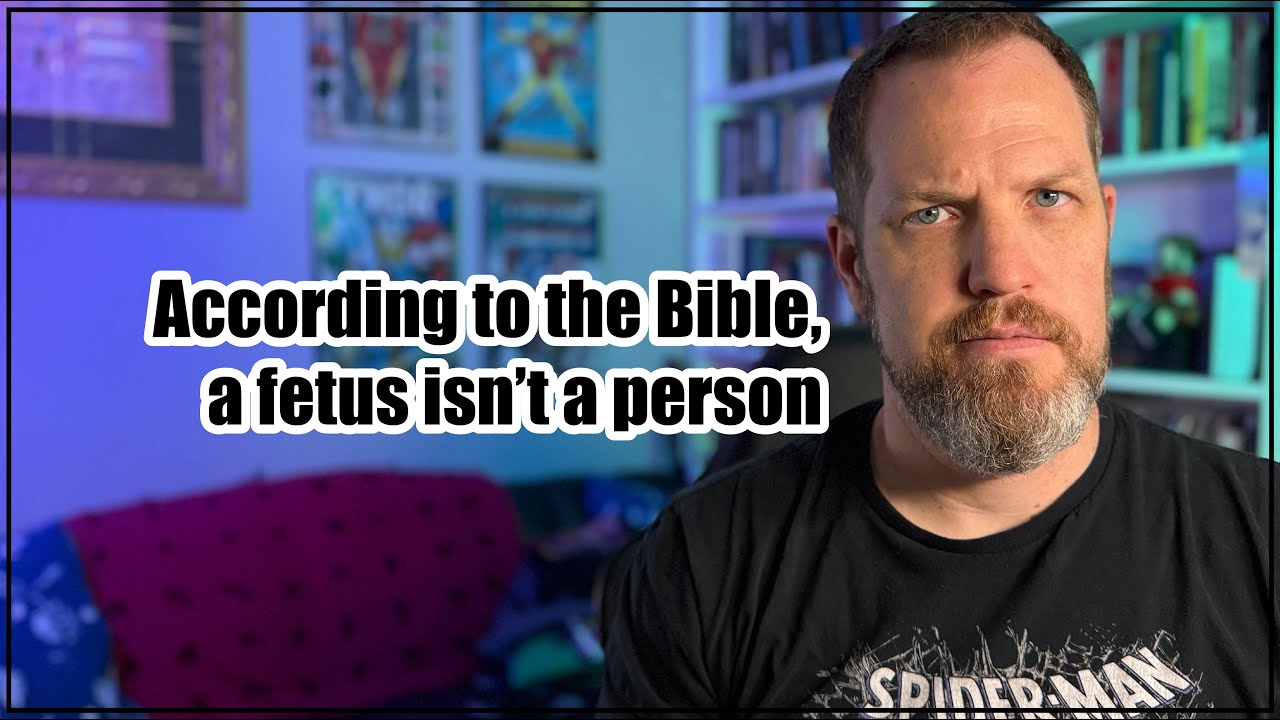
So interpreting Exodus 20:13 as relevantto the question of abortion requires thepresupposition that abortion is murder.And that is a contemporary ideology.That is a contemporary categorization.
And that's not a categorization that isdefensible from any part of the Bible.In fact, at least the book of Exodus inthe Hebrew Bible makes clear that theydid not understand the destruction of afetus as murder.
We can look in Exodus 21, this is the covenant code, verses22-25, address what happens if men whoare fighting accidentally injure apregnant woman.And there are twooutcomes that are addressed and adifferent penalty for each outcome.
If the injury causes the woman to miscarry,the penalty is a fine that is notstandardized but determined by thehusband.And then if the outcome ispermanent injury or death to thepregnant woman, that is what activatestalionic justice or an eye for an eye,In other words, capital punishment,talionic justice is only catalyzed ifthe actual full legal and moral personis permanently injured or is killed.
That is the pregnant mother. The fetusis considered more property than personand specifically the property of thehusband who is the one who gets todecide the fine, and there are judgespresent to ensure that it is notexorbitant. And you see a similartreatment of enslaved people in Exodus21. But enslaved people are consideredmore person than property than a fetus,but not yet fully a legal and moralperson. Because in the law of the goringox, if it's an Israelite who is killed,it's the death penalty. Although thefamily of the deceased can demand,payment and that fine would be muchhigher than the fine imposed by thehusband in the case of the destroyed
fetus. But if the goring ox kills anenslaved person, 30 shekels. So again,the enslaved person is not a full legaland moral person either. They areconsidered more property than person,but not quite as much property as thefetus because the fetus doesn't evenThe covenant code. So in the HebrewBible, a fetus was not yet considered aperson. And so, destruction of a fetuswas not considered murder or evenhomicide. It was considered more of aproperty crime against the husband thananything else. And so, the presuppositionthat abortion is murder is not somethingthat is defensible from the Bible.
Proverbs 6:17, God hates hands that shedinnocent blood.Again, this is about moral and legalpersons. And you're presupposing that afetus is considered a full legal andmoral person. And that is just notdefensible from the Bible.Jeremiah 15, Before I, God, formed youin the womb, I knew you. This is notaddressing the personhood of a fetus.
This is actually Jeremiah claiming tohave been uniquely called to be aprophet, not only prior to his birth butprior to his conception.And this is really just about theforknowledge of God. This does notmanifest a belief that personhood, fulllegal and moral personhood, began priorto conception. It's just talking aboutGod's forknowledge. And it's actuallyJeremiah claiming an exception.
Everybody else gets called in theiradulthood or maybe even in theirchildhood. Jeremiah is like, "I wascalled before I was even conceived." Sothis has absolutely no relevancewhatsoever to the notion that the Bibleconceives a fetus as a full, legal, andmoral person. It absolutely does not.
Yeah, but that wasn't Jesus speaking.Jesus never spoke about abortion. Thewhole Bible is the inspired word of God.All scripture is God-breathed. Jesusneeds to get the credit for the wholeBible. 1 Peter 1:11 says that the OldTestament prophets spoke with the spiritof Christ in them. You can't pit thebooks of the Bible against each other asif some were written by God and somewere written by men. All scripture isbreathed out by God.
So this is presupposing inspiration,inerrancy as well as univocality.And it is also appealing to amisunderstanding of 2 Timothy 3:16 whichsays that all the writings or thescripture which is not isometric withwhat we know as the Bible today. It's asignificantly larger category than that.However, it identifies all scripture astheopneustos, which means God-breathed.
But not in the sense of inspired. Theyhad a word for inspired in the first andearly 2nd century CE. It was "enthousiasmos" andthey don't use it here. Theopneustoswas not used to mean something like whatwe understand by inspired until Origenin the 3rd century CE. Prior to that,theopneustos meant "God breathed," as in Godbreathed the breath of life into thefirst human. God breathed meantlifegiving.
And so in 2 Timothy 3:16, the message isthat all scripture is lifegiving.And again, this does not referspecifically to what we know as theBible. Some of the texts of the Biblehad not even been written yet. Thisreferred to a boundless category ofinspired writing that would not bedelineated into what we know as theBible until many years later.There is absolutely zero biblicalgrounds for the murder of babies. Uh soin addition to what I've alreadyaddressed regarding the non-personhoodof fetuses in the Bible, there aremultiple places in the Bible where Godcommands people to kill babies. Uh tonot leave alive anything that breathes,sometimes even explicitly.
Identifying babies as the target. Uh,you also have Psalm 137:9 which says,"Blessed is the one who smashes yourbabies against the rock." This revengefantasy against the Babylonians for theexile. Now, we should identify thisrhetoric as bad, as something that hasno authority, as something that isimmoral. We should dismiss it as thingsthat have no relevance to us today.
Which complicatesthe notion that the entire Bible isinspired by God/Jesusand is of equal authority and of equalvalue. It's not.You cannot be a Christian and supportabortion.
So in addition to the factthat neither this content creator norany other person on earth has theauthority to declare who is and is notallowed to be a Christian, the historyof Christianity's relationship toabortion is a lot more complex thanthis. And this argument actually ignoresall of it because in the Hebrew Bibleagain the fetus was not considered afull legal and moral person. Which iswhy within early Judaism, you have hakictexts that are outlining when anIt's entirely inappropriate, and it is allfocused on birth because that's when thefetus became a person according to theHebrew Bible, and therefore according torabbinic and later Judaism.
Now, Greco-Roman period Judaism was a littledifferent, and Christianity was a littledifferent because both of these groupswere under the influence of Greekphilosophy. And this is the thing withrabbinic Judaism. Greco-Roman periodJudaism, under the influence of Greekphilosophy, contributed to thedevelopment of Christianity, andChristianity took Greek philosophy andran with it.
Rabbinic Judaism rejectedit for the most part and returned togiving priority to the Hebrew Bible. Andso rabbinic Judaism actually went backto earlier ideologies that had becomeoutmoded within Greco-Roman periodJudaism. But anyway, Greek philosophyhad three different schools of thoughtregarding when a fetus became a person,and it was when ensoulment happened. Itwas when the soul entered the body. Andthe three schools of thought were: one,the Epicureans and the Pythagoreans saidthis happened at conception.
Aristotelians said it happened when thefetus was fully formed. And themanifestation of that was thequickening. That's when the mother canfeel the fetus moving independently.And then the Stoics said it happened atbirth when the infant made contact withthe outside air. So those were the threemain schools of thought. And so withinGreco-Roman period Judaism and within earlyChristianity, there were debates aboutwhich of these positions was the rightone. And according to the translators ofthe Septuagint, according to Josephus,according to Philo, according to otherGreco-Roman Jewish authors, theAristotelian view was given preference.
Some early Christians leaned more intothe Pythagorean and Epicurean view, butAugustine, around the end of the fourth,beginning of the fifth century CE, setthe consensus view that would last untilthe 1800s, and that was the Aristotelianview, the view that the spirit, the soulentered the body at the quickening andthat is when abortion became murder. Soit was always considered unseemly atany time during the periods ofgestation. But Augustine and othersexplicitly said it does not becomeMurder until the quickening. And thatwas the majority view until the 19thcentury. And there are a number ofreasons that things changed in the 19thcentury. But the history ofChristianity's approach to abortion is alot more complex than trying to readback into early Christianity and eventhe Bible the ideologies that have onlybecome dominant since the 1970s.
There's a lot more complexity to thehistory of Christianity's relationshipto abortion than the rhetoric of thisvideo is clearly aware. And if you'rethinking that I'm against abortion, butI'm pro-choice. I personally wouldn'tget an abortion, but we should let womendecide for themselves. That's likesaying I wouldn't rape or murderanybody, but we should give people theright to decide for themselves.
Uh, no, it's not like that at all. Itreally comes down to when along thetrajectory of gestation from conceptionto birth society is going to decide toplace the thresholdat which point a woman's right tocontrol of her own body, a woman's rightto bodily autonomy becomes eclipsed by adeveloping fetus's right to life.
That becomes a very complex question.But if you want to appeal to the Bible,there are very few places where theBible shines any light on its positionon that question. And every time itdoes, birth is that threshold. Youcannot make the case from the Bible thatthey understood fetal personhood to beachieved at any point prior to birth.
Now if you want to look in earlyChristian history, so non-biblical earlyChristian history, you can find debatesbetween the three different Greekphilosophical schools related toensoulment. But again, Augustine settlesthe argument with the Aristotelian view,the view that ensoulment occurred whenthe fetus was fully formed and ismanifested by the quickening. So thequickening becomes the thresholdaccording to the majority view withinChristianity from Augustine down to the1800s.
So if you want to appeal toChristian history, then it is stillpretty complex but doesn't support thenotion that it is murder fromconception. That's not supported byChristian history or by the Bible. Thatis a contemporary ideology.
Widespread among evangelicals today, andit really starts in the 1970s.That in itself is a complex history that alot of people choose to entirely ignore.
But the notion that you can make thecase from the Bible that abortion at anypoint during pregnancy is murder isprofoundly uninformed.Nobody should have the right to murder.
So again, that argument is begging thequestion because it requirespresupposing that abortion is murder.
As I have shown and as you can readin more detail in chapter 7 of my book,the Bible says, so a fetus was notconsidered a full legal and moral personin the Bible. It is not until much laterthat that becomes the case.
And the fit for this video has been Todd McFarland,Spider-Man., Are Christians Allowed to Be Pro-Choice?, Dan McClellan, 01jzragv2yhk190kn83jbfh313.