Charismatic Sermons: Faith, Emotion, and Persuasion
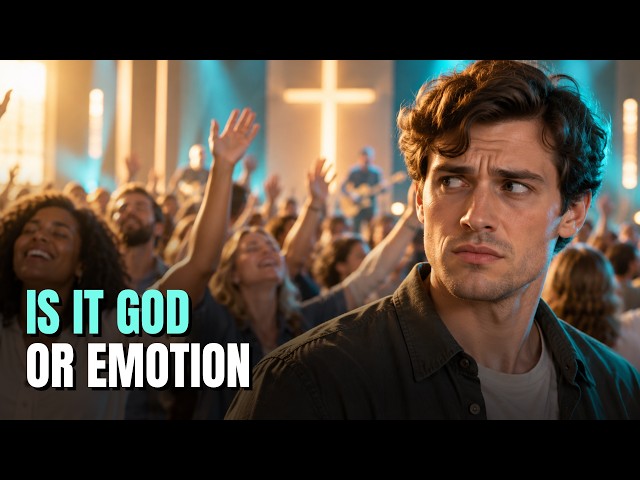
🔗 **Source:** [Charismatic Sermons: Faith, Emotion, and Persuasion](https://www.youtube.com/watch?v=dNT5La9buHk)
> [!note]+ Document Notes
> ---
> tags: [charismatic-movement, emotional-manipulation, religious-branding, prophetic-words, faith-deconstruction]
> author: Leaving the Message
> source: Leaving the Message (YouTube)
> reference: https://www.youtube.com/watch?v=dNT5La9buHk
> date created: 2026-09-28 09:03
> ---
> > [!info] Generated analysis — not the author's words. Sections below are machine-written
> > from the captured source. Only text inside `> [!quote]` blocks is verbatim from the author.
> > Do not quote or attribute any other line to the named author.
> > [!warning] Auto-caption artifacts and unresolved names. The transcript never names either
> > speaker on camera, so this analysis refers to them by a trait each one states about themself:
> > "the German speaker" (uses German vocabulary, says "in Germany" repeatedly) and "the American
> > speaker" (says "in the States," "in the United States"). "Sarah Young was one of the fellows
> > here in Germany selling a books like my love letters to Jesus" ([00:04:21]) does not match the
> > public record — Sarah Young is an American author of the devotional "Jesus Calling," not a
> > Germany-based seller of a book by that exact title — so this line is likely a caption or
> > mid-sentence garble conflating two different figures; treat the Germany/title detail as
> > unverified. "Branham Core headquarters" ([00:07:18]) likely refers to sites associated with
> > William Branham's "Message" movement, the subject the channel is named for, but the exact
> > proper noun is unconfirmed. "Legal bow casting" ([00:02:52]) is unclear as transcribed and may
> > be a mishearing.
> # 🏷️ Title: Charismatic Sermons: Faith, Emotion, and Persuasion
> ## 🧭 Table of contents
> - [📝 Summary](#-summary)
> - [📖 Main content](#-main-content)
> - [🗒️ Notes](#️-notes)
> - [📚 References](#-references)
> - [🗣️ Paraphrase](#️-paraphrase)
> - [📰 Newsletter](#-newsletter)
> - [✅ Action items](#-action-items)
> - [🧪 Hypotheses](#-hypotheses)
> - [📊 Methodology](#-methodology)
> - [❓ Questions](#-questions)
> - [🔮 Future research](#-future-research)
> - [💡 Implications](#-implications)
> - [🧠 Learning styles assessment](#-learning-styles-assessment)
> - [📊 Accessibility assessment](#-accessibility-assessment)
> - [🌍 DEIB assessment](#-deib-assessment)
> - [✅ Logical validity](#-logical-validity)
> - [🛡️ DARVO analysis](#️-darvo-analysis)
> - [🎯 Conclusion](#-conclusion)
> - [🔄 Refactor Appendix](#-refactor-appendix--charismatic-sermons-faith-emotion-and-persuasion)
> ## 📝 Summary
> - **What happened.** An 8-minute, two-person discussion on the channel Leaving the Message (published 2026-09-27) about how charismatic sermons build emotional experience through structured language, using German charismatic figure Johannes Hartl, devotional author Sarah Young, and William Branham's "Message" movement as recurring examples.
> - **The claim.** Both speakers argue that a sermon's emotional payoff (the "charismatic climax") is produced by the arrangement of words, not by God or scripture, and that stamping vague, emotionally loaded language with the name "Jesus" is what makes it read as Christian rather than any doctrinal content.
> - **Why it matters.** The speakers connect this to real financial and psychological stakes: media, "prophetic words," and life-story products sold within these movements, and the difficulty of applying false-advertising standards to spiritual claims.
> - **Key stakeholders.** Named as examples, not as parties to the conversation: Johannes Hartl (described as a German charismatic figure), Sarah Young (author of a Jesus-themed devotional), William Branham and the "Message" movement associated with this channel's name. The German speaker also gives a firsthand account of receiving a "prophetic word" at a congregation event.
> - **Risks and tradeoffs.** The American speaker names a real regulatory gap: false-advertising law does not reach claims framed as spiritual experience, even when attached to sold physical products (books, DVDs). Neither speaker offers a source for the numbers or characterizations they give; this is commentary and testimony, not documented research.
> - **Bottom line.** A short, dense critique arguing that emotionally engineered language, not doctrine, is what makes charismatic sermons feel Christian and effective, illustrated with a German consumer-fraud analogy and one speaker's own account of being on the receiving end of a "prophetic word."
> ## 📖 Main content
> - **The opening claim: language does the work, not doctrine.** The German speaker opens mid-argument that charismatic leaders "engage with charismatic teens because they are uneducated and they live by euphoria," and that terms like "coming to your power" or "get into resonance" are "void language" that nonetheless "sounds exciting" and lets a listener "project" their own sense of God onto the words ([00:00:00]).
> - **The moral-goodness distinction.** The German speaker separates being a morally good person from being Christian, naming Johannes Hartl specifically: whether or not Hartl is morally good is irrelevant to whether Hartl's language is Christian. The speaker's own definition of Christian is narrow and total: someone "enslaved to Christ and to Christ only," with everything else called "circus" and "fireworks" ([00:00:43]). This is a strong claim stated as a hard boundary, not argued from a text or tradition on camera.
> - **"An open mold of religions."** The American speaker extends the point: swap the name Jesus for any other religious figure and the same structure "fits" ([00:01:27]). The argument is that the emotional design is portable across religions, which implies the design itself, not the content, produces the feeling.
> - **Children can't tell the difference.** Both speakers argue that young or "not well Christian educated" listeners equate "hearing Christian speech" with something being biblical, without a mechanism for distinguishing the two ([00:02:10], [00:06:35]). This is presented as an observation about audience composition, not a measured finding.
> - **"Cult of emotions."** The American speaker names specific emotional states the structure can induce — euphoria, mourning, a sense of needing help — and frames the sermon's climax as produced by "the way that they have structured the words," explicitly not by God or the Bible ([00:02:10]-[00:02:52]). The claim that "you can take any religious leader you want, stick him in that frame, and you would have people devoted to that cause" is stated as a general rule with no example given beyond the hypothetical swap already discussed.
> - **The packaging-fraud analogy.** The German speaker introduces two German terms: "Etikettenschwindel" (packaging fraud) and "Zusatznutzen im Sinne des Marketings" (an added feature only in the marketing sense, not a real one), illustrated with a bio/vegan-labeled banana that costs triple the price of an identical unlabeled one ([00:03:36]). The argument by analogy: stamping "Jesus" on otherwise vague ("esoteric, void, fantastic, firework") language works the same way — it adds no real feature, but changes what people are willing to pay in attention, money, or devotion ([00:04:21]).
> - **Sarah Young reference — flagged for accuracy.** The transcript describes "Sarah Young" as "one of the fellows here in Germany selling a books like my love letters to Jesus, angels were talking to me" ([00:04:21]). Sarah Young is the American author of the devotional "Jesus Calling," which describes writing down what they experienced as Jesus speaking to them — not a German seller of a book titled "my love letters to Jesus." This line is treated in this analysis as likely garbled (caption error or a speaker misstatement caught mid-sentence), and the "here in Germany" and exact title details are not treated as established fact.
> - **Firsthand account: the "prophetic word."** The German speaker describes attending a "prophetic picture evening" at a congregation, personally, and asking for "a prophetic word," receiving in reply: "I have a revelation. I see you as a beautiful flower and your smell attracts people" ([00:05:06]). The speaker states, "wasn't laughing then," and was present specifically to observe and later discuss the practice with people in the congregation,
He has to engage with charismatic teens because they are uneducated and they live by euphoria, basically. And if he uses language like coming to your power, get into resonance, stuff like that, it's void language, but it sounds exciting and you can project I don't know if that's the right term in English, but projizieren. You can um uh project your own identity, your
own superficial illusion of God into these words and they will make your experience with God, with the church, with the Holy Spirit um Yeah, that's a huge problem and to explain to these people that that this kind of language isn't Christian, no matter um it doesn't matter if the person like Johannes Hartl is morally
good. A morally good person is not Christian. A Christian person is someone that is um excuse my harsh language there, but is enslaved to Christ and to Christ only. That's what makes a Christian, someone that throws his life on Jesus. That's all. That's the entire thing, you can call it. And everything else is just circus. Just fireworks.
>> And you know, that's part of the reason why I question whether some of the groups that have descended from this movement are even Christian because the way that they present themselves. >> not >> If you were to take the name Jesus out and put some other religious figure in. >> Exactly. >> You can make it fit almost It's like a It's like an open mold of of religions, right? You can make anything fit. And it's all about the feel-good aspects of it. If you can make the audience feel good and entertained, they're going to
come and listen. It doesn't matter what you say. And to the children who come and listen, they're not even trying to decipher what is Christian words and what is not. They just take it all in as church. This is our church. We're hearing Christian speech, so therefore it must be biblical. And so they assume that this religion they're in is Christianity. But what it becomes is it it's as we talked about last time, it's a cult of emotions. And those emotions are driven by the words used. Because if they can prey
upon your emotions with the words, and they can bring you to this you you call it the state of euphoria. There's different states that you can bring people into. You can bring them into mourning or you know, needing help. All of these things. It's It's cult of emotion and manipulation. If you can do this with your words, and then towards the end of it, you bring them to this very happy feel-good climax, which is like almost every charismatic sermon you've ever heard, right?
Into the charismatic climax of the sermon, what It's actually the words that brought you into that euphoric state. It isn't the God. It isn't the Bible. It's really the way that they have structured the words. And again, you can take any You can take any religious leader you want, stick him in that frame, and you would have people devoted to that cause. >> Yeah, like a legal bow casting. Like like a I don't know the word for it. Like like legal. Like a recipe. Like uh yeah. Um
now we are talking business, and that's exactly what it is. Because in Germany, there's a word we call it Etikettenschwindel. Like uh a packaging fraud. So in Germany, we are in a state where people are willing to pay triple or even more money on a banana that's vegan or bio. It's the same banana, but if there's a
label on it that says bio and vegan, it's triple the price and has this special kind of feature. In Germany, we call it Zusatznutzen im Sinne des Marketings. So, there it's it's not a real feature. It's not a real inherent feature. But, in the sense of marketing, you can declare it onto it, so it has this feature for the person you want to catch. So, this is
the exact same phenomena. You you take whatever is esoteric, void, fantastic, firework language and put the stamp Jesus on it. And in that moment, it it becomes Christian. Uh talk about music, talk about books. Sarah Young, we were talking about this like a prophetic writing. Sarah Young was one of the fellows here in Germany selling a books like my love letters to
Jesus, angels were talking to me, I was writing it down. I experienced the same stuff just just for for making fun of it. I was in a congregation that was um having a um prophetic picture evening. And really, I would I went to one of them like, "Ah, please give me a prophetic word." And he was talking to me like, "Um >> [clears throat] >> I have a revelation. I see you as a
beautiful flower and your smell attracts people." >> [laughter] >> I wasn't laughing then. I was just there to uh to experience this, to talk about this, to reflect this with the people of the congregation. Some of them were my friends. Like, "Guys, what are you doing?" He was talking about me like, "I have a revelation. You are a flower and your smell is attracting people." What kind
of buffoonery is this? >> Yeah. >> [laughter] >> Unbelievable. Back to business. Yes, for these kind of people in Germany, like Johannes Hartl, it's just a business, nothing else. They will use every label, every feature that's morally good in the eyes of the people, like any trademark, like any trademark for for for my my clothes that I can identify with, yeah? Like soldier clothes,
hyper attractive women clothes. You get it, [laughter] right? It's ridiculous and and the people buy into it, especially because they are young and are not well Christian educated. >> We have the same thing in the States. It's called false advertisement. You advertise something, but what you're advertising isn't true and so therefore it is illegal in the United States. There There are penalties that you face
for it. But in the churches, this is where the gray area hits. The product they're selling isn't a tangible product. It's a spiritual product and the government does not know how to put laws around the spiritual product and in fact, many of the laws are written such that they can't put laws around the spiritual product. But here for me, this is where it turns into the gray area. They are selling tangible products. They're selling books that have these false advertisement claims. People who
saw angels and doing this and that. >> here's here's something some something interesting for you. In Germany, we call it Heilsversprechen. You versprechen you the Heil. Things like that are called Heilsversprechen. >> You know, such a problem because so the books they're selling, the videos, they're if you go to the Branham Core headquarters, they're talking about the life story of Branham. They're selling this life story. None of it's true. I mean, there there are maybe five out of 50 details that are true in it. The whole rest of it is fiction. So, at
what point can you say that the product they're selling, these life story videos and you know, DVDs, etc. At what point is that false advertisement? And it turns into this really gray area because the government does not want to come into the church and take over the legalities of the products sold by the churches. >> Yeah, on the one hand, it's a huge kind of freedom that you have there in in the USA. On the other hand, it's a huge problem because
>> [music], Charismatic Sermons: Faith, Emotion, and Persuasion, Leaving the Message, 01m3m1exyggp0yjv48bn1t8r0p.