Citation Is an Act of Creation
## Metadata
- Author: [[Naomi Most]]
- Full Title: Citation Is an Act of Creation
- Category: #articles
- Document Note: ---
tags:
- #citation
- #knowledge-ecosystem
- #diversity
Author: Naomi Most
Source: Medium
Reference: https://nthmost.medium.com/citation-is-an-act-of-creation-b85f9115c129
date created: {{date:YYYY-MM-DD}} {{time:HH:mm}}
---
# Title: Citation is an Act of Creation
## Table of Contents:
- [🧠 Thesis: Citation as Creative Infrastructure](#-thesis-citation-as-creative-infrastructure)
- [🕸️ Analogy: Brain Interconnections and Discourse Health](#️-analogy-brain-interconnections-and-discourse-health)
- [📦 The “Invisible Box” and Central Figures](#-the-invisible-box-and-central-figures)
- [🌈 Diversity Effects: Who Gets Seen as a Thinker](#-diversity-effects-who-gets-seen-as-a-thinker)
- [🤝 Community Building Through Citation](#-community-building-through-citation)
- [🚀 Intentional Practice: Curating Wide Citations](#-intentional-practice-curating-wide-citations)
- [📝 Notes](#-notes)
- [🔗 References](#-references)
- [🗣️ Paraphrase](#-paraphrase)
- [📰 Newsletter](#-newsletter)
- [✅ Action Items](#-action-items)
- [🧪 Hypotheses](#-hypotheses)
- [📊 Methodology](#-methodology)
- [❓ Questions](#-questions)
- [🔮 Future Research](#-future-research)
- [💡 Implications](#-implications)
- [🧠 Learning Styles Assessment](#-learning-styles-assessment)
- [📊 Accessibility Assessment](#-accessibility-assessment)
- [🌍 DEIB Assessment](#-deib-assessment)
- [✅ Logical Validity](#-logical-validity)
- [🛡️ DARVO Analysis](#️-darvo-analysis)
- [🔍 SEO Evaluation](#-seo-evaluation)
- [🎯 Conclusion](#-conclusion)
### References:
- The article itself notes: “Composed purposefully without citations. Some writing fleshed out by ChatGPT.”
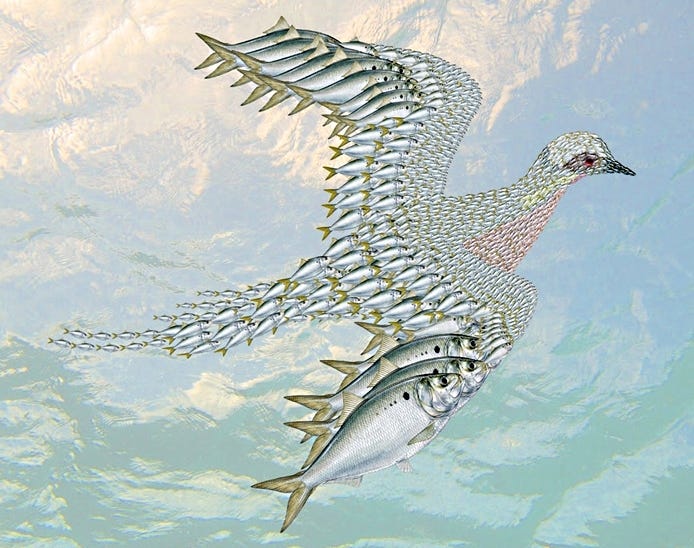
- Artwork referenced: Last Migration by Joseph Ingoldsby.
## 📝 Summary:
Naomi Most argues that citation is not mere academic housekeeping; it actively creates intellectual reality. Using a neuroscience analogy, she compares diverse, dense citations to a healthy brain with many interconnections, while over-reliance on “central figures” creates an “invisible box” that narrows discourse and undermines diversity. Intentional, broad citation practices build more inclusive, resilient communities and increase serendipity, adaptation, and insight.
Key lines:
- “Citation…is an act of creation, a shaping force that determines the trajectory, richness, and vitality of a discourse.”
- “When we cite thinkers from various backgrounds…we enrich our discourse, similar to how a brain’s resilience is enhanced by maintaining a rich network of interconnections.”
## 📖 Main Content:
- Citation as creative act:
- Citations sculpt discourse by elevating certain ideas and voices.
- They set the boundaries of “what counts” and who belongs in the conversation.
- Brain–discourse analogy:
- Dense neural interconnections correlate with cognitive vitality.
- Discourse that “ages” mirrors reduced connectivity: overcitation of a few figures leads to rigidity and stagnation.
- The “invisible box”:
- Central figures become anchors; their repeated citation creates a normative archetype of “a thinker.”
- This narrows who is seen, heard, and invited, often unintentionally.
- Diversity and belonging:
- Restricted citation ranges perpetuate homogeneity.
- Intentionally citing across identities, disciplines, and geographies invites broader participation and creativity.
- Community-building function:
- Citation practices shape not only ideas but also community composition.
- Wider citation increases adaptability, serendipity, and “benevolent mutation” in the knowledge ecosystem.
- Call to action:
- Curate more varied references to keep discourse dynamic and inclusive.
- Treat citations as infrastructure for discovery, resilience, and ethical inclusion.
Personal reflections:
- The article aligns with open-source norms where “links” (issues, PRs, docs) are citations that shape visibility and contributor pipelines.
- The brain analogy maps well to network science: high clustering + diverse paths increase robustness and innovation.
- The piece is meta-ironic: it is deliberately citation-light to foreground the thesis and model clarity; a companion annotated bibliography could further operationalize the call.
### 🗒️ Notes
- Thesis
- Citation is creative, not clerical.
- It shapes trajectories of disciplines and communities.
- Analogy: Brain networks
- Dense, diverse links = cognitive resilience.
- Reduced connectivity (aging/dementia) = loss of function; parallels narrow citation networks.
- Central figures and the invisible box
- Recurrent citation of a select few defines boundaries.
- Creates cognitive rigidity and normed archetypes of who “counts.”
- Diversity consequences
- Homogeneity persists when citation ranges are narrow.
- Intentional broad citation welcomes underrepresented scholars and ideas.
- Community-building
- Citations influence who participates.
- Rich networks increase serendipity and adaptive capacity.
- Practice recommendations
- Audit bibliographies for concentration risk.
- Seek cross-disciplinary and cross-cultural sources.
- Reward committees and reviewers who value citation breadth.
- Stylistic note
- Closing acknowledges “Composed purposefully without citations…Some writing fleshed out by ChatGPT”—transparency about process.
## 📖 References:
- Primary source: Naomi Most, “Citation is an Act of Creation,” Medium: https://nthmost.medium.com/citation-is-an-act-of-creation-b85f9115c129
- Artwork: Joseph Ingoldsby, Last Migration (not linked in-article).
- Related external context for analogy and networks:
- On knowledge networks and robustness: “Scale-Free Networks” overview in network science (e.g., Barabási’s work).
- On citation diversity and inclusion: “Gendered Citation Patterns” in academic literature (e.g., matrices discussed in [bibliometric studies](https://www.pnas.org/doi/10.1073/pnas.2019479118)).
## 🗣️ Paraphrase:
1) Original idea: “Citation…is an act of creation…especially in philosophy, anthropology, and sociology…A robust discourse thrives on the diverse links created through citation.”
- Paraphrase: Referencing sources doesn’t just acknowledge prior work; it constructs the intellectual landscape—particularly in fields driven by interwoven ideas. Like neurons forming a resilient network, discourse grows stronger and livelier when we connect across a broad range of thinkers.
2) Original idea: “When a group predominantly cites a select few…they unconsciously reinforce a certain archetype of a ‘thinker’…By intentionally reaching beyond this ‘invisible box’ and citing a diverse range of thinkers, we create a welcoming space…”
- Paraphrase: If a community keeps referencing only a handful of authorities, it cements a narrow template of who qualifies as a contributor. Deliberately expanding who we cite disrupts that mold and signals belonging to people who don’t fit the old pattern.
## 📰 Newsletter:
This week in the WordPress builderverse: we’re learning smarter, shipping faster, and celebrating community wins.
- Learn web dev: Brush up on modern PHP patterns for block development, async JavaScript with the REST API and WP-CLI workflows, and CSS container queries to make your themes responsive without hacks. For a great intro to container queries, see the MDN guide on container queries for practical examples.
- Recent updates: WordPress core performance improvements continue landing in the Script Modules API; Gutenberg keeps iterating on Interactivity API patterns—worth a test drive in your plugin sandbox.
- Community highlights: New contributors are crushing first issues in the Performance and Sustainability initiatives. If you’re onboarding, check the Make WordPress Contributor Handbook and join next week’s hallway hangout.
- New plugins: Watch for lightweight block collections focusing on accessibility-first patterns, plus a beta of a “Citations for Docs” plugin to help open-source projects elevate underrepresented voices in their documentation and release notes.
- Pro tip: Treat your docs’ links like citations—diverse references = richer learning paths and a more inclusive contributor pipeline.
Useful links:
- Make WordPress Contributor Handbook: https://make.wordpress.org/
- MD
- Summary: Citation is more than an academic routine, as it determines the trajectory, richness, and vitality of discourse in any field of study. The discourse can become impoverished when citations focus too heavily on a select few central figures, similar to a brain losing its cognitive flexibility. A broad spectrum of citations enhances discourse complexity and adaptability, promoting diversity within a community, enabling it to reflect a diverse intellectual landscape and enhance the flow of insights. Therefore, citation is not just an intellectual creation, but a community building practice that shapes the content and composition of conversations to broaden horizons.
- URL: https://nthmost.medium.com/citation-is-an-act-of-creation-b85f9115c129

Citation, in any field of study, is more than a mere academic necessity or a formal protocol. It is an act of creation, a shaping force that determines the trajectory, richness, and vitality of a discourse. This truth resonates especially in the realms of philosophy, anthropology, and sociology, where the nuanced interplay of ideas forms the heart of any conversation. Much like a healthy brain enriched by a dense web of interconnections, a robust discourse thrives on the diverse links created through citation.
In the human brain, the strength and vitality lie in the density of its interconnections. Aging and diseases like dementia erode these connections, leading to a loss of function and vitality. Similarly, a discourse can become impoverished when citations focus too heavily on a select few “central figures,” much like a brain losing its interconnections.
These central figures, often lauded for their substantial contributions, become the recurring touchstones in the discourse. The unintended consequence is a discourse that revolves around these figures, their ideas forming an invisible box that defines the boundaries of the conversation, akin to a brain losing its cognitive flexibility due to reduced interconnectivity.
Just as a healthy brain is marked by a high density of diverse interconnections, a vibrant discourse is characterized by a broad spectrum of citations. Each citation weaves a new thread into the discourse’s tapestry, enhancing its complexity and adaptability. When we cite thinkers from various backgrounds, identities, and perspectives, we enrich our discourse, similar to how a brain’s resilience is enhanced by maintaining a rich network of interconnections.
Another facet of this “invisible box” phenomenon is its potential to exacerbate the lack of diversity within a group or community. This lack of diversity is a concern often raised within various thought communities, with many questioning why their demographic makeup seems so homogenous despite their best efforts. The answer, in part, can be traced back to the restricted range of references that dominates their discourse.
When a group predominantly cites a select few, they unconsciously reinforce a certain archetype of a ‘thinker’ or ‘contributor’. This can inadvertently create an environment that feels exclusive to those who do not fit the archetype. However, by intentionally reaching beyond this “invisible box” and citing a diverse range of thinkers, we create a welcoming space, much like a healthy brain that continues to form new connections and adapt.
Therefore, citation is not only an act of intellectual creation but also a practice of community building. It has the power to shape not just the content of our conversations but also the composition of our communities. It determines whether our discourse will resemble a vibrant, well-connected brain, or one that’s aging, losing its connections and vitality.
Let us remember that each citation we make is an act of creation, an opportunity to redefine the conversation and broaden its horizons. By intentionally curating a wider array of citations, we can ensure that our discourses remain dynamic, inclusive, and ever-evolving, truly reflecting the diverse intellectual landscape we inhabit, maximizing potential for serendipity and benevolent mutation, and enhancing the flow of insights over far more comprehensive datasets.
art: Last Migration by [Joseph Ingoldsby](https://www.pennington.org/arts/silva-gallery-of-art/science-inspires-art)
*Composed purposefully without citations. Some writing fleshed out by ChatGPT.*, Citation Is an Act of Creation, Naomi Most, 01h3wg20g3ssav5sz1fqj94b7g.