Complaint-Wp-Engine-v-Automattic-Et-Al-With-Exhibit
## Metadata
- Author: [[Quinn Emanuel]]
- Full Title: Complaint-Wp-Engine-v-Automattic-Et-Al-With-Exhibit
- Category: #articles
- Document Note: ---
tags: [#legal, #wordpress, #trademark, #opensource, #community-governance]
Author: Quinn Emanuel Urquhart & Sullivan LLP
Source: Complaint by WP Engine, Inc. against Automattic Inc. and Matthew Mullenweg
Reference: [Complaint Document](Complaint-WP-Engine-v-Automattic-et-al-with-Exhibit.pdf)
date created: 2024-10-02 16:30
---
# Title: WP Engine v. Automattic and Matthew Mullenweg - Legal Dispute Analysis
## Table of Contents:
1. [📝 Summary](#-summary)
2. [📖 Main Content](#-main-content)
1. [Introduction and Background](#introduction-and-background)
2. [Timeline of Key Events](#timeline-of-key-events)
3. [Detailed Allegations Against Automattic and Mullenweg](#detailed-allegations-against-automattic-and-mullenweg)
4. [Analysis of Trademark Management](#analysis-of-trademark-management)
5. [Legal Implications and Claims](#legal-implications-and-claims)
6. [Impact on WordPress Community](#impact-on-wordpress-community)
7. [🗒️ Notes](#-notes)
3. [📖 References](#-references)
4. [🗣️ Paraphrase](#-paraphrase)
5. [📰 Newsletter](#-newsletter)
6. [✅ Action Items](#-action-items)
7. [🧪 Hypotheses](#-hypotheses)
8. [📊 Methodology](#-methodology)
9. [❓ Questions](#-questions)
10. [🔮 Future Research](#-future-research)
11. [💡 Implications](#-implications)
12. [🧠 Learning Styles Assessment](#-learning-styles-assessment)
13. [📊 Accessibility Assessment](#-accessibility-assessment)
14. [🌍 DEIB Assessment](#-deib-assessment)
15. [✅ Logical Validity](#-logical-validity)
16. [🔍 SEO Evaluation](#-seo-evaluation)
17. [🎯 Conclusion](#-conclusion)
## 📝 Summary:
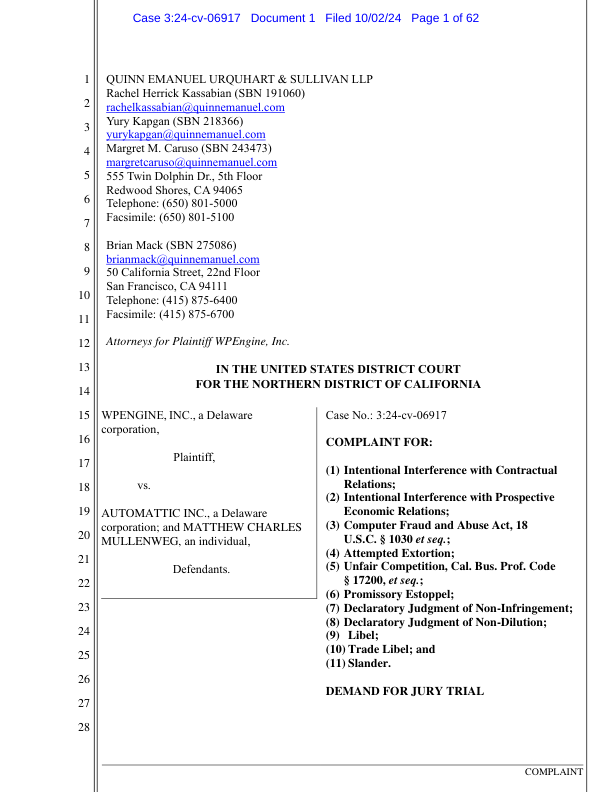
This document details a lawsuit filed by WP Engine (WPE) against Automattic Inc. and Matthew Mullenweg, alleging misconduct involving misuse of WordPress trademarks, extortion, unfair competition, and intentional interference with contractual relations. WP Engine claims that Automattic and Mullenweg have used their influence over WordPress resources to harm WP Engine financially and damage its reputation within the WordPress community.
## 📖 Main Content:
### Introduction and Background
- **Context of WordPress**: WordPress is a widely used open-source content management system that powers over 43% of all websites worldwide. The open-source nature of WordPress means that anyone can use, modify, and distribute the software, which has encouraged extensive community collaboration and development.
- **Role of Automattic and Mullenweg**: Automattic Inc., founded by Matthew Mullenweg, is a for-profit entity deeply involved in the WordPress ecosystem. Automattic oversees various services and products, including WordPress.com, WooCommerce, and other commercial ventures.
- **WP Engine’s Role**: WP Engine is a platform that has built its business around WordPress, providing hosting and related services to WordPress users. WP Engine claims that it has heavily contributed to the WordPress community both financially and through community engagement.
### Timeline of Key Events
- **2003**: Founding of WordPress by Mullenweg, with the vision of an open, accessible platform.
- **2010**: Trademarks for WordPress were transferred from Automattic to the WordPress Foundation, ostensibly to protect them for the community.
- **2011-2018**: WP Engine emerged as a key player, heavily investing in WordPress-related infrastructure and projects.
- **September 2024**: Automattic, under Mullenweg's direction, allegedly demanded payments from WP Engine for a trademark license. WP Engine refused, leading to public defamation and restrictions on WP Engine’s access to WordPress.org resources.
### Detailed Allegations Against Automattic and Mullenweg
- **Misuse of WordPress Trademarks**: The complaint claims that, despite publicly transferring the trademarks to the WordPress Foundation, Automattic retained a secret, irrevocable, royalty-free license, allowing them to continue controlling the trademarks. WP Engine alleges this action was deceptive and allowed Automattic to profit at the expense of other community members.
- **Extortion Attempt**: WP Engine alleges that Automattic and Mullenweg threatened them with reputational harm unless they paid an excessive license fee to Automattic. This fee, which was to be calculated as a significant percentage of WP Engine’s gross revenue, was allegedly intended as a means of controlling competition rather than protecting trademarks.
- **Blocking Access to WordPress Resources**: The complaint also states that Automattic and Mullenweg retaliated against WP Engine by blocking their access to essential WordPress.org functions, effectively cutting WP Engine off from important community resources, including plugin and theme updates, which are integral to maintaining WordPress-based websites.
### Analysis of Trademark Management
- **Initial Trademark Transfer to the Foundation**: In 2010, Automattic transferred the WordPress trademarks to the WordPress Foundation, a nonprofit entity. This transfer was portrayed as a move to ensure that the trademarks would serve the community’s interest, safeguarding them from potential commercial misuse.
- **Exclusive License Back to Automattic**: However, WP Engine alleges that an exclusive, irrevocable license was secretly retained by Automattic, allowing it to use the trademarks freely while maintaining effective control. This duality—a public transfer but continued private control—allegedly misled the community and investors who believed the trademarks were held independently.
- **Implications for Community Trust**: The complaint argues that Automattic’s actions eroded community trust. The license arrangement was not transparently disclosed in the WordPress Foundation’s tax filings or public communications, raising concerns about governance practices and potential conflicts of interest within the WordPress leadership.
### Legal Implications and Claims
- **Intentional Interference with Contractual Relations**: WP Engine claims that Automattic’s actions intentionally interfered with WP Engine’s business relationships, including relationships with its customers and contributors.
- **Computer Fraud and Abuse Act Violation**: By blocking access to WordPress.org, WP Engine alleges that Automattic violated provisions of the Computer Fraud and Abuse Act (CFAA), which prohibits unauthorized access to computer systems.
- **Attempted Extortion**: The demand for an excessive licensing fee, combined with threats of reputational damage, forms the basis of WP Engine’s extortion claim. WP Engine argues that Automattic used the promise of open access as a bait-and-switch tactic to coerce payments once WP Engine became reliant on WordPress.
- **Unfair Competition and Libel Claims**: The complaint also alleges unfair competition under California law, as well as libel, trade libel, and slander for the false statements made by Mullenweg during his public remarks and postings, which WP Engine argues were intended to harm its reputation and business.
### Impact on WordPress Community
- **Retaliation Against Contributors**: WP Engine claims that Mullenweg's actions go against the core principles of open source, particularly the values of openness and accessibility. Blocking WP Engine’s access to WordPress.org not only impacted WP Engine but also set a troubling precedent for other contributors who might fear retaliation.
- **Community Trust Issues**: The lawsuit points out that many WordPress community members were led to believe that the trademarks and assets of WordPress were independently managed for the community's benefit. The allegations challenge this perception, potentially leading to diminished trust in both the WordPress Foundation and Automattic.
- **Stifling Innovation**: The alleged misconduct of Automattic and Mullenweg could discourage innovation and participation within the WordPress community. WP Engine argues that the threat of similar actions against other businesses might deter contributions, harming the community's growth and the ecosystem's sustainability.
### 🗒️ Notes
- **Open Source Community Principles**:
- WordPress has thrived due to its open-source nature, which promotes accessibility and community engagement.
- Automatt
- Document Tags: [[lawsuit]] [[Matt Mullenweg]] [[open source]] [[open source corporate contribution]] [[wordpress]] [[wpdrama]] [[wp engine]]
- URL: https://wpengine.com/wp-content/uploads/2024/10/Complaint-WP-Engine-v-Automattic-et-al-with-Exhibit.pdf
Full text of this document omitted because this document is a PDF
[Download original file →](https://readwise.io/reader/document_raw_content/222397611), Complaint-Wp-Engine-v-Automattic-Et-Al-With-Exhibit, Quinn Emanuel, 01j981pjz5j1m59kr97s7908qx.