Decoupled, Governed, and Stable

🔗 **Source:** [Decoupled, Governed, and Stable](https://pantheon.io/resources/ebooks/decoupled-governed-and-stable/read)
> [!note]+ Document Notes
> ---
> tags: [decoupled-architecture, headless-cms, nextjs, platform-engineering, content-operations, caching]
> author: Pantheon (corporate byline; no individual author named in the capture)
> source: Pantheon ebook
> reference: https://pantheon.io/resources/ebooks/decoupled-governed-and-stable/read
> date created: 2026-09-21
> ---
> > [!info] Generated analysis — not the author's words. Sections below are machine-written
> > from the captured source. Only text inside `> [!quote]` blocks is verbatim from the author.
> > Do not quote or attribute any other line to the named author.
> ## 🏷️ Title
> **Decoupled, Governed, and Stable** — a Pantheon ebook arguing that the integration layer between a headless CMS (WordPress or Drupal) and a Next.js frontend is itself production infrastructure, with a three-failure taxonomy, a four-part operating model, and a five-level maturity rubric that terminates in adopting a managed platform.
> ## 🧭 Table of Contents
> 1. Summary
> 2. Main Content — the three seams, the operating model, the maturity ladder, the pitch
> 3. References
> 4. Paraphrase
> 5. Newsletter
> 6. Action Items
> 7. Hypotheses
> 8. Methodology
> 9. Questions
> 10. Future Research
> 11. Implications
> 12. Learning Styles
> 13. Accessibility
> 14. DEIB
> 15. Logical Validity
> 16. DARVO
> 17. Conclusion
> 18. Refactor Appendix
> ## 🔗 References (in-page)
> The capture is densely linked — thirteen outbound anchors plus five images. This source is **not uncited**; the question is citation *quality*, which varies sharply.
> **Solid, load-bearing:**
> - Next.js Draft Mode — `nextjs.org/docs/app/guides/draft-mode`
> - Next.js revalidation guide — `nextjs.org/docs/app/getting-started/revalidating`
> - `revalidateTag` API reference — `nextjs.org/docs/app/api-reference/functions/revalidateTag`
> - Next.js multi-instance deployment requirements — `nextjs.org/docs/app/guides/deploying-to-platforms#minimum-requirements`
> These are primary documentation for the exact mechanisms described, linked at the point of claim. Good practice.
> **Commercially interested, presented as neutral research:**
> - MACH Alliance 2025 Annual Research Report (`register.machalliance.org`) — cited for "9 out of 10 surveyed organizations expanded their composable software investments" and the 93% ROI figure. The MACH Alliance is a vendor consortium that exists to promote composable architecture; its survey population is drawn from that ecosystem. This is a trade body reporting that its own product category is succeeding.
> - Business Research Insights (`businessresearchinsights.com`) — cited for the 38% integration-complexity figure. A commercial market-report vendor; the linked page is a sales page for a paid report, so the methodology behind the figure is not inspectable from the citation.
> - Forrester's 2025 CMS buyer research — linked not to Forrester but to `amplience.com/reports/forrester-wave-cms-q1-2025/`, a headless-CMS vendor's hosted copy. Vendor-hosted analyst reports are typically licensed for distribution by a vendor positioned favorably in them.
> **Cited but non-specific:**
> - DORA (`dora.dev`) — linked twice, once as "DORA Research Metrics" and once as "DORA Platform Guidance," both pointing at the site root rather than a finding. DORA is a legitimate and relevant body of research, but a homepage link cannot substantiate either specific claim it is attached to.
> **Vendor self-reference (the closing pitch):**
> - `docs.pantheon.io/cache`, `docs.pantheon.io/environments`, `docs.pantheon.io/multidev`, and the SPS Commerce case study on `pantheon.io`.
> **Images:** five, all on `pantheon.io`, all diagram or cover assets. Every one carries a filename-derived alt text (`Page two_ The Brittle Seams.png`, `Cover 2.png`) rather than a description — see the accessibility section.
> ## 📝 Summary
> **What happened.** Pantheon published a guide for engineering and platform teams running production Next.js frontends against Drupal or WordPress. It opens with a short history (WordPress REST API in 2016, Drupal's JSON:API in core in 2019, then GraphQL for both), argues that most production incidents originate at three specific integration seams, proposes four operating-model principles, and closes with a five-level maturity model and a recommendation to standardize on Pantheon.
> **Why it matters.** The diagnostic half is genuinely useful and largely vendor-neutral. The three-seams framing — preview, revalidation, environment parity — maps cleanly onto three stakeholder groups (editors, visitors, developers), which makes it a usable triage tool rather than a list. The four questions in principle 2 are the sharpest thing in the document: any team can run them today against any host and learn something.
> **Stakeholders.** Platform and engineering teams operating decoupled WordPress or Drupal sites; content editors whose preview workflow is the first seam; site visitors, who experience the second as stale or inconsistent pages; agencies maintaining fleets of such sites, who are the real audience for the maturity model.
> **Risks.** The rubric is authored by a party selling the top of it. Level 5 is defined as inheriting preview, release, and governance tooling from a platform — which is a description of Pantheon's offering before it is a description of maturity. A team self-assessing against this ladder is being measured with the vendor's ruler. Separately, three of the four external research citations are commercially interested, and the most technically consequential recommendation (release schemas and code together) is asserted without naming a single mechanism for doing it.
> **Bottom line.** Take the failure taxonomy and the four freshness questions; they are real, portable, and cost nothing to adopt. Treat the maturity model as a sales instrument that happens to contain useful vocabulary, and source the market statistics elsewhere before repeating them.
> ## 📖 Main Content
> **The history is roughly right, with one imprecision.** WordPress's REST API content endpoints did land in core in 2016 (4.7, December). Drupal's addition in 2019 was **JSON:API**, not "the JSON module" — JSON:API entered core in Drupal 8.7, May 2019. The distinction matters because JSON:API is a specification with defined semantics for includes, sparse fieldsets and relationships, and "the JSON module" names nothing in particular. A reader trying to follow up on that sentence will search for the wrong thing.
> **The three seams are the document's real contribution.**
> *Preview.* Editors need to see unpublished changes without a rebuild. Next.js provides Draft Mode: the CMS sends the editor to a Route Handler that validates a shared secret and the requested slug, then sets a cookie that bypasses cache for that session. The stated risk is duplication — every project reimplements the same login checks, URL rules, and draft-state handling. That is an accurate description of what agencies actually experience.
> *Revalidation.* Visitors expect pages to reflect recent publishing. Next.js offers time-based and on-demand revalidation via stale-while-revalidate or tag invalidation. The document makes one observation that is better than its surroundings: a footer edit may need to refresh hundreds of pages while a body-copy change affects one. Invalidation scope is a function of content structure, not of edit size. The prescribed fix — map content changes to affected pages and shared data, then invalidate by targeted path and tag — is correct and non-trivial to implement.
> *Environment parity.* Developers need staging to predict production. The named divergence sources are caching behavior, image processing, and webhook retries, which is a well-chosen list: all three are places where a managed platform's defaults differ silently between tiers. Next.js's `cacheHandler` and `cacheHandlers` are offered as the mechanism for fleet-wide invalidation.
> **The operating model is four principles of uneven weight.**
> 1. *A shared contract for developers and marketers.* Mostly framing. The historical arc — CMS-era favored editors, Next.js-era favored frontend developers, decoupled done well serves both — is a fair sketch but not actionable as stated.
> 2. *Expose content freshness and release health.*

#### Table of Contents
#### Beyond the framework
#### This guide is for engineering and platform teams running production Next.js frontends on Drupal or WordPress.
The CMS-to-frontend integration is where most production incidents begin, and teams repeatedly solve the same problems on every project. Keep reading for the failure patterns behind those incidents, the controls that close them, and a five-level maturity model for moving from ad hoc fixes to a governed, stable platform.
###### **A brief history of decoupled websites**
In 2016, WordPress added its REST API, and in 2019, Drupal included the JSON module in core, enabling developers to manage and access content outside the CMS UI.
A few years later, a GraphQL module for Drupal and a GraphQL plugin for WordPress were published. This enabled the efficient fetching of data for decoupled frontends, like those built with Next.js.
Next.js was initially designed primarily for React apps, including server-rendered apps and statically generated sites. It later expanded its website capabilities, including support for sites that could be generated from local or remote data without requiring a traditional application backend.
As the framework matured, Next.js added features that made it more practical to integrate with external data sources and headless CMSs. These included static generation with data fetched at build time, incremental static regeneration, on-demand revalidation, and native content-preview workflows such as Draft Mode.
Enterprises responded by adopting Next.js, paired with Drupal, WordPress, or another headless CMS as the default architecture for their websites. In the [MACH Alliance](https://register.machalliance.org/hubfs/2025%20Annual%20Research%20Report/2025%20MACH%20Alliance_Global%20Annual%20Research%20Report_Final_compressed.pdf) research, 9 out of 10 surveyed organizations expanded their composable software investments in 2025, and 93% of those measuring ROI say it has met or exceeded expectations.
However, challenges remain for engineering teams. Shipping a Next.js site to production still requires coordination of CMS state, managed deployments, and preview and recovery consistency across the delivery tier.
###### **The market realities & operating stakes**
1. **Time-to-market is a core requirement.** [Forrester's 2025 CMS buyer research](https://amplience.com/reports/forrester-wave-cms-q1-2025/) highlights time-to-market as a primary driver for choosing a publishing stack.
2. **Integration complexity remains a barrier**. Around 38% of organizations report integration complexity concerns for headless CMS, a blocker to the velocity developer teams want to achieve with a decoupled architecture, according to the [Business Research Insights Market Report](https://www.businessresearchinsights.com/market-reports/headless-cms-software-market-109193).
3. **AI magnifies the integration bottleneck**. Coding agents and writing assistants have increased the speed of CMS development and content production. However, engineering teams must now invest in platforms that enable them to deliver software updates safely, quickly, and efficiently, as evidenced by [DORA Research Metrics](https://dora.dev/).
Next.js, Drupal, and WordPress now provide the primitives to work together in a unified publishing experience. But how those primitives should integrate, and the risks of doing it poorly, are still being defined. Those risks affect the experience of content editors, site visitors, and developers in three specific integration points, which we'll examine next.
#### Where production breaks
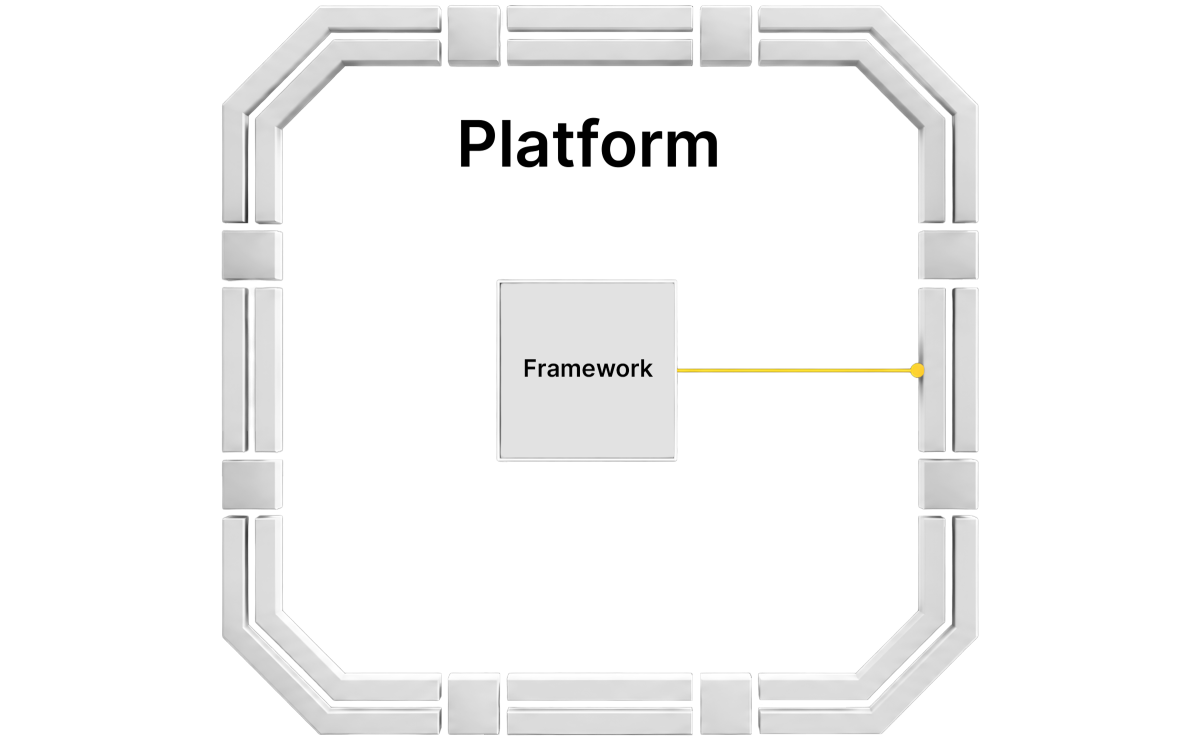
Most production failures with Next.js and WordPress/Drupal trace back to fragile connections in three areas: content preview, page revalidation, and environment parity. Each one affects a different primary stakeholder. Content editors need reliable previews, site visitors need current and consistent pages, and developers need environments they can reproduce and support.

Editors expect to preview unpublished changes without waiting for a rebuild. Next.js enables this experience through [Draft Mode](https://nextjs.org/docs/app/guides/draft-mode). The CMS sends the editor to a secured Route Handler that checks a shared secret and the requested slug before redirecting.
The handler sets a cookie so that the session skips the cache and renders draft content. Visitors to the production site still see the published version. Previews must also use the correct deployment environment, branch, and routing context.
* **The Risk:** When each project builds its own preview system, teams end up duplicating the same login checks, URL rules, and draft-state handling. This makes the systems harder to maintain and easier to break.
* **The Fix:** Provide one shared preview process that every project can use. It should clearly explain what went wrong when a preview fails, while still giving teams enough flexibility to support their own needs ([DORA Platform Guidance](https://dora.dev/)).
Site visitors expect pages to reflect recent publishing activity without encountering outdated content or inconsistent versions across requests. Next.js supports both time-based and on-demand revalidation, using stale-while-revalidate behavior or targeted tag invalidation. ([Next.js Revalidation Guide](https://nextjs.org/docs/app/getting-started/revalidating) & [revalidateTag Reference](https://nextjs.org/docs/app/api-reference/functions/revalidateTag)). A footer edit may need to refresh hundreds of pages, while a body copy change may affect only one.
* **The Risk:** Visitors may see stale content or different versions of the same page depending on which cache or server responds. These issues can undermine trust in the site.
* **The Fix:** Map content changes to the pages and shared data that they affect, then use targeted paths and tags to refresh only what's necessary. Track how long important updates take, and monitor failed webhooks, invalidations, and cache refreshes. Set clear freshness expectations for key visitor journeys, and investigate missed targets as delivery issues.
Engineering teams need confidence that a site will behave in production exactly as it did in staging. The most elusive incidents trace back to discrepancies between environments, especially with caching behavior, image processing, or webhook retries.
Next.js addresses this with configurable cache backends: cacheHandler for Incremental Static Regeneration, route handlers, and image optimization, and cacheHandlers for use cache entries, so a publish invalidates content across the whole fleet.
* **The Risk:** Teams encounter bugs that are difficult to reproduce because each environment may handle saved content and cached pages differently.
* **The Fix:** Measure delivery performance at the application or service level with shared ownership across development and operations. [For multi-instance Next.js deployments](https://nextjs.org/docs/app/guides/deploying-to-platforms#minimum-requirements), shared cache and tag coordination minimize fleet divergence.
Taken together, preview authentication, environment routing, cache invalidation, webhook retries, observability, and environment parity become shared infrastructure that must be maintained across every project.
At that point, your team isn't simply hosting a CMS and a Next.js frontend. It's orchestrating the integrations that connects them.
#### Stable by default
The integration layer between a CMS and a Next.js frontend is now part of your production platform. It needs ownership, standards, observability, and a repeatable operating model. Without those controls, teams fall back to project-level fixes and gradually recreate the same infrastructure in different ways across every site.
##### **1. Use a shared contract for developers and marketers**
A traditional CMS prioritized the content editor, and developers worked around the limits of the theme layer. Later, Next.js shifted power to frontend developers. They were now empowered to build rich, performant site experiences, while content editors had to adjust to a technical publishing workflow.
A decoupled architecture lets editors keep their familiar Drupal or WordPress workflow while developers build component-based React frontends with the tools best suited to their work. The shared contract empowers teams to optimize their workflow while preserving the other’s ability to work effectively.

##### 2. **Expose content freshness and release health**
Most teams measure the two ends of the delivery path and nothing in between. If the build succeeded and the page is fast, the project is judged successful. But those signals do not show whether the content, code, and cache are aligned when a visitor loads the page.
Your platform should make it easy to answer four questions quickly: (1) which content version is live, (2) which code version is serving it, (3) whether the relevant caches are current, and (4) which publishing or deployment event produced the current state.
Your release health report should connect those answers to measurable delivery outcomes, including publish-to-visible latency, webhook and invalidation timing, build duration, stale-content incidents, schema-validation failures, rollback time, change failure rate, and cost per publish and preview.
##### **3. Release schemas and code together**
With a decoupled site, content models and frontend code are deployed separately. That flexibility is useful, but it also creates a risk: a field renamed in the CMS can break a component that still expects the old name.
To combat this drift, treat changes to the content model and changes to the frontend as one release. Before publishing, check that the new model works with the current code and that the updated code works with existing content. Make changes in a backward-compatible way when possible, and test them in preview before they reach production.
AI makes this process even more critical. A coding agent can generate schemas, components, and tests quickly, but those changes can still affect other parts of the site. So run AI-generated changes through the same review, testing, and rollback process as any other release.
##### **4. Make cost a design input**
Running a decoupled site varies in cost for both the CMS and frontend. Build frequency, edge compute, image transformation, CMS database hosting, API request volume, and AI usage can generate unexpected price tags.
These costs scale unpredictably with usage, so a busy release week or a large marketing campaign can create spikes no one planned for. Review cost drivers alongside release health metrics, and estimate the price of architecture decisions when they are made, and avoid surprise bills.
#### From project integration to platform
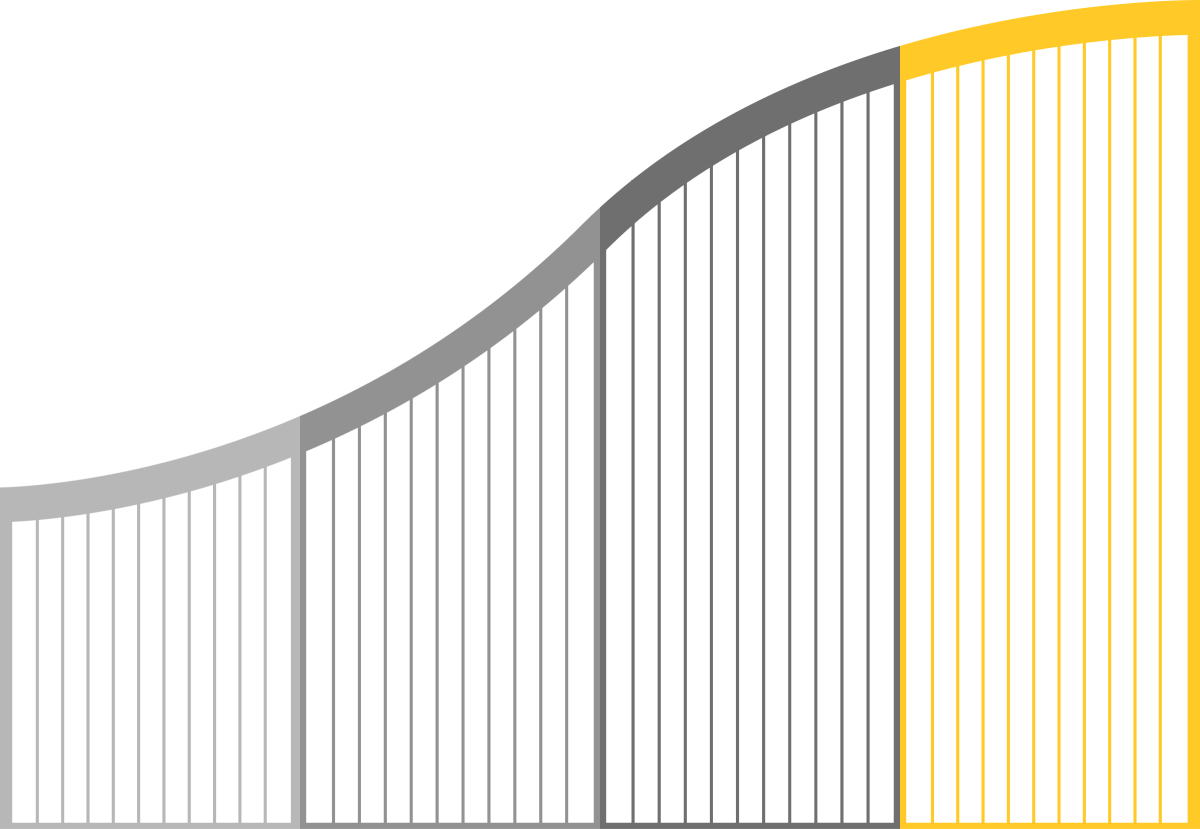
The operating model we discussed above gives teams shared standards and the observability to detect when those standards break. However, adopting it all at once can be difficult, and it isn't always obvious what to fix next.
The maturity model below solves this, helping you identify how mature your decoupled site is and where to focus to close the gap. It walks through five stages, from ad hoc, project-level fixes to a stable, governed platform, with the concrete changes that move you from one level to the next.
| | Level | Architecture | Environments | Release and rollback | Governance |
| --- | --- | --- | --- | --- | --- |
| **1.** | **Ad hoc** | Direct CMS content fetching, project-local preview, default cache strategy. | Environments differ in secrets and content state; cache behavior is hard to reproduce. | Rollback is a redeploy or manual content revert. Recovery relies on team memory. | Ownership is informal; decisions happen in separate channels. |
| **2.** | **Connected** | A secured preview route; content revalidation is time-based or path-based. | Staging covers common paths. Rare content and cache states remain under-tested. | Code can roll back. Combined content-and-code recovery is rarely rehearsed. | Integration owners are named. Standards still vary by team. |
| **3.** | **Coordinated** | Shared tools manage cache updates. Automated checks catch CMS/frontend regressions | Teams test common user-facing failures and service behavior. | Teams ship smaller changes and practice rollback against known content-code pairings. | The platform team publishes supported paths and service scorecards. |
| **4.** | **Governed** | Shared cache rules and versioned content contracts support governed releases. | Readiness checks run before publishing and before schema or routing changes. | Release decisions use SLOs and error budgets. | Security and accessibility controls share the delivery path with AI and cost policy. |
| **5.** | **Stable** | Distributed cache coordination and reusable contracts support different experiences through one core workflow. | Teams test production-like content states and integration events before customer impact. | Recovery is rehearsed. Dependencies are known, and releases remain reversible. | Central standards support distributed ownership and measurable outcomes. |
At level 5, teams running a fleet of decoupled sites adopt a platform whose preview, release, and governance tools are inherited by every new project from day one. Developers stop repeating integration work, and marketers publish faster without the headaches that typically come with a headless CMS.
#### The takeaway
In just the last three years, improvements across Next.js, headless CMSs, deployment platforms, caching systems, and observability tools have made these pieces work together more smoothly.
Teams still need to decide how to serve visitors quickly, give editors a reliable preview and publishing experience, and help developers work consistently across development environments.
Choose Pantheon to manage your CMS and Next.js sites on one platform. [Pantheon’s managed caching](https://docs.pantheon.io/cache) helps keep content delivery fast. [Dev, Test, and Live environments](https://docs.pantheon.io/environments) give your team a consistent path from development to production. [Multidev environments](https://docs.pantheon.io/multidev) support parallel work. Together, these features help keep your decoupled site coordinated, governed, and stable.
Pantheon also gives your team one predictable price to plan around, reducing the cost variability that can come with managing separate CMS, hosting, caching, and deployment services.
SPS Commerce had a 1,600-page Next.js frontend running on Netlify and WordPress on Pantheon. The architecture worked, but the operating model did not. Managing the two products separately created platform sprawl, and the team lacked a proper deployment pipeline for coordinating changes across the website.
Because WordPress and Next.js shared one website, the team also had to manage caching, authentication, and domain routing across both systems. Testing those integrations reliably required production-like environments, while content and development teams needed a clearer way to move changes from development to testing and production.
Pantheon solved those problems by giving [SPS Commerce](https://pantheon.io/resources/case-studies/sps-commerce-modernizes-nextjs-pantheon) a shared operational layer for WordPress and Next.js. The result was a more manageable architecture, greater stability, and more cost controls.
Standardize your projects on Pantheon, and instead of managing the infrastructure for decoupled sites, your team will be free to drive delivery value across your whole site fleet., Decoupled, Governed, and Stable, Pantheon, 01m32kw0z5pf1z8hnzpqespsn4.