Did Patriarchal Blessings Shape History?
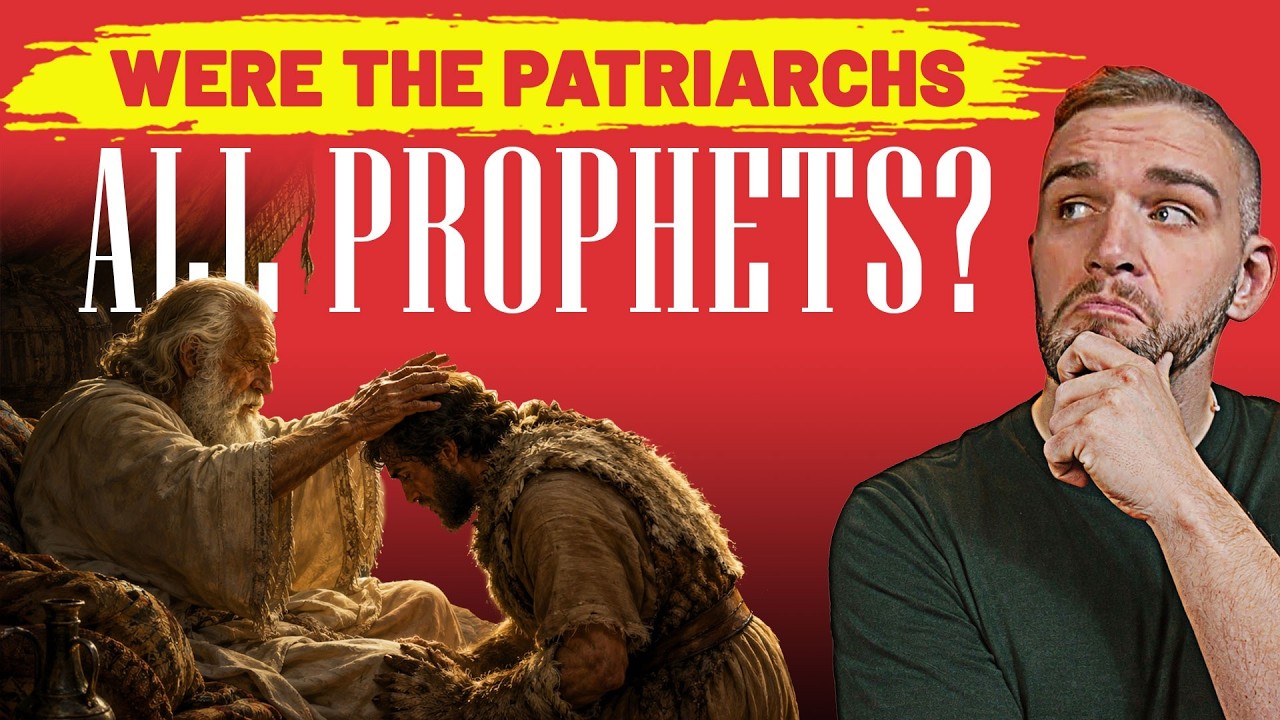
🔗 **Source:** [Did Patriarchal Blessings Shape History?](https://www.youtube.com/watch?v=N5RDrqaBQ14)
> [!note]+ Document Notes
> ---
> tags: [patriarchal-blessings, biblical-prophecy, cessationism, divine-revelation]
> author: [MISSING]
> source: Remnant Radio
> reference: https://www.youtube.com/watch?v=N5RDrqaBQ14
> date created: {{date:YYYY-MM-DD}} {{time:HH:mm}}
> ---
> # 🏷️ Title: Did Patriarchal Blessings Shape History?
> ## 🧭 Table of Contents
> - [📝 Summary](#-summary)
> - [📖 Main Content](#-main-content)
> - [🗒️ Notes](#️-notes)
> - [📚 References](#-references)
> - [🗣️ Paraphrase](#️-paraphrase)
> - [📰 Newsletter](#-newsletter)
> - [✅ Action Items](#-action-items)
> - [🧪 Hypotheses](#-hypotheses)
> - [📊 Methodology](#-methodology)
> - [❓ Questions](#-questions)
> - [🔮 Future Research](#-future-research)
> - [💡 Implications](#-implications)
> - [🧠 Learning Styles Assessment](#-learning-styles-assessment)
> - [📊 Accessibility Assessment](#-accessibility-assessment)
> - [🌍 DEIB Assessment](#-deib-assessment)
> - [✅ Logical Validity](#-logical-validity)
> - [🛡️ DARVO Analysis](#-darvo-analysis)
> - [🎯 Conclusion](#-conclusion)
> ## 📝 Summary
> - A theological analysis of patriarchal blessings in Genesis examines how fathers like Abraham, Isaac, and Jacob spoke words over their children that historically came to pass
> - The presenter argues against three interpretations: lucky guessing, shrewd observation, and inherent patriarchal power to speak things into existence
> - The preferred interpretation is that patriarchs were delivering prophetic revelation from God, not exercising human authority
> - This pattern challenges cessationist theology by showing continuous prophetic activity across generations rather than clustered miraculous periods
> - The analysis suggests God consistently spoke through ordinary family moments rather than only dramatic divine interventions
> ## 📖 Main Content
> The video examines patriarchal blessings in Genesis where fathers spoke words over their children that shaped historical outcomes. These include Lamech naming Noah to bring "relief from the curse," Noah's blessings and curses over his sons that determined civilizational patterns, Isaac's misdirected blessing of Jacob that couldn't be reversed, and Jacob's detailed tribal prophecies.
> The presenter evaluates four possible explanations:
> **Lucky Guessing** is dismissed as statistically impossible given the precision and scope of multiple fulfilled predictions across generations.
> **Shrewd Observation** fails when applied to cases like Lamech, who predicted his newborn son would bring relief from the Genesis 3 curse—something no human observation could anticipate.
> **Inherent Patriarchal Power** is rejected as theologically dangerous because it would give humans the ability to override God's decrees, undermining divine sovereignty. This interpretation suggests patriarchs could "speak things into existence" through their office.
> **Prophetic Revelation** is presented as the correct interpretation—patriarchs received and delivered divine revelation rather than exercising human authority. The mechanism varied, but the source was consistently God.
> The analysis uses Lamech's blessing as the hermeneutical template, arguing that since his prediction about Noah bringing relief from the curse was demonstrably fulfilled (God promised in Genesis 8:21 to never again curse the ground, and Noah became the first to plant a vineyard), all subsequent patriarchal blessings should be understood as prophetic.
> This interpretation challenges cessationist theology, which argues miraculous gifts ceased after the apostolic period and occurred only in historical "clusters." The patriarchal period shows continuous prophetic activity across ordinary family moments rather than dramatic interventions, suggesting God never stopped speaking through his people.
> ## 🗒️ Notes
> #### ⏱️ [00:00:00](https://www.youtube.com/watch?v=N5RDrqaBQ14&t=0) Introduction to patriarchal blessings
> - Patriarchal blessings from figures like Abraham, Isaac, Jacob seem to have binding power that shapes history
> - These aren't obviously supernatural in the text—just recorded as blessings that are later fulfilled
> #### ⏱️ [00:02:15](https://www.youtube.com/watch?v=N5RDrqaBQ14&t=135) Genesis examples overview
> - Genesis 5:28-29: Lamech names Noah saying he'll bring relief from the cursed ground
> - Genesis 9: Noah curses Canaan, blesses Shem and Japheth—these become constitutional documents for civilizations
> - Genesis 27: Isaac's blessing of Jacob (instead of Esau) can't be reversed—Isaac physically trembles
> - Genesis 48: Jacob crosses his arms to bless Ephraim over Manasseh despite birth order
> - Genesis 49: Jacob's detailed blessings over all 12 sons that map tribal futures
> #### ⏱️ [00:06:30](https://www.youtube.com/watch?v=N5RDrqaBQ14&t=390) Option 1: Lucky guessing
> - Dismissed quickly—one or two lucky guesses possible, but not the precision across multiple generations
> - Jacob hitting tribal territories, military characteristics, political trajectories simultaneously is "cosmically low" probability
> #### ⏱️ [00:07:30](https://www.youtube.com/watch?v=N5RDrqaBQ14&t=450) Option 2: Shrewd observation
> - Possible that fathers observed their children's temperaments and leadership styles
> - Falls apart with Lamech—no observable trends could predict relief from the Genesis 3 curse
> - Relief from cosmic judicial decree isn't something you see coming through weather patterns
> #### ⏱️ [00:09:15](https://www.youtube.com/watch?v=N5RDrqaBQ14&t=555) Option 3: Built-in patriarchal authority (most dangerous)
> - Argument that covenant headship gave ontological ability to speak things into existence
> - This would mean human office could override God's decrees—undermines divine sovereignty
> - If Lamech could revoke God's Genesis 3 curse through patriarchal authority, then God isn't truly sovereign
> - Only God has self-authenticating, self-generating word that accomplishes what it sets forth
> #### ⏱️ [00:13:00](https://www.youtube.com/watch?v=N5RDrqaBQ14&t=780) Option 4: Prophetic revelation (preferred)
> - Patriarchs were voicing what God had already told them through various mechanisms
> - Patriarchal blessing is "delivery system for divine revelation" not religious ceremony
> - Source matters more than mechanism
> #### ⏱️ [00:14:15](https://www.youtube.com/watch?v=N5RDrqaBQ14&t=855) Lamech as hermeneutical template
> - Genesis 5:28-29 is first recorded patriarchal blessing—establishes pattern
> - Genesis 8:21: God says "I will never again curse the ground"—fulfillment through Noah
> - Genesis 9:20: Noah plants first vineyard—wine as symbol of relief from labor
> - If Lamech's blessing was prophetic, consistency requires reading all others the same way
> #### ⏱️ [00:16:45](https://www.youtube.com/watch?v=N5RDrqaBQ14&t=1005) Challenge to cessationism
> - Cessationist "cluster argument" says miracles occurred in specific periods for authentication
> - Patriarchal period doesn't fit—it's continuous prophetic activity across generations
> - Not a cluster but a "current"—steady stream through ordinary domestic moments
> - God wasn't distant, occasionally parachuting in, but continuously threading his voice through generations
> ## 📚 References
> - [Genesis 5:28-29](https://www.biblegateway.com/passage/?search=Genesis%205:28-29) - Lamech's blessing over Noah
> - [Genesis 8:21](https://www.biblegateway.com/passage/?search=Genesis%208:21) - God's promise about the curse
> - [Genesis 9](https://www.biblegateway.com/passage/?search=Genesis%209) - Noah's blessings and curses
> - [Genesis 27](https://www.biblegateway.com/passage/?search=Genesis%2027) - Isaac's blessing of Jacob
> - [Dr. Michael Heiser's work](https://drmsh.com/) - Referenced for Ham's transgression interpretation
> ## 🗣️ Paraphrase
> Patriarchal blessings in Genesis represent a fascinating theological puzzle—fathers speaking words over their children that consistently shaped historical outcomes across generations. Rather than mere family traditions or expressions of parental authority, these blessings functioned as delivery mechanisms for divine revelation.
> The key insight comes from recognizing that Lamech's blessing over Noah wasn't based on observable trends or patriarchal office, but represented genuine prophecy about relief from the Genesis 3 curse. This hermeneutical template, applied consistently to subsequent blessings, reveals a pattern of continuous divine communication through ordinary family moments rather than clustered miraculous interventions.
> ## 📰 Newsletter
> **Divine Words Through Family Moments: Understanding Biblical Patriarchal Blessings**
> Ever wondered why Isaac couldn't reverse his blessing when he realized he'd blessed the wrong son? A fascinating deep-dive into Genesis reveals that patriarchal blessings weren't just parental wishes—they were prophetic delivery systems that shaped the course of history.
> From Lamech naming Noah to bring "relief from the curse" to Jacob's tribal prophecies mapping out a thousand years of Israel's future, these blessings demonstrate remarkable historical precision. But the real theological insight challenges modern cessationist thinking: rather than miraculous activity occurring in isolated clusters, God maintained continuous prophetic communication through ordinary family gatherings and deathbed scenes.
> The analysis offers important warnings about "speaking things into existence" theology while affirming God's ongoing voice through his people. A thought-provoking reminder that the divine often flows through the domestic.
> ## ✅ Action Items
> #### DevRel
> - Developer advocacy: Create content examining how biblical interpretation principles apply to documentation and technical communication
> - Education: Workshop on hermeneutical consistency in API design and naming conventions
> #### Community
> - Contributors: Discussion series on authority structures and decision-making patterns in open source projects
> - Ecosystem: Analysis of how foundational decisions in early projects shape long-term community development
> ## 🧪 Hypotheses
> - Patriarchal blessings in Genesis represent prophetic revelation rather than human authority or wishful thinking
> - Lamech's blessing over Noah serves as the hermeneutical template for interpreting all subsequent patriarchal blessings
> - The patriarchal period demonstrates continuous prophetic activity that challenges cessationist "cluster" arguments
> - Theological interpretations that grant humans power to "speak things into existence" undermine divine sovereignty
> - Biblical revelation often flows through ordinary domestic moments rather than only dramatic supernatural interventions
> ### 📊 Methodology
> - **Historical-grammatical analysis** of Genesis blessing narratives with attention to fulfillment patterns
> - **Comparative theological study** examining cessationist vs. continuationist interpretations of miraculous gifts
> - **Hermeneutical consistency testing** using Lamech's blessing as the interpretive template for subsequent accounts
> - **Systematic theological evaluation** of sovereignty implications in different blessing interpretations
> ### ❓ Questions
> - How do we distinguish between genuine prophetic revelation and human presumption in contemporary contexts?
> - What mechanisms did God use to communicate these blessings to the patriarchs—dreams, direct speech, or prophetic impression?
> - Why does Genesis record these blessings with minimal supernatural description if they were truly prophetic?
> - How should modern believers understand the relationship between parental blessing and divine authority?
> - What are the practical implications of continuous vs. clustered models of divine communication?
> ### 🔮 Future Research
> - Comprehensive analysis of all blessing/curse narratives in Genesis for pattern consistency
> - Cross-cultural study of how patriarchal authority functions in ancient Near Eastern contexts
> - Theological examination of cessationist arguments beyond the cluster theory
> - Investigation of how early church fathers interpreted patriarchal blessing narratives
> - Study of contemporary movements claiming patriarchal blessing authority
> ### 💡 Implications
> - **Theological education:** Need for careful distinction between human authority and divine revelation
> - **Pastoral practice:** Warnings against "name it and claim it" theology that grants humans creative speech power
> - **Biblical interpretation:** Support for continuationist understanding of prophetic gifts across church history
> - **Family dynamics:** Understanding parental blessing within proper theological boundaries
> - **Cessationist debate:** Evidence for continuous rather than clustered prophetic activity
> ### 🧠 Learning Styles Assessment
> - **Reading level estimate:** College level (Flesch-Kincaid ~12-14) due to theological terminology and complex argumentation
> #### 👀 Visual learners
> - **Present:** Verbal description of blessing patterns across Genesis narratives
> - **Improve:** Timeline diagram showing patriarchal blessings and historical fulfillments, flowchart of four interpretive options, family tree showing blessing transmission
> #### 🔊 Aural learners
> - **Present:** Full video with clear narration and theological explanation
> - **Improve:** Chapter markers for different blessing accounts, brief audio summary of key points
> #### 🗣️ Verbal learners
> - **Present:** Clear definitions of cessationism, hermeneutics, and ontological authority
> - **Improve:** Glossary of theological terms, analogies for complex concepts like "delivery system for divine revelation"
> #### 🧩 Kinesthetic learners
> - **Present:** Minimal hands-on elements
> - **Improve:** Scripture lookup exercises, comparison chart creation, decision tree for evaluating blessing interpretations
> #### 🧠 Logical learners
> - **Present:** Four-option logical framework, systematic evaluation of evidence, cause-and-effect reasoning
> - **Improve:** Formal argument structure diagrams, statistical analysis of fulfillment rates, theological decision matrix
> #### 🧑🤝🧑 Social learners
> - **Present:** YouTube comment engagement potential
> - **Improve:** Discussion questions for small groups, debate prompts on cessationist vs. continuationist positions
> #### 🧘♀️ Solitary learners
> - **Present:** Individual video consumption, personal reflection time
> - **Improve:** Self-study questions, personal application prompts, journaling exercises on parental blessing experiences
> #### 🌿 Naturalistic learners
> - **Present:** Agricultural metaphors (vineyard, ground, thorns and thistles)
> - **Improve:** Environmental context of ancient Near Eastern agriculture, seasonal patterns in blessing narratives
> ### 📊 Accessibility Assessment
> #### Screen reader semantics
> - **Present:** Video format with spoken content
> - **Improve:** Full transcript with heading structure, chapter markers with descriptive titles
> #### Keyboard navigation
> - **Present:** Standard YouTube controls
> - **Improve:** Timestamp links in description for easy navigation
> #### Contrast and readability
> - **Present:** Clear audio narration
> - **Improve:** High-contrast captions, visual aids with proper color contrast
> #### Text resizing and reflow
> - **Present:** Video format accommodates various screen sizes
> - **Improve:** Responsive transcript layout, adjustable caption sizing
> #### Media and captions
> - **Present:** Audio content available
> - **Improve:** Accurate closed captions, downloadable transcript, chapter summaries
> #### Forms and interactions
> - **Present:** Basic YouTube engagement (comments, likes)
> - **Improve:** Accessible comment moderation, clear interaction guidelines
> #### Standards reference
> - Map to WCAG 2.2 AA requirements for video content accessibility
> ### 🌍 DEIB Assessment
> #### Cultural breadth
> - **Present:** Ancient Near Eastern historical context
> - **Improve:** Acknowledgment of interpretation diversity across Christian traditions, non-Western theological perspectives
> #### Inclusive language
> - **Present:** Accessible theological terminology with explanations
> - **Improve:** Gender-inclusive language where appropriate, cultural sensitivity in biblical interpretation
> #### Neurodiversity support
> - **Present:** Clear structure with numbered options, logical progression
> - **Improve:** Content warnings for complex theological discussions, predictable video structure
> #### Representation
> - **Present:** Focus on ancient biblical figures
> - **Improve:** Acknowledgment of diverse interpretive traditions, inclusive examples from various Christian backgrounds
> #### Psychological safety
> - **Present:** Respectful theological disagreement
> - **Improve:** Clear statements about interpretive humility, acknowledgment of sincere disagreement
> ### ✅ Logical Validity
> #### Strong reasoning
> - **Deductive logic** in systematically eliminating interpretive options through logical constraints
> - **Historical analysis** connecting biblical predictions to documented fulfillments across multiple generations
> - **Theological consistency** applying hermeneutical principles uniformly across similar texts
> - **Causal reasoning** linking prophetic content to divine source rather than human capacity
> #### Fallacies
> - **Potential false dilemma:** Presenting only four interpretive options without acknowledging possible hybrid views
> - **Argument from consequences:** Rejecting the "speaking into existence" view partly because of dangerous implications rather than purely exegetical grounds
> - **Possible confirmation bias:** Selecting examples that support prophetic interpretation while not addressing potential counter-examples
> #### Tone of voice
> - **Authoritative but humble:** "I think we're going to look through...I find that they're not really that compelling"
> - **Pedagogical:** Clear explanation of complex theological concepts for general audience
> - **Cautionary:** Strong warnings about dangerous theological implications
> ### 🛡️ DARVO Analysis
> - **Deny:** No clear DARVO patterns present in this theological analysis
> - **Attack:** Critical evaluation of theological positions but not personal attacks on adherents
> - **Reverse victim/offender:** Not applicable to this theological discussion
> - **Assessment:** The content represents academic theological analysis rather than defensive rhetoric
> ## 🎯 Conclusion
> The analysis makes a compelling case that patriarchal blessings in Genesis represent genuine prophetic revelation rather than human authority, lucky guessing, or shrewd observation. By using Lamech's blessing over Noah as the hermeneutical template—where relief from the Genesis 3 curse could only be known through divine revelation—the argument establishes that all subsequent patriarchal blessings should be understood as delivery systems for God's prophetic word.
> This interpretation has significant implications for contemporary theology, particularly in challenging cessationist arguments about clustered miraculous activity and warning against dangerous "speaking into existence" theologies that blur the Creator-creation distinction. The pattern suggests God maintained continuous communication through ordinary family moments across generations, revealing a divine voice that never stopped speaking to his people.
> ## 🧱 Refactor Appendix
> ### 📚 Literature Split Pad
> ### Patriarchal blessings functioned as prophetic revelation delivery systems
> > [!quote] [Did Patriarchal Blessings Shape History?](https://www.youtube.com/watch?v=N5RDrqaBQ14) by [[Remnant Radio]]. Accessed {{date:YYYY-MM-DD}}.
> > "The patriarchal blessing isn't a religious ceremony. It's a delivery system for divine revelation."
> Establishes interpretive framework distinguishing human tradition from prophetic communication. Challenges contemporary "speaking into existence" theology.
> [view highlight](https://www.youtube.com/watch?v=N5RDrqaBQ14&t=780) #xref #articleseed ID:rw_[MISSING]
> ### Lamech's blessing over Noah establishes hermeneutical template
> > [!quote] [Did Patriarchal Blessings Shape History?](https://www.youtube.com/watch?v=N5RDrqaBQ14)
> > "Lamech is then the prototype...the first mention of that patriarchal blessing establishes the standard for all future blessings moving forward."
> Genesis 5:28-29 represents first recorded patriarchal blessing, requiring prophetic interpretation since relief from Genesis 3 curse couldn't be humanly predicted.
> [view highlight](https://www.youtube.com/watch?v=N5RDrqaBQ14&t=855) #xref ID:rw_[MISSING]
> ---
> ### 🔖 Atomic Split Pad (Zettel Candidates)
> #### Patriarchal authority cannot override divine judicial decrees
> - If patriarchs could nullify God's Genesis 3 curse through office, divine sovereignty collapses
> - Context: critique of "speaking into existence" theology around 13:00 mark
> #### Continuous prophetic activity challenges cessationist cluster arguments
> - Patriarchal period shows steady stream rather than isolated miraculous bursts
> - Context: analysis of theological implications around 16:45 timestamp
> ---
> ### ✏️ Fleeting Queue (Extract by Selection)
> - Lamech blessing methodology applies to all subsequent patriarchal words — theological consistency/https://www.youtube.com/watch?v=N5RDrqaBQ14 #fleeting #inbox
> - Divine revelation through ordinary family moments vs dramatic interventions — continuity patterns/https://www.youtube.com/watch?v=N5RDrqaBQ14 #fleeting #inbox
> - Theological danger of distributing divine speech capacity to human office — sovereignty boundaries/https://www.youtube.com/watch?v=N5RDrqaBQ14 #fleeting #inbox
> ---
> ## Full Transcript
> [00:00] Hey everybody, welcome back to the<br>[00:01] wonderful world of Remnant Radio. In<br>[00:02] this program, we're talking about<br>[00:05] patriarchal blessings. It's going to be<br>[00:07] an interesting program. You guys stay<br>[00:09] tuned.<br>[00:13] So, what is a patriarchal blessing?<br>[00:15] Well, when I speak of the patriarchs,<br>[00:16] I'm speaking of guys like Abraham,<br>[00:17] Isaac, Jacob. I'm thinking of<br>[00:19] individuals such as Lamech and Noah, who<br>[00:22] speak blessings and at time curses over<br>[00:24] their children. And those blessings and<br>[00:26] curses seem to have such a binding<br>[00:28] effect and power over the lives of the<br>[00:30] individuals who are spoken to that it<br>[00:33] ultimately shapes history moving forward<br>[00:35] for them and their children's children.<br>[00:37] So, it's a difficult thing to kind of<br>[00:39] grapple with because as I'm reading<br>[00:41] through my Bible in a year reading plan,<br>[00:43] and I'm kind of pushing through the<br>[00:45] text, I don't take the time to try to<br>[00:48] figure out what is going on there. I<br>[00:50] read so quickly past the text. I don't<br>[00:52] see something overtly supernatural. The<br>[00:54] author, when he's recording these<br>[00:56] accounts, is not attempting to say this<br>[00:58] is the supernatural activity that's<br>[01:00] taking place. It just records, "Hey, he<br>[01:02] blessed. Hey, he cursed." And then if<br>[01:04] you follow the storyline carefully,<br>[01:05] you'll find that those blessings and<br>[01:06] curses seem to be fulfilled exactly as<br>[01:09] the forefather has predicted. So, what's<br>[01:11] going on here? Is this just some kind of<br>[01:13] wishful thinking? Is it just a word of<br>[01:14] encouragement? Is it just some kind of<br>[01:16] binding power that's taking place with<br>[01:17] these blessings and curses? I think<br>[01:19] we're going to look through a couple of<br>[01:20] examples up front, three examples, and I<br>[01:23] find that they're not really that<br>[01:24] compelling as to what is taking place<br>[01:26] with these blessings and curses. And<br>[01:27] then, we're going to move over into the<br>[01:29] final conclusion of what I think is<br>[01:31] actually taking place with these<br>[01:32] blessings and curses. So, let's dive in<br>[01:34] by kind of reminding ourselves of the<br>[01:36] various kinds of patriarchal blessings<br>[01:38] that are taking place in the book of<br>[01:39] Genesis. I'm not going to run through<br>[01:41] all the accounts, and I'm not going to<br>[01:42] run through all of them with great<br>[01:43] detail. So, what I would encourage you<br>[01:44] to do, if you're less than fuzzy<br>[01:47] on these accounts, you don't really<br>[01:48] recall them at all, maybe go pick up the<br>[01:50] book of Genesis, read it through. It's<br>[01:51] like an hour, hour and a half. You can<br>[01:53] come back to this video, and we can<br>[01:54] discuss patriarchal blessings. But for<br>[01:56] the rest of us, let's just use this as a<br>[01:58] refresher to remind ourselves of the<br>[01:59] various blessings that are taking place<br>[02:01] in the book of Genesis. Genesis 5:28-29<br>[02:04] is the first account that really seems<br>[02:06] to express itself explicitly. We have<br>[02:09] Lamech, and he names his son Noah. He<br>[02:11] doesn't name his son Noah because he<br>[02:12] opened up a book of ancient Near Eastern<br>[02:14] baby names in an old book and says,<br>[02:16] "Ooh, this is a cool name. I'm going to<br>[02:17] name him Noah." Instead, he names him<br>[02:19] Noah, and the text gives us the reason<br>[02:21] why. It says, "This one shall bring us<br>[02:22] relief from the work and from the<br>[02:24] painful toil of our hands out of the<br>[02:25] ground that the Lord God has cursed."<br>[02:27] Now, that's an important interpretation<br>[02:30] of why he named his son Noah and the<br>[02:31] blessing that he spoke over him. This is<br>[02:33] going to be important because I think<br>[02:35] it's going to be the interpretive key<br>[02:36] for the kinds of blessings and curses we<br>[02:38] see flowing throughout the book. So,<br>[02:40] we'll return to Genesis 5 momentarily.<br>[02:43] Next, let's recall Genesis 9. After the<br>[02:45] flood, Noah puts all three of his sons<br>[02:47] together, Shem, Ham, and Japheth. He<br>[02:48] curses Canaan, Ham's son, likely because<br>[02:51] of some kind of relationship that he has<br>[02:53] with Noah's wife.<br>[02:55] I know that's really complicated, maybe<br>[02:57] too much for this video. It certainly is<br>[02:58] too much for this video. Go check out<br>[03:00] Dr. Michael Heiser's work on this.<br>[03:02] You might disagree with me. You might<br>[03:03] disagree with him. Whatever happened, we<br>[03:06] know for certain that Ham does something<br>[03:08] nasty that he wasn't supposed to be<br>[03:09] doing. Could have been voyeurism, could<br>[03:11] have been something extra that's beyond<br>[03:13] voyeurism, but I'd point you to that<br>[03:15] podcast for my interpretation. Anyway,<br>[03:18] he continues. And not only does he curse<br>[03:21] Canaan, who's Ham's son, but then he<br>[03:22] blesses Shem and says to Japheth that he<br>[03:24] will be enlarged and dwell in Shem's<br>[03:26] tents. And these weren't just again<br>[03:28] fatherly sentiments, they actually<br>[03:29] function somewhat like constitutional<br>[03:31] documents for each of these<br>[03:32] civilizations. Each of these sons would<br>[03:34] go out and do the very things that dad<br>[03:36] kind of spoke blessings over them as if<br>[03:38] those were the things that they were in<br>[03:39] fact going to do. Japheth's descended<br>[03:42] did fan out across a large territory,<br>[03:43] and Canaan's line did end up under<br>[03:46] Israel's boot. Next, we have Genesis 27.<br>[03:49] This one everyone knows. Isaac is old,<br>[03:52] like really old, like practically blind,<br>[03:54] right? He means to bless Esau. Rebecca<br>[03:56] and Jacob run in and scheme together.<br>[03:58] Jacob goes in wearing his brother's<br>[03:59] clothes, smelling like the field and<br>[04:01] like goats, and feeling like goats, and<br>[04:03] Isaac gives him a blessing, but he gives<br>[04:05] him the blessing to the wrong kid. He He<br>[04:07] wanted to bless Esau, but he blesses<br>[04:09] Jacob instead. Then Esau walks in, and<br>[04:12] here's what people seem to consistently<br>[04:13] miss about this scene. Isaac trembles,<br>[04:17] physically shakes, because he doesn't<br>[04:19] reverse the blessing. He can't. He gives<br>[04:21] Esau a consolation word instead. You'll<br>[04:24] serve Jacob, but one day you'll split<br>[04:27] free from his yoke. The or<br>[04:29] Esau's people, uh spent centuries under<br>[04:31] Israel's rule, and they broke loose<br>[04:33] during Jeroboam's reign, right on cue<br>[04:35] from what was spoken over them by their<br>[04:37] father. Then we got Genesis 48, Jacob's<br>[04:41] deathbed scene, if you will. Uh he's<br>[04:43] getting close to death. Joseph brings in<br>[04:44] his boys. Manasseh, he puts on the<br>[04:46] right. Ephraim, he positions on the<br>[04:48] left, because the right is where the<br>[04:49] better blessing is. Manasseh's the<br>[04:51] firstborn, let's bless him with the<br>[04:53] better blessing. But Jacob, that old<br>[04:55] schemer, decides to cross his arms, put<br>[04:57] the right hand on Ephraim, and the left<br>[04:59] hand on Manasseh. Joseph's like, "Dad,<br>[05:01] you've got it all backwards. That one's<br>[05:02] the younger, this one's the older." But<br>[05:04] Jason Joseph basically waves him off and<br>[05:06] says, "Look, I know exactly what I'm<br>[05:07] doing. Ephraim is going to be greater<br>[05:09] than his brother Manasseh. Ephraim<br>[05:11] eventually does in fact dominate the<br>[05:13] northern kingdom so thoroughly that the<br>[05:14] prophets just started calling the whole<br>[05:16] northern kingdom Ephraim. That's how<br>[05:18] complete this fulfillment of this<br>[05:20] blessing seemed to be. And finally,<br>[05:22] Genesis 49. Jacob gathers all 12 of his<br>[05:25] sons together, and he pronounces a word<br>[05:26] over each individual one of them. Uh<br>[05:28] these aren't simply birthday blessings,<br>[05:30] they're something that are going to<br>[05:31] affect the future of each of these men<br>[05:33] and their respective tribes. He tells<br>[05:35] Reuben, his firstborn, that he's going<br>[05:36] to lose his preeminence because of his<br>[05:38] instability. He announces that Simeon<br>[05:41] and Levi will be scattered throughout<br>[05:42] all of Israel on account of their<br>[05:43] violence. Then he He that the scepter<br>[05:45] will not depart from Judah, a word<br>[05:47] that's going to stretch all the way to<br>[05:49] the coming of Christ. He then gives<br>[05:51] Zebulun the seashore. He describes his<br>[05:53] God as being raided but also raiding in<br>[05:55] return. He calls Naphtali a doe set free<br>[05:57] and he speaks of Benjamin as a ravenous<br>[05:59] wolf. Tribe by tribe, word by word, the<br>[06:01] historical record confirms all of the<br>[06:04] blessings that we have the patriarch<br>[06:06] speaking over his sons. Now, that's the<br>[06:08] landscape. That's the pattern that we're<br>[06:10] going to be dealing with here in this<br>[06:12] video. But the question is still on the<br>[06:13] table and I think it's simple. How do<br>[06:15] these words actually work?<br>[06:18] So, how do they work? That's a really<br>[06:20] good question. I think there's a couple<br>[06:22] of interpretations four that I can come<br>[06:24] up with off of the top of my head. And<br>[06:25] as I wrestle through them, I think the<br>[06:27] first three are bad and potentially even<br>[06:29] dangerous because they lead towards a<br>[06:31] kind of sloppy theology. So, I want to<br>[06:33] work through my first three which I I<br>[06:35] don't really like and I'm going to lean<br>[06:36] into my fourth one as the most reliable<br>[06:40] interpretation of what's taking place in<br>[06:41] this text. Option one is the patriarchs<br>[06:44] are just guessing, right? Maybe they're<br>[06:46] just winging it. And the blessings that<br>[06:48] they speak over their kids actually<br>[06:49] happen just as they say they will. And<br>[06:52] I'm not going to spend a whole lot of<br>[06:53] time on this, maybe 30 seconds because I<br>[06:54] don't think it really deserves any of<br>[06:55] our time. One lucky guess, sure, maybe.<br>[06:58] Two, that's a stretch but fine. But when<br>[07:00] you think of Jacob blessing all 12 of<br>[07:02] his sons, hitting tribal territories,<br>[07:04] military characteristics, political<br>[07:06] trajectories, and the timeline of a<br>[07:07] coming ruler all simultaneously in a<br>[07:10] single speech, that's probably just way<br>[07:13] too low to consider realistically. I<br>[07:15] mean, it's laughably cosmically low to<br>[07:18] think that they were just guessing. Luck<br>[07:20] scales badly. I think the explanation<br>[07:23] probably collapses under the weight of<br>[07:24] its own explanation. It just doesn't<br>[07:26] work. Then we have option two. That's<br>[07:28] that these guys are just sharp<br>[07:30] observers.<br>[07:31] It's one I think probably worth talking<br>[07:33] about a little bit longer, maybe for a<br>[07:34] minute, because it's plausible, I<br>[07:37] suppose, that the idea is that these<br>[07:38] patriarchs were shrewd, right? They<br>[07:40] watched their kids grow up and under<br>[07:42] their kind of political scheming, their<br>[07:44] family dynamics, and their temperament,<br>[07:47] their kind of leadership styles. That<br>[07:49] maybe the fathers were just looking at<br>[07:50] these kids and going, "Okay, I see this<br>[07:52] destiny over your life, and it's going<br>[07:54] to flame out." So, when Jacob looked at<br>[07:56] Reuben, and when he said that that this<br>[07:58] one won't hold preeminence, maybe it's<br>[08:00] just because the father who was watching<br>[08:01] his son for a long time knew that he<br>[08:04] wasn't really made of the stuff<br>[08:06] necessary for a good leader. And I'll<br>[08:08] grant you that for some of the elements<br>[08:10] of these blessings, that's at least a<br>[08:11] coherent interpretation. But then we go<br>[08:14] back to Lamech. Lamech holds his newborn<br>[08:17] son and says that this child will bring<br>[08:18] relief from the curse on the ground. No<br>[08:21] relief from drought, not<br>[08:23] better<br>[08:24] farming techniques that Noah is going to<br>[08:26] implement, not a relief from regional<br>[08:28] economical slumps. It's a relief from<br>[08:31] Genesis 3, the curse that God would<br>[08:33] judicially decree over creation and it<br>[08:36] ensued in the aftermath of Adam's fall.<br>[08:39] When God says, "Cursed is the ground<br>[08:40] because of you. In pain, you shall eat<br>[08:43] of it all the days of your life. Thorns<br>[08:45] and thistles it shall bring forth for<br>[08:47] you." So, what trend was Lamech<br>[08:49] observing?<br>[08:51] What cultural development could he have<br>[08:52] possibly seen and extrapolated from this<br>[08:55] that his son would one day bring relief<br>[08:58] from this toil? What was happening in<br>[09:00] the ancient Near East that would lead<br>[09:02] this reasonable man to look at the<br>[09:03] circumstances and think, "You know what?<br>[09:05] Yeah, I actually do think that Noah is<br>[09:07] going to bring relief from the ground."<br>[09:09] There's no such data point for Lamech. A<br>[09:11] relief from cosmic judicial decree isn't<br>[09:13] the sort of thing that you just see<br>[09:14] coming by watching weather patterns.<br>[09:17] This isn't shrewd observation. I think<br>[09:19] the explanation dies right there when we<br>[09:22] take that observation, potentially that<br>[09:24] Jacob could use with his kids, and then<br>[09:26] apply it to Lamech. I just don't think<br>[09:28] it holds water.<br>[09:29] Maybe there's a pun intended in there<br>[09:31] somewhere. Then we have point three. The<br>[09:33] patriarchs had built-in authority to<br>[09:35] speak things into existence. This is by<br>[09:38] far the most dangerous of the three that<br>[09:40] we have spoken of this far. I think the<br>[09:42] first two are sloppy. I don't know how<br>[09:44] dangerous they could be. This third one,<br>[09:46] bad, real bad, real dangerous.<br>[09:48] And for a couple of different reasons.<br>[09:50] There is an argumentation that these<br>[09:52] guys had the ontological ability, which<br>[09:54] means that their very nature as the<br>[09:56] patriarch gave them the office, the<br>[09:58] right, the ability to bless things and<br>[10:00] speak things out into existence. This<br>[10:04] one I want to dwell on.<br>[10:05] Because this one actually sounds<br>[10:07] biblical, right? From some people's<br>[10:09] perspective. It comes dressed in the<br>[10:11] right vocabulary. It can fool people who<br>[10:13] are paying attention to the text. The<br>[10:15] argument runs something like this. The<br>[10:17] patriarchs had the covenantal head, the<br>[10:19] federal representative of the household<br>[10:21] and the line that had been given through<br>[10:24] Adam, through Noah, that seed of the<br>[10:26] woman. And that these guys are the heads<br>[10:28] of those households and they're able to<br>[10:30] declare blessings. They possess a kind<br>[10:32] of inherent spiritual authority within<br>[10:35] them. And when they open their mouths<br>[10:37] and spoke blessings, those words carried<br>[10:39] a weight not because God had revealed<br>[10:42] something to them, but because they had<br>[10:44] an office that they were administrating.<br>[10:46] The covenant headship itself was the<br>[10:48] source of power. His word, by nature of<br>[10:50] who he was, had the capacity to shape<br>[10:53] the lives of his descendants and their<br>[10:55] destinies.<br>[10:56] You hear this sort of thing in a lot of<br>[10:57] charismatic environments where we have<br>[10:58] the ability to speak things into<br>[11:00] existence. There's a bunch of<br>[11:02] argumentation that says because we're<br>[11:03] created in the image of God, God spoke<br>[11:05] things into existence, therefore we get<br>[11:06] to speak things into existence. But this<br>[11:08] really undermines the created-creation<br>[11:10] distinction and I think we need to<br>[11:11] reject this on the front end as being<br>[11:14] false and dangerous. And here's why. If<br>[11:16] Lamech functioned in the capacity as the<br>[11:18] covenant head, possessing some kind of<br>[11:20] intrinsic metaphysical ability to speak<br>[11:23] relief from the ground in order to bring<br>[11:26] a relief from the curse in Genesis 3,<br>[11:28] then this would effectively override<br>[11:30] God's word. And I don't think people<br>[11:32] actually who hold this view actually<br>[11:34] follow that thread all the way through<br>[11:36] to its end conclusion because if they<br>[11:38] did, I think they would be as<br>[11:39] uncomfortable as I am quite quickly. The<br>[11:42] Genesis 3 curse wasn't a family policy.<br>[11:44] It wasn't a tribal regulation placed<br>[11:47] upon creation. It was actually something<br>[11:50] much much higher in that it was God's<br>[11:52] decree over creation. It changed the<br>[11:55] ontological nature, the very the very<br>[11:57] essence of what creation was because of<br>[11:59] the fall. Who has the ability to revoke<br>[12:02] such a curse that God has placed? Who<br>[12:04] has the ability to bring relief from<br>[12:07] what God has brought pressure and<br>[12:09] restraint upon? It was issued by God who<br>[12:13] spoke existence itself into being from<br>[12:15] nothing. That God who said, "Let there<br>[12:17] be light." and there was. When that God<br>[12:19] pronounced it a judicial decree decree<br>[12:21] over creation, that decree doesn't just<br>[12:23] sit there in suspense waiting for a man<br>[12:25] with the right credentials to walk up<br>[12:27] and overrule the decree that God has<br>[12:29] made. It's to say that God can issue a<br>[12:31] decree, but a patriarch with the right<br>[12:33] credentialing standing in the right gap<br>[12:36] can effectively nullify the command of<br>[12:38] God. If that's true, then God isn't<br>[12:40] actually sovereign. He's just a very<br>[12:41] important voice in a certain<br>[12:43] human voice with the right office is<br>[12:46] able to stand in against him and trump<br>[12:48] his command.<br>[12:50] This third option is especially sinister<br>[12:51] and it's more sinister than the other<br>[12:53] two that we've talked about because it<br>[12:54] doesn't come intentionally just trying<br>[12:56] to guess at what's going on in the text.<br>[12:58] It secretly brings in some destructive<br>[13:02] teaching you might not see on face<br>[13:04] value. Nolan says, "Oh, this person has<br>[13:06] the ability to speak things into<br>[13:07] existence. Therefore, it undermines<br>[13:09] God's sovereignty." It's trying to honor<br>[13:12] what God has already established with<br>[13:14] the patriarchs and heads of their<br>[13:15] households and and it's trying to uh<br>[13:18] smuggle in unintentionally something<br>[13:21] that only God himself has the<br>[13:23] prerogative to speak things into<br>[13:25] existence with his divine speech. And<br>[13:27] all of the scripture, only one being has<br>[13:30] that ability, and it's God alone. Not<br>[13:32] because timing is favorable, not because<br>[13:34] God saw all the way the creation was<br>[13:35] unfolding, but because he has the<br>[13:37] self-authenticating, self-generating<br>[13:39] word that accomplishes all that it set<br>[13:41] forth to do. And that's the God of<br>[13:43] Genesis 1, and you cannot distribute the<br>[13:46] capacity downward to the human office,<br>[13:48] no matter what kind of office they hold,<br>[13:50] and turning that office into some kind<br>[13:52] of idol.<br>[13:53] So, if it's not either of these three,<br>[13:55] it's not a lucky guess, it's not an<br>[13:57] observation, and it's not the ability to<br>[14:00] speak things into existence, what's the<br>[14:02] only option left for us?<br>[14:04] These men were voicing what God had<br>[14:06] already told them. That's my fourth<br>[14:09] option. I actually think they're<br>[14:10] prophesying. They're not guessing,<br>[14:11] they're not calculating, they're not<br>[14:13] leveraging some kind of built-in<br>[14:14] metaphysical power that they've been<br>[14:16] given from creation or their office as<br>[14:18] patriarchs. They're instruments of a<br>[14:20] prophetic decree, whether that came<br>[14:22] through a direct verbal revelation,<br>[14:24] through a prophetic impression, or<br>[14:25] there's some kind of foreknowledge that<br>[14:26] God had granted them. The scripture<br>[14:28] doesn't always give us the specific<br>[14:29] mechanism by which these blessings are<br>[14:32] given to the patriarchs to speak over to<br>[14:33] their children. But the mechanism isn't<br>[14:36] actually the point. The point is the<br>[14:37] source. Where is this blessing coming<br>[14:39] from? It's coming from God through these<br>[14:42] patriarchs to their children. The<br>[14:45] patriarchal blessing isn't a religious<br>[14:47] ceremony. It's a delivery system for<br>[14:49] divine revelation.<br>[14:52] So, let's run back to Genesis chapter 5,<br>[14:55] and I keep returning to Lamech, not<br>[14:56] because his blessing is maybe the most<br>[14:58] significant or striking, but because of<br>[15:00] actually where it falls in the text.<br>[15:02] Genesis 5:28-29 is the first mention of<br>[15:04] patriarchal blessings recorded in the<br>[15:06] Bible that I can see. Everything else,<br>[15:08] Noah over his sons, Isaac over Jacob,<br>[15:11] Jacob over Ephraim and that Manasseh,<br>[15:13] and the whole 12 tribes oracle, it all<br>[15:15] comes afterward. Lamech is then the<br>[15:18] prototype, and it's not a small thing<br>[15:19] because the first mention of that<br>[15:21] patriarchal blessing, I think<br>[15:22] establishes the standard for all future<br>[15:25] blessings moving forward. So, we have to<br>[15:27] ask ourselves, is this prophetic and was<br>[15:30] it fulfilled? I think the answer is yes.<br>[15:33] If you look at Genesis 8:21, the flood<br>[15:35] is over and then God speaks. "I will<br>[15:37] never again curse the ground because of<br>[15:38] man," God says. This is the curse<br>[15:41] language from Genesis 3, now echoed<br>[15:43] directly here in Genesis 8. Through whom<br>[15:45] did this moment of relief come? Well, it<br>[15:47] came through Noah, the son that Lamech<br>[15:49] named. Then, a single chapter later in<br>[15:51] Genesis 9:20, Noah becomes the first<br>[15:53] person in scripture to plant a vineyard.<br>[15:56] And in the ancient world, wine isn't<br>[15:58] just a beverage, it's a standard symbol<br>[16:00] for ease and relief, a relief of<br>[16:02] laboring giving way to rest. So, you've<br>[16:05] got the name Noah, which connects to the<br>[16:08] relief and release. The reason Lamech<br>[16:10] gives the name is for a relief from the<br>[16:12] curse and then Noah actually does the<br>[16:15] thing that he was predicted to do in<br>[16:17] this prophetic blessing, I would call<br>[16:19] it. He plants the vineyard and then<br>[16:21] produces the drink of relief, all<br>[16:23] pointing to the same moment. The threads<br>[16:26] converge too perfectly for coincidence.<br>[16:29] That's not pattern matching, that's<br>[16:30] revelation recognizing itself. And<br>[16:33] here's the payoff for our purposes. If<br>[16:35] the evidence forces us to conclude that<br>[16:37] Lamech's blessing was prophetic, and I<br>[16:39] think it does, then we're actually<br>[16:42] obligated for the sake of consistency to<br>[16:44] read every blessing that follows through<br>[16:45] that same lens. Lamech establishes the<br>[16:48] hermeneutical template, meaning the way<br>[16:50] that we read the scriptures. Every<br>[16:51] patriarch who comes after him is<br>[16:53] operating on that same principle, by<br>[16:56] that same mechanism, through the same<br>[16:58] source.<br>[17:00] So, here's something worth sitting with<br>[17:01] as we wrap up. Uh there's a theological<br>[17:03] position called cessationism. This view<br>[17:06] says that spiritual gifts, things like<br>[17:08] prophecy, healing, miracles, they've all<br>[17:10] ceased. And one of the more<br>[17:12] sophisticated arguments cessationists<br>[17:14] make is something that is called the<br>[17:15] cluster argument. This idea is that<br>[17:18] supernatural activity in scripture isn't<br>[17:21] evenly distributed across history. In<br>[17:23] fact, it clusters in specific periods.<br>[17:26] Now again, I don't believe this position<br>[17:27] is actually tenable or true, but the<br>[17:29] argument goes like this. Moses got a<br>[17:31] cluster, Elijah got a cluster, and Jesus<br>[17:34] and the apostles got a cluster. And the<br>[17:36] argument goes that these bursts of<br>[17:37] miraculous activity existed for a<br>[17:39] specific reason, to authenticate the<br>[17:42] message that these men were carrying.<br>[17:44] And once that message was established,<br>[17:46] the gifts would wind down. So don't be<br>[17:48] looking for that kind of thing anymore.<br>[17:49] Jesus and the apostles delivered the<br>[17:51] message, no mass miracles.<br>[17:53] This doesn't really work on a couple of<br>[17:55] levels. One, because Jeremiah says from<br>[17:57] the time of Moses to Jeremiah's day,<br>[18:00] miracles have continued. So through that<br>[18:02] whole period of time, those activities<br>[18:04] were taking place. But we've done entire<br>[18:06] videos on the cluster argument, and I<br>[18:08] don't have time to unpack that for you<br>[18:10] today. But here's what I want you to<br>[18:11] notice specifically, because there's<br>[18:13] something I don't hear people talking<br>[18:15] enough about. It's the idea of this<br>[18:17] patriarchal period, from Noah all the<br>[18:19] way to Joseph. It doesn't fit within<br>[18:21] that framework at all. And not a single<br>[18:23] towering figure was here, a single<br>[18:25] revelatory message that needed divine<br>[18:27] authentication. What you have instead is<br>[18:29] generation after generation of ordinary<br>[18:31] covenant men, fathers, through whom God<br>[18:34] actively was speaking through. Lamech<br>[18:36] hears something about his son, Noah<br>[18:38] speaks over his boys, Isaac's words<br>[18:40] outlast his body, Jacob blesses the 12<br>[18:42] tribes and maps out a next thousand<br>[18:44] years of Israel's history. That's not a<br>[18:46] cluster. That's a current, a steady,<br>[18:48] continuous stream and flow of prophetic<br>[18:51] activity running through the most<br>[18:52] ordinary domestic moments of deathbeds<br>[18:55] and naming ceremonies and family<br>[18:57] gatherings around aging patriarchs,<br>[19:00] which tells us something really<br>[19:01] important about who God is and how he<br>[19:03] operates. He wasn't distant from his<br>[19:05] people and during stretches of history<br>[19:07] occasionally parachuting into a dramatic<br>[19:08] moment because things were going quiet.<br>[19:10] He was threading his voice from<br>[19:12] generation to generation shaping human<br>[19:14] events from the inside speaking through<br>[19:16] the fathers before anyone had an<br>[19:18] established view of what an office of a<br>[19:20] prophet even was in Israel. The God of<br>[19:22] Genesis isn't a God who shows up in<br>[19:24] clusters. He's a God who never stops<br>[19:26] speaking and leading his people.<br>[19:29] So I hope you enjoyed this kind of<br>[19:31] content. I think there are these<br>[19:33] abstract or or odd things that take<br>[19:35] place in the text of scripture that we<br>[19:37] often don't really dive into and try to<br>[19:39] make sense of and if you're out there<br>[19:41] and you're wanting to make sense of more<br>[19:43] of the text of scripture, I'd very much<br>[19:44] encourage you to subscribe to the<br>[19:45] channel because we have content like<br>[19:47] this all the time that we're constantly<br>[19:49] cranking out. Guys, thank you so much<br>[19:50] for tuning in this episode and we'll see<br>[19:52] you next time.
Unfortunately, Youtube does not provide subtitles for this video, Did Patriarchal Blessings Shape History?, YouTube, 01ks5aw8tf21m2d7yr85px06v9.