EP114 Jim Hankins Introduces CribOps to Agencies
Heat. Heat.
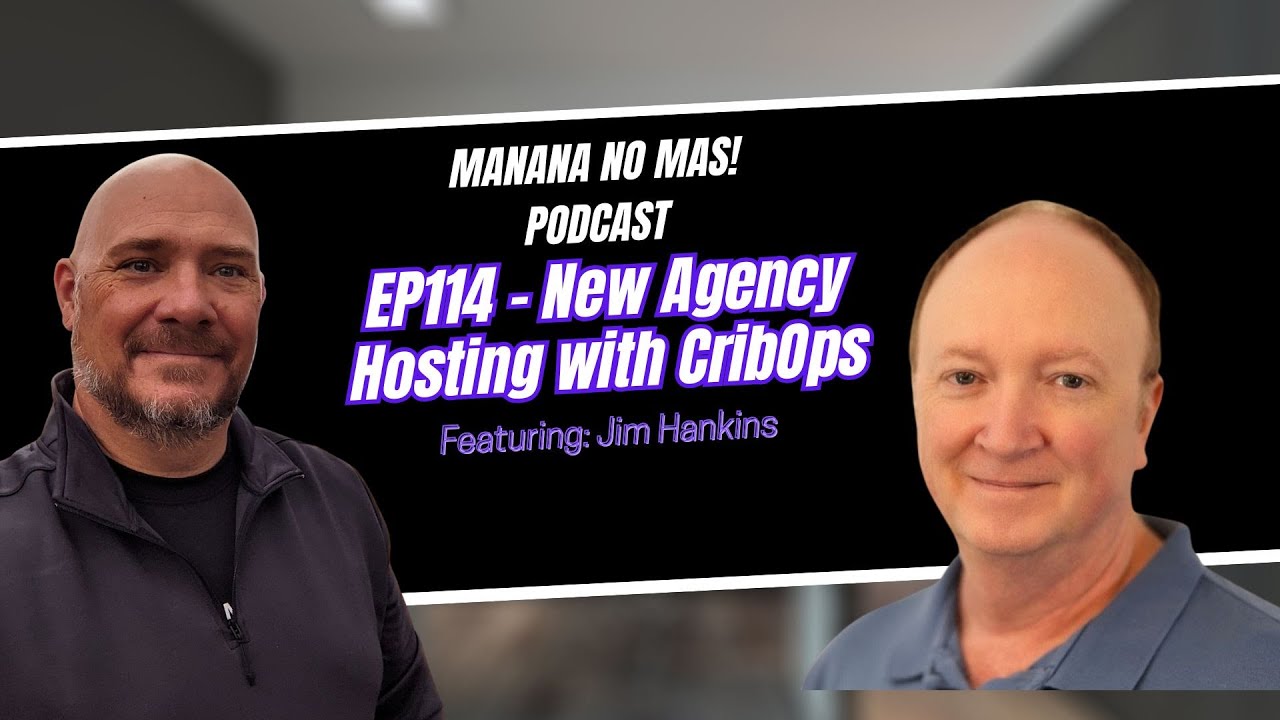
Hey folks, welcome to yet another Mñana Nomas podcast. Uh, as you know, we don't really uh schedule these on a schedule. We just wait until we have someone really awesome to talk to. And in this case, uh, I'm going to go out on a limb and say I think he's more than an acquaintance. We kind of know each other from some other circles. Uh Jim Henkins has just been a phenomenal support to me in the Lifter LMS space. He comes to our office hours. Um we've had conversations
uh off screen, like off of shows about other things and products that he's working on. And today Jim says he's ready to talk about something called Crib Ops. So I thought I'd welcome him to the show, let him introduce himself and uh see where we go from there. Folks, Jim Henkins. Jim, can you tell us someone about yourself? >> Yeah, I'll give you a Reader's Digest condensed version. So, you know, given my age, >> so uh >> you know, I used to read those when I was a kid. My mom would get Reader's
Digest and I would sit and read them like as a kid. I thought they were cool. >> Totally. Yeah. Yeah. Yeah. Absolutely. Yeah. So again, Jim Henkins, uh, I own a company called Cloud Beerrock, which is an agency, a web agency. And then I have I'm involved in a number of different uh software uh products and and other um uh startups. And uh most of my kind of history has been in the IT world. So I've worked for companies like Cisco and uh you know worked for very large uh automotives you
know like one of the big three for very long periods of time you know building things uh or supporting things for them. Uh so mostly uh IT support ser uh you know server side uh development backend stuff right. Uh I got uh the opportunity to get acquired by one of my um roles as a chief technology officer for a company that did uh uh emergency response coordination for panic devices. So if you had a satellite panic button, you press the button, we would coordinate
the the rescue for that. So I built the infrastructure that received the SOS and you know got it to the response center so they could call and dispatch the helicopter. >> Are you just afraid to say I've fallen and I can't get up? >> Yeah. Yes. It's it's like that only it's probably more on the side of a mountain or an avalanche or something off the grid, right? You know where they would uh skiers get stuck in a in an avalanche under snow. >> Yeah, that was very very uh common uh dispatch scenario that we would have to to handle. So um so yeah, that got
acquired by Garmin. Uh so I've had a couple exits uh under my belt um with that which was great. And uh so now you know I had some time to you know to build an agency work an agency and and we predominantly just are you know like WordPress hosting and CRM hosting and doing various incundury things that the the customer needs in our niche. uh and then got the crazy idea that maybe I would build based on those observations a agency hosted or a agency focused
hosting platform. So you know out of the you know building the thing that I think I want uh for my own hosting and then said well probably other people would might like this too. So that's Kerbops. So, I interview a fair amount of product creators, right? Whether it's for the Mñana Noas show or for WP Tonic or Membership Machine or whatever. >> Um, and a lot of them have like that same pathway. Like I needed a product. I got
tired of duplicating the effort to like remake this thing for myself over and over again. I thought I would just make it as a product. It's duplicable and now I can offer it to others. Is that like kind of the mind space that you were in? >> Yeah. Yeah, pretty much. I mean I think developers oftentimes will spend an inordinate amount of time working on you know saving five minutes of time and maybe spend six months working on it to to help save someone else five minutes right so there's a little bit of that right uh but yeah in this particular
case it was um for our own agency enabling us to scale so other members of this mine's a familyowned business so I have my son and my wife involved in it whereas I'm more of the crazy you know IT guy So, I was trying to give them the ability to do some things because I'm lazy. Uh, so that uh they could work on some of those things, too. So, they didn't have to have everything that had to do with managing any kind of hosting issues to be able to offload some of that ticket work, right? To make it easier, right? >> Uh, so yeah, so at first I went through
just using whatever was possible, you know, so I would just go out and rather than reinvent the wheel, try to find other, you know, product offerings that would work. and I've used a number of them and just none of them ever quite like fit the bill for what uh I wanted to do and so yeah so I just said heck with it. I'll build it. >> Heck with it. I'll build it. >> Yeah. You know, it's interesting you you kind of go down that route, right? So some listeners and viewers might not care anything about websites. Other people might be,
>> you know, freelancers or maybe you're a business owner that owns a shoe store and you're like, "Well, I have a website. You know, what does that mean?" And those are like kind of like removed examples I would dare say. But I think about my own journey as an agency owner and it was like, yeah, you know, I was I started out I was on a budget. We were new. I I got this Blue Host account and I figured out, oh, I I can add I can add websites and it doesn't add money to my bill. So, I'll just sell as many websites as I can until this thing stops working. Um, and then eventually it
slows down. You're like, "Ah, I need to upgrade. I need to this. I need to that." And so, um, I upgraded with Blue Host. I stayed with Blue Host for like 16 years, Jim. 16 years. I ran a ton of projects through that, right, >> through that platform. And then finally, I was like, you know what? I'm doing professional websites. Like I'm I'm I'm doing real websites for real clients. Suzuki, Ducati, things like that. And so, um, I went to Cloudways. Uh, but while I went to Cloudways, I looked at WP Engine. I looked at Kinsta. When I
left Cloudways, I was looking at like um Rocket.net. I was looking at um 20i. I was looking at uh Grid Pane. Grid Pane kind of rose to the top of my list a little bit because they had that Facebook page and they had a lot of people I knew in there saying really good things about it >> and >> and I have used them. I I've used most of the ones you've seen at one time or another. Yeah. And and as people listen
to me throwing out all these names, I'm not trying to disparrage any or raise any to the top. >> Um I like 20i. I've used 20i for a while and it gives me some tools as an agency person where you know I can blueprint some some packages, some hosting packages. So I could say here's a sample site that's my blueprint and then if I get a customer that wants a similar thing, I just snap that up. It's like an instant build, right? So that's like a thing I like. But there's like these different tools. But now I'm going to be honest about 20i on some hosted things
they offer that are really clumsy. Like they have this reseller ability where I can resell hosting or I can bring, you know, I can bring people in, but the the interface is like super clunky, like 2002 looking, right? Like the interface doesn't look good. It doesn't perform well. It's it's not a clear path of purchase for the customer. Um, so from an agency perspective, I just create my own sales pages with buttons that say click here and sign up and then we
manual the pro the project after that. Um, talk to me about like your experience and like when you're thinking I got to create an agency focused platform like what were the considerations and the features and the options that you wanted to put in place? >> Yeah. So it and also it happens to coincide with kind of changes in the marketplace because it wasn't just I was always having that feeling that I wanted to have the control. Uh so it was either the the hosting provider didn't provide
me enough access so that I could troubleshoot something myself and I had to like open a ticket, you know, so there's that that side. So if I if I want to dip in and actually look at a debug log or something like that, I want to do it because it's probably something's not working right. I need to fix it for the customer, right? Um, but there's like a change in the market now, at least from my perception, where uh, you know, you know, I'm 60 now, you know, this this year. Uh, so so I've
seen a number of market uh, changes and there seems to be kind of a consolidation of different types of hosting services where it's not just potentially WordPress anymore. Now there may be people that that's all they're using totally fine but there there may be client demands where they're starting to see I want to have this or I want to have that and uh the agency has to figure out how to operationalize that so that they're not you know being forced to have you know five different accounts to manage all these various incundury
services as well as uh economies of scale if there are resources that all of these new sites could leverage like maybe it's the database right so maybe you have this this specific pick like static hosting service that you're going to run alongside your WordPress site. Sure, it would be nice if you could leverage that database to, you know, share in between and maybe have they be better together, you know, for, you know, uh, uh, greater than the sum of the parts, uh, kind of a thing. Uh, so that's when I started uh, to focus on that because there's a ton of, you mentioned Kinsta and WP Engine that were
very predominantly focused in the WordPress world, right? I think Ken still spun off uh >> uh Savala as a >> everything else besides WordPress kind of a thing to try to you know to deal with that. So so I wanted to have multiple uh support for multiple hosting types. So that was one and then probably as a side effect of me spending so much time in IT and like enterprise IT like major you know large companies or you
know SOS messages. I have a a version to uh I guess you could say I see downtime. So I I see an awful lot of of hosted services out there uh that people are launching their uh their sites on that are uh what we would call single points of failure where it's a it's a single virtual private server running somewhere. Maybe it's, you know, bring your own infrastructure and on there is a single, you know, my my SQL or Mariah DB database on there and then they might
put one or more WordPress sites on there and then the more sites you put on, you know, either the slower you get or it's also the uh the kind of the blast radius of a failure. So, uh I I have an aversion towards that. So I I always try to kind of build things when I'm building things that are more fault tolerant and and resilient. Uh so fault tolerance is a big thing that I focus on with uh with Querbop. So I don't put a
database on a virtual private server. It's a managed database service as an example. So all sites get that. Uh so it's a primary and secondary. that can do point in time recovery which just means uh uh instead of the common thing you see out there which is daily backups uh we could do what what day and what minute of the day do you need this restored from because you know Glattus inadvertently you know uh connected
straight to the database and blew something up or some plugin went sideways and and you lost uh you know all these records and it's a WCommerce site and now that would be, you know, really problematic to have to go back and sort through your payment gateway and rebuild all the user accounts if it was a digital product and all that, right? So, with point in time recovery, uh, that's no sweat. You just pick the date and time you need to do the recovery and restore it. If you picked the wrong date and time, try it again.
You know, if you got the time zone wrong, that happens. If you got the time zone wrong and it was actually this time, then um it would be so much easier if we just all agreed on the same time and just got over with it. But yeah, that would be uh >> totally. But uh yeah, so that so it's uh it's a combination of hosting uh providing the ability for agencies to host different kinds of sites if they want to um together in a place that's close together uh that then can leverage
some of these shared resources like a really super resilient database u and object caching is another thing I feel like that is a not an option it's a requirement so we include it free other places will charge you you know a lot of money because they have to, you know, you know, cobble that all together. Every single instance has a our own uh like Reddus wire compatible piece of software that sits there. >> Every site has a object cache. Uh so that when you're the agency and you're using it, that's like one of the big
things that helps speed things up as the and when you're in the back end, right? You know, working with Lifter LMS or those kinds of things. If you have an object cache, wow, that makes a big difference on your experience, you know? Uh, you make a good point and and this is something I think the listeners and viewers might see some value in. >> You seem to have a deeper knowledge of caching and I think so many people are confused about caching and it sounds like it's a big part of your project,
right? >> Yeah. Yep. So, uh, a lot of people will have cash on a website like, so I do customer service for Lifter LMS and we get a ton of tickets that come in where someone's like, uh, my users are signing up for a course and then they go to sign in and it says they don't have an account or they get a certificate and then they they go to their certificates and it's not there, right? Um, and they think something's wrong with Lifter. Nothing's wrong with Lifter. Something's wrong with your hosting. you know,
you've got some cheap host that's cashing the living crud out of it and it's causing a lot of cache errors where what you think you see in the back end is not what your people see on the front end, >> right? >> And so we have to teach people how to like not cache certain dynamic pages and things like that. >> But when you mention object cache, that's kind of a different world, right? >> Yeah. >> Yeah. So, so oftentimes the things that are kind of causing those problems are page caching, you know, plugins where they're caching pages that are dynamic,
you know, that need to be dynamic, you know, like your uh your WordPress, you know, checkouts and lifter LMS course progression and those kinds of things, right? >> Uh so yeah, and we just necessarily don't install those by default. So that's one of the things we're focused on our more dynamic uh sites uh just to, you know, to support that. Um, so yeah, we don't by default include a page caching, uh, feature. Uh, and we're not driven by the, you know, uh, kind of the
buzzwords or, um, uh, you know, using all these scores, uh, to get the performance of a website. We're actually focused on what is what is the actual real experience versus a number. >> Yeah. Uh, you know, that that that's what's important, you know, and uptime. People have a tendency to focus on hitting a number for performance, but they forget that what you know, at least what my customers and my agency care about is they will definitely let you know if there's a problem with their
order system because that's, you know, that's how they transact business. that they in our case we're booking uh in-person classes or most of our uh customers are inerson class class instructors and you know it they either make it or break it every week by making sure that they fill those seats up for uh for their customers and any ancillary sales after the fact. So they have a really brief window uh usually of you know Saturday where all these orders come in and uh and they they can't they
have zero appetite for outages >> or lost data. I'm thinking about the average use case that that I interact with, >> right? And so the average use case I interact with um you know I'll be working with a client, they're on Cloudways, it came with Breeze, I'll be working with someone at 20i, it came with stack cache, >> but then these clients, they think they need a performance or a cache tool. So then they add >> something else and then maybe they maybe
they didn't even realize it. they got some image optimization tool, but anything that says performance or optimization is probably caching something anyway, right? And so they end up with three or four tools in the website, even if it's by mistake, and they create this disaster, this mess, >> right? >> And then I'm I'm hearing you talk and I'm thinking, well, from an agency perspective, this sounds like a dream. Like, I don't have all this nonsense just to walk people through because it's confusing for a lot of people. Like, it
is. Yeah. Most business owners don't want to be web masters. They want to be business owners and they want someone else to manage the site. Totally. You want to you want to spend time doing incomeroucing activities. Uh you know, even our customers if they're if they're the type that you know, because they're everyone's different, right? Everyone's wired differently. Some >> will never ever ask to log in. Uh or even if they're provided to login, they'll never log in. uh even if you need them to log in to be able to or have somebody log in so that they can uh you know deal with like open orders and
things like that right you have other people that have a tendency to I just >> I just watch this YouTube video and I have to you know put in sticky bear version 2.7 plugin to do some magic thing and uh and those are actually the ones that probably if if if other agencies are like me those are the ones that cost you the time right and and cost themselves the time because they're spending time doing that instead of doing whatever it is their their business is supposed to be doing. You
know, putting butts and seats if you're an instructor, etc. Yeah. from a mñana nom perspective when I bring in clients I think the value that we really bring to the table is hey out of those 60,000 plugins that are out there in the WordPress repository um you know we've really worked with and identified 20 that we're experts with that fit your use case and can get you you know to your minimal viable product and to revenue as quickly as possible like
that's >> in a nutshell that's and when it comes to e-learning and and memberships and like we're solid. Where we're not solid is maybe there's some custom development that people want to do or or they really want to get into that claude code stuff and and really start playing with cursor and messing around with things and and going down some custom avenue and then I find those people generally end up having some kind of security or functionality issue downstream. Mhm. >> Is what kind of support are you able to
offer through crib ops for people in these situations that kind of create their own nightmare? Like you say, hey, you created your own nightmare. Have a nice day. That that's how we do it from a like our agency perspective. That's actually what we do. So, so we don't give um we we allow them to log in, but we use user roles so that they don't have the ability to install and update plugins and or even see them so they even think about it, right? And that generally works for 98% of our
customers. Uh, and the ones that that want to go off that beaten path, we just had the conversation, you're on your own for support for that. We'll help, you know, like if you need us to recover a backup or something like that. uh but it's like best effort you know you know we we'll take we won't say no flat out but but we make it very clear that as soon as they go down that path you know they've brought in some other developer you know you know web design you know person and they want to grant them admin access and they want to change the themes or they want to use a different
learning management system than we have right that we've standardize on we standardize on Lifter LMS for uh for our uh uh for that >> and uh and we actually do some integrations with it as well for some additional products we have. So, uh yeah, if they want to go down that path, they just need to understand that that's that's fine, but you know, you now own the responsibility for that because we can't, you know, we're we're a small, you know, company. We can't, you know, own the respons and you, as you know, it can take hours, days to sort out an
issue that it was, you know, created with a, you know, a change like that, right? I think that's so interesting because you and I share that ideology except I think I'm a little split. So I have a website as a service pro product that we offer for people. They basically lease the website until they pay for what it would have cost to develop it and then we lower their bill down to an average hosting bill um hosting and maintenance. And so but during that time during the lease time it's user role and
no access to plugins. I'm I am not Look, I I'm already giving you financing, >> right? Yeah. Right. >> I'm already financing your project for you. The last thing I'm going to do is is let you go in and screw it up on top of that. >> Um but once people are fully vested in the build of the site, we usually give them admin access and that coaching that you talked about that said, "Hey, we're going to give you admin access. It's your website. If you want to hire third parties to work on it, I mean, it's yours. You own it. You can do what you
want. But when you break it, >> you know, this is what your maintenance and hosting covers. Anything beyond that, >> you know, you're either have to be on a maintenance and and uh, you know, maintenance plan or you're going to have to, you know, be on by the hour to fix it, you know, in real time, >> right? >> So, always an awkward conversation, but I think it's really the only way to go. I mean, you can't you can't have the financial liability of putting yourself out there for other people, >> right? And those people have other opport, you know, other choices that
they can make for hosting, you know, so it's not like they're they're >> dead in the water, right? They can pick up their WordPress and go, you know, somewhere where they just have, you know, fullon access to do do what they want, right? >> Exactly. Once they get past the lease period with us and they get ownership of the site, uh we tell them, you know, you're free to take it take it and do with it what you want. Um or uh or uh you know you can sign up for this hosting and maintenance package with us and it'll reduce your monthly out output, right? Um so there's different
ways to go. Uh I'm interested. I want to ask another question because you got you got all these wheels turning in my head. We have people in town that are creating vibecoded SAS websites, right? And so I don't know if they're on I don't know what this person's use. I don't know if they're using Replet or uh at one point I heard they were using Squarespace and talking like these are AI coded you know custom websites. I'm like no you're on Squarespace. Um
everyone's got a different vernacular different sense of vocabulary to go with what they think they're doing as an agency. When you say that you host more than WordPress, that you're, you know, a multi- multi-product platform, what what do you like to see people on? Like what who's your target customer? Yeah. So, so my target customer only agency. So, we don't we're with the cribops offering, it's it's an agency
product. So, you could look at like the Kinsta, we're our our pricing is similar to Kinsta. Uh we just don't charge for updates or for upgrades. uh like uh you know hourly backup, we include that uh for free that would cost you $100 a site as an example, right? Yeah. Uh so uh but yeah, so our our target market are agencies and we think uh agencies are now getting pressure to have something besides WordPress uh that they can offer and you know customize as a as an
offering to get a like a niche automation offering or something to that effect, right? or WordPress may or may not always be part of it. oftentimes it would probably be part of the solution could be uh you know the the whole headless thing for example that seems to be making a a comeback now as these vibecoded things are happening right where uh you know you still have WordPress as a as a backend because you've got your uh >> all of your investment in all these uh these tools uh that are available but you want to have a some fancy front end
right you know uh so uh so so it could also be an agency that just wants to spend less time managing WordPress issues uh you know because if you get it onto a you know kind of a more repeatable uh platform there's not a lot of variance in between so the likelihood you're going to run into a problem is less u and uh but then these vibe code solutions we offer a static hosting capability so if you built a service on
lovable or bolt or one of these many you know things or you use cloud code at the terminal and you know brought some you know spoke something into existence right uh you can deploy that into your cryops uh environment and share the resource uh because most things need a database well you might as well use the already you know already available database that you have sitting right there uh and just create another database on it and now you have a a common view so now and we
have a mobile app I forgot you know the one more thing we have a mobile app so you can you can manage your agency in your pocket and and and look and you'll the the list of these sites will just say what kind of site it is. It's a PHP site, it's a Laravel site, it's an NADN because you you can deploy NADN in there and self-host that uh WordPress uh mutable and immutable. So if you're really wanting to just like say no, you know, not not only do you not have or even if you had admin access, you can't
make changes to the file system because it's immutable. So there's a flag that you can turn on with WordPress and say nothing other than your uploads directory, you know, if you want upload your images and that kind of stuff and then that's not actually hosted there. It's put in S3 and has a CloudFront, you know, CDN, you know, cache for that. But the, you know, WordPress and all the plugins are all together in a bundle that are not that are updated as one deployment. you know, when a new update comes out, the whole shoot match is
swapped together instead of a onesie twoosy, you know, you know, plug-in update and it passes health checks before it makes it in there so that you don't have the onesie Tuesday plugin giving you a, you know, white screen of death uh, you know, WordPress deployment, right, where you >> I very embarrassingly did that to one of my clients websites just yesterday. >> Yeah, it happens. Happens to the best of us. We were working in staging, working in staging, working in staging. And then uh last week I told her I would do something for her. And then I went into staging and it was gone. Like she took
her staging site down or else took the staging site down. And I said, "It's just a code snippet. I'm just going to drop it right in on production and see what happens." >> Yeah. Could go wrong. >> Whoops. >> So I do it to myself all the time. But yeah, I I >> sometimes I don't listen to my own best uh you know, advice, but >> yeah, she's a super cool client. She's really she's fun. Her energy is great. She's and she's really gracious. I don't think it's an issue, but you know, it's
just one of those things. It's like ah, you know, I've got I've got a process and then, you know, the process was broken and I should have just stopped in our tracks, but I was like, ah, it's just this quick little thing and poof. Um, just like that. So interesting. And I'm glad to hear you laugh and and realize it happens to you, too. So >> Oh, yeah. totally. Yeah. We're all We're all humans. We're all fallible. >> Yeah. I I don't feel too stupid. >> To really to really mess up, you need a computer. >> Well, now I've got lots of those.
>> I think we have something like 14 computers in the house now. It's just ridiculous. There's only there's only three human beings in this house right now. >> Yeah. >> Um, talk to me about So, let's say I'm an agency, right? And I'm probably putting you on the spot and and I know I want to watch the time, but I want to get through this, too. Uh, I'm an agency. I'm looking for a place to to move my clients that makes sense. I've never heard of Crib Ops before. Um, what's the experience like? Do I get uh is there a control panel of some sorts?
How do I see my how do I see my clients? And is there a control panel or an interface I can share with individual clients if I wanted to? Right. So, we're uh so so we have our own control panel. uh a and a mobile app that that has the same view of that. And a mobile app can get uh notifications, you know, like up down like white screen of death notifications because we we add that we have a monitoring system on there and it just runs every it kind of like divides it up on the on the instance and just
you know checks everything. So it'll check for what not just if it's up but also if you have that no content thing that a white screen of death would give you alert that push notification. you click it, it'll take you to the site. You can, you know, restart, you can do those kind of things from the from the mobile app. As far as extending uh panel to end users, uh we could do it. Um we uh and and I'll do it if if I get the feedback that that's what people want. Um >> yeah. >> Uh you know, because the the system we
have is capable. It's like a multi-tenant system. So it could be scoped uh school kids say uh so that if a user signed in they're only going to see their site, >> right? And it's just whether or not you want to give that uh access or not. Um and we could do the same for the mobile app. It just would depend uh we're not planning on probably at least initially white labeling the mobile app because it's just there's a fair amount of lift with that. Um >> uh you know where you know and I don't know that as an agency you'd want to you
know push that capability all the way down to users like that. Maybe you do maybe maybe you want to give them the ability to clear their cash from their mobile uh device versus call you and say hey I'm making a change and it's not working. I just I I question whether customers will know to to do that or not. Well, all the customers say they need it and then none of them ever sign in and use it, >> right? Yeah. So, so it just becomes one of those things and >> it's just a branding thing, right? You know, so if you're an agency, so so if I
extend that to them then, you know, then all the branding questions will come up, right? Which we would have to, you know, satisfy. So I want, you know, my logo >> uh to you know, to show on the the thing. >> Oh, people get crazy, don't they? >> Yeah. Yeah. And that that creates a lot of like develop uh like limited value as far as everyone is concerned as far as uptime and performance and those kind of things. And now it's you know kind of not that marketing is not valuable but you know it's a subset of the of the audience that probably would would think
they want that and whether they actually use it would be question. I will let the I will let the audience decide on that as to whether we we build that because the capability is there. >> Nice. So Uh, one more question. An agency signs up. Is it like a reseller account and they can add as many sites as fit in the bandwidth or is it like it's 30 bucks a site or is it 50 bucks a site or >> Yeah. Like is it a person you ask? >> Yeah. So, so we, you know, because all
the competitors put like number of sites uh uh in there, we do that. But like for example, our lowest tier is 20 sites uh you know for an for an a a agency plan, right? >> Um but you could end up having one customer take up that entire instance if you wanted, right? Uh and so you you had the ability to tune the resources that each site utilizes uh whether that's CPU and memory as well as like a high
watermark like you know, hey, if it's available, go ahead and you know, take it. But if things get a little busy on all, you know, like all the sites for whatever reason, >> yeah, >> some crazy, you know, it's pretty unlikely, but sometimes that happens where you have a lot of, you know, activity going on. Uh, then it will constrain it so no one noisy neighbor takes out, you know, all the resources. So we give you and and you can do it from the mobile app. So you could look and see the utilization of CPU and memory from the mobile app and go, "Oh, I forgot, you know, so and so did say he
was, you know, potentially going to have a sale. But maybe he moved it up a week. I'm going to go ahead and just give him a little extra headroom uh you know on the on the instance and it will make that happen with zero downtime. >> Yeah. >> So we use we use containers to you know effectively you know manage that. >> Yeah. >> Because from the agency perspective and and I'm I might be full of it. Maybe everyone else is running some thriving business where everybody's a gazillionaire, but um I find that in real life, you might manage 50 websites
as a as a medium-sized agency, and out of those 50 websites, >> 30 of them do next to zero in traffic. >> Yeah, easily 30. >> They just sit there. Yeah. They just sit there and then Yeah. And and those are the squeakiest wheels. Those are the ones where, you know, oh, my my website's down. Well, it doesn't matter. You didn't have a customer anyway. >> Yeah. And those are the ones that are also spending an awful lot of time testing out different plugins instead of driving business. So that's why they traffic. >> Yeah, it just the selling something sell something. Um, but then out of the 20%
that that are doing traffic, uh, to your point, it seems like it's it's almost like maybe a couple of them are really big on Black Friday activity. Maybe a couple of them are really big on some kind of spring release. Like I do a lot of work in the powers sports industry and so traffic and bandwidth and stuff increases like March through September and then it's like data falls off a cliff. No one's looking at nothing until
Christmas. They do a little dream building at Christmas, right? Um so when I look at actual traffic and flow and and uh tasks or processes or whatever name you want to put on it um it's it's up and down and it's only on certain accounts and so yeah I like that you have those containers and you can allocate the resources appropriately. >> Yeah. Oh and on that we also this is kind of unique uh we uh enable per site storage allocation. So um most everybody
else it's a shared VPS and it's a it's storage on that and the storage is shared across you know if you're putting multiple instances on a an instance in our case each uh each task or each uh you know container has its own uh storage that's also you know flexible we give 20 gigs by default per site uh and and then you can at the time of launching uh make that larger if you'd like and then or grow it after the fact.
And uh yeah uh so so now you you know storage is a separate you know separately scaled thing. >> That's pretty sweet. I have a client who I adore. She's she building the website was a task. >> Yeah, >> it was a task. Her her brain does not work the same as my brain. It was a task building the website. But I've really come to adore as a client. She has a makeup uh class. It's a makeup school. >> Okay. And she did she put like a nine-month pause on the project and
redid all the videos professionally in LA with real videography in a real studio with, you know, real models. And I've also done makeup projects for like large big companies. Her content dwarfs their content. Like she makes awesome content, but she wants everything to be high definition, high resolution, high everything. every picture that opens up, you know, you got to see the pores and that girl's nose. Uh, and so it's a lot of um even though it seems like a lot of
pictures, when you consider the size of the images and how people can open them up and expand them, um, it's just huge files. So, it's a huge course, huge video files, huge photo files. And to your point, yeah, out of it might not have the most traffic, but it uses a lot of resources in that space, >> right? Yeah. So, one thing we do with uh with just images and such in general is
when you upload to the WordPress, if you're using WordPress um uh to the media pool, we'll we have a hook into that and we take that and we drop that into an S3 bucket. So, so first it's not consuming this the the per task uh storage in that case >> and then we uh use a we use cloudfront because we predominantly use everything as a AWS and we use cloudfront to serve that content up at the edge right and
then you know at option we can you know automatically uh you know compress those images or or treat those images appropriately so that you know you're not you know using oodles of bandwidth when somebody's on a mobile device or things like that. So, so we provide that. We have like a plugin that's just installed by default and it and it will hook up and do that automatically, you know, uh for the user and rewrite all the URLs and all that kind of stuff. So, there's no need for a separate uh you know, uh CDN plugin for something like
that. Now, videos something that Yeah, I I'd have to look on I know you've used uh you know, Bunnyet and things like that. there are some probably some lower cost alternatives for serving up that you know the video content than uh you know straight up on on AWS but we could do it as well so we can serve up streaming and >> well I've been throwing them under the bus all month so I'll do it again on the on this episode I had a lifetime deal with Adillo and so I used Adillow for
like five years right because it was a lifetime deal and you could host all the videos you wanted and then all of a sudden first of the year rolled around and they were like you got 30 days to pick the subscription you Not. And I was like, I don't need a subscription. I have a lifetime deal. >> Right. That >> they were like they were like, no, that wasn't >> last I checked. >> Mistake. Uh, we found it's financially infeasible to offer a lifetime deal. And I'm like, well, that's not how lifetime deals work. Like, like Lifter LMS has a lifetime deal, but it's a limited
lifetime deal. They only sell so many of them, you know, per year, >> and they still rely on subscriptions to keep the the money coming. I think Adillo just got I >> right >> can't speak because I'm not on the inside of the company but they just said yeah we know you bought a lifetime deal but we're not going to honor it anymore you have subscription and it wasn't even a cheap subscription like it wasn't like hey thanks so much for being a loyal customer for five years we're going to let you host for 20 bucks a month no it was like $40 a month or something and I
was like ah forget it and it had limits like it was like $40 a month and you know you're almost at your limit already and so I was like no We're moving everything to bunny.net. So, I've put customers on bunny.net. I'm on bunny.net. Uh, just seems like the way to go. I mean, Vimeo, I guess, is first class and works real well. I just don't like the surprise invoice you get down the road. >> Yeah, that's what I've heard. I have I've not been hit with that because I don't I'm not nearly as popular as some people I know. But, uh uh but I have I I know people who have gotten the bills for tens of thousands of dollars if you
want to continue and they've had to move off. So, >> we'll get you on more podcasts. You'll get more popular. I'm usually the man deep deep undercover. >> So, uh, I do want to value your time. Thank you so much for coming on the show because I've invited you before and you were like, "I'm not ready. I'm not ready. I'm not ready." >> No. Now, here you are. So, this is awesome. Folks, if you um if you haven't checked out Cribops or you've never heard of Cribops before, I encourage you to do so. I know Jim personally. He's an upstanding dude. At least give it a
look. Um, Jim, if you give anybody any extra details or maybe plug Lerty before we get off the call because Lertie is really cool, too. Yeah. >> Um, plug that. And then uh since they're existing uh enterprises, since they're existing agencies, uh is the migration process part of the move or is that on their shoulders? >> Uh it uh it is part of the move. So, we actually uh have a kind of no plug-in
required uh script for some types of uh sites and we'll continue to to work that. So, like if you have shell access like a c panel or a grid pane for example. In fact, I I'm just finishing up the grid pane uh migration uh today uh where it'll just do it automatically with a with a button click. You drop your your key in from your source and it will just make it happen. >> I love auto >> server to server with no plugins. Yep. and no no need to log in on on the other side. So yeah.
>> Yes, we have that. >> Yeah. >> So yeah, people to go >> Yeah. So you go to cribops.com is the website and cribops pretty much anywhere uh that that you know social media wise uh Kurt also mentioned uh Lerty. So I am also the uh chief technology officer and a developer there for Lertie which is a automation tool that that's pretty slick. Uh that is lury.a AI um and you can go out there and take a look at that. That's
basically if you are a um an AI agency or you're someone that has built agents, whether that's on NAD or Zapier or Make or one of those kinds of of things and you want to be able to take that uh that product or that that agent and sell it as a service or you just want to use it uh uh you know have a second brain and have a conversation with your phone and have it categorize and and build things. We have uh on Lerty we have free tiers and $29 a month tiers and you know $200
$200 a month if you're an agency if you want to you know sell this and make money with it. Uh lerty.ai. Go check it out. >> Yeah, cool stuff. Jim, thanks so much. Folks, Jim Henkins, check them out. There'll be some links in the show notes for you. Uh so don't worry if you didn't hear him say it. You know, the notes will be in the description and we'll see you next time., EP114 Jim Hankins Introduces CribOps to Agencies, YouTube, 01kgfw71et0y6wvkx3knapvqv1.