Ensuring Stability and Security: Recent Timeline
## Metadata
- Author: [[WP Engine]]
- Full Title: Ensuring Stability and Security: Recent Timeline
- Category: #articles
- Document Note: ---
tags: [#WordPress, #Security, #Stability, #WebsiteDevelopment]
Author: WP Engine
Source: WP Engine Blog
Reference: [Ensuring Stability and Security](https://wpengine.com/blog/ensuring-stability-and-security)
date created: 2024-10-25 14:00
---
# Title: Ensuring Stability and Security in WordPress
## Table of Contents:
1. [📝 Summary](#-summary)
2. [📖 Main Content](#-main-content)
3. [🗒️ Notes](#-notes)
4. [📰 Newsletter](#-newsletter)
5. [✅ Action Items](#-action-items)
6. [🧪 Hypotheses](#-hypotheses)
7. [📊 Methodology](#-methodology)
8. [❓ Questions](#-questions)
9. [🔮 Future Research](#-future-research)
10. [💡 Implications](#-implications)
11. [🧠 Learning Styles Assessment](#-learning-styles-assessment)
12. [📊 Accessibility Assessment](#-accessibility-assessment)
13. [🌍 DEIB Assessment](#-deib-assessment)
14. [✅ Logical Validity](#-logical-validity)
15. [🔍 SEO Evaluation](#-seo-evaluation)
16. [🎯 Conclusion](#-conclusion)
---
## 📝 Summary:
WP Engine’s article discusses key strategies for enhancing stability and security in WordPress environments. The focus is on proactive measures such as regular software updates, thorough security practices, and high-performing infrastructure to maintain website reliability and safeguard against threats.
## 📖 Main Content:
### Stability and Security Best Practices
- Regular Updates: Emphasizes updating core WordPress files, themes, and plugins to protect against vulnerabilities.
- Security Framework: Utilizes firewalls, threat detection, and access management for multi-layered security.
- Backup Systems: Automated backups ensure data recovery in case of breaches or failures.
### Technical Specifications
- Infrastructure: Ensures high performance and low latency through optimized server configurations.
- Load Management: Balancing traffic spikes without compromising performance.
## 🗒️ Notes:
- **Updates**: Consistently updating software components is vital for protection.
- **Security Protocols**: WP Engine recommends firewalls, malware scans, and controlled access.
- **Backups**: Automatic, regular backups provide a safety net for data recovery.
- **Performance**: Load testing and server optimization play a key role in stability.
### ⚖️ Bias and Completeness Analysis: WP Engine’s Article on Stability and Security
WP Engine’s article offers useful advice on WordPress security and stability, yet potential biases and areas of incompleteness are evident. Here’s a closer look at where these might impact the guidance offered.
---
## 🎯 Potential Biases:
1. **Product-Centric Perspective**:
- **Source of Bias**: As a managed hosting provider, WP Engine’s recommendations lean toward solutions that align with their own offerings.
- **Implications**: The article implicitly advocates for managed hosting as the optimal approach to stability and security, without emphasizing other industry best practices that don’t require paid services.
2. **Emphasis on Paid Features**:
- **Source of Bias**: Many suggested practices, like firewalls, automated backups, and load management, are features included in WP Engine’s hosting packages, making these appear essential for site security.
- **Implications**: This focus may discourage users seeking more affordable, self-hosted, or open-source solutions, as free plugins or manual alternatives are rarely mentioned.
3. **Limited Alternatives Presented**:
- **Source of Bias**: The guidance is primarily focused on tools and strategies found within managed hosting environments, suggesting a standard that doesn’t fully consider independent solutions.
- **Implications**: This narrow focus might portray WP Engine’s offerings as indispensable for secure, stable WordPress hosting, despite the availability of effective plugins and configurations that work outside of managed hosting.
4. **Industry Influence**:
- **Source of Bias**: WP Engine benefits from portraying managed hosting as essential, framing the article’s approach as the most reliable choice within the WordPress ecosystem.
- **Implications**: The article’s language promotes managed hosting without balancing this with a discussion of open-source tools, giving a potentially skewed perspective on best practices.
---
## 🧩 Incompleteness and Factual Gaps:
1. **Lack of Alternative Solutions**:
- **Incomplete Aspect**: The article heavily emphasizes managed hosting’s security features without exploring how self-hosted sites could achieve similar security with plugins like Wordfence or iThemes Security.
- **Potential Issue**: This omission might give readers the impression that WP Engine’s hosting services are the only option for stability and security, overlooking effective free or self-managed alternatives.
2. **Security Emphasis without Industry Comparisons**:
- **Incomplete Aspect**: While stressing the importance of updates and backups, WP Engine does not contrast its services with those of other hosts in terms of specific reliability or performance metrics.
- **Potential Issue**: The importance of regular updates and automated backups is well-stated, but without comparative data or benchmarks, WP Engine’s implied superiority is unsubstantiated, making the claim less factually robust.
3. **Lack of Technical Specifications on “High Performance”**:
- **Incomplete Aspect**: Claims about “optimized server configurations” and “load management” are made without specifics, which could make the performance-related advice seem vague.
- **Potential Issue**: Without a more technical breakdown of these features, readers can’t easily verify or compare WP Engine’s infrastructure to other options. Providing case studies or empirical data on performance would support these claims.
4. **Implied Necessity of Paid Features**:
- **Incomplete Aspect**: The article implies that features like firewalls and automated backups are critical for site security but does not mention accessible alternatives, such as free plugins or manual setup options.
- **Potential Issue**: This approach may lead users to believe paid features are the only route to a stable and secure site. Citing free, community-driven tools would round out the information and help readers with limited budgets.
5. **Limited Scope of Threat Types**:
- **Incomplete Aspect**: Security threats are generally discussed without specific mention of types of attacks (e.g., brute force, SQL injection) or details on how WP Engine’s platform mitigates them.
- **Potential Issue**: Generalized language on security threats may give the impression of comprehensive coverage, though details on handling specific attack types would make the guidance clearer and more actionable.
---
## 📝 Summary:
WP Engine’s article presents solid advice on WordPress security and stability, but it reflects biases toward managed hosting and leaves some areas incomplete:
- **Biases**: Emphasis on paid features and a focus on managed hosting limits the scope of advice, potentially discouraging users seeking alternative methods.
- **Incompleteness**: The absence of technical details, alternative solutions, and industry comparisons leaves room for improved factual depth, making the advice less universally applicable.
Incorporating a balanced view that includes open-source and free security options, coupled with specific performance data and threat examples, would offer a more comprehensive guide to WordPress security and stability.
## 📰 Newsletter:
🚀 **Security and Stability in WordPress**
In this week’s WordPress newsletter, we highlight WP Engine’s strategies for robust security and site stability. From regular updates to multi-layered security frameworks, their approach emphasizes reliability and proactive threat management. For developers and site owners alike, these measures ensure optimal performance and peace of mind. Check it out for tips on keeping your site secure and efficient! [Read more](https://wpengine.com/blog/ensuring-stability-and-security)
## ✅ Action Items:
- Focus on consistent site updates.
- Implement automated backup systems.
- Apply multi-layered security measures.
## 🧪 Hypotheses:
- Sites with
- Document Tags: [[matt mullenweg]] [[wordpress]] [[wpdrama]] [[wp engine]]
- Summary: WP Engine prioritizes site security and performance. As we take decisive steps to safeguard our customers, we’re committed to keeping you informed.
- URL: https://wpengine.com/blog/ensuring-stability-and-security/
We’re keenly aware of the impact recent events have had on the WordPress community and ecosystem, and we’re deeply grateful to the many partners and customers who have stood by WP Engine and trust us to serve you in the face of unprecedented and unwarranted attacks and attempts to disrupt our platform.
WP Engine’s top priority has always been and remains the integrity, security, availability and performance of our tools, and we will continue to take the decisive steps necessary to ensure we can continue to deliver the enterprise-grade experience we’re committed to building.
Whether as a customer, an agency partner, or a valued member of the WordPress community we’re committed to keeping you updated on the latest developments. With that in mind, we’d like to share the following timeline of our most recent actions and statements:
##### **October 18, 2024: Request for preliminary injunction**
On October 18, WP Engine filed a motion for a preliminary injunction, requesting that the court order Matt Mullenweg and Automattic to stop their harmful actions immediately and act to preserve the status quo ante while the case is being litigated.
We sought rapid court action to minimize or prevent any further interference with WP Engine’s access to the WordPress community, including WordPress.org and the plugin and theme directory and repository, and to re-establish control over the plugins and extensions we manage as they existed before September 20, 2024. The requested injunction also seeks to provide protection and certainty for WP Engine’s partners, employees, users, and customers, and demand the restoration of any restricted or altered access or operations. You can view the injunction request in full, [here](https://wpengine.com/wp-content/uploads/2024/10/10.18.2024-Preliminary-Injunction-Motion.pdf).
##### **October 16, 2024: Email to customers**
On October 16, WP Engine CEO, Heather Brunner emailed customers to address concerns about recent events and outline the actions we’ve taken to ensure platform stability and security.
The letter, which you can read [here](https://wpengine.com/wp-content/uploads/2024/10/Message-on-behalf-of-the-WP-Engine-team.pdf), emphasizes our commitment to protecting customers and supporting the ongoing success of the open-source WordPress community.
##### **October 12, 2024: ACF takeover**
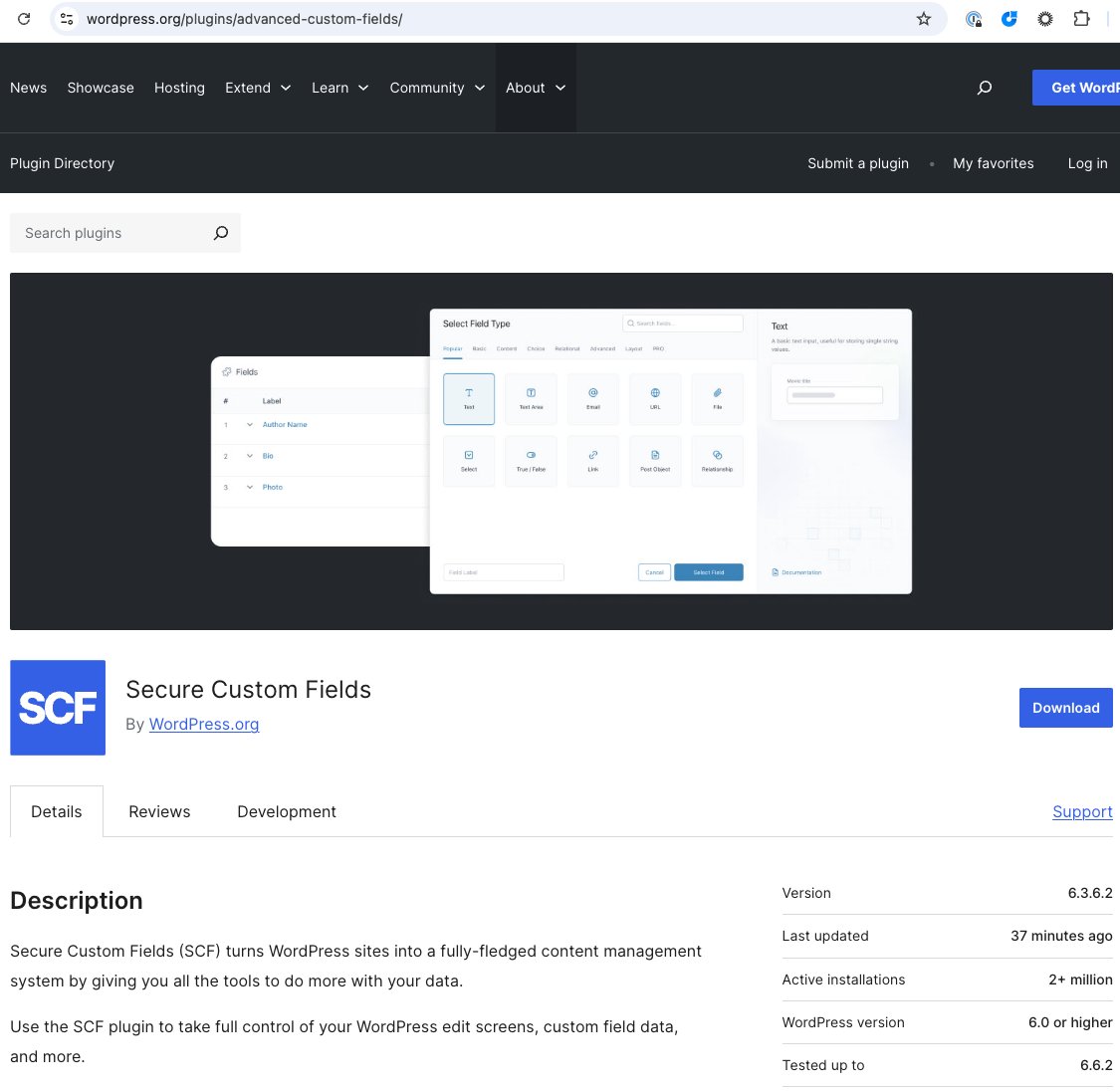
On October 12, WordPress.org [forcibly took control](https://www.advancedcustomfields.com/blog/acf-plugin-no-longer-available-on-wordpress-org/) of our [Advanced Custom Fields](https://www.advancedcustomfields.com/) (ACF) plugin, marking the first time in WordPress’s 21-year history that a plugin under active development was taken over without consent.
While ACF Pro users remain unaffected, free users are advised to download ACF 3.6.8 from [advancedcustomfields.com](https://www.advancedcustomfields.com/) for secure updates.The ACF team released the [following statement](https://x.com/wp_acf/status/1845169499064107049) regarding the takeover:

[Advanced Custom Fields](https://twitter.com/wp_acf)
[@wp\_acf](https://twitter.com/wp_acf)
We have been made aware that the Advanced Custom Fields plugin on the WordPress directory has been taken over by WordPress dot org.
A plugin under active development has never been unilaterally and forcibly taken away from its creator **without consent** in the 21 year history of WordPress.
[Posted Oct 12, 2024 at 6:27PM](https://twitter.com/wp_acf/status/1845169499064107049)
Since 2011, our ACF team has actively developed the plugin, evolving it into a highly sophisticated solution with over 200,000 lines of code. Our continuous work to enhance, support, and invest in the plugin has made it a critical part of the WordPress ecosystem, relied on by millions of users.
The forced takeover replaced the ACF plugin [with unapproved code](https://www.advancedcustomfields.com/blog/acf-plugin-no-longer-available-on-wordpress-org/#:~:text=The%20change%20to%20our%20published,(@wp_acf)%20October%2012%2C%202024), breaking from standard protocol and raising concerns about control, governance, and the motives behind such a move. WP Engine continues to actively develop the genuine version of ACF and provide support and updates which can be downloaded at [www.advancedcustomfields.com](http://www.advancedcustomfields.com), and will automatically update once downloaded.
##### **October 9, 2024: New checkbox on WordPress.org**
On October 9, WordPress.org added a new checkbox to its login and registration process, requiring users to assert that they are “not affiliated with WP Engine.”
The unclear statement next to the check box has left many bewildered—both as to whether and how they should answer it and as to why it’s there. We believe that the checkbox is confusing and disturbing to many and that none of our customers, agency partners, open-source tool users, or members of the community, are legally ‘affiliates’ of WP Engine. WP Engine released the [following statement](https://x.com/wpengine/status/1844078545603092691) regarding the checkbox:

[WP Engine](https://twitter.com/wpengine)
[@wpengine](https://twitter.com/wpengine)
Like the rest of the community, we have seen a new checkbox for logins at <https://t.co/VBY7VYgqzY> that has created confusion amongst the community as to whether or how they are obliged to answer the question posed next to the checkbox.
We value our customers, agencies, users and the community as a whole, none of whom are affiliates of WP Engine.
[Posted Oct 9, 2024 at 6:12PM](https://twitter.com/wpengine/status/1844078545603092691)
##### **October 7, 2024: Secure Updater plugin**
On October 7, we introduced the WP Engine Secure Updater plugin, which currently supports updates for all of our open-source plugins and allows us to assist other plugin or theme developers in the community on request.
Installing the Secure Updater is optional and precautionary, and this free-to-everyone plugin has been developed for users self-hosting, or hosted outside of the WP Engine platform—detailed instructions are available [here](https://wpengine.com/support/installing-and-updating-free-wp-engine-plugins-and-themes/).
**Note: WP Engine and Flywheel managed customers are already protected by the WP Engine update system and do not need to take any action**.
##### **October 3, 2024: Independent update capabilities**
On October 3, we released new versions of our widely used plugins, featuring independent update capabilities and updates delivered directly from WP Engine.
While WP Engine and Flywheel customers are already protected by the WP Engine update system and don’t need to take any action, community members are encouraged to download these versions of our free, open-source plugins and updates directly from the [ACF](https://www.advancedcustomfields.com/blog/installing-and-upgrading-to-the-latest-version-of-acf/) and [NitroPack](https://support.nitropack.io/en/articles/9991759-installing-and-upgrading-to-the-latest-version-of-nitropack) websites to ensure they receive updates directly from us.
**Note: ACF PRO customers are automatically protected by the WP Engine update system and don’t need to take any action.**
If you’re running [v6.3.2](https://www.advancedcustomfields.com/changelog/) or earlier of ACF, or have been forcibly switched to “Secure Custom Fields” without your consent, you can install [ACF 6.3.8](https://www.advancedcustomfields.com/) directly from the [ACF website,](https://www.advancedcustomfields.com/) or [follow these instructions](https://www.advancedcustomfields.com/blog/installing-and-upgrading-to-the-latest-version-of-acf/) to fix the issue.
These efforts support our customers and plugin users and seek to protect the community at large.
##### **October 2, 2024: Commencement of legal action**
On October 2, WP Engine took legal action against Matt Mullenweg and Automattic to address their continuing misconduct and protect our business, our customers, and our participation in the broader community. The complaint can be read [here](https://t.co/e40e9ZgFjZ) and WP Engine released the [following statement](https://x.com/wpengine/status/1841643374090031461) regarding the decision to file a lawsuit:

[WP Engine](https://twitter.com/wpengine)
[@wpengine](https://twitter.com/wpengine)
Matt Mullenweg and Automattic’s self-proclaimed scorched earth campaign against WP Engine has harmed not just our company, but the entire WordPress ecosystem. The symbiotic relationship between WordPress, its community and the businesses that invest millions to support WordPress users, and advance the ecosystem, is based on trust in the promises of openness and freedom.
Matt Mullenweg’s conduct over the last ten days has exposed significant conflicts of interests and governance issues that, if left unchecked, threaten to destroy that trust. WP Engine has no choice but to pursue these claims to protect its people, agency partners, customers, and the broader WordPress community. Like so many of you, we love WordPress and are committed to the stability and longevity of the community.
Read the complaint here: <https://t.co/e40e9ZgFjZ>
[Posted Oct 3, 2024 at 12:56AM](https://twitter.com/wpengine/status/1841643374090031461)
##### **September 30, 2024: Plugin and theme update solution**
On September 30, following interruptions to WordPress.org, and instability in the services used to update WordPress websites, we [deployed a solution](https://x.com/wpengine/status/1840910240801316924) to all sites across the WP Engine and Flywheel platforms, that enables customers to use their normal workflows and receive plugin and theme updates without relying on the WordPress.org API.
The solution was launched after WordPress.org was once again blocked for thousands of WordPress users. WP Engine released the [following statement](https://x.com/wpengine/status/1840905665440633087) regarding the block and our solution:

[WP Engine](https://twitter.com/wpengine)
[@wpengine](https://twitter.com/wpengine)
Thousands of WordPress community members have once again been blocked from accessing <https://t.co/VBY7VYgqzY>. WP Engine has commenced deployment of its solution for accessing updates and installations for plugins and themes across our customers’ sites. We expect deployment of the solution to all customers to be completed within the hour.
[Posted Oct 1, 2024 at 12:04AM](https://twitter.com/wpengine/status/1840905665440633087)
This solution allows WP Engine and Flywheel customers to use their preferred workflows without fear of further disruption or delays.
##### **September 27, 2024: Temporary access restored**
On September 27, WP Engine was given three days to develop a solution to help its customers update plugins and themes, and access to WordPress.org was temporarily restored. We released the [following statement](https://x.com/wpengine/status/1839805389036036424) regarding our restored access:

[WP Engine](https://twitter.com/wpengine)
[@wpengine](https://twitter.com/wpengine)
We’re pleased to see access restored to the repository of WordPress plugins for our customers who operate their sites with us at WP Engine.
[Posted Sep 27, 2024 at 11:12PM](https://twitter.com/wpengine/status/1839805389036036424)
WP Engine engineers worked around the clock on a solution for the reliability of update functionality and workflows. Their work was vital to increase resilience, reduce dependencies, and provide improved stability and protection from further disruptions.
##### **September 25, 2024: WP Engine blocked from WordPress.org**
On September 25, WP Engine was blocked from accessing plugin and theme updates on the WordPress.org repository. This forced WP Engine customers to update plugins and themes manually or seek other solutions.
While Matt Mullenweg asserted that he took this action because WP Engine had filed litigation against WordPress.org, this was untrue. Our prior cease-and-desist letter was not a lawsuit—and it was directed at Automattic due to Matt Mullenweg’s pattern of repeated misconduct.WP Engine released the [following statement](https://x.com/wpengine/status/1839246341660119287) in response to the blocked access:

[WP Engine](https://twitter.com/wpengine)
[@wpengine](https://twitter.com/wpengine)
Matt Mullenweg, CEO of Automattic, has misused his control of WordPress to interfere with WP Engine customers’ access to <https://t.co/VBY7VYgqzY>, asserting that he did so because WP Engine filed litigation against <https://t.co/Boiq7UES2h>. This simply is not true. Our Cease & Desist letter was a letter – not a lawsuit – and was directed at Automattic for Matt’s pattern of serious and repeated misconduct – behavior that must stop for the health and stability of the entire community.
Matt Mullenweg’s unprecedented and unwarranted action interferes with the normal operation of the entire WordPress ecosystem, impacting not just WP Engine and our customers, but all WordPress plugin developers and open-source users who depend on WP Engine tools like ACF. We are taking immediate steps to remediate the impact of this action. We remain steadfastly committed to supporting WP Engine customers, users, and the entire WordPress community.
[Posted Sep 26, 2024 at 10:11AM](https://twitter.com/wpengine/status/1839246341660119287)
##### **September 23, 2024: “Cease and desist” letter**
On September 23, WP Engine sent a “cease and desist” letter to Automattic demanding that Automattic and its CEO Matt Mullenweg stop making and retract false, harmful, and disparaging statements about WP Engine.While you can read the full letter [here](https://wpengine.com/wp-content/uploads/2024/09/Cease-and-Desist-Letter-to-Automattic-and-Request-to-Preserve-Documents-Sent.pdf), it was initially sent privately. We also released the [following statement](https://x.com/wpengine/status/1838350670564377051) regarding our letter, after Matt Mullenweg made various inaccurate statements about it:

[WP Engine](https://twitter.com/wpengine)
[@wpengine](https://twitter.com/wpengine)
Today WP Engine sent what is called a “cease and desist” letter to Automattic demanding that Automattic and its CEO Matt Mullenweg stop making and retract false, harmful and disparaging statements against WP Engine. In response to misinformation he has disseminated about the letter, its purpose, and who it is directed at, we are making the full letter available here: <https://t.co/Z0j5PDk659>
[Posted Sep 23, 2024 at 10:52PM](https://twitter.com/wpengine/status/1838350670564377051)
After our cease-and-desist letter was sent, Automattic sent a cease-and-desist letter to WP Engine, alleging infringement of several trademarks, including WordPress and WooCommerce. WP Engine denies these allegations as set forth in our [Complaint](https://wpengine.com/wp-content/uploads/2024/10/Complaint-WP-Engine-v-Automattic-et-al.pdf).
#### Resource links
● [Install and Update WP Engine Owned Plugins and Themes](https://wpengine.com/support/installing-and-updating-free-wp-engine-plugins-and-themes/)
● [All Customer email](https://wpengine.com/wp-content/uploads/2024/10/Message-on-behalf-of-the-WP-Engine-team.pdf)
● [Cease and Desist](https://t.co/Z0j5PDk659)
● [Legal Complaint](https://wpengine.com/wp-content/uploads/2024/10/Complaint-WP-Engine-v-Automattic-et-al.pdf)
● [Preliminary Injunction](https://wpengine.com/wp-content/uploads/2024/10/10.18.2024-Preliminary-Injunction-Motion.pdf)
● [WordPress Community Contributions](https://wpengine.com/blog/highlighting-wordpress-innovation-contribution/), Ensuring Stability and Security: Recent Timeline, WP Engine, 01jb245e1489vphegsm6avdpyt.