Episode 25: Jill Binder
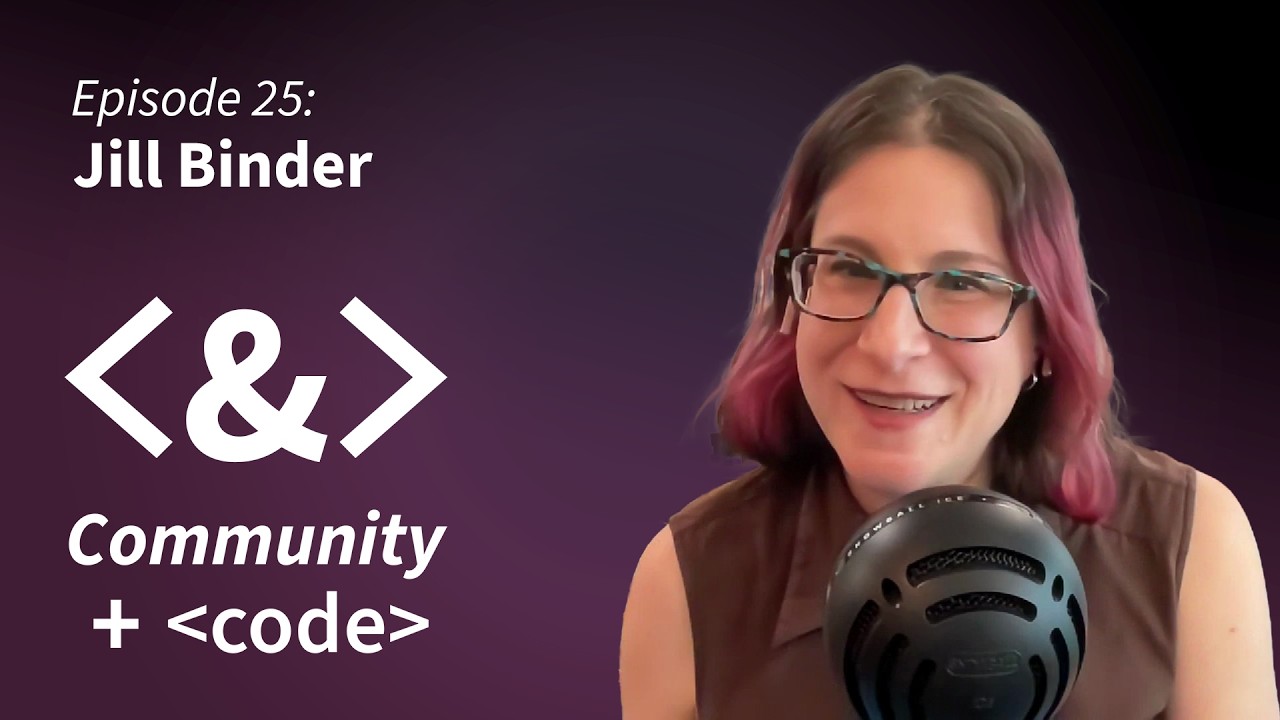
🔗 **Source:** [Episode 25: Jill Binder](https://www.youtube.com/watch?v=SZNThB0salY)
Welcome back to Community and Code. I'm your host, Chris Reynolds. My guest today has an origin story that starts with I wasn't trying to do this and ends with 600 people across 50 countries.
Jill Binder is a public speaking coach for Tech Folks based in Vancouver, BC. And before that, she spent 5 years as the founder and lead of the WordPress diversity speaker training initiative, a program she built inside the WordPress community to get more underrepresented voices onto conference stages. We talk about how the diversity training initiative got its start and how it became a global program. And we talk about speaking and speaker selection in general, like why blind speaker selection doesn't necessarily solve the
problem you think it does and often times introduces new issues. For anyone who's ever thought I don't have anything worth saying, Jill would disagree with you. Let's get into it. Welcome to Community and Code, the podcast where we talk to the human beings behind the commits. I am here today with Jill Binder. Uh Jill has been active in the open source and particularly the WordPress community for a very long time. uh doing all sorts of stuff, but most recently uh diversity stuff, but
also sort of uh just helping people speak better at things and doing and and representing underrepresented groups. And I am thrilled to have you on. Uh welcome Jill. Tell us about yourself. >> Hi Chris, thanks so much for that intro and thanks so much for having me on the show. This is so fun. Um for five years I was the founder and lead of the hashwp diversity speaker training group in the
WordPress community space and I did that till um 2023 early 2024 something like that. Um and after taking a break I'm now doing public speaking and confidence coaching for all voices in tech. Um, public speaking is just such a transformative thing, but I know so much about diversity and I still incorporate it in all the work that I do now and I'm happy to chat about any of those topics. Um, and just in case we do talk a lot
about the diversity part, I just want to say a little thing that I like to say before having those conversations, um, which is I'm a white woman in Canada. I can't possibly know everything that you're all going through. I also tend to be socially awkward and um terms change, but also I trip over words and sometimes accidentally say things that um are not great. And I want people I want everybody to know that I try very very
very hard to say the right things. I don't always get it right. um my heart is in the right place and I uh I want to do right and if any if I say anything out there that bothers anybody and if you have some bandwidth to spend on me please reach out and chat with me about it. >> I I appreciate that a lot. Um I we met uh in person recently and at Word Camp Canada um and I went to your talk. I
I've I've known who you are for a lot of uh for a long time. a lot of that being the WP diversity work that you were doing, but I think that like your name was floating around even before that um just in in the in the round. So, I was excited to to to go to your talk and then you gave a very similar sort of introduction and that I just like framing everything from a foundation like just like from the get-go like I just I just feel like that's just I don't know it helps me contextualize the space that I
occupy in the world. um and the space that I hope to occupy in the world, but also like I'm a white man living in America and I have a whole lot of things that go along with that baggage, right? Um and Right. Um >> I love that word baggage. That's awesome. >> Yeah. Yeah. There's there's there's much to be had. Um, like there's a lot of things that go along with that. And there's a lot of things that go along with just not having been in the place
of to experience many things that people who don't look uh like me or occupy the same physical spaces that I do um or aren't don't have access to those physical spaces. Um, and it's it's really grounding to sort of like, you know, start from the get-go with with that thing. So, like, yeah, I I glad to have you on, glad to have you talking about that stuff. Uh I was um why don't we start off I guess with um with the talk that you gave at at at uh Word Camp Canada since that kind of what is what
brought us together. Um for anyone who was not there which is probably a lot of people were not at Word Camp Canada. What uh what what was your talk about and and what brought you to that specific topic? >> Oo yeah. Um well so the title my fancy long title that I workshopped for a very long time um was from Canada to the world 10 lessons from working with 50 countries. Um and I I came to that topic
because um the Word Camp Canada team came to me asking if I would give a diversity related talk and I haven't officially been in the diversity space for a bit. I needed to take a break and I thought, well, what would be fun for current Jill? What would I love to talk about? So, I did a little um slight angle on it and instead of talking directly about diversity, I talked about what it was like to take a little
workshop that a few of us created in Vancouver for public speaking for our underrepresented voices and what happens when um I was asked to scale that to all over the world. Um at the time precoid there were 800 cities with meetups and I was asked to try to reach all of them with that that work. In the end I was able to reach 50 countries over 5 years which is an incredible feat and was a lot of work to do. Um and so the talk
was the the little things that I learned you know the little um and a lot of it was tangentially diversity related because that was my lens the whole time. the whole time I was doing these workshops for underrepresented groups. So there's a little bit of cultural stuff, a little bit of like um working with women in Latin America and um lang language issues speaking with um you know India and Japan. And the parts that
people really resonated with in this talk were um talking about what diversity means in places like the Philippines and um the black culture in Africa and then how the black culture in Africa is different from the black culture in America >> because in Africa let's say um and in the Philippines you know the the the men of of color are over represent the the
well what I like to say the well represented folks of the regions and um and then they are asked to come speak on the global stages because they're underrepresented because you know in tech we typically have uh I like to say straight cis young white men um not not necessarily always sis not necessarily always straight but um >> uh and not necessarily young um but just a kind of as a as a global like just to give a snapshot If you ask ChatGBT what
a tech what a tech worker looks like, you would probably get >> Yeah, probably get that. >> Um, and so then they're asked to speak on these global stages and it feels very disorienting to come from a culture where one is well represented and then walk into a space where they're under reppresented and it's it's dizzying and it's disorienting. Um, so talking about that, whereas in America, black men of America are very underrepresented and very um, and this was the most personal
part of my whole talk and the one that people resonated with the most and appreciated the most. Um, it was basically uh they live in a culture of and again I'm a white woman in America uh in in in Canada trying to talk about black men in America but I have from my experiences and also I've checked this with people to make sure it was correct. Um there's a culture of fear um because they don't know who to trust. They don't know who
they can open up to. my workshops were a very vulnerable space. Um, you know, digging into why we're afraid of public speaking and starting to use our voices is a is a big deal and they didn't know if they could trust me. Um, and all kinds of issues came up out of that and I had to apologize a bunch of times and I gave a whole script for how to apologize sincerely, >> um, etc. So, it was those kinds of things that uh were unexpected and
constant. It was it there was always things coming up which is part of why I developed that script with the help of some fellow diversity experts um because things were coming up and people were leaving upset um especially in 2020 when diversity became a bigger issue when the George Floyd incident happened and it became top of everybody's minds um people were um uh more sensitive at the time absolutely understandably
Um, but then tanking it out on me, the white woman in Canada who's trying to do well in the world. Um, and so making sure people knew that I'm coming from a good place made a really big difference in people's experiences cuz I care more about them than anybody being angry with me. Um but that's yeah so that's that's a little bit about that speech and a few of the highlights and the the little bit about that. Yeah, I as I as I was
listening to you like I remember you know in the before times before COVID um uh well once upon a time there was a really good traveling conference called Alterconf uh and Alterconf was specifically for by and for predominantly like underrepresented groups in tech. show. Um, and I went to one in Portland. Um,
and so there's like a lot of female speakers, a lot of uh trans and non-binary speakers, and all sorts of things. And basically the stories were the common theme was this is what it's like to exist as myself in a space that is dominated by >> cis straight white men, basically. Um, and >> yeah, >> and it was heavy. Uh, and it was it was amazing. It was really really eye opening um for me as a cis white man um in tech. Uh and it made me really want
to be part of whatever a solution or an answer or a response to that pain that discomfort uh was. Um, and uh I think I can't remember who who it might have been. Uh, it might have been Andrew Norcross who at at Loopconf
one year gave a talk that I went to in which he said, "Use your powers of privilege for good." Um, >> and I was like, "Yeah, yeah, I I can do that. I can't I can't be the like I can I can try I can try to be more visible. I can try to be repres like you know like be the representation like use my voice as much as I can in the spaces that I have access to to raise awareness
or whatever like I that is a thing that I can do. Um, and then so, so what I was thinking about as you as you're talking is I gave a talk at Open West, uh, I guess it was had to have been like 2019 or something or 2018. Um, in in response to all of these ideas, things floating in my brain called being a better ally. And it was basically what it was. What was ironic at the time was um one of the things I was talk I mean like I was also
very self-aware that I'm a male speaker talking about allyship at a tech conference with an audience of primarily male uh attendees and speakers and I also noticed and I told the organizers I was going to do this when I did it that the speaker selection also tended very heavily white male and I'm like look I'm going to call you out on this because because it's obvious and it's it's topical to my thing. It's not because I
think you're doing a bad job. It's because it's it's a this is just this is an evidence that this is an issue, right? And and one of the things like their process for selecting speakers was it was a blind speaker selection process. Um, which to me also just under underlines why blind speaker selection is not always the best way of doing like it it feels egalitarian >> but it the result you get is is just going to you know reinforce those things. Um
>> I don't know if I would give that talk uh like this year and I and it I didn't even think about like how things have changed over time but in in hearing you H we're working on that through that time. What what things have you observed um change in sort of like I don't know feeling sentiment uh vulnerability over like over that period of time like sort of postcoid. >> Oh yeah big big question. Um good
question. >> Took a took a lot of time to get there. I had to ramp up >> and I if we can come back later to the um the thing about why blind selection like people don't know why blind selection doesn't work. I would love to chat more about that but let me let me answer this question. >> Um so um there were two sides to um what changed from what I could observe. one which was
amazing was more people cared in the before times I was alone a lot trying to do this work I had I had a bit of help here and there um and then when that happened people suddenly cared and I got a lot more volunteers for my initiative which was amazing um and a lot more people caring about it and a lot more people wanting to contribute opinion ions and ideas which was also amazing.
Um um although I was a bit burned out and had a hard time wrangling the ideas and contributions and me now who has rested up and is well resourced I know how I would handle that now but in the past it was it was a lot um and then from the side of the people who are underrepresented um I you know I'm partially underrepresented myself so I'm partially
speaking myself you I'm female. I'm neurode divergent. I have some physical uh not quite disabilities, but not quite full abilities either. I'm currently walking with walking sticks to be able to walk. Um for example, so I can't do stairs and things like that. Um uh but um from the people at the time, um people were very understandably on high
alert all the time. Everybody was in a little bit of a trauma state. >> Um and so um the hardest time for me um was that time. Um I had people being very upset um with me over things that they may or may not have been upset about other times or maybe they maybe it would always bother them but maybe they wouldn't have spoken up as much. And so
I had long conversations of people being upset with me. And um I did my best to listen, hold space when needed, apologize, and I learned a lot about apologizing, which is something I talked about in the speech. Um and mostly it was letting people feel heard. Um, one of my diversity uh, peers pointed out that people were just upset at the system and at that
time I was representing the system and I was an outlet to uh, um, talk to and I'm very glad that I was. Um, I just my nervous system was also shot and it was hard at the time. Um but uh after I started so that's when I developed the script and then I didn't have people um have those long angry upset conversations with me anymore after that. If anybody had anything to say they came to me gently with corrections
which didn't happen much um after I started saying that script. Um and again it's not about me and my experience. It was really the important thing to me was helping people with their like I wanted I I cared more about other people and their experiences. Um it's it's not about me having a hard time. It's it's like I don't want people to come to a workshop that is
pre in the pre-times was very transformative for people and would absolutely change their lives. I don't want them to come to an amazing experience and have a terrible time. But because everybody was on high alert, there were there were more terrible times. Um uh one of the things that I didn't No. Yeah. So um uh there were little things that happened as well like um I mentioned in my speech about the color
of the skin on the posters in India when we had when we were holding workshops specifically for India and it wasn't just India there were other regions as well but I just gave one example story um and that story was basically we had the people of the region pick the the poster and pick the person and it was a light-skinned person and everybody in India seemed fine with it, but people in other parts of the world were very triggered and very upset by it being a
light-skinned person. >> Yeah. >> Yeah. Well, there's whole I mean there's there's I don't know how many hundreds of years of history to explain why in India that is the one that gets picked versus the versus an option with with darker skin. Like there there's there's >> it there's >> I mean we have a cultural framework in the United States that is based on a very particular history and like where our biases and cultural like things that
we identify with or think is normal or whatever comes from like they have a very similar but different like I mean it's yes there's there's a whole a whole host of things that could be said about about that sort of stuff. Um for sure. Um, >> yeah. >> What, um, what brought you to, uh, like into this sort of like diversity or even just speaking type of work? Like what what
was the thing that brought you into that to begin with? >> Yes. Good. I love the story. So, I was never a diversity person. It it just sort of happened. I wrote an article a couple years into it called um how I became an accidental activist um in Vancouver. So I was uh one of the main Word Camp co-organizers from 2013 to 2015. And for people who don't know what Word Camp is um it's it's I'm
assuming a lot of people listening to your show know, but just in case it is our basically our one to two day conference. Um most most cities around the world will have a 1 to two day conference all on done by and for the community and it's all WordPress topics. Any anything tangentially related to WordPress can be talked about at these events. Um and we had uh
close to 56 I think 56 applications and only seven were from women. M >> um and in the end uh we only had four out of 28 speakers who were women at our event. Um and when I say women, I mean people who identify as women somewhere all of the time. Uh and we were not happy about that and the audience was not happy about that. They talked to us um privately about it and they also
called us out publicly. They wrote blog posts about it. Uh absolutely understandably. We did our best. We we accepted six and then two dropped out for family emergencies and then in the end it was the small 14%. Um and so I was chatting with people about this issue. I went to Word Camp US to ask other meetup organizers, how do you get more women and under other underrepresented? And I also, while I'm here, I'll define when I say
underrepresented and diversity, I mean gender, um, cast, class, physical ability, sexuality, uh, race, ethnicity, uh, etc. Age, that's something that when I forget to say age, I always have people coming up to me asking about the age thing. Absolutely. age also. Um, and so I I we there was this meetup brunch and I asked all of them, how do you get more people asking, you know, applying to speak? And they're like, you got
seven, we got zero. So then I learned this was a bigger issue all around. And I I started doing more effort. I started asking people directly instead of just waiting for people to show up. and I got the same two answers over and over, which is what would I even talk about? And I'm not an expert in anything. And I learned so those were the two big things. I chatted with some people and somebody gave me an idea um to tackle the topic question
with doing a brainstorming session. And from there, a group of women and I created our 5-hour workshop, which is the foundation for what I've been doing ever since. And in this workshop, we first cover imposttor syndrome, the myths of who it is the person speaking up on stage. Especially um uh the well- reppresented people in a community when
they know a little bit about something will be like, "Yeah, I can apply for that job or I can talk on that topic." And the rest of us when we only know a little bit, we're like, "Well, I don't know enough." But we actually know the same amount. Um so helping people reframe that. um helping people do more story based talks. Um when we started developing this workshop, make WordPress community got a wind that we were doing this and they asked, can we get people to do more story- based workshops? People will walk away from a day of
conference talks after a whole bunch of how-to talks won't remember the details, but stories are engaging. People remember them. And so I've been really honing in over the years how to help people create great stories. Um and so then make WordPress said great you've had these amazing results. Other cities started running their own versions of it and they asked could I lead a team to
make it not just women all diversity and all around the world. And that is that is how that began. It started with our own local little problem in Vancouver. We developed a solution that worked and uh and oh yeah and we we started running that workshop for ourselves and in the next year we had three times the number of applications from people who identify as women and it was a developer edition. So that's an even bigger deal. Uh and then we had fully 50% um representation
in our next few word camps as well. So that's how that all started. >> Yeah. Yeah. Well, that overlaps with the with the thing that we we uh pinned uh earlier with with uh speaker selection and and the the blind speaker selection. Um I also I was involved in in Word Camp Salt Lake City for for many many many years. Um I was uh co-organizer for two years and then I was lead organizer for
two years. So I basically was I was running it in to a greater lesser extent for essentially four years. Um and we had I mean the exact same problem. We have like the applications come in and for a long time it was like well we're just going to run with what we get, right? Like that's that's what you do. Um, when I was not satisfied with that uh answer, I >> I think it was actually and I think it was probably like a similar conversation because I think that might have been about the same time as uh there was a
word camp San Francisco. It was before Word Camp US was a thing. There was a Word Camp San Francisco where there was an open well it was an invite community summit and I happened to be invited because I was part of the docs team at the time. Um, so I got to go to the community summit which meant that I got to have conversations with other people that are word camp organizers which wasn't, you know, ostensibly the reason I was there. Um, and I asked that question and the answer that I got was, well, have you tried asking? >> Like, wow, I can ask people.
which then so the next year I went to when I when we were organizing was like okay I'm gonna like pick a bunch of people that I think would would uh bring value to the people that come to our event uh that are maybe not local but people that I know that I have at least some like six degrees of Kevin Bacon connection to um >> yeah yeah >> that and just just ask just ask would you like to come to Salt Lake City to give a presentation I don't really care
what you want to talk about we can talk about whatever you want just I'd love to have you here. And yeah, it that weirdly when you ask people if they if they want to speak at your event, a lot of them say yes. >> Um >> that's awesome. >> And we were able Yeah. And we were able to to course correct that. I think I think the next year when I the first year when I did that, we had I think about 50%. I mean, if you're if you're considering a gender binary as the as the rubric by which you're organizing
who's on what side of the line, we had about 50%. Um and and and that continued and that was um yeah um and that and it goes to the point like and because I had that experience that was why I was >> uh not super uh enthusiastic about the blind speaker selection of this one event that I was speaking at because like I felt like I felt like I knew what a solution could be. Um, and like I get it, like I understand like
>> it seems fair, but I think that you can do that and also do the other thing too >> and then get better results. Yeah. >> I think I want to speak a little bit about why it matters that there's representation and also a little bit more about the blind selection. >> Yeah. Um so um you know when I first started in this work there was a lot of talk out there of um it should be based on talent. It should be a good mix of topics. Um it shouldn't be who's
speaking the the representation shouldn't matter. And I argue after learning a lot about this over the years, um, different perspectives, people with different history, people with unique, um, viewpoints because of having different representation and the representation what I mentioned before in all the different forms. Um, it makes for a more interesting conference. Um,
it it does so many things. It makes for a more interesting conference. It helps the audience feel included and represented because um if people are as lucky to have the kind of audiences that we had, we had a big mix in our audience but not on stage before I started this work. Um it boosts ticket sales because a lot of people will look for is there a mix of speakers. Um and since 2020ish um maybe even a bit before but
especially after people will boycott people will say this is all young young middle-aged white men I will not go. Uh and so it's it's important even just just to uh um uh to be a better event and for people to to agree that it's a better event. I guess that's one way of saying it.
>> Yeah. >> Um and then blind selection. What happens with that? There's a few things that happens. One is if the people haven't been on the speaker circuit, they may not write as good of a an application, a speaker application and the application is the title and the description and uh in a blind selection that's the only thing that people read and people of other countries and um cultures, ethnicities, all the different
things might not write English well and get unselected. Now in my work I say I tell people um you know make sure you know it's it's sad that people don't get selected based on how it is written but that is the reality get somebody to help you write it properly and now there's all kinds of tools to help people with their grammar >> um uh and um blind selection does remove the names so you're so they are less
likely to pick the popular people. But the fact is we can often recognize, oh, this is a talk from this person. I'd want this person there. Um, and um and and also, you know, even if all the talks are truly anonymous, you can't tell who the popular people are and um all written at the same quality. You still just want a
mix of voice. It's for all the reasons I said before, it's a better conference when there's a mix of voices, >> right? I remember back there, you know, I haven't been on Twitter in probably well since Elon bought it, but um once upon a time I was and um I think it was Anneil Dash who at some point decided that because he had gotten so big on Twitter and he has so many followers that he was going to intentionally stop uh like reposting
um things by male users and just repost things by you know female or non-binary like things that because so much of the discourse and dialogue was already from like the male perspective even if the content was exactly the same. he was going to retweet the thing that was posted by somebody who is female. Um because just to elevate those voices and
because and and because like the yeah the topic title could be exactly the same thing but the perspective that comes behind it. The lived experience that goes into the ideas is going to be by default different. Um >> yeah. >> Yeah. Um and >> and something to add on that. Um it is to our benefit to hear more lived experiences. Yes. Um, you know, there's all kinds of things that we're blind to for our from our own um, lived
experience that are things that our our users experience and we need to know that they're experiencing that as well as um, so hearing the different perspectives opens our eyes to more things as well as um, people's different experiences often bring cool innovations to things. Um, for example, back in the wartime, a long long time
ago, um, they started creating, uh, what was it? Um, like I think I think it was creating audiobooks for their veterans who, um, couldn't read. And now podcasts are a thing. You know, it was created originally for a certain segment, which became something that changed, you know, made things better for everyone. Um, and so, uh, you know, there's all kinds of innovations that can happen when we when we're problem solving for somebody in
particular and then it can become something cool in the mainstream for everybody. >> Yeah. Yeah. For sure. I mean, I think, you know, when I was in high school, we had books on tape and whatever, but that was like >> that was it. Books on tape. Yes. >> Yeah. >> Yeah. But like books on tape like to start you think about like well obviously you if you can't read a book because you are vision impaired then that is the the thing that but like yeah I >> I you process information differently by listening to a book being read to you
than than you do by reading it with your eyeballs too. And like, you know, there's so many reasons why you would choose to do the one thing over the other thing. And and like you can read a lot more books if you listen to them when you're doing like making dinner. Like yeah. Um >> all sorts of sort of accidental uh serendipitous uh effects of of things that that started out being for like ex sort of like for accessibility sort of purposes. Yeah. Yeah. >> So talk about um now you do sort of
coaching for public speaking. Um tell obviously that came out of your work from the WP diversity thing. Um but talk about how that sort of evolved and and what like what made you want to sort of focus in that. >> Yeah. Uh so when I came back from my um self-funded recovery sbatical, I was looking at what can I do and um I still had some corporate clients on the side.
Um I I starting in 2020 um I had a couple of companies hire me to just do one-on-one coaching with their um employees just to help them be better on stage. And uh I still had those clients and I when I came back to work I really loved it a lot and it still makes such a big different like you know it it the diversity work is so meaningful but
I've found so much meaning in helping all voices cuz it's basically if somebody has a good experience on say a podcast or on stage. It helps them level up to their next self. People get so much confidence. People get career um uh it helps their careers. I'll talk more about that in a second. Um it's uh some people step into leadership
roles after speaking. my my um my whole stepping into being the the founder and lead of the WP diversity training initiative uh was right after I did a public speaking talk on how it how it was going with our workshop in Vancouver. Um I that was at Word Camp Seattle. Um and uh yeah, and so there's I've I had I've had so many stories. Um but there's one in particular that I
witnessed that means so much to me. Um one of the people who went through a workshop in Vancouver um got spotted by a local uh agency. They sought her out. They said we need her specifically after seeing their talk her talk and um got her on board. See, she soon became their senior developer and then their team lead and she was their first and only woman developer for the for a bunch of
years and then she brought some other women developers on board as well. Um, and I've also in my own experience, um, and seeing seeing it happen for so many people, people get job offers, people people who are entrepreneurs get gigs. Um, you know, before doing this public speaking coaching, I was and before the diversity initiative, I was a web developer and every time I got on stage, no matter how good or bad I was that day, I inevitably got people asking to hire me to work on to create their websites for them.
um it's just this visibility thing that makes a huge difference for people. And so the combination of the fact that I ran this workshop literally 100 times over 5 years, reached 600 people in 50 countries. Um but also I have done a lot of public speaking myself before that. So I'm just very good at it. Um, I started off as a performance poet uh for
I was kind of tangentially in the slam scene for almost 10 years and that's where I really learned how to do public speaking. Um, and then in the work world I started giving a lot of talks when I was a other kinds of coaches and then when I was doing web development and then I started speaking at meetups and word camps when I got into the WordPress space. Um, and I just uh I'm a very anxietyfilled person and I've learned how to calm my own nerves and I'm able
to help people calm their nerves. And I have kind of a small presence in regular life, but on stage I have a big stage presence and I'm able to teach people how to do that as well, no matter how small and introverted they are in regular life. Um, and it's not about being something that we're not. It's about using our own and if we're having a if I'm very quiet and I have a quiet energy lean into that be quiet which is I think what I did at my keynote I'm not
even sure this I'm usually feeling quiet so I lean into that and it gives me this presence so because of all of that that that's now what I'm doing and and um I'm I don't know I love it so much I'm doing one-on-one coaching with people when they have a talk coming up. And I'm also aiming to do some cohorts where, you know, I gave these 5-hour workshops where it was just a crash course quickly. And I would love to do like one module at a time, one month at
a time and really dig into it together and get people from I don't know, I could never give a talk to giving a standout talk that they're so proud of and everybody really loves. So that's the current thing. Yeah, that's a good current thing to have. Um, I've I've had a couple people on before who are either in Devril or they're in uh tech spaces who are come from similar backgrounds where um, you
know, they had to sort of force themselves to do public speaking and they did so because they thought it would just help them in general or because it would help them professionally or whatever. um and and now they do it a lot and they really enjoy it. Um what are what are the sorts of things that you uh would recommend or suggest to folks that are that are on the cusp but need a little bit of a nudge to to to do to go to a meetup and
and do like talk or you know give a presentation for their employer or like or >> get up on stage like whatever. What's what's the sort of like key thing that you think that uh that you would suggest to to get people over the little over the hump? >> That's a good question and it depends a little bit on where that hump is. You know, I would start by asking is it feeling like they don't know enough and don't belong on stage? They don't know what their topic is. They're too
nervous. They don't know how to write a title and and description. Um I actually have a little self diagnostic tool. Am I allowed to mention a little thing on my website? Um, speaktuckconfidently.com/blooprint. I lay out the 10 steps for what it takes to get on stage and have people self diagnose um what's their confidence level with each stage. So, some of the stages that I just mentioned. Um, so for the two most common ones, well, the
three most common ones that um I hear a lot is what would I talk about? Um, and so there's uh little exercises we can do, but as a quick example, um, the best talks are what we're already doing every day in our tech life. So a little quick prompt could be, um, think about the last three things that you learned at work. Um, and then some, one of those could be a great topic or or a great one is like mistakes
you've made. Everybody has mistakes they've made in tech and that that's a really good story-based talk. Yeah. >> Like here's the mistakes I made so that I, you know, learn from me so you don't make the same mistakes. >> Um if it is feeling like they don't belong on stage. Little thing I mentioned before. Um we tend to self- select ourselves out feeling like I only know a little bit but actually we know the same amount as the people who are getting up on stage.
Um, but I like to say because I'm I love helping people. Well, so there's a bunch of different kinds of talks, but I do lean towards the story-based talk, although I let people choose. There's how-to talks, story-based case studies, panels, workshops, etc. Um, but the great thing about story-based talks is we are always an expert in our own experience. Nobody can argue with our life experience.
Um, so there's that's one way to get over that hurdle. And then for nerves, the two two big tips are practice, practice, practice, practice before if if one can before getting up on a big stage, get up on little related stages or even just talking to friends and family. Just just practice. Um, and breathing. Breathing is this overlooked thing. We breathe. But do we? Uh when we
get nervous, our breath >> and energy gets high and we we we're breathing from here and here and our voice goes up and our body gets tense. And if we bring that slow the breathing down, breathe through our belly, take a few deep breaths. I recommend breathing in the day weeks and days leading up to it because some of us are in a heightened state all that time, but then also on the day of
do deep breathing before and then there's often a wait period before we're called up on stage. Great time to do more breathing. And when we get on stage before talking, I recommend doing deep breathing. Um, there's a difference between somebody who walks up onto stage and then starts talking, "Hi, my name is Jill. I'm here to talk about blah blah." versus, "Get up on stage, take take a moment, take a breath,
and then on one of the outreaths, start talking, which also gives us a fuller voice. Hi everyone, my name is Jill. I'm so happy to be here with you today. preferably a better start line than that. I like I like to coach people to have an interesting hook before starting to tell people who they are. Have like a really interesting question that is the through line of the whole talk. Um but yeah, those are some little tips
to get people started on some of those things. >> Breathing is so good. Um I'm >> so good. >> I I so I've I've I do aerial uh arts stuff. I've been going to classes for about a year and and pull and >> and I'm our instructors are constantly saying and remember to breathe because for the for very similar but slightly different reasons because but like yeah you you doing a thing that's really hard
and you're pulling yourself up and it and then you forget you need actually need to breathe like and breathing makes it better. >> Breathing makes it more successful. Breathing uh helps you not tense up. Breathing helps you not get injuries. Uh yeah. Yeah. Breathing is breathing is really good. >> Breathing is good. >> Yeah. And that actually reminds me of another thing which is um you know sometimes we start speeding up in a talk and so deciding ahead of time some spots
that we're going to stop and take a breath. Especially between sections is a really good time. Or sometimes we have this moment where we blank. So, I have this little story. When I was in grade school, um I was doing pretty well at the public speaking, but there was this one time that I blanked, did not know what my next line was, ran out of the room crying, and then refused to do public speaking until I was an
adult and really wanted to do my poetry on stage until I had a really good reason to push past it. But I just lived in fear for so long. And now with with what I know now, when we blank, stop, take a few breaths, oxygenate the brain, maybe even another thing I talk to people about is um feeling in their heart, maybe even putting a a hand on their heart. and that it our heart is like this second brain that will remind
us what we are there to talk about and overcome situations like like tough questions in the Q&A time and um so the breathing and and the heart thing will help people get over the humps of stuff in the middle of the things that happen when we're on stage. >> Yeah. Well, I will have to think about that. remember that. Um, well, thank you so much, uh, Joe for coming on. Um, I love
talking about this stuff. Uh, I love to have you on. Um, I was so happy that we got to meet in person, uh, a few months ago. Uh, for anyone who's maybe looking for you or what you do on the internet, where can they find you? >> Oo, great question. Um I am Jillbinder all one word on LinkedIn Mastadon still on X. Um uh Facebook but except on
Facebook it's Jillbinder consulting. Um those are the business social medias and my website is speaktechconfidently.com and that little um self diagnostic tool that I mentioned to figure out where somebody is stuck so they know where to even start or also just to know like how does one do a talk or how does one do their next talk and make it better. um the 10 steps to that. It's that was speakconfently.com/bloopprint.
And thanks for letting me mention those things. Free some free stuff. >> For sure. For sure. Absolutely. Well, thanks again for coming on. Thank you everybody who might be watching or listening to this in the future. And uh we'll see you on the internet. >> Thank you, Chris. This was a pleasure., Episode 25: Jill Binder, YouTube, 01kre3yt5vp21s353cnnc1aqyh.