Episode 4: Patrick Rauland
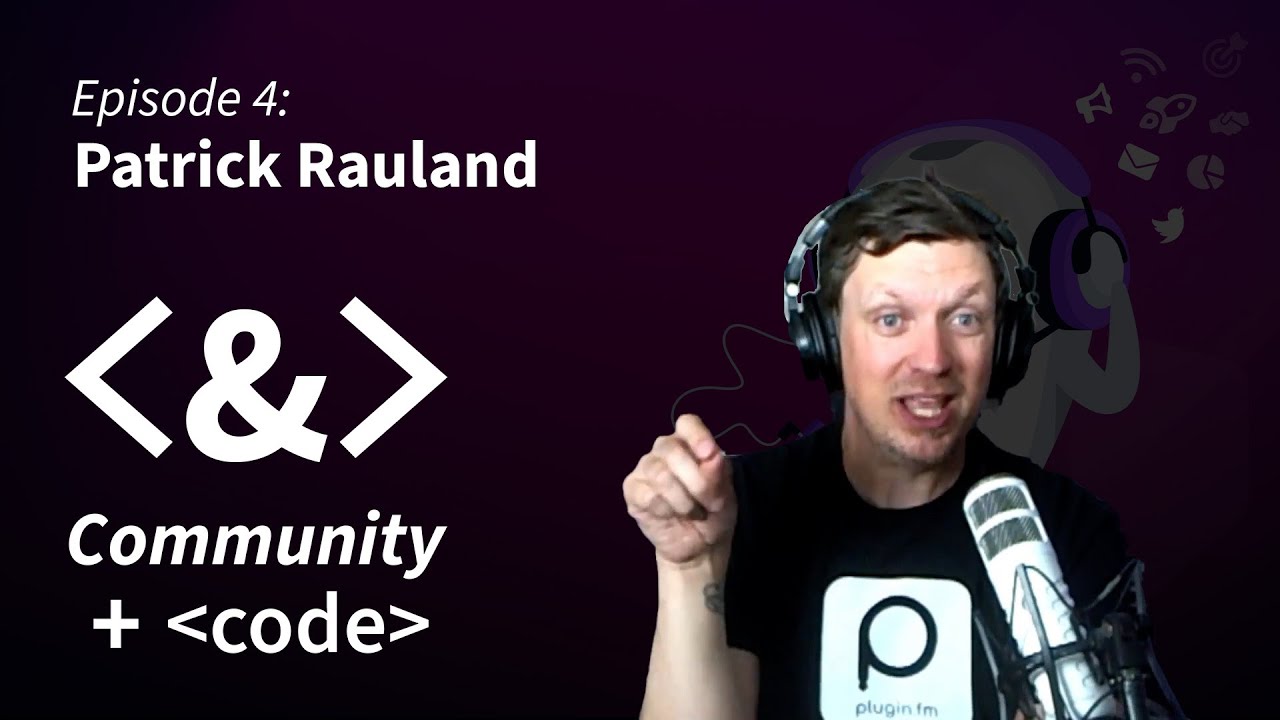
## Metadata
- Author: [[Community & Code]]
- Full Title: Episode 4: Patrick Rauland
- Category: #articles
- Document Note: ---
tags: [#wordpress, #ecommerce, #podcast]
- #community
- #pluginfm
- #open-source
Author: Chris Reynolds, Patrick Rauland
Source: Community & Code Podcast – Episode 4
Reference: https://www.youtube.com/watch?v=NUPWfKvnsEE
date created: 2025-07-18 15:30
---
# Title: Patrick Rauland on WordPress, E-Commerce, and Creative Curiosity
## Table of Contents:
- [📝 Summary](#-summary)
- [📖 Main Content](#-main-content)
- [🗒️ Notes](#-notes)
- [📖 References](#-references)
- [🗣️ Paraphrase](#-paraphrase)
- [📰 Newsletter](#-newsletter)
- [✅ Action Items](#-action-items)
- [🧪 Hypotheses](#-hypotheses)
- [📊 Methodology](#-methodology)
- [❓ Questions](#-questions)
- [🔮 Future Research](#-future-research)
- [💡 Implications](#-implications)
- [🧠 Learning Styles Assessment](#-learning-styles-assessment)
- [📊 Accessibility Assessment](#-accessibility-assessment)
- [🌍 DEIB Assessment](#-deib-assessment)
- [✅ Logical Validity](#-logical-validity)
- [🔍 DARVO Analysis Prompt](#-darvo-analysis-prompt)
- [🔍 SEO Evaluation](#-seo-evaluation)
- [🎯 Conclusion](#-conclusion)
---
## 📝 Summary
In this episode of *Community and Code*, host Patrick Rauland offers a warm, self-aware, and refreshingly candid narrative about his multifaceted journey through web development, WooCommerce, indie board game design, and podcasting. Patrick reflects on the transition from custom CMS development to WordPress, shares the behind-the-scenes evolution of Plugin.fm, and discusses how creativity, marketing, and curiosity shape his personal and professional path.
The tone throughout is relaxed, humorous, and deeply personal, providing both seasoned WordPress professionals and newcomers with insights into sustainable contribution models, the messiness of learning new mediums, and the joy of making complex things approachable—whether it’s product marketing, plugin support, or painting miniatures.
**Key moments:**
- 👨💻 From hand-coded login pages to WooCommerce product lead
- 🎙️ Starting a podcast about marketing for software makers
- 🧠 Learning by doing (and failing first)
- 🦶 Enthusiastic defense of barefoot shoes
- 🎲 Designing indie board games that respect different learning styles
His story showcases the beauty of evolving in public, the benefits of being bad before getting better, and the quiet confidence that comes from decades of tinkering, teaching, and trying.
[Watch the episode](https://www.youtube.com/watch?v=NUPWfKvnsEE)
---
## 📖 Main Content
Patrick's story begins with a childhood fascination for creating things, from comic books to fantasy worlds. This translated into an early career hand-coding login pages before discovering the WordPress ecosystem and eventually working on WooCommerce.
He later embraced product marketing as a bridge between technical and human communication. He’s passionate about making sure users understand what a product does—clear documentation, onboarding, and accessibility being core concerns.
His podcast, Plugin.fm, is a reflection of his desire to help makers succeed, particularly those who struggle with self-promotion. His energy is grounded in empathy for people learning hard things, often alone.
He’s also an indie board game designer, and he applies those creative principles to education and learning accessibility, building board games that accommodate various cognitive and play styles.
---
## 🗒️ Notes
- **[0:23](https://www.youtube.com/watch?v=NUPWfKvnsEE&t=23s)** – Podcast intro; focus on people behind code.
- **[0:45](https://www.youtube.com/watch?v=NUPWfKvnsEE&t=45s)** – Patrick introduces himself; host of Plugin.fm; involved in WooCommerce and product marketing.
- **[1:20](https://www.youtube.com/watch?v=NUPWfKvnsEE&t=80s)** – Early days: working with clients who needed a CMS → built his own before moving to WordPress.
- **[3:00](https://www.youtube.com/watch?v=NUPWfKvnsEE&t=180s)** – Joined WooCommerce team → eventually became product manager.
- **[4:05](https://www.youtube.com/watch?v=NUPWfKvnsEE&t=245s)** – Plugin.fm was born from wanting to help indie devs do marketing.
- **[5:10](https://www.youtube.com/watch?v=NUPWfKvnsEE&t=310s)** – Talks about marketing being misunderstood → it's not just advertising, it’s communication.
- **[6:35](https://www.youtube.com/watch?v=NUPWfKvnsEE&t=395s)** – WooCommerce taught him how much users struggle with software; documentation matters.
- **[8:12](https://www.youtube.com/watch?v=NUPWfKvnsEE&t=492s)** – Creativity isn’t limited to one medium; mentions painting minis, game design.
- **[10:18](https://www.youtube.com/watch?v=NUPWfKvnsEE&t=618s)** – Advocates for barefoot shoes and unconventional comfort for creative workers.
- **[12:00](https://www.youtube.com/watch?v=NUPWfKvnsEE&t=720s)** – Encourages building things even when you’re bad at first: “The bad version teaches you.”
---
## 📖 References
- YouTube: [Patrick Rauland on Community & Code](https://www.youtube.com/watch?v=NUPWfKvnsEE)
- Plugin.fm: https://plugin.fm/
- WooCommerce: https://woocommerce.com/
---
## 🗣️ Paraphrase
1. *Original*: “Marketing is not just about ads—it's about helping people understand what your product does and why it matters.”
*Paraphrase*: Marketing isn’t only about promotion; it’s about clarity and ensuring users know how and why they might benefit from your product.
2. *Original*: “You don't get to the good version of your idea without going through the bad version first.”
*Paraphrase*: Progress requires imperfection—early failures are part of building something meaningful.
---
## 📰 Newsletter
**From Code to Commerce to Curiosity: Patrick Rauland Gets Real**
In this week’s spotlight on *Community & Code*, we get a delightful deep dive into the creative brain of Patrick Rauland—WooCommerce veteran, Plugin.fm host, indie game designer, and barefoot shoe evangelist.
Tune in to hear Patrick reflect on:
- Making marketing less mysterious
- Supporting devs who hate self-promotion
- Why everyone should try being bad at something
His journey is a masterclass in blending empathy, play, and education across the open source ecosystem.
🎧 [Watch the episode](https://www.youtube.com/watch?v=NUPWfKvnsEE)
---
## ✅ Action Items
- Use Rauland’s empathetic communication style as a case study in contributor onboarding.
- Reference Plugin.fm episodes in WordPress DevRel content to bridge marketing gaps for indie plugin makers.
- Highlight WooCommerce as a model for scalable OSS product documentation and support.
- Consider barefoot metaphors when coaching new contributors: remove the “shoes” that restrict learning.
Alignment with Courtney’s goals:
- Promotes sustainable contribution and onboarding pathways.
- Elevates accessibility in software education.
- Models community-centered, non-corporate forms of technical storytelling.
- Directly supports your OSPO and contributor engagement lens.
---
## 🧪 Hypotheses
- Indie developers are more likely to succeed if provided with non-intimidating marketing education.
- Community-led podcasting improves contributor self-efficacy and visibility.
- Analog play (e.g., board games) can support digital fluency and memory retention for developers.
### 📊 Methodology
- Qualitative interviews with plugin devs pre- and post-podcast exposure
- Case studies of marketing changes by Plugin.fm guests
- Surveys comparing self-efficacy scores of devs with and without non-technical support systems
### ❓ Questions
- How do we better integrate marketing literacy into WordPress onboarding?
- What non-digital tools help devs better understand open source contribution?
- Could podcasting become a structured mentoring tool?
### 🔮 Future Research
- Long-term success rates of guests featured on plugin-focused podcasts
- Cross-training initiatives that pair game design and software dev
- Barefoot work ergonomics and open-source developer wellness
### 💡 Implications
- Stronger, more confident plugin authors
- Increased retention of non-traditional contributors
- More joyful, human-centered open source development practices
---
## 🧠 Learning Styles Assessment
- **Visual**: Video format supports this; recommend timestamps, diagrams.
- **Aural**: Podcast
- Summary: This week, we have Patrick Rauland on the pod. Patrick is not a stranger to podcasting himself and is currently the host of Plugin.fm. We talk about his journey through open source before landing on WordPress and WooCommerce, marketing advice for creators and board games.
Also: Patrick may or may not have recorded this episode from space.
Intro music: nqt provided by mobygratis. Outro music: Conspire provided by mobygratis.
- URL: https://www.youtube.com/watch?v=NUPWfKvnsEE
[Music] [Music] Welcome to Community and Code, the podcast about the humans behind the commits. I'm here today with Patrick
Rolland. Uh he is the host of Plugin FM and does other things in uh the space. Patrick, why don't you tell us uh about yourself and and who you are and and and what you do? Sure. Uh hi everyone. My name is Patrick Rolland. Uh so yes, I so I do run a podcast called Plugandf. So if you want to learn about marketing software, that's what we talk about there. Um I also do I'm also really big in the e-commerce world. So, I've done a lot of stuff with Woo Commerce in the past and I currently work at sort of an
enterprise e-commerce scale for a company called Zero Shoes building their e-commerce um website and you know enterprise. Um and then I also do some cool stuff for LinkedIn Learning. And then outside of WordPress, uh I have a board game I designed behind me. I have I made a Star Wars helmet last fall. So, I do all sorts of weird fun nerdy cool things in addition to in addition to coding. If you're only getting the audio version of this podcast, uh I would
recommend jumping over to YouTube real quick just to see just for like a second because people always tell me that my background uh looks like I'm in a spaceship, but Patrick actually is in a spaceship. I think like I I I think that literally we've got like the Enterprise behind you. The Death Star. But yes, yes, I'll take I'll take yes. Yeah, I stand corrected. Um so uh so tell me about your I I guess you're sort of in the the WordPress
space. What is your what is your WordPress origin story? Oh man. Um origin story. So I Okay. So first job. Okay. So first job out of college I knew I wanted to go into web. So I worked at this at this website at this uh custom web shop. We just built everything was custom. So it was like you to build a login page by hand. you to build a, you know, a beer page by hand if they were a brewery selling different types of beers. Like everything had to be its own CMS. And I just, you know, I just got tired of
building login pages. That was like, why do we why do I need to keep I I like building custom stuff because then there isn't like a million menu options that people can get lost in. That's what I like about the custom side. But the thing I really dislike about the custom side is you're always rebuilding plug-in Yeah. login pages and and like it's a ton of work to like you know upload images and you different mime types and and all sorts of stuff and you can reuse code but no not every site's the same anyways I started basically saying our
low-end sites need to be WordPress and so that's how we got started with a couple test WordPress sites I changed jobs and then I kept doing WordPress at the new space at the new place I worked and then I just kept getting deeper and deeper that's when I you know I I I I always followed open source and stuff like that, but that's when I at the at the second job a couple years after WordPress, I finally got into like finding GitHub repos and making fixes there. And that that was another another
deeper dive into WordPress. Did you ever try other uh other open source CMS's besides WordPress? I know back in the day I was like playing around with Joomla for a little bit and I did a couple Magento sites and I did a bunch of Zen Cart sites. Um there's there's a couple there's a thing that I found where like it was sort of like a a quasi CMS where like you uploaded this PHP script or something and it basically gave you an admin page. The pages are
all written in HTML, but it gave you like an admin interface to edit the HTML of those pages. Mh. Um, do you ever like play with with other things like that? There were a couple. Um, so so I started as a student web developer at university and we used Sorry. Oh god, was it Dreamweaver? Dreamweaver like page templates which is so like Yeah. Yeah. So page templates like it's not a CMS, right? But it's just a program that manually updates all of your like HTML like everything outside of the content area. Oh man, there are some nightmares
there of of updating things going wrong. Um, I did try Jumla. Sorry, I guess I shouldn't say. I had a friend who also did web stuff and he showed me some of the stuff his shop was doing with Jumla. I I thought it was okay. I wasn't It didn't blow my socks off. So, I I didn't I didn't dive deep into it. And I should say I actually started WordPress one or two years earlier. I think this was WordPress 2 something. And there's something about WordPress before version two where it just didn't quite catch me. I'm like, "Okay, seems fine." And then
by the time WordPress 3 came out and that's when I was looking for again just login pages and uploading media and a couple basic things that I just want didn't want to recode every time where everything everything I wanted to do was in WordPress and I I looked at expression engine and playfy there there's a couple other CMSs later and there were some uh local people who did Magento and I saw how they did stuff at a at a web meetup. they just never called to me that nothing ever nothing ever looked that good compared to WordPress. Um, I always felt like
everything was like just really overly complex. Like I I would get lost in the Jumla menus. I would get lost in the Magento menus. I never knew what I was doing. I I was building these sites and I was like, I hope you know what you're doing because I don't. Like I know how to make it look pretty, but I don't know how to use any of this [ \_\_ ] Yeah. Super complicated. Yes. Like Yeah. Again, the thing with the custom CMS's that I like, those are the things that are it was like there's, you know, you log in and it's like, do you want to add a new blog post or do you want to add a new
announcement bar? Like th those are your two options. There's no there's no settings. There's no profile. I like minimal aesthetics and most CMS's are just exploding with options. Yeah. Yeah, for sure. Yeah. I back in back in the olden days, I also worked uh at the university at my university as a as a web I think my title was web master and web master was a title you could have. Um and I I don't I don't even remember what department it might have even been
like the HR department or something. And I was literally writing everything in just like plain HTML. I was probably like using Notepad or something and just like SFTP actually no FTP is before SFTP just like straight FTP up to the server. Uh which was like some server like a physical box somewhere on campus like uh very very and like that's like before that like I I the reason why I even wanted to do that in the first place is
because obviously I got my start on Geio Cities like that's what you do if you're of a certain age. Um, so, uh, so yeah, you you do a lot of e-commerce stuff. Tell me about, uh, how you transitioned into to doing, uh, to focusing on like WooCommerce specifically and e-commerce generally. So, um, I was into Okay, so timelinewise, I was doing WordPress stuff for a couple years, right? So, doing custom CMSs, doing some WordPress stuff, and then I got my first WooCommerce site. And actually, it was WooCommerce on easy mode. It was just
like the catalog, not actually checkout, you know, you know, shipping options and taxes and payment. And that was a really nice introduction to WooCommerce cuz we were still dealing with, you know, a couple thousand products. Um, but it but it wasn't all the complicated e-commerce stuff. I loved it. I So, again, from my very first just building an online catalog, I'm like, "Oh, this is cool, right? It has most of the options you want. You can add a million extensions to do what whatever custom stuff you want to do after that." I loved it. What I think what I think really helped is I
started immediately contributing to Woo Commerce. I I I can't remember if it was it might have actually been some of their like uh extensions like I think it at the time Woo themes had a plugin called testimonials or something just to add like testimonials to your website in a in a CMS controlled fashion and I think I you know there was a filter that was there but like in the wrong place and so you know just I I got to know their dev team by like submitting pull requests and being like hey this does 95% of what we want but I think this filter needs to be here. just just some
sort of simple things like that and it really um I think that really got the ball rolling. Uh and then when I app so I saw a job at Woo themes I'm like why not try I applied and it was really easy in your cover letter you're like I've already written code that you guys use that you you know you've that that's a really easy uh cover letter to write. Um and then I so then I got on the wings team. So this is I'll I'll fast forward but it was it actually wasn't that long. It was maybe like nine months six months. nine months. It's hard to remember the exact timeline as a support
engineer. I worked with WooCommerce subscriptions almost exclusively for the first couple months. Then I wor went on the dev team that was pretty short, maybe six months. And then I moved into product management and I was their first basically dedicated product manager for any of their products. So there there was a head of product, but no individual products had a product manager. And then I was the product manager for Woo. And I did that up all the way up until Automatic acquired the plugin. um and then stayed for about 6 months after that. So I was with the Woo team
and I did you know everything from writing code for them support dev product management all the way through the acquisition with automatic. So and that sort of ties into you said your podcast is primarily about like e-commerce product marketing type stuff. Yes. I would I think a lot of e-commerce I would say is is you know you're selling t-shirts or clothes and there's thousands of SKs on the websites. Plugin.fm FM is more for software makers. So, generally you have, you know, a software bundle that maybe has a couple different tiers. That's
definitely e-commerce, but like it's a flavor of e-commerce, but Yes. Yeah. Yeah. Yeah. So, tell me about uh how that got started and and like how long you've been doing that. Um boy, how did that get started? I I forget how, but I met VVA from Fremius. I'm trying to remember how we met, but I think I think he saw one of my other online videos and I think he just likes my online persona. Um, you know, I I can be energetic, I can be positive and uplifting and chatty. Um, um,
so I think he liked that and he wanted someone who could just regularly produce sort of video content for them and I think a podcast is a way to do that. So anyways, V and I talked I actually think it took us this is one of those like a lot of a lot of my best projects took years to happen. I we should talk about Wooach a little bit later if you want, but Wooach just like this this plugin.fm took I I think plugin took maybe close to two years to actually like we made a pilot episode and what do we want it to
be? What type of guests do we want to bring on the show? How long? What's the format? Um, it just took us a while to sort of get through those details and plug and uh the guys at Fremius are busy doing their own a lot of their own stuff. Um, and I and I should say they also have other people who make other video content and other you know blog posts and all sorts of other content for them. So I was a very I'm sure I'm a very small piece of their of the the marketing puzzle for them. But I love it. Um, so we get to bring on so this last season we focused on marketing and
we get to bring on all sorts of cool people. I like to bring on people who've done like case studies like really like a specific unique thing they've done at least one time as opposed to talking about abstract stuff. Um I my my big thing is uh so working for Woo I've interviewed hundreds probably not thousands probably hundreds of store owners who are all and almost all of them are struggling to get started. Like the first gate to business is is how do you get those first 10 sales 100 sales that aren't your family? Like you can't
you can't include family in that number. Like it's really hard. You have to like, you know, cuz your mom will always say that your marketing looks good, right? Um, so it's really hard to get that that if I can get people their first hundred sales with something that I teach them on Plugin.fm, I'm really really happy. Um, because then then there's something in the business and it can be viable and it can grow into a at least a side project, if not a full-time job. Yeah, that's that's sort of like I don't know. Well, I don't want to say like the myth of of building an online business or even just a business in general, but
that was definitely something that I had to learn sort of the hard way when I was freelancing um and then tried to to start my own uh theme development business and I didn't want to do Invato because I didn't want to like sell out or whatever. Um but the I mean the benefit of of a platform like Theme Forest is that it's got a built-in audience, right? I've learned now
because there's this idea um this sort of like uh naive idea if you haven't been doing websites for a while on your own that if you build it they will come. Like you just you just put a website out there and then it's on the internet and then people can just go there like Yeah. But you need to find a way to get them to go there. And I don't do marketing. Like I don't know what that is. Like I can kind of maybe figure out my way through search engine optimization a
little bit. There's tools for that that make that that that make that helpful. But like I'm not, you know, tweeting something every hour on the hour or whatever. Like I'm not like creating a funnel to get people into my site. Um what's sort of uh the biggest tip that you that you give people that you find uh that that helps people get over that first hurdle? Oh man. Um so there yes there build it you overcome is 100% true. That is definitely a belief that
we have online and I I think m I do think that's shifting. I I I think there's been enough discussion over the last decade plus of how how hard it is to get real people to your website. I think it's starting to shift, but man, I wish it I wish it I wish that topic shift. people that have that kind of idea. Yeah, you're you're 100% correct that is still out there. Let me go high level. I think it's a lot less, you know, like um so and I'm in some private e-commerce forums where there are people who have incredible success on Tik Tok or have incredible
success on LinkedIn, have incredible success with postcards. Like there there's there's a wild number of channels, especially when you start talking about like postcard like physical mail. I think what's what's even more important than that is a process. You just for me it's all you have to you have to test each channel for two to three months. You see if you get results and then you move on to the next channel. Like there's just no telling you you just don't know what you're good at. Like sure it took so it took me um even getting into blogging. I did a month-long blogging challenge with some friends. Again this is at Woo
themes so probably a decade ago. God it might be longer than that. Um but we did a monthlong blogging challenge and the first blog post took me like six hours to write and you know it's like four 500 words. It's like, oh god, it took me a minute a word. Like, how does that happen? It took forever to write. It was painful. And then by by blog post two, it took half that. By blog post three, it took half that. By blog post 4, and it starts getting down to like, oh, this is only like an hour and a half, two hours. But I had to like I had to go through this 30-day blogging challenge to get good enough to know if I should
keep doing blogging. Does that make sense? I think you should do the same thing with, you know, obviously uh like short form video like Tik Tok or re real YouTube shorts like you should definitely try those but just give it a month and then if it doesn't work great you can wash your hands you can try a new thing again there's LinkedIn ads there's postcard there's there's a million things to try but you just have to try everything and then and you can't do everything that's the other thing there's the myth of build it they will come there's also the you have to be everywhere your customer is that is
That is a losing myth. If you believe you have to be everywhere, you will you will burn yourself out. So I don't be everywhere. Pick two or three channels and as a channel you know and try it for two to three months. If it's not working, you drop that channel, you try a new one. That for me is the most important thing for and that's you know software creators but also e-commerce vendors. Yeah. Yeah. That's a that's a really interesting point too. um the the limiting yourself and and also and figuring out what you're good at. And
also like what I heard in that in that uh was a little bit of you're going to suck before you get good. Yes. Yes. That's really hard. It's really hard to suck, right? If you're Yeah. If your first video like Okay, so a blog again, my first blog post for this challenge took me like six hours. Took forever just just to get out of the idea phase took forever. Um, and I think if you're doing a video, I can see that taking you 10 hours, 20 hours. I can see your first Tik Tok being like, and your first Tik Tok's going to be bad. You know what I
mean? Like, for sure. You're going to spend 20 hours on 10 hours on it, 20 hours, and it's still going to be bad. Yeah. That's very, it's very frustrating to be to have to be bad at something before you get good at it. Yeah. Yeah. I think about So, I had a podcast with a couple friends for uh we ran for six years and then we just stopped hitting the record button. Um, and now we just hang out. Um but the very first episode, so the the the premise was um my friend Gary and and I worked together at WebDev Studios. We really overlapped for like
maybe two or three months. Um but I onboarded him. Um and um and then we kept in touch afterwards and he would like come across um like bits of my code or like comments I made and stuff and then he would send me the the fry mooning the um on like rubbing his butt on the on the window emoji or uh uh gif on the on Twitter randomly whenever he came across my code. So I would just get these mooning gifs on on Twitter every
once in a while. Um, and then we get in these like weird debates about nothing at all. And um, and so another uh another person that we uh had worked with that we both overlapped with, Allison, um, just would sit back in like popcorn like like sort of feed the the argument and and and she and we she would say that like we we kind of argued like like an old married couple. Um, and and that she would, you know, we were like, "Oh, we should make a podcast uh and and just argue with like old married couple." And she's like, "I would listen." I'm like, "Well, you came up
with the idea, so you should be you should be on the podcast with us." And then it just turned into an actual podcast where like where she would like uh for the the original premise was she would come up with like a random topic um and we would just try to figure out and debate what that topic was um without knowing anything about the topic and without knowing what the topic was. So there's like, you know, very few episodes where we knew going like we didn't know going into the episode what it was. Um, but there's a few times only
a few times when we knew what the thing was um at all and so we would just like make up random [ \_\_ ] to let sounded like plausible. Um, but the very first episode of that podcast uh sucked. Um, it sucked partially because she couldn't make it. She just gave us a topic and like walked away. And then it also sucked because like like we didn't know when to stop. We didn't know uh like how to what we were doing. and we didn't know how to like have a good So, if you go back to the very first episode of Binary Jazz, uh I think the topic is
barefoot running. It's not a very good show. But, but from there, like we we leaned into the fact that uh Zoom kicks you out after 40 minutes. Uh and and rather than trying to like make that make that pretty, we just leaned into it just cutting us off mid-sentence. Um cuz cuz it was funny and so it was just like a running joke like um and yeah. And we did that for six freaking years. And that's like like it it Yeah, I I think I stand by that. Like, you know, I
I enjoy hanging out with people and I enjoy um like just having conversations and it was it was a lot of fun. And like if if you think about like the lifespan of of a lot of podcasts, like six years is a long freaking time. How long have you been doing your podcast? that we're on season three and that I also had a separate board game podcast that I made for maybe like two years. So that was that one got up to like 120 episodes. What's it's interesting because it's like three seasons at pluginfm but
they're much more like I don't know like 15 episodes a season 12 episodes a season but they're much more curated. So I only have like 36 40 episodes of plugin going on three years. My board game podcast I have again 120 or something like that and that was only like two years. Anyways, just interesting. Yeah. Yeah. I I I honestly cannot say that I know the number of of episodes that we did because we because because we called it binary jazz and the reason why it's called binary jazz is because my handle is jazz sequence and
my friend Gary's is binary Gary. So binary jazz is Yeah. So because we called it binary jazz, we counted episode numbers in binary. Oh my god. Um so that was fine. That was fine for a while. And it's it's easy enough to tick up one, right? Like I can count by one in binary, but like looking at an at an episode number now, like to see like what episode we I have no idea. Like I I stopped I stopped trying. Um uh but what what uh what attracted to
you you uh about about getting into podcasting in the first place? Like why is that uh a thing that you wanted to pursue? Love it. I Okay. I I would love to talk about podcasting. Let me put a pin in something and we may come back to it. Uh barefoot running because that's the I work for a company Zero Shoes. They do we make barefoot footwear. So we we might want to loop back to that. I'm I'm curious on your I'm curious on your episode one takes but podcasting. Um okay. So I'm a crazy I'm a I'm just a huge fan consumer of that media. I'm I'm
a big fan I I think one thing that's going on in in maybe like TV media is like I want to hear the best version of someone's argument. like I I what whatever this is, it's politics or I love personal finance, I love some software, I love IT stuff, I love board game stuff. Um um there's a million different types of podcasts I listen to, but I always want to hear like the best most interesting version. And ba basically a podcast you can listen to like an hourong uninterrupted adree podcast on whatever topic I want to. But
podcasts is the me is the medium, right? Like and it's very personal and you're usually outside. I you know I have a dog so I'm walking my dog around the neighborhood. It's very personal. It's very intimate. And it's also like instead of like if I want to be a master in a topic, let's say personal finance, you just need to download three personal finance podcasts, stick with one or two of them and then listen to them for a couple years. And in one or two years, you're like, "Cool, I've got like 90% of this memorized now." And you don't have
to like find all the right books and the right experts. You can just kind of start with a couple, whittle down to your favorite one, listen to it for a year or two, and then I I do actually find podcasts trail off for me after two years, and I just I sort of got most of what I want to get out of the podcast. But I but I love the medium. I love it's it's like me time, you know, and I if I need to like do cleaning around the house, I'm usually listening to a podcast. So, in addition to walking outside, it's also, you know, cleaning the house and doing errands and mowing the lawn and and stuff like that. So,
anyways, it's just my favorite medium. Um, I love uninterruptedness. I love people getting their point across without being interrupted. Um, I think that's what I think I think I said there. I don't think there's any magic, you know, like now there's podcasts on YouTube there. I don't think there's anything magic about the audioness of podcasts. Just that that's the main thing we're listening to and then the video is like an extra. But anyways, yeah, it's um it's a bunch of cool stuff. Yeah. Yeah. I find uh I I also like have something uh in in my
ears uh when I'm like doing dishes or or making dinner or whatever like just just kind of in the background. Um, I got into um actual play uh role playing games um like watching uh many years ago. Um and and uh sort of like speed ran through uh Critical Roles like first couple campaigns uh and then like c got caught up and and so like and those are like you know four or five hours
sometimes and it's like you're you're it's obviously not a thing that you're going to be uh consuming in one sitting. And part of the reason why I did that talking about board games is um uh I wanted so my I wanted my kids to to kind of get into D and D. I mean I they wanted to get into the D and D and role playing also. Um and they tried a couple uh things at like the library but the library program D and D stuff wasn't very good. Um and so we just decided
that if they if we wanted them to have a good D and D experience um then we sort of needed to curate that for them with their friends and whatever and kind of do that. So, I just like I I bit the bullet. Uh I became a DM. The first session was ridiculous. It was chaotic. It was a bunch of like early teens and like uh tween. Um and it was like 11 people playing. Um it was stupid number of of people. Um, and uh, so I started listening to Critical Role and then I got into a couple other uh, actual plays partially because I just wanted to just
be more fluent in like like you said like the rules and it sort of like filters in through osmosis like you listen to a thing long enough that you stop thinking about the thing like it just kind of just becomes natural. Yeah, agreed. Um, go ahead. Agreed. Yeah. Yeah, that that's it's that I don't feel like I'm learning like sorry just to be like when I listen to a podcast I'm just I'm right there's like very active learning and then there's like passive listening for lack of a better word and you still need to pay attention but but you're not like
you know again I'm walking my dog I need to cross the street I need to pick up the dog poop like you're you're doing other stuff and you are how romantic picking up the dog poop you are still like learn you are still learning in the background like it is it is learning through osmosis and you Um, I'm listening to um an Ed Helms podcast uh Snafu right now and now I have like random facts about the Citizens Commission to investigate the FBI in my brain. Like I've like I didn't try to learn this but just like that's
part of that's one of the topics of this season of that podcast and now I have some like really cool facts to pull out at at a party or chatting with my friend last night. Like you just you do pick it up via osmosis. It is magic. Yeah. Um is magic. There there was an Audible podcast I listened to a while ago uh probably a couple years ago now, but it was about um it was about an almond heist. Like it was about it was about like basically uh people who hire truckers to deliver their their truckload of of specifically California
almonds to a particular location, pick up the truck truckload and then drive it to a different destination and sell black market almonds. And then so it went into like the the like why would somebody do that and like how does that go and like where do the almonds come from and like all of this stuff. So now I've got random almond facts in my brain. Yeah. Yeah. I love that. Yes. You just pick them up. Yeah. Yeah. So that's what makes it such a good medium. It's incredible. Yeah. So good. Uh so tell me about your barefoot uh barefoot shoes.
So the the takeaway from barefoot running was uh G uh Gary had done some amount of running and I hate running. Um, and so we both were kind of like, and it was funny because like just left to our own devices, uh, and rambling on for, uh, way too long. Um, it was like this sounds like a bad thing. Like, like I I understand like, uh, the theory of of barefoot shoes and let your feet like feet are supposed to be not in
contained in like small boxes that we like. Shoes are awful. Like I I I get I can't like I wouldn't do it, but like I I get the theory. Um and but doing like running um barefoot seemed bad and that was basically the takeaway of the episode. I love that. Um so I have experience with this before. So I do you remember those five finger toes? The five finger the VBs? I tried those. I was I was I I tried them. I was into the fat. I I just
got into running right around I'm guessing right around this time. I got some VBRs. I got uh I ran a couple half marathon. This is like 10 getting close to 15 years ago, half marathons and eventually a whole marathon in Veebrum. So, I was very big into those. So, I man I was not prepared. I'm actually really excited because I'm not a shoe person and now that I've worked at a shoe company for a year, I like I know things about shoes that I just I'm excited to talk to people about. So, like so barefoot running is I'm sorry, we need a visual for people who are on there's a vi this is our beach shoe. It's called
the Kona. Anyways, um so most running is heel striking. So you you hit the heel and you roll down. And actually that to me is like regardless of protection like you would just if you if you start going on long you start going on for me it was um half marathons 13 miles. Once I got beyond that distance my heels would always always hurt. Like there's just something about you're just slamming your heel into the floor over and over and over and over and over again for 13 plus miles and it just does some like damage. Um, yeah. So, barefoot, right,
is you're generally you're hitting on the ball of your foot and you're rolling back. So, you're stepping and hitting and rolling. That for me just it just intuitively feels better. So, I know it it sounds wild, but like there's just a big difference between heel striking and rolling forward and landing on the ball of your foot and rolling backward. And I I love that about barefoot shoes. Again, you this is just for running, right? Like the the other thing. So we make uh the barefoot shoes market now is I man I I never if you talked to me a year ago I wouldn't have had any of these facts
where like it's now getting c so now casual shoes can be barefoot and then there's a you know it's not about the heel strike anymore. It's about you want to have the wide toe box so your your toes can sort of fit in your shoes and and then the other big thing is just there's no heel obviously on barefoot shoes like it's it's as it's called zero drop. It's as flat as it can be. Anyways I I I now work at the shoe company. I love I get uh I get a ton of free pairs of shoes and I I'm finally getting to like shoe fashion. I I ch I never used to care what shoes I wore, but now that
I have I have I I have a dozen pair of shoes. I've never in my life had a dozen pair of shoes. I've had like four shoes max at any point in my life. So, it's um it's a weird thing to get like into a thing that you didn't you had no idea you might be into. Yeah. Yeah. I worked uh when I was freelancing um I worked part-time at Whole Foods. Um and I eventually moved into specialty uh specialty department, which uh if if you're not in the grocery business, uh
specialty is usually like cheese and coffee and chocolate and and like specialty foods. It's like the the the high-end, you know, uh stuff. And so I got really really into uh cheeses and chocolates cuz that was what I was selling all day. Um, and also like you know the local like coffee roasters. Like we we did a tour of of one of the local coffee roasters. I learned how they roast coffee and the difference between different roasts. And we did a coffee tasting and I learned about how what how how coffee tastings happen like
how you how you're supposed to consume coffee at a tasting specifically because it's a different it's it's not it's it's very similar to like wine tasting. Yes. Um, I met people I met the the the founder of like a local chocolate company um that makes amazing single origin chocolates. I I learned why. So, I'm in Salt Lake City, Utah, and I learned uh the dry uh environment is really really good for roasting beans. So, coffee roasters do well, chocolate roasters do well, um as opposed to as
opposed to other places. Um, and so like, um, yeah, there's there's there's a lot of there's a lot of random like I I I love sort of picking up uh these sort of like random and now like and now I'm fully vegan, so like I know a lot of stuff about cheese that like I'm never going to use again. Uh-huh. Uh-huh. I Okay, let me let me ask you a question. Um, do you Okay, so are we weirdos who just pick up fun interesting facts everywhere we go, or is there or is that a human thing? Like the fact that you and I listen to podcasts or or we both
had jobs where we got interested in the subject of the job having not been interested in it before we started. Like is that just a you and me thing or are other humans like this as well? I mean I hope it's not just a you and me thing right like I feel like I feel like there I I would like to think that most people uh if they are doing something that they find enjoyment in end up learning about that thing. I I I'm I feel like there's a lot of people that kind of I don't
know. I don't want to say like they're onedimensional, but they don't have as many outside interests, you know? And like I feel sad because like what are you doing with your life that you don't have other things, you know? Like there there should be things that like occupy your brain more than like the thing that you do at a desk or, you know, at a job for for eight hours a day, right? Like so my my go-to my go-to whenever I meet a new person is what do you do for fun? That's my go-to question. And it works. It works 98% of the time. I have run
into a few humans who I've and I I've said, "What do you do for fun?" And they can't think of a thing. And I'm like, I don't want to say a red flag, but like this is probably not going to be a great conversation, right? This is if you can't think of anything you do for fun outside of work. Um that Well, I I remember I remember having a conversation in like the lunch line at a conference once and uh they asked me like, "What am I reading?" And I'm like, "Oh, I read like, you know," and everything that I was think I could think of was like fiction. And they're like, "Oh, you read you read fiction like like that
was some wild like an amazing concept because like the only thing that they ever read was business business." Yeah. Like business books and like self-help sort of thing. I'm like I'm like how do you read that? Like I don't like that's the only thing that you read. Do you read for enjoyment? Like I read to like enrich my life like you know like I want to learn about other places and ideas and like things that I don't experience in the real world. Like that's what I read for.
That's pretty funny. I get I you know what's funny is I I get where that person's coming from of I was so big into business books for five six years and I just and and there's something about the the pandemic where I I had to get my sleep schedule sort of dialed in and I finally got back into fiction but I I never I never didn't understand why someone would want to read fiction. You know what I mean? So that is it is weird to not understand why someone would would want to read that at all. So I'll ask your question back to you. What do you do for fun? my um you know what I
work so working online all day I feel the need to disconnect from my screen um obviously I still watch TV and stuff like that but I but I do really feel the need to disconnect from the online world uh my favorite thing you can't really see it in my background but I have these like little tiny miniatures I love there just that my personal belief is every human likes to do something with their hands like you know whether it's pottery or cooking or or even like turning a page on a book but like there's something humans like to do things with
her hands. And for me it is it is painting miniatures. It's very therapeutic. It's very um relaxing and and then at the end you get a cool miniature and there's lots of game. I have a Marvel game and a Star Wars game and I go to tournaments on the weekends and I play my little games for nine hours. Um but but really it's not a little game. If it's nine hours it's not little. You're you're correct. It's so they're two-hour games with breaks in between but you know and a lunch break. So that it's about nine hours of of a
three games in a row is about nine hours. But yes, um and I guess a two-hour game for most people is not uh that's still that's still a pretty big game. Yeah, you're right. You're right. You're right. You're right. I'm just I'm in my miniature world. I the the flagship miniature game, man. I'm guessing you haven't talked about miniatures. The flagship miniature game and other nerds will recognize this term Warhammer. That game takes like three to four hours and ar if you're like if you haven't played in a while, probably like five hours just to like remember all the rules. So, a two-hour miniature game is
relatively short. I I never got into miniature gaming. I Well, I say that the t the only time that I got into anything resembling that is uh a my in college I had a friend um who was just interested in like game design. It wasn't even a thing he was studying. It was just a thing that he just liked doing and and thinking about. Um, and so he would create what he called low dice games, which are low dice is basically like really it was no dice. It was like a a handful of pennies
that we would flip the flip and like the number of like heads is like successes or whatever. Um, and so he made a low dice game with uh yeah, a handful of pennies and uh little green armymen. Um, so the only time I ever did any sort of like actual miniature gaming was a low dice game with little green armymen on like a pool table. Oh, that's that's great. I love that. What a great start. But um but yeah, I never got into Warhammer. That seemed way too much of of a a commitment of of time and money.
Um but what uh you you had a you had a board game podcast. Tell me about your board game podcast. Yeah, it was called Indie Board Game Designers. It's still around. Um so you can still find it online. It's called Indie Board Game Designers. And the the the whole goal was to interview. I'm not interested in the um uh talking with you know Asthma is a big board game company. If you're in the board game world, you may have heard of them. I'm not interested in talking with people at Asodee too much. A little bit. Um you know, there might be the occasional designer there that I want to talk with, but it's really about
talking with like the one-man shops about what game they think is interesting and they want to bring to market. And and again before the the kind of world craziness we're living in with tariffs and and all this craziness before that happens it was very easy to design a game and then you pay you know maybe a thousand bucks for an illustrator to illustrate the cards for your game and then you can have it manufactured in China for you know relatively speaking pennies. I ran I ended up running so um oh man it's not behind me. I made a game called Fry
Thief. Um, very cute little a very cute little take. It's called a take that game where you're you're messing with other your opponent's resources, right? Um, and you're just stealing fries back and forth. It's very silly. And I think I raised like $10,000. And with $10,000, it's like I was able to pay for everything and order like 3,000 games, right? It's like, it's crazy how cheap manufacturing is in China. And you see you see why everyone does it. Um, but any but yeah, so so I veered off topic
from from the podcast, but I got really into I but I like knowing like and and some designers sell their games. So my second game is called that's the one you can see Broken and Beautiful. That one I did sell to a publisher and I get a much smaller cut, but I don't have to deal with any of the manufacturing, storage, yada yada. But I I just love talking with game designers about that. For me, I one of the biggest things is the the most challenging thing about games is how do you teach someone the game when you're not in the room? That is the and and I once or twice I let people I don't
want to say push past the question. They just say, "Oh, it's easy. You play it once and you get it." But I really wanted to because like because people might not play it once correctly the first time and you play it wrong. Most certainly they will play it wrong the first time given personal experience. It it's it's really hard and I know like so my spouse is one of those people who can't listen to board game rules. she just has to play it. So, you also have to like I Okay, so I learn best by like I'm I I want to be prepared and if I bring a new game to game night, I will watch a 20-minute YouTube video of how to play the game just to concisely
explain everything to everyone else tonight that night. That's what I will do. My partner can't do that. Um, so like you just have to like how do you with like a simple v rule instruction book, I guess you have a QR code, links to a YouTube video, but like how do you manage all that for all these different types of learners? because if they can't learn the game, they can't play the game. Um, so anyways, that's that's why I liked uh when it w when it was around the the web series tabletop with Will Weaton. Um, and and now on on Dropout,
there's a series called Parlor Room and it because it's just people playing the games and then as they're playing the games that sort of explains the rules of the games. I learned so much from from watching and and learned about games that I might want to play on on tabletop that that really sort of shaped uh you know my interest in in board gaming. Um because yeah I my my partner also can't listen to rules and I I lose in if like the the rules are not presented in the book uh in a I don't know concise enough
way then I lose interest halfway through. if it's like a 20page book like I'm not going to read that before and um I would like to watch the 20inut YouTube video. Um but I don't always have time to do that either. So then we're like making and like that like I said almost certainly the first playthrough like we'll get 3/4 through the game and realize something we were doing we were doing wrong and then like okay well we need to play this again next time. You know that's already like an hour and a
half into the game and we're close to the end game. Well, we'll, you know, we'll fix it now and I guess we'll try to remember next time and then next time is like maybe a month from now or something and then we'll probably forget then, too. So, yeah, that's that's definitely a very true uh valid thing. Um, what uh what what what games do you play? What types of games do you do you go in for? I so let me first say if you like Will Weaten I was lucky a friend of mine got his so I joined a board game designers club a couple years before the pandemic and basically all me and two
buddies that I met there all got our games published which is really cool my guy my buddy who had his game published called the alpha it's a really cool uh area control game if there's board game nerds listening to this it's an area control game um where you're wolves hunting for food anyways they got Will Weaten to do something like tabletop and I got to play in that as well so me Nice. And we're all online because I think again this was maybe in the pandemic, but we were all playing online. So anyways, I got to play an actual game with Will Weaten, which was magic. Um, sorry. So, what type of games do I like to play? I love personally I
love Okay, so I love short games, like games that are less than an hour. Uh, because look, I have a kid now. I don't know. I don't know how anyone has free time for anything anymore. Yeah. I I'm I'm still I'm still reconciling having a child and having no free time. So like short games are magic. Um that that's really important. And then I I also I like I hate take that games because it just But you wrote one.
Yes. Okay. So there there's caveats. So I did make a take that game. Um the nice thing about Fry Thief is it's not I play I play card, I steal fry, you play card, you steal a fry. It's I'm the salad player. I have special rules and my cards work this way. You're the fry player, you have special rules, your cards work this way. That's like uh it's asymmetric or Yes. Thank you. Yep. And that to me like changes the dynamic a little bit. But I I think for me it's mostly the feels bad and and when unintentionally like if you're playing a
game with a married couple and they both pick on you like it's just kind of like are do you guys realize that you might be teaming up on someone else like cuz they they're a married couple they don't want to pick on each other. Like there's just weird dynamics and take that game. So I try to avoid that. So, Broken and Beautiful is a game where you can only indirect it only indirectly harm other people. So, like by the last card you take off the table, there's a card left and that affects everyone. So, like you you don't leave you don't choose which card to leave on the table, but you do choose which is the last card you draw
into your hand that affects everyone at the table. So, it's a very indirect method of like harming other players, so it doesn't feel nearly as bad. So anyways, I I try to get around those issues by um yeah, but with with interesting mechanics where you're not directly player one, you lose a point. That that to me is the not very interesting. So yeah. So uh so we what's your favorite what's your current favorite game? I'm sure you have at least one. And and and I'll I'll I'll add the caveat that it
doesn't have to be one that you've played recently because you have a kid cuz I understand how that goes. And like uh there was definitely several years where we just like uh weren't playing adult games or playing like games that were designed like cooperative games that were designed for kids and like simplified rules. There's there's actually a gaming company or was a gaming company, I don't know if they exist anymore, that that made really good like uh games for kids, but with interesting enough mechanics that adults could play without getting bored. Um it
wasn't just a bunch of go fish. It was like actually like you know like mini versions of like area control type stuff and like other things like so like you know uh so it was more interesting but yeah so uh what's what's your current favorite well I'm sorry the so I'm looking forward to those cuz that's that's at a very near near point in my life I'll be able to play play games with my kid which I'm excited about. Is it Haba? Haba is I think the publisher that makes more kid games. Anyways I I'll have to look into that. Um, okay. Let me, um, I have a couple games upstairs that I just love all the time.
So, one of them is So, one of them is the most board gamey is Tiny Epic Dinosaurs. So, Tiny Epic Dinosaurs. Okay. Tiny Epic is a series. Yeah. So, see if you see Tiny Epic Blank, that's a series that they make. And all their games are in this sort of, you know, what, you know, 7 by 5 inch box or something like that. Um, yeah. Easy to stick into your carry-on luggage. Yes. And I I like again so small games small small and short games are what I what I love. The thing I like about Tiny Epic
is they do really feel like a there's a full game in there. Yes. So this that's what I've always that's what I've always observed from Tiny Epic games is like they're called I mean the it's right there in the name, right? It's tiny. It's small enough to fit in in like a backpack, but it does feel like a much like physically larger game. It doesn't feel like you're playing a tiny game or just a card game or whatever. There's like some of them even have miniatures that you can move around like it feels like a a game that could have been in a standard size like shelf size box. Yes.
And this is if you're again so for the board game nerd nerds this is a worker placement game. So that would be things like if any a Greeka or I'm trying to think of other classic word you know worker placement games but it's a worker placement game. And basically the goal of the game is you're trying to raise the best dinosaur ranch. So you're raising dinosaurs to sell them but of course it's dinosaurs. So if you don't build enough fences or you don't have enough resources, like if you don't have enough money to feed them, then they break out of their cages. So and then if a carnivore escapes, it also eats another animal. And if like a herbivore escapes, it like breaks another fence.
So like multiple multiple animals are just going to be like rampaging all around your dinosaur island if you mess it up. It's very fun. And again, there isn't really a take that element. It's just Yeah. Did someone take the space on the board that you wanted to get the the two leaf tokens before you did? That's the most you can do. Um, but I really like it and it I think it's good because I I my my partner is not a board game person and I can get her to play that game. So, I really love that one. Okay, very quickly. Uh, Slap 45 is um a certain cards come flipping up on the table and when a certain cards come up,
you have to slap the middle and point to someone and shoot them like a western or you have to slap your home base and I think then you're safe in your home base. So, it's just a very quick reflexes. Super light game like not, you know, that's like a 10-minute filler game. Um, I also love a bunch of those 10-minute filler games. I also love Liars Dice, Perudo. Um, where you're, you know, which you've seen in Pirates of the Caribbean 2. Y, but you're, you know, you're looking at how many dice, you're guessing how many fives are on the table. You only see your dice. That's a really fun bluffing game. Yeah.
Um, those are some of my favorites. I'm I'm sure I have more that I'm I'm not thinking of. Yeah. Uh, my What about you? my current favorite. Uh I just got into uh Dune Imperium last year. I just got a copy of that and so I really really like that. It h it hits a lot of um it hits a lot of the right sort of sweet spots for for like it's not just one. It's not just a worker place where there's like other things. It's sort of asynchronous as asymmetrical. Thank you.
Um uh yeah, it it's just it's just a lot of of good things we we're playing. Um, I really like Wingspan. Oh, yeah. Um, and we just got Worm Span recently, so we've been playing that a little bit. Um, I like uh I I I do like the like there's a couple games that I I have that we don't play enough. I I've got a game called Guildmaster that I really like, which is basically your um it's sort of like it into the you know, leaning into like the D and D sort of role playing theme. It's as if you had
your own uh your own guild, your own thieves guild, your own merchants guild, whatever. And so you you hire heroes and then you send them out on adventures to to go out and make money for you. And then the team that has the the per player that that makes the most money or does the most things or builds up their guild house uh the best ends up being the winner. Um so yeah, I and there's a lot of there's a lot of things like I I also kind of lean into like, you know, I really like Lords of Water Deep. I've been told that Lord there's other games that do that do the same thing way better, but I still just love the flavor
of Lord of Water Deep cuz Yeah. Um, so yeah, I I I I we've got so many stupid games. I built a plugin uh a plugin to uh to track it's called Games Collector, and it's basically just uh it's a WordPress plugin. It's on GitHub. Um, and it's so that you can you can just track your uh your game collection and it has an integration with the board game. Yeah, with the board game XML uh API so
that you can add you can do a you can when you're adding a game you don't have to just add it all manually. You can do a search for that game on the board gamegeeek API and it'll fill in all the details for you um and and pull everything in. Um, and I I partially wrote this because my father-in-law was like, "I don't know what games you already have." And like, I'm gonna write a plugin and I'll have a page on my website and you will know what games we already have. Um, and I also but I also built it with the idea that like um, you
know, you could set like number of players, how long it takes to play the game, what the difficulty level of the game is, and then you can have these filters where where if you're looking for a game like I've got five people at this party. Uh, we're going to look for a game that that's five people and up. They're beginners, so we're gonna look for something that's not super complicated. Uh, and then it'll filter down the list to see these these are the things I have in my collection that fit that criteria. I love that. I love that. I um, man, BG I kind of I So, so as a
website person, I've hated that website for so long. It's so ancient looking and but then eventually I just I realized that every like talking to all these other board game designers, like I needed a presence there. Uh, speaking and I I had to like add all my games on BG and I wish there was an easier to use plugin to add all of your games to BG because it's old school interface. For sure. Yeah. Yeah, for sure. Um, well, I I feel like we've we've we coming up on time and and like wow, it's it's kind of flu by flown by. Uh, where can people uh
find you online? Are you going to any uh events where people might see you in person? Um, yeah. Have any any any links to share? I I would uh I would love to say I'm going to Word Camp US. I cannot confirm that. I would like I I would say it's a coin toss, but I'm I'll I'll explore going to Word Camp US, but uh the main place to find me online is speaking in bytes. That's bts. So uh.com, that's my programming blog. I talk about all sorts of WooCommerce things there. Check me out on plugin.fm. So the podcast is great. Talk about
interesting marketing for software. Um and those are the two best places. You know, I'm on Twitter, but that's a weird place now. Um, so, um, trying to and then LinkedIn, but I I don't check that. So, yes, my website or the plug or the the podcast website are the two best places. I'd love to connect with you there. Awesome. Well, thanks again for for coming on, Patrick. Uh, and thanks for everyone uh sticking out uh or geeking out on on board games. Uh, and uh yeah, I'll see you online. Bye.
[Music], Episode 4: Patrick Rauland, Community & Code, 01k0cdhg6s4mevps8hd7zhtwk5.