Hosting a Mothers Blessing
🔗 **Source:** [Hosting a Mothers Blessing](https://ebbymoyer.substack.com/p/hosting-a-mothers-blessing)
> [!note]+ Document Notes
> ---
> tags: [mothers-blessing, birth-traditions, postpartum-support, community-ritual, motherhood]
> author: Ebby Moyer
> source: Ebby Moyer's Substack
> reference: https://ebbymoyer.substack.com/p/hosting-a-mothers-blessing
> date created: 2026-08-21 12:35
> ---
> > [!info] Generated analysis — not the author's words. Sections below are machine-written
> > from the captured source. Only text inside `> [!quote]` blocks is verbatim from the author.
> > Do not quote or attribute any other line to the named author.
> # 🏷️ Title: Hosting a Mothers Blessing
> ## 🧭 Table of Contents
> - [📝 Summary](#-summary)
> - [📖 Main Content](#-main-content)
> - [🗒️ Notes](#️-notes)
> - [📚 References](#-references)
> - [🗣️ Paraphrase](#️-paraphrase)
> - [📰 Newsletter](#-newsletter)
> - [✅ Action Items](#-action-items)
> - [🧪 Hypotheses](#-hypotheses)
> - [📊 Methodology](#-methodology)
> - [❓ Questions](#-questions)
> - [🔮 Future Research](#-future-research)
> - [💡 Implications](#-implications)
> - [🧠 Learning Styles Assessment](#-learning-styles-assessment)
> - [📊 Accessibility Assessment](#-accessibility-assessment)
> - [🌍 DEIB Assessment](#-deib-assessment)
> - [✅ Logical Validity](#-logical-validity)
> - [🛡️ DARVO Analysis](#-darvo-analysis)
> - [🎯 Conclusion](#-conclusion)
> ### 🔗 References
> - [Hosting a Mothers Blessing (original post)](https://ebbymoyer.substack.com/p/hosting-a-mothers-blessing)
> - Navajo Blessingway / Hózhó (referenced, not linked in source)
> - India: vailakappu ceremony (referenced, not linked in source)
> - Japan: Satogaeri shussan (referenced, not linked in source)
> ## 📝 Summary
> - **What happened.** Ebby Moyer makes the case for "mothers blessings" — a pre-birth gathering centered on the expectant mother rather than baby gifts — as a modern alternative or companion to the traditional baby shower, then surveys cross-cultural precedents (Navajo Blessingway, Medieval European birth girdles, Indian vailakappu, Japanese Satogaeri shussan, and postpartum rituals from East Africa, Java, Ghana, Hawai'i, Mexico, Southeast Asia, and ancient Greece) before introducing a "Modern Mothers Blessings" framing and a "Planning a Mothers Blessing" section that is gated behind Substack's paid-subscriber paywall.
> - **Why it matters.** The piece argues that a mother who feels supported and cared for going into birth has better labor and postpartum outcomes, and is in turn more able to care for her children — positioning ceremony/ritual as a mechanism for community-delivered emotional and practical support, contrasted against a clinical model (routine OB visits, hospital birth, 6-week postpartum check) the author frames as isolating.
> - **Key stakeholders.** Expectant mothers; the friends/family "village" organizing and attending the blessing; by extension, the resulting children (framed as beneficiaries of a better-supported mother); doulas/birth-community practitioners who popularize this format; Substack as the publishing/monetization platform gating the practical how-to content.
> - **Risks and tradeoffs.** The author flags cultural-appropriation risk directly — she explicitly declines to call her practice a "Blessingway" because that term names a specific sacred Navajo rite — but the broader essay still surveys many distinct sacred and cultural practices (Navajo, Indian, Japanese, Egyptian, Slavic, Indonesian, East African, Javanese, Ghanaian, Hawaiian, Mexican, Southeast Asian, ancient Greek) in a single comparative sweep, which risks flattening distinct traditions into an undifferentiated "worldwide precedent" argument even while disclaiming appropriation of any one of them.
> - **Bottom line.** The free content lands the philosophical case and the cross-cultural framing; the actionable "how to plan one" content is paywalled, so this source is best read as a rationale/pitch rather than a how-to guide.
> ## 📖 Main Content
> - **Core argument:** communal, mother-centered ritual before birth changes outcomes at two removes — first for the mother (less fear/isolation, smoother labor/postpartum), then for her children (a "filled up" mother parents better) — and functions as a deliberate rebuild of a "village" support structure the author believes modern life has eroded.
> - **Structure the author uses to build the case:** (1) philosophical opening on why it matters, (2) a "History & Culture" section surveying global precedent to establish the practice as universal-human rather than a fad, (3) an explicit disclaimer distinguishing modern mothers blessings from any single sacred tradition (especially the Navajo Blessingway), (4) a "Planning" section that the free excerpt only opens before the paywall cuts in.
> - **Terms defined in-text:** "Blessingway" — a specific two-night Navajo ceremony for major life transitions (puberty, marriage, pregnancy), which the author explicitly does NOT use as a synonym for a generic modern mothers blessing. "Vailakappu" — an Indian ceremony adorning the mother with glass bangles and sandalwood. "Satogaeri shussan" — the Japanese practice of a pregnant woman returning to her family home before delivery.
> - **Uncertainties / contested framing:** the article treats "the modern OB/hospital model" as uniformly isolating and under-supportive by contrast with historical/ritual models, without citing outcome data (postpartum depression rates, birth satisfaction scores, etc.) for either side — this is asserted, not evidenced, in the free portion.
> - **Paywall boundary:** the practical planning content (specific elements, activities, logistics) is not visible in the free tier; this analysis is built entirely from what Reader was able to scrape (the free excerpt), so any assessment of the "how-to" quality of the piece is out of scope here.
> ### 🗒️ Notes
> - The essay opens with a causal chain, not a list of ceremony ideas: mother is cared for → less fear/isolation in birth and motherhood → smoother labor/better postpartum → mother better able to love/care for children → generational ripple effect. This chain is the load-bearing claim of the whole piece.
> - The author is careful to decouple "mothers blessing" from "baby shower": she notes explicitly that hosting both is fine, so this is framed as additive, not a replacement or a rejection of gift-giving norms.
> - The History & Culture section is a breadth sweep, not a depth study — each culture gets one or two sentences (Navajo, Medieval European, Egyptian/Mesoamerican, Indian, Japanese, plus a general "sacred women's sanctuaries" claim across Egypt/southwest Asia/North America/Indonesia/Slavic cultures, then a postpartum-specific list: East Africa, Java, Ghana, Hawai'i, Mexico, Southeast Asia, ancient Greece).
> - The author's disclaimer paragraph is the ethical hinge of the piece: she names the Navajo Blessingway specifically as "a specific, sacred Navajo tradition" she is not replicating, which reads as a direct pre-emption of a cultural-appropriation critique.
> - The section ends mid-thought at "Planning a Mothers Blessing" — the paragraph that follows the heading is present, but it is scene-setting ("there are a few elements that work together...") rather than the actual list of elements, which sits behind the paywall.
> ## 📚 References
> - [Hosting a Mothers Blessing — Ebby Moyer](https://ebbymoyer.substack.com/p/hosting-a-mothers-blessing) — primary source for this analysis.
> - No external citations, studies, or sources are linked within the free excerpt itself; all cultural claims (Navajo Blessingway, vailakappu, Satogaeri shussan, etc.) are stated without inline sourcing.
> ## 🗣️ Paraphrase
> - Mothers blessings are worth reviving broadly because caring for the mother first has downstream benefits for her children and for the wider community fabric, and this isn't a new idea — it just fell out of practice.
> - Historically, nearly every culture surveyed had some ritual for protecting, honoring, or supporting a pregnant or postpartum woman, from physical objects (birth girdles, bangles) to social structures (returning home, communal confinement spaces, elder-provided care).
> - The author is explicit that today's version is a clinical, transactional model — a weigh-in, a "you're fine," a 6-week check — that she contrasts unfavorably with the communal ritual mod
[](https://substackcdn.com/image/fetch/$s_!eSk5!,f_auto,q_auto:good,fl_progressive:steep/https%3A%2F%2Fsubstack-post-media.s3.amazonaws.com%2Fpublic%2Fimages%2F156ea6ae-3abd-47a5-ada2-e4efad729c09_2048x1237.jpeg)
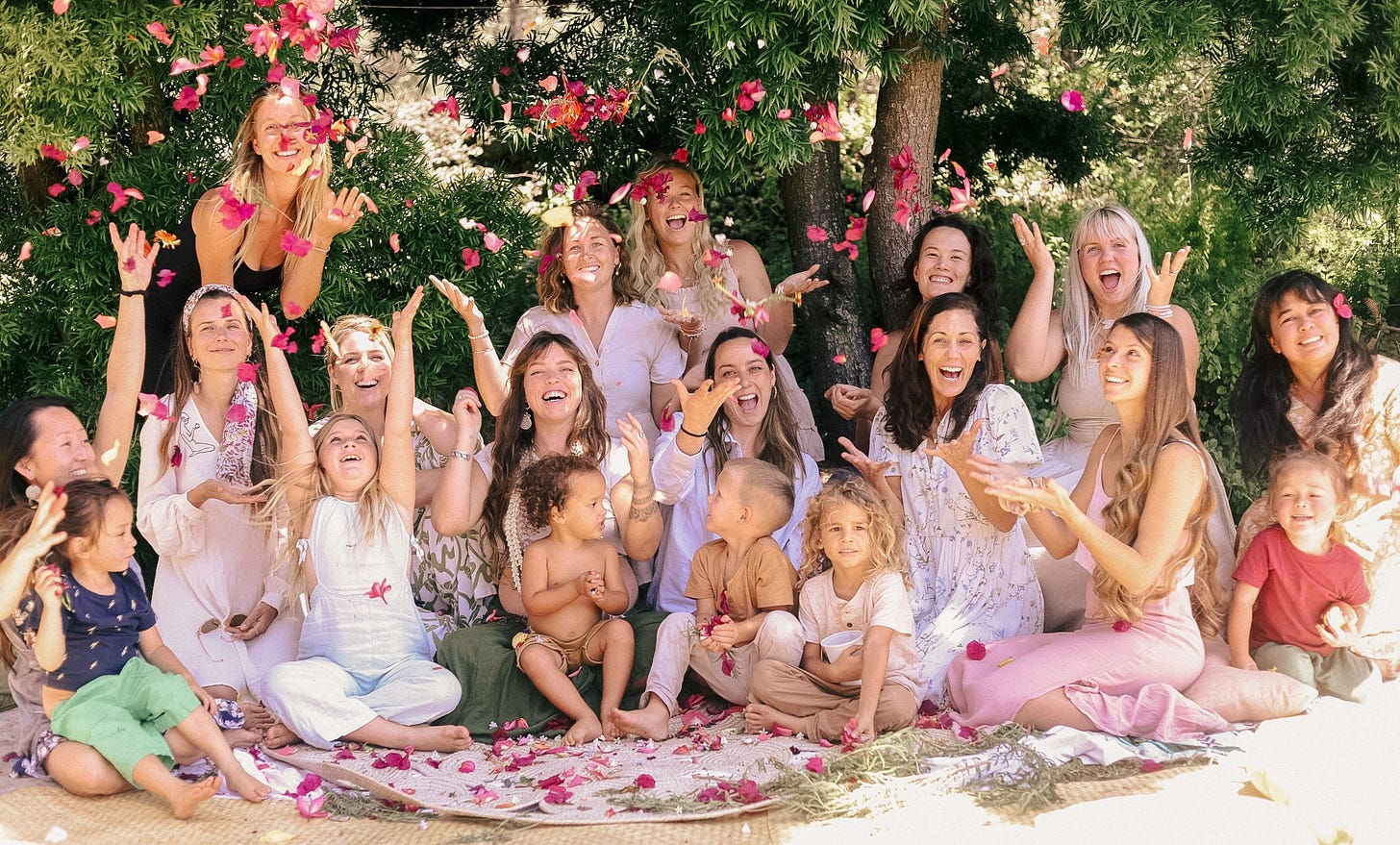
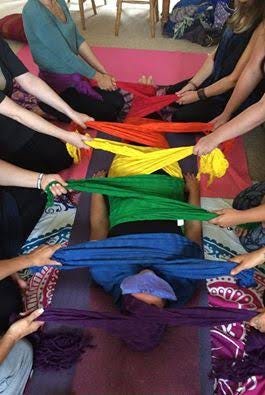
I’m convinced that hosting Mothers Blessings for expectant moms can change the world. I’m not exaggerating- recreating a norm of communal support and blessing for mothers (and not just excitement for babies) has a generational ripple effect. When the mother is cared for, supported, and enters birth and motherhood without fear and loneliness, she is more likely to have a smooth labor and a better postpartum. When the mother is filled up, she is more able to love and care for her children well, which is life changing for them and creates a better experience of motherhood. A mothers blessing is one way to bring this care and support to the forefront and build a web of female community.
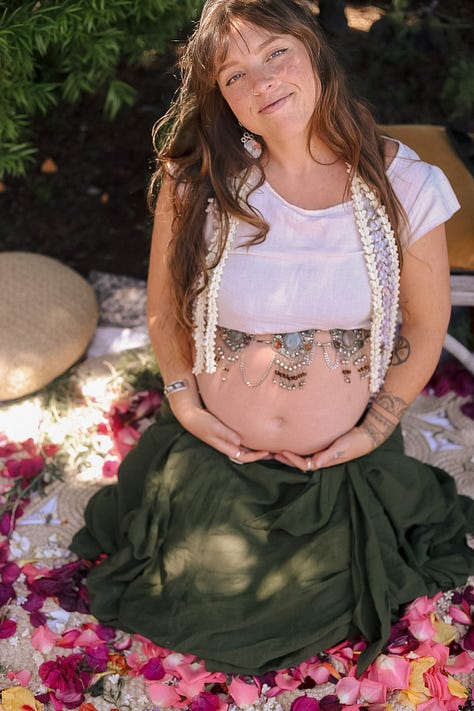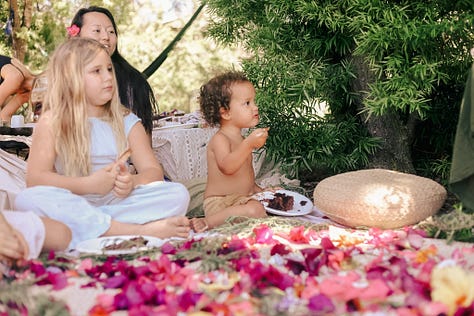
I’ve had the privilege to be a part of a good handful of mothers blessings and can honestly say they are one of my favorite things in the world! The idea is to really pamper, bless and encourage the expectant mother into this new season of life (wether it is her 1st or her 5th baby, each one brings a new season), instead of a party more focused around gifts for baby.
(You can still totally do gifts for baby, have a registry and all of that, in fat you can absolutely have a baby shower and a mothers blessing)
A mothers blessing invites the mother to receive (for once) and brings together community around her, showing her she is supported and helping her to feel less alone in what can sometimes feel scary and isolating. It also helps that community to feel a part of her journey, encouraging more commitment from them to be part of her support system. “We’re all in this together” type vibes.
It brings us back to the heart of womanhood, something that many of us feel has been lost- that we are intrinsically communal and thrive when we gather together, that we pass down wisdom through stories and words, and caring for each other as a village uplifts us all. Motherhood, birth and postpartum have long been womens work, often marked by the gathering of generations of women, support from wise elders, celebration, ceremony and deep, nourishing care for the new mom- something that is very far from many womens’ experience of pregnancy, labor, postpartum and motherhood as isolating and unknown.
**History & Culture of Mothers Blessings**
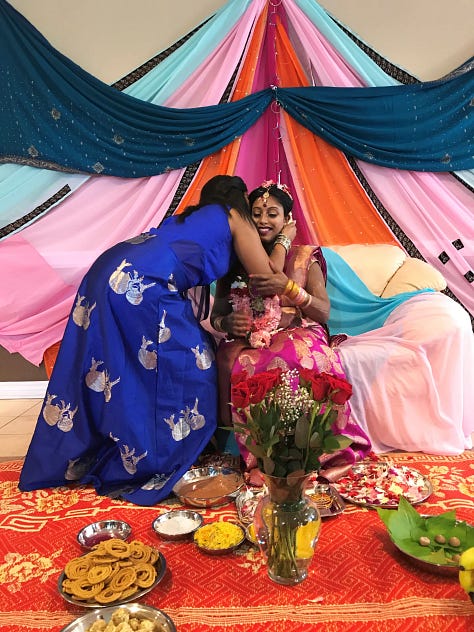
There have been version of this worldwide and in times long past and I am so convinced it needs to make a full blown comeback and be the norm for every mother, in some way.
The most commonly known and what the recent American resurgence often links back to is the Navajo “Blessingway” or Hózhó. The Blessingway is a two-night ceremony that is used for many major life transitions, like puberty, marriage, or pregnancy. It is a sacred ritual with specific chants and stories intended to restore peace, harmony and invite protection to the mother and child. However, this is very different than any modern mothers blessing practice I have heard of, and isn’t really something to emulate as this is a sacred cultural tradition.
Many indigenous cultures worldwide have practices of preparing the space for birth, cleansing and blessing it and the mother to be.
Across Medieval Europe, various versions of birth girdles were wrapped around pregnant bellies, inlaid and sewed with charms, amulets and prayers to protect the mother and child and ease labor, along with chant and prayer rituals. In ancient Egypt and Mesoamerica, protective amulets and and charms were worn also.
In India, women gather for a *vailakappu* ceremony to adorn expectant mothers with colorful glass bangles, anoint her with sandalwood and shower her with flower petals, to calm the mothers mind and stimulate baby’s senses.
In Japan, women practice *Satogaeri shussan*, returning to their ancestral home a few weeks before delivery and allowing elders and relatives to take care of her, providing her rest and emotional security.
In Egypt, southwest Asia, North America, Indonesia, Slavic cultures and I’m sure many others, sacred women’s sanctuaries where generations of women gathered to bleed, birth, and confine after labor were communal and supportive spaces with their own unique rites of passage and blessings, many of which are largely unknown and only hinted at (you know we women like to have our secrets).
There are also tons of post-birth blessings and rituals- in East Africa, new mothers are bathed in the ocean by female elders, in Java mothers are washed with flower petals and other goodies while women chant milk-supply blessings, in Ghana new babies are ceremoniously washed in protective herbal baths. Hawai’i has postpartum lomilomi massages, Mexico has the “closing of the bones” wrapping of the mother, southeast Asia keeps new mothers by a roaring fire for 7 days. In ancient Greece, the family celebrated mother and baby surviving the first 10 days postpartum, and lots of cultures had and still have strict rules about care for postpartum mothers and complete community support for the first month or so.
Many cultures practice or have practiced immeasurable sacred rites, rituals, and blessings through ought pregnancy, birth and postpartum to honor, protect and guide expectant mothers. And yet now we tend to send mom off to her gyno visits, where she is weighed, asked if she feels ok and sent off with a ‘yes thats all normal’ just to return to hospital, uninformed and unsupported, expected to birth with no loving hands, and then quickly bundled off home with not another word except to mark her ‘open for business’ again at the 6 week postpartum check up.
**The Modern Mothers Blessings**
[](https://substackcdn.com/image/fetch/$s_!T7Je!,f_auto,q_auto:good,fl_progressive:steep/https%3A%2F%2Fsubstack-post-media.s3.amazonaws.com%2Fpublic%2Fimages%2Ff700b7da-28d8-4df5-99a0-bf55b8cc9046_2560x1709.jpeg)
Modern mothers blessings seems to be something all of their own, which I love. While they draw inspiration from the idea of gathering around mothers and creating more ceremony around such a milestone, it isn’t stolen or appropriated from any particular culture. Instead it seems to stem from the natural urge to gather as women and honor one another, something long lost that we are coming back to.
As such, I don’t personally use the word “Blessingway” (although it does roll of the tongue beautifully) because that very much is a specific, sacred Navajo tradition and that is not what we are doing here.
So all that being said, a blessing can really take so many forms. The goal is that it is suited to the mother and is something that would personally bless her. It can be as simple as a gathering of close friends with a little extra intention, or it can be a longer, more deliberate ceremony created with different interactive elements to honor the mom and encourage community commitment to her and baby wellbeing.
**Planning a Mothers Blessing**
Planning a mothers blessing can actually be so simple, but there are a few elements that work together to make it a really enjoyable time for everyone involved. Again, you can take or leave whatever parts of this make sense for you or the mother in question.
Previous
##### the baby shower alternative every mama wants, Hosting a Mothers Blessing, Ebby Moyer, 01m0jjdnh6qqxzhe0w35yb7wff.