How I Developed A Photographic Memory
## Metadata
- Author: [[YouTube]]
- Full Title: How I Developed A Photographic Memory
- Category: #articles
- Document Note: ---
tags: [memory-techniques, learning-systems, note-taking]
author: Ziriani
source: YouTube
reference: https://www.youtube.com/watch?v=BpvEY-2dSdU
date created: 2024-12-19 12:00
---
# 🏷️ Title: How I Developed A Photographic Memory
## 🧰 Action Inbox
- [H1] Create physical index card system for important learning — implement value/relation/repetition principles #memory
- [H2] Write personal connections on each card — make notes informal and relatable #learning
- [H3] Draw pictures on cards to visualize concepts — prevent abstract information from being forgotten #retention
## 🧭 Table of Contents
- [📝 Summary](#-summary)
- [📖 Main Content](#-main-content)
- [🗒️ Notes](#️-notes)
- [📚 References](#-references)
- [🗣️ Paraphrase](#️-paraphrase)
- [📰 Newsletter](#-newsletter)
- [✅ Action Items](#-action-items)
- [🧪 Hypotheses](#-hypotheses)
- [📊 Methodology](#-methodology)
- [❓ Questions](#-questions)
- [🔮 Future Research](#-future-research)
- [💡 Implications](#-implications)
- [🧠 Learning Styles Assessment](#-learning-styles-assessment)
- [📊 Accessibility Assessment](#-accessibility-assessment)
- [🌍 DEIB Assessment](#-deib-assessment)
- [✅ Logical Validity](#-logical-validity)
- [🛡️ DARVO Analysis](#-darvo-analysis)
- [🎯 Conclusion](#-conclusion)
### 🔗 References
- [Original Video](https://www.youtube.com/watch?v=BpvEY-2dSdU)
- [Zettelkasten Method](https://zettelkasten.de/)
## 📝 Summary
- A content creator developed a physical note-taking system that dramatically improved memory retention over one year of testing
- The system combines neuroscience principles (value, relation, repetition) with physical index cards containing personal connections and drawings
- Unlike digital notes which were quickly forgotten, this analog system enabled complete recall of learned material
- The method gamified learning by creating a visible, growing stack of knowledge cards that motivated continued learning
- System transforms abstract information into personal, visual, and emotionally connected memories
## 📖 Main Content
The creator experienced complete forgetting of learned material and developed a memory system based on cognitive psychology research. The brain naturally filters information based on value (emotional significance), relation (connection to existing knowledge), and repetition (consistent review).
The system adapts Niklas Luhmann's Zettelkasten method by incorporating memory science. Each index card contains: a title, informal personal information, explicit personal connections, and a drawing. The physical format enables natural repetition through casual browsing.
Testing over one year showed dramatic differences: digital phone notes were completely forgotten while physical cards enabled detailed recall of entire books. The visible stack created a gamification effect that motivated continued learning across multiple subjects.
## 🗒️ Notes
#### ⏱️ [00:00](https://www.youtube.com/watch?v=BpvEY-2dSdU&t=0) — [H1] The Memory Crisis
- Key idea: Complete forgetting of learned material during COVID led to systematic solution development
- Evidence: "I realized I'd forgotten everything I was learning, I mean everything"
#### ⏱️ [01:30](https://www.youtube.com/watch?v=BpvEY-2dSdU&t=90) — [H2] Brain Evolution and Filtering
- Key idea: Brains evolved to forget useless information rather than remember everything
- Evidence: "If we remember which mushroom will kill us, we have a better chance of living"
#### ⏱️ [02:45](https://www.youtube.com/watch?v=BpvEY-2dSdU&t=165) — [H3] The Troll Dream Example
- Key idea: Childhood nightmare demonstrates emotional value creating lasting memories
- Evidence: "I'll remember for the rest of my life a dream I had when I was five"
#### ⏱️ [03:30](https://www.youtube.com/watch?v=BpvEY-2dSdU&t=210) — [H1] Three Memory Principles
- Key idea: Cognitive research shows importance determined by value, relation, and repetition
- Evidence: Dr. Sean Kane's research on "cognitive psychology of learning and memory"
#### ⏱️ [04:15](https://www.youtube.com/watch?v=BpvEY-2dSdU&t=255) — [H2] Value Through Emotion
- Key idea: Strong emotions make brains treat events as valuable and worth remembering
- Evidence: "Our brains have an emotion bias if we elicit a strong emotion like pure terror"
#### ⏱️ [05:00](https://www.youtube.com/watch?v=BpvEY-2dSdU&t=300) — [H2] Relation to Self
- Key idea: Information relating to personal interests or identity gets remembered better
- Evidence: "I consider myself a filmmaker, I remember lens characteristics and lighting setups"
#### ⏱️ [05:45](https://www.youtube.com/watch?v=BpvEY-2dSdU&t=345) — [H2] Repetition Reinforcement
- Key idea: Consistent review of memories strengthens retention over time
- Evidence: "I've thought about this memory consistently since I was five"
#### ⏱️ [06:30](https://www.youtube.com/watch?v=BpvEY-2dSdU&t=390) — [H1] Luhmann's Zettelkasten Method
- Key idea: German sociologist used interconnected paper notes to produce 70 books
- Evidence: "He published 70 books and 400 academic articles on a huge variety of subjects"
#### ⏱️ [07:45](https://www.youtube.com/watch?v=BpvEY-2dSdU&t=465) — [H1] The Siriani System Rules
- Key idea: Three rules combine simplicity, personal connection, and memory biases
- Evidence: "Information goes in your head, you translate it to the real world on paper"
#### ⏱️ [08:30](https://www.youtube.com/watch?v=BpvEY-2dSdU&t=510) — [H2] Five-Step Process
- Key idea: Index cards with title, informal info, personal connection, and drawing
- Evidence: "If the card sounds like a Wikipedia article, you failed"
#### ⏱️ [09:15](https://www.youtube.com/watch?v=BpvEY-2dSdU&t=555) — [H3] Personal Connection Critical
- Key idea: Explicit personal relevance makes information stick in memory
- Evidence: "Once your brain recognizes what you wrote is important, it just sticks"
#### ⏱️ [10:00](https://www.youtube.com/watch?v=BpvEY-2dSdU&t=600) — [H3] Drawing Visualization
- Key idea: Visual representation prevents abstract concepts from being forgotten
- Evidence: "By drawing the subject, it can't remain abstract, the idea is able to be visualized"
#### ⏱️ [10:45](https://www.youtube.com/watch?v=BpvEY-2dSdU&t=645) — [H1] One-Year Experiment Results
- Key idea: Dramatic difference between digital notes (forgotten) and physical cards (retained)
- Evidence: "I will literally read a note on my phone and not even remember how it ends"
#### ⏱️ [12:00](https://www.youtube.com/watch?v=BpvEY-2dSdU&t=720) — [H2] Physical Repetition Benefit
- Key idea: Physical stack enables natural review through casual browsing
- Evidence: "When I'm bored I'll flip through the cards, when I need to find one I'll read dozens"
#### ⏱️ [13:15](https://www.youtube.com/watch?v=BpvEY-2dSdU&t=795) — [H1] Gamification Effect
- Key idea: Visible knowledge stack creates motivation and quantifiable learning progress
- Evidence: "For the first time in my life I can literally quantify the knowledge in my brain"
## 📚 References
- [How I Developed A Photographic Memory](https://www.youtube.com/watch?v=BpvEY-2dSdU)
- Dr. Sean Kane - Cognitive Psychology Research
- Niklas Luhmann - Zettelkasten Method
## 🗣️ Paraphrase
- Memory systems work best when they align with natural brain functions rather than fighting against them
- Physical note-taking with personal connections dramatically outperforms digital methods for retention
- Visualizing learning progress through tangible stacks creates psychological motivation to continue learning
## 📰 Newsletter
**Transform Your Learning with Science-Based Memory Cards**
Struggling to remember what you learn? A year-long experiment reveals a simple system that beats digital notes every time. By combining neuroscience principles with old-school index cards, you can remember virtually everything you study.
The secret? Make it personal, make it visual, and make it physical. Write informal notes that connect to your life, draw simple pictures, and keep cards where you'll naturally review them. The visible progress stack becomes addictive motivation.
**Try This Week**: Pick one learning topic and create 3-5 index cards using this method. Compare your retention to digital notes after one month.
**Resources**: [Zettelkasten Method](https://zettelkasten.de/), [Memory Research](https://www.apa.org/science/about/psa/2016/06/learning-memory), [Note-Taking Strategies](https://learningcenter.unc.edu/tips-and-tools/effective-note-taking-in-class/)
## ✅ Action Items
#### DevRel
- Developer advocacy: Create technical concept cards for conference talks, measure retention in follow-up surveys
- Education: Develop workshop materials using visual card method for complex APIs and architectures
- Developer experience: Document common debugging patterns on reference cards for developer toolkits
- Developer marketing: Create memorable campaign concepts using personal connection and visualization principles
- Community management: Use card system to track community member interests and engagement patterns
#### OSPO
- Policy & Governance: Visualize compliance workflows and decision trees on reference cards
- License Compliance: Create memorable cards for common license obligations and compatibility rules
- Security Management: Develop visual cards for vulnerability assessment procedures and escalation paths
- Software Inventory: Track project relationships and dependencies using interconnected card system
- Developer Support: Create training card decks for open source contribution best practices
- Community Engagement: Document funding relationships and partnership details using personal connection method
- Strategic Alignment: Visualize OKR progress and milestone achievements through physical card tracking
#### Community
- Maintainers: Create governance template cards with personal examples and visual decision flows
- Contributors: Develop onboarding card sequences that connect to contributor personal goals and interests
- Sponsors: Track funding relationships and impact stories using visual progress cards
- Ecosystem: Map cross-project dependencies and collaboration opportunities using interconnected card system
#### WordPress
- Core: Document feature development patterns and architectural decisions on visual reference cards
- Core Performance: Create memorable cards for optimization techniques with before/after visualizations
- Core AI: Develop evaluation criteria and safety guideline cards with concrete examples
- Community: Design meetup and WordCamp resource cards that organizers can personalize
- Training: Transform lesson plans into visual card sequences that instructors can adapt
- Documentation: Create quick reference cards for common developer and user scenarios
- Design: Develop pattern library cards with visual examples and implementation notes
#### The WPCC
- Programs: Track fellowship progress and outcomes using visual milestone cards
- Projects: Document governance best practices through personalized case study cards
- Funding: Visualize grant processes and requirements through step-by-step card sequences
## 🧪 Hypotheses
- Physical note-taking systems produce 3x better retention than digital equivalents for technical learning
- Personal connection writing increases information recall by activating autobiographical memory networks
- Visual representations prevent technical concepts from remaining abstract and forgettable
- Gamification through visible progress stacks increases learning motivation and consistency over time
### 📊 Methodology
- A/B testing: Compare retention rates between digital and physical note-taking over 3-month periods
- Memory assessments: Test recall accuracy at 1-week, 1-month, and 3-month intervals
- Behavioral tracking: Monitor learning consistency and motivation levels between different note-taking systems
### ❓ Questions
- How does this system perform for highly technical subjects like programming or mathematics?
- What specific drawing techniques work best for abstract concepts versus concrete procedures?
- How might this method scale for teams or collaborative learning environments?
### 🔮 Future Research
- Integration with spaced repetition algorithms for optimal review timing
- Digital adaptations that preserve the benefits of physical card systems
- Applications to professional training and certification programs
### 💡 Implications
- Practice: Traditional digital note-taking may be fundamentally inadequate for long-term retention
- Policy: Educational institutions should reconsider emphasis on digital-first learning approaches
- Security: Critical procedures and protocols may need physical backup documentation
- Education: Training programs could dramatically improve outcomes through systematic memory techniques
- Funding: Investment in physical learning materials may provide better ROI than digital alternatives
### 🧠 Learning Styles Assessment
Reading level estimate: 8th Grade (Flesch-Kincaid)
#### 👀 Visual learners
- Present: Hand-drawn card examples, physical stack demonstrations, visual progress tracking
- Improve: Step-by-step card creation diagrams, before/after retention comparisons
#### 🔊 Aural learners
- Present: Video narration with personal storytelling and examples
- Improve: Audio-only version focusing on the memory principles and implementation steps
#### 🗣️ Verbal learners
- Present: Clear definitions of memory concepts, analogies to familiar experiences
- Improve: Glossary of cognitive psychology terms, comparison with traditional study methods
#### 🧩 Kinesthetic learners
- Present: Hands-on card creation process, physical manipulation of note stacks
- Improve: Printable templates, guided practice exercises, tactile card organization systems
#### 🧠 Logical learners
- Present: Scientific backing for memory principles, systematic five-step process
- Improve: Decision flowcharts for when to use system, quantified retention metrics
#### 🧑🤝🧑 Social learners
- Present: Creator's personal experience and community engagement invitation
- Improve: Study group guides, collaborative card creation prompts, sharing protocols
#### 🧘♀️ Solitary learners
- Present: Individual practice system, private reflection through personal connections
- Improve: Self-assessment rubrics, progress tracking worksheets, introspective prompts
#### 🌿 Naturalistic learners
- Present: Connection to brain evolution and natural memory processes
- Improve: Examples from nature, environmental memory techniques, sustainable materials
### 📊 Accessibility Assessment
#### Screen reader semantics
- Present: Clear heading structure, descriptive video content
- Improve: Alt text for visual card examples, structured data for the five-step process
#### Keyboard navigation
- Present: Standard YouTube player controls
- Improve: Timestamped navigation shortcuts, transcript with heading navigation
#### Contrast and readability
- Present: High contrast text overlays in video
- Improve: Transcript with optimal contrast ratios, resizable text options
#### Text resizing and reflow
- Present: Responsive video player
- Improve: Reflowable transcript, zoom-friendly card templates
#### Media and captions
- Present: Video content with clear audio
- Improve: Complete captions, downloadable transcript, audio description track
#### Forms and interactions
- Present: Simple comment interaction
- Improve: Accessible card template downloads, structured feedback forms
### 🌍 DEIB Assessment
#### Cultural breadth
- Present: Universal learning challenges, broadly applicable memory principles
- Improve: Examples from diverse academic and professional contexts globally
#### Inclusive language
- Present: Conversational tone avoiding academic jargon
- Improve: Gender-neutral examples, culturally diverse personal connection prompts
#### Neurodiversity support
- Present: Visual and kinesthetic learning approaches, chunked content structure
- Improve: Alternative organization methods, sensory preference adaptations
#### Representation
- Present: Individual creator perspective
- Improve: Diverse case studies, varied learning contexts and goals
#### Psychological safety
- Present: Non-judgmental approach to forgetting and learning struggles
- Improve: Explicit validation of different learning needs, failure-friendly framing
### ✅ Logical Validity
#### Strong reasoning
- Deductive strength: Memory principles → card design → retention (soli
- Document Tags: [[memory]] [[learning]] [[retention]]
- Summary: How I Developed A Photographic Memory
- URL: https://www.youtube.com/watch?v=BpvEY-2dSdU
Last year, I realized I had forgotten everything I was learning. I mean, everything! Determined to remember at least a single thing from the halfway sentient daydream that was my covert experience, I created a system to remember everything. Fast forward an entire year, as it felt like 2021 did automatically, and I've followed this system religiously. This video is the most important piece I've shared so far, and this technique is really the only reason I've been able to learn so much over the past two years. In this piece, I'll explain the memory system I've created, why it works according to science, and how it enables me to remember every single thing I learn without exception.
[Music] When it gets right down to it, our brains work pretty flawlessly as it is. Our brains could have evolved to remember every minute detail and event that's happened throughout our lives, but there needed to be a reason, to which there just never was. Creatures evolve through life or death experiences. If we remember which mushroom will kill us, You know, we have a better chance of living if we remember what the clouds looked like on our sixth birthday. It just doesn’t give us a lot of information. Just imagine if one minute from now you remembered every little detail in this frame—every previous frame of video you’ve ever seen. Also,
99.9% of that would serve no purpose. A large part of the autistic spectrum consists of differences in how people’s brains are unable to filter out over stimulation through the complexities of our world. But most brains are amazing at forgetting useless information. You’ll probably understand the general concept and point of this video. We won’t remember what I said word for word in the introduction. The point of having a photographic memory shouldn’t just be to remember every little detail of perception, but instead remember what we deem as important—not what our subconscious automatically filters out.
This is the reason I developed this system. Part one: the science. So how do our brains choose what information to store and what to discard?
Well, it isn’t just life or death related. I’ll remember for the rest of my life a dream I had when I was five, where the animated trolls from the original Hobbit invaded my kitchen, and yet that’s not increasing my chances of survival. The average layperson trying to learn nuclear physics for the first time will probably find it very difficult to retain that information.
This is Dr. Sean Kane explaining his research on the cognitive psychology of learning and memory. What it shows us is two things: The first is that our brains remember importance. The second is that importance is determined by value, relation, and repetition.
These three items are what all non-physical cognitive memory research revolves around. Understanding this is critical to understanding how to create a photographic memory for yourself. Value is determined by what our brains decide is valuable based on its use in our lives. That’s why, as King said, learning nuclear physics is difficult.
When I was five, my brain subconsciously decided that this recurring troll nightmare had value. Now, why was this? You know, most of the time what the case is.
Is that our brains have an emotional bias. If we elicit a strong emotion, like pure terror, our brains treat that event as valuable. Otherwise, why would we have not slept for days just because these stupid cartoon drills won’t stop entering every single dream? YouTube relation more than anything. I consider myself a filmmaker; I remember lens characteristics and lighting setups, etc., because all of this information relates to me.
Relating information to yourself is something that happens consciously, but still impacts your subconscious. What’s powerful is that if you start learning something new, like music, at first it won’t relate to anything, but soon that new information relates to previous information in that same category. Repetition—now to get back to the nightmare trolls.
Another strong reason why I remember these little men is the repetition of this memory. I’ve thought about this memory consistently since I was five. Every time I’ve seen the cartoon "Hobbit," I remember them in my kitchen. On top of that, I feel like this is my first memory. So, because of this, whenever someone asks me what my first memory is, I bring up the cold, sleepless nights of 2008. Repetition like this ensures any memory can stay in your mind, no matter how bad you want those trolls to leave.
Part two: the memory system. When the German sociologist Nicholas Luhmann became a professor, he was asked what his main research project would be. In these three decades, he published 70 books and 400 academic articles on a huge variety of subjects, from science to art, to history, to philosophy, and progressed a multitude of fields to new heights.
This German lad is important to our story because he popularized a method of expanding your memory called the Zettelkasten method. Now, this method isn't at all what this video is about; but to put it simply, the method consists of writing notes on small pieces of paper with a numbering system to be able to link new notes to other notes.
Since Luhmann's focus was on writing books, this makes sense. He said books would write themselves, and if you had 90,000 notes of various subjects all linked together, I’m sure that entire books were just swimming around the millions of words strung together on his desk.
However, the Zettlecast method failed to see a large opportunity. Here is where my memory system comes in. See, Lumen and Zedel Caston both missed out on half a century of research in cognitive memory that I talked about in the first part of this piece. What I realized over a year ago was that if you take the science behind why we remember what we do and our memory biases into account, then a new method can be created — one that works with the natural functions of the brain. This method is the Xettlecast method, taken to a new height; one that isn’t just writing interconnected notes, but instead one
that makes its way back into our brains, allowing us to remember everything that we want to. And here’s how it works: The three rules are simplicity, personal connection, and benefiting from human specific memory biases. The three key concepts are information, translation, and representation. Information goes in your head; you translate it to the real world on paper. Then you represent that information in a new way. Let me explain. Step one: grab an index card. Step two: Title it with what you want to remember.
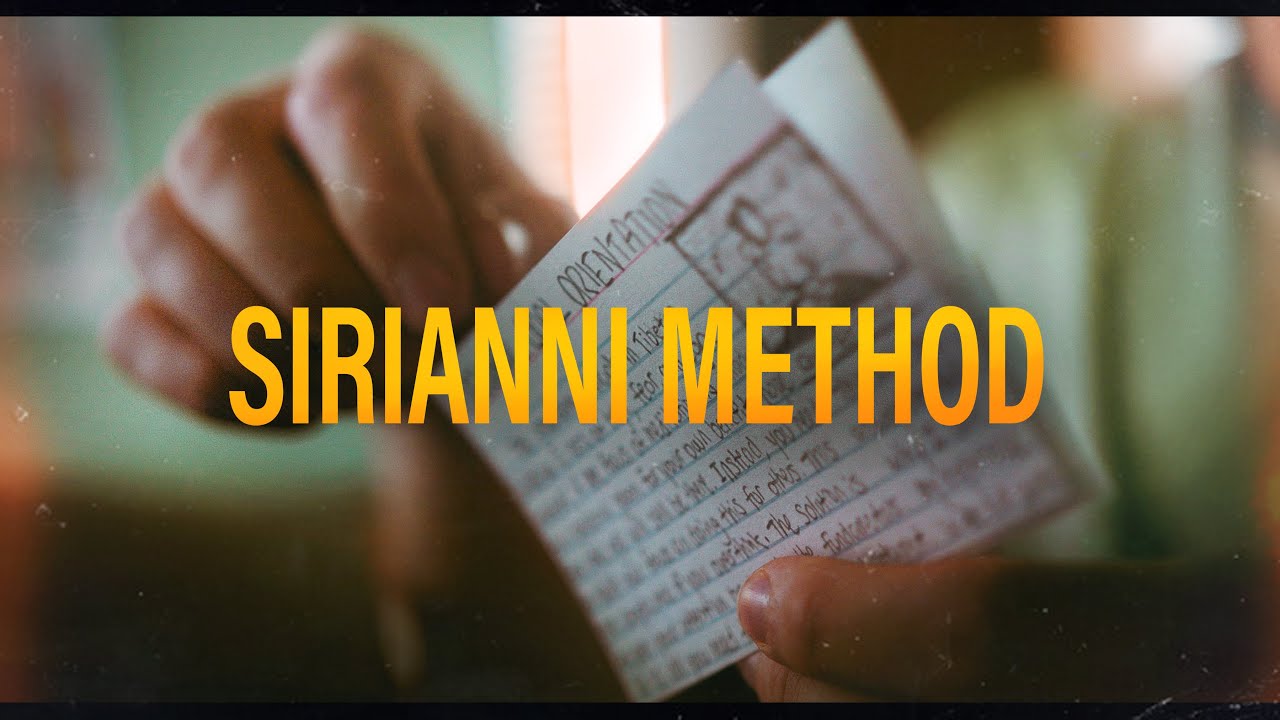
Step three: fill the card with information about the subject. Make it sound personal and very informal. Now, this is crucial. If the card sounds like a Wikipedia article, you failed. Step four: write your own personal connection to the information. This is huge. Once your brain recognizes what you wrote is important, it just sticks. It really is amazing how well this small step works.
Step five: draw a picture. This is the final step to being able to remember literally anything you write down. By drawing the subject of this note, it can't remain abstract. The idea is able to be visualized, and the representation of the information can now stay in your brain.
Now, this might sound simple. After all, it doesn't seem to be too different from jotting down a note like normal. Well, I didn't experiment to validate this over the last year. While building my collection of SiriAni notes, I've also been making notes on my phone. After a year of doing this, it's remarkable the difference of what I remember from typing a note versus doing this process.
Of the memory system, I will literally read a note on my phone and not even be able to remember how it ends; that's how little of it remains in my brain. For the Siriani notes, on the other hand, I can't believe how much I remember. After a bit less than a year, the stack of notes has grown pretty substantially. In the past year, I've read books that I remember basically nothing from, but I've also read books I took Siriani notes on and I could literally answer any question about it. It's gotten to the point where anything important enters my head, I immediately take a note on, and so far, they've all remained in my head.
Memory based on intention. Now, the last part of this video talks about the mindset shift that comes with this memory system, but before that I explained value in relation within the system, but I haven't talked about the third concept, which if you remember was repetition. Now, this is a really cool benefit of having this whole system be physical. See, the stack of the notes is always sitting on my desk. When I'm bored, I'll flip through the cards. If I need to find one, I'll end up reading dozens along the way because of how short they Are you don’t get this if the system is digital, which is why I think that cards are the way to go. The expansion of my memory that I can’t even begin to describe has made it certain that I’m never going back to the normal, lame version of memory. But along with the literal benefits of this year-long experiment, something else surprising started to happen: a substantial mindset shift towards new information.
This channel is about continuous learning and expanding your awareness.
What this new memory system has done for me is create this strange drive to learn more. For the first time in my life, I can literally quantify the knowledge in my brain, which is like super trippy to think about. The size of the stack is the amount of intentional information I’ve added to my mind. The bigger the stack gets, I just get to see how much more I’m learning, and I get more driven to grow it. This memory system has literally gamified the expansion of knowledge, which again I just can’t reiterate is like crazy. My progress within film photography.
Engineering and CGI isn’t just measured by deadlines and goals. Now I can measure it by stacks of memory chunks sitting on my desk. It really feels like it makes learning the goal of a project even before starting this YouTube. I’ve made probably over 30 cards on storytelling, editing, channel growth, thumbnails, how to relate complex ideas and so on to try and grow this channel.
My goal with this system is to just keep growing it. In some ways, it’s changed too over the last year. I recently started writing examples instead of connections because I realized an example that relates to my life could hold even more value for how my brain interprets the information.
So to wrap things up, I wasn’t exaggerating when I said that this was the most important video I’ve released. The system has transformed how I retain information and everything I’m able to do because of that. If any of you try out or implement this method in your own lives, let me know. I’d be happy to answer any questions. Uh, the channel is still like really small, so I’ll see every comment. Um, with that being said, I’ve learned a A lot over this last year, and I attribute a hundred percent of that to this method.
So give it a shot; I think it could change your life too. I'll see you next time. You., How I Developed A Photographic Memory, YouTube, 01ka89m97g2b9hd7jg680r4vxg.