How Latter Rain Divided Pentecostal Churches
🔗 **Source:** [How Latter Rain Divided Pentecostal Churches](https://www.youtube.com/watch?v=_bFr49FijmU)
This influx of all of these latter rain affected people started coming down into the United States and Canada from Canada. >> [clears throat] >> Spread throughout the United States, they're attending Assemblies of God churches, Pentecostal United Pentecostal churches, all of these different flavors of Pentecostalism and they're cross-pollinating. And the end result was this, the doctrine became so destructive from the cross-pollination that the Assemblies of God themselves
could no longer put up with it. They were watching ministers without any qualifications, with many of which did not even have doctrinal training or even understand doctrine of the Bible who could become a minister or a leader or an evangelist simply by having hands laid upon their shoulders and praying for them. And the way it worked in latter rain, if this happened, if you were prayed for, well, God was going to speak through your mouth and we're going to get a new revelation. And it doesn't matter if you
don't know the old revelation of the Bible, the new one, the spoken word, the rhema. This is a new thing and it's more powerful than the Bible anyway. Well, the Assemblies of God just said, "No, we're not going to do this. You guys are destructive and in the 23rd General Council that was held in Seattle, Washington from September 9th through 14th, 1949, the Assemblies of God just fully rejected latter rain. And they said that
we as the Assemblies of God will not put up with the {quote} "new order of latter rain" and we recognize that yes, there's a hunger for this kind of thing, but we disapprove of these extreme teachings and practices, which being unfounded scripturally serve only to break fellowship of like precious faith and to send confusion and division among members of the body of Christ. And that's verbatim. I'm reading this
resolution that was passed. So, Branhamism came in, started cross-pollinating, other ministers started cross-pollinating. This mess was happening in this particular apostolic network. Broadness to today, now the New Apostolic Reformation, it's built upon all of these similar apostolic networks. The Assemblies of God just being one of them, and I've talked to Assemblies of God ministers or uh not ministers, but people who are
affiliated with the Assemblies of God, and they say, "We reject the New Apostolic Reformation. We don't even like it." And I'm scratching my head thinking, "Do you not know you're in a network?" But that's how this works. It's so insidious because they're all kind of connected, and they don't even know it themselves. Because, number one, they're erasing their history. Number two, they're not transparent if they know their history. And number three, it's just all connected, and there's no gatekeeper that keeps the evil out.
There's not There's nothing that says, "We're not going to let you come preach in our church because you might preach that heresy from the New Apostolic Reformation." Well, [snorts] back in this day, we're not going to stop William Branham from coming because that's not how we work. That's not how we operate. He's in our revival circuit. And so, they did until it became a problem. But unfortunately, the problem was too late. Once this resolution was passed, this caused such a split in the
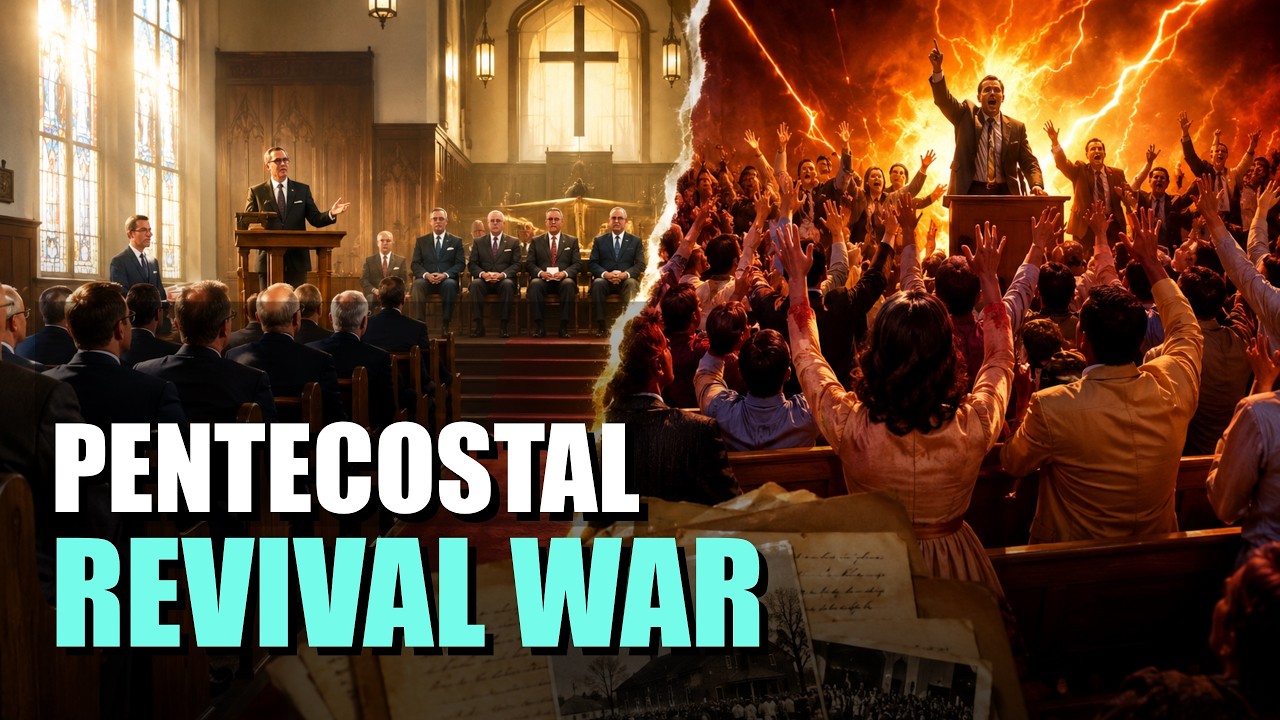
Assemblies of God that it's very surprising that the Assemblies of God actually survived the aftermath of this. It drove a wedge right down through the middle of the Assemblies of God. And what happened was there were other Pentecostal organizations that had merged into the Assemblies of God to form the Assemblies of God. One of them, one of the largest, was the Independent Assemblies of God. And they just decided, "We're going to break away because we want to side with
Branham and the Latter Rain side of the split." So, you had on the Assembly side, those who rejected Latter Rain, who said, "This nonsense that's being taught is destructive and it's causing divisions in the church." Then you had the other side that said, "We want the divisions in the church." Literally, they wanted the divisions and they created it. So, they broke away and the Independent Assemblies of God was formed. It was formed by A.W. Rasmussen, who was
one of William Branham's, I think Branham called him his bosom friend. And working with closely with Rasmussen was Joseph Mattson Boze. They were not the only leaders, but they were significant leaders in the Independent Assemblies of God. This was the organization, if you have studied the history in our Revival History series, this is the organization and the men who would later ordain Jim Jones into the faith and launch Jim
Jones and his ministry. So, you had that wide of a split. You had people saying, "If you do this, it's dangerous and you'll cause a division." And you had the other side that said, "We want the division and we're going to invite the danger. We're We're going to invite Jim Jones into our fold and make him a leader in the sect." That's That's how bad this was. So, the split happened and >> [clears throat] >> then beyond that, it got a little bit dirty. The water was muddy. I'll say it
like that. You had all of these different Assemblies of God churches, many of whom had been recognized for years as an Assemblies of God church, and then suddenly decided to flip to the Independent Assemblies, but not all of them changed the name of their church on the door. >> [laughter] >> So, you had people who were attending who thought they were attending a Assemblies of God church, but instead they were attending the Independent Assemblies of God. You had
others who did change the name and they denounced it. But, the the water was so dirty that people did not recognize whether or not they were part of the split and some of them I think just were not even fully aware that the split happened. So, the end result of this, because of all of these Apostolic networks, you had all of these different churches who were cross-pollinating. You had these ministers in the revival circuits going around from church to church to church.
And some of these ministers might go to an Independent Assemblies of God church not preaching the latter rain doctrine so that they could stay sanctioned, but they're preaching to an IAOG church to later go to an AOG church and the doctrines were still cross-pollinating. And so, some of the people in the churches didn't really understand the difference. And I've actually talked to people who were in those churches and they said, "We had no idea we were Independent
Assemblies of God. We thought we were AOG." Then, on the other hand, you had AOG churches who were fully adopting the latter rain doctrine and Branhamism. And you have to ask the question, were they really an Assemblies of God church or were they simply a church that didn't rebrand their organization after the split? I've come to the conclusion that there were certainly Assemblies of God churches that stayed with Branhamism
even after the resolution was passed. And I know this because Indiana in the Assemblies of God became a rogue state. And they just they fully accepted Branham because there were ranking members of the Assemblies of God who were Branhamites and they said we're we're going to side with Branham but we're still an Assemblies of God church. >> [laughter] >> And so there's this weird fight that was happening. Spearheading the fight for Branham against the Assemblies was the
Assemblies of God first district superintendent Roy H. Weed. So he was [clears throat] part of the Assemblies of God in Indiana but as a rogue state Roy Weed said we want Branhamism. We want the latter rain version of you know Branham's message and we still want to be Assemblies of God. Now he had such clout in Indiana. He was one of the most popular pastors in the state that he was able to pull this off and he even wrote articles that
was defending Branham in many of in some of the Branham publications. Interestingly his son Doug Weed was an advisor for American presidents and was a special assistant to George H.W. Bush. So this was a person who had both political clout who had you know as as one of the most popular Assemblies of God pastors in the state of Indiana he had some pull and he was able to successfully to some extent defend
Branham before the Assemblies and what happened was he and others like him were able to push back and let Branham continue attending services teaching his his Branham specific flavor of Christian identity of politics of all of this weird weird mixture that Branham had in Assemblies of God churches for many years until they finally just sanctioned Branham altogether and said you're you can't come back
but he was Roy Weed was one of the people who was able to push this back. >> Mhm., How Latter Rain Divided Pentecostal Churches, YouTube, 01kt2kzrj4thbm5k7qyjwkxkww.