How Prophetic Movements Validate Their Own Prophets
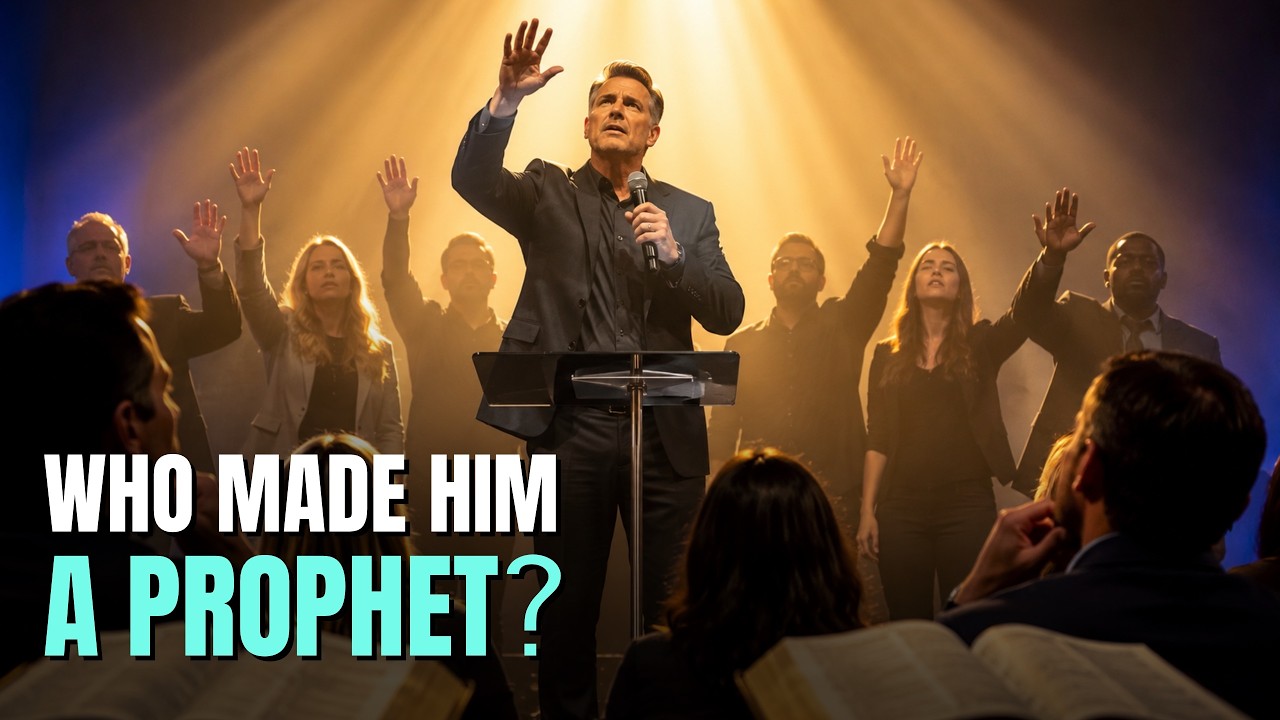
🔗 **Source:** [How Prophetic Movements Validate Their Own Prophets](https://www.youtube.com/watch?v=HsdI8ktTRAI)
> [!note]+ Document Notes
> ---
> tags: [false-prophecy, spiritual-abuse, latter-rain-movement, new-apostolic-reformation, cult-dynamics, confirmation-bias]
> author: [MISSING]
> source: [MISSING]
> reference: https://www.youtube.com/watch?v=HsdI8ktTRAI
> date created: 2026-07-20 10:30
> ---
> # 🏷️ Title: How Prophetic Movements Validate Their Own Prophets
> ## 🧭 Table of Contents
> - [📝 Summary](#-summary)
> - [📖 Main Content](#-main-content)
> - [🗒️ Notes](#️-notes)
> - [📚 References](#-references)
> - [🗣️ Paraphrase](#️-paraphrase)
> - [📰 Newsletter](#-newsletter)
> - [✅ Action Items](#-action-items)
> - [🧪 Hypotheses](#-hypotheses)
> - [📊 Methodology](#-methodology)
> - [❓ Questions](#-questions)
> - [🔮 Future Research](#-future-research)
> - [💡 Implications](#-implications)
> - [🧠 Learning Styles Assessment](#-learning-styles-assessment)
> - [📊 Accessibility Assessment](#-accessibility-assessment)
> - [🌍 DEIB Assessment](#-deib-assessment)
> - [✅ Logical Validity](#-logical-validity)
> - [🛡️ DARVO Analysis](#-darvo-analysis)
> - [🎯 Conclusion](#-conclusion)
> ## 📝 Summary
> - The speaker describes a repeatable social mechanism inside charismatic/prophetic movements (Latter Rain, Branhamism, New Apostolic Reformation-adjacent circles): a lead figure delivers a prophecy, then several planted or self-selected "supporters" independently offer vague, symbolic prophecies or dreams that loosely echo it, manufacturing the appearance of independent spiritual confirmation.
> - It matters because this mechanism explains how minor, now-forgotten figures (Myrtle Beall, Anna Schrader, George Warnock/"Waro") became load-bearing credibility props for major movement leaders — including ones later tied to catastrophic outcomes (Jim Jones/Jonestown, Hobart Freeman's faith-healing deaths, William Branham's racist "serpent seed" doctrine).
> - Key stakeholders: the "major prophet" whose authority is being built, the minor/supporting prophets (some sincere, some allegedly complicit), and the congregants who reinterpret ambiguous signals as confirmation and reorganize their lives around it.
> - Risk/tradeoff the speaker names directly: it may not matter whether a supporting prophet truly believed their own vision or fabricated it to protect the movement — the audience-level effect (manufactured legitimacy) is identical either way.
> - Bottom line: corroboration inside these movements is frequently structural (a social process with predictable roles) rather than evidentiary (independent confirmation of a real, prior event), and tracing the minor names is what exposes the pattern.
> ## 📖 Main Content
> The core claim is that "self-proclaimed prophet" is the wrong frame for how authority actually gets built in these movements. A single person claiming prophetic status rarely converts a skeptical room. What converts the room, per the speaker, is a *second wave*: other attendees — sometimes planted, sometimes genuine believers who want to be helpful — stand up and offer prophecies or dreams that are deliberately vague and symbolic enough to be read as matching the first prophecy without needing real specificity. The vagueness is a feature: it gives listeners something to actively interpret and "discover" a fit in, which produces far stronger buy-in than being told directly what to believe (this maps to the psychological concept of the Barnum/Forer effect, though the speaker doesn't name it explicitly).
> The speaker distinguishes two categories of supporting prophet, and argues the distinction doesn't matter for outcomes:
> 1. **Sincere but uncalibrated** — people who had a real subjective experience (a dream, a vision, a felt prompting) and genuinely believe it was divine, but have no method for testing that belief against reality.
> 2. **Deliberately fabricated** — people who reportedly said things they knew weren't true, specifically to reinforce the movement's chosen narrative.
> Three historical cases anchor the argument:
> - **George Warnock** ("Waro" in the transcript — likely a mishearing/misspelling; unverified from this transcript alone) and the Manifested Sons of God movement, whose ideas the speaker says were substantially derived from William Branham and "Branhamism" without that lineage being widely recognized.
> - **Myrtle Beall**, a named prophetic voice in the Latter Rain movement, alleged to have laid hands on Jim Jones and pronounced a prophetic "anointing" over him as he moved toward founding what became Jonestown — invoked as a case where a supporting prophecy preceded a genuinely catastrophic outcome (mass death).
> - **Anna Schrader**, connected to Gordon Lindsay and the Voice of Healing movement, alleged to have prophesied that Hobart Freeman was newly anointed immediately after William Branham's death, positioning Freeman as Branham's successor. Freeman's later faith-healing teaching is linked to follower deaths from refusal of medical care. Schrader is also alleged to have prophesied Branham's own death, timed to when much of the movement was already turning against him over his "serpent seed" doctrine (a racist, antisemitic teaching).
> The speaker's epistemic move is to ask, for each supporting prophecy/dream: (1) did the *original* prophecy it supported come true — if not, a "supporting" dream about it can't itself be from God by the movement's own logic; and (2) separately, did the person actually have the experience they claimed, or did they fabricate it to protect group cohesion or save face once a leader (like Branham) became a liability. The speaker's stated conclusion is that both categories of supporting prophet coexist historically, and — critically — that this distinction is not load-bearing for explaining the outcome, because audiences responded identically to sincere and fabricated corroboration alike.
> ## 🗒️ Notes
> - Central mechanism: primary prophecy → deliberately vague "echo" prophecies from others → audience actively resolves the ambiguity into perceived confirmation → a subset converts fully ("abandon everything and join").
> - The vagueness of corroborating prophecies is presented as functional, not incidental — specific claims would be falsifiable; vague ones survive scrutiny because listeners do the interpretive labor themselves.
> - Speaker treats "was this dream/prophecy from God" as testable in only one direction: if the original prophecy failed, a dream supporting it cannot have been divinely sourced, even if the dreamer is sincere. This is an internal-consistency test, not an external one.
> - Minor/forgotten names are framed as the actual evidentiary trail: George Warnock, Myrtle Beall, Anna Schrader. The speaker's broader claim is that these names are "long forgotten" until researchers dig into movements like Manifested Sons of God, Latter Rain, and the Voice of Healing network.
> - Myrtle Beall → Jim Jones lineage is presented as a direct causal thread from a Latter Rain "anointing" prophecy to Jonestown, though the transcript doesn't detail the mechanism connecting the anointing to the mass deaths beyond the prophetic endorsement itself.
> - Anna Schrader is presented as functionally identical to Myrtle Beall but for Hobart Freeman: both are described as the person who "anointed" a successor figure at a moment of leadership vacuum (Branham's death for Freeman; implicitly, the movement's need for a new figurehead).
> - Schrader is also credited with a prophecy of Branham's death, notably timed after "serpent seed" backlash — raising the alternative reading that this was reputational triage (removing a compromised leader) rather than genuine foreknowledge.
> - The serpent-seed doctrine (a racist/antisemitic teaching attributed to Branham) is named as the specific trigger that caused "many of the minor prophets and some of the major prophets" to turn against him.
> - Speaker's closing question, left open: why were so few of Anna Schrader's prophecies preserved, if she was functioning as a recognized prophetic voice in an "Old Testament style" movement that claims direct divine transmission to the church? Framed as suspicious, not explained.
> ## 📚 References
> - William Branham and the Latter Rain movement (named repeatedly; no link provided — verify independently)
> - Manifested Sons of God movement / George Warnock (name uncertain per transcript audio — verify spelling independently)
> - Myrtle Beall, Latter Rain prophetic figure
> - Jim Jones / Jonestown
> - Hobart Freeman, Voice of Healing-adjacent faith-healing movement
> - Anna Schrader, associated with Gordon Lindsay and Christ for the Nations
> - New Apostolic Reformation (referenced as a comparison point, not a main subject)
> *No external links included — none were provided in source content, and URLs were not independently verified.*
> ## 🗣️ Paraphrase
> Prophetic authority in these movements isn't usually claimed once and accepted — it's built through a small chorus. The leader speaks first; then several others come forward with prophecies or dreams pitched at just enough symbolic altitude that they can be read as matching, without ever committing to specifics. Most of the room won't be moved, but a meaningful minority will start wondering "maybe he really is a prophet," go home, reread scripture through that lens, and eventually convert fully.
> The people supplying that second wave of "confirmation" split into two groups: those who had a real subjective experience and sincerely (if uncritically) believe it came from God, and those who reportedly said things they knew were false to protect the group's chosen story. The speaker argues that from the audience's side, it doesn't matter which group any individual belongs to — belief and fabrication produce the same social result. That argument is illustrated through three now-obscure names — Warnock, Beall, and Schrader — whose "supporting" prophetic acts are tied to genuinely severe downstream harms: Jonestown, Freeman's faith-healing deaths, and the racist doctrine that eventually got Branham renounced by his own movement.
> ## 📰 Newsletter
> Ever wonder how a single person's claim to be a prophet turns into a room full of true believers? This deep dive traces the social choreography behind it — a lead prophecy followed by a wave of deliberately vague "supporting" prophecies from other attendees, real or planted, that let listeners talk themselves into belief. The receipts are wild: a Latter Rain prophetess allegedly laying hands on a young Jim Jones years before Jonestown, and another prophetic voice allegedly anointing Hobart Freeman the moment William Branham died — then later prophesying Branham's own death once his racist "serpent seed" teaching became a liability. Worth a watch if you're into the history of high-control religious movements, the psychology of manufactured consensus, or just want language for a pattern you've felt but couldn't name.
> ## ✅ Action Items
> This source is religious-history/spiritual-abuse commentary, not a technical or product artifact — most of the standard DevRel/OSPO/WordPress/WPCC/FAIR subteams below don't apply, so only the relevant ones are filled in.
> #### Community
> - Content warning practice: any community discussing high-control religious groups or cult recovery should default to opt-in content warnings before naming specific groups, leaders, or death counts (Jonestown, Freeman-linked deaths) — this transcript itself would need one.
> - Moderation note: distinguish "critiquing a doctrine/leader" from "attacking former adherents" in any discussion thread that spins out of this content — cult-recovery communities are sensitive to re-traumatization.
> ## 🧪 Hypotheses
> - H1: Vague, symbolic "supporting" prophecies increase conversion rates more than specific, falsifiable ones, because ambiguity offloads the confirmation work onto the listener.
> - H2: The rate of movement leadership transitions accompanied by a "prophetic anointing" narrative correlates with leadership vacuums (death, scandal, doctrinal backlash) rather than with any independent evidentiary trigger.
> - H3: Sincere-but-uncalibrated supporting prophets and deliberately fabricated ones are statistically indistinguishable from the audience's perspective, measured by conversion/retention outcomes.
> - H4: Movements that fail to preserve a "minor prophet's" full record of prophecies (as with Anna Schrader) do so more often when that record would reveal unfulfilled or contradictory prophecies, versus records lost to ordinary archival neglect.
> - H5: Doctrinal scandal (e.g., Branham's serpent-seed teaching) is a stronger predictor of a leader being prophetically "un-anointed" by their own movement than any claim of new revelation is.
> ### 📊 Methodology
> - H1: Content-analyze a corpus of preserved movement prophecies, coding each for specificity (Likert scale) and cross-referencing with contemporaneous conversion/attendance records where available.
> - H2: Build a timeline dataset of leadership transitions across Latter Rain-descended movements, tagging each with (a) triggering event type and (b) whether a prophetic-anointing narrative accompanied it; test for correlation.
> - H3: Not independently testable from outside the movement (motive is unobservable); best approached via primary-source interviews with former adherents and, where available, former supporting prophets.
> - H4: Compare surviving-record completeness against known outcome (fulfilled vs. unfulfilled) for the subset of prophecies that are independently verifiable.
> - H5: Case-study comparison across multiple high-control movements to see whether "un-anointing" events cluster around doctrinal scandal vs. other triggers (death, financial scandal, sexual abuse allegations).
> ### ❓ Questions
> - What fraction of Anna Schrader's prophecies survive in any archive, and do the missing ones cluster around a particular period or claim type?
> - Is there a primary-source account (letter, sermon recording) directly connecting Myrtle Beall's "anointing" of Jim Jones to his subsequent theological or organizational choices?
> - Did any contemporaneous observers at the time publicly question the vagueness of "supporting" prophecies, or is that critique retrospective?
> - How did Hobart Freeman's followers who survived faith-healing incidents describe their decision-making at the time — did the Schrader-Freeman "anointing" narrative factor into their trust?
> ### 🔮 Future Research
> - A comparative study of "successor anointing" narratives across independent high-control religious movements (not limited to Latter Rain/Branhamism) to test how common this specific pattern is outside this lineage.
> - Oral history collection from surviving members of Freeman's and Beall's congregations, focused specifically on how they weighed "supporting" prophecies against the primary leader's claims.
> ### 💡 Implications
> - Practice: pastoral/counseling frameworks for cult recovery could use "manufactured corroboration" as a specific, nameable pattern to help survivors reinterpret experiences that felt like independent confirmation at the time.
> - Policy: religious-liberty protections make external regulation of this dynamic largely infeasible; the realistic intervention point is public documentation and education, which is what this content itself is doing.
> - Security/safety: the Freeman and Jones cases show this pattern's downstream risk isn't limited to financial or emotional harm — it has preceded fatal outcomes, which raises the stakes of debunking it early rather than after a movement is established.
> - Education: this is a strong case study for media literacy / critical thinking curricula on how social proof substitutes for evidence in high-trust group settings, not just in religious contexts.
> ### 🧠 Learning Styles Assessment
> - Reading level estimate: this note is written at roughly a Flesch-Kincaid grade 11–13 level (long sentences, proper nouns, embedded clauses); the source transcript itself, being spoken, skews slightly lower (~grade 9–10, oral cadence, repetition for retention). *Note: estimated from prose characteristics, not run through a formula against the full raw transcript.*
> #### 👀 Visual learners
> - Present: none — this is an audio-only transcript with no diagrams, on-screen text, or visual aids described.
> - Improve: a simple timeline graphic (Branham → Warnock/Manifested Sons of God → Beall/Jones → Schrader/Freeman) would make the lineage claims much easier to track than prose alone.
> #### 🔊 Aural learners
> - Present: the source is itself an audio/spoken format — well-suited to this learning style natively.
> - Improve: a short recap at segment boundaries (there are none in this transcript) would help aural learners retain the several proper nouns introduced in quick succession.
> #### 🗣️ Verbal learners
> - Present: the speaker uses direct analogy ("weird mess," staged conversion sequence) and defines terms like "prophetist" in context.
> - Improve: an explicit glossary distinguishing "major prophet" vs. "minor prophet" vs. "prophetist" as movement-internal terms would help verbal learners who process via precise definitions.
> #### 🧩 Kinesthetic learners
> - Present: none directly — no exercises or hands-on tasks in the source.
> - Improve: a "trace the claim" worksheet exercise (pick one named prophecy, find a primary source, verify it) would suit this learning style and also serves the note's own verification goals.
> #### 🧠 Logical learners
> - Present: the speaker's if/then reasoning about testing "was this dream from God" is explicit and logic-forward.
> - Improve: a decision-tree diagram of that reasoning (prophecy fulfilled? → dream sincere? → conclusion) would sharpen it further for this audience.
> #### 🧑🤝🧑 Social learners
> - Present: none in the source itself.
> - Improve: discussion prompts (e.g., "have you seen vague corroboration used to build trust in a non-religious setting?") would extend this to social/cohort learning contexts.
> #### 🧘♀️ Solitary learners
> - Present: none in the source itself.
> - Improve: self-check questions ("can you name a claim in your own life that gained credibility mainly through repetition by others, not evidence?") would suit reflective, self-paced engagement.
> #### 🌿 Naturalistic learners
> - Present: none — no ecological or systems framing in the source.
> - Improve: framing this as an "information ecosystem" (how unverifiable claims propagate and get selected for survival, like a meme/evolutionary lens) could bridge to naturalistic thinkers, though this would be an added lens, not present in the original.
> ### 📊 Accessibility Assessment
> *Assessed from the transcript text only — the actual video/audio was not reviewed, so presentation-layer claims below are inferred, not confirmed.*
> #### Screen reader semantics
> - Present: this note itself uses semantic headings; the original YouTube video's accessibility (captions, chapter markers) could not be verified from a transcript alone.
> - Improve: verify the YouTube upload has accurate closed captions (not just auto-generated) given the density of proper nouns (Warnock, Beall, Schrader) that auto-caption commonly mangles.
> #### Keyboard navigation
> - Present: not applicable to a video transcript.
> - Improve: n/a.
> #### Contrast and readability
> - Present: not applicable — no visual assets in this source.
> - Improve: n/a.
> #### Text resizing and reflow
> - Present: not applicable to this source format.
> - Improve: n/a.
> #### Media and captions
> - Present: unknown — could not verify from transcript whether the YouTube video has captions or a published transcript.
> - Improve: publish a corrected transcript (fixing likely name errors like "Waro") as a video description or pinned comment, since the auto-transcript quality directly affects who can access proper-noun-heavy claims like these.
> #### Forms and interactions
> - Present: not applicable — no interactive elements in this source.
> - Improve: n/a.
> #### Standards reference
> - WCAG 2.2 AA gap most relevant here: 1.2.2 (Captions, Prerecorded) — cannot be confirmed compliant without reviewing the actual video.
> ### 🌍 DEIB Assessment
> #### Cultural breadth
> - Present: the source situates itself within a specific American charismatic/Pentecostal religious lineage; no cross-cultural or international examples are given.
> - Improve: comparative examples of manufactured-corroboration dynamics in non-American or non-Christian high-control groups would broaden applicability.
> #### Inclusive language
> - Present: the speaker explicitly names Branham's "serpent seed" doctrine as racist and antisemitic rather than euphemizing it — a notably direct and appropriate choice.
> - Improve: none needed on this point; the source is already direct here.
> #### Neurodiversity support
> - Present: the transcript is a single continuous monologue with many proper nouns introduced rapidly and no structural signposting (no "first," "second," chapter breaks).
> - Improve: chunking with clear signposts (as this note attempts via Notes bullets) would meaningfully help neurodivergent readers/listeners track the several named individuals.
> #### Representation
> - Present: the source discusses a range of figures (mostly white American religious leaders) without commentary on demographic representation.
> - Improve: not a natural fit for this source; flagging only that the "serpent seed" doctrine's racist/antisemitic content is itself a representation-relevant harm worth foregrounding, which the speaker does.
> #### Psychological safety
> - Present: no explicit content warning is given before discussing mass death (Jonestown) or fatal medical neglect (Freeman's followers).
> - Improve: add a content note before these segments, especially for audiences with personal history in high-control religious groups.
> ### ✅ Logical Validity
> #### Strong reasoning
> - The internal-consistency test ("if the original prophecy didn't come to pass, a dream supporting it wasn't from God") is a clean, valid conditional argument, and the speaker applies it consistently across cases.
> - The observation that sincere belief and deliberate fabrication produce identical audience-level outcomes is a strong functionalist argument — it correctly separates "what caused the behavior" from "what effect the behavior had," which is often conflated in cult-critique discourse.
> #### Fallacies
> - Appeal to consequence risk: linking Beall's prophecy over Jim Jones directly to Jonestown implies a causal chain ("this prophecy → this catastrophe") that the transcript doesn't actually substantiate with intermediate steps — this reads as correlation/lineage presented with causal weight. Fix: explicitly frame it as "an early credibility-building event in Jones's trajectory," not a cause of the eventual outcome.
> - Possible unverified-premise fallacy: the entire argument rests on historical claims (Beall laying hands on Jones, Schrader's specific prophecies) that the speaker says are "on the website" but aren't sourced within this transcript itself — the argument's strength depends on evidence not present in this excerpt.
> - Speculative motive attribution: describing Schrader's prophecy of Branham's death as possibly saving face is explicitly flagged by the speaker as opinion/conjecture, which is actually good practice — the fallacy risk is only in a listener not carrying that qualifier forward when repeating the claim.
> #### Tone of voice
> - Measured and investigative, closer to a researcher walking through evidence than a polemic — hedges its most damning connections ("I have come to the conclusion," "it is my opinion") while still landing on a clear normative point about racism in the serpent-seed doctrine.
> ### 🛡️ DARVO Analysis
> - This transcript is analysis *of* a movement's tactics, not a first-person account of someone denying an accusation — so classic DARVO (Deny, Attack, Reverse Victim & Offender) doesn't map cleanly onto the speaker's own rhetoric.
> - Deny: not present from the speaker; however, the pattern being described (supporting prophecies) functions partly as reputational insulation for the primary prophet — if a prophecy is challenged, corroborating "confirmations" pre-empt scrutiny rather than directly denying wrongdoing.
> - Attack: not present from the speaker toward any accuser; within the movement history itself, Branham's minor/major prophets "rising up" against him over serpent-seed doctrine is closer to the reverse — the group turning on the leader, which the speaker suggests may itself be reputational (an "un-anointing" to save the movement's face) rather than principled.
> - Reverse victim/offender: not directly present, though it's worth naming as a related but distinct dynamic worth researching separately: whether Branham or his defenders reframed his critics as the movement's threat, rather than his doctrine as the problem — this transcript doesn't cover that.
> - Emotional cues/rhetoric: the speaker uses vivid, slightly ironic delivery ("as weird as that sounds") that signals critical distance rather than persuasion, which is itself a mitigating factor against manipulative framing in the *analysis*, even while describing manipulative dynamics in the *subject matter*.
> ## 🎯 Conclusion
> The video's core, well-supported claim is that prophetic authority in these movements is frequently built rather than discovered — through a predictable social pattern where vague, secondary "confirmations" do the persuasive work a single prophecy can't do alone. The historical throughline (Warnock/Manifested Sons of God → Beall/Jonestown → Schrader/Freeman → Branham's fall) is compelling as narrative but under-sourced within this transcript alone, so the practical next step for a reader is to verify the specific historical claims (especially the Beall–Jones and Schrader–Freeman connections) against primary or well-documented secondary sources before treating them as settled fact — the analytical *pattern* is sound and useful regardless of how any one historical detail holds up.
> ## 🔄 Refactor Appendix — How Prophetic Movements Validate Their Own Prophets
> ### 📚 Literature Atoms (H3)
> #### Planted corroborators manufacture false prophetic credibility
> > [!quote] ID:transcript
> > "then suddenly, one of those five stands up and says, 'I'm a prophet, too'... so generic... that matches what I said in some form"
> **Context & use**:
> - Mid-transcript, the mechanism-description segment before historical examples begin.
> - Central claim of the whole video — everything else is evidence for this pattern.
> **Tags**: #xref
> **Highlight**: n/a — transcript-sourced, not a Readwise import
> <!-- atomicity: 1 idea ✓ -->
> #### Sincere belief and fabrication produce identical outcomes
> > [!quote] ID:transcript
> > "it really doesn't matter if one side is truly believing what they said and the other side is not, the end result is the same"
> **Context & use**:
> - Speaker's explicit synthesis after describing both categories of supporting prophet.
> - Reusable outside this domain — applies to any social-proof-driven belief system.
> **Tags**: #xref #aphorisms
> **Highlight**: n/a — transcript-sourced
> <!-- atomicity: 1 idea ✓ -->
> #### Forgotten minor prophets retroactively legitimized major leaders
> > [!quote] ID:transcript
> > "Nobody heard the name George Waro until now we start to investigate the manifested sons of God"
> **Context & use**:
> - Introduces the historical-evidence section (Warnock, Beall, Schrader).
> - Supports the article's "trace the minor names" research method.
> **Tags**: #xref
> **Highlight**: n/a — transcript-sourced
> <!-- atomicity: 1 idea ✓ -->
> ### 🧠 Permanent Candidates (H4)
> #### Social proof substitutes for evidence in belief formation
> **Claim** (one sentence, my voice): When a group needs to validate a leader's unverifiable claim, manufactured social corroboration works as effectively as real evidence, because audiences experience the *feeling* of independent confirmation rather than checking for it.
> **Evidence pointer**: [[#Planted corroborators manufacture false prophetic credibility]]
> **Scope & conditions**:
> - Holds when: the original claim is unfalsifiable or symbolic (prophecy, vision, vague prediction) and the audience has high trust/investment in group cohesion.
> - Breaks when: the original claim is concretely falsifiable in the short term (specific, dated, checkable), since corroboration can't outrun a clear failure.
> **Links** (≥1 with annotation):
> - [[Confirmation bias]] — because extends
> - [[Barnum-Forer effect]] — because applies-in vague-prophecy validation
> **Optional**: none
> <!-- atomicity: 1 idea ✓ -->
> ### ✏️ Fleeting Queue
> - [F1] Verify the Myrtle Beall → Jim Jones "anointing" claim against a primary/documented secondary source before citing it as fact — https://www.youtube.com/watch?v=HsdI8ktTRAI #xref
> - [F2] Confirm correct spelling of "George Waro"/Warnock and his link to the Manifested Sons of God movement — context: likely transcription error #xref
> ### → Things 3 (max 2 actions)
> - [ ] Verify the Beall–Jones and Schrader–Freeman historical claims against documented sources before treating them as settled — research #things
> ---
> ## Full Transcript
> [00:00] It isn't just that a person can claim<br>[00:03] it. That makes them a self-proclaimed<br>[00:05] prophet.<br>[00:07] And if that were the case, every single<br>[00:10] prophet that we see in Charismania, New<br>[00:12] Apostolic Reformation,<br>[00:14] they would all be branded<br>[00:15] self-proclaimed prophets, not apostles<br>[00:18] and prophets with prophetic insight in a<br>[00:21] prophetic movement. That's not how it<br>[00:23] works. Now, in that same event, say that<br>[00:27] I brought five people with me and the<br>[00:29] five people are on stage. I tell my<br>[00:31] prophecy, everybody's scratching their<br>[00:33] heads thinking, "I don't really want to<br>[00:34] change my life." And walk away from<br>[00:37] families and all of the many weird<br>[00:39] things that they ask you to do.<br>[00:42] But then suddenly, one of those five<br>[00:44] stands up and says, "I'm a prophet, too,<br>[00:48] and I had a prophecy very similar to<br>[00:50] what he just said. Let me tell you what<br>[00:52] it is." And then they start to say<br>[00:54] something that is so generic, so I don't<br>[00:58] know, mystic, so symbolic that matches<br>[01:02] what I said in some form. Maybe not as<br>[01:05] accurate, but just enough to make the<br>[01:08] person think about their prophecy. It<br>[01:12] may not be detailed. It may not even<br>[01:14] have any substance, but maybe there's<br>[01:16] that one element that sounds, "Yeah,<br>[01:18] that could sound like John's prophecy. I<br>[01:20] wonder if it is." And the people start<br>[01:22] scratching their heads thinking, "Well,<br>[01:24] maybe it is." And then the next person<br>[01:27] does it. Then the next person, next<br>[01:28] person. Before that meeting is over,<br>[01:32] there will be a percentage, not all, but<br>[01:34] there will be a large percentage of<br>[01:36] people in there that at least have the<br>[01:39] question planted, I wonder if John<br>[01:41] really is a prophet. He says he is.<br>[01:44] Those other people, their prophecies<br>[01:46] sound like it. I wonder. And so they go<br>[01:49] home, they start looking into it, and<br>[01:50] they think about it. They read the<br>[01:52] Bible, they start to see identifying<br>[01:55] markers of things that I said in my<br>[01:58] prophecy purposefully that matched some<br>[02:00] scripture that they read. And a subset<br>[02:03] of those people will suddenly say, "Oh<br>[02:06] my gosh, John is a prophet. Let's<br>[02:08] abandon everything and join." [laughter]<br>[02:11] And as weird as that sounds, that really<br>[02:14] is how this played out. You have so many<br>[02:17] people in the movement doing this. And<br>[02:20] it doesn't even necessarily have to be a<br>[02:22] prophecy. There are examples, we've<br>[02:24] talked about it in the revival history<br>[02:26] series, there are people who aren't even<br>[02:29] recognized as a minor prophet who had a<br>[02:32] supportive dream. And the dreams, if you<br>[02:37] go back and into the examples that we<br>[02:39] gave, they're supporting prophecies that<br>[02:42] did not come to pass. So you have to ask<br>[02:44] the question first, was it a dream from<br>[02:46] God? Because if the prophecy didn't come<br>[02:48] to pass and the supportive dream was<br>[02:51] about that prophecy, well, I don't think<br>[02:53] that was from God. But the next question<br>[02:55] really becomes,<br>[02:57] did that person really have that dream<br>[02:59] or were they just trying to support and<br>[03:01] encourage the crowd to believe the<br>[03:03] prophet? I have come to the conclusion<br>[03:05] and it is my opinion that you have both.<br>[03:09] You have people who truly have something<br>[03:12] happen, whether it's of God or not, and<br>[03:15] they believe what happened to them,<br>[03:18] whether it's a vision, a prophecy, a<br>[03:20] dream, etc. Those people in that<br>[03:22] category, they're not trying to deceive<br>[03:25] people. They just had something happen.<br>[03:28] And they don't they don't really have<br>[03:30] the tools to determine was that from God<br>[03:33] or was that just something that<br>[03:34] happened. On the other hand, we clearly<br>[03:38] have shown examples where people<br>[03:40] purposefully said things that weren't<br>[03:42] true of the spiritual nature to back or<br>[03:46] support something that the movement<br>[03:48] presented. And for me, when you combine<br>[03:52] those two categories, it really doesn't<br>[03:54] matter if one side is truly believing<br>[03:58] what they said and the other side is<br>[03:59] not, the end result is the same. the<br>[04:02] people will believe the stage act that<br>[04:04] is supposed to eventually become the<br>[04:07] major prophet. So this turns into this<br>[04:10] weird mess that you go through the names<br>[04:12] and I mentioned [clears throat] Percy<br>[04:14] Hunt Holt etc. because people are<br>[04:16] researching this. Those names are<br>[04:18] familiar. Until they did, they were long<br>[04:21] forgotten. Nobody nobody heard the name<br>[04:24] George Waro until now we start to<br>[04:26] investigate the manifested sons of God.<br>[04:28] Who is this guy? And they don't even<br>[04:30] realize that many of Waro's ideas came<br>[04:32] from Branom and Branomism as it was<br>[04:35] developing. So the the true history is<br>[04:38] kind of lost.<br>[04:40] People like Myrtle Beal, that is a name<br>[04:43] in latter rain. If you're in a Latin<br>[04:45] circle, you know this name because she<br>[04:46] is one of the supportive prophets. In<br>[04:48] fact, I think she rose up to become you<br>[04:51] you'd call our major preacher in the<br>[04:53] Latin movement, I guess. Well, she had a<br>[04:56] prophetic voice that some of the details<br>[04:59] many people have forgotten. She was<br>[05:01] apparently the one who laid hands on Jim<br>[05:04] Jones of Jonestown and said, "God has<br>[05:06] given me the the spirit of anointing to<br>[05:09] anoint you as this new leader of the<br>[05:11] movement." and he was joining into the<br>[05:14] Brandom movement. We we have evidence<br>[05:16] supporting this on the website.<br>[05:19] She laid hands on him and look what<br>[05:21] happened with Jonestown. You had so many<br>[05:23] people that died with this. Was that an<br>[05:25] anointing by God? No. But this is<br>[05:28] another person supporting the claim that<br>[05:30] Jones is vindicated as a true messenger<br>[05:34] or true minister in the five-fold<br>[05:36] ministry of latter reign.<br>[05:39] We have a person named Anna Schrader who<br>[05:41] Chenno and I have mentioned a few times<br>[05:44] was the equivalent of Myrtle Beal with<br>[05:47] regards to Hobart Freeman. She was<br>[05:49] working directly with Christ for the<br>[05:51] Nation's founder Gordon Lindsay and<br>[05:53] others in the Voice of Healing movement.<br>[05:57] And she<br>[05:58] apparently told Hobart Freeman that he<br>[06:01] was anointed as this new minister right<br>[06:03] after William Brandham died which gets<br>[06:05] really odd when you think about it. Here<br>[06:08] we have Brandom going off the scene who<br>[06:10] is the leader of the movement. Now we<br>[06:11] have to find a new leader. Suddenly<br>[06:13] Hobart Freeman's elected and the rest is<br>[06:16] history. His his cult there are a lot of<br>[06:18] people who died as well in his cult. But<br>[06:21] not many people know the name Anna<br>[06:23] Schrader. I know it because Shrader was<br>[06:26] one of the ones who apparently or<br>[06:29] allegedly prophesied that William Brham<br>[06:31] would die after most of the movement had<br>[06:34] revolted. There was this period of time<br>[06:36] in history when many of the minor<br>[06:39] prophets and some of the major prophets<br>[06:41] all condemned Brham for his serpent seed<br>[06:44] doctrine which was very racist and<br>[06:47] anti-semitic.<br>[06:48] They rose up against him and they began<br>[06:50] to prophesy this guy is out. And again,<br>[06:54] you have to question, was that really<br>[06:56] from God, or did they just want to save<br>[06:58] face whenever it was recognized that<br>[07:00] this was a racist that was backed by<br>[07:02] some of the more racist and more<br>[07:04] sinister parts of American history? But<br>[07:07] Anna Schrader is a name that most of you<br>[07:09] are not familiar with until we start<br>[07:11] bringing it up. [clears throat] But the<br>[07:14] problem is she was apparently a<br>[07:16] prophetist in the movement. So, what<br>[07:18] does it mean to be a prophetist or a<br>[07:20] minor prophet in the movement? And I'm<br>[07:22] pulling up a prophecy that later was<br>[07:25] titled Jezebel and Ahab must be<br>[07:27] dethroned. And you can find this if you<br>[07:30] go online, you can find some of<br>[07:32] Annrader's prophecies that were<br>[07:34] preserved. The problem for me is that a<br>[07:37] large number of them were not preserved.<br>[07:40] And why why is that? For a movement that<br>[07:43] is teaching that these are Old Testament<br>[07:45] style prophets and [music] the<br>[07:46] prophecies are given directly by God to<br>[07:49] the church.<br>[07:53] >> [music]
It isn't just that a person can claim it. That makes them a self-proclaimed prophet. And if that were the case, every single prophet that we see in Charismania, New Apostolic Reformation, they would all be branded self-proclaimed prophets, not apostles and prophets with prophetic insight in a prophetic movement. That's not how it works. Now, in that same event, say that I brought five people with me and the five people are on stage. I tell my
prophecy, everybody's scratching their heads thinking, "I don't really want to change my life." And walk away from families and all of the many weird things that they ask you to do. But then suddenly, one of those five stands up and says, "I'm a prophet, too, and I had a prophecy very similar to what he just said. Let me tell you what it is." And then they start to say something that is so generic, so I don't know, mystic, so symbolic that matches
what I said in some form. Maybe not as accurate, but just enough to make the person think about their prophecy. It may not be detailed. It may not even have any substance, but maybe there's that one element that sounds, "Yeah, that could sound like John's prophecy. I wonder if it is." And the people start scratching their heads thinking, "Well, maybe it is." And then the next person does it. Then the next person, next person. Before that meeting is over,
there will be a percentage, not all, but there will be a large percentage of people in there that at least have the question planted, I wonder if John really is a prophet. He says he is. Those other people, their prophecies sound like it. I wonder. And so they go home, they start looking into it, and they think about it. They read the Bible, they start to see identifying markers of things that I said in my prophecy purposefully that matched some
scripture that they read. And a subset of those people will suddenly say, "Oh my gosh, John is a prophet. Let's abandon everything and join." [laughter] And as weird as that sounds, that really is how this played out. You have so many people in the movement doing this. And it doesn't even necessarily have to be a prophecy. There are examples, we've talked about it in the revival history series, there are people who aren't even recognized as a minor prophet who had a
supportive dream. And the dreams, if you go back and into the examples that we gave, they're supporting prophecies that did not come to pass. So you have to ask the question first, was it a dream from God? Because if the prophecy didn't come to pass and the supportive dream was about that prophecy, well, I don't think that was from God. But the next question really becomes, did that person really have that dream or were they just trying to support and
encourage the crowd to believe the prophet? I have come to the conclusion and it is my opinion that you have both. You have people who truly have something happen, whether it's of God or not, and they believe what happened to them, whether it's a vision, a prophecy, a dream, etc. Those people in that category, they're not trying to deceive people. They just had something happen. And they don't they don't really have
the tools to determine was that from God or was that just something that happened. On the other hand, we clearly have shown examples where people purposefully said things that weren't true of the spiritual nature to back or support something that the movement presented. And for me, when you combine those two categories, it really doesn't matter if one side is truly believing what they said and the other side is not, the end result is the same. the
people will believe the stage act that is supposed to eventually become the major prophet. So this turns into this weird mess that you go through the names and I mentioned [clears throat] Percy Hunt Holt etc. because people are researching this. Those names are familiar. Until they did, they were long forgotten. Nobody nobody heard the name George Waro until now we start to investigate the manifested sons of God. Who is this guy? And they don't even
realize that many of Waro's ideas came from Branom and Branomism as it was developing. So the the true history is kind of lost. People like Myrtle Beal, that is a name in latter rain. If you're in a Latin circle, you know this name because she is one of the supportive prophets. In fact, I think she rose up to become you you'd call our major preacher in the Latin movement, I guess. Well, she had a prophetic voice that some of the details many people have forgotten. She was
apparently the one who laid hands on Jim Jones of Jonestown and said, "God has given me the the spirit of anointing to anoint you as this new leader of the movement." and he was joining into the Brandom movement. We we have evidence supporting this on the website. She laid hands on him and look what happened with Jonestown. You had so many people that died with this. Was that an anointing by God? No. But this is another person supporting the claim that
Jones is vindicated as a true messenger or true minister in the five-fold ministry of latter reign. We have a person named Anna Schrader who Chenno and I have mentioned a few times was the equivalent of Myrtle Beal with regards to Hobart Freeman. She was working directly with Christ for the Nation's founder Gordon Lindsay and others in the Voice of Healing movement. And she apparently told Hobart Freeman that he
was anointed as this new minister right after William Brandham died which gets really odd when you think about it. Here we have Brandom going off the scene who is the leader of the movement. Now we have to find a new leader. Suddenly Hobart Freeman's elected and the rest is history. His his cult there are a lot of people who died as well in his cult. But not many people know the name Anna Schrader. I know it because Shrader was one of the ones who apparently or allegedly prophesied that William Brham
would die after most of the movement had revolted. There was this period of time in history when many of the minor prophets and some of the major prophets all condemned Brham for his serpent seed doctrine which was very racist and anti-semitic. They rose up against him and they began to prophesy this guy is out. And again, you have to question, was that really from God, or did they just want to save face whenever it was recognized that
this was a racist that was backed by some of the more racist and more sinister parts of American history? But Anna Schrader is a name that most of you are not familiar with until we start bringing it up. [clears throat] But the problem is she was apparently a prophetist in the movement. So, what does it mean to be a prophetist or a minor prophet in the movement? And I'm pulling up a prophecy that later was titled Jezebel and Ahab must be dethroned. And you can find this if you
go online, you can find some of Annrader's prophecies that were preserved. The problem for me is that a large number of them were not preserved. And why why is that? For a movement that is teaching that these are Old Testament style prophets and [music] the prophecies are given directly by God to the church. >> [music], How Prophetic Movements Validate Their Own Prophets, YouTube, 01kxzz5v3nghn8eshmmhh8r0se.