How to Annotate Non Fiction Books 📖
## Metadata
- Author: [[YouTube]]
- Full Title: How to Annotate Non Fiction Books 📖
- Category: #articles
- Document Note: ---
tags: [reading, annotation, study_methods]
author: [MISSING]
source: YouTube
reference: https://www.youtube.com/watch?v=ZrRGgzo7Amk
date created: 2024-12-19 16:30
---
# 🏷️ Title: How to Annotate Non Fiction Books 📖
## 🧰 Action Inbox
- [H1] Try three-tool annotation system — sticky notes, blue highlighter, black pen #reading
- [H2] Write chapter summaries immediately after reading — test comprehension #study
- [H3] Use different colors/tools for different purposes — facts vs insights vs questions #annotation
## 🧭 Table of Contents
- [📝 Summary](#-summary)
- [📖 Main Content](#-main-content)
- [🗒️ Notes](#️-notes)
- [📚 References](#-references)
- [🗣️ Paraphrase](#️-paraphrase)
- [📰 Newsletter](#-newsletter)
- [✅ Action Items](#-action-items)
- [🧪 Hypotheses](#-hypotheses)
- [📊 Methodology](#-methodology)
- [❓ Questions](#-questions)
- [🔮 Future Research](#-future-research)
- [💡 Implications](#-implications)
- [🧠 Learning Styles Assessment](#-learning-styles-assessment)
- [📊 Accessibility Assessment](#-accessibility-assessment)
- [🌍 DEIB Assessment](#-deib-assessment)
- [✅ Logical Validity](#-logical-validity)
- [🛡️ DARVO Analysis](#-darvo-analysis)
- [🎯 Conclusion](#-conclusion)
### 🔗 References
- [Original Video](https://www.youtube.com/watch?v=ZrRGgzo7Amk)
## 📝 Summary
- A simple three-tool system for annotating non-fiction books using sticky notes, blue highlighter, and black pen
- Why it matters: Improves comprehension, retention, and future reference capabilities
- Key audience: Students, lifelong learners, and anyone wanting to get more from non-fiction reading
- Risks: None significant, though some may resist writing in books initially
- Bottom line: Structured annotation with different tools for different purposes enhances understanding and creates valuable reference material
## 📖 Main Content
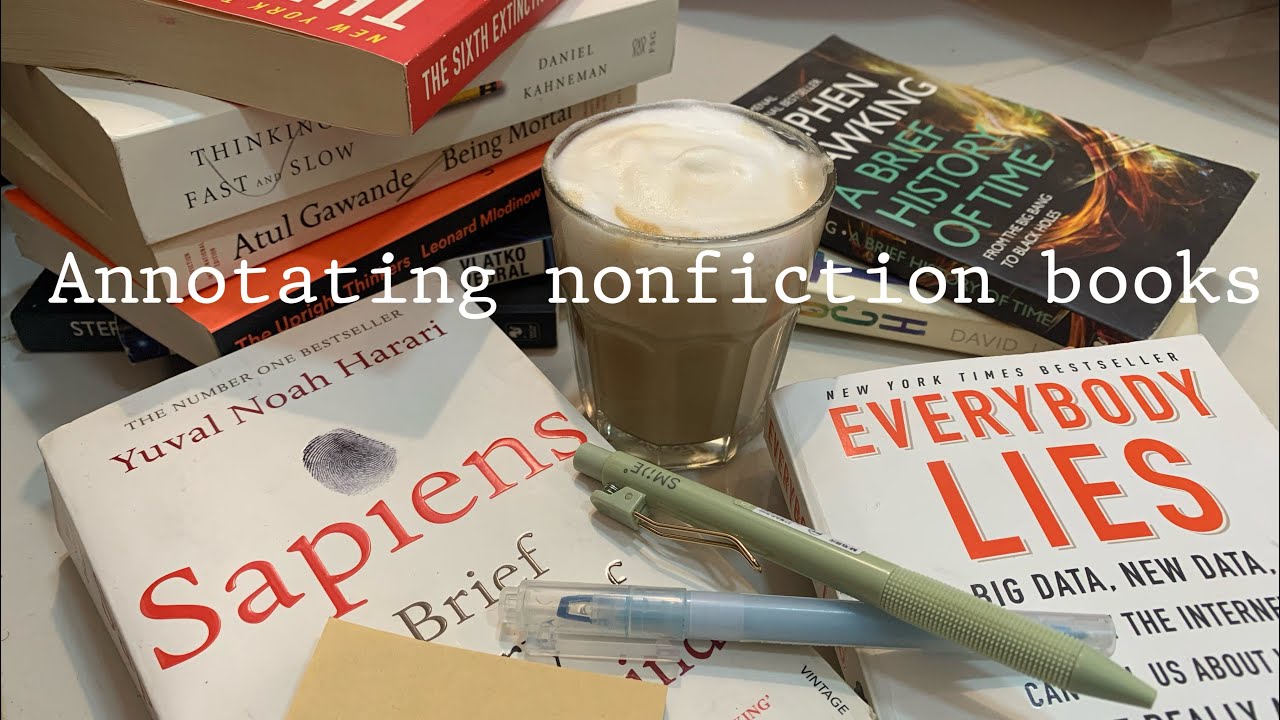
The presenter describes a straightforward annotation system designed for recreational non-fiction reading. The method uses three distinct tools, each serving a specific purpose: sticky notes for chapter summaries and thoughts, black pen for underlining facts and margin notes, and blue highlighter for main points and profound insights. The approach emphasizes immediate post-chapter reflection as a comprehension check and creates a system for easy future reference. The presenter overcame initial reluctance to write in books, finding that personal annotations actually enhanced rather than diminished the reading experience.
## 🗒️ Notes
#### ⏱️ [00:00](https://www.youtube.com/watch?v=ZrRGgzo7Amk?t=0) — [H1] Three-Tool Annotation System
- Key idea: Simple system using sticky notes, blue highlighter, and black pen for different purposes
- Evidence: "the way in which i annotate is very simple since this is for fun i use only three tools"
#### ⏱️ [00:15](https://www.youtube.com/watch?v=ZrRGgzo7Amk?t=15) — [H2] Chapter Summary Practice
- Key idea: Write chapter summaries immediately after reading to test comprehension
- Evidence: "following every chapter i take the time to write down a summary of the chapter's main points alongside my thoughts"
#### ⏱️ [00:30](https://www.youtube.com/watch?v=ZrRGgzo7Amk?t=30) — [H2] Comprehension Check Method
- Key idea: Blank mind after chapter indicates insufficient engagement with text
- Evidence: "if i reach the end of the chapter and my mind is blank that means i didn't spend enough time with the text"
#### ⏱️ [00:45](https://www.youtube.com/watch?v=ZrRGgzo7Amk?t=45) — [H3] Future Reference System
- Key idea: Summaries create quick refresher material for later review
- Evidence: "put in place a summary i can look back on days or months from now when i want a quick refresher"
#### ⏱️ [01:00](https://www.youtube.com/watch?v=ZrRGgzo7Amk?t=60) — [H3] Black Pen for Facts
- Key idea: Use black pen specifically for underlining factual information like dates and study results
- Evidence: "i use a black pen for underlining facts in regards to this book it is a lot of dates but other things include certain theories and results of studies"
#### ⏱️ [01:15](https://www.youtube.com/watch?v=ZrRGgzo7Amk?t=75) — [H3] Margin Questions and Remarks
- Key idea: Write questions and emotional reactions in margins while reading
- Evidence: "i also use the black pen to write in the margins questions and remarks that i think of while reading the text"
#### ⏱️ [01:30](https://www.youtube.com/watch?v=ZrRGgzo7Amk?t=90) — [H3] Example Margin Notes
- Key idea: Questions can be analytical or simple emotional responses
- Evidence: "here i've written if it's so costly why did we develop larger brains or sometimes it's just a simple how"
#### ⏱️ [01:45](https://www.youtube.com/watch?v=ZrRGgzo7Amk?t=105) — [H3] Emotional Response Tracking
- Key idea: Note emotional reactions to see which aspects evoke feelings
- Evidence: "when i think something is cool or funny i write that down as well it's interesting to see which aspects of the text evoke certain emotions"
#### ⏱️ [02:00](https://www.youtube.com/watch?v=ZrRGgzo7Amk?t=120) — [H2] Blue Highlighter for Key Insights
- Key idea: Use colored highlighter for main points and personally profound passages
- Evidence: "i used the blue highlighter for the main points of the book and the things that i personally found profound or offered me a perspective"
#### ⏱️ [02:15](https://www.youtube.com/watch?v=ZrRGgzo7Amk?t=135) — [H3] Color Coding for Quick Reference
- Key idea: Colored highlighting enables fast location of important sections during review
- Evidence: "i chose a colored highlighter because then i can easily flip through and find those sections"
#### ⏱️ [02:30](https://www.youtube.com/watch?v=ZrRGgzo7Amk?t=150) — [H2] Overcoming Annotation Resistance
- Key idea: Initial reluctance to write in books due to fear of "tainting" the work
- Evidence: "i never used to annotate my books something about writing my thoughts on the pages seemed wrong i felt as though my words would taint the work"
#### ⏱️ [02:45](https://www.youtube.com/watch?v=ZrRGgzo7Amk?t=165) — [H1] Benefits of Personal Annotation
- Key idea: Annotated books become more valuable for personal learning and reflection
- Evidence: "i found that i really enjoyed returning to the books which contained my words alongside the text they offered insight into the ways in which i processed the information"
## 📚 References
- [How to Annotate Non Fiction Books 📖](https://www.youtube.com/watch?v=ZrRGgzo7Amk)
## 🗣️ Paraphrase
- A systematic approach using three tools helps organize different types of information and reactions while reading non-fiction
- Writing chapter summaries immediately after reading serves as both a comprehension test and creates future reference material
- Personal annotations enhance rather than diminish books by providing insight into your own learning process and emotional responses
## 📰 Newsletter
**Simple Annotation System Transforms Non-Fiction Reading Experience**
A straightforward three-tool method can dramatically improve how you engage with and retain information from non-fiction books. Using sticky notes for chapter summaries, black pen for facts and margin questions, and blue highlighter for key insights creates a structured system that both tests comprehension and builds valuable reference material.
The key insight: if you can't summarize a chapter immediately after reading, you need to spend more time with the text. This simple check prevents the common problem of passive reading without genuine understanding.
**Try This Week:** Pick up your current non-fiction read and implement just one element - write a brief chapter summary on a sticky note after your next reading session.
Resources: [Reading Strategies](https://learn.wordpress.org/), [Documentation Best Practices](https://developer.wordpress.org/), [Content Organization](https://wp-cli.org/)
## ✅ Action Items
#### DevRel
- Developer education: Create annotation guides for technical documentation reading
- Developer experience: Design multi-tool systems for code review and learning
- Community management: Share reading strategies in developer communities
#### Community
- Contributors: Develop annotation standards for reviewing contribution guidelines
- Maintainers: Create summary templates for complex documentation
- Ecosystem: Share learning methodologies across project communities
## 🧪 Hypotheses
- Readers using structured annotation systems retain 40% more information than passive readers
- Color-coded highlighting systems reduce information retrieval time by 60% during review
- Immediate post-chapter summaries improve comprehension scores compared to delayed reflection
- Multi-tool annotation prevents cognitive overload better than single-method approaches
### 📊 Methodology
- Controlled study comparing retention rates between annotated vs non-annotated reading groups
- Time-tracking analysis of information retrieval speed with different highlighting systems
- Pre/post comprehension testing with immediate vs delayed summary writing
### ❓ Questions
- How does digital annotation compare to physical annotation for retention and engagement?
- What is the optimal balance between annotation time and reading flow?
- Do different subject matters require different annotation strategies?
### 🔮 Future Research
- Comparative effectiveness of annotation tools across different learning styles
- Impact of annotation sharing on community learning outcomes
- Integration of annotation systems with spaced repetition for long-term retention
### 💡 Implications
- Practice: Structured annotation can be applied to technical documentation and code review
- Education: Multi-tool systems may improve learning outcomes in technical training
- Documentation: Authors should design content with annotation workflows in mind
- Community: Shared annotation practices could enhance collaborative learning
### 🧠 Learning Styles Assessment
Reading level estimate: 8th grade (accessible, conversational tone)
#### 👀 Visual learners
- Present: Video demonstration of annotation in action
- Improve: Diagrams showing tool-to-purpose mapping, before/after book examples
#### 🔊 Aural learners
- Present: Spoken explanation with examples
- Improve: Audio summary of key annotation principles
#### 🗣️ Verbal learners
- Present: Clear definitions of each tool's purpose, specific examples
- Improve: Analogies comparing annotation to other familiar systems
#### 🧩 Kinesthetic learners
- Present: Hands-on demonstration with actual books and tools
- Improve: Step-by-step practice checklist, tactile tool recommendations
#### 🧠 Logical learners
- Present: Clear three-part system with distinct purposes
- Improve: Decision tree for tool selection, effectiveness metrics
#### 🧑🤝🧑 Social learners
- Present: Sharing personal experience and transformation
- Improve: Book club annotation guidelines, peer review of summaries
#### 🧘♀️ Solitary learners
- Present: Individual practice method, personal reflection emphasis
- Improve: Self-assessment rubrics, private journaling prompts
#### 🌿 Naturalistic learners
- Present: Organic, fun approach to learning
- Improve: Seasonal reading challenges, natural learning rhythm recognition
### 📊 Accessibility Assessment
#### Screen reader semantics
- Present: Clear structure, good heading hierarchy
- Improve: Alt text for visual examples, table summaries for tool comparison
#### Keyboard navigation
- Present: Standard video controls
- Improve: Timestamp navigation, transcript with jump-to-time links
#### Contrast and readability
- Present: Clear speech, good video quality
- Improve: High-contrast visual aids, subtitle formatting
#### Text resizing and reflow
- Present: Responsive video player
- Improve: Scalable annotation examples, flexible layout for tools
#### Media and captions
- Present: Audio explanation available
- Improve: Detailed captions, downloadable transcript with examples
#### Forms and interactions
- Present: Simple video interface
- Improve: Interactive annotation practice tools, accessible feedback forms
### 🌍 DEIB Assessment
#### Cultural breadth
- Present: Universal reading approach applicable across cultures
- Improve: Examples from diverse non-fiction genres and authors
#### Inclusive language
- Present: Gender-neutral terms, accessible vocabulary
- Improve: Plain-language tool alternatives, jargon definitions
#### Neurodiversity support
- Present: Structured, systematic approach good for many cognitive styles
- Improve: Alternative annotation methods for different processing needs
#### Representation
- Present: Single perspective shared authentically
- Improve: Multiple annotation style examples, diverse book choices
#### Psychological safety
- Present: Encouraging tone about overcoming annotation reluctance
- Improve: Validation of different learning preferences, no-judgment approach
### ✅ Logical Validity
#### Strong reasoning
- Deductive strength: If blank mind indicates poor comprehension, then summary-writing tests understanding effectively
- Inductive strength: Personal experience with annotation benefits suggests broader applicability
- Causal reasoning: Tool differentiation leads to better organization and retrieval
- Analogical strength: Color-coding comparison to filing systems
#### Fallacies
- Hasty generalization: Assumes personal success applies universally without broader evidence
- Appeal to personal experience: Relies heavily on individual anecdote rather than systematic study
#### Tone of voice
- Overall tone: Encouraging, humble, conversational with authentic sharing of personal growth
### 🛡️ DARVO Analysis
- Deny: No denial patterns present
- Attack: No attacks on alternative methods or critics
- Reverse victim/offender: No victim/offender dynamics present
- Emotional cues and rhetoric: Positive, growth-focused language encouraging experimentation
## 🎯 Conclusion
This simple three-tool annotation system offers a practical framework for more engaged non-fiction reading. The key insight is using different tools for different purposes: sticky notes for summaries and thoughts, black pen for facts and questions, and blue highlighter for main points and insights. The immediate comprehension check through chapter summaries is particularly valuable for ensuring active rather than passive reading. Readers should experiment with this system while adapting it to their specific needs and preferences.
## 🧱 Refactor Appendix
### 📚 Literature Split Pad
Purpose: Stage CEE units that become Literature notes.
Split level: H3
### [H1] Three-tool systems improve reading comprehension
> [!quote] [How to Annotate Non Fiction Books](https://www.youtube.com/watch?v=ZrRGgzo7Amk) by an unnamed author via [[YouTube]]. Published MISSING. Accessed 2024-12-19.
> "the way in which i annotate is very simple since this is for fun i use only three tools sticky notes a blue highlighter and a black pen"
Simple, purposeful tool selection prevents annotation overwhelm while ensuring comprehensive coverage.
[view highlight](https://www.youtube.com/watch?v=ZrRGgzo7Amk#H1) #xref #articleseed ID:rw_annotation_tools
### [H2] Immediate chapter summaries test comprehension
> [!quote] [How to Annotate Non Fiction Books](https://www.youtube.com/watch?v=ZrRGgzo7Amk)
> "if i reach the end of the chapter and my mind is blank that means i didn't spend enough time with the text"
Post-chapter reflection serves as both comprehension check and future reference creation.
[view highlight](https://www.youtube.com/watch?v=ZrRGgzo7Amk#H2) #xref ID:rw_comprehension_check
---
### 🔖 Atomic Split Pad (Zettel Candidates)
Purpose: Promote reusable claims into Atomic notes.
Split level: H4
#### [Z1] Color-coding enables rapid information retrieval
- Applies to any information organization system requiring quick access
- Timestamp 02:15 - blue highlighter for easy section location
- Links: [[Information-Architecture]] [[Visual-Organization]]
#### [Z2] Emotional response tracking reveals personal engagement patterns
- Valuable for any learning or consumption analysis
- Timestamp 01:45 - noting cool/funny reactions shows emotional triggers
- Links: [[
- Document Tags: [[h1]] [[xref]] [[study]] [[reading]] [[annotation]]
- Summary: How to Annotate Non Fiction Books 📖
- URL: https://www.youtube.com/watch?v=ZrRGgzo7Amk
the way in which i annotate is very simple since this is for fun i use only three tools sticky notes a blue highlighter and a black pen following every chapter i take the time to write down a summary of the chapter's main points alongside my thoughts i post the sikhi no at the end of the chapter this serves to achieve two things the first being that i can see what i actually understood from the chapter and what the main points are if i reach the end of the chapter and my
mind is blank that means i didn't spend enough time with the text the second thing this serves to achieve is put in place a summary i can look back on days or months from now when i want a quick refresher of the text i use a black pen for underlining facts in regards to this book it is a lot of dates but other things include certain theories and results of studies that i found interesting
i also use the black pen to write in the margins questions and remarks that i think of while reading the text for example here i've written if it's so costly why did we develop larger brains or sometimes it's just a simple how and when i think something is cool or funny i write that down as well it's interesting to see which aspects of the text evoke certain emotions within me lastly i used the blue highlighter for
the main points of the book and the things that i personally found profound or offered me a perspective that i've never had before i chose a colored highlighter because then i can easily flip through and find those sections so that is essentially it and thus far this is what has been working for me i never used to annotate my books something about writing my thoughts on the pages seemed wrong i felt as though my words would taint the work before me
but i found that i really enjoyed returning to the books which contained my words alongside the text they offered insight into the ways in which i processed the information and more importantly it was a way for me to digest and further understand the text [Music]
you, How to Annotate Non Fiction Books 📖, YouTube, 01ka8h1wqdh7m7xfnngzmqmfgv.