How to Choose Developer Events

## Metadata
- Author: [[Adam DuVander]]
- Full Title: How to Choose Developer Events
- Category: #articles
- Document Note: ---
tags:
- #developer-relations
- #event-strategy
- #technical-marketing
Author: Adam DuVander
Source: EveryDeveloper (Article)
Reference: https://everydeveloper.com/developer-events/
date created: 2025-08-21 00:00
---
# Title: How to Choose Developer Events
## Table of Contents:
- 🔎 Overview (#-overview)
- 🧭 The Right Event (Not Always the Big One) (#-the-right-event-not-always-the-big-one)
- 👥 The Staff to Support It (#-the-staff-to-support-it)
- 🧩 The Product–Event Fit (#-the-productevent-fit)
- 🚀 Ways to Stand Out (#-ways-to-stand-out)
- ✅ Choose Events Where You Can Engage Developers (#-choose-events-where-you-can-engage-developers)
- 📚 References (#-references)
### References:
- EveryDeveloper article: How to Choose Developer Events
- Related concepts: Developer Relations, Event ROI, CFP best practices, Audience–Product fit
## 📝 Summary:
Adam DuVander argues that while content scales, in-person events create high-fidelity engagement and feedback with technical audiences. To select events wisely, he recommends: avoid assuming bigger is better; ensure you can staff authentically with technical communicators; verify strong product–audience fit before sponsoring; and plan concrete ways to stand out (talks, side events, helpful contributions, interactive games). Measure success by quality of developer connections and insights, not just short-term leads.
## 📖 Main Content:
- Events complement content by delivering face-to-face signal and feedback. Large expos can dilute relevance; smaller, targeted events often yield deeper connections.
- Staff for authenticity. Developers tune out salesy tactics—send technical communicators or pairs that combine outreach with engineering depth. Capture and route learnings back to product.
- Prioritize product–event fit. If your product doesn’t align with the language, seniority, or domain focus (e.g., low-code at PyCon), results will suffer.
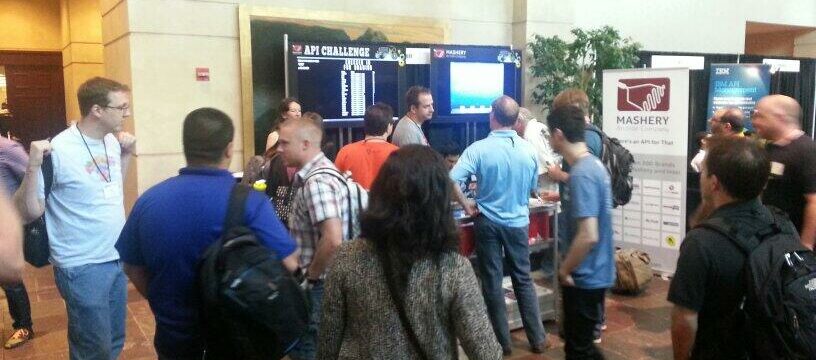
- Stand out through value-adding tactics: thoughtful talks (via CFPs), sidecar gatherings, volunteering, speaker dinners, meaningful giveaways, and interactive booth experiences (e.g., Mashery’s API Challenge).
- Success metric: an engaged technical audience and meaningful conversations that inform future content and product decisions.
### 🗒️ Notes
- Why events:
- High-fidelity interactions vs. content’s scale.
- Real-time feedback loop to validate messaging and collect product insights.
- Compete less with “a click away” distractions.
- Big vs small events:
- Big shows are noisy; authentic connections harder.
- Attendance ≠ impact; beware “overpromised” participation.
- Umbrella events mixing communities can reduce targeting.
- Staffing principles:
- Don’t sponsor if you can’t staff appropriately.
- Prioritize technical communicators: developer advocates, PM/PMM with technical depth, solutions engineers, support/TAMs, product engineers.
- Tag-team model: outreach-oriented + deeply technical teammate.
- Underpromise, then connect attendees to experts post-event if needed.
- Close the loop: funnel insights back to product and content teams.
- Product–event fit:
- Assess: language support, cloud availability, company size, industry focus, engineering type, years of experience.
- PyCon example: great only if you support Python and appeal to senior devs.
- Misfit example: ETL for legacy enterprise data at a frontend JS framework conf.
- Standing out:
- Speak via CFP with non-promotional, valuable topics.
- Organize side events; volunteer; attend speaker dinners.
- Value-forward giveaways; creative activations (e.g., API Challenge with leaderboard, puzzle flow, prize drawing).
- Opportunistic helpfulness (e.g., sponsor coffee) builds goodwill.
- Closing ethos:
- Engage, don’t sell. Aim for genuine connections before any “selling.”
## 📖 References:
- Adam DuVander, “How to Choose Developer Events,” EveryDeveloper: https://everydeveloper.com/developer-events/
- Related reading (general): CFP best practices (various conference guides), DevRel community playbooks.
## 🗣️ Paraphrase:
1) Original idea: Bigger isn’t inherently better; authentic connections are the primary goal.
Paraphrase: It’s tempting to chase giant expos for the numbers, but you’ll usually forge stronger, more meaningful relationships at focused gatherings. If you judge events by short-term leads or signups, they’ll rarely pencil out—optimize for genuine developer connections instead.
2) Original idea: Product–event fit is essential (PyCon example).
Paraphrase: Even flawless execution will fall flat if your offering isn’t relevant to attendees. A conference like PyCon can be outstanding, but only if you support Python, speak to experienced developers, and bring a compelling Python-forward narrative. Otherwise, you’re addressing the wrong room.
## 📰 Newsletter:
This week in the WordPress Builder’s Log: sharpening your developer-event strategy while leveling up web dev skills.
- Learn: Modern WordPress dev with PHP 8.x niceties, JS build tools, and block-first UX. If you’re starting out, consider MDN’s “Learn Web Development” and the “WordPress Developer Resources” for a structured path.
- Updates: WordPress core performance efforts continue to reduce TTFB and improve LCP; keep an eye on the Performance Lab plugin for features-in-progress. The Gutenberg project delivers iterative UX improvements—test the latest in the plugin channel.
- Community: Contributor Days are back on many WordCamps—perfect for first contributions. Join “Make WordPress” Slack to meet teams (Core, Docs, Training, Community) and find a welcoming onramp.
- New Plugins: Explore performance-friendly image optimization, modern form builders with accessibility baked in, and lightweight block libraries. Vet plugins for active maintenance, security posture, and PHP/WordPress version support.
- Pro Tip: Heading to an event? Don’t just show up—submit a CFP on a topic that helps developers solve real problems, host a hallway-track coffee chat, or run a mini “API Challenge” at your booth to spark authentic conversations.
Useful links:
- WordPress Developer Resources: https://developer.wordpress.org/
- WordPress Performance Lab: https://wordpress.org/plugins/performance-lab/
- MDN Learn Web Development: https://developer.mozilla.org/en-US/docs/Learn
## ✅ Action Items:
Prompt for aligning articles with your DevRel + WordPress + OSPO trajectory:
“Given my role as a GoDaddy Developer Advocate specializing in open source and WordPress, analyze how this article advances:
- Open-source advocacy: Identify opportunities to promote sustainability, governance, and responsible dependency management within WordPress and broader OSS.
- Contributor engagement: Extract tactics to onboard and retain contributors (e.g., event formats, hands-on workshops, CFP topics, mentorship) and map them to Make WordPress teams.
- Education and instructional design: Translate concepts into curricula, labs, or contributor training modules for PHP, JS, HTML/CSS, Git/GitHub, and WordPress-specific workflows.
- Inclusive community-building: Evaluate DEIB practices, transparent decision-making, and codes of conduct; propose inclusive event patterns and documentation improvements.
- OSPO preparation: Connect recommendations to OSPO functions (strategy, policy, compliance, inner/outer sourcing, community relations) and define KPIs.
- WordPress ecosystem impact: Show how these ideas strengthen plugin/theme developer success, performance, accessibility, and long-term sustainability.
Deliver: a) a strategic summary, b) a tactical playbook for the next two quarters, c) measurable outcomes and reporting metrics.”
Alignment for this article specifically:
- Event portfolio strategy: Prefer targeted WordPress and PHP events, contributor days, and smaller dev meetups where authentic engagement is highest.
- Staffing model: Pair DevRel with engineers/maintainers for authentic conversations; route feedback to core/product and docs.
- Program design: Run CFP-backed talks on performance, sustainability, and contributor onboarding; host sidecar contributor sprints; offer “API/CLI Challenge” for WP-CLI or REST API.
- OSPO lens: Treat events as chann
- Document Tags: [[favorite]]
- Summary: When it comes to marketing strategies for reaching a technical audience, events offer distinct advantages over content marketing. While content can be scalable, events provide the opportunity for authentic connections and valuable feedback. When choosing which events to sponsor or attend, factors such as event size, staff representation, product relevance, and ways to stand out should be considered. It's important to make sure the event aligns with your product and to have a plan to engage developers in meaningful interactions. By following these guidelines, you can make the most of developer events and effectively engage with your target audience.
- URL: https://everydeveloper.com/developer-events/
Content might be the most scalable way to reach a technical audience, but it’s ultimately just one part of your larger marketing strategy. The written word, streaming video, and other content formats have their downsides, the biggest of which is that you don’t actually see the people with whom you’re connecting! That makes it hard to know whether your message resonates with them. Plus, you’re competing with many other [content marketing channels](https://everydeveloper.com/channels/), each a click or tap away.
With that in mind, events provide some distinct advantages. While expensive and intrinsically tailored to smaller audiences, events also tend to be much higher fidelity, providing both the feedback loop you’re seeking and valuable input for future marketing content.
As you evaluate potential events to sponsor or attend this year, there are some key factors to consider: event size, which support staff should represent your organization, the relevance of your product or service, and how you can stand out from the competition. Using my experience as an employee of a handful of developer companies—plus interactions with many more in the industry—I’ll dig into each of these areas to help you decide where to ship your booth and team.
#### The Right Event (which Isn’t Always the Big One)
We all know that bigger isn’t necessarily better, right? Yet, high volumes are appealing, especially when we have numbers to meet. There’s always a huge event that seems to have “everyone” attending. My network used to descend on Austin every March for SXSW—many still do. In the fall, I can’t seem to avoid AWS re:Invent blog articles, emails, and social posts.
Nothing against these expos—but you may be able to spend that budget on several smaller events that could be more impactful for your company, and there are many reasons why.
For one, the larger the event, the harder it is to make authentic connections. As I wrote in the events chapter of *[Developer Marketing Does Not Exist](https://everydeveloper.com/developer-marketing/book/)*, as a technical organization, your main conference goal should be making strong, meaningful connections. If you judge them on lead counts, customers, or other short-term metrics, you’ll find events tough to justify.
Next, high attendance numbers for an event do not always translate to other volume metrics. When I worked at SendGrid, there was an event series notorious for overpromising on participation and impact. The developer relations team knew to stay away, but another group in the company booked a speaking slot for one of the SendGrid founders. He flew up to the Bay Area from Southern California, found his way to the event’s isolated location, and spoke to a nearly empty room.
Sometimes, large events attempt to look bigger by combining multiple communities of smaller events under one umbrella. But unless all these communities naturally fit with your audience, you may be better off supporting the smaller individual events.
Distinguishing quality events where you can make genuine connections may be more challenging than simply going for the big names. But the alternative is wasting a lot of your budget. The next few sections provide ways to filter the events you support and help you maximize your investment.
#### The Staff to Support It
Simply put, you shouldn’t sponsor an event if you can’t staff it appropriately, because you won’t maximize the opportunity to reach the developers in that community.
When developers claim to “hate marketing,” it’s that they don’t want to feel like they’re the target of marketing. So make sure the staff you send to an event are there to engage developers, not sell them. That doesn’t mean sales should be left out, but whoever staffs the event should be capable of authentic conversations about your technical product.
In *Developer Marketing Does Not Exist*, there’s an entire chapter on events and another on your developer engagement organization. Both come into play to successfully staff an event with a technical audience. Your best case is an employee with a technical background and great social skills. They’ll be able to connect with developer attendees *and* answer technical questions.
It’s not always possible to find someone available who fits this description. If you can send multiple people, you can tag-team a team member who excels in outreach with an engineer whose strength lies in technical conversations.
Among the roles you could consider sending to events:
* Developer advocate or evangelist
* Product manager or product marketer
* Solutions engineer or sales engineer
* Support engineer or technical account manager
* Product engineer or developer matching your audience
* Any marketer with a plan to engage and educate developers
The roles highest on the list are more likely to understand the problems that would attract developers to your technical product. The better they understand those problems, the more likely they are to have substantive conversations at the event.
While you’re educating your audience, don’t forget they have valuable insights to provide you, too. Specifically, event attendees can give you valuable feedback on your product or service. Especially if you’re new in the market, make sure you intentionally funnel what’s learned at events back to the team that’s building your offering.
Finally, you can get away with a less technical representative if you make a plan to connect attendees to someone who can answer their questions—even if it’s not at the event itself. As with many things, underpromise what’s possible and you’ll give your teammate a chance to overdeliver. Plus, overpromising is a type of marketing that developers tune out.
To give the best chance for developers to tune into your message, make sure you start right with an event that fits your product.
#### The Product to Make it Meaningful
You could do everything right from the previous sections and still stumble at the developer event. Without a clear connection between your offering and the event, you’ll struggle to create meaningful interactions. While you should [avoid being overly promotional about your product](https://everydeveloper.com/marketing-funnel-for-technical-products/), there must be *some* relevance to developers at the event. It’s easy to overlook this one, so let’s see how you can avoid this common mistake.
Perhaps you’re considering [PyCon](https://us.pycon.org/), the annual conference on the Python programming language with over 2,000 participants and a strong reputation for an engaged and mostly senior developer audience.
PyCon could be a great event for you—unless your product:
* Doesn’t support Python
* Is low-code or drag-and-drop
* Is aimed at junior developers
While some of your audience might be at PyCon, the audience generally dives deep into advanced code—which wouldn’t get as many low-code or beginning developers. And, of course, Python is the preferred language of PyCon attendees, so you’d want to have a good story for them with your product to be most successful.
Look for potential issues like these that might suggest a weak connection between the event and your audience. The conferences with highly relevant attendees will become clear through this process.
In general, the larger the event, the less targeted it will be. PyCon is exceptional in this case. Whether compiling multiple communities or taking a broader view of technology, the large expos will likely have a lower percentage of the right developers for your product. That said, a small percentage of a very large number may still be relevant if you can find a way to be found.
Some areas to assess for fit with your product:
* Language support
* Cloud availability
* Company size
* Industry focus
* Engineering type
* Years of experience
You could have a product that enables enterprises to extract, transform, and load (ETL) their legacy data into modern tools. Your customers may sing your praises. But if you take that message to a frontend JavaScript framework conference, you likely won’t find a lot of interest.
Use the criteria in this post to assess how well your product and team fit the event. Ask the right questions around the event to ensure enough overlap with your ideal audience. Then, consider the opportunities with the broader team. Include some of the most likely staff to support the event in the decision-making process. And once you think you have some good opportunities, the next step is to make the most of it with a plan to be found at the event.
#### A Way to Stand Out
It’s not enough just to go to an event and hope to be noticed. Sure, that’s part of an event’s value, but you must encourage some of that good fortune. There are ways to stand out from everyone else at the event, without wearing a funny hat (though I suppose that’s also an option). As you review sponsorship materials from events, you’ll notice that they often look for ways to build standing out into their business plans, with options to promote from stage or more prominent logo placement. Even after you select your sponsorship level, look for other ways to separate yourself from the other booths.
Here are some ways to make the most of your event sponsorship and attendance:
* Speak at the conference
* Organize sidecar events
* Volunteer to help the organizer
* Attend the speaker dinner
* Give away a prize
The above isn’t an exhaustive list but hopefully gives you some ideas. You can also mix and match, maybe even do it all. (Use your best judgment about getting the organizer’s blessing or begging for forgiveness afterward!).
One event, running on a shoestring budget, didn’t plan for refreshments during session breaks—or, perhaps, they hadn’t found a sponsor for that option. Either way, an enterprising sponsor made a quick run to Starbucks and turned their booth into the de facto coffee bar. If you see opportunities like this—that improve the event overall without making anyone look bad—take them. It’s a small price to pay for a lot of goodwill.
Speaking can be touchy, as events often ask sponsors to pay for the privilege of pitching their wares. Instead, you can earn the spot with a session developers want to see. This can vary by event, but most have a call for proposals (CFP) for anyone to suggest a topic. A speaking slot of this type won’t be a promotion of your product, but that’s a better way to get developer attention anyway. In fact, even if you buy yourself a spot on stage, your best approach is to not seem like a sponsored talk at all.
*Conference crowds participating in Mashery’s ‘API Challenge’ game*
One clever trick I witnessed at a conference was Mashery’s “API Challenge,” whose developer engagement is seen in the image above. The API services provider had a booth where they showed a leaderboard and invited attendees to compete in the challenge. It started with a simple API call to get a hint to the next puzzle. Throughout the event, Mashery’s booth had many visitors for conversations that started as hints to the puzzles.
Everyone who finished the challenge was entered into a drawing. By the end of the conference, a time when most booths are typically empty, a crowd gathered and chatted about their experience with the challenge. By encouraging all those non-sales discussions, I bet the team was able to learn quite a lot about participants’ roles, companies, and potential for future engagement.
A truly engaged technical audience is a powerful thing and it’s exactly what you need before you have any chance of “selling” them anything.
#### Choose Events Where You Can Engage Developers
Here, you’re at the end of a nearly 2,000-word blog post about developer events. If I had event services, this might be where you’d expect to see a pitch for those. I’ve worked many developer events over the years and consulted on these topics, but my main focus is great technical content strategy. So, there’s nothing event-related to promote here. Instead, I’m taking the exact approach that I recommend with a technical audience—engage, don’t sell.
Want to talk about technical events or other ways to engage developers? [Reach out to the EveryDeveloper team](https://everydeveloper.com/consulting/). Our chat doesn’t signal any commitment to work with us—we want to see more companies succeed with an authentic approach to technical audiences., How to Choose Developer Events, Adam DuVander, 01hk59jr19ewa14ev65txh2bs6.