How to Learn AI in a Weekend
🔗 **Source:** [How to Learn AI in a Weekend](https://www.youtube.com/watch?v=qLMYOhaKcZs)
There is an incredible piece of softwarecalled Claude Code that I've been usingfor the last 3 months, and it hascompletely and utterly changed my life.
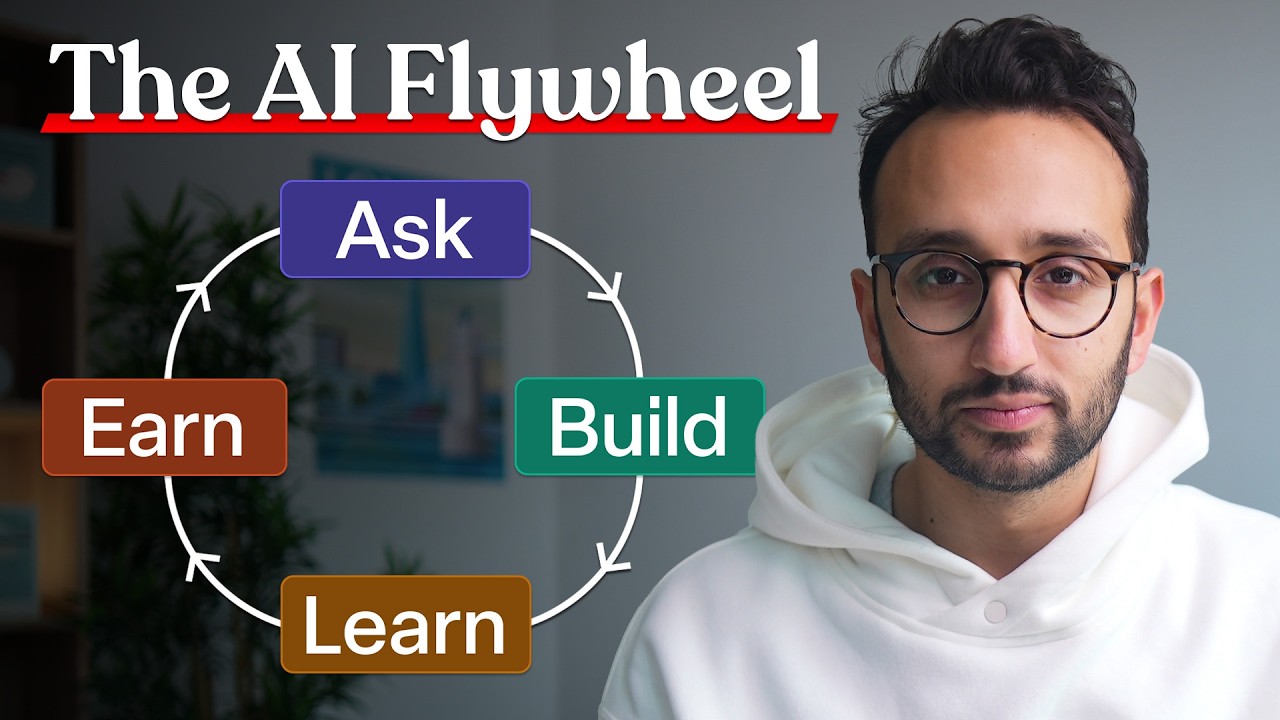
And this video is the video that I'msending to my friends, my family, myteam members who have not yet startedusing Claude Code. Maybe you're like mea few months ago, where you wereintimidated by the thought of typingstuff into a terminal. Maybe you'reintimidated by the name Claude Code.You're like, "Ah, but I'm not a coder.I'm not a developer. I couldn't possiblyuse Claude Code." Maybe you're stillstuck in that paradigm of talking toChatGPT or Claude on the web app andthinking that that is all AI has tooffer. Or maybe you're like a lot ofpeople I know, and you're like, "Man, Iknow I should get into this Claude Codething or this Claude Co-Work thing. Ijust don't really have the time."Hopefully, this video will help yousolve all that. And this video is goingTo introduce you to the idea of the AIflywheel. You basically get AI tointerview you about what you're doing inyour business, your life, your work.
Based on that, you get the AI to suggestwhat cool things you can use the AI tohelp build that would help save you timeand make you more money. And then in theprocess of getting AI to build thosethings for you, you are also learningabout how the AI works. The more youlearn about how the AI works, the morethat feeds into giving you ideas. It'slike you're getting a firmware update inyour brain where now you know what'spossible, which means you can then buildeven more things to help save you timeand make you more money. Using thesesick AI features, I've built stuff formy business and for my customers thatliterally add value to our customersevery single day where people are ravingabout the tools that I've managed tobuild for them over the last couple ofmonths just by learning how to use cloud.
Code. The final thing to say before weget into the video is that every singleday, the gap between the people that justuse the free version of Chat GPT andtalk to it on the web versus people whoknow how to build stuff using flawedcode, even if you don't know how to code.Every single day, that gap is gettingwider and wider. And what I hope thisvideo will do is give you a sort ofbeginner's guide on how to narrow thatgap. There are timestamps for everythingdown below in the video. So, let's getstarted. Okay, so there are a couple ofprerequisites that will really help youif you have these downloaded before we
try doing this stuff. The first thing isyou do not want to be using the web appfor something like Claude. Instead, youwant to download the desktop app. Thisis totally free, but when you downloadthe Chat desktop app, you will notice itsays chat, which is the thing that youare used to. It also says co-work, whichsounds somewhat scary if you haven'tUsed it before. And it says code, whichsounds even scarier if you haven't usedit before. The second thing you want todo is you do not want to type. You wantto have some kind of dictation softwareinstalled that does a speech to text.
There are lots of these. In my case, theone I use is called Whisper Flow. I'llput an affiliate link or something inthe video description if you areinterested. And the cool thing aboutWhisper Flow is I can hit Fn spacear andthen I can say whatever I want and thenit will appear on screen within likemilliseconds. Boom. This is how itworks. This is a far quicker way ofspeaking to an AI rather than having totype to an AI. And those are basicallythe only two prerequisites you need. Sostep number one is we're going to ask AIwhat we should build with AI. I'm tryingto learn how to use AI. My current, uh, AIskill set is I just use, uh, ChatGPT andClaude and use the chat feature. But Irecently watched a video that tells me.
About co-work and how Claude code is thebest thing ever. So, to that end, I wantto learn how to use AI, but I don't wantto just randomly try and learn how touse AI by following tutorials. Iactually want to build something that'sreally useful in my work or in my life.
The problem is, I'm not really sure whatto build. So I want you to ask mequestions and interview me, and help mefigure out within the context of my work,like I want to build something that willsave me time meaningfully, uh, or help memake more money in the context of mybusiness. Uh, and in the process, I wantto sort of learn how to use things likeClaude, co-work, and Claude code as well.
Okay. So, my business actually does, Iguess I would say, three main things. Uh,first, we do content. So, I have aYouTube channel, and I post stuff onInstagram and occasionally onLinkedIn. And the content is trying tohelp people build a life theylove and sort of change their lives.
Stuff, personal development things. Uh,the second thing the business does is wehave an online business school calledthe Lifestyle Business Academy thathelps uh people start and grow six-figurelifestyle businesses. And then the thirdthing that we do is that we are buildingvarious software products. We've builtan app called Voice Pal, which is a sortof AI ghostwriter. We're building an appcalled Superfocus, which is a sort ofproductivity thing, and we are buildingan app called, uh, a platform calledCreator Grid, which, um, is a platform tohelp creators, uh, grow and monetize theiraudience. Now, obviously, all of this isin the context of me owning a businessand doing various different things. UhBut in the context of you maybe havingyour own job, then you can ask it tointerview you about what you do in yourjob. If you are trying to go for a raise,or just trying to improve your jobperformance or anything like that.
Wish I didn't have to do, or I wish thatmy team didn't have to do, is that we doa lot of data scraping. So, for example,for YouTube, for Instagram, forLinkedIn, we spend, you know, my teamspends a lot of time each week lookingat analytics and looking at view countsand adding up saves and uh impressions,and stuff. And then some of that data weneed to send to sponsors. Some of it weuse to figure out whether our own socialmedia stuff is going well. We also needto do this across our competitors. I
mean, I don't really think of them ascompetitors. I think of them ascolleagues. But we want to keep an eyeon what our sort of friends in the spaceare doing, so that if someone is growingparticularly fast or hits on a formatthat is particularly good, then we canexperiment with that format ourselves.And so, all of this stuff takes actuallymany, many hours for my team, uh, everysingle week. So, I wonder if there's somecool stuff we can build that will help.
Let's automate some of that. Do you thinkthat would be possible? 100% possible.And honestly, this is a great candidatebecause it ticks both boxes. It'sgenuinely painful hours per week ofmanual work. And it's the kind of thingwhere you'll learn a ton by building it.Now, this is good. This is asking mereally, really useful questions abouthow we can automate this, like datacollection process. I'm not going toread all the responses. You can pausethe video whenever you like, just to readthe stuff because I know you can read.
Okay, so the current workflow is likeum, yeah, Nicole on my team and Becky andmy team literally go to YouTube Studioor to Instagram analytics. Basically,they go to Instagram insights, theywrite down numbers, and they manually, uh,write the numbers into a Google sheet.And then use the sum function to sort ofcount up, like, impressions this week orsomething. To be honest, I actuallydon't know what's available on Instagram.
Insights. Maybe they don't have to dothat anymore, but either way, it's amanual process of copying and pastingnumbers into a Google sheet. Second, howmany of these colleagues are youtracking? Are we talking five channelsor 50? More like 50. 50 on YouTube, 50on Instagram, 50 on LinkedIn, that sortof thing. And what does the output looklike? It sort of goes into a Googlesheet, but then it sort of goes onrandom notion pages that are all overthe place. It very rarely goes into
slide decks, but yeah, primarily GoogleSheets and Notion databases. That'swhere it goes once it's collected. Andthen, you know, we always think, "Oh,it'd be nice if we looked at it moreoften, but then because it's all overthe place, it's kind of hard to look atmore often. In reality, what we often dois just chuck it into AI and be like,"Hey, can you give us some interestinginsights?" But I think it's the collection of the data itself that likeIs kind of annoying. You know what?
Let's not worry about the sponsor thing.I think let's just focus on thecompetitor tracking. And what do I wantto know? I think, yeah, it's how manyviews did the recent videos get. It isalso what topics are performing well forthem. I mean, if we could get a sense oflike, if we're thinking about YouTube, um,I, I never want to watch the video itselfbecause I don't want to accidentally copyit. But I'm very interested in what thetitle and the thumbnail was. And ifwe're thinking about Instagram reels, Iyou know, in a dream world, we'd be ableto transcribe the reel to get the hook,'cause I'm always interested in what's thefirst line. But if it's an Instagramcarousel, like, what was the format? So,yeah, the challenge with Instagram isthat we've got all these differentformats. So yeah, I just don't reallyknow how we would go about that. Allright, so this is telling me we're goingto start with YouTube. It's the easiest.
Win. YouTube has a public API where youcan pull videos, titles, thumbnails,view counts, publish dates for anypublic channel. You give it 50 channelnames and it gives you back everythingyou want. That's your week one project.
Sick. Instagram is harder but doable.Meta's API is more locked down. So we'llneed to get a bit more creative here.Here's what I imagine. You open adashboard, could be a web page, and yousee something like, "Here are the 50channels I track. Here are the last 10videos sorted by views. And here'swhat's popping off this week." Thatsounds great. You can see thumbnails andtitles at a glance without watchinganything. And you could have AIautomatically tag the topics so you canspot patterns. Like three of mycolleagues posted about morning routinesthis week and they did well. Sick. Thebeautiful thing is that this is aperfect project for learning clawed codebecause it involves real API calls, realData processing, and optionally a realfront end, but none of it is so complexthat you'll get stuck for days. Doesthat sound like the right thing to focuson? And do you have a preference for theoutput looks like? Would you rather seea nice looking dashboard you open in a
browser, or would you rather justautomatically update a Googlesheet that your team uses? This is sosick. Like, man, even me reading thisback right now, I’m like, "Wow, Claudehas such a good understanding of whatI’m trying to do, what I’m trying tobuild, it’s suggesting things that Ididn’t even think of." What a time to bealive that you can literally ask the AIto build stuff for you and also teachyou how to build the stuff in theprocess. Like, in the past, I paidthousands of dollars forautomation consultantsto ask us these sorts of questions tofigure out what we can automate in thebusiness. And none of what they’ve saidOf the $50,000 or so dollars that we'vepaid to automation companies andautomation agencies and consultingwhatever, people come close to the levelof clarity that Claude just got throughjust a handful of exchanges with me.
This is incredible. Now, once you getgood at using AI to build all of thesedifferent features that are going tohelp you save time and make moremoney, what you might need is a webhost. You might need a place to host thevarious programs that you're creatingand stick them on a website and makethem accessible via the web, either toyou personally or to you and your teamor even to the public if you want tolike, make money from the thing.
This is where Hostinger comes in, who are verykindly sponsoring this video. Now,Hostinger has a bunch of differentfeatures that are all super helpful ifyou are trying to build a business orjust improve your life in general. Thefirst one is Hostinger Horizons. This isBasically an all-in-one AI website builder.
You basically just describe whatever you want, and Hostinger Horizonswill basically code up the app entirely for you.It'll build you a fully working mobile-friendly web app with absolutely no coding required.And just by talking to it, you can refine things like the content and the colors and the functionality.They've even integrated features that handle user logins behind the scenes in a super easy way,and also billing through something like Stripe.
You can even start charging people for the various different web apps that you create.When you're ready to go live, it's just one click, and then you get a domain,you get your email, and you get your web hosting all included as part of the package.In addition to Horizons, there's also the Hostinger VPS service that lets you host a virtual private server,which, if you're doing particularly fancy stuff with Claude Code or with OpenClaw, is very useful.
Things like that, you can host itdirectly on Hostinger. Domains areincluded with all of the Horizon plansand you also get free hosting includedwith the annual plans. Plus, they have a30-day money-back guarantee. So, there'sgenuinely no risk in actually justgiving it a go. So, if you want to turnyour idea into a real business, headover to hostinger.com/aliabdal.
And you can get 10% off if you use thecode Aliabdal at checkout as well. Butthank you again, Hostinger Horizons, forsponsoring this video. And let's getback to it. Now, at this point, there'salso something super interesting that Iwould love to talk about here. So, Ihappen to know what an API is, I think.
But if I didn't know what an API was,it's like my rule for the AI stuff isanytime I don't understand something,what do I do? I ask Claude to explain itto me. Okay, this sounds really cool.But, um, one of the key things I want todo is I want to understand theFoundations and the philosophy, and youknow, I'm even interested in like history,uh, you know, the history of stuff likethis. So when you say API, what does anAPI actually mean? Can you help meunderstand what an API is? Why it'suseful and how did APIs get developed?
Uh, like, why are they a thing in thefirst place? So, this sort of thing ishow, for the last 2 months, I have feltlike every single day I'm learning somuch about the world. I'm learning aboutthe history of computing. I'm learningabout the history of technology. I'mlearning about, like, random stuff, becausewhen something interesting happens, andClaude code, or Claude cowork, or Claudeor GBT codeex, or whatever, is asking meto build something, or it's running aterminal command that I don't understand,while it's doing the thing, I will justopen a separate window, and I'll ask itto teach me about the history of thething. For example, when I wasinstalling OpenCLaw, and I was trying toDo some security audits on it, and I wasreally trying to understand, like, what
does SSH mean and, like, what do you know, howdoes a terminal work, and what's a secureshell and stuff. I ended up sort ofspending half an hour going down arabbit hole of, like, understanding thehistory of, like, the telegraph and howthe telegraph morphed into Morse code,and how Morse code then became, like,telephone lines, and how, like, the USmilitary in the Cold War was worriedthat, like, you know, the telephoneexchanges would get bombed by the Soviets,so they had to figure outthis method of information interchange,that involved, like, packets, and so thepackets was invented, and that was thenthis protocol called TCP/IP, which wasthen the precursor for, like, HTTP, whichwas the precursor for the worldwide web.
And then, when the worldwide web wasinvented, there were all these peoplegetting hacked, and there was thisstudent, I think, in some university inPoland or something he was pissed offthat his like university got hacked. Andso he like coded up this thing calledSSH, which was like a secure way oftransmitting information across packets.
And then this guy ended up trying toovercommercialize it. And so someoneelse made this thing called open SSH,which became like a free platform. Andthen this is encryption and public andprivate keys and all of this sort ofstuff. And now when I'm typing in SSHdot dot dot dot into my terminal, I knowwhat that means and I can appreciate thehistory behind it and I can appreciatewhy it was such a big deal and how itwas invented. It's just so cool. Ah, andClaude is just again really good atexplaining stuff. Let's go deep. Theproblem before APIs existed. Imagineit's 2005. You're building a website.
You want to show a map on it. BeforeAPIs, you had two options. Build yourown mapping system from scratch. Insane.Or literally take a screenshot of MapQuest and paste it into your page. Idon't know what Map Quest is. I might Imight ask it about it. This was thefundamental problem. Software was like aseries of world cities. Each applicationhas its own data locked inside of it.
And if you wanted to use that data inyour own thing, you had to eitherrecreate it yourself or do somethinggross like write a script that pretendsto be a human clicking buttons andscraping the screen. People actually didthis, and it was as fragile as it sounds.
YouTube changes one pixel on their pageand your whole system breaks. So whatactually is an API? API stands forapplication programming interface. Butthat name is honestly unhelpful. Here'sa better way to think about it. So good.Again, this is the flywheel idea. AI ishelping me figure out what to build. Inthe process of figuring out how to buildit, I'm also learning about stuff. SoI'm not just blindly writing commandsinto a terminal and hoping for the best.
I'm actually increasing my understanding of it. The reason it's useful tounderstand this stuff rather than justlike blindly do it is because when youstart understanding these things, youget it. It's like you get a firmware updatein your own brain, which means even ifyou don't really care about like thehistory of computing because you don't findit interesting, it's still useful foryou to know what an API is and whatHTTP requests are because the fact thatyou now know that those things existmeans that you might realize, wait aminute, huh, there's this program that Iuse in my work called blah blah blah. Iwonder if they have an API. And youGoogle does blah blah blah have an API,and if you weren't familiar with theword API, you wouldn't have known thatyou could even ask that question, andthen you might find no, it doesn't havean API, but it does have an MCP server.
Now, if you are not at all curious andyou're a total dumbass, and you don'tThen pull on that thread you're like MCPserver. Oh, it sounds technical. I don'tcare, but if you're an intelligent person,you would think, huh, MCP server. I thinkI've heard of that, but I don't reallyknow anything about it. What's an MCPserver? Claude, and you understand what anMCP server is, and you realize, wait aminute, there's all these other ideas forthings that I could build that will helpme save time and make more money, thatinvolve MCP servers. Could I build myown MCP server? What about my own MCPclient? Okay, this is super interesting.
And you start to learn these thingswithout even trying to learn the stuff.Like, you never had to sit down and watcha tutorial about, like, what the hell isan MCP server and how does it work? Butpurely by exercising your curiosity andpulling on the string of, like, huh, APIsare cool. Does not have an API? It does,but it also has an MCP server. Oh,that's cool. Like, what's an MCP server?
Oh, sick. It's a way for, like, AI things.
To chat to each other. And it wasinvented by Anthropic back in like 2024or something. Like sick. Now, basicallyeverything has an MCP server, and youcan even build your own. Sick. That justgives me so many ideas for like otherthings that I can build with my stuff.Now, we're about to dive into the rabbithole of Claude Code, which is the toolthat I've been spending most most of mytime on practically 24/7 for the lastlike 2 months. It's absolutely sick. Iwas intimidated by Claude Code becauseit involved the terminal. I was like,"Oh my god, terminal. I'm not like somehacker from the 1990s. Why don't I needto use the terminal?" And then I
realized I was a total [\_\_] dumbassfor thinking that. And actually, it'sreally straightforward, especially ifyou ask Claude to explain to you how touse Claude Code. And then once you're inClaude Code, you ask Claude Code toexplain to you how to use itself, whichis freaking sick. But before we do that,We have dived down into this thingaround trying to scrape Instagram andYouTube competitors for social mediamanagement. Unless you are a socialmedia manager or your job or yourbusiness involves social media in someway. Uh, that specific use case isprobably not relevant to you.
Obviously, because you're an intelligent person,you know that I'm using that use case asan example, and you know that you couldobviously just ask Claude to interviewyou about your own use cases, and itwill help you figure out what you shouldbuild for your own stuff. But just forthe sake of opening your brain up withmore examples, I want to tell you alittle bit about some of the other toolsthat I've basically built for mybusiness and my life over the last twomonths. If you want to skip this bit inthe video because you don't care and youjust want to get to the Claude codestuff, there'll be a timestamp as is
the case for every other thing in thisVideo. And in fact, to make this list,I'm going to ask one of my Open Clawagents. Open Claw is kind of like ClaudeCode on steroids. I've been usingOpenClaw for the last, like, 2 months aswell. If you're just getting startedwith this stuff, I wouldn't worry aboutit. I would start off with ClaudeCo-work or Claude Code initially, andthen you can dabble around with OpenClawif you feel like it. But let me tell youabout my various OpenClaw agents. I haveAlbus, who is my primary Open Claw agent.
This is what Albus looks like. I haveHermione, who is my curriculum architectfor our Lifestyle Business Academy.She's the one who helps me basicallythink through all the different thingsthat we are teaching our students and doresearch on what's currentlyworking in the world of building anonline business in 2026, etc., etc. This iswhat she looks like. I have Minova, whois the vice principal of the Lifestylebusiness academy, and she helps with allOf the operational things associatedwith trying to give our students thebest experience to build their, you know,six-figure lifestyle businesses. Andthen Manova, along with Claude Code,essentially helps me build automationsthat make our lives and our studentslives a lot easier. Next, we have Remis,
who is my content buddy. So he, Remis, iswho I talk to when I'm on Telegram toget content ideas, and he's theone who helps build out all of theselike, competitor analysis, like dashboards,and stuff that we're doing in additionto Claude code. We have Dobby, who is mygeneral assistant that runs on a verycheap, uh, anthropic model called Haiku,whereas all the others run on Sonnet orOpus, and so they're a bit moreexpensive. So Dobby's like my cheappersonal assistant. We have Cedric, who islike my relationships coach, and so Italk to Cedric, and he does researcharound, like, homeschooling, and like, youknow, gives me ideas for, like, romanticDate nights with my wife and stuff like that. So that's cool. And then recentlyI added Kaledan, who is my health coach.
And so Kaledan tracks my protein intake every day, and he's also my workout buddywhen I'm at the gym. Um, he's got accessto all of my DEXA scans, all of my likeworkout history, which I exported fromthe app Strong for like, for the lastfive years, and so he knows exactlywhere my lifts are at. He knows that Ihad, like, I broke my arm recently. Ihad a left radial head fracture. Heknows that, and he therefore has to modifythe exercises based on that. And so whenI'm at the gym, because currently mypersonal trainer is on holiday. So whileI'm at the gym, Kaledan is my personaltrainer. I'm talking to Kaledan tofigure out what lifts I should do, anymodifications I need to make. If, like, mygroin hurts while doing squats, Kaledan
will tell me to back off and doanother exercise instead. This sort ofthing. If you're like, whoa, how's anyOf this possible? Then don't worry aboutit. Just like stop using AI to teach youwhat you want to build using AI thatimproves your business, life, or saves youtime or makes you money. Then, in theprocess of learning stuff,and then at some point, you can ask Claude,like, "Hey, I watched an Ali Dal videowhere he talked about having these likeeight different OpenClaw agents that hetalks to on Telegram. How does thatwork? What's up with that?" And thenClaude will teach you about the stuff.
You'll realize that there are a bunch ofsecurity risks that you have to be awareof when you are using something likeOpenClaw more so than when you're usingsomething like Claude Code. Even thoughClaude Code does have some securityconcerns, again, you can just ask Claudeabout, "Hey, I've heard that Claude Codehas some security concerns. What's upwith that? Like, what are the securityconcerns? Why is it a big deal? Etc.,etc. You'll learn about things like.
Prompt injection and how to protectyourself against it. And you'll learnthat there are skills that you candownload for Claude, that things likeDCG, which is like the destructivecommand guard that like physically stopsit from doing anything that might likedelete the files on your computer oranything like that. If you're like, "Wo,holy [ \_\_ ] You're telling me it candelete the files on my computer?" Yes,if you do not do sensible things with thesepowerful tools, it can result in badstuff happening. But that's why you sortof want to do it one bit at a time. Youwant to make sure you understand what ishappening rather than just blindly letthe AI agent just like do whatever itwants. So with that digression, I wasactually going to ask Albus.
Yo Albus, I'm actually working on aYouTube video where I explain how to uhlearn AI in a weekend, and you know, forthe last 2 months that we've beenbuilding stuff using OpenClaw and usingClaude code. Can you just give me a listof real business and life use cases thatwe have built in our setup that I canshow, uh, my lovely viewers on YouTube asan example of what we've built. For eachone, I just want like a quick one-liner.
All right, so here's an example of allof the stuff that I've built usingClaude Code over the last two months.Firstly, a support ticket pipeline. Sowithin a lifestyle business academy, wehave 200 support channels for all of ourstudents because currently we have about 200students, and each student has their ownprivate Slack channel where theyget added to a Slack channel withthemselves and like me and their coachand like Angus and various other teammembers, where they can post anythingthey want, and we aim to get back to themwithin, like, 24 hours, ideally. Nowpreviously, this was a manual process of
like the coaches having to keep on topof which Slack channel is unreadand which one is red. And then, if aStudent's replying in a thread, youcan't see the notifications, you can'tsee the messages. And so what I createdin Claude code is this thing that likeautomatically creates supporttickets anytime a student messages us inSlack. And so that's available in adashboard and also pings alerts to asort of private Slack channel that wehave in the team which says that heyJohn Smith posted this support request.
It's about to be 24 hours, someone pleasereply to him. You know, that kind ofidea. On top of that, I created a webinterface that the coaches can log into.So, they can see which Slack channels forwhich students need responses, and sothey're able to then just click abutton. It takes them directly to Slackand they can respond to the studentthere and then. I created a handful ofstudent-facing Slack bots. So, theproblem we were having is thatpreviously, we were giving our students abunch of custom GPTs. Like, we createdCustom GPTs for things like nichegeneration and first draft offercreation and like content, and like youknow, giving them feedback on the salescalls and things like that. But theproblem we found with custom GPTs is
that we couldn't actually see how thestudents were interacting with thecustom GPTs. It was kind of annoyingbecause then I couldn't audit or thecustom GPTs actually giving the studentsuseful advice and then the students werecoming up with all these things, and Iwas like, wait a minute, where didyou get that from? And they got it fromthe custom GPT. And then I can't see, like,where things went wrong with the customGPT. And on top of that, we had studentswho were like, complaining that we havetoo many platforms, like, you know,some stuff is on Google Doc, some stuffis on Slack. There’s a lot happening onSlack. We've got the course on Circle, andnow they have to have an OpenAIaccount and do stuff in a custom GPT.
I said to Claude, code like: is it possiblethat we can recreate the functionalityof a custom GPT within a Slack bot, sothat if students are on Slack anyway,they're just able to message the bot, andget the same kind of stuff, but then weas the coaching team have access to theconversation so we can see, we can sortof like audit the agents and make surethey're doing sensible things. And soover the course of about a weekend, Icoded all of this up using Claude code,using Python servers, making sure that
we have everything in a database that isSock 2 compliant. So, like, enterpriselevel security, so that we don't likeaccidentally leak any conversations thestudents are having. And so, we created abunch of Slack bots that students havebeen engaging with, and they're having agreat time talking to them. For example,there is Dumbledore, the DM agent. Andso, we've had over a hundred of ourstudents send thousands and thousands ofmessages to Dumbledore, the Slackbot.
Dumbledore has been trained on our likeinternal DM methodology for how to sortor convert a cold prospect into a warmlead and get them on a sales call sothat they can grow their business. Andso students are like copying and pastingLinkedIn profiles of their prospectsinto Dumbledore, and Dumbledore ishelping them craft outreach messages.
If a student is in a DM conversation withlike a prospect and they're likestruggling to turn it into a call,they'll just screenshot theconversation, stick it into Dumbledore,and Dumbledore will give them advicebased on our connect, understand, inviteframework, for example.
So we haveDumbledore, the DM agent, we have Lupin,the LinkedIn agent, we have Sprout, thesales agent. By the time this videocomes out, we will have releasedFlitwick, who's like the delight agentthat helps students craft adelightful customer experience for theircoaching or consulting or service.
Business. And I'm working on a bunchmore, which is super exciting. But thereally cool thing about this is that thestudents can give us feedback. I can seethe stats on how much people areinteracting with these agents. I canliterally read the conversations thatstudents are having with the agents. Wedo flag it to them that I can readthe conversation. So I read theconversations to see if the agentsare giving students sensible advice. And soif you use Slack in your business or inyour work, then did you know you can askLord Code to help you figure out whatSlack bots you can create that make yourlife easier. We have another Slack botthat’s like, you know, alerts us at thestart of every day to see, like, youknow, in terms of our competitorson YouTube, like who has released videosand what’s been their views in thelast 24 hours. So we’ll see that, youknow, Homozi recently released a videocalled whatever, whatever, whatever.
That's got 94,000 views in the last 24hours. And that's like an outlier forAlex Hozi's channel. So then it promptsus to think, huh, could we like takeinspiration from the fact that thatvideo is popping off for Horosi? Thething that I'm working on now is a sortof creator HQ, which is a sort of webdashboard that me and my entire team canuse across YouTube, Instagram, LinkedIn,and TikTok, and Twitter, thatautomatically analyzes all of thecontent that we've put out over the lastlike 9 years on these platforms. Figuresout what are the things that worked,what are the things that didn't work,generates content ideas based ontranscripts from stuff that I've said
when I've done workshops for ourstudents in LBA. Automatically tracksall of the competitors, and then ithelps us surface ideas for bettercontent that we can make that will justperform better. And on top of that, I'vealso created my own MCP server, whichThen Claude and Chaget have access to,which means that they can automaticallysee all of the projects that I'm workingon within the business, what my goalsare, all of the outstanding to-dos, anykind of journal items that I've put inthere because I want it to have accessto that. And so now, anytime I talk toClaude AI, the chat, it now has way morecontext about me than I ever did before.
And that context is always up to datebecause I'm keeping it up to date whenI'm using Claude Code, when I'm usingOpenClaw, when I'm using Claude. And itall happens through an MCP server. Now,that might have been a lot of jargon. Idid not know what any of this stuffmeant two months ago until I decided to,you know, spend a weekend really justtrying to build something useful usingClaude code. And over the last twomonths, like every day, as I've donethis learning loop, this sort of AIflywheel, I've built more and morethings. And there is a danger with allThis like AI stuff that you, you end upin this zone where you spend solong, like building agents that talk toother agents and that like help youorchestrate other agents that you don'tactually end up doing anything useful.
Useful, I would define as it adds valueto your customers. It saves you timepersonally. It makes you moneypersonally. And so I was very mindful ofthat, that like I didn't I didn't wantthis to be another one of those likepeople spending days making Notionsetups to theoretically try and be moreproductive but not actually being moreproductive. So, going back to our dataanalytics project for YouTubecompetitors. Yes. Okay. I'm now ready tostart writing this thing. Can you helpme understand what the hell Claude codeactually is? Um, I don't really have abackground in coding, and so I have beenintimidated by Claude code in the past.
You know, when people, when I see peopleusing the terminal with, like, the blackAnd the green text, it feels likethere's some hackers out of the matrix,and I feel like I'm not tech-savvy enoughto use Claude code. Can you help mefigure this out? Okay, let's kill theintimidation. Now, the terminal is notwhat you think it is. That black screenwith the green text, let's demystify it.
Because before we talk about Claude code,you need to understand the terminalbecause Claude code runs inside it.Here's the thing. You already know howto use a computer using a graphical userinterface. A GUI. You see icons, youclick buttons, you drag things around.Mac OS, Windows, your phone, allgraphical user interfaces. But GUIweren't always there. Before 1984, whenApple released the Macintosh, virtuallyall computers were operated by typingcommands. You type something like ls tosee a list of files or cd documents togo into your documents folder. That'sit. That's the terminal. It is a way oftalking to your computer by typing.
Instead of clicking, the terminal didn'tgo away when GUIs arrived. It just gothidden. On your Mac right now, there'san app called Terminal. This is what itlooks like. Boom. There we go. I thinkon the Mac, by default, it's white withblack text rather than black with whitetext, but whatever. It's basically thesame thing. You can type whatever youwant. Dot dot dot. If you open it,you're looking at the exact samecomputer, the exact same files, theexact same everything. You're juststeering with a keyboard instead of amouse. Think of it like driving. A GUIis an automatic car. The computerhandles a lot of the details for you.
The terminal is a manual. Same car, sameroad, same destination. You just havemore direct control. And for certaintasks like the one we're about to build,the terminal is actually way faster andsimpler than clicking through menus. Sowhat is Claude code specifically? Youknow how when you use Claude in theChat, you type a message and Claude responds. Yes, Claude code is the sameClaude, the same brain, but instead ofliving in a browser window, it lives inyour terminal. And here's the keydifference. It can actually do things onyour computer. When you chat with Claudeon Claude.ai, it can give you code, butthen you'll have to figure out where toput it, how to run it, what to install.
You are the middleman. Claude tells youwhat to do, and you do it. However,Claude code removes the middleman. Yousay, "Build me a script that pullsYouTube data for these 50 channels." AndClaude code will actually create thefiles, write the code, run it, see theerrors, fix the errors, and run itagain. All right there on your machine.
You're sitting next to it watching, andyou can steer it. No, not like that. Doit this way. But you're not doing themechanical work of copying and pastingcode between windows. Oh, this is nice.
A concrete analogy. A regular Claude isLike texting an architect. They send youblueprints, and you have to figure outhow to build the house yourself. Claudecode is like having that architectstanding in the room with a toolkit.
They're actually building the thing.You're watching and you're saying,"Actually, move that wall over there."And they just do it. Why? It feels likehacking, but isn't. The matrix aestheticof the terminal is genuinely misleading.
When you use cloud code, most of whatyou're doing is just talking to it inplain English. You type things like,"Can you create a new project folder formy YouTube tracker, and it just goes anddoes it. It'll ask you questions if it'sunsure. It'll show you what it's aboutto do before it does it. You can say yesor no. It's a conversation just likethis one, except the AI can actuallytouch your files. Amazing. Like, youdidn't need to watch a tutorial to teachyou how to do this. All you needed wasask Claude to explain what Claude codeIs. And now you can ask it be like,"Okay, how do I install it?" Okay, thissounds really cool. How do I install it?
You can download it using the desktopapp if the terminal feels scary. Or youcan type in one command in the terminal.
Okay, so on a Mac, open the terminalapp, hit command space, type terminal,hit enter, then paste the single commandcurl -fsclaw.install sh. So this is now where itstarts to feel like coding. It feelslike hacking. It feels like, oh my god,this is this is intimidating. But supersimple thing. I'm going to copy this.
Explain to me what the hell is going onhere before I do it, please. dot dotdot. You don't have to do this withevery single terminal command, but likeit's good habit to understand the codethat the machine is trying to run onyour machine. Good instinct. You shouldnever paste something into a terminalwithout understanding what it does. Letme break down every single piece.
Reading left or right, curl. This is aprogram that's been on basically everycomputer since 1998. The name stands forclient URL. All it does is fetch stufffrom the internet. You give it a webaddress. It downloads whatever's there.It's like a browser, but instead ofdisplaying a pretty web page, it justgrabs the raw content. FSSL. These arefour flags squished together. Flags arelike settings that modify the commandbehaves. Fail cleanly, silent, stillshow errors, follow redirects. Oh, okay.
So, FSSL together means download thisquietly, follow any redirects, and onlytalk to me if something goes wrong.Claw.ai/install.shis a web address. Points to a file onanthropic servers. If you're curious,you can actually open that URL in yourbrowser and read the script beforerunning it. Huh. Okay, let's do that.
Oh, nice. It's just like some textstuff. And if we wanted to, we could tryand like copy and paste this text intoClaude and get it to help us explainevery single line. To me, that's alittle bit overkill. In general, theredoes come a point where you do in facthave to trust the thing that you'reinteracting with. Now, in my case, Itrust Anthropic. I trust Claude. I trustthat they're not going to do dumb thingson my computer because they're like a$400 billion company and it would justbe dumb for them to like put malicioussoftware on my own computer. You mightthink differently. If you have majordistrust of like big corporations, thenyou are very welcome to go through thisline by line and make sure that everysingle command that's running on your
computer, you understand what's goingon. You audit it, validate it, make sureit's legit. But like, you know, we alltrust big corporations. You probablyhave a Google account. You probablytrust Google with your emails, with yourmaps, with whatever. You probably havean Apple account. You probably trustApple with your private photos of likeyour friends and your family andyourself. Yes, there are securityconcerns with a lot of this stuff. Andif you're downloading a random plug-infrom some random developer that you'venever heard of, then you want to have ahigher threshold for like beingskeptical or being like securityconscious about that. But if you’redownloading like the official Claude
code app from Anthropics websitedirectly, where you can verify that it isin fact on Anthropic’s website,calibrate it to your level of risk. Thenice thing is, you can be as securityconscious or as cavalier as you like. Inmy case, I started out very, very, verysecurity conscious about every littlething. Make sure I understand everysingle command. And then I sort ofrealized, okay, this is like overlycautious, especially when I’minteracting with local files where itdoesn’t involve talking to like, youKnow, customer data or anything like that. I sort of lower my bar for likehow much I think about the security sideof things. But as soon as it involvesinteraction with customer data, that'swhen I'm like, all right, let's like
lock down the security walls around thisand make sure that like what I'm doingis legit. But you can decide howsecurity conscious to be, uh, or not. Ah,You were right to ask. This pattern ofdownload a script and immediately run itis super common for installing developertools, but it does require trust. You'resaying, "I trust that whatever Anthropichas put at that URL is safe to run on mycomputer." In this case, it's Anthropic,a major AI company, so that trust isreasonable. But as a general rule, neverrun a command like this from a sourceyou don't trust. Exactly. Great. So thenOnce you've installed Claude, youliterally just type in Claude into yourterminal. And look what happens.
Accessing workspace uses Alidal.
A project you created or one you trust,like your own code or work from yourteam? Um, so yes, I trust this folder.Great. Now you'll see this doesn't lookscary anymore. This doesn't feel likeyou're trying to hack away in ablack and green terminal. Welcome back,Ollie. There's a little icon. Opus 4.5Claude Team Sparkle Studios. Hello. Whatthe hell is going on here?
Coalescing. Oh god. Please run login.Okay, I need to log into my Claudeaccount. Let me do that. Great. I wouldlike to connect to Parker Studios, whichis the name of my business. Yes, I'mhappy to have it do stuff. Great.Login successful. Press enter tocontinue. Wonderful. Hello. What thehell is going on here? Boom. Hey, you'rein Claude Code. Anthropic command lineinterface for Claude. Your login wassuccessful. I can help you with softwareengineering tasks like writing,debugging, or explaining code,navigating and understanding code bases.
Running commands, and managing files,answering technical questions. What canI help you with? We basically haveClaude running inside the terminal thatis able to then access files and dostuff on our computer with ourpermission. Crucially, you might bethinking, "Oh my god, there's all sortsof security concerns here. Ah, I'm soscared about it deleting all my files."If that's the case, actually, you know,what? Let's talk to Claude Code. Hey, sothis is the first time that I'veactually installed Claude and I am a littlescared. I'm worried about the securityimplications of having an AI that cantouch my files and potentially deleteeverything on my computer. Can you helpme understand what is going on? Totallyfair concern. Giving an AI access toyour file system is a big deal. Here'swhat you should know. You're in control.
I ask for permission before runningcommands or editing files. You seeexactly what I'm about to do and can.
Approve or deny it. You can configurehow strict the permission system is.Commands run in a sandbox by default.This limits what shell commands can do.If you don't know what that means, justask Claude, "What is a sandbox? What areshell commands? I can't access filesoutside your working directory withoutyou navigating there." Destructive Gitcommands like git reset hard requireexplicit approval. If you're like, "Whatthe [ \_\_ ] is a git command?" You can justask Claude, "What is a git command? Howdoes it work?" Then you're going to goin a rabbit hole to understand that gitis this like thing that was created byLinus Tovalt, the inventor of Linux backin the day, because he wanted a betterversioning control system compared tohaving like document 1, document 2,
document 3, v5, final, v6 final, etc.,etc. So, Git is like this open sourcething that you can install onbasically any computer that basicallycreates a snapshot of files so that ifAnything goes wrong, you can just revertto the previous version of the file. Youmight not have known that, but you donow because you're not a dumbass and youknow that if you cla involving thesecurity on your computer that you donot understand, you just do a little bitof research by asking it to explain itto you and it will do a really good jobof explaining it to you in a veryengaging way. What I can't do withoutyou seeing delete files, run arbitraryshell commands. What's a shell command?
I don't know. Let me ask it. Push codeto remote repos. What the [ \_\_ ] is arepo? I don't know. Let me ask Claude.Install packages. What's a package? Imean, let's ask Claude. Practical tips.Start in a test project or git repo soyou can revert changes. What's a gitrepo? I don't know. Let's ask Claude.Watch the permission prompts. They'llshow you exactly what will happen. Typehelp to see the available commands andsettings. The honest truth. Very AI. I'mA powerful tool, and with great power,comes the need for you to pay attentionto what you're approving. But the systemis designed so you always havevisibility and veto power. Want me towalk through a simple example so you cansee how the permission flow works? Oo,yes, please.
It's so helpful. I love it. Watch whathappens when I attempt this. Create filecla test.txt. Hello. This is a test filecreated by claude code. You approvedthis action, which is why it exists. Feelfree to delete me. Do you want to createclaude code test.txt? I can say yes.
Yes. Allow all edits during the session.I.e., I'm just giving it blanketpermission to create files and editfiles. Might want to not do thatinitially if you're new to this sort ofstuff. Let's say yes. Terminal wouldlike to access files in documentsfolder. Sure, that's fine. So even theMac is giving me an additional, like,security prompt before doing this. SoHere we go. Write Claude code test.txt.
Wrote four lines to Claude code test.txt. You should have seen a permissions prompt before that went through, showing you the exact file I wanted to create and the full contents of what I wanted to write. You approved it. So now the file exists. Let me read it back to you to show that it works.Read one file. Notice that reading didn't require a permission prompt. It's a non-destructive action. So it just happens. Now let's clean up. Watch the permission prompt again. Okay.
So, bash rm uses our example code test.txt to delete the test file we just created.Now, you might be thinking, what the hell does bash rm mean? And so, this is where especially when it starts to say delete stuff, I would recommend copying the command, pasting it into another Claude window or even a ChatGPT window if you're like, wait a minute, I'm using Claude to tell me about the security settings in Claude.
AI goes [ \_\_ ] rogue and like misleadsme? If you want, you can use a differentAI to do the security audit on the AIthat you're using. But again, I broadlytrust Anthropic. Let's go into Claude.Be like, okay, I'm using Claude code forthe first time, and it's trying to runthis command. Uh, what does thisactually mean? What is Bash? What is RM?Two things to unpack here. What Bash isand what RM does? And the second one isworth paying attention to. Bash is thelanguage your terminal speaks. The namestands for Born Again Shell, which is anerdy joke, 1979, blah blah blah blah.
RM, this is the one you shouldcare about. RM stands for remove. Itdeletes files. This is the one terminalcommand where you should always readwhat comes after it before hitting yes.Unlike dragging something to the trashon your Mac, RM does not have arecycling bin. When it's gone, it'sgone. So RM some temporary file.txt,fine, it's cleaning up a singleTemporary file. For example, RM usersareal Claude code test.txt. I know thatI now know because I took the time tounderstand what is bash and what is RM.
That, oh, all it’s asking me to do isit’s asking for permission to justdelete that one file, or some folder.It’s deleting a whole folder andeverything inside it. The -ash r meansrecursive. Go into every subfolder anddelete everything. Still fine if it’s afolder that Claude code just created.
And then we have the famous command, theone that everyone worries about: rm -rf /.This would attempt to delete your entirecomputer. Nobody should ever run this.Claude code won’t suggest it, but I’mmentioning it so you understand thespectrum. The key habit to build.Whenever Claude code asks permission to runa bash command, read it. Most of thetime, it’ll be harmless things likecreating folders, running code, orinstalling packages. But RM is the oneIt's removing before you approve it.
What does the full command say after RM?I can tell you whether it's safe toapprove. I know it's safe to approve,but just for the sake of the argument,I'm going to copy and paste. This is thecommand. And so then it's going to tellme completely safe. It's deleting a singletest file called claude code test inyour home folder. That's almostcertainly a file that Claude Code itselfcreated a moment ago to test that itcould write files on your machine, andnow it's cleaning up after itself. Thinkof it like someone checking whether the penworks by scribbling on a scrap of paperand then throwing the scrap away. Goahead and approve it. Okay. Oh my god,it's scary. Done. Here's what you justexperienced. Action. Write a new file.
Yes, you saw the content first. Read afile? No. Permission needed? No. It'snon-destructive. Delete a file via bash.Permission needed. Yes, you saw thecommand first. The key takeaway, you areAlways in the loop for anything thatmodifies your system. If you ever seesomething remotely sketchy in apermission prompt, just deny it. Feelmore comfortable now? Any questionsabout how this works? Mate, our AIoverlords are very good at helping usfeel good about the commands and thepermissions that we are allowing them tohave to run stuff on our machines. Thisis pretty cool. So now what youbasically have is yes, you can chat toClaude via claude.ai or Claude chat, butonce you have it on your computer, onyour terminal, you can also literallytalk to Claude code via your terminal.
It's just that the terminal versiongives you the option with yourpermission to access your files and addfiles and remove files. That one's yougot to be careful about and be able towrite code, be able to run code. Whereasthe Claude chat, it can still createwebsites and PowerPoint presentations,but it does it in a web browser. So, youHave to download the file or it wouldn'tbe able to actually run a webapplication for you because you'd haveto run it on your computer. So it's sortof like Claude chat, like, hey, I've gotall these. I've got the ability to do allthese things, but like I can't actuallytouch your files. Everything justhappens in a web browser withinClaude.ai. But Claude code is like, hey,I've got all those powers as well, but Ican also make files directly on yourcomputer. Okay, so now I've installedClaude code. Where do we go from here?
Like, how do I build this, like, uh,YouTube competitor analysis dashboardsituation that we were talking about?Okay, here's where it gets fun. Threesteps before you start talking to Claude.
Create a project folder in yourterminal. You want to create a dedicatedfolder for this project. Think of itlike creating a new folder in yourdesktop or via the terminal. So I coulddo mech, which means make a directory.
It creates a folder. CD means changedirectory, then start cla code insidethat folder. That sounds interesting.Let's just do that. So, I'm going to goin my terminal. I'm going to get rid ofclaude code. I happen to know that youuse C to like exit out of cla code. If Ididn't know that, I would ask cla code.
So, now I've exited claude code and I'mnow back within the terminal interactingwith my computer directly. So, what Icould do is I could go on my desktop, Ican right-click, I can do new folder, andI could call itYouTube tracker. Then I can open thefolder YouTube tracker. And you know howthis works. You know how to create afolder on a desktop because you know howto use a computer, obviously. So thatwould be the manual GUI (graphical userinterface) way of creating thatparticular folder. Let's delete thatnow. But I can do the same thing fromthe terminal itself. I can use mkdir. Solet's go in the terminal and type inmcdder YouTube tracker. I hit enter. Andit looks like nothing has happened. Butif I look inside my home folder,turns out there is now a new foldercalled YouTube tracker. I was able torun a command from the terminal. Theterminal understood what I'm trying todo and it created the folder for me.
Sick. So now it's like cd YouTubetracker. Okay, let's copy and pastethat. Let me make sure I understand whatit means. CD means change directory.
Okay. Yeah, that seems fairly harmless.Boom. And you'll notice that it's gonefrom Ali Ali's Micro Pro 3 uh with thislittle wavy symbol. What's the What'sthis wavy symbol called? Something elsecalled It is called Tilda. Okay, fine.
So, previously we were running commandsin my home folder, aliadal, with thiswhich is shorthanded via this tildacommand, as I've just found out fromClaude. And now we are inside the folderYouTube tracker. So, then, it's telling meto start a code inside that folder byJust typing in Claude. Okay, I justtyped in Claude. Oh, nice. Accessingworkspace YouTube tracker. Uh, yes, Itrust this folder. It's got nothing init because I just created it. And now I amrunning Claude code within the contextof this YouTube tracker folder. Nextstep, get a YouTube API key. Oh god,this is going to be complicated.
Remember how to set API, supply, the APIkeys, access bridge. You just need toknow who's making the request. Peopleuse it. The key is free. Google justwants you to register. So go toconsole.cloud or google.com, create a newproject, search for the Data API, go tocredentials, and create an API key. Ittakes about 3 minutes. And then, stepthree, tell Claude Code what to build.
This is the magic part. Once you'reinside Claude Code in your projectfolder, you literally just describe whatyou want in plain English. This is likesuper cool. So I could literally say, Iwant to build a YouTube competitor.
Tracker. I have a list of about 50YouTube channel names. I want a scriptthat uses the YouTube data API to pullthe 10 latest videos from each channel,including title, thumbnail, URL, viewcount, and publish date. Store theresults in a local JSON file for now.Here's my API key. Let's start with justthree channels to test. And then cloudcode will start building. It'll createfiles. It'll write the code and probablyrun it to test. You'll see it asking forpermissions along the way. Can I createthis file? Can I run this command? Andyou just approve each step. Caveat, youwant to understand what it's doingbefore you approve the step. And then
over time, you'll realize that you'llyou'll start to get a feel of what youneed to worry about versus what youdon't. My suggestion, start tiny. Don'ttry and build the whole dashboard in onego. Start with just three channels. Getthe data pulling working. Look at theoutput. Then say, "Okay, now can youMake this into a simple web page where Ican see the thumbnails and titles in agrid and layer it up from there. " Thebeauty of Claude Code is that you caniterate in conversation. Actually, canyou sort by views? Can you add a columnfor how old the video is? Can youhighlight anything over a million views?
You are steering. Claude code isbuilding. That's the workflow. Again, adigression. It's not really it. It isrelevant. One of the things that reallyholds people back from running this AIflywheel is encountering friction andbeing unwilling to figure it out.Developers don't have this problem. Whenyou're a software developer, youencounter friction all the time. Youencounter a bug and the bug shows thatsomething's not working. You run try andconnect to an API and you realize thatlike the API documentation is out ofdate. Back in the day, the skill ofbeing a good developer was knowing whatto Google because it's like knowing what
Error, you Google what you copyand paste into Google to then go on awebsite called Stack Overflow, which islike a forum where developers arediscussing how to fix things, andthen figuring out what the fix is thatsomeone else has done, and then trying torun it on your machine and see if thefix is still valid. And if you're a verygood developer and you're good to thedeveloper community, you would thenupdate the Stack Overflow forum postwith what the latest version of the fixis. These days, you don't actually needto do the Google Stack Overflow thing,
because you can just copy and paste anerror message into Claude, and it willtell you exactly what to do, and then youknow all this sort of stuff. So,developers are naturally good at pushingthrough friction. Most people who arenot developers in the context of theirwork have probably not encountered technical friction unless you’re in aparticularly technical role. You mightHave encountered human friction likewhat do you do when your boss refusesyou like annual leave request and thenyou have to figure it out. But when itcomes to doing stuff like this, you willencounter some technical friction. Andthe thing that will separate you from
your grandma is that you are going to bewilling to push through the technicalfriction and figure it out. So gettingAPI keys from platforms is an example oftechnical friction that in particularwith like Google projects is a littleannoying, and it's a little—it can be alittle hard to get your head around. ButI trust you, you're intelligent, youwill be able to figure this out. And ifyou can't figure it out again, you haveClaude, you have Chantyt that you canjust like copy and paste stuff into tofigure it out for you. So let's get aYouTube API key. So go to console.cloud.
cloud.google.com. Huh. Okay. Yep. Openlink. Create a new project. Call itYouTube tracker or whatever. How theFreak, do I create a new project? Ah. Ah.
Ah. Friction. Friction. Google Cloud.Okay. Maybe if I click here. Newproject. Ah, [ \_\_ ] How do I create a newproject? I don't know. Ah, complicated.Oh my god. Complicated. Okay,we're going to calm down. We're going torelax and I'm going to ask Claude. Yo,Claude. Um, I'm on the Google CloudConsole thing, but I can't see a buttonto create a new project. Uh, what thefreak do I do? Huh? Google Cloud Consoleis not the most intuitive interface inthe world. Let me look up the currentlayout so I don't send you on a wildgoose chase. Thank you, Claude. Verykind. Yeah, Google Cloud Console isnotoriously confusing. Here's exactlywhere to look. At medium, the top of thepage. What the [ \_\_ ] does that mean?
Click the button directly.Okay. Ah, okay. So, if I click on that,I can then type in new project. YouTubetracker test. Okay. Yep, that's fine.Notifications. Create project YouTubeTracker test. Okay, cool. Great. Let meclick select project. Ah, okay. I justsaw YouTube tracker test. You're nowincurring charges in your billingaccount. Uh-oh. It's probably fine. Setup Google Cloud for yourorganization. Ah, I don't know what anyof this stuff means. What are we goingto do? We're going to ask Claude. So,this is what I like to do whenever I’mon a page where I have no freaking cluewhat's going on. I command a command C.
Copy. Stick it into Claude.Help me understand what the [ \_\_ ] isgoing on on this page. Dot dot dot. Iliterally just copied and pasted theentire contents of the website, chuckedit into Claude and now Claude's going toexplain it to me. Hopefully Claude isgoing to say, "You don't need to worryabout it, bro. Like, let's just build aYouTube tracker." But I actually didthis many a time. I was setting upCloudflare. I was setting up like adatabase thing, making sure it's secure.
And you know, sometimes the instructionClaude gives are sort of out of datebecause like Cloudflare, which is likethe security provider, might havechanged the way their interface looks.And so I would just end up copying andpasting the contents of the page orscreenshotting it, chucking it intoClaude, and then asking Claude, "What doI click on?" Again, we need to be goodat pushing through technical friction ifwe find it, and then the friction willdisappear over time, and it will justbecome a part of your usual skill set.
If something doesn't workthe first time, you figure out why it didn'twork and you do something about it.Deep breath. You can ignore almost everythingon this page. Thank you, Claude. What'shappening? Google Cloud Console isdesigned for enterprise companies.Running massive infrastructure. ThinkNetflix deploying thousands of servers,or banks processing millions oftransactions. So, when you create aProject, Google assumes you might wantto set up Terraform infrastructureautomation because that billing alerts,security policies, identity management,and all this other stuff that hugecompanies need. You need literally noneof that. You're here to get one API keyso you can pull some YouTube video data.
It's like walking into a car dealershipto buy a bicycle, and they're trying tosell you fleet insurance. That's quitefunny. The good news, now you can see itsays now viewing project YouTube trackertest at the bottom, which means yourproject is already created. You're donewith that step. Okay, now do this. Lookat the left sidebar. Hamburger menu inthe top left. Click on APIs andservices. Ah, sick. I clicked on APIsand services. Click library. Okay. Ah,love it. I love it when the instructionsthat the AI gives me actually matcheswhat I see on screen. Doesn't alwayshappen. This is the friction thatsometimes you have to go through.
Library. Okay. In the search bar, typeYouTube data API v3. YouTube data APIV3. Oh, sick.Nice. The YouTube data VPI is an APIthat provides access to YouTube datasuch as videos, playlists, and channels.Sick. Click the result, then hit enable.Nah, it can't be that easy, can it?Enable. Surely not. That would be tooeasy for like dealing with like GoogleCloud stuff. Okay, what's happening now?
Okay,stuff is happening. Ah, okay. Chill out.Let's go back to Claude. Once it'senabled, go back to APIs and servicescredentials. Uh, okay. Well, APIs andservices credentials. Okay. Click createcredentials API key. Where the [ \_\_ ] iscreate? Okay. Create credentials APIkey. Okay. Copy the key it gives you.Ignore Terraform. Ignore billing setup.Ignore migration center security commandcenter. I am blah blah blah blah blahblah. That’s the enterprise stuff.You’re just grabbing a key and leaving.
Think of it like checking into a hotel.They're offering you the spa package,the restaurant reservation, the conciergetour, and the loyalty program. You justwant the room key. Okay. Back in theday, you'd see a page like this. You'dbe like, name. Does the name matter?And you spend ages googling on StackOverflow, being like, does it matter whatI name my YouTube API key? APIs that canbe accessed using the key. You'd belike, oh shit, now I've got thisenormous list. Oh god, what's all this list?
Analytics, BigQuery. What the freak isBigQuery? Oh my god. CLI [\_\_] like,you're like, do I need to use a serviceaccount or not? Like, what the hell is aservice account, etc., like, ah.Application restrictions, what should Ido? Website? Like, ah, this was my life 10years ago when I was trying, when I wasbuilding my first like coding projects.
Back in like 2015, I built like this sortof uh online question bank for medicalstudents. This was the first business.
That I built that, you know, didreasonably well. I say reasonably well.It got to like six figures in revenue,and then I sold it a little bit later.But now, you just copy and paste all ofit into Claude, and it helps youunderstand it directly. You know what?I'm just going to copy and paste all ofthis. It's giving me all these options.
What do I type in where dot dot dot?Classic Google overcomplicating thingsagain. Here's what to do. Name. Typesomething like YouTube tracker. This isjust a label for your reference so youremember the keys for. Okay. YouTubetracker. Thank you. APIs that can beaccessed using the key. Where it saysAPI restrictions, click restrict key andthen find YouTube Data v3. Okay, cool.
Okay, that's fine. Everything else,ignore it. Thank you. Don't touchapplication restrictions. Don't trustthe service account thing. Don't worryabout our websites, IP address, Androidapps, iOS, n. None of this applies. JustGive it a name. Restricted to data, APIv3. Hit create, etc. blah blah blah.
It'll show you a long string ofcharacters. Copy that immediately andpaste it somewhere safe. Okay? Don'tshare this key publicly. Don't paste itin a YouTube video. Don't commit it to apublic GitHub repo. It's like apassword. It's tied to your Googleaccount. If someone else gets it, theycould use up your free API quota. Forthe video you're filming, you want toblur it or cut away when it's on screen.Note to editors, please, can you dothat? Okay. So, I hit create. Great.Now, it's given me an API key. I'm goingto copy it. Once you got the key copied,come back and we'll fire up Claw Codeand start building. I've got it copied.
What do I do next? If you're still withme in the video, like this is actuallywhat the process looks like. It's justhow it works. And it might seemintimidating right now, but likehonestly, just give it a day. Give it aWeekend and play around with it. Likepush through the friction. I promiseyour life will freaking change. So nowwe open our terminal, run these threecommands. Make directory, YouTubetracker, CD, YouTube tracker, andclaude. Okay, so I've already done thatactually. Great. So I'm in YouTubetracker. I'm running Claude. Okay, oncecloud code is running, you'll see theprompt paste something like this. I wantto build a YouTube meta tracker, etc.,etc., let's just copy and paste it.
You'll see pasted text lines 1 to 9. MyAPI key is, and I'm going to use theclipboard thing here. Then just hitenter and watch it work. Two tips foryour first time. Don't try to be perfectwith your prompt. You can always say,actually, can you change X afterwards?
That's the whole point. It's aconversation, not a oneshot. And readwhat it's doing, even if you don't fullyunderstand the code. I agree. You'llstart picking up patterns naturally. AndIf you see something you're curious about, just ask it. Hey, what does thisline do? Right there in cloud code.
Okay, so we can see like this is whatcloud code is now doing. And I'm likefingers crossed what's going to happen.Huh? Let's see. Let's see. Listing onedirectory. Okay. Yep. Empty directory.Let me build a cracker, a Python scriptto fetch data in an HTML patientdisplayer. If I didn't know what Pythonwas or what HTML was again, I would justbe like copy into paste. What does thismean?
Oh [ \_\_ ] now there's all this code. Ohmy god. Intimidating. It's fine. It'sfine. It's fine. We don't need to worryabout it. Okay, so it's creating a file.Fetch videos py, fetch latest videos fromYouTube channels using the data API v3.Okay, it's doing all of this stuff. It'swriting all this code. API key, base URLchannels alto Frankella. Cool. Um, okay.At this point, this will feel likefriction and so people will stop doingIt because they'll be intimidated by thefact that it's writing code. The trickis to not get intimidated by the factthat it's writing code. It's only code.
If you want, you can look through itline by line and try and understand whatthe code does. Would I recommend that?Well, I mean, you can do it. Itgenerally is good practice to understandwhat broadly the code is doing thatyou're writing on your computer. To behonest, often the way that Claude Codeand Codeex and these other AI tools likewrite code, it actually is somewhathuman readable. So, let's see what'sgoing on here. You'll see that it's, it'seven explaining fetch latest videos fromYouTube channels using the data API v3.
Import all of this stuff. It's, huh.
Okay. Okay, whatever that means. It'ssetting an API key. Base URL channels.Yeah, videos per channel 10. Yeah, Iunderstand what that means. Def API getpoint. Ah, so and then I'm like, huh,this is a comment. Make a get request toThe YouTube data API. Okay, so it's doing that. Then find a channel name.
Search for a channel name by ID and return its ID and usual title. Okay,yeah, that seems reasonable. Like, often as you're browsing code, you don't need to understand what every single line of the code does, but the AI will usually do a good job, and this is what good developers do as well, of commenting the code as they go along. So, it'll help someone reading the code further down the line understand the gist of what the code is trying to do. Okay, cool.
Search for a channel. Get the uploads playlist for each of the channels. Yep, that makes sense. Get the latest video ideas from a playlist. Okay, yeah, that makes sense. Get the full details for a list of video ideas. Okay, okay, okay.Yep. All of this stuff. Sort the videos by view count descending. Okay, so do I want to create this file? Well, I'm just creating a file. I'm not actually running it yet. So, I just hit yes ifI wanted to, I could copy and paste itinto Claude and be like, "Hey, can youexplain every single line of the code?"The nice thing about Claude Code is thatit'll give you little tips for usingClaude code as you go along. Like use/btwidequestion without interrupting Claude's
current work. I use that a lot. Uh, or Imean, you can just command tab intoClaude chat and just ask the questionsthere. That's usually what I do, to behonest. I get Claude code to build thestuff, and I use Claude chat to help meunderstand things as it's buildingstuff. Okay, now we're running a bashcommand. This command requires approval.
So, Python 3, fetch videos.pi. This command requiresapproval. This is where I’m like, I’mgoing to paste this command. Okay, itseems like it’s trying to run this as abatch command. Is this something Ishould be concerned about? I’m making abig deal of the security things, like, uh.
Because I see so many comments frompeople on YouTube being like, "Oh myGod, security." And it's like, not atall. This is exactly what's supposed tohappen. And it's a great example of howcloud works. Fold code has just finishedwriting a Python script. Blah blah blah.It's asking for yourapproval. It's just running the code itwrote, etc., etc. Great. Let's allow itto run the command. Okay, so it'srunning the command. Fetch videos.py.Let's see what happens. Oh, fetchingAli. Fetching Thomas Frankplus five lines. Control O to expand.Huh. What happens if I do control O? Itdoesn't matter. All 30 videos fetched.Okay, now it's going to ask me for morepermission. Bash command preview topfive videos by view count. By viewcount. Uh, at this point, I'm like, okay,I'm just going to proceed because thatseems reasonable. Let me verify the datalooks good. Working perfectly. Here'swhat was built. Fetch videos.py hits.
The YouTube data API pulls the latest10 videos from each channel, searchesfor the channel name, gets uploads, blah,blah, blah, index. HTML. dark themed,grid display that reads videos.json.Shows thumbnail, title, view count, badchannel name, time ago, etc., etc. Oh,interesting. To view the HTML page, openit via a local server needed for thefetch call to load JSON. Python 3 M HTTPserver 8000. Then open localhost inyour browser. What would you like to addnext? Now I'm like, okay, this isconfusing. What the hell is going onhere? So, I'm going to. You know what? Idon't even need to copy-paste it. Wait,help me understand what this commanddoes. What's a local server? The firsttime you try creating an HTTP server andrunning things on localhost, you mightbe like confused as to what the hell'sgoing on. But if you just ask it toexplain it to you, you'll understand,oh, this is what a local server is, andthen you won't need to worry about it.
Again, good question. Let me break itdown simply. The problem when you doubleclick index.html html to open in abrowser, the page tries to loadvideos.json using JavaScript fetch.Browsers block this for security reasonswhen opening files directly from yourcomputer. You know what? Let's testthis. If I go and find her, ah, when Ilook in my YouTube tracker folder, I seethree files. I see fetch videos.py, Isee index.html, and I see videos.json.Turns out I can actually open all thesefiles and I can verify what's going on.So, if I open this with, I don't know,like text edit or something. Oh, sick.This was the code that Claude wrote forme. Okay, nice. If I look at index.html,I can open it in a code reader and I canread like, okay, there's all this HTMLcode, whatever. And then I can look atvideos.json. I can open it with textedit. Hopefully, that'll load. I cansee, oh, it's basically just data. VideoID, title, thumbnail. Sick.
Channel name from Mattyella. Nice.Channel name Thomas Frank. Channel nameAli Dal.Nice. Okay. It's kind of interesting.Um, so now what happens if I just tryand open index.html? Could not loadvideos. Run python 3 fetch videos.pyfirst. Okay, so it's not working. Uh,but Claude already knows that it's notgoing to work because it knows that thisis the problem. The solution, Python 3MHTTP server, starts a tiny web server onyour own computer. It makes your filesavailable at localhost 8,000, which is aURL the browser trusts. So that fetchworks. Local host is your own machine.
Nothing goes to the internet, so no oneelse can access this. 8,000 is the portnumber like a door number. Arbitrary,just needs to be unused. And it onlyruns while the terminal command isactive. Hit control C to stop it. Huh.
Nobody else can see it. It's purelylocal. Want me to start it up for you?Sure. So now Claude is asking me to runThis bash command. Python -m http.server 8000. Okay, sure. Server is running.
Open this in your browser. localhost 8000. Okay, let's see if it works. Going to copy and paste this URL, open it in my browser. localhost 8000. Whoa, that was really cool.
Look, I've literally just opened this in localhost 8000, and I can see that we've automatically scraped data from Thomas Frank, Matt Daveella, and me.Ooh, I see that we've scraped some short YouTube shorts for me. That was not my intention. Uh, but like whatever.And then I can filter it. Wow, look at that. We've just created an online dashboard that’s running purely on our local machine.
It does. No one on the internet has access to this other than me because it's on localhost. But if I wanted to make this accessible via the web, what do I do?Again, I ask Claude, "This is really cool. You know what? Let me just talk to it." Um, but this is on local host.Um, how do I make this accessible?
On a website, so that my team can haveaccess to it? Because this is reallynice. And then Claude will teach me allabout what deploying stuff to the webmeans, and then I can ask you morequestions about it, and then I can deployit to the web, and now I have an actualwebsite. And then I might say to it, butlike I don't want anyone in the world tobe able to access the website. Like, howcan I, you know, how do I prevent peoplefrom accessing it? And then it will teachme about authentication and say that, oh,you should just add in a username andpassword. I'll be like, how do we dothat? It'll tell me you can do itmanually, or you can use Google's OAuth.
Or you can use Versellauthentication. I’ll be like, what thehell is Google OAuth? I can understandabout that. And now, before you know it,I have coded up a fully fledged web appthat only I and trusted people haveaccess to. Or, if I want, I can allowanyone to access it and make an account.
I could even get them to pay for it if Iwanted to make it paid by just askingClaude, "Hey, I'd like to make this appavailable to paid subscribers. I wantthem to be. I want to charge them $19 amonth. How do we make this happen?" AndClaude will tell me, "Ah, great. Greatway of thinking about it. What you wantis a billing API. Make a Stripe account.
Go on Stripe.com. Make an account. Giveme the API key, and I’ll set it all upfor you. Now, anyone in the world cansign up to your app, but they can onlyuse it if they pay you $19 a month. Howamazing. You've now built a web app, aSAS, a software as a service that couldpotentially make you some money. Youhave not needed to know anything abouthow to code in order to do this becauseall you've needed to know is how to talkto Claude, how to be curious, how to askClaude to explain stuff to you that youdon't know the answers to, and thelittle skill of being able to pushthrough the small frictions that youWill encounter. Okay, so anyway, uh how do I make it accessible on the website?
Versell is the easiest thing. One command deploys it to your URL like YouTube tracker.l.app. Free tier is plenty.Your team just visits the link. Sick. It's even free. I don't need to pay for it.GitHub pages. Push to GitHub repo. Enable page and settings. Free.Okay. Nice. Netlify. Submit a Vercel. Nice.All three host static files for free.
The one thing to think about right now is the data is a snapshot to keep it fresh.We'd set up a GitHub action which runs a script on a schedule and deploys it automatically.Sick. Which option sounds best to you? I'd recommend Versell. It's the fastest to get running.
Nice. And I'd be like, what is Versell and how does it work, etc, etc? You get the idea, right? We're building the thing,and in the process of building the thing, we are learning about how websites work, how code works, how deployments work, etc, etc.And before you know it, you will.
Be so far ahead of your previous self,you'll be so far ahead in terms ofunderstanding the [\_\_] compared to yourfriends who didn't give it the time thatlike you, will feel like a differentperson. I feel like a different person,now than I did 2 months ago when I firststarted discovering the stuff. And I knowhow to code; I've been coding [\_\_] sinceI was like 13, and I built software asa service myself. It wasn't particularlyhuge, but like, you know, me and my brotherhad built stuff when we were atuniversity that was making like $150,000a year in revenue, which is, you know, it's
not bad. It's not like zillions, but it'slike, it's not bad for, like, universitykids. I knew how to code, and still mymind has been freaking blown by thepower of Claude code, the power of justbeing able to speak to the AI to get itto interview you about what to build,that saves you time and makes you money,helps you follow your curiosity tounderstand things like web servers andVersell and SSH and all this funky stuffpush through the friction associatedwith dealing with API keys and stuff
like that. And before you know it, you'vebuilt some really cool stuff thatgenuinely adds value to your life, yourcustomers' lives, and your boss's life if youwant to try and get a raise at work. Youcan build things that track yourworkouts. You can build, like, you know,I've got my Kaladins openclaw agent thathelps me track my protein and helps megive me workoutrecommendations. And every single day,me and my team, at least my team memberswho are now into this AI stuff, and Ihope this video will make all of theminto the AI stuff. Actually, I'm goingto send this video to literally everyoneon my team. You then start realizing allof the cool [ \_\_ ] you can build toautomate aspects of your life and saveyou time. It's so cool. Oh, what a timeto be alive. Anyway, before we do thisthingy, I'm like, okay, I look at thisPage, and I'm like, huh, this is fine,but I don't like the fact that YouTubeshorts are showing. Okay, um, let'sforget about the web deployment for now.
Um, I don't like the fact that it'sshowing YouTube shorts. I don't reallycare about YouTube shorts. I only wantto show long-form YouTube videos. Andlet's see what Claude says. I'll filterout shorts by checking video duration.Shorts are 60 seconds or under. Just need topull content details from the API andskip short videos. Sick. Do you want tomake this edit to fetch videos.py? Okay.Well, okay. Now here, like, green meansit's adding it, and red means it'sremoving the line. So here, it's likefetch per channel, 30 fetch more than 10to account for sure it's being filteredout. Yeah. Okay. Sure. Do you want tomake this edit? Okay. So it's removingsome stuff. It's adding some stuff.Okay. Yeah. Seems reasonable. Yes.There's a good meme of, like, what itfeels like to be using forward code.
These days. Here it is.Okay. Rerun the fetch. Yep. That's fine.Lolly gagging. That's why I like Claude.Claude has personality. Ah, YouTuberecently expanded shorts to be 3 minuteslong. So, let me bump the filter toexclude anything less than 3 minutes. Itfigured it out. It took a few attemptsto figure it out, but it figured it out.
Now, as you're doing this sort of stuff,one thing you'll realize is that, youknow, while it's doing things, it's areal challenge to figure out what to dowhile waiting for it to do stuff. So,what you do is you either chill out orthink about life or like do somemeditation and mindfulness or you dowhat all the pros do and you create asecond terminal window. So while thefirst one is working on onefeature or one thing, you've got asecond Claude code instance that'sworking on another thing, and then yourealize that you still have time on yourhands. So then what you do is you have
Four terminal windows open, each ofwhich are running a different instanceof claw code, and you're working on adifferent feature for each one. It isannoying if you're trying to work onfour terminals for the same feature,because then they start like notrealizing that each other are working onthe same files. There are ways around it,but like to keep things simple, youstart off with one. You realize, wait aminute, I can just be twice asproductive if I just had another windowopen. So then you make a new terminalwindow. You like stick it on the side of
your screen like this. Boom. Uh, you dothis one like this. Boom. You then zoomout, and now you have one terminal windowthere. You zoom in here because we don'tlike that. We don't like to read typingclaw over here. And now, we have anotherclaw code window here. And then you'redoing stuff here. You're like doingstuff here. You're working on a featurehere, working on something there. AndThen you're doing stuff and you're likestill got too much time. And theneventually you get into this likefour-way setup where you do windows likethis. This kind of thing where you have
a terminal window here, a terminalwindow there, a terminal window there, aterminal window there. You got likeeverything everything with a terminalwindow all over the place. I literallyjust bought a 52in Dell Ultrasharmonitor for the sake of being able tohave multiple terminal windows open cuzmy Mac Studio display broke, which iswhy I’m using my laptop. Anyway, um,okay. Open localhost V3 in your browseror incognito window. Let’s see whathappens. Oh, it worked. Nice. So now thenow the shorts have been gotten rid of.
Amazing. That’s cool. Sick. GG. I mean,this doesn’t do anything. It just wasteswaste tokens, but I like tocompliment Claude when it’s done a goodjob. Glad it’s working. Let me know whenyou want to build on it. Things likeAdding more channels or to refreshingthe data or deploying it for your team.
Now, this is a very basic use case, butyou've just seen without knowinganything about how to code, literally byasking Claude to interview me about whatI do that I find annoying. DownloadingClaude code, trying to understand whatcommands it's getting me to do, I havejust built this dashboard. And this isso, so, so freaking basic. This is likethe most basic thing you could possiblybuild, and it's still really cool. Andthe great thing about this is that, youknow, I'm really not sure what I want tobuild on top of this. Can you ask mesome questions and help me figure outlike what we should build next?
The key thing is, when you're building AIstuff, you don't want to build stuff forthe sake of it. You want to build stuffthat actually helps you in your work orin your life. So, for example, you wantto build things that add value to yourcustomers or that save you time or thatMake you money. And generally, Claude isvery smart at helping you figure outwhat that stuff actually is. Here we go.
A few questions. What's the goal? Areyou tracking competitors to learn fromtheir content strategy or is it moreabout benchmarking your performanceagainst theirs? Great question. Whatdecisions does this help you make? Whenyou look at this dashboard, what do youwish you could immediately answer? Forexample, what topics are trending in myniche right now? Or which of mycompetitors is growing the fastest? Whoon your team should use this? How manychannels do you want to track? How oftenwill you check this? Daily, weekly,before a weekly meeting. That affectswhether we need auto refreshnotifications, etc. Okay. How is Claudecode doing the session? Good. Very good.
Thank you, Claude. I love you. Startwith whichever question feels mostinteresting. We don't need to answer allof them. And again, this is where youJust open up Whisper Flow and you justtalk. You just spiel out whatever youwant to do. And then Claude will do agood job of helping you figure out whatfeature to build next and even thenbuild the feature for you. And nowbefore you know it, you've, you know, inmy team, like Becky, my YouTubeproducer, has automated like 2 days aweek of her job by just building cool[ \_\_ ] in Cloud Code. Uh Nicole, oursocial media manager, is in the processof learning how to use cold code andcalled co-work to automate again hoursand hours and hours of manual time thatshe's spending every week doing thissort of stuff, which means she's thenable to focus on more interesting thingsthat are higher leverage, more strategicstuff, coming up with new content ideasand creative things like that ratherthan the manual nuts and bolts of
pulling stuff from like the InstagramAPI and trying to like copy and pastenumbers into a Google sheet. In everyA person's job and in every person'sbusiness, there is annoying tedious workthat needs to be done, which is so, so, soeasy to automate these days. Super, superback in the day, if you wanted toautomate anything, you had to hire asoftware developer to do this code, andthen no-code automation tools likeZapier came about. Later on, at first, itwas Zapier, then it was make.com, andthen it was NA10. And all of these toolswere basically like drag-and-dropinterfaces for saying, "Hey, connect upthe data from my notion, chuck it intoZapier, and then connect it to GoogleSheets so that I can automate thattedious part of my job." But now, youdon't even need to use tools likeZapier.com and NA10. Like NA10 is so
2025. Now you can literally just getClaude Code to be your full-time geniuslevel software developer. It can createall of this stuff automatically. You canrun these things called chron jobs onyour own server. You can run them asGitHub actions. You can get it so thatevery minute it pulls in data fromYouTube. Every day it like gives you aanalysis of your top 50 competitors andlike what they're doing. You can get itso if you're running like a marketingagency and you're trying to close a newclient, it automatically scrapeseverything on the internet. It knowsabout your clients. It automaticallylooks up the Meta ads library to seewhat competitors are out there. Itautomatically creates for you a proposalthat you can record a Loom over and sendto the client to try and close them.
There's so much stuff you can do withthis. It's incredibly powerful. And theway you access this power is that youspend a few hours, you spend a weekendjust choosing to go through the frictionof like sitting down with a terminalwindow talking to Claude and askingClaude about how it can help you makemore progress in your job or in yourlife, in your business, help you saveTime helps you make more money. It is anincredible time to be alive. Okay, ifyou got to the end of this video, Iwould love to see a comment down below.
Did you find this useful? I mean,hopefully you did if you got to the endof this video. Um, but I would reallylove to know what more would you like tosee in our little AI education series.I'm diving deep into all of this stuff.
I love doing tutorials about this because this isthe future of productivity. Back in theday, it was like Notion. Notion sort ofchanged the game for people's productivity setups and stuff like that.Before then, it used to be like how totype really fast, but now it's aboutlike how to use AI tools to save youtime and make you money. It’s justabsolutely incredible stuff. And I wouldlove to make more videos about this, butI would love to know what you guys wouldfind interesting or useful on thisfront. And if you enjoyed this video andYou want to see another video about howspecifically I use AI and a whole suiteof AI tools to improve my ownproductivity within the businesscontext. Check out this video over here.
Thank you so much for watching, and Iwill see you in the next one. Bye., How to Learn AI in a Weekend, YouTube, 01kpgw7hhyb9m2aayzjn74qenw.