I Deleted My Second Brain
## Metadata
- Author: [[Joan Westenberg]]
- Full Title: I Deleted My Second Brain
- Category: #articles
- Document Note: ---
tags: [#productivity, #secondbrain, #PKM, #Notetaking, #Minimalism, #DigitalWellness, #JoanWestenberg]
- #productivity
- #secondbrain
- #PKM
Author: Joan Westenberg
Source: joanwestenberg.com
Reference: https://www.joanwestenberg.com/p/i-deleted-my-second-brain
date created: 2025-07-01 12:01
---
# Title: 🧠 I Deleted My Second Brain – Joan Westenberg
## Table of Contents:
- [📝 Summary](#-summary)
- [📖 Main Content](#-main-content)
- [🗒️ Notes](#️-notes)
- [📖 References](#-references)
- [🗣️ Paraphrase](#-paraphrase)
- [📰 Newsletter](#-newsletter)
- [✅ Action Items](#-action-items)
- [🧪 Hypotheses](#-hypotheses)
- [📊 Methodology](#-methodology)
- [❓ Questions](#-questions)
- [🔮 Future Research](#-future-research)
- [💡 Implications](#-implications)
- [🧠 Learning Styles Assessment](#-learning-styles-assessment)
- [📊 Accessibility Assessment](#-accessibility-assessment)
- [🌍 DEIB Assessment](#-deib-assessment)
- [✅ Logical validity](#-logical-validity)
- [🔍 DARVO Analysis](#-darvo-analysis)
- [🔍 SEO Evaluation](#-seo-evaluation)
- [🎯 Conclusion](#-conclusion)
---
### References:
- [I Deleted My Second Brain – Joan Westenberg](https://www.joanwestenberg.com/p/i-deleted-my-second-brain)
---
## 📝 Summary:
Joan Westenberg shares her experience of deleting her entire “second brain”—her collection of digital notes, PKM (Personal Knowledge Management) archives, and meticulously cataloged digital information. She critiques the current “Second Brain” movement for turning creativity into optimization and productivity theater, rather than fostering actual creation or deep thought. Joan argues that constantly capturing and organizing knowledge does not equate to wisdom or output and instead pulls people away from real life. Ultimately, she advocates for simplicity, presence, and trusting oneself to remember and create without endless digital crutches.
---
## 📖 Main Content:
Joan begins by explaining the context: the rise of “second brain” tools and PKM systems that promise to make us more creative and productive. She describes how she became obsessed with capturing everything—books, quotes, ideas—filling up Notion, Obsidian, and other platforms, and following every productivity hack.
However, Joan admits that her output and creativity did not improve. Instead, she became trapped in a cycle of “optimization,” spending hours refining her system rather than writing, thinking, or making things that mattered. She felt disconnected from real life and from the joy of actual creation. Joan highlights the pressure and anxiety that come with feeling you must catalog every idea or you’ll “lose” your knowledge.
Frustrated and fatigued, she makes the bold choice to delete all her notes, trusting that what truly matters will stay with her—and that anything forgotten was probably unnecessary. Joan then details how this act was liberating, allowing her to focus on writing, making music, and enjoying life with more clarity and presence.
She concludes by questioning the Second Brain cult’s fundamental premise: that knowledge must be hoarded, “actionized,” and endlessly cataloged. Instead, Joan proposes we trust our minds, embrace messiness, and value genuine experience over digital perfection.
---
### 🗒️ Notes
- **Second Brain Movement**
- Popularized by productivity experts and platforms like Notion, Obsidian, and Tiago Forte.
- Focuses on systematically capturing, categorizing, and referencing knowledge.
- **Productivity vs. Creativity**
- Joan describes an obsession with note-taking, collecting ideas, and organizing.
- Realizes that time spent managing her second brain outweighed actual creation or deep thought.
- Notetaking became performative, more about looking productive than being creative.
- **Information Overload**
- Constantly capturing and archiving led to anxiety, fear of missing out (FOMO), and self-doubt.
- Created a false sense of progress; knowledge management as busywork.
- **Liberation through Deletion**
- Deleted all digital notes and archives.
- Discovered that her best ideas and important knowledge remained, while clutter faded.
- Felt more present and confident in her creative and professional work.
- **Critique of PKM Culture**
- Warns against “productivity theater” and the illusion of knowledge accumulation.
- Advocates for messiness, lived experience, and trusting one’s memory.
- Suggests not everything needs to be captured, and that letting go is healthy.
- **Living and Creating**
- Returns to a more analog, present-focused approach to writing, thinking, and making.
- Finds joy and clarity in life without the burden of digital optimization.
---
## 📖 References:
- [I Deleted My Second Brain – Joan Westenberg](https://www.joanwestenberg.com/p/i-deleted-my-second-brain)
- Forte Labs (Tiago Forte, referenced as Second Brain originator)
- Notion, Obsidian (PKM tools)
---
## 🗣️ Paraphrase:
1. **Original:**
“I was building systems for the sake of systems, optimizing for optimization, doing work about work. I had turned my creativity into an administrative task, an endless game of moving digital Post-It notes around a board.”
**Paraphrase:**
I was trapped in the cycle of building productivity frameworks just to have them—constantly refining processes instead of producing. My creativity turned into paperwork, endlessly shuffling ideas from one digital folder to another.
2. **Original:**
“So I deleted it all. Every note, every file, every archive, every quote and every link. I just deleted it. I decided to trust myself. I decided to live and to create, not to optimize, not to capture.”
**Paraphrase:**
I erased everything—notes, files, saved quotes, and links—wiping my digital slate clean. I chose to trust my instincts, focus on living and creating, and stopped obsessing over capturing and organizing every thought.
---
## 📰 Newsletter:
**🧠 Productivity Overload: Why Deleting Your "Second Brain" Might Actually Help**
This week, Joan Westenberg makes waves by challenging the cult of PKM (Personal Knowledge Management). She shares why she deleted her entire “second brain”—notes, digital archives, the works—and what it taught her about creativity, productivity, and the myth that more info equals more output. Joan’s story is a must-read for anyone feeling bogged down by digital clutter and performance productivity.
If you’re juggling Notion, Obsidian, and a hundred “lifehacks,” this piece is a call to put down the apps and trust yourself to create. As always, we round up the best new plugins and community tips—plus, have you tried simplifying your workflow lately?
Read the article: [I Deleted My Second Brain](https://www.joanwestenberg.com/p/i-deleted-my-second-brain)
---
## ✅ Action Items:
- **Open Source Advocacy**: Reflect on how over-engineering contributor documentation/tools might inhibit real community engagement.
- **Contributor Engagement**: Consider reducing onboarding friction by focusing on essentials—avoid overwhelming newcomers with excessive process.
- **Education**: Rethink instructional design—teach contributors how to find/create knowledge, not just how to hoard it.
- **OSPO Director Prep**: Emphasize sustainable, simple, and accessible processes; fight “busywork” in governance.
- **Transparency**: Promote clear, minimalist knowledge-sharing—avoid confusing knowledge with endless note-taking.
- **Inclusivity**: Recognize that not all contributors thrive with complex PKM systems; offer alternatives that respect neurodiversity and learning differences.
- **Sustainability**: Audit your workflows—are they truly productive, or are they just “productivity theater?”
- **Professional Growth**: Model a healthy relationship to knowledge and process for new contributors.
---
## 🧪 Hypotheses:
- Reducing digital information management (PKM) can increase creative output and reduce anxiety.
- Simpler onboarding/documentation processes boost new contributor retention in open source projects.
- Letting go of “productivity theater” fosters genuine engagement and innovation.
### 📊 Methodology:
- **Surveys**: Assess stress, output, and satisfaction among users befo
- Summary: Why I Erased 10,000 Notes, 7 Years of Ideas, and Every Thought I Tried to Save
- URL: https://www.joanwestenberg.com/p/i-deleted-my-second-brain
#### Why I Erased 10,000 Notes, 7 Years of Ideas, and Every Thought I Tried to Save
Two nights ago, I deleted everything.
Every note in Obsidian. Every half-baked atomic thought, every Zettelkasten slip, every carefully linked concept map. I deleted every Apple Note I’d synced since 2015. Every quote I’d ever highlighted. Every to-do list from every productivity system I’d ever borrowed, broken, or bastardized. Gone. Erased in seconds.
What followed: Relief.
And a comforting silence where the noise used to be.
For years, I had been building what technologists and lifehackers call a “second brain.” The premise: capture everything, forget nothing. Store your thinking in a networked archive so vast and recursive it can answer questions before you know to ask them. It promises clarity. Control. Mental leverage.
But over time, my second brain became a mausoleum. A dusty collection of old selves, old interests, old compulsions, piled on top of each other like geological strata. Instead of accelerating my thinking, it began to replace it. Instead of aiding memory, it froze my curiosity into static categories.
And so…
Well, I killed the whole thing.

I’ve been sober for six years now; and that kind of milestone does something to your perception of time. It creates a before and an after, and it invites you - gently at first, then insistently - to take stock. A few weeks ago, looking back on my sobriety journey, I was digging through my archives, scrolling through old notes, old goals, old mental frameworks I had once treated like gospel. Systems layered on systems. Promises I had made to my future self, as if that self were an operating system waiting for updates.
Reading through these remnants, I felt a tightening in my chest. Not sadness, not nostalgia - a kind of existential lag. I could see how each iteration of my self was trying so earnestly to build a roadmap to something better. But what got me sober, what got me through the first one, two, three hard years - none of it was in those notes.
It hit me: what got me here won’t get me where I need to be next.
### **The Promise of Total Capture**
The modern PKM (Personal Knowledge Management) movement traces its roots through para-academic obsessions with systems theory, Luhmann’s Zettelkasten, and the Silicon Valley mythology of productivity as life. Roam Research turned bidirectional links into a cult. Obsidian let the cult go off-grid. The lore deepened. You weren’t taking notes. You were building a lattice of meaning. A library Borges might envy.
But Borges understood the cost of total systems. In “The Library of Babel,” he imagines an infinite library containing every possible book. Among its volumes are both perfect truth and perfect gibberish. The inhabitants of the library, cursed to wander it forever, descend into despair, madness, and nihilism. The map swallows the territory.
PKM systems promise coherence, but they often deliver a kind of abstracted confusion. The more I wrote into my vault, the less I felt. A quote would spark an insight, I’d clip it, tag it, link it - and move on. But the insight was never lived. It was stored. Like food vacuum-sealed and never eaten, while any nutritional value slips away.
Worse, the architecture began to shape my attention. I started reading to extract. Listening to summarize. Thinking in formats I could file. Every experience became fodder. I stopped wondering and started processing.
### **The Mistaken Metaphor of the Brain**
The “second brain” metaphor is both ambitious and (to a degree) biologically absurd. Human memory is not an archive. It is associative, embodied, contextual, emotional. We do not think in folders. We do not retrieve meaning through backlinks. Our minds are improvisational. They forget on purpose.
Merlin Donald, in his theory of cognitive evolution, argues that human intelligence emerged not from static memory storage but from *external symbolic representation*: tools like language, gesture, and writing that allowed us to rehearse, share, and restructure thought. Culture became a collective memory system - not to archive knowledge, but to keep it alive, replayed, and reworked.
In trying to remember everything, I outsourced the act of reflection. I didn’t revisit ideas. I didn’t interrogate them. I filed them away and trusted the structure. But a structure is not thinking. A tag is not an insight. And an idea not re-encountered might as well have never been had.
### **The Tyranny of Tools**
Every tool changes the shape of the hand that uses it.
Obsidian is a brilliant piece of software. I love it, dearly. But like anything, without restraint, it can also be a trap. Markdown files in nested folders. Plugins that track your productivity. Graph views that suggest omniscience. There’s an illusion of mastery in watching your notes web into constellations. But constellations are projections. They tell stories. They do not guarantee understanding.
When I first started using PKM tools, I believed I was solving a problem of forgetting. Later, I believed I was solving a problem of integration. Eventually, I realized I had created a new problem: deferral. The more my system grew, the more I deferred the work of thought to some future self who would sort, tag, distill, and extract the gold.
That self never arrived.
### **The Anxiety of the Unread**
There is a guilt that accompanies unread books, articles and blog posts. But there is a special anxiety reserved for unread *lists* of unread things. My reading list had become a totem of imagined wisdom. A shrine to the person I would be, if only I read everything on it.
When I deleted that list, I lost nothing real. I know what I want to read. I know the shape of my attention. I do not need a 7,000-item database to prove that I have taste or ambition.
This mirrors a deeper psychological error. The belief that by naming a goal, you are closer to achieving it. That by storing a thought, you have understood it. That by filing a fact, you have earned the right to deploy it.
This is productivity as performance. It is a symptom of modern intellectual insecurity: the fear of losing track, of forgetting, of not being caught up. But caught up to what? The feed? The discourse? The meme cycle?
There is no finish line in the pursuit of knowing. Only presence.
### **Destruction as Design**
Nietzsche burned early drafts. Michelangelo destroyed sketches. Leonardo left thousands of pages unfinished. The act of deletion is not a failure of recordkeeping. It is a reassertion of agency.
In design, we speak of subtraction as refinement. A sculptor chips away everything that is not the figure. A musician cuts a line that clutters the melody. But in knowledge work, we hoard. We treat accumulation as a virtue.
But what if deletion is the truer discipline?
I don’t think I want a map of everything I’ve ever read. I want a mind free to read what it needs. I want memory that forgets gracefully. I want ideas that resurface not because I indexed them, but because they mattered.
What does it feel like to start again?
Like swimming without clothes. Light. Naked. A little vulnerable. But cleaner than I’ve felt in years.
I write knowing it may disappear. I highlight books knowing the highlights will fade. I trust that what matters will return, will find its way to the surface. I no longer worship the permanence of text.
There is a Hebrew word: “zakhor.” It means both memory and action. To remember, in this tradition, is not to recall a fact. It is to fulfill an ethical obligation. To make the past present through attention.
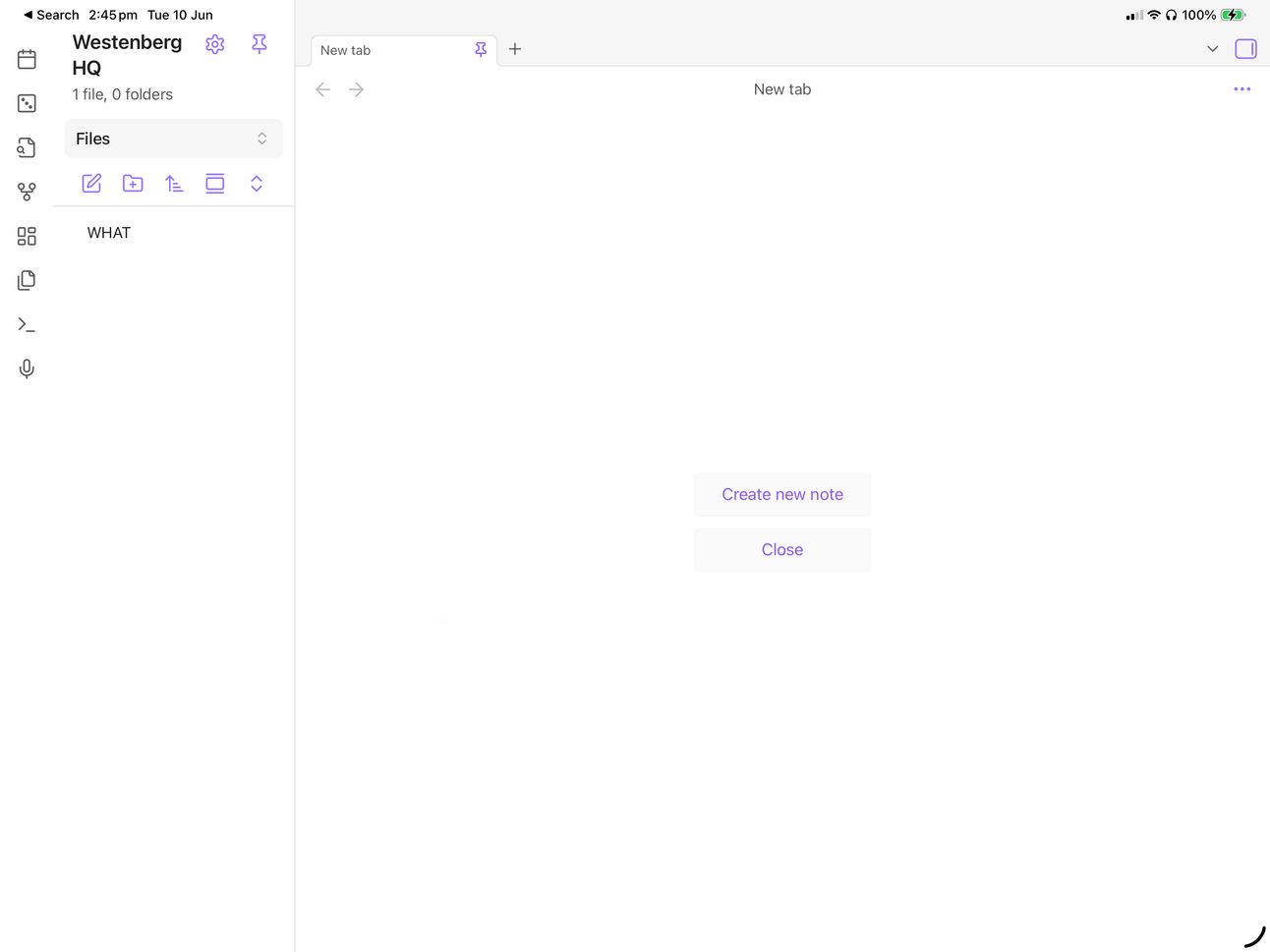
My new system is, simply, no system at all. I write what I think. I delete what I don’t need. I don’t capture everything. I don’t try to. I read what I feel like. I think in conversation, in movement, in context. I don’t build a second brain. I inhabit the first. Drawing on something DHH (37Signals) told me a couple of years ago, I’ve started keeping a single note called WHAT where I write down a handful of things I have to remember. *The important bits will find their way back.*
I don’t want to manage knowledge. I want to live it.
I still love Obsidian. And I’m planning on using it again. From scratch. And with a deeper level of curation and care - not as a second brain, but as a workspace for the one I already have.
And for the first time in years, I’m actually excited by that., I Deleted My Second Brain, Joan Westenberg, 01jz36kdtv13w55ahjea3aw2qn.