Is the King James Bible Crap?
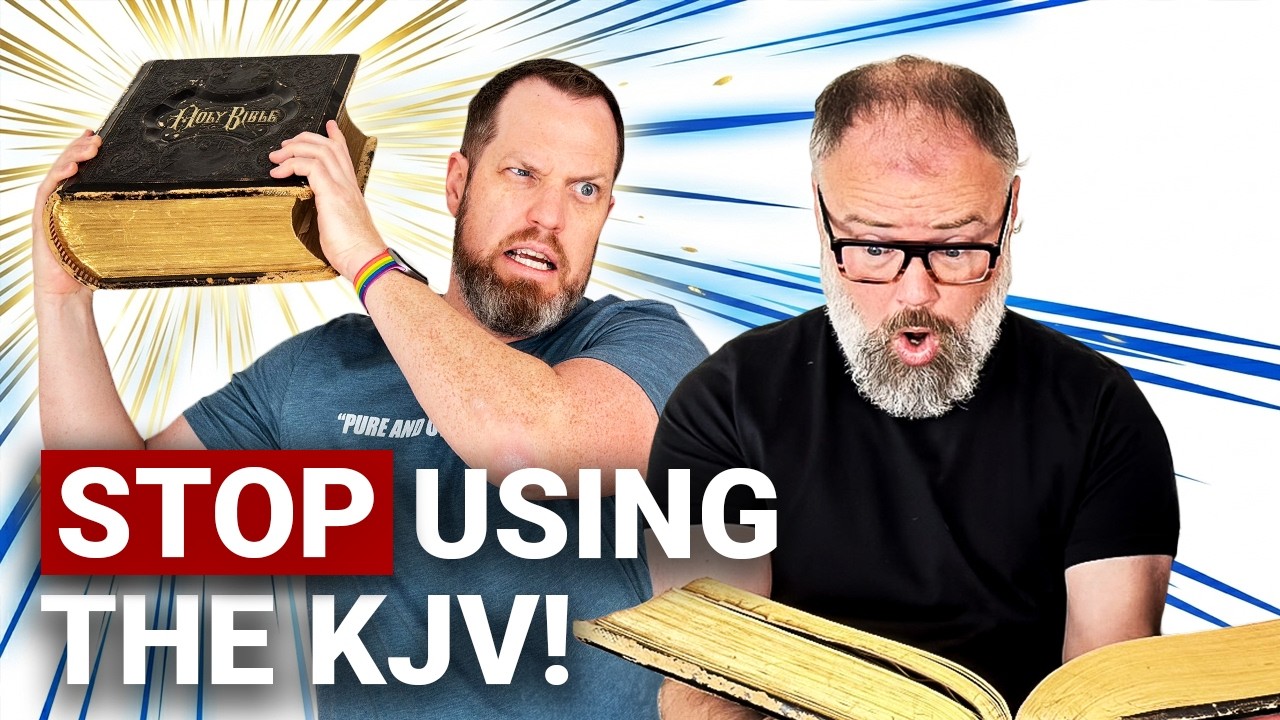
🔗 **Source:** [Is the King James Bible Crap?](https://www.youtube.com/watch?v=l_GISprZkIo)
Hey everybody, I'm Dan Mlelen and I'm Dan Beecher and this is Data Over Dogma where we increase public access to the academic study of the Bible and religion and we combat the spread of misinformation about the same. How are things on this fine what is it 69° day at the >> Oh, don't do that to >> I got to bring up how nice it is outside. You don't want to hear that. Well, you know, you and I were just talking on the uh on the afterparty uh over over on our Patreon page uh the
about golfing and just being outside. Suddenly, I got I got the itch. I want to be out there. But instead, I'm locking in and uh and we're going to do a show for the people. Today, we're going to be doing a twisted scripture. Uh, and the the the the the scripture that got twisted, don't get it twisted, is the KJV. >> Yeah. So, the the whole Bible, the >> the Bible, >> but a specific version. We we'll get
we'll get to why uh that specific version is uh is its own form of twisted. So, let's dive right in to twisted scripture. So, the KJV uh it's there are still lots of people out there who believe that it is the only English version that anyone should be looking at for anything. It is the inspired and true word of God. Every bit
of it uh uh inherent in every way. Uh amen. >> Yes. the the the degree of KJV onlyism out there is puts PO law to the test time after time after time because I'm like you cannot cannot possibly be serious. Uh for instance, folks who uh pastors who will insist that they will use the King James version to correct the Greek >> and so and I'm like no that's
>> no you can't be serious. Um, >> but yeah, >> I I you know what? It takes a bold move to you to correct source material with the after with with the thing that came after. >> Yeah. Yeah. With the target translation. Yeah. >> Uh but yeah, there there's a large degree of that. But the King James version while it remains it is one of the most popular translations I think it still may be the best selling
translation out there. It is not the most read translation out there. So it is kind of more of an icon um than an actual translation that people like to read because >> it's a slog. Um, I think the NIV might be the most read translation out there, but uh, it it is a it is an influential translation. So much so that uh, Robert Alter recently published his own
translation of the Hebrew Bible and along with it he published somewhat of a companion volume called the art of Bible translation. >> Oh yeah. >> And he talked about how all Bible translations into English these days operate in the shadow of the King James version. And so you might as well you need to lean into that. Um, otherwise you're just um spitting into the wind. Um, >> now now we've been saying the the phrase King James version, but can I can I correct us a little bit >> because when it first was released, it
was >> the Holy Bible containing the Old Testament and the New, newly translated out of the original tongues and with former translations, diligently compared and uh revised by his majesty's special commandment. Yes, >> that was that was the original title. Why don't we go back to that? >> It's a little too wordy. Um, it's >> instead of the KJV, it's T H B C O T A T N T. Okay.
>> Yeah. And and it's also not entirely accurate because uh I mean the degree to which it is a a new translation is is very small. It is a conservative revision of the Bishop's Bible, specifically 1602 edition of the Bishop's Bible. In fact, the they got several copies of the Bishop's Bible and sent them to the translators and they literally scratched words out and wrote
the replacements in the margins. >> Oh, wow. and and then they were collected and they had folks who were the editors who would basically just transcribe the resulting cobbled together translation. So, and and there are there are scholars who have estimated the the New Testament of the King James version and and like we can see how close it is to the Bishop's Bible. It's incredibly close to the Bishop's Bible, but it's even incredibly close to Tindle's translation of the New
Testament, which is several versions removed from the Bishop's Bible. Uh they they estimated uh 84% of the New Testament in the King James version is word for word. Uh Tindle's translation. >> Wow. I did not realize that. >> And about this is this is why it is the KJV and not the KJT. Uh, I mean the the the titles are are pretty there's not a a really strict uh set of rules for titles, but some people call it the KJB.
>> Oh. >> Uh, the King James Bible. >> Oh, sure. >> Where and that way you just sidestep the claim that it's its own translation. But but yeah, it's it's really just a revision of the of the Bishop's Bible. And so, a lot of the things that we're going to talk about today as as squirrely translations have actually existed for like a century. uh before the King James version was was ever translated. So, it's not like the King James version introduced all of these things, but but certainly it perpetuated and um and in the history since the
publication of the King James Bible, it has been responsible for um making sure those things remain influential, >> become become cemented into the tradition or whatever. Yeah. In fact, the King James version has a lot to do with with the language that we use because we're English was moving away from the King James version until the first and second great awakenings when suddenly it was like bring back the King James version and then a lot of words that had fallen out of use suddenly
popped back into use only because of the influence of the King James version. So like the word warfare that we only use that word because the King James version Yeah. and and there's a there's scholarship that looks at a list of words that uh were no longer used until the second great awakening and in the 19th century and and suddenly people started using these words again and they're still used to this day. But we and we got a lot of different
examples of of problematic uh passages in here because while it was based on this revision was based on the best available scholarship of the day for the most part the scholarship has advanced significantly. Our resources have advanced the >> I would hope so. >> Yes. And probably the biggest thing is we have a lot more manuscripts that are available to us today. the science/art of textual criticism has advanced significantly and we can make much more informed decisions about what readings
are most likely earlier particularly because we have access to a lot more New Testament manuscripts we have access to the Dead Sea Scrolls uh all that kind of stuff so some of the things we'll talk about have to do with uh translations some of the things have to do with uh manuscripts and what sources are being used >> okay >> so for instance one of the first things one of the biggest things one of the most influential things is uh something known as the kama Johanam. Are you familiar with the with that
phrase? >> The I I'm I'm familiar with the Oxford comma. >> Okay. No, this is a different one. >> This is a different comma. >> Also known as the Johannine comma, >> right? >> Uh and and comma here just means clause. >> Okay. >> Um and so it is first John 5:es 7 and 8. And this uh these two verses read, "For there are three that bear record in heaven, the father, the word, and the holy ghost, and these three are one." And so this is a central
trinitarian proof text. >> Right. Right. >> Um the only problem is it's not in any early Greek manuscripts. >> It's something that >> pops up in uh Latin manuscripts. And so >> the the King James version, the source text that the translators went to when they were like, "Why' the bishop's Bible translate it this way?" They would go back to a source text for the Greek New
Testament. And the the source text they went back to was the what became known as the Textus Receptus, which is a a version of the Greek New Testament that was originally cobbled together at the beginning of the 16th century by Desidarius Arasmus. And uh he the when he first started this project, he went to his library in Switzerland and was like, "Give me all your Greek New Testament manuscripts." And they were like, "We got six of them." And then they added a seventh
later on. Uh but it was like two manuscripts that represented the majority of the New Testament and then the other four to five represented smaller portions. And he basically just took them and and collated them and said, "Okay, I like this reading over here. like this reading over here. And in the uh between the second and the third edition, some people started asking him why he didn't include this verse or the this this is a a clause that crosses two verses.
>> And um there's another part of one of the verses that's not a part of this, but >> they said, "Where's that phrase?" And he was like, "It's not in any of the Greek manuscripts." and uh he got leaned on by uh people who had a lot of power and influence and he basically said, "Look, I'm not going to include this unless I have a Greek manuscript that has it cuz it's not in any of the Greek manuscripts." And lo and behold, somebody shows up with a Greek manuscript that has it.
>> I have it under my pillow. So, >> and and quite literally, it's uh dated to more or less within a couple of years of uh of when it showed up at Arasmus' doorstep. And scholars who have looked at it have said, "Yeah, it looks like somebody just translated the Latin back into Greek." >> Okay. >> While in while transcribing this manuscript. So, um but he said, "Okay, fine. I'll include it in the third edition." So the third edition of his
Texas receptus which was really called the noam instrumentum a new instrument. Um the third edition has the kama Johaneam and it just so happens that the edition that the King James translators uh le relied on for their revision was the third edition. >> Okay. So the King James version of course included the Johannine comma and that's one of the things that was stricken uh once we started doing more text critical work uh in the 1700s and
then more earnestly in the 1800s. So >> all you scholars and your and and how you're trying to deceive everyone by taking scriptures out of the books. >> Yeah. Yeah. That's Oh gosh. And there there's about we've talked about this before. I think the >> there are about 16 verses in the New Testament that are commonly just omitted just deleted from contemporary translations of the Bible. And it sends some people into conictions. They just
That's right. >> Yeah. They they're like um and the reality is it's a more accurate book. It's a more accurate New Testament without it. So somebody added it to it. Um, I want to talk about another one that's relevant to uh the use of Arasmus' texus receptus. >> Oh, sure. >> And this comes from the book of Revelation. >> Okay. >> Revelation 22:19. And um when Arasmus went and uh asked
for all those manuscripts, what he got omitted the last chapter or so of the book of Revelation. He did not have a m a manuscript that included the end of the book of revelation. So what he did was he took the Latin and he just translated the Latin back into Greek and just slapped that on the end of his uh the end of his product. >> Okay. So, so it's it's it's in Greek in
the text receptus, but it is Greek that was translated from a Latin manuscript. And part of the uh the Revelation 22:19 in the um King James version, it talks about somebody's name, the people's names being in the book of life, >> which in Latin would be Libro. And uh so the Arasmus' Texas receptus has book of life. All fine and good except for the fact that the Latin is wrong. Um or at
least the somebody was wrong in uh transmission because the Latin probably said ligno which meant tree >> because the Greek manuscripts the Greek manuscripts all say tree of life. >> Okay. So, uh, so Revelation 22:19 in the King James version refers to the book of life, but it should refer to the tree of life, >> having your name written in the tree of life. >> Who writes in trees?
>> I I mean, I guess people >> there. Revelation talks a little bit about this about this tree that grows alongside the river. Um, but yeah, an interesting little uh variation that we see based on the fact that Arasmus was like, "Where'd the last chapter go? I'll just translate it from Latin." That looks like the word book. Um, and >> so wait, the Texas receptus that he was creating was a Latin was in Latin, right? >> No, he was creating a a Greek edition of
the New Testament. He was he was basically >> Oh, okay. So he's so he's taking original Greek sources and just cobbling together a Greek version, >> right? >> Okay, I get it. >> This would be called an eclectic edition, right? >> Eclectic meaning it's it's cobbled together from a bunch of different manuscripts. The alternative would be a diplomatic edition. That's where you're just basing it on a single manuscript. So most critical editions of the Hebrew Bible, they're based on the Lengrad Codex. They're diplomatic editions. Most
critical editions of the New Testament are based on a bunch of different manuscripts. They're eclectic editions. But you can have the opposite. You can have a New Testament manuscript that's based on Codex Caticus or something like that. That would be a single manuscript. That'd be a diplomatic edition. And and there's a an Oxford Hebrew Bible project that's trying to put together an eclectic edition of the Hebrew Bible where they're incorporating Dead Sea Scroll readings and and Septuagent readings and things like that. So, so yes, he was he was generating a a Greek
edition of the New Testament, it was the first widely available Greek edition of the New Testament. >> Okay? >> Because up until you wanted the Greek New Testament, you had to go find a manuscript and most of the manuscripts that were the early manuscripts didn't cover the whole New Testament. And so his his uh edition of the Greek New Testament is what it made is what made it possible for Martin Luther to translate the New Testament from Greek into German. >> Because before that they were using the
Latin, >> right? >> And this kind of caused this sea change where everybody was like, "All right, we're leaving the Latin behind. We're going back to the Greek." >> Okay. >> So it was a big deal. >> Yeah. And I get it now. I I I had I was just I had translation on my mind and so I I was thinking that he was translating to something but I just hadn't. >> Oh yeah. >> Yeah. Anyway, uh now that I understand what we're talking about, let's let's continue going on with uh with KJV and
ways that it might have gotten a few things a little wonky. Um, wait. Let's talk unicorns because there's something >> just delightful about uh about a Bible. Frankly, I don't want to give this one up. I want there to be unicorns in the Bible. You're about to tell me that I can't have my unicorns and I'm about to be sad. But talk Let's talk about where they come from and what what what it's what it's trying to translate.
>> Yeah. So, the King James version has um nine occurrences. I think six occurrences in the singular unicorn, three occurrences of the plural unicorns. And when we look in the the first place we can we can go is the Septuagent uh because that's the tradition that resulted in that's one of the traditions that the that the King James translators uh referred to. In fact, when we go all the
way back to I in fact I I pulled up Tindle's Penetuk cuz William Tindle translated more than the New Testament. He also translated the entire Penetuk which was published in 1530. But in uh Deuteronomy 33:17 we have a reference to this where it says uh his horns as the horns of and unicorn. And you know unicorn has a Y instead of an I and an E on the end and all that kind of stuff. Right. >> Uh so the the use of unicorn goes all
the way back to uh to tindle in English and it's actually used in something related is used in the uh in the vulgates. I think they use rhinoceros >> um in the let me just pull up the the vulgate real quick to to make sure. But um the Latin would be translating the septuagent uh monocaros. Is it monocaros or
monokeros? Yeah, it's monocaros which means one horn. >> Okay. >> And so the septuagen is probably the foundation of this misunderstanding. Uh, I think once you get into the the Latin vulgate, you get the this was probably Jerome's attempt to try to understand the Hebrew word by appealing to the Greek because the Hebrew has ram. And that is kind of an unusual term. For
a long time, people weren't exactly sure uh what it was. Most scholars today would say it is a now extinct kind of ox called an orics. >> Oh, okay. >> Uh but when you go um but they didn't know this anciently. Uh I'm looking in the Yeah, rhinoceros is what the vulgate has in uh in Deuteronomy 33:17. So the it sounds like the the vulgate is
like a one horn. What's that? Well, we got these things called rhinoceroses. Rhinocerai. Maybe that's what's going on. So, the the Vulgate is using that. The Greek is probably basing this translation on reports from Persia uh from people who are exploring and legends from even further uh east into uh you know like the Indis Valley or
something like that because there's an idea that in Persia they knew about this animal that had one long horn not not quite a unicorn but some singlehorned animal. Uh in and deeper into uh the Indis Valley into India, there were reports coming out of this creature that had a long horn that was, you know, its horn had healing properties and stuff like that. And that's where the the mythical creature probably comes from. M
and so this is like fifth 4th century BCE explorers writing in Greek are talking about these mythical creatures and I think the the Septuagen translator either was trying to reflect that idea or was just trying to reflect the idea of a rhinoceros. >> Okay. So when we get into English, they're like, "Right, what?" They don't really know what's um either they don't know what's
going on or unicorn originally had a broader semantic range and could include a rhinoceros. >> Sure. But very quickly the idea was that this is a this this mythical creature when in reality the Hebrew would have just referred to this particular kind of ox. And one of the reason one of the confusing reasons one of the reasons we know it it's is not a one-horned animal is because Deuteronomy 33:17
has it talks about the plural horns of the in Hebrew. >> And so the animal the animal is singular. The horns are plural. >> Oh, okay. >> You can use a singular word for an animal to speak collectively about multiple animals. Like we we talked about that in Exodus where the the plague of frogs just mentions a frog. >> The plague of a frog.
>> Yes. So there's like this kaiju frog crawling out of the out of the Nile. Uh, and also, uh, the word for bird. Uh, every bird of the sky, all the birds, uh, it's just of in the singular. >> Okay. >> Um, and so maybe that's what's going on. But when the King James version translated Deuteronomy 33:17, it um, it kind of fiddled with that a little bit and it talks about the horns of unicorns in the plural. Mhm.
>> So, um, they didn't want quite want to abandon the notion that this word referred to a a singlehorned animal, whether whether it was understood as natural or or mythological. >> But like the the way that it talks about these animals in the Bible, it doesn't it's it's not it doesn't seem like it's referring to a mythical creature with magical abilities. It just seems like it's referring to an animal >> that the people reading it would understand, would know, right? >> Yeah. Just like if we if we wrote about
a bear, >> no, you know, no one would think, oh, it's mythical or whatever. They would just >> that's that that's a thing that exists and we all know what a bear is. >> Yeah. And and certainly the some of these animals would have been better wellknown than than others cuz you know I think I think you got plenty of examples of of different regions even in the United States but especially around the world where some some people might know about a certain animal and and people who don't live very far away from
them might be like what's that? >> Yeah. Um, like when I the the first time I went to uh Israel, Palestine, I was in I forget the ruins of of an ancient city and I heard this this high-pitched squeak almost like a yell. And I was like, "What is that?" And um somebody was like, "Oh, it's a hyrax." And I was like, "And what pretel is a hyrax?" And they were like, "Oh, it's kind of a it's kind of a rodent that that hides
out in in rocky areas." And then I was like looking at a pile of of uh basaltt rocks and then this little rodent poked its head out and went and and yelled at me and I was like, "Oh, that's a hyrax." >> I heavily encourage everyone to look up hyraxes cuz they're uh I wouldn't say cute. They look mad. They all look pretty mad. >> Yeah, they do. Yeah. And they sound mad. Like they they sound like they're like, "Get out of here."
>> Um, >> what are you doing? >> Yeah. Yeah. >> So, uh, I had no idea what a hierax was until I started getting shouted at by one. So, um, and I had to have some knowledge dropped on me. >> There you But but yeah, so so I'm you know if if somebody you know I tell this story and and 2,000 years from now somebody >> uh reads a transcript and they have and they've and you know the knowledge of the Hierax has been lost because maybe it's extinct or something like that >> then yeah they might be like Hierrax
that kind of sounds like the Toyota Hilux. So, it was probably an animal that looked a lot like a car. Uh, or I don't know. You know, there if you're if you're trying to translate a word that you don't have a a translation for, >> you you kind of go with whatever you got. >> Yeah. And and in the King James version, they're using a lot of traditions that, you know, are found in the the translations that precede them. And, uh, some of them are are kind of silly. Uh,
one of the ones that I wanted to jump to, we don't we're we don't have a lot of time, but I wanted to jump to how the KJV handles >> uh the word how it translates a bunch of different words all to the word hell. >> Oh, >> and doesn't and doesn't bother to distinguish any of them. >> Yeah. So, this is so you got three different word. Well, one in Hebrew, sha >> is translated hell in the King James version, right? And and this is just based on the assumption that's you know the assumption of univocality. Well,
we're we're talking about the realm of the dead and it's not particularly happy. That must mean hell. >> Yeah. >> And the reality is that they had they did not have a concept of hell in the Hebrew Bible. Everybody went to the same place. Good, bad, >> nor heaven. Just just sha. >> Yeah. Shaol, which is just the realm of the dead. and it was a it was a hazy, murky, not very exciting existence. Uh, and they didn't know an awful lot about it. So, so right off the bat, yeah, that's that's a mistransation uh in the
King James version. And then you've got uh a few different words that are used in the New Testament. The main two are Hades >> and Gehenna. It's really gea in uh in Greek transliteration, but those are the two that are most commonly translated hell. And then you've got one occurrence of the word tarderus. >> And in Greek, uh, gehenna is is a Greek Jewish term. It, um, comes from Gehenna from the valley of the son of Henom. Um,
and this is this valley that that um comes around the the south end of Jerusalem. And this is associated with uh child sacrifice in the pre-exilic period. The tophett which is where the pre-exilic kings were supposed to have offered their children as sacrifice make make them pass through the fire that that all that stuff that's supposed to be on the edge of the valley of henam. And in Greor Roman period Jewish tradition that location becomes associated with the bad
place. Uh just because it is there's fire, there's wickedness, there's killing, that is the bad place. And so that becomes kind of an esqueological location of divine punishment. And so in the New Testament, that's Gehenna. Uh, Hades is just is largely borrowed from from Greek um, mythology and Tartarus in Greek mythology is one of the two places you can go within Hades. Hades is kind
of a more generic realm of the dead. And for certain groups, if you've been good, you go to the fields of Alissium. That that is uh, you know, in Gladiator. That's uh, that's what he says. You are in Althium. >> Um, and then the other place is Tardus. that's if you've been bad um and you don't want to you don't want to end up in Tarderus. But I in borrowing that concept into the New Testament, >> Hades kind of has more of a negative
tone. So it's it's kind of conceptually merging with the idea of Gehenna, but uh but Tardarus is I think it's it's used in one of the letters of Peter and that's more directly referring to the lake of fire kind of bad part of of Hades. It'd be I'm trying to imagine what Christianity today would look like if those three words slash four words were each given a different translation
or were you know what I mean were separated out as four distinct concepts. I think it would that's a that's a big deal difference. >> Well, yeah, you can you can look in Mormonism for their degrees of glory if you if you really wanted to try. Sure, man. Um, but no, it's although it's not quite quite the hierarchy that that Mormonism presents, but uh but yeah, I I think it would be fascinating if if those different concepts were allowed to stay different. But that's
kind of that's kind of the pattern is is everything gets kind of lumped together. You have the good side and the bad side. And you know, all of the bad entities from the Hebrew Bible get just consolidated in in Satan. Whereas all the good, all the supernatural mediator figures from the Hebrew Bible get consolidated into Jesus. Right? >> And all of the different concepts of postmortem, divine punishment get consolidated into hell. Whereas the idea of post-mortem good stuff gets
consolidated into heaven. There's only one concept. And and I yeah, I think that's an outgrowth of the fact that everybody's presupposing it all has to be pointed in the same direction, >> right? >> But yeah, I think it would be an interesting thought experiment. Somebody will have to make a movie one day about Christianity that did not presuppose univocality. >> Yeah, >> that would be interesting. >> It would be a mess. But >> it would be a mess. And I don't think and I think that, you know, to some extent these consolidations kind of have
to happen or at least like some >> Yeah. for any kind of unity, for any kind of consistency, >> you have to converge on some sort of understanding. >> Um, the LA there's also the the way the KJV talked about the word uh uh kashaf I don't know how to say that but uh sorcerer diver or >> as in the KJV thou shalt not suffer a witch to live which >> Oh yeah, Exodus 22:18, right? >> Yeah. >> Yeah. So um it's
should be 17 in the in the Hebrew. Yeah. So um masha is the is the word in um >> okay >> in Hebrew, but it it's based on it's a it's a noun form based on the verbal roots uh kashaf to practice sorcery. Yeah. And this is this is w like a lot of people say, "Oh, King James was was anti-witch and so he either told him to write this in or or made them change it
to witch or something like that." And um >> I mean, you know, Shakespeare wrote McBth for King James. Uh so obviously he had a witch thing. >> Yeah. But it's it's just not true because it's in the Bishop's Bible. It's in the Geneva Bible. It's in the Great Bible. It's in the Matthews Bible. It's in the Coverdale Bible. that's in the Tindle >> translation like it it is thou shalt not suffer a witch to live every single place it occurs in English up to and including the King James version >> but yeah in in Hebrew it's it actually
doesn't address the law to you in the second person it just says which would be a a witch shall not live >> okay >> so the verb is actually third feminine singular >> but is which the right The I I guess the problem that I have with the word witch in this case is that uh it's gendered. >> Yeah. And it's a feminine noun in the Hebrew. >> Oh, okay. >> Now, interestingly enough, the ancient
Greek translation not only changed it to masculine but changed it to plural. Oh, >> and they have pharmmakus which uh is based on the word um pharmicon or pharmarmacos which is could be magician, could be sorcerer but fundamentally it refers to someone who uh who mixes up potions. >> Thou shalt not suffer a pharmacist to live. I get it. I you know this is this
is an antivaxer. This is a a COVID denier who prophesied thousands of years prior to the arrival of CO 19 that uh that this was all going to happen and that Fouchy uh because you know the the original Greek uh could be rendered Fouchy if you uh >> you just got to cuz it starts with an F. You just got to you just got to change you got to, you know, elide the uh the row and the moo and then you got to um
kind of take the uh the kappa and render it more of a chuh. So anyway, um yeah, for for some weird reason the the Greek decided to just fiddle with it and make it uh and and uh pharmmakos can refer to potions for good or potions for bad. So you see the usage of the word in reference to people who are using it to heal. >> Uh but you more commonly see it as in
reference to people are using these potions for for ill. And so um the pharmarmacia became kind of a a bad word in in early Christianity which you know gave gives rise now to all kinds of ridiculous conspiracy theories that I have to see on Tik Tok day after day after day. All right. Well, that's all the time we have for our twisted scripture for today. Uh the I mean, you know, KJV still has some of the best
some of the prettiest language of any of the translations. >> Yeah. There there are some renderings that you can't get away from. You just got to just got to lean into that uh King James English. >> Yeah. I mean, you know, it's it was the time of Shakespeare. They say Shakespeare may have written some of it, but he probably didn't. >> Oh gosh. >> Come on. What is it? Psalm 46 or something. >> Oh god, >> there's a whole there's a whole thing. Anyway, >> uh look into it. Shakespeare Psalm 46. Shakespeare. It's all in there. 46 in
46N. All right. Uh we'll leave it at that. Uh if you would like to become a part of keeping our show going. We would sure appreciate if you would head on over to uh the patreon.com/data overdogma where you can become a uh a subscriber and you can have uh you know you just give us a little bit of your money and then you can have access to an early and adree version of every show. And if you subscribe at the $10 a month uh level you can get the afterparty
which is bonus content that we record every week. Uh, and we sure do appreciate our patrons. Thanks so much to Roger Gaudy for editing the show. Thanks to JJ for being our our producer. And thanks to all of you all for tune tuning in. We'll talk to you again next time. Bye everybody., Is the King James Bible Crap?, YouTube, 01kq7dmdqe8x94aw8kfmwhhbw2.