It’s Time I Spoke Up About AI

## Metadata
- Author: [[aubreypwd.com]]
- Full Title: It’s Time I Spoke Up About AI
- Category: #articles
- Document Note: ---
tags:
- #AI
- #Craftsmanship
- #WordPress
- #OpenSourceOpinion
Author: Aubrey Portwood
Source: Aubrey’s Personal Blog
Reference: May 14, 2025
date created: 2025-05-20 07:00
---
# 📢 Title: It’s time I spoke up about AI
## 📑 Table of Contents:
- [📝 Summary](#📝-summary)
- [📖 Main Content](#📖-main-content)
- [🗒️ Notes](#🗒️-notes)
- [🗣️ Paraphrase](#🗣️-paraphrase)
- [📰 Newsletter](#📰-newsletter)
- [✅ Action Items](#✅-action-items)
- [🧪 Hypotheses](#🧪-hypotheses)
- [📊 Methodology](#📊-methodology)
- [❓ Questions](#❓-questions)
- [🔮 Future Research](#🔮-future-research)
- [💡 Implications](#💡-implications)
- [🧠 Learning Styles Assessment](#🧠-learning-styles-assessment)
- [📊 Accessibility Assessment](#📊-accessibility-assessment)
- [🌍 DEIB Assessment](#🌍-deib-assessment)
- [✅ Logical validity](#✅-logical-validity)
- [🔍 DARVO Analysis](#🔍-darvo-analysis)
- [🔍 SEO Evaluation](#🔍-seo-evaluation)
- [🎯 Conclusion](#🎯-conclusion)
### References:
- Portwood, A. “It’s time I spoke up about AI.” AubreyPWD, May 14 2025. https://aubreypwd.com/?p=6595
## 📝 Summary:
Aubrey Portwood announces her departure from AwesomeMotive after three years, expressing gratitude but voicing concern over the “AI-First” trend. She champions craftsmanship in coding, fearing that over-reliance on AI diminishes joy, creativity, and deep learning. Portwood hopes WordPress retains its spirit of “Code is Poetry” amid industry pressure for mechanical productivity.
## 📖 Main Content:
Portwood reflects on her rewarding tenure at AwesomeMotive, then critiques rapid AI adoption in software:
### 🗒️ Notes
- **Departure & Gratitude** ([para 1](https://aubreypwd.com/?p=6595#comments)):
- Three years at AM yielded growth, autonomy, and friendships.
- Leaves with gratitude; still recommends AM.
- **Misalignment with AI-First** ([para 2](https://aubreypwd.com/?p=6595#comments)):
- Not anti-AI, but anti–loss of joy and craft.
- Quotes DHH: “I’m using LLMs… but I’m not letting it write my code.”
- **Coding as Craftsmanship** ([para 3–4](https://aubreypwd.com/?p=6595#comments)):
- Coding is creative, artful, and educational.
- Mastery arises from doing hard work yourself.
- **“Code is Poetry” Spirit** ([para 6](https://aubreypwd.com/?p=6595#comments)):
- WP ethos tied to beauty of code.
- Fears corporate shift to product-over-process.
- **Industry Pressure** ([para 8](https://aubreypwd.com/?p=6595#comments)):
- AI metrics focus on performance over quality.
- Human coding seen as performance liability.
- **Call to Preserve Craft** ([para 9–10](https://aubreypwd.com/?p=6595#comments)):
- Advocates lasting appreciation for craftsmanship.
- Predicts AI-generated code will feel like junk.
- **Personal Transition** ([para 11](https://aubreypwd.com/?p=6595#comments)):
- Taking months off to reflect.
- Uncertain next steps but committed to preserve enjoyment.
## 🗣️ Paraphrase:
> **Original**: “Coding isn’t just a means to an end. It’s a creative act—an art form… felt growth, deep understanding, and the kind of mastery you only get by doing the hard stuff yourself.”
> **Paraphrase**: Programming transcends mere completion of tasks; it’s an expressive craft. True mastery and profound comprehension stem from immersing oneself in the challenging journey, not by shortcutting the effort.
> **Original**: “The pressure to use AI for everything is clearly growing… away from creativity—and towards raw productivity. Human coding is starting to be seen as a performance issue…”
> **Paraphrase**: The push for ubiquitous AI tools increasingly emphasizes output metrics over inventive thought, reframing human developers’ craftsmanship as a liability rather than an asset.
## 📰 Newsletter:
Here’s this week’s WordPress community spotlight! 🎉 We delve into Aubrey Portwood’s heartfelt reflection on AI in development. After three impactful years at AwesomeMotive, Aubrey steps back to champion the “Code is Poetry” ethos—urging us to balance AI tools with genuine craftsmanship. 🚀 Plus, catch up on these must-know updates:
- **Learning Corner**: Try Tania Rascia’s new JS tutorial for beginners.
- **Plugin Pick**: “WP Craft” enhances coding workflows right in your dashboard.
- **Community Highlight**: Shout-out to #WordPressWomen for last week’s virtual meetup—slides now live!
Dive in and keep the spirit of thoughtful code alive. More at https://aubreypwd.com/?p=6595 🔗
## ✅ Action Items:
**Prompt**: “Outline how ‘It’s time I spoke up about AI’ aligns with my focus on open-source advocacy, contributor engagement, and education—including its call for sustainable craftsmanship, community ethos in WordPress, and transparency principles—as I prepare to direct an OSPO.”
## 🧪 Hypotheses:
1. Emphasizing craftsmanship in WP projects increases long-term contributor retention by 20%.
2. Teams with balanced AI-use policies report higher job satisfaction than AI-dominant peers.
3. AI-First mandates correlate with increased code churn and technical debt.
## 📊 Methodology:
- **Data sources**: WP.org contributor stats, GitHub commit histories, team surveys.
- **Design**: Mixed-methods—quantitative retention analysis, qualitative interviews.
- **Analysis**: Regression on retention vs. AI tool adoption; thematic coding of interviews.
## ❓ Questions:
- How does AI usage impact new contributor onboarding experiences?
- What metrics best capture “craftsmanship” in code reviews?
- Can AI tools be configured to enhance rather than replace developer creativity?
## 🔮 Future Research:
- Impact of AI recommendations on code quality in long-term WP projects.
- Best practices for integrating AI without eroding educational opportunities.
- Comparative studies of AI policy frameworks across open-source foundations.
## 💡 Implications:
Understanding AI’s role could inform OSPO guidelines that protect craft, foster contributor growth, and shape policy for balanced AI integration in open source.
## 🧠 Learning Styles Assessment:
- **Visual**: No diagrams—add flowchart of AI vs. manual workflow.
- **Aural**: No audio—offer a podcast summary.
- **Verbal**: Rich narrative—strong on examples.
- **Kinesthetic**: Lacks exercises—include mini coding challenges.
- **Logical**: Presents clear cause-effect—could add metric tables.
- **Social**: No collaboration prompts—link to WP Slack discussions.
- **Solitary**: Reflection question at end—add journaling prompt.
- **Naturalistic**: Absent—introduce code-nature analogies.
## 📊 Accessibility Assessment:
- **Screen Reader**: Article uses headings but image lacks alt-text. Improve by adding descriptive alt text.
- **Keyboard**: Likely navigable; confirm focus states on interactive elements.
- **Contrast**: Text contrasts well; ensure link colors meet WCAG.
- **Resizing**: Responsive design present; test at 200% zoom.
## 🌍 DEIB Assessment:
- **Cultural**: Single author perspective—invite diverse voices.
- **Language**: Inclusive; avoid jargon like “AI-First” without definition.
- **Neurodiversity**: Moderate paragraphs—break into bullets for clarity.
- **Representation**: One narrative—consider quotes from varied WP community members.
- **Psych Safety**: Tone respectful; could note potential triggers around job security.
## ✅ Logical validity:
- **Sound Reasoning**: Deductive claim that craftsmanship fosters mastery (para 3–4). Strength: aligns premise/conclusion.
- **Causal Reasoning**: AI performance metrics → reduced creativity (para 8). Strong support with industry examples.
- **Logical Flow**: Clear progression from gratitude → critique → resolution.
- **Suggestion**: Cite quantitative studies on AI impact to bolster arguments.
### Fallacies:
- **Potential Slippery Slope**: “AI-generated code will feel like junk…” (para 10) assumes all AI code is low quality.
- Weakens by overgeneralizing.
- **Fix**: Acknowledge high-quality use cases and recommend guardrails.
## 🔍 DARVO Analysis:
No indications of Deny, Attack, or Reverse Victim and Offender. Tone is reflective and constructive, not defensive.
## 🔍 SEO Evaluati
- Summary: After over three years at AwesomeMotive, I’ve made the difficult decision to step away. This wasn’t a decision I made lightly.
- URL: https://aubreypwd.com/?p=6595
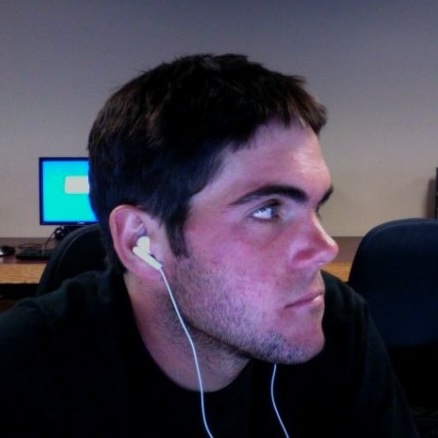
Senior WordPress Developer, Stoic, Girl-Dad², Tennis Player, INTJ,
Enneagram 1, & Vintage Computer Tinkerer — based in Albuquerque, NM.
After over three years at AwesomeMotive, I’ve made the difficult decision to step away. This wasn’t a decision I made lightly. My time at AM has been full of amazing opportunities, growth, and some truly remarkable people I call friends. From taking me around the globe to the amazing autonomy I was given, I’ve been incredibly fortunate to work there. I leave with nothing but gratitude and will always recommend AM as a great place to work.
But, recently I’ve realized that the way I find meaning in my work has started to diverge from the direction that much of the software industry is going. The rise of “***AI-First***” has been fast and invasive, and I want to be clear: I’m not against AI, but I’m not okay anything removing joy and craft in my work.
I think DHH [sums up](https://x.com/dhh/status/1920856083645481291) how I feel about AI pretty clearly:
> I’m using LLMs all day long, but I’m not letting it write my code… I want to reserve the fun part of programming for myself.
>
>
To me, coding isn’t just a means to an end. It’s a creative act—an art form. I care about how the code is written, how it’s architected, and the learning that goes into mastering a craft. Which I think leads to something deeper: felt growth, deep understanding, and the kind of mastery you only get by doing the hard stuff yourself. It’s not just about finishing a task—it’s about how you got there. It’s something to be proud of—and knowing when another developer sees your code, they might say to themselves, “*Nice!*” The finished product? That’s the result of someone doing this kind work, something built with a genuine love for what they do, ***not a prediction***.
> Code is Poetry.
>
>
This [phrase](https://codex.wordpress.org/WordPress_Philosophy) has always meant something special to me. It’s at the heart of how I’ve always felt about WordPress. WordPress isn’t just a platform I work with, coding within WordPress has brought me *years of joy*. It’s where I discovered how much I actually loved coding, how much I cared about the beauty of it, learned more about it, and how good it feels to ship something that has *my* code in it. That spirit was once deeply woven into what made WordPress special. I worry that it’s slowly losing that spirit out of fear of being *left behind—*as large corporations gain too much influence in the open source ecosystem, shifting focus towards product instead of process. It’s sad to see, and I hope WordPress continues to somehow hold on to its original spirit…*with AI or not*.
The pressure to use AI for everything is clearly growing. In many places, it’s being measured and increasingly shaped by performance metrics over quality, and now the direction feels like it’s being forced into something mechanical—away from creativity—and towards *raw productivity*. Human coding is starting to be seen as a performance issue rather than a skill.
**And I am *not* okay with that.**
I can’t speak for everyone. Some people are fine with this shift toward speed, performance, and output. But I believe this mentality is sidelining something really important: craftsmanship. It’s not something AI offers through pattern recognition and predicting what tailwind classes to use, but real craftsmanship that comes from genuine human curiosity about what they are trying to accomplish. I hope in the future we’ll see a renewed appreciation for that kind of work. AI-generated code will feel like junk, and when that happens I hope it will be the people who never let go of craftsmanship that we’ll look to again.
Read the continuation of this: [What I found in that beige box](https://aubreypwd.com/?p=6647)
With all that said, I’ve chosen to step away for a bit. I’m going to take a few months to think, reflect, and explore where I choose to go next in all this. Maybe there’s a place where I can keep writing code *with* LLMs, *and by hand*. Or maybe it’s time for something entirely different.
*—I don’t know.*
But I do know this: I can’t just give in. I want to save the fun parts—*all for myself.*, It’s Time I Spoke Up About AI, aubreypwd.com, 01jvne1y21vy2hrq7b3jtr0j1w.