Just Trying to Figure Out My Job
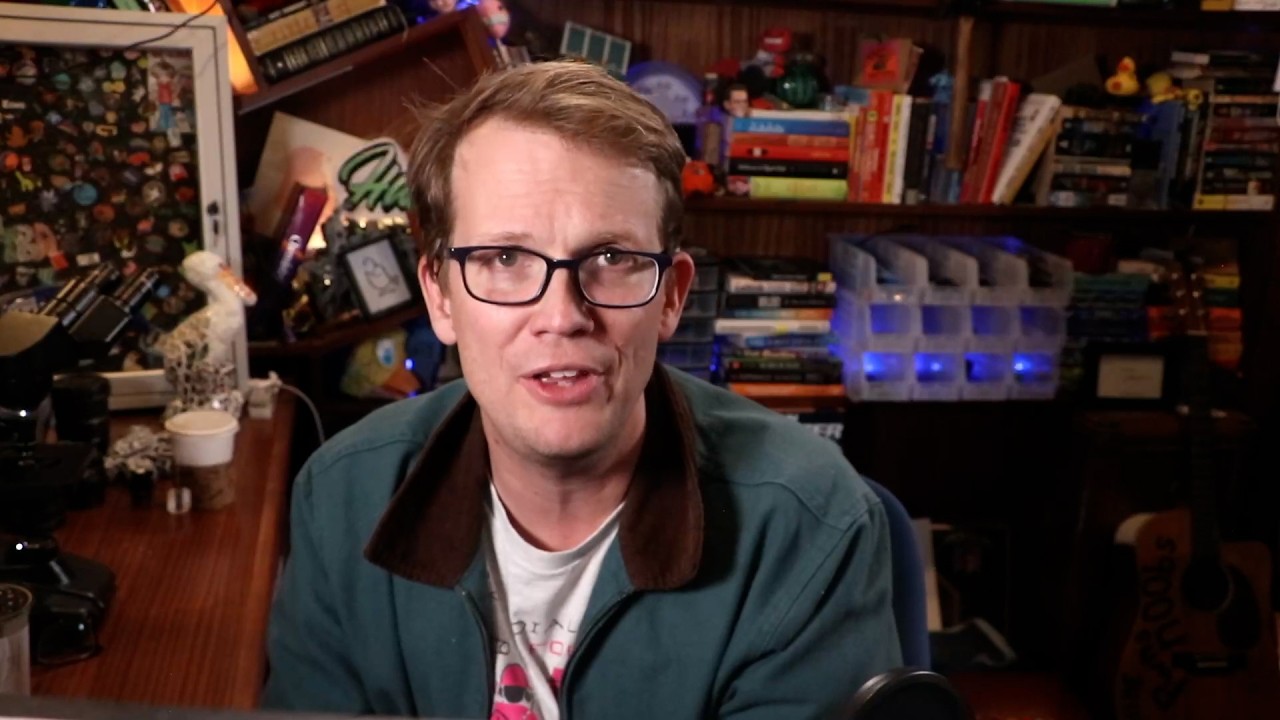
🔗 **Source:** [Just Trying to Figure Out My Job](https://www.youtube.com/watch?v=ssE1rmt3EpE)
> [!note]+ Document Notes
> ---
> tags: [audience-capture, ai-policy, creator-accountability, content-creation, media-literacy]
> author: Hank Green
> source: https://www.youtube.com/watch?v=ssE1rmt3EpE
> reference: Hank Green / John Green (Vlogbrothers), audience capture, LLM use disclosure, Complexly AI policy
> date created: 2026-08-08
> ---
> > [!info] Generated analysis — not the author's words. Sections below are machine-written
> > from the captured source. Only text inside `> [!quote]` blocks is verbatim from the author.
> > Do not quote or attribute any other line to the named author.
> # 🏷️ Just Trying to Figure Out My Job
> ## 🧭 Table of Contents
> 1. References
> 2. Summary
> 3. Main Content
> 4. References (source list)
> 5. Paraphrase
> 6. Newsletter
> 7. Action Items
> 8. Hypotheses
> 9. Methodology
> 10. Questions
> 11. Future Research
> 12. Implications
> 13. Learning Styles Assessment
> 14. Accessibility Assessment
> 15. DEIB Assessment
> 16. Logical Validity
> 17. DARVO Analysis
> 18. Conclusion
> 19. Refactor Appendix
> ## 🔗 References
> - Complexly's public AI policy (referenced, not embedded — linked in the original video description)
> - Prior week's public post about LLM enthusiasm/overuse (referenced, not embedded)
> ## 📝 Summary
> A short, personal Vlogbrothers video in which Hank Green responds to a week of public criticism after admitting he had become over-reliant on LLMs for advice, editing, and sourcing. He opens with the "audience capture" concept — creators drifting toward whatever gets the strongest audience reaction until the creator becomes incoherent with their original self — and applies it reflexively to his own recent behavior and to the discourse response he received. The video has two explicit purposes he names directly: (1) an apology to the people who work at Complexly (Crash Course, SciShow, Eons, Eskindar), whose careful, expert-informed work he feels his AI-use controversy put into public question by association; (2) an announcement that he is creating a personal AI-use policy, following Complexly's institutional lead, to constrain his own LLM reliance going forward. Stakeholders: Complexly's staff and creative teams (reputational exposure), his brother/co-creator John Green (the video is addressed to him directly), and the broader audience debating AI use in creative/educational content. Risk/tradeoff acknowledged directly by Green: some of the public response was "silly or bad-faith criticism" based on incorrect premises (e.g., a false claim about Crash Course videos), but he separates that from the substantive part of the criticism, which he accepts.
> ## 📖 Main Content
> ### 🗒️ Notes
> **Audience capture, applied reflexively:** Green opens by naming the audience-capture dynamic — a creator absorbing audience reaction until they drift from their own coherent perspective — and immediately turns it on himself and on the discourse he's currently inside, rather than using it only to critique others. He explicitly distinguishes "listening to understand where someone is" from "listening to converge everyone onto one correct take," framing healthy community response as the former.
> **The apology, specifically scoped:** Green is careful to separate himself (his own AI overuse, his own public statement, his own presence on Twitter) from the Complexly staff whose work he says is being "called into question because of my issue" — despite Complexly's own AI policy being long-standing and, in his words, clear enough that its wording ("barred") dates it. He frames the apology as being about association and public trust, not about Complexly's actual practices.
> **The stated policy response:** Green commits to creating a personal AI-use policy (separate from Complexly's institutional one) constraining his reliance on LLMs "for advice, for editing, and for sourcing." He frames having a personal policy — public or private — as broadly good practice he'd recommend to other creators, independent of this specific incident.
> **Distinguishing "checking boxes" from wanting to make things:** Green explicitly rejects the audience read that he was using AI to rush through a content quota, countering that his actual problem is the opposite — wanting to make *too much*, across too many simultaneous projects (prototyping games, researching climate regulations, 18th-century organic chemistry, screwdriver history) — and that LLMs made that scattering feel newly possible rather than making him lazier.
> ## 📚 References
> No external citations are embedded in the transcript itself; the video references Complexly's AI policy and Green's own prior public post but does not quote either verbatim in this recording.
> ## 🗣️ Paraphrase
> Opens by defining audience capture and applying it to himself, admitting he has been "searching for certainty" over the past few years amid general destabilization, and framing his worry about audience-capture dynamics against his belief that creators still have some obligation to their audience. States his view of healthy community response: not converging everyone onto one person's take, but each person being genuinely understood in where they are. Thanks John directly for being frustrated with him while remaining kind and compassion-led, and for not adding guilt about timing (a novel release). Recaps the originating incident: he'd posted publicly about being "enticed" by LLMs across many simultaneous projects, acknowledges some response was bad-faith or factually wrong (a false claim that AI was used on Crash Course videos, when Complexly's AI policy long predates the controversy), but states the core criticism landed and is his to own. States the video has two purposes: an apology to Complexly's staff, whose careful expert-informed work he feels got reputationally entangled in his personal controversy; and an announcement that he is building a personal AI-use policy after realizing he'd become over-reliant on LLMs for advice, editing, and sourcing. Frames personal AI policies (public or private) as good practice generally, not just incident response. Pushes back on one specific audience reading — that he was using AI to grind through a content checklist — countering that his actual failure mode is wanting to make too much across too many projects at once, and that AI made that feel newly achievable. Closes without full resolution ("I still don't have the certainty that I would love to have") but states he feels clearer on what his job actually is: to be himself, and to let people trust that his takes are genuinely his own.
> ## 📰 Newsletter
> **A creator's public accountability video, read as a case study in scoped apology.** Hank Green's response to public criticism over LLM overuse does two things worth noting as a pattern: it separates the apology (to Complexly's staff, for reputational spillover) from the self-correction (a personal AI-use policy, distinct from his employer's institutional one), rather than blending them into one generic mea culpa. It also explicitly rejects one specific piece of audience feedback (that he was using AI to rush output) while accepting another (that he'd become over-reliant on LLMs for advice/editing/sourcing) — modeling that accepting criticism doesn't require accepting every claim within it. Relevant to this vault's own running thread on AI-tool disclosure and personal-policy-as-practice.
> ## ✅ Action Items
> Not applicable to this source — a personal creator accountability video with no organizational, WordPress, or DevRel content.
> ## 🧪 Hypotheses
> 1. Creators who publish a personal AI-use policy (public or private) will report lower incidence of audience-trust controversies over AI use than creators without a stated policy, independent of actual AI usage level.
> 2. Public apologies that explicitly separate "what I did wrong" from "what critics got factually wrong" will be received as more credible than apologies that either concede everything or contest everything.
> 3. The "audience capture" framing, when a creator applies it reflexively to their own recent behavior, correlates with a more measured public response than when it's used only to describe others.
> ## 📊 Methodology
> None — a personal reflective/accountability video, no data collection or study desi
Good morning, John. So, there's thisidea among people who study media calledaudience capture, which is when like acreator gets signals from their audienceabout what's most interesting to them,what angers them, what gets them mostexcited, what they like and what theydon't like, and then they just likeslowly become that perspective. More andmore forever, the creator becomes athing that isn't really them, maybeisn't even really coherent, and theaudience and the creator reinforce eachother's certainty. I 've been searching alot for certainty a lot, not just thislast week, but like this last couple ofyears, it's felt destabilized ingeneral. And so when I see dynamics likethat that bring people to a certaintythat I don't think is deserved byreality, you know, if you look at our
previous ability to predict the future,it hasn't been great. So, I worry aboutthat. But I also don't think thatcreators have like zero obligation toTheir audience. Obviously, I hope theway community actually works is we alllisten to each other. Not just to hearthe takes at the surface, but the stuffdeeper down. Not so that we can say,"Okay, Steve has identified the one trueplace that we all need to be." So,everybody get to where Steve is, butinstead so that people can say, "I getwhere you are." And understanding thathas moved me. Now, you're not going toget moved to a place where you haveexactly the same perspectives as anybodyelse, but we move each other. That ishow this community has always worked.
and it's how our brotherhood has alwaysworked. I should say, John, you're agood brother. I hope that you could hearthat. I appreciate you so much for beingfrustrated with me and worried about meand being kind with your frustration andmaking it clear that your compassion andyour love for me is the biggest piece ofwhatever you're feeling. Also, Iappreciate you not saying, "Oh my god, ICannot believe that this is distracting from the imminent release of the novel I have been working on for a decade.
I appreciate you not saying it. I'm sure you are feeling it.So, last week I posted publicly about how I have been so enticed by LLMs.Always starting on a new project or prototyping a game or researching climate change regulations and 18th-century organic chemistry and the history of screwdrivers, all at the same time.The more time I spent with it, the more every problem was starting to look like an LLM-shaped problem.And that's dumb.
Of course, because of how online discourse works, some of the response has been silly or bad-faith criticism.No one is using AI to write crash course videos.No matter what an AI-generated headline said, Complexity's AI policy is years old.It mentions barred in it.So, that's how old it is,and that policy is extremely clear.And this is the thing that I feel most bad about.
Of trust I have brought up on myselfhere, that's mine to take and try toearn back. But the people who work atComplexly, who write Sihow and Endlingsand Eons and Crash Course, and who workwith experts, and make sure that theyget everything right, do the videoediting, make the visuals beautiful, dothat hard work of putting together someof the most valuable videos in the worldare now being called into questionbecause of my issue. So, this video istwo things. First, it is an apology tothe people who work at Complexly. I'm sosorry. Like, you are so good and I’m solucky I get to work with you and I seehow hard that work is. And of course,I’m really closely associated with CrashCourse and Sihow, but there are wholeteams of people who have each other'sbacks who are just trying theirdamdest to make great things that helppeople understand the world. I get thatnot everybody's going to get this and Iunderstand that what I do, no matter
What context I do it in is going toreflect on complexity, and so I should bemore careful, and I should not be onTwitter. Everybody agrees I should notbe on Twitter. Second thing, followingcomplexity's lead, an AI policy. Thisall started because I said I needed torealign the way I use LLMs. I havethought a lot about that this week. I'dbecome too reliant on them for advice,for editing, and for sourcing. So, I'mcreating an AI policy for myself. One ofthe things I've been hearing in thediscussion around this, and I'm gladthis discussion is being had, is thatthis is a good idea. I encouragecreators to do this. It doesn't evenhave to be public. Just have it. I wishI had had it. Another thing I've beenhearing is that people don't want me tomake stuff because, like, I'm rushingthrough a list of boxes I need to checkoff a list. I have never felt this way.
Like, sometimes I will want a video to bemore elaborate than it ends up being.
Because I need to be done with it, but Ionly make videos that I think arevaluable. I don't like having a schedulethat needs to be kept. I stopped doingbrand deals at the beginning of the yearon Hank's channel specifically because Ididn't like having that lock in. So it'snot that I don't want to make stuff. Iwant to make too much stuff, and I amconvinced that it is possible. That'sthe problem.
Whether it's an attempt atlike legitimate analysis of the veryweird world that we find ourselves in, orit's just goofing off, I want to makethat stuff. I like making videos, but Iwant to make sure that I like makingthem, not just having them be done. Butthat I have heard from people that theyfeel like I might just be checkingboxes, that’s a fault all in itself. AndI think there’s lots of opportunity forme to be more choosy in a way thatresults in only good outcomes forlike me as a person, for the content,and for the audience.
Let's be honest with ourselves, there'snot too few YouTube videos. I stilldon't have the certainty that I wouldlove to have about where we are rightnow or where we're heading. But havingsat for a week and listened to thisconversation, I feel more aware of whatmy job is right now. And a huge part ofthat is to be myself. Making more thingsdoes not make me make better things. Andpeople need to be able to absolutelytrust that my takes are my takes, whichthey are. And I know that there are avariety of perspectives on what AIshould and shouldn't do, but for me, youcan see the policy in the description.Everybody, thank you. John, I'll see youon., Just Trying to Figure Out My Job, YouTube, 01kzgw027qvbw9eaemf0gz37ya.