Letter to Arc Members 2025

## Metadata
- Author: [[The Browser Company]]
- Full Title: Letter to Arc Members 2025
- Category: #articles
- Document Note: ---
tags:
- #opensource
- #community
- #governance
Author: The Browser Company (Arc Team)
Source: https://browsercompany.substack.com/p/letter-to-arc-members-2025
Reference: https://browsercompany.substack.com/p/letter-to-arc-members-2025
date created: 2025-05-26 21:00
---
# Title: Letter to Arc Members — 2025
## Table of Contents:
- 📝 Summary
- 📖 Main Content
- 🗒️ Notes
- 📖 References
- 🗣️ Paraphrase
- 📰 Newsletter
- ✅ Action Items
- 🧪 Hypotheses
- 📊 Methodology
- ❓ Questions
- 🔮 Future Research
- 💡 Implications
- 🧠 Learning Styles Assessment
- 📊 Accessibility Assessment
- 🌍 DEIB Assessment
- ✅ Logical validity
- 🔍 DARVO Analysis
- 🔍 SEO Evaluation
- 🎯 Conclusion
### References: Include a list of sources consulted and cited in the article.
- The Browser Company. “Letter to Arc Members — 2025.” Substack, 2025. https://browsercompany.substack.com/p/letter-to-arc-members-2025
## 📝 Summary:
This 2025 letter from The Browser Company to its Arc browser community members outlines their vision for the year ahead. It emphasizes community involvement, open development progress, feature updates, and evolving the product to better suit user needs. The letter transparently discusses internal challenges and invites members to participate actively in shaping Arc’s future through feedback and collaboration. It signals a strong push for inclusive and responsive product development rooted in open dialogue with users.
## 📖 Main Content:
The Browser Company opens by reflecting on the Arc community’s growth and how integral members have been to their development journey. They share highlights from the past year including feature releases, bug fixes, and foundational technology improvements that serve as a base for future innovations. The letter stresses an intention to remain transparent about challenges such as scaling infrastructure, managing competing priorities, and navigating the complexities of modern browser design.
A core message is fostering a deeper partnership with the community, moving beyond just users to collaborators who influence the product roadmap. They discuss upcoming features like improved tab management, customization options, and performance enhancements. The team encourages feedback loops, bug reports, and suggestions to ensure that development aligns with real-world user needs. There’s an open invitation to contribute ideas and even code through upcoming open source initiatives.
The tone is optimistic and inclusive, balancing technical detail with accessible language to engage both power users and newcomers. The letter recognizes the tension between innovation speed and stability, acknowledging trade-offs openly. Importantly, it situates the community as co-creators rather than passive consumers, aiming to empower members through transparency and shared ownership.
### 🗒️ Notes
- **Community Focus**
- Emphasis on Arc users as essential contributors to product evolution.
- Invitation for active engagement and feedback.
- Plans for enhanced community tools to foster collaboration.
- **Product Development Updates**
- Recap of major 2024 updates: tab groups, sidebar improvements, privacy features.
- Current focus on performance optimizations and stability.
- Upcoming features teased: more flexible UI customization, better workspace management.
- **Transparency & Challenges**
- Honest acknowledgment of growing pains and technical debt.
- Discussion of balancing innovation with reliability.
- Commitment to regular communication about progress and setbacks.
- **Open Source & Contribution**
- Intent to open source parts of Arc’s codebase soon.
- Calls for community code contributions, bug reports, and documentation help.
- Roadmap to expand open collaboration in 2025.
- **User Empowerment**
- Desire to shift users from consumers to co-creators.
- Tools and processes to enable member influence over feature prioritization.
- Recognition of diverse user needs and use cases.
- **Tone & Style**
- Friendly, transparent, optimistic.
- Avoids jargon, seeks inclusivity.
- Encourages trust through honesty about difficulties.
## 📖 References:
- The Browser Company, Substack: https://browsercompany.substack.com/p/letter-to-arc-members-2025
## 🗣️ Paraphrase:
1. Original: "We want to build Arc with you — not for you. That means your feedback, ideas, and contributions aren’t just welcome, they’re essential. Together, we can create something that reflects what people actually want and need from a browser in 2025 and beyond."
Paraphrase: Our goal is to develop Arc collaboratively alongside you, making your suggestions and involvement crucial. By working in partnership, we aim to shape a browser that truly fits the evolving demands of users today and into the future.
2. Original: "Scaling a modern browser is hard. We’re juggling user growth, technical complexity, and new features all at once, and that sometimes means making tough trade-offs. But we believe honesty and openness with our community is the best way to move forward."
Paraphrase: Growing a contemporary browser involves significant challenges, including managing increasing users, complex systems, and feature expansion simultaneously. Though it requires difficult choices, we trust that being transparent with our users is key to progressing effectively.
## 📰 Newsletter:
🚀 **What’s New in Arc & How You Can Shape It!**
Hey there, browser enthusiasts! The Browser Company just dropped their 2025 community letter, and it’s packed with exciting updates and heartfelt transparency. Arc’s journey continues with big plans around performance, customization, and turning *you* into co-creators — not just users. They’re opening parts of their codebase for collaboration and want your feedback more than ever. If you love browsers that listen, evolve, and put community first, now’s the time to jump in. Check out the letter here: [Arc 2025 Letter](https://browsercompany.substack.com/p/letter-to-arc-members-2025) and get ready to influence the future of browsing!
## ✅ Action Items:
- Leverage this letter as a case study for open-source community engagement and transparency.
- Use the Browser Company’s approach as a model to advocate for increased open collaboration in WordPress and open-source projects.
- Emphasize how transparent communication builds trust in tech communities—integrate these lessons into GoDaddy's open-source advocacy.
- Encourage WordPress contributors and ecosystem members to participate actively in governance and development by drawing parallels with Arc’s invitation to co-create.
- Highlight the importance of balancing innovation and stability in open-source projects, a topic reflected here, to inform community discussions and education.
- Develop workshops or talks around community-driven development strategies using this letter as an example of best practices.
- Position yourself as an OSPO director candidate by advocating for these transparency and engagement standards within GoDaddy and the wider WordPress community.
## 🧪 Hypotheses:
- Hypothesis 1: Increased transparency and active solicitation of user feedback leads to higher community engagement and contribution rates in open-source projects.
- Hypothesis 2: Framing users as co-creators rather than consumers improves user retention and satisfaction.
- Hypothesis 3: Open-sourcing parts of a commercial product can accelerate innovation and improve product quality through external contributions.
- Hypothesis 4: Balanced communication about technical challenges and progress fosters trust and reduces negative community reactions during setbacks.
### 📊 Methodology:
- Conduct mixed-method research: surveys and interviews with Arc community members before and after open-sourcing initiatives.
- Analyze contribution metrics pre- and post-open sourcing (e.g., PR submissions, issue reports).
- Use sentiment analysis on community forums and social media around transparency announcements.
- Case studies comparing projects with varying degrees of user collaboration.
- Longitudinal tracking of user engagement, retention, and satisfaction scores.
### ❓ Questions:
- How do users perceive t
- Summary: On Arc, its future, and the arrival of AI browsers — a moment to answer the largest questions you've asked us this past year.
- URL: https://browsercompany.substack.com/p/letter-to-arc-members-2025
[](https://browsercompany.substack.com/)
### [Keeping Tabs by The Browser Company](https://browsercompany.substack.com/)
##### On Arc, its future, and the arrival of AI browsers — a moment to answer the largest questions you've asked us this past year.
[](https://substackcdn.com/image/fetch/f_auto,q_auto:good,fl_progressive:steep/https%3A%2F%2Fsubstack-post-media.s3.amazonaws.com%2Fpublic%2Fimages%2F8b894c52-cb46-4da7-8aad-17642d4345c7_1800x1304.png)Untitled (to a man, George McGovern) 2, Dan Flavin. Dia Beacon, 2024.
#### **Dear Arc members,**
You’re probably wondering what happened. One day we were all-in on Arc. Then, seemingly out of nowhere, we started building something new: Dia.
From the outside, this pivot might look abrupt. Arc had real momentum. People loved it. But inside, the decision was slower and more deliberate than it may seem. So I want to walk you through it all and answer [your questions](https://x.com/joshm/status/1923442093894115589) — why we started this company, what Arc taught us, what happens to it now, and why we believe Dia is the next step.
1. What we got wrong
2. Why we built Arc
3. Where Arc fell short
4. Why we didn’t integrate Dia into Arc
5. Will we open source Arc
6. Building Dia
##### **What we got wrong**
To start, what would we do differently if we could do it all over again? Too many things to name. But I’ll keep it to three.
First, I would’ve stopped working on Arc a year earlier. Everything we ended up concluding — about growth, retention, how people actually used it — we had already seen in the data. We just didn’t want to admit it. We knew. We were just in denial.
Second, I would’ve embraced AI fully, sooner and unapologetically. The truth is I was obsessed. I’d stay up late, after my family went to bed, playing with ChatGPT— not for work, but out of sheer curiosity.
But I also felt embarrassed. I hated so much of the industry hype (and how I was contributing to it). The buzzwords. The self-importance. It made me pull back from my own curiosity, even though it was real and deep. You can see this in how cautious [our Arc Max rollout](https://www.youtube.com/watch?v=y7koAGLf0EE&t=793s) was. I should have embraced my inspiration sooner and more boldly.
If you go back to our [Act II video](https://www.youtube.com/watch?v=WIeJF3kL5ng) — when we announced we were going to bring AI to the heart of Arc — it ends with a demo of a prototype we called *[Arc Explore](https://youtu.be/WIeJF3kL5ng?feature=shared&t=302)*. That idea is basically where Dia and a lot of other AI-native products are headed now. That’s not to say we were ahead of our time, or anything like that. It’s just to say our instincts were there long before our hearts caught up.
[](https://substackcdn.com/image/fetch/f_auto,q_auto:good,fl_progressive:steep/https%3A%2F%2Fsubstack-post-media.s3.amazonaws.com%2Fpublic%2Fimages%2F0cf18019-750a-48cf-80ed-55045355a8a1_1600x893.png)[Arc Explore prototype](https://youtu.be/WIeJF3kL5ng?feature=shared&t=302), as shared in our Act II video. January 2024.
Third, I would’ve communicated very differently. We care so much about the people we build for. Always have. Saying it “pains me” to have made people mad doesn’t really do it justice. In some moments, we were too transparent — like announcing Dia before we had the details to share. In others, not transparent enough — like taking too long to answer questions we knew people were asking.
A few years ago, a mentor told me to put a sticky note on my desk that said: *“The truth will set you free.”* I know. It sounds like a fortune cookie. But it’s served me well, again and again. If I regret anything most, it’s not using it more. This essay is our truth. It’s uncomfortable to share. But we hope you can feel it was written with care and good intent.
##### **Why we built Arc**
In order to answer your real questions — why we pivoted to Dia, whether we can open source Arc, and more — I need to share a bit of background from the past. It informs what is possible (and not) today.
At its core, we started The Browser Company with a simple belief: the browser is the most important software in your life — and it wasn’t getting the attention it deserved.
Back in 2019, it was already clear to us that everything was moving into the browser. My wife, who doesn’t work in tech, was living in desktop Chrome all day. My six year old niece was doing school entirely in web apps. The macro trends all pointed the same direction too: cloud revenue was surging, breakout startups were browser-based (writing blog posts like “[Meet us in the browser](https://www.figma.com/blog/meet-us-in-the-browser/)”), crypto ran through browser extensions, WebAssembly was enabling novel experiences, and so on.
[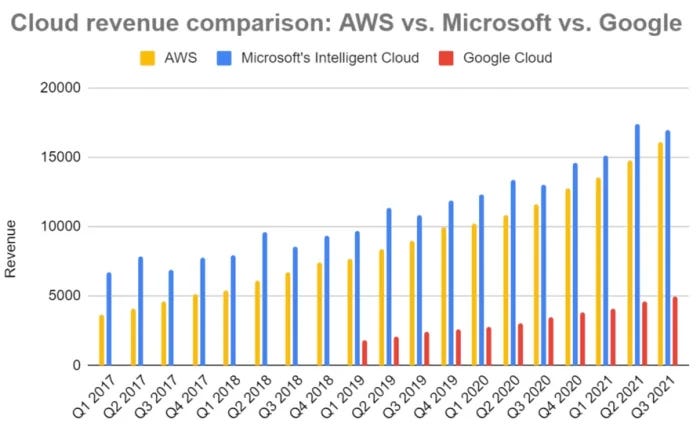](https://substackcdn.com/image/fetch/f_auto,q_auto:good,fl_progressive:steep/https%3A%2F%2Fsubstack-post-media.s3.amazonaws.com%2Fpublic%2Fimages%2Fdbb2c78d-66e0-4cfa-acf7-2e87d6279b0d_700x434.png)Source: Amazon, Microsoft and Alphabet’s investor relations website, via The Street.
Even back then, it felt like the dominant operating system on desktop wasn’t Windows or macOS anymore — it was the browser. But Chrome and Safari still felt like the browsers we grew up with. They hadn’t evolved with the shift. And both of these trends have only accelerated since. Some companies only issue enterprise versions of Chrome with new employee laptops (their companies fully run on SaaS apps), and Chrome and Safari remain essentially unchanged.
So that’s why we made Arc. We wanted to build something that felt like “your home on the internet” — for work projects, personal life, all the hours you spent in your browser every single day. Something that felt more like a product from Nintendo or Disney than from a browser vendor. Something with taste, care, [feeling](https://browsercompany.substack.com/p/optimizing-for-feelings).
We wanted you to open Arc every morning and think, “This is mine, my space.” And we called this north star vision the “[Internet Computer](https://www.youtube.com/watch?v=v0160IirdL4&t=336s).”
But it increasingly became clear that Arc was falling short of that aspiration.
##### **Where Arc fell short**
After a couple of years of building and shipping Arc, we started running into something we called the “novelty tax” problem. A lot of people loved Arc — if you’re here you might just be one of them — and we’d benefitted from consistent, organic growth since basically Day One. But for most people, Arc was simply too different, with too many new things to learn, for too little reward.
To get specific: D1 retention was strong — those who stuck around after a few days were *fanatics —* but our metrics were more like a highly specialized professional tool (like a video editor) than a mass-market consumer product, which we aspired to be closer to.
On top of that, Arc lacked cohesion — in both its core features and core value. It was experimental, that was part of its charm, but also its complexity. And the revealed preferences of our members show this. What people actually used, loved, and valued differs from what the average tweet or Reddit comment assumes. Only 5.52% of DAUs use more than one Space regularly. Only 4.17% use Live Folders (including GitHub Live Folders). It's 0.4% for one of our favorite features, Calendar Preview on Hover.
Switching browsers is a big ask. And the small things we loved about Arc — features you and other members appreciated — either weren’t enough on their own or were too hard for most people to pick up. By contrast, core features in Dia, like chatting with tabs and personalization features, are used by 40% and 37% of DAUs respectively. This is the kind of clarity and immediate value we’re working toward.
But these are the details. These are things you can toil over, measure, sculpt, remove.
The part that was hard to admit, is that Arc — and even Arc Search — were too incremental. They were meaningful, yes. But ultimately not at the scale of improvements that we aspired to. Or that could breakout as a mass-market product. If we were serious about our original mission, we needed a technological unlock to build something truly new.
In 2023, we started seeing it happen, across categories that felt just as old and cemented as browsers. ChatGPT and Perplexity were actually threatening Google. Cursor was reshaping the IDE. What’s fascinating about both — search engines and IDEs — is that their users had been doing things the same way for decades. And yet, they were suddenly open to change.
*This* was the moment we were waiting for. This was a fundamental shift that could challenge user behavior and maybe lead to a true reimagining of the browser. Hopefully you can now see why Dia felt like a no-brainer. At least for us and our original aspirations.
So when people ask how venture capital influenced us — or why we didn’t just charge for Arc and run a profitable business — I get it. They’re fair questions. But to me, they miss the forest for the trees. If the goal was to build a small, profitable company with a great team and loyal customers, we wouldn’t have chosen to try and build the successor to the web browser – the most ubiquitous piece of software there is. The point of this was always bigger for us: to build good, cared for software that could have an impact for people at real scale.
So if Arc fell short, why build something new versus evolve it?
##### **Why we didn’t integrate Dia into Arc**
It’s a great question. And for those [who followed our podcast last year,](https://open.spotify.com/show/512srmQyB2LQTLVQzIsFV3) you’ll know that it’s one we spent the entire summer grappling with before understanding that Dia and Arc were two separate products.
For starters, in many ways, we have approached Dia as an opportunity to fix what we got wrong with Arc.
First, simplicity over novelty. Early on, Scott Forstall told us Arc felt like a saxophone — powerful but hard to learn. Then he challenged us: make it a piano. Something anyone can sit down at and play. This is now the idea behind Dia: hide complexity behind familiar interfaces.
Second, speed isn’t a tradeoff anymore — it’s the foundation. Dia’s architecture is fast. Really fast. Arc was bloated. We built too much, too quickly. With Dia, we started fresh from an architecture perspective and prioritized performance from the start. Specifically, sunsetting our use of TCA and SwiftUI to make Dia lightweight, snappy, and responsive.
Third, security is at the forefront. Dia is a different kind of product – to meet it, we grew our security engineering team from one to five. We’re invested in red teaming, bug bounties, and internal audits. Our goal is to set the standard for small startups. Which is even more important in a world of AI, especially as more AI agents come online. We want to get out in front.
These are all things that need to be part of a product’s foundation. Not afterthoughts. As we pushed the boundaries of whether this truly was Arc 2.0 last summer, we found that there were shortcomings in Arc that were too large to tackle retroactively, and that building a new type of software ([and fast](https://www.youtube.com/watch?v=lvw-85-6-4s)) required a new type of foundation.
##### **Will we open source Arc**
Which brings us to the present.
As we started exploring what might come next, we never stopped maintaining Arc. We do regular Chromium upgrades, fix security vulnerabilities, related bugs, and more. Honestly, most people haven’t even noticed that we stopped actively building new features — which says something about what most people want from Arc (stability not more stuff to learn).
But it is true: we are not actively developing the core product experience like we used to. Naturally, people have asked: will we open source it? Will we sell it? We’ve considered both extensively.
But the truth is it’s complicated.
Arc isn’t just a Chromium fork. It runs on custom infrastructure we call ADK — the Arc Development Kit. Think of it as an internal SDK for building browsers (especially those with imaginative interfaces). That’s our secret sauce. It lets ex-iOS engineers prototype native browser UI quickly, without touching C++. That’s why most browsers don’t dare to try new things. It’s too costly. Too complex to break from Chrome.
[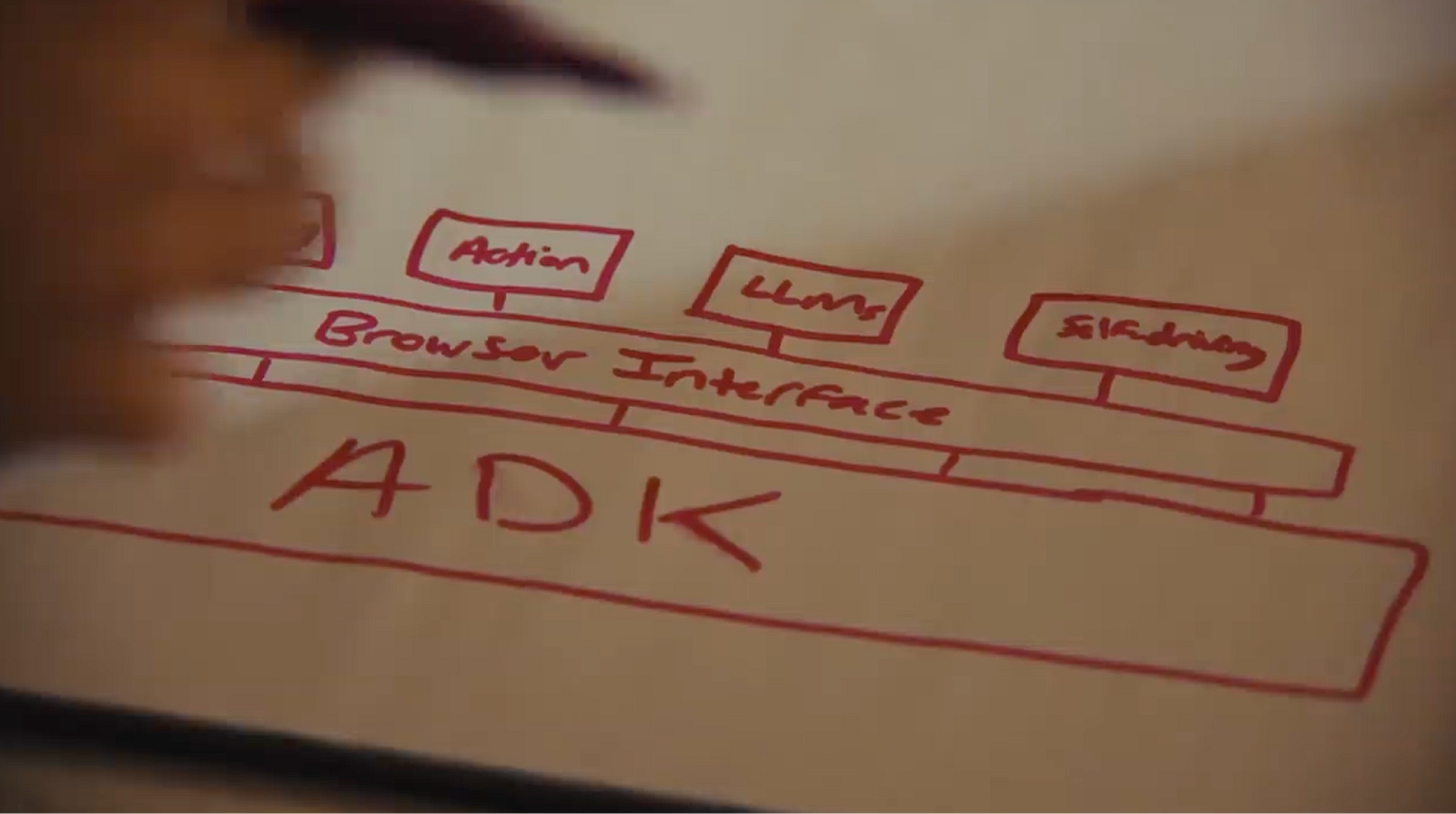](https://substackcdn.com/image/fetch/f_auto,q_auto:good,fl_progressive:steep/https%3A%2F%2Fsubstack-post-media.s3.amazonaws.com%2Fpublic%2Fimages%2F22836082-609e-40d0-9630-85a6c512ae12_1600x894.png)Where ADK sits in our browser infrastructure as shared in our Dia recruitment video.
ADK is also the foundation of Dia. So while we’d love to open source Arc someday, we can’t do that meaningfully without also open-sourcing ADK. And ADK is still core to our company’s value. That doesn’t mean it’ll never happen. If the day comes where it no longer puts our team or shareholders at risk, we’d be excited to share what we’ve built with the world. But we’re not there yet.
In the meantime, please know this: we’re not trying to shut Arc down. We know you use it and rely on it. Many of our family and friends do, too. We still love it, spent years of our life on it — and whether it’s through us or the community, our hope and intention is that Arc finds a future that’s just as considered as its past. If you have ideas, I’d love to hear from you. I’m [
[email protected]](mailto:
[email protected]).
##### **Building Dia**
I want to end by being frank with you: Dia is not *really* a reaction to Arc and its shortcomings. No. Imagine writing an essay justifying why you were moving on from your candle business at the dawn of electric light. Electric intelligence is here — and it would be naive of us to pretend it doesn’t fundamentally change the kind of product we need to build to meet the moment.
Let me be even more clear: traditional browsers, as we know them, will die. Much in the same way that search engines and IDEs are being reimagined. That doesn’t mean we’ll stop searching or coding. It just means the environments we do it in will look very different, in a way that makes traditional browsers, search engines, and IDEs feel like candles — however thoughtfully crafted. We’re getting out of the candle business. You should too.
“Wait, so The Browser Company isn’t making browsers anymore?” You better believe we are! But an AI browser is going to be different than a Web browser — as it should be. I believe this more than ever, and we’re already seeing it in three ways:
1. **Webpages won’t be the primary interface anymore**. Traditional browsers were built to load webpages. But increasingly, webpages — apps, articles, and files — will become tool calls with AI chat interfaces. In many ways, chat interfaces are already acting like browsers: they search, read, generate, respond. They interact with APIs, LLMs, databases. And people are spending hours a day in them. If you’re skeptical, call a cousin in high school or college — natural language interfaces, which abstract away the tedium of old computing paradigms, are here to stay.
2. **But the Web isn’t going anywhere — at least not anytime soon.** Figma and The New York Times aren’t becoming less important. Your boss isn’t ditching your team’s SaaS tools. Quite the opposite. We’ll still need to edit documents, watch videos, read weekend articles from our favorite publishers. Said more directly: webpages won’t be replaced — they’ll remain essential. Our tabs aren’t expendable, they are our core context. That is why we think the most powerful interface to AI on desktop won’t be a web browser or an AI chat interface — it’ll be both. Like peanut butter and jelly. Just as the iPhone combined old categories into something radically new, so too will AI browsers. Even if it’s not ours that wins.
Some content could not be imported from the original document. [View content ↗](https://browsercompany.substack.com/p/letter-to-arc-members-2025?triedRedirect=true)
3. **New interfaces start from familiar ones**. In this new world, two opposing forces are simultaneously true. How we all use computers is changing much faster (due to AI) than most people acknowledge. Yet at the same time, we’re much farther from completely abandoning our old ways than AI insiders give credit for. Cursor proved this thesis in the coding space: the breakthrough AI app of the past year was an (old) IDE — designed to be AI-native. OpenAI confirmed this theory when they bought Windsurf (another AI IDE), despite having Codex working quietly in the background. We believe AI browsers are next.
This is why we’re building Dia. It is the opportunity to chase *the* product of our original ambition: a true successor to the browser — maybe even the “Internet Computer” we’ve been building toward all along — only in ways we couldn’t have predicted.
To be clear, we might fail. Or we might partially succeed but not win. We still *[assume we don’t know](https://thebrowser.company/values/#assume)*. But we’re confident about this: five years from now, the most-used AI interfaces on desktop will replace the default browsers of yesteryear. Like today, there will probably be a few of them (Chrome, Safari, Edge). But the point is this, the next Chrome is being built right now. Whether it’s Dia or not.
#### **Your home on the internet**
The Browser Company is a team that assembled for the chance — however slim — to build something that rewired how we use our computers. Something that might, just *might*, be used by hundreds of millions. A piece of software that actually shapes how people live and work. Not just an app, but an Internet Computer. That’s what drew us in. And that’s why we’re proud of the decisions we made.
Dia may not be your style. It may not land right away. But this is still us. Being ourselves. Building the kind of thing we’d want to use. Fully aware that we might be wrong. But doing it anyway. Because we think the intent matters. And we think that’s what got us this far.
This is our truth, and we sincerely hope that you’ll like what comes next.
– Josh
[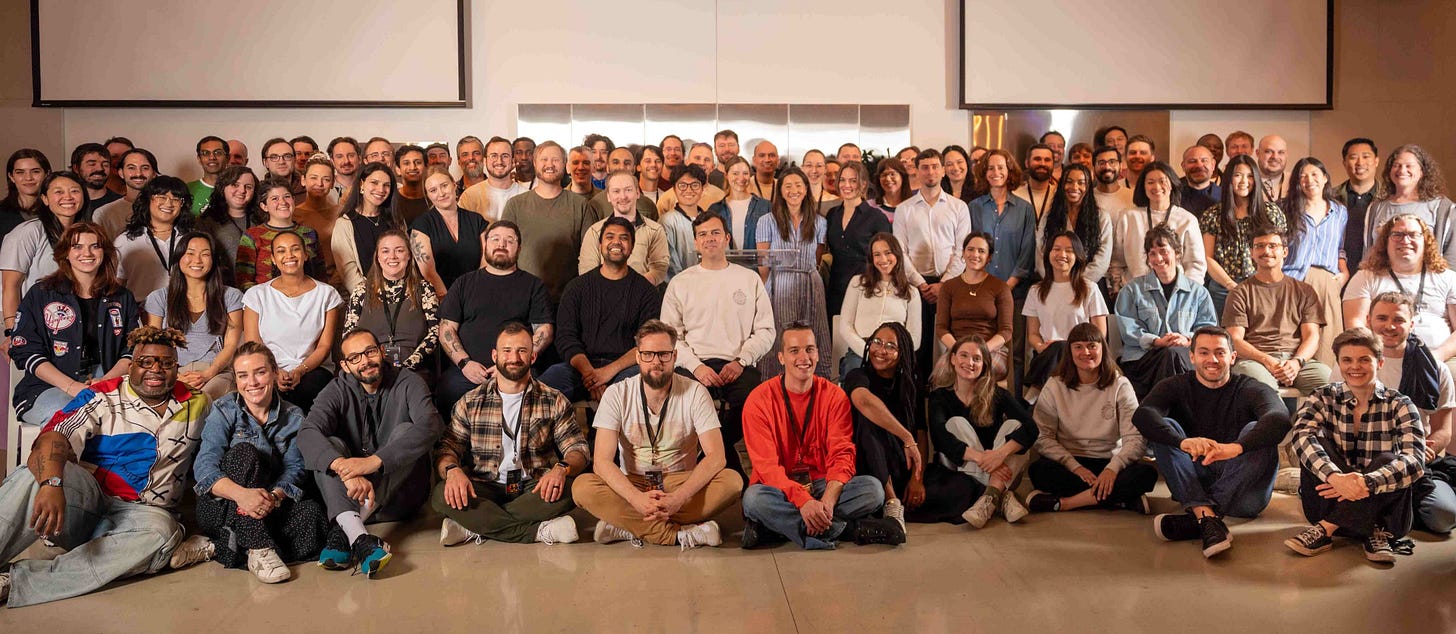](https://substackcdn.com/image/fetch/f_auto,q_auto:good,fl_progressive:steep/https%3A%2F%2Fsubstack-post-media.s3.amazonaws.com%2Fpublic%2Fimages%2Fbf0c587b-6067-46cb-95b2-d13bcaf23070_5551x2417.jpeg)The Browser Company of New York, April 2025.
*P.S. For those of you who do want to try Dia, we’re excited to open access for Arc members next, as the first expansion of our alpha beyond students.*
###### Subscribe to Keeping Tabs by The Browser Company
Launched 4 years ago
We’re building a better way to use the internet.
By subscribing, I agree to Substack's [Terms of Use](https://substack.com/tos), and acknowledge its [Information Collection Notice](https://substack.com/ccpa#personal-data-collected) and [Privacy Policy](https://substack.com/privacy)., Letter to Arc Members 2025, The Browser Company, 01jw7pkhwmqsh7pzz5dshche93.