Lobster Boil

> [!note]+ Document Notes
> ```markdown
> ---
> tags: [AI, open-source, agents]
> author: On my Om
> source: On my Om
> reference: [https://om.co/2026/03/16/lobster-boil/]
> date created: 2026-04-10 00:00
> ---
> # 🏷️ Title: Lobster Boil
> ## 🧭 Table of Contents
> - [📝 Summary](#-summary)
> - [📖 Main Content](#-main-content)
> - [🗒️ Notes](#️-notes)
> - [📚 References](#-references)
> - [🗣️ Paraphrase](#️-paraphrase)
> - [📰 Newsletter](#-newsletter)
> - [✅ Action Items](#-action-items)
> - [🧪 Hypotheses](#-hypotheses)
> - [📊 Methodology](#-methodology)
> - [❓ Questions](#-questions)
> - [🔮 Future Research](#-future-research)
> - [💡 Implications](#-implications)
> - [🧠 Learning Styles Assessment](#-learning-styles-assessment)
> - [📊 Accessibility Assessment](#-accessibility-assessment)
> - [🌍 DEIB Assessment](#-deib-assessment)
> - [✅ Logical Validity](#-logical-validity)
> - [🛡️ DARVO Analysis](#-darvo-analysis)
> - [🎯 Conclusion](#-conclusion)
> ### 🔗 References
> - Include links cited in or relevant to the article.
> ## 📝 Summary
> - What happened.
> - The author explores OpenClaw, an open-source AI agent ecosystem, and the grassroots excitement around it.
> - Why it matters.
> - It demonstrates a tangible, user-controlled path for “AI agents” that feels real to non-technical people.
> - Key stakeholders.
> - OpenClaw developers, global users (especially outside US), cloud providers, governments, hardware vendors (Apple/Nvidia).
> - Risks and tradeoffs.
> - Significant security and safety risk from agentic automation; regulatory and political pushback.
> - Bottom line.
> - OpenClaw is an early, rough symbol of personal, locally-run AI agents that could democratize action the way WordPress democratized voice.
> ## 📖 Main Content
> - Explain the core arguments in plain language.
> - OpenClaw is an open-source, locally-run AI agent you plug into models of your choice and control via everyday messaging apps. It doesn’t just chat; it acts (email, calendars, automations). Its adoption is exploding globally, with vibrant community meetups and strong traction in China and beyond.
> - The author draws a parallel to WordPress: WordPress lowered the cost and permission barriers to publishing; OpenClaw may similarly lower the barriers to getting work done by software, especially for people who can’t afford expensive AI subscriptions.
> - The core idea: AI can and should be personal—running on your machine, under your control, wired into tools you already use, and not strictly mediated by big centralized platforms.
> - Add sourced context and define terms.
> - “Agentic system / AI agent”: software that uses models to understand intent, then decomposes tasks, calls tools, and executes actions autonomously (e.g., scheduling, sending messages, managing files).
> - The article notes Chinese local models (Qwen, DeepSeek) that run locally, allowing low- or zero-cost setups compared to US SaaS models like OpenAI or Anthropic.
> - Nvidia’s Jensen Huang is quoted describing OpenClaw essentially as an “operating system of agentic computers,” underscoring its perceived architectural importance.
> - Note uncertainties or contested claims.
> - OpenClaw is “not ready for prime time” and acknowledged as dangerous for users who don’t understand command-line tooling.
> - It’s unclear how sustainable this ecosystem is under regulatory scrutiny (e.g., Beijing’s “Clip the Claw” order) or corporate co-optation (founder joining OpenAI, foundation governance).
> - The scale and durability of democratizing impact (WordPress-level) remain speculative but plausible.
> ### 🗒️ Notes
> - OpenClaw origin and design:
> - Built by Austrian developer Peter Steinberger as a weekend project in late 2025, evolving from “Clawdbot” to “Moltbot” to OpenClaw.
> - Runs locally on user machines, wired to popular messaging apps like Slack, WhatsApp, Telegram, iMessage, and Discord.
> - Unlike standard chatbots that reply with text, OpenClaw performs actions: clearing inboxes, making reservations, tracking calendars, controlling smart devices.
> - Adoption dynamics:
> - Rapid community growth with “ClawCons” (grassroots meetups/unconferences) attracting both developers and non-technical people like retirees and small business owners.
> - Sponsors are keen to associate with the movement, suggesting early ecosystem momentum.
> - GitHub stars surpass ~247k by March 2026, signaling intense developer interest; the project transitions to a foundation as its creator joins OpenAI.
> - Chinese context:
> - In Shenzhen, long lines form outside Tencent HQ where engineers help diverse users set up OpenClaw, coining the term “raise a lobster” for running an agent instance.
> - Major Chinese cloud vendors release their own variants (e.g., Tencent WorkBuddy, MiniMax MaxClaw, Moonshot Kimi Claw).
> - Local governments in Shenzhen and Wuxi offer grants for startups building atop the platform; MiniMax stock surges.
> - Simultaneously, Beijing orders state-linked entities to “Clip the Claw,” showing the technology’s political sensitivity.
> - Hardware zeitgeist:
> - Mac Mini becomes a symbolic dedicated “agent box,” purchased solely to run OpenClaw separate from primary machines.
> - The “Mac Mini bro” meme highlights a new archetype: people with local AI agents as lifestyle infrastructure.
> - Ownership and philosophy:
> - Example user (Aaron Ng) runs OpenClaw on a Mac Mini to manage email, baby tracking, and smart home control, preferring local control over granting deep access to his main computer.
> - The author emphasizes: intelligence living on your machine, under your ownership, no ongoing subscription, no external permission gate.
> - Hiten Shah encapsulates it as “(AI) Power to the people.”
> - Democratization analogy with WordPress:
> - WordPress didn’t invent its underlying stack but assembled it into something accessible to non-technical users, collapsing the gap between wanting to publish and being able to do so.
> - A crucial impact was global: people in Jakarta, Manila, Nairobi gained publishing infrastructure comparable to the New York Times, undermining traditional permission structures.
> - The author sees OpenClaw as analogous but oriented toward “action” rather than “voice” — closing the gap between intention and execution for more people.
> - Economics and global inequality:
> - Subscription AI pricing (e.g., $20–200/month) is prohibitively expensive for much of the world, where such costs are not trivial “lattes.”
> - Local Chinese models (Qwen, DeepSeek) plus OpenClaw’s model-agnostic design enable powerful setups at near-zero marginal cost for users in Manila, Cairo, Bogotá, etc.
> - This suggests a way for non-US, non-wealthy users to access agentic AI capabilities comparable to those in Silicon Valley.
> - Safety and risk:
> - OpenClaw’s domain is “real-world action,” raising the stakes relative to web publishing: misconfigured or malicious agents can delete data, spam contacts, or perform socially or legally harmful acts.
> - Even a core maintainer warns that if users cannot manage a command line, they might find it too dangerous to operate safely.
> - The author stresses that OpenClaw is more a symbol of what’s coming than a finished, safe consumer product.
> - Concept of personal AI:
> - Personal AI is framed not as a centralized cloud “app” but as a local, user-directed agent that:
> - Runs on hardware you own.
> - Uses models you choose.
> - Interacts through interfaces you already use.
> - Nvidia’s CEO labels it effectively as an OS for agentic computing, underlining the shift from “applications” to “agents” as a new computing substrate.
> - Historical parallels:
> - The author notes having lived through multiple tech waves (internet, Web 2.0, social, cloud) and sees similar early “electricity in the air” around OpenClaw.
> - The key novelty: for the first time, normal people can feel AI working on their behalf in daily life, albeit in “rough and half-broken” ways.
> ## 📚 References
> - OpenClaw project: http://openclaw.ai
> - ClawCons: https://www.claw-con.com
> - Nvidia GTC (Jensen Huang keynote): https://www.nvidia.com/gtc
> - WordPress: https://wordpress.org
> - DeepSeek: https://www.deepseek.com
> - Qwen (Alibaba): https://qwen.ai
> ## 🗣️ Paraphrase
> - Paragraph A paraphrase.
> - The author describes
I had coffee this weekend with my good friend [Michael Galpert](https://x.com/msg), father to my godchildren. Too much coffee. We talked too much Claw. [OpenClaw](http://openclaw.ai) that is.
Michael has been running around the country organizing [ClawCons](https://www.claw-con.com). New York, Austin, Tokyo next. Not industry conferences. In the halcyon days of Web 2.0, we called them meetups and un-conferences. Sponsors are falling over themselves to get them attached to this new new thing, that borders on madness and hope.
Just people showing up in rooms because they want to talk about what OpenClaw makes possible. Developers, yes. But also small business owners, retirees, students, people who have never attended a tech event in their lives. The energy in those rooms, Michael says, is unlike anything he has seen in years.
I have known Michael long enough to know when he is genuinely excited about something versus just being hyperactive for a second. He is so ‘clawed’ into OpenClaw.
Makes you wonder: what is really going on here? Hope and madness. Whatever the reasons, I am fascinated with the very idea of OpenClaw, how it might be foretelling a future we are not seeing yet.
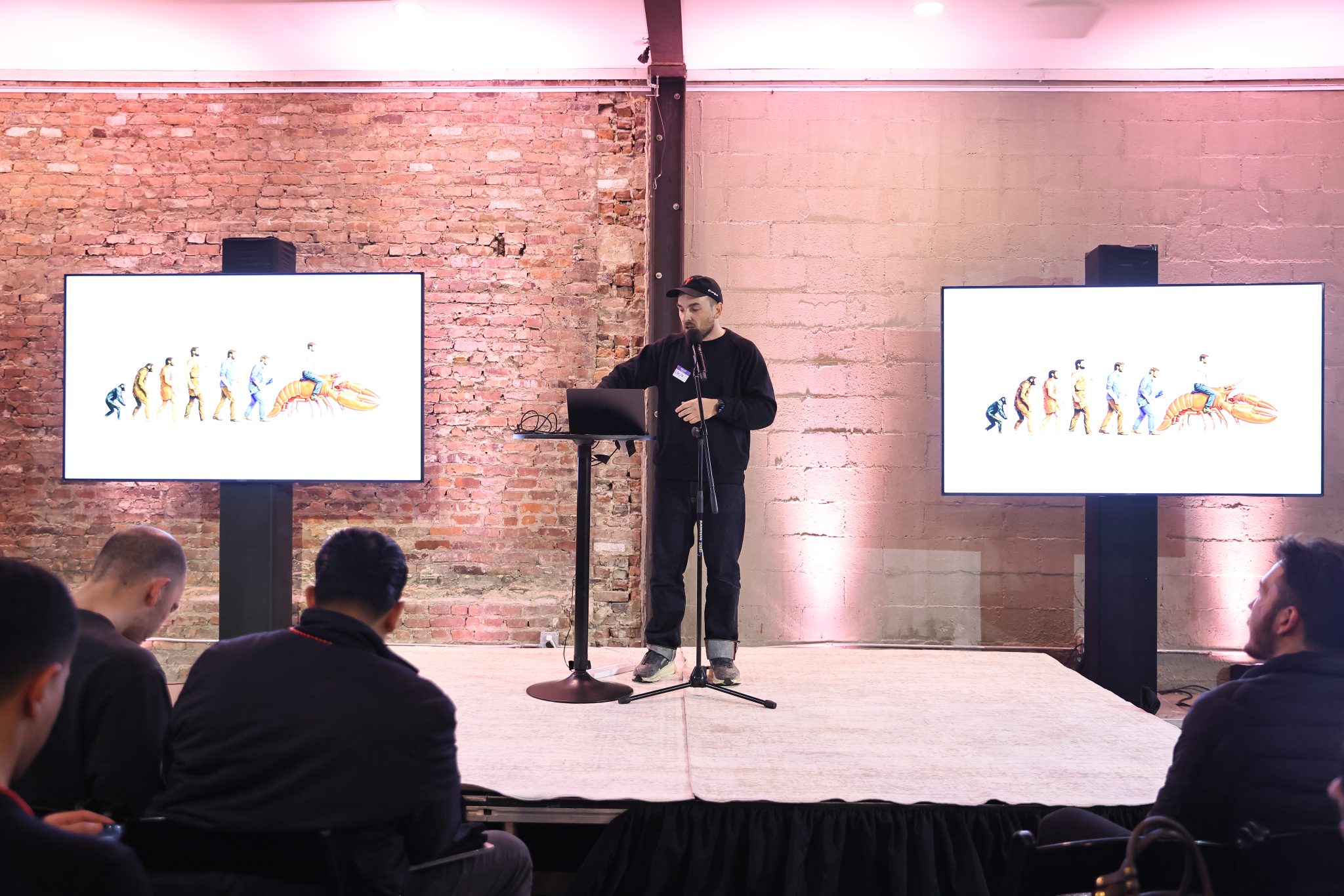
[OpenClaw](https://openclaw.ai/) is a free, open-source AI agent built by Austrian developer [Peter Steinberger](https://steipete.me/). It started as a weekend project in November 2025, originally called Clawdbot, went through a rename to Moltbot after a trademark complaint from Anthropic, and landed as OpenClaw at the end of January 2026.
You connect it to whatever AI model you prefer. It runs on your own machine. You talk to it through the messaging apps you already use, including Slack, WhatsApp, Telegram, iMessage, and Discord. And then it does things. Typical chatbots answer questions. It acts. It clears your inbox, makes reservations, tracks your calendar, executes tasks on your behalf while you are doing something else.
By March 2026, it had crossed 247,000 stars on GitHub. Steinberger has since been hired by OpenAI to work on personal agents, and the project has moved to a foundation. The lobster, as they say, has molted. Ironic, the movement’s Jesus has ceded control to his apostles.
Across the planet, everyone is tinkering.
China tech is going bonkers over OpenClaw. On a Friday afternoon in Shenzhen, nearly a thousand people lined up outside [Tencent](https://www.tencent.com/) headquarters to get OpenClaw installed on their laptops. Engineers from Tencent’s cloud unit were helping students, retirees, and office workers set it up. The Chinese have their own phrase for it now: *raise a lobster*, a reference to OpenClaw’s red lobster logo.
Every major Chinese cloud provider has released its own version. Tencent has WorkBuddy. [MiniMax](https://www.minimax.io/) has MaxClaw. Moonshot has Kimi Claw. Local governments in Shenzhen and Wuxi announced grants for startups building on the platform. MiniMax, whose model runs inside many OpenClaw setups, has seen its stock rise over 600 percent since its IPO two months ago.
And then Beijing sent a diktat to state banks, government agencies, and the families of military personnel: Clip the Claw.
A thousand people lining up on Friday. A memo from the CCP. Same technology. Same week.
It’s not nothing.

The Mac Mini has become the unofficial hardware of the OpenClaw moment. People are buying the Apple desktop with a single purpose: a dedicated machine to run their agent, separate from their main computer, connected to a free or cheap open-source model. The [SF Standard](https://sfstandard.com/2026/03/12/mac-mini-bro-new-matcha-latte-guy/) called the Mac Mini bro the new matcha latte guy. Oy vey!
The publication shares the story of Aaron Ng, a 35-year-old AI engineer in the Sunset. He did not want to give OpenClaw access to his own computer. So he bought a Mac Mini just for the agent. It handles his email, tracks updates about his newborn, controls his smart lights. He texts it baby logs because, in his words, the existing apps were terrible. Others are using it to post their bets on Polymarket to Twitter and game the results.
Mac Mini bro! Apple has backed into a cultural moment, without even trying. Jokes aside, this physical object represents a philosophy. The intelligence lives on your machine. You own it. You aim it. No subscription. No permission required.
I checked in with [Hiten Shah](https://x.com/hnshah), one of my close friends who is building hard with OpenClaw. He summed it up in a single line: (AI) Power to the people.
This is why retirees are lining up in Shenzhen. This is why people with no GitHub account are showing up at ClawCons. For the first time, they can feel AI’s intelligence, even if it is not very good. Yet. Not a demo. Not a keynote promise. Not big boys burning billion dollars a month. A thing that actually does things on their behalf. The gap between what you want done and what gets done has always required either your own time or someone else’s labor. OpenClaw makes that gap feel smaller. That feeling, even in its rough and half-broken form, is new.
It has been almost a month since I published [*How AI Goes To Work*](https://om.co/2026/02/06/how-ai-goes-to-work/). “What OpenClaw shows is how AI will work in the background,” is what I wrote. “And that is what the ‘AI’ future looks like for normal people. Not a separate AI app. Intelligence woven into tools you already use. Doing work you used to do yourself. Or used to hire someone to do, done by software.”
I have seen this kind of excitement before. Many times. That is what keeps me around in Silicon Valley. The excitement of new technology is my addiction. I saw this with the big poppa, the internet itself. Web 2.0. Social. Cloud. In terms of product, the closest parallel to OpenClaw for me is my first time with [WordPress](https://wordpress.org/).
WordPress did not invent PHP or MySQL or web publishing. It was a continuation of someone else’s idea. However, it assembled those pieces into something a non-technical person like me could actually use. The gap between having something to say and being able to publish it closed overnight. No developer. No hosting deal. No media company gatekeeping who got a voice. Yes, there were other platforms and other options, but it dovetailed with the rise of open source, the optimism of publishing on the internet, and the joy of sharing and being social.
The best part that most people forget about WordPress is that it was never really about us. It was about the rest of the world that could not afford American software economics. At Forbes.com, we spent millions on bad software, trying to publish professionally. Now you could do it for free. A teacher in Jakarta. A student in Manila. A journalist in Nairobi. Suddenly they had the same publishing infrastructure as the New York Times. That is what the excitement was really about. Not the product. It was the collapse of the permission structure.
OpenClaw has that same siren call. Two hundred dollars a month, or even twenty a month, to Anthropic or OpenAI is not a rounding error for most of the world. The world doesn’t pay $10 for lattes. This is the real barrier. But Chinese-made Qwen runs locally. Chinese-made DeepSeek runs locally. OpenClaw does not care which model you plug in. So someone in Manila or Cairo or Bogota can run the same agentic setup as a San Francisco startup, on a model that costs them nothing. If you want something from Claude or ChatGPT, and you can afford to pay for it, then plug that in too.
[WordPress](https://wordpress.org/) democratized voice. OpenClaw is pointing at something further: action. The gap between what you intend and what actually gets done has always required resources. A team. A budget. An organization. OpenClaw is the first very rough sketch of closing that gap for everyone.
WordPress operated in a forgiving domain. A bad plugin broke your homepage. Mine broke all the time. And there were no plugins. OpenClaw operates in the domain of real-world action. A bad agent deletes your inbox, spams your contacts, creates a dating profile without your knowledge. The blast radius is different. One of OpenClaw’s own maintainers warned publicly that if you cannot understand how to run a command line, this is far too dangerous for you to use safely. That is not a ringing endorsement. But it is also not the point.
OpenClaw is not ready for prime time. The security issues are real and the warts are visible. It is a symbol of what is coming, not the thing itself.
AI can be personal. Not a service you subscribe to. Not a platform you visit. A thing that runs on your machine, serves your intentions, uses the model you choose, and works through the apps you already live in.
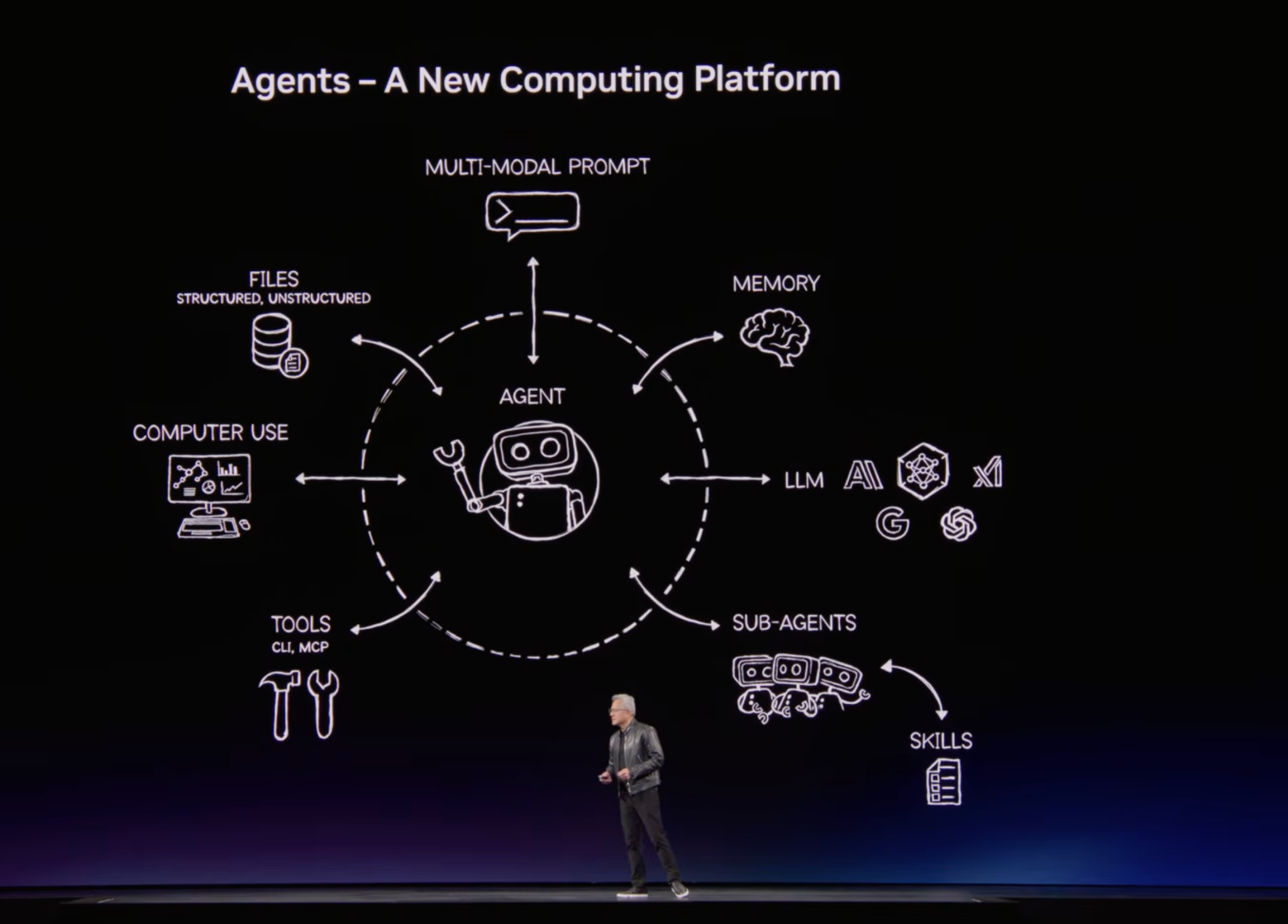
> In his keynote speech at GTC, Nvidia CEO and founder Jensen Huang [described OpenClaw as](https://www.youtube.com/live/jw_o0xr8MWU?t=8779s):
>
> What is Open Claw? It’s an agentic system. It calls and connects to large language models.It has resources that it manages. It could access tools, it could access file systems, it could access large language models. It’s able to do scheduling. it’s able to– do cron jobs, is able to decompose a problem that you gave it into step by step by step. It could spawn off and call upon other subagents. It has IO. You could talk to it in any modality you want. It’s an operating system. I’ve just used the same syntax that I would describe an operating system. Open Claw has open sourced essentially the operating system of agentic computers.
>
>
In 2023, [Bill Gates wrote](https://www.gatesnotes.com/The-Age-of-AI-Has-Begun) that “in the near future, anyone who’s online will be able to have a personal assistant powered by artificial intelligence” and that agents would “utterly change how we live.” OpenClaw, running on a free Chinese model through WhatsApp on a $599 Mac Mini in the Sunset, is the first time regular people can actually feel that becoming real.
That’s what I am Clawing about.
*March 16, 2025. San Francisco*, Lobster Boil, On my Om, 01knhytrs9amnyd58dk7ncgj3k.