Market Share and Version Control
## Metadata
- Author: [[Brian Coords]]
- Full Title: Market Share and Version Control
- Category: #articles
- Document Note: ---
tags: [WordPress, OpenSource, CMS, MarketShare, Gutenberg, WordPressFuture]
- WordPress
- CMS
- OpenSource
Author: Brian Coords
Source: Modern WordPress Development
Reference: [Original Article](https://masterwp.com)
date created: {{date:YYYY-MM-DD}} {{time:HH:mm}}
---
# Title: Is WordPress Getting Too Hard?
## Table of Contents:
1. [Market Share & Market Fit](#market-share--market-fit)
2. [Built to Scale](#built-to-scale)
3. [Where to?](#where-to)
4. [Other Exciting Things](#other-exciting-things)
## 📝 Summary:
WordPress, once a dominant force in web development, is facing questions of sustainability as its market share plateaus around 40%. Users are finding more accessible platforms like Squarespace, Ghost, and Shopify for simpler projects, while WordPress shines primarily for more complex builds. The ecosystem must evolve to maintain relevance, particularly through tools like Gutenberg and stronger integrations with external software. Concerns about scalability and the ecosystem’s dependency on growth remain significant challenges.
## 📖 Main Content:
### Market Share & Market Fit:
- WordPress' market share has plateaued around 40%, with fewer new sites adopting it.
- Competitors like Squarespace and Ghost offer simpler, more user-friendly solutions for small businesses and content creators.
- WordPress struggles to maintain dominance in SEO, eCommerce (WooCommerce vs Shopify), and Activity Pub support.
- WordPress remains ideal for complex sites that require SEO, content personalization, or heavy content management.
### Built to Scale:
- The WordPress ecosystem depends on continuous growth, with large hosting companies, plugin developers, and agencies relying on new site creation.
- WordPress' future may lie in complex website builds for high-end users, while the DIY market shifts to simpler tools.
### Where to?
- Gutenberg's development is promising, with potential in the block editor for more flexible content management.
- Canonical plugins that offer core solutions for SEO, forms, and subscriptions could simplify WordPress for new users, reducing decision fatigue.
- Integrations with tools like ConvertKit and Salesforce could be the next frontier in maintaining WordPress' relevance in the web development space.
### Other Exciting Things:
- Version Control Livestream: High-level discussion on version control in WordPress.
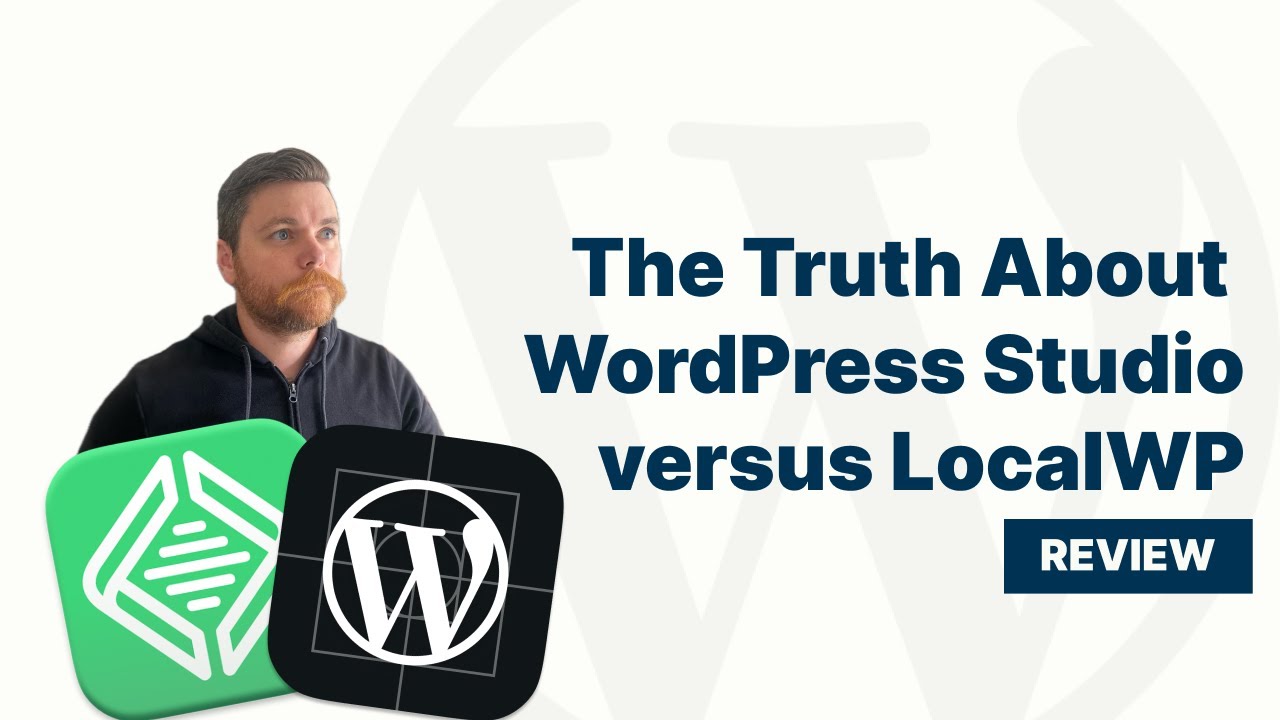
- WordPress.com Studio Release: Comparison between Studio and Local WP on YouTube.
- WordPress 6.6 Roadmap: Aligns with recent wishlist updates, with a few surprises ahead.
## 🗒️ Notes:
- WordPress market share remains stagnant at 40%, particularly among older sites.
- New users often turn to simpler alternatives like Squarespace or Ghost for website creation.
- The platform’s complexity is becoming a barrier for small business and DIY users.
- WordPress still thrives in SEO-driven, content-heavy builds for larger, more complex projects.
- Gutenberg is gaining traction, particularly with its block editor functionality, which could help reclaim WordPress' position.
- WordPress needs better integration tools to stay competitive in the long term.
- Plugins that solve 80% of user needs directly from the core could reduce user confusion.
## 📖 References:
- Coords, Brian. "Is WordPress Getting Too Hard?" Modern WordPress Development.
- Tock, Noel. "The Future of WordPress," WordCamp Asia 2023.
## 🗣️ Paraphrase:
1. WordPress' future lies in complex website builds, while the DIY sector is shifting to more user-friendly tools like Squarespace and Ghost, reducing WordPress' mass-market appeal.
2. WordPress needs stronger integrations with third-party software to maintain its relevance, moving away from the overwhelming plugin ecosystem that burdens users with too many choices.
## 📰 Newsletter:
Hey, WordPress fans! It’s time to dive into the future of WordPress—where is the platform headed? WordPress’ market share has plateaued at 40%, and new users are opting for easier platforms like Squarespace or Ghost. Meanwhile, WordPress remains a powerhouse for complex, content-driven sites. Gutenberg continues to evolve, and there's talk of stronger integrations with tools like ConvertKit. What does this mean for developers and site owners? Plus, don't miss the upcoming Version Control Livestream and thoughts on the WordPress 6.6 roadmap. Stay tuned!
## ✅ Action Items:
The article aligns with my focus on open-source advocacy and contributor engagement, particularly in discussing WordPress' need to evolve in a saturated market. The shift towards complexity echoes my commitment to supporting contributors in developing integrations and features that meet real-world needs. The ideas presented support my goal of creating a sustainable and inclusive open-source community, especially in advocating for tools like Gutenberg and simplifying plugin options. This insight will be helpful as I pursue OSPO director aspirations, focusing on transparency, sustainability, and growth within WordPress.
## 🧪 Hypotheses:
1. If WordPress improves its core plugin options, more small business owners may adopt it again for simple websites.
2. Enhanced third-party integrations could help WordPress maintain relevance as the digital ecosystem diversifies.
### 📊 Methodology:
- Surveys of small business owners and content creators to measure interest in simplified WordPress features.
- Case studies comparing the usability of WordPress with competing platforms like Squarespace.
### ❓ Questions:
1. How can WordPress regain market share from simpler platforms?
2. What role will Gutenberg play in attracting new users?
3. How can WordPress better integrate with third-party tools to meet evolving web development needs?
### 🔮 Future Research:
- Exploration of WordPress' potential in niche markets like eCommerce and SEO-heavy builds.
- Studies on how improving plugin integration can help WordPress compete with platforms like Shopify.
### 💡 Implications:
If WordPress successfully narrows its focus and enhances its integration capabilities, it could maintain relevance in more specialized, high-end web development. This would reduce its mass-market appeal but allow it to thrive in complex web ecosystems.
### ✅ Logical validity:
The arguments presented are sound in recognizing WordPress' declining market share for smaller, simpler websites while highlighting its strength in complex builds. The analogy of WordPress to "jazz" is apt, reflecting how the platform has evolved from revolutionary to more niche.
- **Sound Deductive Reasoning**: The claim that WordPress shines in complex builds but loses ground to simpler platforms is well supported by examples like Squarespace and Shopify.
- **Strong Inductive Reasoning**: The use of Noel Tock's presentation to infer future trends is a solid approach, based on observable changes in user behavior.
- **Coherent Counterarguments**: The piece effectively refutes the idea that WordPress is universally applicable, showing the reality of niche specialization.
### 🎯 Conclusion:
WordPress' future may lie in specialization, moving away from being an "everything store" to focus on complex, content-heavy builds where it excels. By improving integration with third-party tools and simplifying its plugin ecosystem, WordPress can remain relevant in the evolving web development landscape.
- Document Tags: [[market share]] [[wordpress]]
- Summary: WordPress market share is plateauing around 40%, with newer sites opting for simpler platforms like Squarespace. WordPress is struggling to retain users in content creation and ecommerce, facing competition from platforms like Substack and Ghost, as well as Shopify. To evolve and stay relevant, WordPress needs to focus on integrations, simplify its plugin ecosystem, and adapt to changing user needs.
- URL: https://www.briancoords.com/newsletter/market-share-and-version-control/
Is WordPress getting too hard? Are the masses *really* leaving? How big is the moat that keeps WordPress safe?
The same questions year after year. (I even found a [post I wrote about it](https://masterwp.com/my-so-called-wordpress-mass-exodus/) for MasterWP two years ago). That’s not to say they’re unimportant questions- in fact they’re probably more important than ever. WordPress got *really big* for an open source project. **Is that sort of momentum sustainable or even desirable?**
#### Market Share & Market Fit
There’s definitely a consensus that WordPress’ [market share has plateaued](https://joost.blog/cms-market-share/) around 40% of the web. More than it, it seems that much of that market share is based on older websites, and that if you just look at newer sites, the number is much less. That’s the premise of Noel Tock’s *must-watch* presentation [The Future of WordPress](https://www.youtube.com/watch?v=dbwkPxnZCXM) from WordCamp Asia this year.
At least anecdotally, the use case for WordPress is smaller than in the past. I used to be a “build everything in WordPress” person, but I’ve shifted to using Laravel for more complex applications and recommending simpler landing page builders for very small businesses or personal sites. I’ve made the mistake of pointing friends/family members to WordPress when what they really wanted was something like Squarespace.
I would love to say that WordPress is still a great “website builder” for those small 5-page marketing sites that used to be our bread and butter, but that’s less and less the case. As long as WordPress keeps the “blog” as the central concept, [instead of landing pages](https://www.briancoords.com/should-the-page-in-wordpress-be-the-new-default/), it’ll be more attracive to go build your small marketing site on something like Squarespace or Canva. **WordPress is complicated and the internet isn’t really expected to be “complicated” for the average user anymore.**
For content creators, you’d think WordPress would be a perfect fit, but it’s losing ground there as well. Substack and Ghost are easier solutions for newsletter writers than whatever WordPress has to offer (Jetpack? Some other plugin?). WordPress is missing out on the Fediverse momentum with Ghost and Threads on their way to beating WordPress (and Tumblr) to full Activity Pub support. Even WooCommerce is struggling to define it’s value proposition against Shopify. Search Engine Optimization (once WordPress’ strong suit) is starting to lose it’s grip as the “most important thing” for publishers as users (and Google itself) turn to LLMs with their queries.
Don’t get me wrong, I still love WordPress, especially as a CMS (when you have a lot of content). Blocks are great for publishing as (sorta) structured data and then reusing it in other “headless” tools, like mobile and web apps. As platforms like Webflow impose stricter pricing on sites with more content/traffic, WordPress will continue to win out, especially if your site is constantly publishing or if you want your content available across multiple mediums.
I don’t think there’s anything wrong with a narrowed focus that tries to be *really good at fewer things*. But will more than 40% of websites need what WordPress is currently offering?
#### Built to Scale
The problem is that much of the WordPress ecosystem as we know it is- like tech in general- built for growth and scale. Large hosting companies can’t compete without continued growth, without more, more, more. Even the plugin companies, page builders, and larger agencies need a steady income of new WordPress sites coming online at scale.
Right now WordPress is mostly useful for a specific type of complicated website build, one where SEO, content, and personalization are mission critical. WordPress still really shines for “complicated,” which is probably why hosting companies suddenly seem more interested in developers than DIYers.
If you’re a medium-sized agency, you might be more insulated from the larger shift away from WordPress because you don’t need scale and exponential growth, you operate with fewer customers who are (for now) more valuable and “high end”. That said, we are part of a larger ecosystem, so that broader health is important, especially if those companies are the ones giving back to the open source project.
I wouldn’t be surprised if we see more hosting and plugin companies slowly stepping back their generosity to the community and focusing more on squeezing out their existing customers. I’m sure you can feel it already.
#### Where to?
The WordPress user base is evolving, and WordPress needs to evolve to meet it. One big evolution is Gutenberg, and I’m still excited about the trajectory of the visual editor.
Just last week I met with a client as she worked on populating content to their new WordPress site. She raved about the block editor and how much fun she was having filling out and tweaking all the custom patterns we’d built. There really is potential and every year I feel like we’re just one more year away from feeling really good about blocks and site editing.
So where does WordPress go from here? WordPress used to be the “anything store” with 60,000 plugins, a theme directory, a pattern directory, an free image directory and a million other things. The problem is that all of them are not… great. They’re not bad but they’re not… great.
I wrote a while back that WordPress needs [a suite of canonical plugins](https://www.briancoords.com/in-support-of-canonical-plugins/) that take away the burden of choice: a core solution for SEO, forms, subscriptions, etc. They don’t have to be nearly as powerful as the premium options, but they should solve basic needs (think 80/20 rule) and feel extremely native, as if they’re built into core itself. That said, I’m not sure who would actually do this work.
In his talk, Noel makes a really strong case for *integrations* as the next frontier that WordPress needs to dive into. Yes, there are a ton of plugins for things like ConvertKit or Salesforce, but is there *one really good one* that we can recommend? It’s a really great point and it definitely has me thinking. In fact, I would put it in place of Data Liberation as a project priority. **True data liberation would be the ability to use core WordPress with your other software**, keeping WordPress relevant, not trying to pretend like migrating content from Wix is what’s holding WordPress back.
WordPress loves jazz, and I think “jazz” is the perfect metaphor. Jazz started out as revolutionary, counter-cultural, and freeform, but it has become a bit stiff, outdated, dogmatic, niche, and mostly still relevant in the public sector (NPR <==> NASA).
I’m still optimistic about WordPress, but I also think it’s ok to be realistic about the future and about the project itself, rather than just a cheerleader offering vague inspirational platitudes. **The broader ecosystem is undergoing dramatic change, and that change will effect all of us.** What do you think?
#### Other Exciting Things…
##### Version Control Livestream this week
Are you a WordPress developer or builder? This week I’ll be hosting a **livestream going over the basics of version control** with Mark J Szymanski. This is not going to be a technical breakdown: Instead Mark asked if we could talk high level ideas on a livestream- what really is version control for WordPress, when do you need it, and what problems does it actually solve? Join us and please jump into the live chat!
Some content could not be imported from the original document. [View content ↗](https://www.youtube.com/embed/XxRaN9SBKds?feature=oembed)
##### WordPress.com Releases Studio
Last week [WordPress.com released Studio](https://developer.wordpress.com/studio/), a new local development tool. **I offered my thoughts- and compared it to Local WP** – on my YouTube channel:
Some content could not be imported from the original document. [View content ↗](https://www.youtube-nocookie.com/embed/QEP3H17BkVI?feature=oembed&rel=0&showinfo=0&autoplay=1)
##### WordPress 6.6 Roadmap
The great Anne McCarthy wrote up a [Roadmap to 6.6](https://make.wordpress.org/core/2024/05/03/roadmap-to-6-6/) for the Make WordPress blog. I would say it mostly aligns with my last newsletter ([5 Promising PRs – a WordPress 6.6 Wishlist](https://www.briancoords.com/newsletter/5-promising-prs-a-wordpress-6-6-wishlist/)) with a few surprises that I wasn’t expecting. We’ll see how it shakes out as we get closer to release.
That’s everything on my mind this week. How do you feel about the future of WordPress? Let me know. Thanks for reading and hope to see you online.

**Brian Coords**
Modern WordPress Development, Market Share and Version Control, Brian Coords, 01hx7777713ek2h97e2zvsbxvp.