Matt Is WordPress
## Metadata
- Author: [[Ben May]]
- Full Title: Matt Is WordPress
- Category: #articles
- Document Note: ---
tags:
- #WordPress
- #OpenSource
- #Governance
Author: Ben May
Source: BenMay.org
Reference: [https://benmay.org/2024/12/27/matt-is-wordpress](https://benmay.org/2024/12/27/matt-is-wordpress)
date created: {{date:2024-12-27}} {{time:12:00}}
---
# Title: Matt Is WordPress
## Table of Contents:
- 📝 [Summary](#summary)
- 📖 [Main Content](#main-content)
- 🗒️ [Notes](#notes)
- 📖 [References](#references)
- 🗣️ [Paraphrase](#paraphrase)
- 📰 [Newsletter](#newsletter)
- ✅ [Action Items](#action-items)
- 🧪 [Hypotheses](#hypotheses)
- 📊 [Methodology](#methodology)
- ❓ [Questions](#questions)
- 🔮 [Future Research](#future-research)
- 💡 [Implications](#implications)
- 🧠 [Learning Styles Assessment](#learning-styles-assessment)
- 📊 [Accessibility Assessment](#accessibility-assessment)
- 🌍 [DEIB Assessment](#deib-assessment)
- ✅ [Logical validity](#logical-validity)
- 🔍 [DARVO Analysis](#darvo-analysis)
- 🔍 [SEO Evaluation](#seo-evaluation)
- 🎯 [Conclusion](#conclusion)
### References:
- Ben May's article on Matt Mullenweg's leadership in WordPress
## 📝 Summary:
Ben May presents a thoughtful commentary on the ongoing tension within the WordPress community regarding Matt Mullenweg's leadership. He reflects on the dichotomy between calls for more community governance and the reality of WordPress's leadership structure. May argues in favor of strong, visionary leadership, highlighting how projects with clear leadership have outperformed those driven by decentralized committees. He shares insights from other open-source projects, emphasizing the importance of a guiding figure while acknowledging areas for improvement in WordPress's ecosystem.
## 📖 Main Content:
Ben May discusses the current friction within the WordPress community as it debates Matt Mullenweg’s role and governance model. He argues that the calls for a more democratic, committee-driven governance system are often idealistic and unpractical, pointing to the potential paralysis and inefficiency that could arise from this structure. Drawing comparisons to other open-source projects like Kubernetes, React, and Node.js, May makes a case for the value of strong leadership in driving innovation, using Matt’s bold decisions with the Gutenberg editor as an example.
### 🗒️ Notes:
- **Tension in the WordPress Community**:
- Calls for Matt Mullenweg's resignation or for a community board are gaining traction.
- A growing faction of the community is leaving the ecosystem due to governance dissatisfaction.
- **Two Emerging Paths**:
- Push for complete community control with boards and committees.
- Acknowledgement of WordPress being primarily guided by Matt and Automattic, which is more practical.
- **The False Promise of Community Control**:
- Governance by unpaid, committee-driven individuals could lead to decision paralysis, as seen in other open-source projects.
- Decision-makers in a committee lack accountability and incentives, unlike Matt, who has personal and business stakes in WordPress's success.
- The experience of Drupal and its cumbersome process under a democratized model highlights these risks.
- **Why Strong Leadership Matters**:
- The Gutenberg editor’s success under Matt’s leadership contrasts with the difficulties faced by projects that lack decisive leadership.
- May compares Matt’s leadership to Steve Jobs’ approach with the iPhone—taking bold, visionary steps despite initial resistance.
- **Examples from Other Open Source Projects**:
- Kubernetes and React have thrived under strong leadership while maintaining community involvement.
- Projects like Node.js and MariaDB show the risks of unclear leadership and lack of corporate backing.
- **Moving Forward**:
- The path to progress is not through replacing Matt but focusing on building and innovating within the WordPress ecosystem.
- WordPress needs clearer expectations around commercial contributions and reconciliation within the community to reduce toxicity.
## 📖 References:
- Ben May's original article: [Matt Is WordPress](https://benmay.org/2024/12/27/matt-is-wordpress)
## 🗣️ Paraphrase:
1. **On community control**:
- "Although the idea of democratizing WordPress governance seems appealing, it brings with it potential issues of decision paralysis and lack of accountability, as seen in other open-source projects. Having a clear leader like Matt Mullenweg allows for bold decisions that are necessary for long-term progress."
2. **On leadership**:
- "Strong, visionary leadership is crucial for the future of WordPress, as demonstrated by Matt’s push for the Gutenberg editor. Just as Steve Jobs led the development of the iPhone, Matt’s willingness to make tough decisions ensures WordPress remains competitive and innovative."
## 📰 Newsletter:
**Title**: "Leadership and Governance in Open Source: A Vision for WordPress’s Future"
The WordPress community has been buzzing with debates over the future of its governance model, with many calling for more community control. But is this the right path? Ben May argues that strong leadership, as demonstrated by Matt Mullenweg’s bold decisions like the introduction of the Gutenberg editor, is crucial for WordPress's continued success. While community involvement is important, May suggests that decision-making needs clear direction and accountability, much like other successful open-source projects such as Kubernetes and React. For the future, focusing on innovation, clearer expectations, and community reconciliation is key. Read the full analysis and learn why a BDFL model might still be the best approach for WordPress.
## ✅ Action Items:
- **Review Governance Models**: Compare the committee-driven models in open-source projects like Drupal with the leadership style at WordPress. Evaluate the pros and cons in the context of long-term sustainability and innovation.
- **Explore Transparency in Commercial Contributions**: Clarify the role of commercial entities like hosting companies in WordPress’s governance structure.
- **Encourage Reconciliation**: Work on mending the disconnect between the idealistic vision of community governance and the practicalities of WordPress’s current leadership model.
## 🧪 Hypotheses:
1. **Hypothesis 1**: Open-source projects with strong visionary leadership, similar to WordPress under Matt Mullenweg, have better long-term sustainability than those that adopt highly democratic, committee-driven models.
2. **Hypothesis 2**: A transparent governance structure that acknowledges corporate influence (like Automattic’s role in WordPress) can reduce tensions within the open-source community.
3. **Hypothesis 3**: The Gutenberg editor’s success could be used as a case study to argue that sometimes bold, unilateral decisions in open-source projects are necessary for advancement.
### 📊 Methodology:
- **Quantitative Research**: Gather data on open-source project success rates, comparing committee-driven models with projects led by strong central leadership.
- **Qualitative Research**: Conduct interviews with key stakeholders from projects like WordPress, React, and Kubernetes to understand the decision-making processes and challenges they face.
### ❓ Questions:
- What are the long-term impacts of a committee-driven governance model on an open-source project’s market share?
- How can WordPress ensure more transparency in its decision-making without undermining the efficiency of its leadership?
### 🔮 Future Research:
- Explore whether the success of leadership-driven open-source projects like WordPress can be replicated in other sectors of the tech industry.
- Study the correlation between open-source project governance models and developer satisfaction.
### 💡 Implications:
- The findings could influence future governance decisions in open-source projects, guiding how leaders balance community input with the need for decisive leadership.
## 🧠 Learning Styles Assessment:
**Readability Score**: The article is aimed at an adult audience with an intermediate to advanced understanding of open-source governance and WordPress. The readability score is 12th-grade level.
1. **Visual Learners**:
- **Present**: The a
- Document Tags: [[governance]] [[open source]] [[WordPress]]
- Summary: The discourse surrounding Matt Mullenweg’s leadership in WordPress reveals a divided community, with calls for either increased democratic governance or recognition of Mullenweg’s pivot…
- URL: https://benmay.org/2024/12/27/matt-is-wordpress/
[Skip to content](https://benmay.org/2024/12/27/matt-is-wordpress/#wp--skip-link--target)
[Ben May](https://benmay.org)

Written by
[Ben May](https://benmay.org/author/benmay/)
on
I’ve been quiet about the recent WordPress drama, watching and listening as the community processes its complicated feelings about Matt Mullenweg’s role as WordPress’s visionary leader (what open source communities traditionally call a “*Benevolent Dictator For Life*” or BDFL).
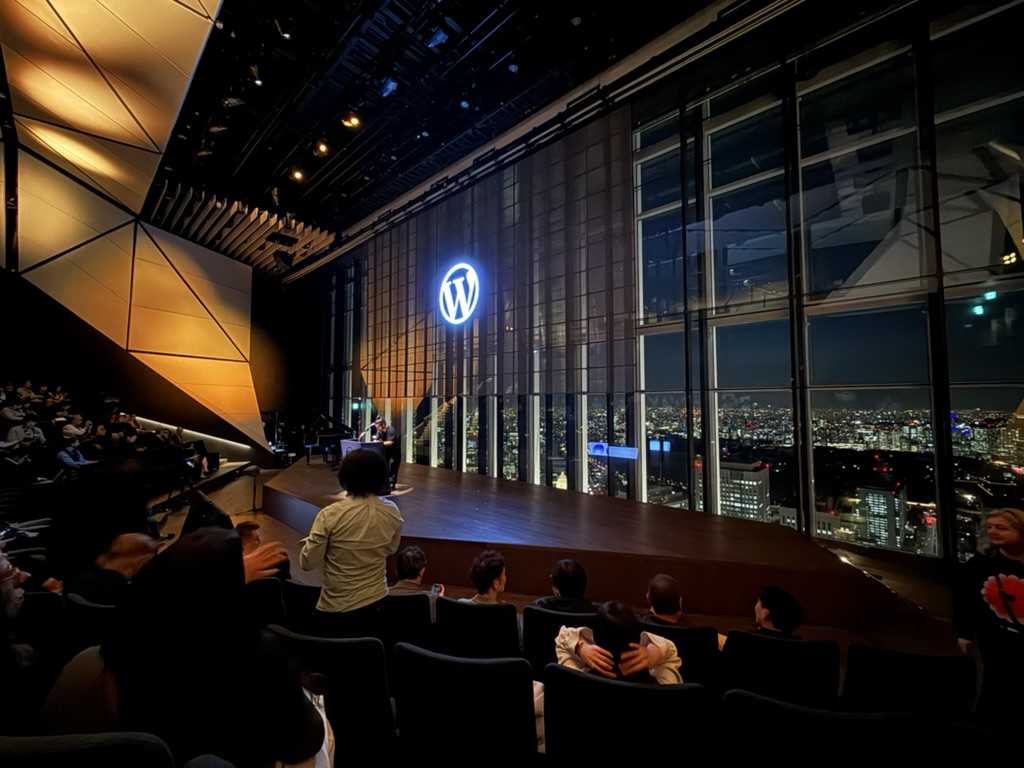
After months of observation, including being at WordCamp US when Matt kicked off his campaign against WP Engine, and more recently in Tokyo for State of the Word, I think I have formulated enough of a position to put in writing.
*Like many things, this is a strong opinion, loosely held.*
*Let’s get the inevitable perception of bias out of the way:* I run [The Code Company](https://thecode.co), a WordPress VIP Gold partner. While valuable, this relationship represents a small portion of my business and isn’t significant enough to influence my perspective. I’m sharing these thoughts because I believe this governance discussion is crucial for WordPress’s future.
#### A significant portion of the WordPress community is angry
Some are calling for Matt’s resignation or for him to be accountable to a community board, while others are leaving the ecosystem entirely. The tension has been building for months, and it’s bringing up fundamental questions about how WordPress should be governed.
As I see it, two distinct paths are emerging from this turbulence:
1. A push toward complete community control through governance boards and committees
2. A more explicit acknowledgment that WordPress, while open-source, is ultimately guided by Automattic and Matt
After years of building businesses around WordPress and watching its evolution, I’ve come to believe the second path is not just more practical – it’s actually better for everyone involved.
#### The False Promise of Community Control
The calls for democratisation sound great in theory. But having watched other open-source projects struggle with this exact issue, I’m skeptical.
Here’s what worries me about the committee-driven approach:
1. **Who’s actually going to serve?** Since WordPress is free, these positions would be unpaid. That means only people with other commercial interests would likely be motivated to participate. I’d rather have clear, known commercial interests (like Automattic’s) than hidden ones.
2. **Decision paralysis is real.** When everyone gets a vote, you end up with watered-down features trying to please everyone. The Gutenberg editor is a perfect example – yes, it was controversial, and yes, the initial release was rough. But Matt had the courage to push forward because he knew it was the right long-term decision. Would a committee have had that courage? I doubt it.
3. **The incentives are wrong.** Without skin in the game (like Matt has with Automattic), decision-makers can take positions without bearing the consequences. That’s dangerous for a project of WordPress’s scale.
Take Drupal, for instance. Their highly democratised committee structure, while admirable in principle, has led to a more cumbersome, slower-moving project. The result? [A platform that’s struggling to maintain its market share.](https://drupal.org/project/usage/drupal)
#### When Visionary Leadership Matters Most
The Gutenberg editor story perfectly illustrates why strong leadership is crucial for WordPress’s future. When Matt pushed forward with Gutenberg, despite significant community resistance, [he made a bold bet on WordPress’s future](https://ma.tt/2017/08/we-called-it-gutenberg-for-a-reason/) that required courage and conviction.
I hate to make grandiose comparisons, but this mirrors [Steve Jobs and the original iPhone](https://www.bbc.com/news/technology-38552241).
Sometimes leaders need to push forward with transformative changes despite initial resistance. The iPhone revolutionised mobile computing, just as Gutenberg is reshaping how people create content on WordPress. In both cases, having a leader willing to weather criticism and stay focused on the long-term vision was crucial.
Could you imagine a committee trying to push through something as controversial yet necessary as Gutenberg? I’d wager that the classic editor would likely still be the default, and WordPress would be falling behind in the modern editing experience race.
#### Learning from Other Open Source Projects
We don’t have to speculate about how different governance models play out – we have plenty of real-world examples to learn from.
**Kubernetes** has found success through transparent governance while remaining heavily influenced by Google. Their steering committee model, clear decision-making processes, and open communication about Google’s role provide a blueprint for balancing corporate leadership with community involvement.
**React**, under Meta’s leadership, has thrived with a clear vision and decisive decision-making. Despite occasional controversies around licensing, React has maintained its position as one of the most widely-used and respected frameworks in the industry. Why? Because having Meta as a strong, clear leader ensures the framework evolves to meet modern demands while avoiding the decision paralysis that plagues more committee-driven projects.
**Red Hat Enterprise Linux** (RHEL)’s commercial leadership drives innovation while still benefiting the community. Yes, some decisions – like ending CentOS as a downstream project – sparked outrage. But the commercial focus has kept RHEL thriving and relevant in enterprise markets.
**Node.js** shows us what can go wrong – internal disagreements over governance led to a fork called io.js, fragmenting the community. While they eventually reunited, the split caused significant pain and demonstrated the costs of unclear leadership.
**MariaDB**, which forked from MySQL after Oracle’s acquisition, has struggled to match MySQL’s pace of innovation – highlighting the challenges of maintaining momentum without strong commercial backing.
#### Moving Forward
The evidence from other open source projects is clear: strong, focused leadership – even with its occasional controversies – consistently produces better outcomes than pure democracy.
That said, there are areas where the WordPress project could improve.
**We need clearer expectations** around commercial contributions, particularly from hosting companies. Having transparent expectations would help reduce tensions and ensure sustainable ecosystem growth, along with reducing anxiety of someones livelihood being threatened by crossing an undefined threshold.
**The community also needs reconciliation.** Much of the current anger seems to stem from a disconnect between the idealistic vision of WordPress as a pure democracy and the reality of its leadership structure. While Matt’s provocative style can be entertaining, it sometimes feels like we’re stepping on unnecessary rakes. The vitriol from a vocal minority who’ve lived in the WordPress bubble for too long is creating unnecessary toxicity.
Here’s something I’ve struggled with over the years: I used to resent the idea of one person having so much control while others volunteered their time. But I’ve come to realise there’s no perfect way to run an open-source project of this scale. The truth is, WordPress owes us nothing, and we owe WordPress nothing. It’s free software. If we don’t like the direction, we can fork it (thanks, GPL!) or build something else. That’s not just a theoretical right – it’s the ultimate check on power in the open-source world.
I don’t believe the path forward is about replacing Matt with committees or fighting the project’s natural governance structure. WordPress has thrived under this model for two decades, powering 40% of the web. Rather than trying to fundamentally reshape its governance, we should focus our energy on what matters: building and innovating on this platform.
I’ve been trying to limit my time on platforms like Twitter and Reddit, so I’m not across all the intercourse between Matt and members of the community, from the bits I have seen, I probably wouldn’t have done it, but I also don’t think *[pineapple on pizza](https://wptavern.com/wordpress-org-login-introduces-mandatory-pineapple-pizza-checkbox)* is really that significant in the scheme of things.
FWIW, I think a lot of the ideas ([like on Karim’s blog](https://marucchi.com/wordpress-leadership-continued/)) like federated repositories / [supply chain security](https://cloud.google.com/blog/products/containers-kubernetes/the-rise-and-future-of-kubernetes-and-open-source-at-google), general tech stack modernisation and so on, are all great additions to the future of WordPress.
I just don’t think a page one rewrite on leadership is productive.
But as I said at the start: strong opinion, loosely held., Matt Is WordPress, Ben May, 01jg4rkvgh820ezg3v47y0cejd.