Misguided Faith: When Miracles Become the Deity
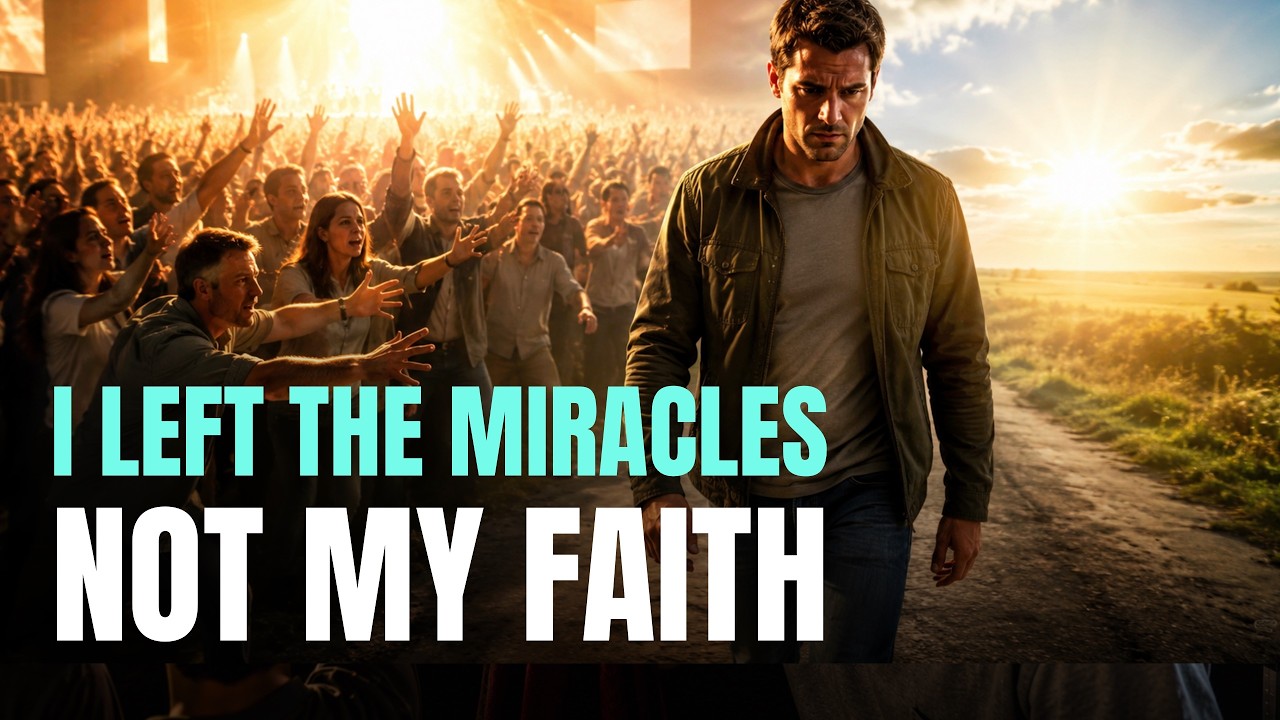
🔗 **Source:** [Misguided Faith: When Miracles Become the Deity](https://www.youtube.com/watch?v=phJlwXqy1xc)
> [!note]+ Document Notes
> # 🏷️ Title: Misguided Faith: When Miracles Become the Deity
> > **Current-agent capture.** The transcript is saved, but the full deep-read analysis is still pending (current-agent mode). The active Codex task must add the notes, topic tags, master highlights, and Reader-native inline highlights before this document is complete.
> ---
> ## Full Transcript
> [00:00] the glorification of the miracles<br>[00:04] always comes at the expense of the<br>[00:06] children. Like, that and I I'll say what<br>[00:09] I mean there. Like, growing up in that<br>[00:12] world<br>[00:14] is so This has been a common thing that<br>[00:16] I've expressed, but it it causes us to<br>[00:21] us, you yourself, and me who grew up in<br>[00:24] it<br>[00:25] to spend the first 30 years of our lives<br>[00:28] not knowing how to even put our feet on<br>[00:30] solid ground because it is impossible<br>[00:34] to know who our parents really are. It's<br>[00:36] impossible for us to know who our<br>[00:39] spiritual fathers really are. It's<br>[00:41] impossible to know what the history of<br>[00:44] my<br>[00:45] the life and the church that came right<br>[00:47] before me. You know, um<br>[00:50] the Kierkegaard I'm going to<br>[00:53] This is a little philosophical, but<br>[00:55] Kierkegaard talks about the teleological<br>[00:57] suspension of the ethical and like faith<br>[01:00] being a purpose that is above ethics.<br>[01:04] That God calls us to do something and<br>[01:06] that supersedes what is good, it<br>[01:09] supersedes what is rational, it is the<br>[01:12] divine.<br>[01:13] And his idea of that and representation<br>[01:17] of that is the<br>[01:19] uh expression of faith of Abraham<br>[01:23] going and and choosing to slaughter his<br>[01:26] son.<br>[01:28] >> [clears throat]<br>[01:28] >> human sacrifice that God is calling him<br>[01:31] to do. And that, you know, of course, we<br>[01:33] know the story that Abraham doesn't end<br>[01:36] up sacrificing his son, but he was<br>[01:38] willing to and he was there and<br>[01:41] uh God stopped him before he would he<br>[01:44] killed<br>[01:45] um Isaac.<br>[01:47] And that has always been very symbolic<br>[01:48] to me because like the teleological<br>[01:52] suspension of the ethical, this sort of<br>[01:54] the<br>[01:56] faith that supersedes ethics and<br>[01:59] rationality,<br>[02:01] especially in a world where there is a<br>[02:02] lot of falsity and you don't know if<br>[02:05] your faith is grounded in God or if<br>[02:07] grounded in men, it is always going to<br>[02:09] lead to the sacrifice of the children.<br>[02:12] Like it's it the the death of Isaac on<br>[02:14] the altar. And very much like I and my<br>[02:17] sisters were sacrificed on the altar of<br>[02:19] my father's faith, without question. So<br>[02:22] many of the children who are grew up in<br>[02:24] the International House of Prayer were<br>[02:26] sacrificed on the altar of their<br>[02:28] parents' faith because we were given<br>[02:30] worlds that were not real. We were told<br>[02:33] stories and and not given the option not<br>[02:36] to believe things that just were not<br>[02:39] true.<br>[02:40] And it made it impossible for us to<br>[02:43] orient<br>[02:46] around our world unless we left it<br>[02:48] entirely. And that's what you've seen.<br>[02:49] You've seen so many people who have only<br>[02:52] been able to find their own sense of<br>[02:54] identity, their own sense of self, once<br>[02:56] they left the world that their fathers<br>[03:00] and mothers, but primarily fathers,<br>[03:03] built for them.<br>[03:04] >> Well, here's the problem that I have<br>[03:06] with this question. And there's no<br>[03:08] there's no easy way to put this. There's<br>[03:10] no way to beat around the bush.<br>[03:12] The miracles have become the deity.<br>[03:15] >> Yeah.<br>[03:15] >> somebody asked me that question, the<br>[03:19] first thought that goes through my mind<br>[03:21] is actually the story of Lot's wife<br>[03:24] looking back.<br>[03:25] >> Mhm.<br>[03:26] >> Because that's what they're doing when<br>[03:27] they ask that question. They're really<br>[03:29] looking back.<br>[03:30] Because [clears throat]<br>[03:31] so in these movements, the miracles<br>[03:33] become the deity, they start worshipping<br>[03:35] the miracles instead of Jesus. The focus<br>[03:38] is all imbalanced. We could preach a<br>[03:40] thousand sermons on that and not even<br>[03:42] touch the surface of it.<br>[03:44] But when you leave these groups, because<br>[03:47] the miracles are their deity,<br>[03:50] there's this tendency for the people<br>[03:51] still in the group to say, "You no<br>[03:53] longer have access to these miracles.<br>[03:55] You're not part of our group. You don't<br>[03:57] have our deity."<br>[03:59] And so, when you leave, the very first<br>[04:01] thing when Whenever I left, the very<br>[04:03] [clears throat] first thing that my<br>[04:05] mother said and some of the other<br>[04:06] people, "Well,<br>[04:08] what about the miracles? What are you<br>[04:09] going to do?"<br>[04:10] In other words,<br>[04:12] you're leaving and they I I told them<br>[04:14] very clearly, "I left as a Christian. I<br>[04:17] said I did not lose my faith in God. I<br>[04:19] left as a Christian." I said this to<br>[04:20] them.<br>[04:22] But, they wanted to to believe that they<br>[04:24] could sever the miracles because I<br>[04:26] wasn't part of their group.<br>[04:28] And instantly this told me the miracles<br>[04:30] have become the deity.<br>[04:32] And whenever somebody asked me this<br>[04:33] question, I have a I have a hard time<br>[04:36] not thinking about the person asking it<br>[04:39] rather than the answer to the question<br>[04:41] because<br>[04:42] what what was being worshipped here?<br>[04:45] If it was really God<br>[04:48] that was doing performing a miracle, you<br>[04:51] wouldn't even have a question was it<br>[04:52] real<br>[04:53] because if God's doing it, you're going<br>[04:55] to know God's doing it.<br>[04:57] If it was a magician's trick or a<br>[04:59] parlor's trick, yeah, you're going to<br>[05:00] have a question. Whenever<br>[05:02] >> [laughter]<br>[05:02] >> When I'm at the magic show or watching<br>[05:04] the magic show and I watch the guy<br>[05:06] perform the trick,<br>[05:07] >> [snorts]<br>[05:08] >> you know, like I said, I the question<br>[05:09] never comes in my head was it real, but<br>[05:12] if I were to believe some of it,<br>[05:15] >> [clears throat]<br>[05:16] >> if I left the magic show,<br>[05:18] I could still have access to other magic<br>[05:20] shows. So, I left as a Christian, I<br>[05:22] could go to another church and another<br>[05:24] church might have a miracle because<br>[05:25] God's giving the miracle, right?<br>[05:28] So, the question is really in balance<br>[05:30] and I have I have a hard time with it,<br>[05:32] but what I have come to realize is that<br>[05:36] because the miracles themselves were so<br>[05:39] worshipped in these groups and they've<br>[05:41] lost the focus of God,<br>[05:43] the gospel itself was diminished.<br>[05:46] So, if you're listening to this and<br>[05:49] you're a Christian and you believe in<br>[05:50] Jesus Christ<br>[05:52] and you're asking the questions about<br>[05:53] the miracles,<br>[05:54] that's not the question. Ask the<br>[05:56] question, what was being worshipped,<br>[05:58] God, the miracles, or the man who<br>[06:01] allegedly performed the miracles?<br>[06:03] And what did that take precedence over<br>[06:06] the gospel itself?<br>[06:08] And I think by and large in all of these<br>[06:10] cults I've examined, you're going to<br>[06:12] find that the gospel took second place.<br>[06:15] >> I think that I think that that makes so<br>[06:16] much sense and that's a a great way of<br>[06:19] articulating it about what was being<br>[06:21] worshipped and and there really was a I<br>[06:24] mean a sense of idolatry of like that<br>[06:26] there an idol worship created in the<br>[06:29] image of these own men, you know, and a<br>[06:32] a<br>[06:33] a type of God that<br>[06:36] was contingent<br>[06:38] on these miracles and this<br>[06:41] miraculous expression.<br>[06:43] Um and for anybody who might question<br>[06:46] that, I like I I fully fully agree with<br>[06:50] you, John, and I know that there's going<br>[06:53] to be a lot of people who probably<br>[06:55] have a hard time<br>[06:57] accepting that.<br>[07:00] To to strengthen that argument, I mean,<br>[07:03] I think about<br>[07:05] could I have<br>[07:08] remained in the world that I grew up in<br>[07:12] and not worshipped<br>[07:15] the miracles<br>[07:16] and not been and and and maintained a<br>[07:20] member of the community.<br>[07:22] And the answer's no. Like I I could not<br>[07:25] have been<br>[07:26] um<br>[07:27] and not just me, anyone. I mean,<br>[07:29] obviously me with with my relationship<br>[07:31] with my father.<br>[07:33] But could I have been<br>[07:36] a sensationalist or any you know, or<br>[07:40] not believed in miracles<br>[07:44] and been a member of at IHOP. No. Could<br>[07:46] I have been a member at Bethel? No. Not<br>[07:49] not in a way that they would have been<br>[07:51] accepting. I wouldn't have been able to<br>[07:53] ever speak up front. I wouldn't have<br>[07:55] ever been able to<br>[07:57] um<br>[07:58] you know, maybe I would have even gotten<br>[07:59] kicked out of the high school that I was<br>[08:01] in. Especially if like<br>[08:04] the the high school were having all of<br>[08:06] these miracles going on during the<br>[08:08] awakening and people are prophesying at<br>[08:11] our actual school and if I would got up<br>[08:13] there and said, "Hey, none of this is<br>[08:15] real." I<br>[08:16] I would have had to leave the school.<br>[08:18] You just it it there was no<br>[08:22] Yeah, there was no way to not worship<br>[08:25] the miracles.<br>[08:32] >> [music]
the glorification of the miracles always comes at the expense of the children. Like, that and I I'll say what I mean there. Like, growing up in that world is so This has been a common thing that I've expressed, but it it causes us to us, you yourself, and me who grew up in it to spend the first 30 years of our lives not knowing how to even put our feet on
solid ground because it is impossible to know who our parents really are. It's impossible for us to know who our spiritual fathers really are. It's impossible to know what the history of my the life and the church that came right before me. You know, um the Kierkegaard I'm going to This is a little philosophical, but Kierkegaard talks about the teleological suspension of the ethical and like faith
being a purpose that is above ethics. That God calls us to do something and that supersedes what is good, it supersedes what is rational, it is the divine. And his idea of that and representation of that is the uh expression of faith of Abraham going and and choosing to slaughter his son. >> [clears throat] >> human sacrifice that God is calling him
to do. And that, you know, of course, we know the story that Abraham doesn't end up sacrificing his son, but he was willing to and he was there and uh God stopped him before he would he killed um Isaac. And that has always been very symbolic to me because like the teleological suspension of the ethical, this sort of the faith that supersedes ethics and rationality,
especially in a world where there is a lot of falsity and you don't know if your faith is grounded in God or if grounded in men, it is always going to lead to the sacrifice of the children. Like it's it the the death of Isaac on the altar. And very much like I and my sisters were sacrificed on the altar of my father's faith, without question. So many of the children who are grew up in the International House of Prayer were sacrificed on the altar of their parents' faith because we were given
worlds that were not real. We were told stories and and not given the option not to believe things that just were not true. And it made it impossible for us to orient around our world unless we left it entirely. And that's what you've seen. You've seen so many people who have only been able to find their own sense of identity, their own sense of self, once they left the world that their fathers
and mothers, but primarily fathers, built for them. >> Well, here's the problem that I have with this question. And there's no there's no easy way to put this. There's no way to beat around the bush. The miracles have become the deity. >> Yeah. >> somebody asked me that question, the first thought that goes through my mind is actually the story of Lot's wife looking back. >> Mhm. >> Because that's what they're doing when they ask that question. They're really looking back.
Because [clears throat] so in these movements, the miracles become the deity, they start worshipping the miracles instead of Jesus. The focus is all imbalanced. We could preach a thousand sermons on that and not even touch the surface of it. But when you leave these groups, because the miracles are their deity, there's this tendency for the people still in the group to say, "You no longer have access to these miracles. You're not part of our group. You don't have our deity." And so, when you leave, the very first
thing when Whenever I left, the very [clears throat] first thing that my mother said and some of the other people, "Well, what about the miracles? What are you going to do?" In other words, you're leaving and they I I told them very clearly, "I left as a Christian. I said I did not lose my faith in God. I left as a Christian." I said this to them. But, they wanted to to believe that they could sever the miracles because I wasn't part of their group. And instantly this told me the miracles
have become the deity. And whenever somebody asked me this question, I have a I have a hard time not thinking about the person asking it rather than the answer to the question because what what was being worshipped here? If it was really God that was doing performing a miracle, you wouldn't even have a question was it real because if God's doing it, you're going to know God's doing it. If it was a magician's trick or a parlor's trick, yeah, you're going to
have a question. Whenever >> [laughter] >> When I'm at the magic show or watching the magic show and I watch the guy perform the trick, >> [snorts] >> you know, like I said, I the question never comes in my head was it real, but if I were to believe some of it, >> [clears throat] >> if I left the magic show, I could still have access to other magic shows. So, I left as a Christian, I could go to another church and another church might have a miracle because God's giving the miracle, right? So, the question is really in balance
and I have I have a hard time with it, but what I have come to realize is that because the miracles themselves were so worshipped in these groups and they've lost the focus of God, the gospel itself was diminished. So, if you're listening to this and you're a Christian and you believe in Jesus Christ and you're asking the questions about the miracles, that's not the question. Ask the question, what was being worshipped, God, the miracles, or the man who
allegedly performed the miracles? And what did that take precedence over the gospel itself? And I think by and large in all of these cults I've examined, you're going to find that the gospel took second place. >> I think that I think that that makes so much sense and that's a a great way of articulating it about what was being worshipped and and there really was a I mean a sense of idolatry of like that there an idol worship created in the image of these own men, you know, and a
a a type of God that was contingent on these miracles and this miraculous expression. Um and for anybody who might question that, I like I I fully fully agree with you, John, and I know that there's going to be a lot of people who probably have a hard time accepting that.
To to strengthen that argument, I mean, I think about could I have remained in the world that I grew up in and not worshipped the miracles and not been and and and maintained a member of the community. And the answer's no. Like I I could not have been um and not just me, anyone. I mean, obviously me with with my relationship
with my father. But could I have been a sensationalist or any you know, or not believed in miracles and been a member of at IHOP. No. Could I have been a member at Bethel? No. Not not in a way that they would have been accepting. I wouldn't have been able to ever speak up front. I wouldn't have ever been able to um you know, maybe I would have even gotten kicked out of the high school that I was
in. Especially if like the the high school were having all of these miracles going on during the awakening and people are prophesying at our actual school and if I would got up there and said, "Hey, none of this is real." I I would have had to leave the school. You just it it there was no Yeah, there was no way to not worship the miracles.
>> [music], Misguided Faith: When Miracles Become the Deity, YouTube, 01m2xnzn33v59wwthbhby9fhz5.