My Response to Terrence Howard
## Metadata
- Author: [[YouTube]]
- Full Title: My Response to Terrence Howard
- Category: #articles
- Document Note: ---
tags: [science-communication, peer-review, dunning-kruger-effect]
author: Neil deGrasse Tyson
source: YouTube
reference: https://www.youtube.com/watch?v=1uLi1I3G2N4
date created: 2024-12-28 17:30
---
# 🏷️ Title: My Response to Terrence Howard
## 🧰 Action Inbox
- [H1] Review peer-review process for evaluating unconventional scientific claims — 00:00 #science-methodology
- [H2] Study Dunning-Krueger effect in science communication — 12:45 #cognitive-bias
- [H3] Examine historical examples of legitimate scientific revolutions — 15:30 #science-history
## 🧭 Table of Contents
- [📝 Summary](#-summary)
- [📖 Main Content](#-main-content)
- [🗒️ Notes](#️-notes)
- [📚 References](#-references)
- [🗣️ Paraphrase](#️-paraphrase)
- [📰 Newsletter](#-newsletter)
- [✅ Action Items](#-action-items)
- [🧪 Hypotheses](#-hypotheses)
- [📊 Methodology](#-methodology)
- [❓ Questions](#-questions)
- [🔮 Future Research](#-future-research)
- [💡 Implications](#-implications)
- [🧠 Learning Styles Assessment](#-learning-styles-assessment)
- [📊 Accessibility Assessment](#-accessibility-assessment)
- [🌍 DEIB Assessment](#-deib-assessment)
- [✅ Logical Validity](#-logical-validity)
- [🛡️ DARVO Analysis](#-darvo-analysis)
- [🎯 Conclusion](#-conclusion)
### 🔗 References
- [StarTalk Radio](https://www.startalkradio.net)
- [Dunning-Kruger Effect Research](https://psycnet.apa.org/record/2000-16936-012)
## 📝 Summary
- Neil deGrasse Tyson responds to being name-checked by Terrence Howard on Joe Rogan's podcast
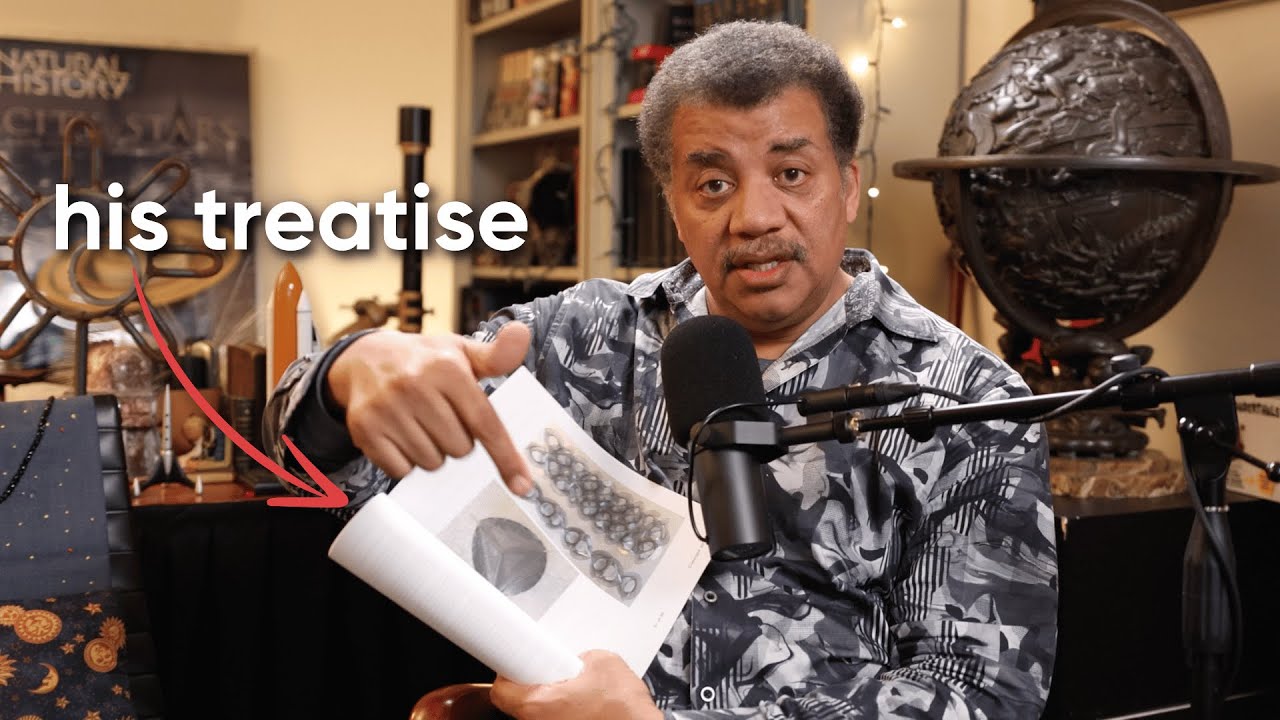
- Tyson explains his detailed peer review of Howard's 36-page mathematical treatise from 8 years ago
- The response demonstrates proper scientific methodology and peer review processes
- Key focus on the Dunning-Krueger effect and distinguishing legitimate scientific revolution from misguided theorizing
- Tyson maintains respect for Howard while firmly correcting mathematical and scientific errors
## 📖 Main Content
Neil deGrasse Tyson provides a comprehensive response to actor Terrence Howard's recent appearance on Joe Rogan's podcast, where Howard referenced their previous interaction. Eight years ago, Howard sent Tyson a 36-page treatise attempting to reinvent mathematics and physics, which Tyson thoroughly reviewed and critiqued.
Tyson explains that he initially became interested in Howard after learning of the actor's childhood scientific interests. When they met at a television industry event, Tyson solicited Howard's scientific work, leading to the extensive treatise beginning with the false premise that "1 × 1 = 2."
The astrophysicist emphasizes the importance of proper peer review in science, explaining how legitimate scientific ideas must withstand rigorous testing and reproducibility requirements. He distinguishes between being misunderstood as a genius versus being misunderstood due to being wrong, using historical examples like continental drift and Einstein's relativity to show how legitimate revolutionary ideas gain acceptance through evidence.
## 🗒️ Notes
#### ⏱️ [00:00](https://www.youtube.com/watch?v=1uLi1I3G2N4?t=0) — [H1] Background of the Terrence Howard interaction
- Key idea: Tyson received a 36-page mathematical treatise from Howard 8 years ago
- Evidence: "He sent me a 36 page treaties... Terence Howard attempting to reinvent mathematics and physics"
#### ⏱️ [01:30](https://www.youtube.com/watch?v=1uLi1I3G2N4?t=90) — [H2] Initial interest in Howard's scientific curiosity
- Key idea: Tyson's mother alerted him to Howard's scientific interests expressed on NPR
- Evidence: "My mother said... I heard him interviewed on NPR... he wanted to be like a scientist and study the Universe"
#### ⏱️ [02:45](https://www.youtube.com/watch?v=1uLi1I3G2N4?t=165) — [H1] Peer review process explanation
- Key idea: Tyson provided detailed scientific review out of respect for Howard's effort
- Evidence: "I spent time reading every line of all 36 pages and I commented my comments are in red"
#### ⏱️ [04:20](https://www.youtube.com/watch?v=1uLi1I3G2N4?t=260) — [H2] Purpose of peer review in science
- Key idea: Peer review is essential for identifying errors and validating scientific ideas
- Evidence: "It is their duty to alert you of things about your ideas that are either misguided or wrong"
#### ⏱️ [06:15](https://www.youtube.com/watch?v=1uLi1I3G2N4?t=375) — [H1] The Dunning-Krueger effect explained
- Key idea: Limited knowledge can create false confidence in one's understanding
- Evidence: "A little bit of knowledge you over assess how much of that subject you actually know"
#### ⏱️ [08:30](https://www.youtube.com/watch?v=1uLi1I3G2N4?t=510) — [H2] Critique of "1 × 1 = 2" premise
- Key idea: Howard's foundational mathematical claim is demonstrably false
- Evidence: "The square root of 64 is 8, 8 is bigger than 64... 64 squared = 4096 a smaller number than the original"
#### ⏱️ [10:45](https://www.youtube.com/watch?v=1uLi1I3G2N4?t=645) — [H2] Analysis of Howard's historical parallels
- Key idea: Being misunderstood doesn't automatically make one a genius
- Evidence: "To be a genius is to be misunderstood but to be misunderstood is not to be a genius"
#### ⏱️ [12:00](https://www.youtube.com/watch?v=1uLi1I3G2N4?t=720) — [H3] Evaluation of Tesla, Russell, and Keeley
- Key idea: Tesla's legitimate contributions are recognized while fringe work is not
- Evidence: "Much of Tesla's work had very real value... that value is duly recognized by my community in the naming of a unit"
#### ⏱️ [14:30](https://www.youtube.com/watch?v=1uLi1I3G2N4?t=870) — [H2] Reproducibility requirement in science
- Key idea: Scientific validity requires reproducible experimental results
- Evidence: "If I perform an experiment and no one else can duplicate that experiment it belongs in the trash heap"
#### ⏱️ [16:15](https://www.youtube.com/watch?v=1uLi1I3G2N4?t=975) — [H3] Flat Earth reference correction
- Key idea: Modern scientific methods prevent large-scale errors like flat Earth beliefs
- Evidence: "The idea of a flat Earth predates the introduction and development of the methods and tools of science"
#### ⏱️ [18:00](https://www.youtube.com/watch?v=1uLi1I3G2N4?t=1080) — [H2] Mirror and candle light measurement error
- Key idea: Howard's claim about doubled light measurement is physically incorrect
- Evidence: "The light in the mirror appears dimmer... no mirror is 100% reflective"
#### ⏱️ [19:30](https://www.youtube.com/watch?v=1uLi1I3G2N4?t=1170) — [H3] Appreciation for Howard's artistic work
- Key idea: Tyson finds Howard's derived artwork intriguing despite flawed reasoning
- Evidence: "The illustrations that derive from them are beautiful regardless of how they were derived"
#### ⏱️ [21:00](https://www.youtube.com/watch?v=1uLi1I3G2N4?t=1260) — [H1] Continental drift as example of legitimate scientific revolution
- Key idea: Valid revolutionary ideas gain acceptance through accumulating evidence
- Evidence: "When we're mapping the bottom of the ocean we find... a Mid-Atlantic Ridge"
#### ⏱️ [23:15](https://www.youtube.com/watch?v=1uLi1I3G2N4?t=1395) — [H1] Einstein's relativity validation process
- Key idea: Revolutionary theories succeed through experimental verification in peer review
- Evidence: "1919 we measured light around the edge of a total solar eclipse... provided the first experimental evidence"
#### ⏱️ [25:30](https://www.youtube.com/watch?v=1uLi1I3G2N4?t=1530) — [H1] Proper platforms for scientific validation
- Key idea: Research journals, not social media, are the appropriate venues for scientific validation
- Evidence: "The platform... is not social media... it is research journals where attention can be given"
## 📚 References
- [Dunning-Kruger Effect Study](https://psycnet.apa.org/record/2000-16936-012)
- [Einstein's General Relativity Papers](https://einsteinpapers.press.princeton.edu/)
- [Continental Drift Theory History](https://www.britannica.com/science/continental-drift)
## 🗣️ Paraphrase
- Tyson thoroughly reviewed Howard's mathematical treatise years ago, finding fundamental errors in basic premises like "1 × 1 = 2"
- The Dunning-Krueger effect explains how limited knowledge can create overconfidence, leading people to believe they've revolutionized established science
- Legitimate scientific revolutions like continental drift and relativity succeeded through rigorous peer review and experimental validation, not social media promotion
## 📰 Newsletter
**Scientific Peer Review in Action: Lessons from Neil deGrasse Tyson's Response**
This week, astrophysicist Neil deGrasse Tyson demonstrated the importance of rigorous scientific methodology in his response to Terrence Howard's mathematical claims. Tyson's detailed peer review process shows how legitimate science evaluates new ideas—through careful analysis, reproducible experiments, and honest feedback.
Key takeaway: The Dunning-Krueger effect reminds us that a little knowledge can be dangerous, creating false confidence. True scientific breakthroughs require extensive validation through proper channels.
For anyone developing scientific content or educational materials, this example highlights the value of thorough review processes and the distinction between revolutionary ideas and simply incorrect ones.
Resources: [Learn WordPress](https://learn.wordpress.org/), [Developer Docs](https://developer.wordpress.org/), [WP-CLI](https://wp-cli.org/)
## ✅ Action Items
#### DevRel
- Developer advocacy: Create content explaining peer review processes for technical documentation
- Education: Develop workshops on evaluating technical claims and avoiding false confidence
- Developer experience: Implement review processes similar to scientific peer review for API documentation
#### Community
- Contributors: Establish mentorship programs pairing experienced reviewers with new contributors
- Maintainers: Create guidelines for constructive criticism and feedback in project reviews
- Sponsors: Fund educational initiatives on critical thinking in technical communities
#### WordPress
- Documentation: Apply peer review principles to technical documentation accuracy
- Training: Develop lesson plans on evaluating technical claims and sources
- Community: Foster culture of respectful but rigorous technical review
## 🧪 Hypotheses
- Peer review processes in scientific communities could be adapted to improve technical documentation quality
- The Dunning-Krueger effect significantly impacts adoption of unvalidated technical solutions
- Historical examples of legitimate scientific revolution provide templates for evaluating technical innovations
- Social media amplifies technical misinformation due to lack of formal review processes
### 📊 Methodology
- Comparative analysis of peer review effectiveness across scientific and technical communities
- Survey technical professionals on confidence levels versus actual expertise
- Case study analysis of legitimate technical breakthroughs versus failed innovations
### ❓ Questions
- How can technical communities implement peer review without stifling innovation?
- What markers distinguish legitimate technical revolution from Dunning-Krueger overconfidence?
- How do social media platforms affect the spread of unvalidated technical claims?
### 🔮 Future Research
- Effectiveness of peer review processes in open source development
- Cognitive biases affecting technical decision-making in software development
- Historical analysis of validated versus debunked technical innovations
### 💡 Implications
- Practice: Implement formal review processes for technical documentation and claims
- Policy: Establish standards for evaluating and promoting technical innovations
- Education: Integrate critical thinking and peer review principles in technical training
- Community: Foster culture of constructive criticism and evidence-based evaluation
### 🧠 Learning Styles Assessment
Reading level estimate: 12th grade
#### 👀 Visual learners
- Present: Clear examples of mathematical errors with visual corrections
- Improve: Add diagrams showing peer review process flow, scientific method visualization
#### 🔊 Aural learners
- Present: Video format with clear narration and examples
- Improve: Podcast version with enhanced audio descriptions of visual elements
#### 🗣️ Verbal learners
- Present: Rich analogies, clear definitions of scientific terms
- Improve: More historical storytelling, expanded glossary of scientific concepts
#### 🧩 Kinesthetic learners
- Present: Step-by-step explanation of peer review process
- Improve: Interactive checklist for evaluating scientific claims, hands-on experiments
#### 🧠 Logical learners
- Present: Clear logical progression, cause-and-effect relationships
- Improve: Decision trees for evaluating scientific validity, formal logic frameworks
#### 🧑🤝🧑 Social learners
- Present: Discussion of community standards and collaborative review
- Improve: Group exercises in peer review, collaborative evaluation rubrics
#### 🧘♀️ Solitary learners
- Present: Individual reflection on scientific methodology
- Improve: Self-assessment tools for recognizing cognitive biases, personal study guides
#### 🌿 Naturalistic learners
- Present: Examples from natural phenomena like continental drift
- Improve: More connections to observable natural processes, ecosystem analogies
### 📊 Accessibility Assessment
#### Screen reader semantics
- Present: Clear heading structure, descriptive video content
- Improve: Enhanced alt text for mathematical examples, ARIA labels for complex concepts
#### Keyboard navigation
- Present: Standard video controls accessible via keyboard
- Improve: Timestamp navigation, skip-to-section functionality
#### Contrast and readability
- Present: High contrast video presentation, clear audio
- Improve: Closed captions with mathematical notation support
#### Text resizing and reflow
- Present: Responsive transcript formatting
- Improve: Mathematical formula accessibility at different zoom levels
#### Media and captions
- Present: Full video transcript available
- Improve: Enhanced captions with speaker identification, mathematical notation descriptions
#### Forms and interactions
- Present: Standard YouTube interface
- Improve: Custom learning interface with accessible progress tracking
### 🌍 DEIB Assessment
#### Cultural breadth
- Present: Universal scientific principles, international examples (Einstein, continental drift)
- Improve: Include diverse scientists and cultural approaches to knowledge validation
#### Inclusive language
- Present: Clear, jargon-free explanations of complex concepts
- Improve: More accessible alternatives to technical terminology
#### Neurodiversity support
- Present: Structured presentation with clear sections
- Improve: Multiple formats for processing information, visual and auditory options
#### Representation
- Present: Focus on scientific merit over personal characteristics
- Improve: Highlight diverse scientists who contributed to peer review development
#### Psychological safety
- Present: Respectful treatment of Howard despite criticism
- Improve: Explicit discussion of constructive criticism principles
### ✅ Logical Validity
#### Strong reasoning
- Deductive strength: Sound logical progression from premises to conclusions about scientific method
- Inductive strength: Uses multiple historical examples to support general principles
- Causal reasoning: Clear cause-effect relationships between peer review and scientific progress
- Analogical strength: Effective analogies between legitimate and illegitimate scientific claims
#### Fallacies
- Ad hominem: None detected - Tyson critiques ideas, not personal characteristics
- False equivalence: Avoided - clearly distinguishes between legitimate and illegitimate scientific revolution
#### Tone of voice
- Overall tone: Respectful but firm, educational rather than dismissive, maintains professional courtesy while being scientifically rigorous
### 🛡️ DARVO Analysis
- Deny: No denial patterns detected - Tyson acknowledges the interaction and his
- Document Tags: [[science]] [[cognitive]]
- Summary: My Response to Terrence Howard
- URL: https://www.youtube.com/watch?v=1uLi1I3G2N4
I recently learned I got name-checked byTerrence Howard on his recent appearanceon Joe Rogan. I reached out to NeildeGrasse Tyson. Neil deGrasse Tyson, he waslike, "Hey man, yeah I’d love for you tocome on my show, do my radio, do my TVthing. Would love that!" I was like, yeah,but let me, I’ve got something I want tointroduce to you. I got name-checkedbecause 8 years ago he sent me a 36-pagetreatise, and it was only 36 pages. Sothis is TerrenceHoward attempting to reinventmathematics and physics. A littlebackstory there: I took initial interestin Terrence because my mother said to me,
"Do you know Terrence Howard?" I said, "Yeah,I know; you mean the actor?" She said, "Yeah,well, I heard him interviewed on NPR. Onthere, he said that like when he was akid he wanted to be like a scientist andstudy the universe." I said, "Well, that’scool! Okay, maybe we’ll get him on StarTalk. We love talking to celebrities whohave a soft geek underbelly." At the time,I didn’t quite know how to get in touchwith him, but we met at somethingcalled the upfronts, which is wherenetworks present their next season’s TVshows. I saw him at an event, um, uh.
Upfront, and then this came in myinbox. In this particular case, since Ibasically solicited it from him, Iactually spent time reading every lineof all 36 pages, and I commented. Mycomments are in red; here you see that. SoI spent a lot of time on it, and Ithought, out of respect for him, what Ishoulddo is give him my most informed criticalanalysis that I can. In my field, we callthat a peer review. You come up with anidea, you present it either at aconference, or you first write it up andsend it to your colleagues. It istheir duty to alert you to things aboutyour ideas that are either misguided orwrong, or if there's a mistake; thecalculation doesn’t work out, or thelogic doesn’t comport — that’s their job.
Not all ideas will turn out to becorrect; most won’t be. But to get to thatpoint, you need to know things like whathas everyone else said about this samesubject? Am I repeating someone else’swork? Is this a new insight that no oneelse has had, but has foundations thatare authentic or legitimate, orobjectively true? Am I making a falseassumption? Am I making an assumption?
That someone else has already shown tobe false. All of this goes on on thefrontier of science. Let me make it clearthat I'm delighted when I see peoplewith active minds trying to tackle thegreat unknowns in the universe. It's abeautiful thing that people want toparticipate on this frontier. What canhappen is if you're a fan of a subject,let's say a hobbyist, let's call it; it'spossible to know enough about thatsubject to think you're right but notenough about that subject to know thatyou're wrong. And so there's this sort ofvalley in there, a valley of false
confidence. This has been studied byothers, and it's called the DunningKruger effect. It's the phenomenon wherea little bit of knowledge makes you overassess how much of that subject youactually know. And then when you learneven more, you realize, "No, I didn't knowas much as I thought I did." So thenthere's a sort of a lull there, and thenwhen you learn even more, you come backup, ultimately learning enough to knowwhether you are right or wrong. To becomean expert means you spend all this time.
It doesn't happen overnight. You can'tjust sit in an armchair and say, "I'm nowAn expert requires years and years ofstudy, especially looking throughjournals where new ideas are publishedand contested. That’s what we havelearned: learned is the most effectivemeans of establishing that which isobjectively true or determining thatwhich is objectively false. Both of thosework hand in hand to move the needle onour understanding of the universe. I’mgoing to read you just my opening line.
Here, it’s titled "1 \* 1 equals 2," so I leadoff by saying this is an ambitious workthat is a clear indication of a restlessactive mind. Within these pages, however,there are many assumptions andstatements that are underinformative.For example, “greater than the initial number squared”would expose a loose threadwithin the fabric of our understanding — aloose thread capable of unraveling thevery ground rules of mathematics. That’sa bold statement. So then I just saythis opening thesis is false. There areplenty of examples of this that haveescaped your attention. His statement isshown to be false for every numberthat’s less than one and greater than zero.For example, the square root of 64 is 8.8 is bigger than 64.
A number smaller than the original is 64 squared=496, a smaller number than the original.To the extent that the next 35 pagesdepends on your statedthesis, this fact undermines your claimsand assumptions. It's notabout feelings here; it's about objectivereality. So at the time, I consideredTerrence a strong acquaintance, and we hungout a bit and had much exchange. Wehaven't spoken much since then. But go topage two, and in here he mentions peoplewhom he declares were persecuted becausetheir vision exceeded the myopic view oftheir contemporaries. He mentionsWalter Russell, Nikola Tesla, John Keeley,
and many, many more. Regarding yourlist of people who have made bravesacrifices, I note that to be a genius isto be misunderstood, but to bemisunderstood is not to be a genius. Thework of Walter Russell haseluded any experimental support, and thework of Keeley is generally notreproducible. Science is aboutreproducibility. I can have the mostbrilliant, crazy, fun idea ever, and if Iperform an experiment and no one elsecan duplicate that experiment, it belongsIn the trash heap, it's me in my ownworld. I think I have landed on anobjective truth when in fact I haven't.
That's how science works: thereproducibility of results. As for thework of Tesla, much of it had very realvalue to physics and our understandingof electromagnetism, and that value isduly recognized by my community in thenaming of a unit of electromagnetismafter him. You can't get more badass thanhaving a unit named after you. Newton hasa unit named after him; for example, themetric unit of force is a Newton. Much ofthe rest of his work was fringe andunrealized, either for violating knownlaws of physics or for being simplyimpractical. Just because you do somegood stuff doesn't mean everything youever did is going to be great. I willfurther affirm that just because an ideasounds crazy doesn't make it wrong. Thesystem of research and publications inpeer-reviewed journals has the capacity tospot crazy but true ideas, provided theyare supported by compelling arguments andultimately supported by experiments andobservations. Newton's Laws, Einstein'srelativity, quantum physics were allrevolutionary ideas that appeared inPeer-review settings or journals,meanwhile, most of the work of Russelland Keeley had no such success withtheir ideas. So I think on Rogan, Terrensaid that I trashed those threeresearchers, and I had an immediate
reaction that I talked about Walter Russell andVictor Shaw Berger and John Keeley aswell as Tesla, as the people that I looked upto. So he threw on, he was like"Well, Tesla's stuff worked, but Teslawas never really respected and out there."When I'm just simply stating the fact, Idon't think of that as trashing; I thinkof that as being honest. I mean, I couldhave softened it, but I don't thinkthat's what people who care about youshould do. People who care will be honestwith you about ideas, about thoughts. Theworld is changing so quickly, and so iseverything around us. Unfortunately, wehave chosen to remain handcuffed toantiquated and obsolete beliefs. We haveput an enormous amount of faith—faithinto the methods and practices of oldthat are as dead today as the men whopropagated the notion that the world wasflat. So I say here regarding your worldwas flat reference,it's not widely appreciated that theThe idea of a flat Earth predates theintroduction and development of themethods and tools of science as wepractice them today. Those processes dateback to around 1600, coincident with theinvention of the microscope andtelescope. Before then, truths werewhatever seemed right to the senses.
Afterwards, and to this day, truth waswhatever the verified data obtained byyour instruments forced you to believe.If your senses otherwise contradictedthe data, this fact means that there's nosuch misunderstanding on the scale ofthe Flat Earth in the era of modernscience. In multiple placesthroughout thetreaties, he's attaching a number to aphysical idea or a physical object. Thatidea goes way back; by the way, it goes back toPythagoras, famous for the Pythagoreantheorem which we all learned in 8th
grade, was it or nth grade? Pythagoras wasalso a philosopher who tried tounderstand how things worked. He feltamong others in his group that if youassign a number to something, the numbercan imbue that object with certainmeaning and significance. This meansthat if you manipulate the numbers, thenYou gain insight into the objectsthemselves once you've assigned a numberto it. There’s a lot of that thatpermeates this document, but it's along disproven approach to the world.
Again, there’s nothing wrong with afailed idea; now other people know notto do it right, that has value. If we place acandle in front of a mirror, themeasurement of light is doubled, is itnot? It does not measure as only onelight source; we actually see two lights.A light meter will show twice theintensity of light. This is false. Heattacked it with suchvitriol. Maybe that’s too blunt; what elseshould I say? I’m a scientist, that’s whatI would tell a colleague, a colleague whothen would say, "Thank you," and then we goout for beer after, 'cause that’s how thatworks. And there’s an old saying I firstheard from Michael Dell of DellTechnologies: if one day you findyourself the smartest person in the room,change rooms. I say this is false; thelight in the mirror appears dimmer thanthe source of light itself for severalreasons, starting with the fact that nomirror is 100% reflective, but moreimportantly, the candle in the mirror isThe candle's light is always farther away from you than thecandle itself, so the light meter willalways read less than twice the actual
value of the candle itself. I willnote that from this work, Terren producesart, sculptural art, which I find to beintriguing, even beautiful to me—moreintriguing than beautiful—because youhave to look at it, and you keep lookingat it like, "What is that and what's goingon there?" I just want to read you my endand comments here. I could not follow thereasoning on these last few pages, butthe illustrations that derive from themare beautiful, regardless of how theywere derived. My notes have been stronglycritical of your reasoning andconclusions. I was candid and blunt outof respect for the energy you haveclearly invested in this work. But ifyou're sure that you are still right andthat I have completely misunderstoodyour thesis, then you will need to lookfor another person to evaluate what youhave done and solicit their comments. Inany case, like I say above, the images andillustrations in your final pages arebeautiful works of art, unlike any I haveseen. Best to you, Neil. So in case peoplewanted to know what actually went down.
Years ago, just always be cautious of theDunning-Kruger effect. You put in alittle bit of work and you have an idea,and then you think your idea is right,and that Einstein is wrong and Newton iswrong, and that everybody's wrong, andthat all of modern astrophysicists arewrong. That'sbold. That's bold and audacious.Bodacious! When continental drift wasproposed, it was like, "What? Land massesare moving on Earth? Sure, that's a weirdidea. That's going to be a hard sell. Wethink there's sort of upwelling of theyes, locally, but whole continents move?
That's crazy! It would take a few decadesuntil ultimately, when we're mapping thebottom of the ocean, we find that there'sa Mid-Atlantic Ridge that the ridges areseparating. It's like, bada bing! So theresistance to jumping on the idea thatcontinentsmove was not because people werestubborn; it was because people arecautious. Any new idea needs to be putthrough the ringer. That's how scienceworks: you put it through the ringer,every possible test you can, not just becauseit happens to look like South Americafits with Africa. Any better evidence?
Than that. Oh wait a minute, fossilsmatched between the west coast of SouthAmerica and the east coast of Africa. Notrecent fossils, fossils from millions ofyears ago. That's interesting—things thatmake you go, "Hm." That brought some morepeople over to the camp. You keep that upand you reach a point where enoughevidence is brought to bear on thequestion, and then you have a newemerging truth. But at the vibrantenergy that goes on at conferences andthe contest of ideas—that's how we roll;that's how it works. When Einstein cameout with relativity, saying SpaceTimecurves, Albert, Al, what are you saying?
What are you doing? Well, you can test itwith the total solar eclipse. So the ideacomes out in 1915, published in 1916.In 1919, we measured light around the edgeof a total solar eclipse, 'cause you can't see the starsduring the daytime. You see the light, thelight rays bent from their actualcoordinate positions on the sky. SirArthur Eddington, an astrophysicist,provided the first experimental evidencefor Einstein's general theory ofrelativity, which by the way waspublished in a peer-reviewed journal. Crazy.
The idea of the platform to be accepted for theideas is not social media. It is not JoeRogan. It is not my podcast. It isresearch journals,where attention can be given on alevel that, at the end of the day, offersno higher respect for your energy andintellect than by declaring that what'sin it is either right or wrong, or worthyof publication or not. I wanted to postthis to my website so you can see mycomments mixed in with his treaties, butyou got the sense of it. Thanks forlistening. Thanks for watching.Neil deGrasse Tyson here. As always, keeplooking up.[Music], My Response to Terrence Howard, YouTube, 01ka8hmw78rswmxg6172gtstnz.